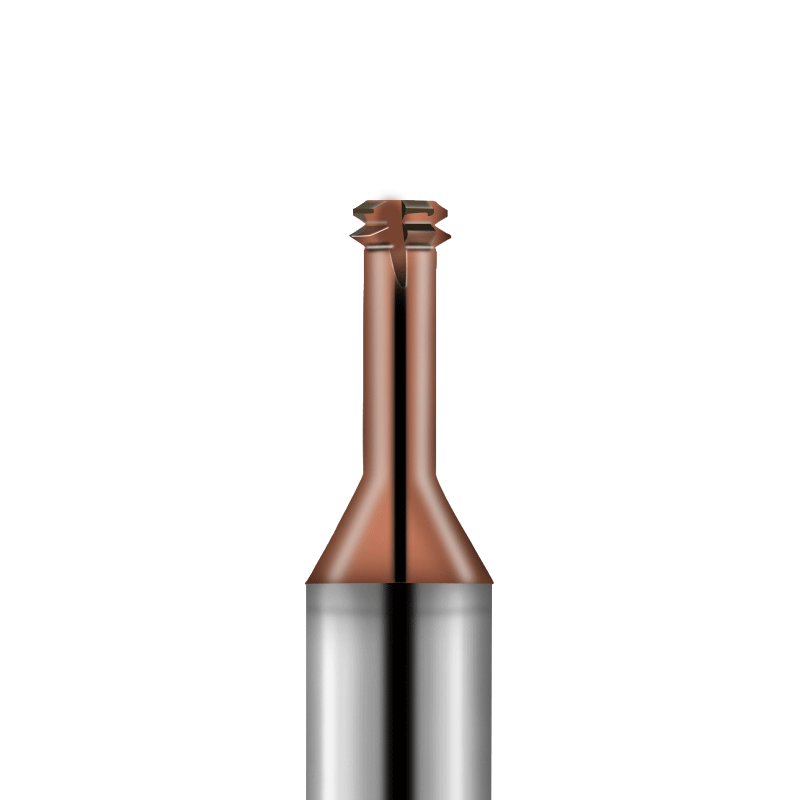
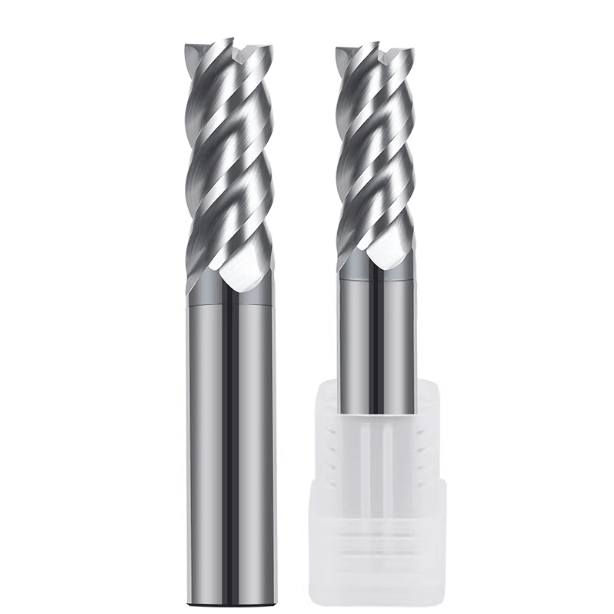
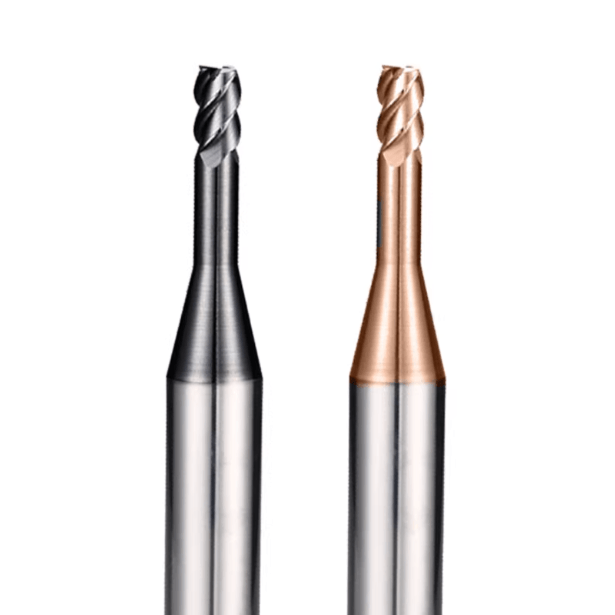
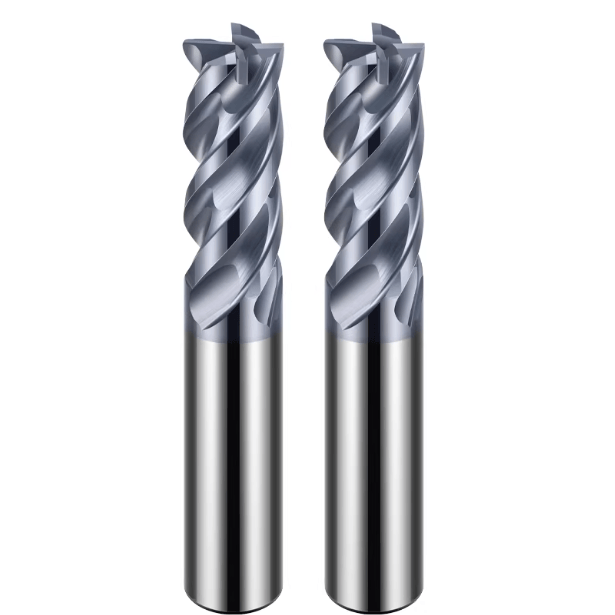
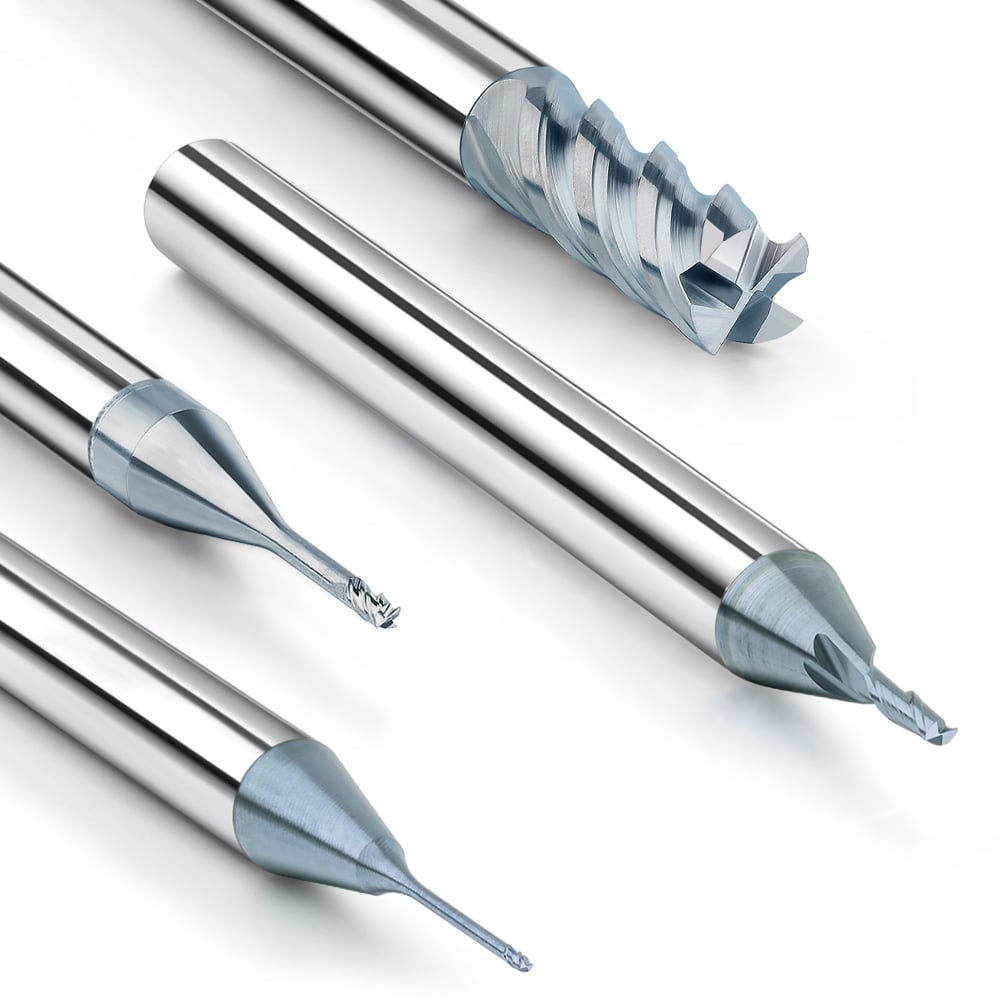
In high-precision electronics manufacturing, diamond milling bits play a critical role across microcircuit board processing, precision ceramic machining, and cutting conductive graphite or composite materials. Selecting the right diamond milling bit directly improves machining efficiency, dimensional accuracy, and surface integrity. As electronic components continue to demand tighter tolerances and higher surface quality, these tools have become indispensable—especially when working with brittle materials such as graphite plates, ceramic substrates, or high-hardness composite structures. Professional diamond milling bits designed for graphite help minimize material chipping while maintaining consistent precision.
Partnering with a reliable custom CNC diamond milling bit supplier offers additional value for manufacturers. Customized tooling solutions tailored to specific geometries, materials, and cutting requirements ensure stable performance in mass production, reduce process variability, and enhance overall product quality. From tool geometry to particle embedding and wear-resistant coatings, every detail affects the machining outcome. With well-designed diamond tools and properly matched cutting parameters, manufacturers achieve higher stability, longer tool life, and reduced production costs in precision electronics manufacturing.

Core Advantages of Using Diamond Milling Bits in Electronics Manufacturing
In modern electronic component machining, high-performance cutting tools significantly improve production efficiency and surface quality. By optimizing tool geometry, particle bonding, and coating technologies, diamond milling bits deliver excellent stability during micro-sized machining, maintaining consistent accuracy across complex contour cutting. When processing brittle or high-hardness materials—graphite, ceramics, composite structures—advanced diamond tools help reduce chipping, improve dimensional consistency, and ensure uniform surface finishes. Customized tools further support specific workpiece requirements, providing stable performance in high-volume manufacturing and optimizing the overall machining workflow.
Improving Microstructure Machining Accuracy
In microcircuit board and micro-electronic component production, micron-level dimensional control is essential. High-precision diamond bits, featuring uniform particle distribution and refined cutting-edge geometry, achieve smooth cutting with minimal material removal. This results in significantly fewer burrs and surface defects. When cutting parameters and feed rates are properly matched, microstructures maintain stable geometric accuracy, offering reliable support for downstream assembly, soldering, and functional integration.
Stability Advantages in Brittle Material Processing
Brittle materials are prone to edge breakage and surface cracking during machining. Traditional tools often struggle to maintain both accuracy and long tool life. Optimized diamond milling bits maintain balanced cutting forces when machining graphite plates, ceramic substrates, or composite materials, reducing edge chipping and structural defects. Reinforced coatings and uniformly bonded particles withstand high-speed friction and impact, ensuring stable machining performance and consistent surface quality even in complex workpiece features.
Reduced Tool Wear and Consistent Quality
High wear-resistance and advanced bonding technology allow diamond bits to maintain cutting efficiency over extended production cycles. Longer tool life reduces downtime and replacement frequency, while stable cutting performance ensures consistent product dimensions and surface quality across large batches. This is particularly valuable for micro-hole drilling, fine-groove milling, precision pocketing, and contour machining in electronics manufacturing. Custom tool suppliers can further optimize tool structure and cutting parameters for specific materials, helping manufacturers reduce processing risks and overall production costs.

Main Application Scenarios of Diamond Milling Cutter Bits in Precision Electronic Components
Precision electronics manufacturing involves numerous miniature components that demand high accuracy, stable machining, and excellent surface finishes. High-performance diamond milling bits provide reliable performance when processing complex geometries, enabling consistent precision across semiconductor wafers, packaging elements, miniature metal components, and thermal management modules. By optimizing tool structure and machining parameters, manufacturers can achieve smooth cutting, low tool wear, and excellent repeatability, even on challenging materials such as graphite, ceramic substrates, copper alloys, and composite materials.
Precision Machining of Semiconductor Wafers and Packaging Components
Semiconductor wafer and packaging processes require strict micron-level dimensional control. Wear-resistant diamond tools with optimized cutting geometry enable clean cutting with minimal burrs and crack formation along wafer edges. With properly selected feed strategies and tool paths, packaging components achieve precise dimensions and high surface integrity. This improves solderability and assembly compatibility while lowering scrap rates and improving manufacturing yield.
High-Precision Milling of Electronic Connectors and Miniature Metal Parts
Processing miniature metal connectors often involves tight spacing, fine grooves, and precision hole features. Advanced diamond milling bits enable high-speed, high-accuracy machining while maintaining stable tool life. Reinforced coatings and evenly distributed abrasive particles help maintain continuous cutting force, reducing thermal distortion and material deformation. This improves production efficiency, product consistency, and dimensional reliability in mass production.
High-Quality Machining of Precision Fixtures and Heat Dissipation Modules
Precision fixtures and heat dissipation modules affect the performance and thermal stability of electronic devices. Diamond milling bits deliver high-quality surface finishes on aluminum, copper, and composite heat-sink materials. Their optimized design reduces vibration, keeps heat-affected zones minimal, and ensures consistent flatness, groove accuracy, and hole alignment. This contributes directly to long-term electronic device reliability.

Key Considerations When Choosing a Diamond Mill Bit
In precision electronics machining, selecting the appropriate diamond milling bit requires evaluating material characteristics, structural complexity, and surface quality requirements. The right tool ensures high accuracy, long tool life, and reduced material waste. Key factors include tool geometry, cutting-edge design, substrate material, bonding method, and machining parameters. Customized tooling enables optimal compatibility with specific machining setups, improving consistency and efficiency in high-volume production.
Tool Geometry Design and Cutting-Edge Structure Matching Workpiece Requirements
Micro-component machining requires tool geometry carefully matched to the workpiece’s characteristics. Proper cutting-edge angles, tip shapes, and particle distribution reduce cutting forces and minimize thermal impact, helping to prevent burr formation and surface scratches. By optimizing helix angle, edge sharpness, and flute count, manufacturers achieve better dimensional accuracy, smoother surface quality, and improved repeatability for micro-feature machining.
Differences in Tool Substrate Materials and Electroplating/Sintering Processes
The choice of tool substrate and tool-making process affects strength, thermal stability, and wear resistance.
-
Electroplated tools provide sharp cutting edges and smooth surfaces, ideal for micro-cutting and fine-pattern machining.
-
Sintered tools offer dense particle bonding, superior strength, and excellent high-temperature resistance, suitable for heavy-load or long-cycle cutting.
Matching tool type to material characteristics—hardness, brittleness, thermal conductivity—ensures stable machining performance and reduces scrap rates.
Influence of Machining Speed, Feed Rate, and Cutting Depth on Performance
Cutting parameters have a direct effect on tool life and machining quality. Proper spindle speed, feed rate, and cutting depth minimize vibration, heat buildup, and deformation—critical when machining graphite plates, ceramic components, or miniature metal parts. High-speed light-cutting strategies increase accuracy and extend tool life. Optimized parameters allow diamond tools to deliver maximum stability and wear resistance in high-volume production.

Application Value of Diamond Milling Cutter Bits for Graphite in the Electronics Industry
In electronics manufacturing, graphite materials are widely used for electrodes, precision molds, and high-thermal-conductivity components. Due to their brittle and easily fractured nature, machining graphite places extremely high demands on tool accuracy, wear resistance, and cutting stability. High-performance diamond milling cutter bits enable rapid material removal while maintaining excellent surface finish, reducing chip buildup and burr formation, and significantly improving machining efficiency and product consistency. Customized tooling solutions further enhance machining results by optimizing tool geometry, bonding structure, and abrasive particle distribution based on the specific grade of graphite, ensuring that every workpiece meets required dimensional and surface quality standards in mass production.
High Material Removal Rate for Graphite Electrodes and Molds
Graphite electrodes and molds require fast and efficient machining to minimize production cycles and lower processing costs. Optimized diamond milling tools achieve high-speed cutting while preserving tool life, allowing large volumes of graphite material to be removed quickly with minimized heat buildup. Through proper selection of abrasive particle hardness, bonding strength, and cutting-edge geometry, machining efficiency can be substantially increased without sacrificing accuracy, offering strong support for large-scale electronics manufacturing.
Maintaining Edge Sharpness and Reducing Chipping
Graphite is prone to edge chipping, micro-fractures, and burr formation during machining, which can affect assembly precision and electrical conductivity. High-quality diamond milling bits with precise tip geometry and uniform particle distribution preserve edge integrity even under micro-cutting conditions. When combined with optimized feed rates and cutting depths, the tools minimize vibration and crack propagation during high-speed machining, effectively reducing chipping and improving dimensional accuracy, assembly reliability, and long-term component stability.
Improving Mold Life and Processing Consistency
The service life and machining consistency of graphite molds directly influence mass-production efficiency. Wear-resistant diamond tools maintain stable cutting performance across long machining cycles, reducing tool replacement frequency and overall manufacturing costs. Customized solutions enhance performance further by optimizing tool geometry and abrasive bonding for different graphite densities. This ensures consistent dimensional accuracy, surface quality, and mold lifespan across batches—an essential advantage for electronics manufacturers requiring uninterrupted precision production.

Process Strategies for Improving the Machining Performance of Diamond Milling Bits
Achieving the best performance from diamond milling bits requires more than selecting the right tool material and geometry. Optimal machining performance depends on the scientific combination of spindle speed, feed rate, and cutting depth, supported by appropriate cooling and toolpath strategies. For graphite, ceramics, high-hardness alloys, and miniature electronic components, well-optimized machining parameters help minimize burrs, chipping, heat-affected zones, and micro-deformation. Customized machining strategies tailored to specific material behaviors and complex geometries further improve production efficiency, reduce scrap rates, and ensure consistent results in large-scale manufacturing.
Optimizing the Combination of Spindle Speed and Feed Rate
The relationship between spindle speed and feed rate is critical for cutting stability and tool longevity. Excessively high spindle speeds can cause vibration, heat accumulation, and surface defects in brittle materials, while overly aggressive feed rates increase cutting forces and diminish surface finish. By properly coordinating spindle speed, feed rate, and cutting depth, manufacturers can achieve stable cutting forces and low-vibration machining conditions, resulting in higher dimensional accuracy and improved surface uniformity in micro-features and delicate structures.
Optimizing Cooling Methods to Reduce Thermal Effects and Workpiece Deformation
During high-speed machining, heat can lead to thermal expansion, microcracks, and deformation. Effective cooling—whether through spray systems, high-efficiency coolants, or minimum-quantity lubrication—helps reduce tool and workpiece temperatures. This minimizes the heat-affected zone and prolongs tool life. For materials such as graphite, ceramic substrates, and high-conductivity metals, properly planned cooling strategies ensure cutting stability, improve surface quality, and maintain dimensional consistency, supporting downstream assembly and functional testing.
Improving Surface Quality Through Tool Path Planning
Optimized toolpath strategies significantly reduce redundant cutting, tool load spikes, and surface defects. High-efficiency toolpaths—such as helical milling, layered cutting, and adaptive feed—ensure uniform material removal and smoother surfaces in every pass. For intricate electronic components and complex contours, refined toolpath planning minimizes burrs, scratches, and edge deformation. When paired with customized tool designs, optimized toolpaths help maximize cutting stability, reduce cycle time, and ensure that each workpiece meets dimensional and surface requirements in mass production.

Advantages of Partnering with a Custom CNC Diamond Milling Bit Supplier
In precision electronics manufacturing, collaborating with a specialized supplier for custom diamond milling bits offers substantial benefits. Professional suppliers can optimize tool geometry, abrasive bonding, and coating structures based on the material, size, and complexity of electronic components. This ensures that every tool is precisely matched to the machining requirements. In addition, suppliers provide practical recommendations for machining parameters—such as feed rate, cutting depth, spindle speed, and cooling strategies—ensuring stable cutting performance on brittle materials and miniature features. Working with an experienced custom tool supplier reduces scrap rates, improves cutting accuracy, and enhances consistency across all workpieces in high-volume production.
Customizing Tool Geometry Based on Electronic Part Shape for Enhanced Efficiency
Electronic components often feature complex contours, precise micro-features, and tight geometries. Customized diamond milling bits allow manufacturers to optimize edge shape, helix angle, and abrasive distribution specifically for these requirements. Improved matching between tool geometry and workpiece shape reduces cutting force spikes, minimizes vibration, and enables higher machining speeds without compromising accuracy. Tailored tool designs maintain stable cutting performance even in demanding applications, significantly increasing machining efficiency and throughput.
Obtaining Tool Formulation and Machining Parameter Recommendations Tailored to Material Properties
Different materials—graphite, ceramic substrates, copper alloys, composite structures—exhibit distinct machining behaviors. Professional suppliers provide customized abrasive hardness, density, bonding strength, and coating combinations based on each material’s brittleness, hardness, and thermal conductivity. Combined with optimized machining parameter recommendations (feed rate, spindle speed, cutting depth), manufacturers can achieve high-precision, low-wear machining. Material-matched tool formulations help reduce chipping, thermal damage, and burr formation, resulting in improved consistency across batches.
Ensuring Tool Consistency and Stability in Mass Production
Tool consistency is critical in mass production, where even minor variations affect dimensional accuracy and surface finish. Partnering with a custom tool supplier ensures reliable manufacturing standards, consistent abrasive bonding, and uniform coating thickness, guaranteeing stable performance across all batches. Customized service also includes evaluating tool life and replacement intervals, reducing unexpected downtime and ensuring that each electronic component maintains high accuracy and repeatability. This provides dependable support for large-scale, continuous manufacturing.

Key Points for Maintenance and Management of Diamond Milling Bits
Tool performance in precision machining depends heavily on proper maintenance and management. Through standardized cleaning, wear monitoring, and usage tracking, diamond milling bits maintain stable cutting performance, reduce vibration, and minimize chipping. Effective maintenance extends tool life, preserves machining accuracy, and helps optimize tool inventory and replacement planning. A structured management system improves production efficiency, prevents unexpected downtime, and ensures long-term machining consistency for high-precision electronic components.
Correct Cleaning Methods to Extend Tool Life
Diamond milling bits used for brittle or abrasive materials often accumulate micro-debris that increases cutting resistance and accelerates wear. Proper cleaning—using ultrasonic cleaning or mild tool-safe cleaning solutions—effectively removes graphite dust, ceramic particles, and composite debris without damaging the abrasive bonding. After cleaning, tools should be stored in a dry, protected environment to maintain optimal cutting condition and prevent premature tool degradation.
Checking Cutting Edge Wear to Ensure Machining Accuracy
Cutting edge wear greatly affects machining accuracy, especially in micro-feature machining. Even slight dullness can cause dimensional deviation, increased surface roughness, or chipping. Regular inspection of edge integrity, abrasive exposure, and bonding condition helps determine whether a tool is approaching the end of its useful life. If unusual wear patterns are detected, adjustments to feed rate, spindle speed, cooling method, or cutting depth can restore stable cutting conditions and improve tool life predictability.
Establishing Tool Usage Records to Improve Factory Processing Efficiency
A structured tracking system for tool usage significantly enhances overall production efficiency. Recording data such as processed material type, spindle speed, feed rate, cutting time, wear stage, and cleaning intervals helps manufacturers better understand actual tool lifespan and plan replacements accurately. Accumulated long-term data also helps evaluate consistency between tool batches and refine machining parameters using supplier feedback. This supports more reliable capacity planning and improves production yield.