-白底主图1.jpg)
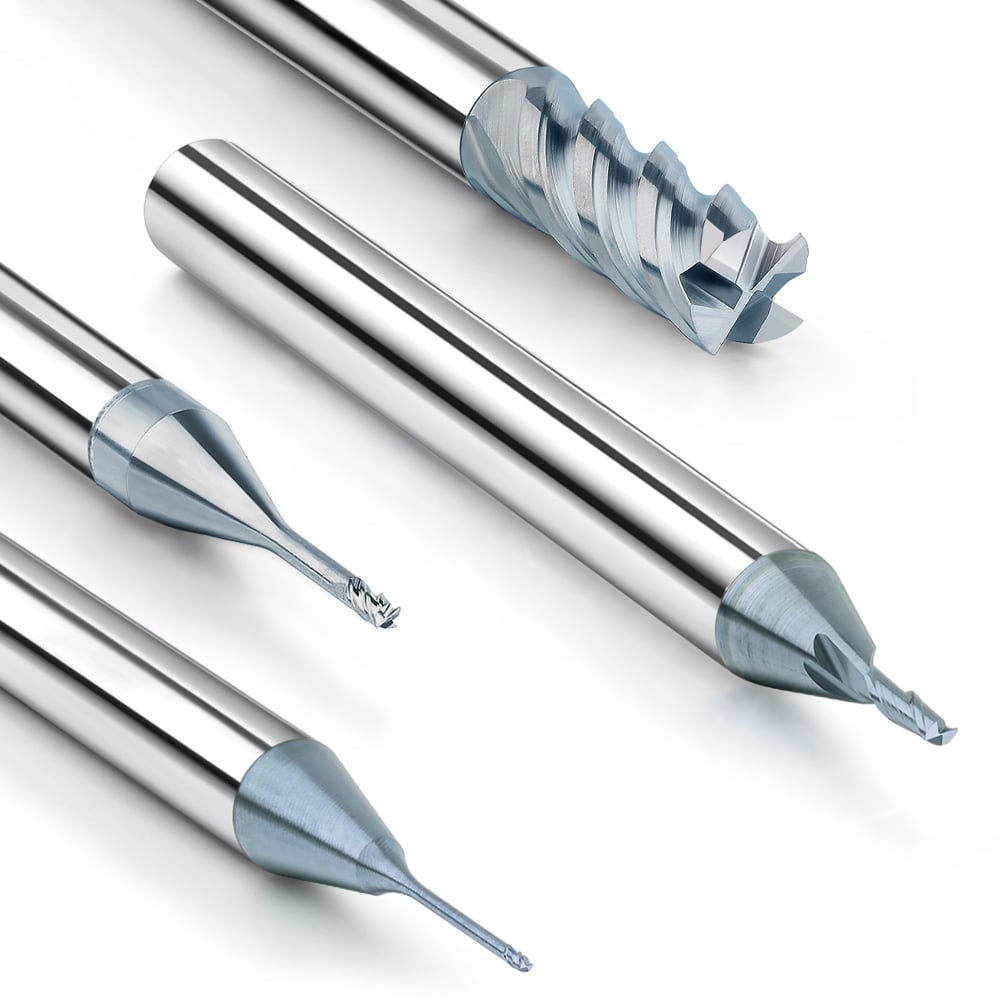
High-efficiency production depends heavily on the performance and stability of cutting tools. Carbide milling drill bits continue to dominate various machining environments due to their ability to significantly improve cutting efficiency, dimensional consistency, and machining cycle time. For manufacturers pursuing higher throughput—whether in batch metal processing, long-term continuous cutting, or machining high-hardness materials—carbide tools offer superior wear resistance and reduce tool change frequency, resulting in substantial productivity gains.
In real production scenarios, many users frequently compare the performance of HSS vs. carbide milling drill bits. Carbide tools maintain sharper cutting edges under high-speed and high-temperature conditions, making machining more stable and reducing scrap rates. With the growing demand for multi-process integration, milling-drilling tools capable of handling both operations are increasingly replacing standard drill bits. This reduces tool changes and shortens cycle time, improving overall workflow efficiency.
Different machining stages also impose different demands on cutting tools. During roughing, metal removal rate and chip evacuation capability are crucial, especially in high-strength materials. In finishing, surface quality and dimensional accuracy become priorities. Selecting the appropriate roughing vs. finishing milling drill bit ensures full utilization of tool advantages and machine performance.
Working with experienced OEM milling drill bit manufacturers also allows optimization of tool geometry, cutting edge forms, and coatings. Tailored tooling solutions improve cutting efficiency, prolong tool life, and enhance production line stability.
The Core Role of Carbide Milling Drill Bits in High-Efficiency Machining
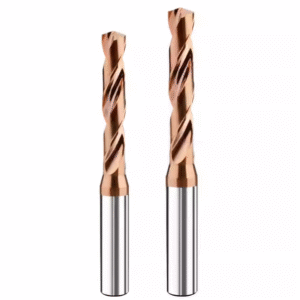
Carbide milling drill bits play a central role in improving machining efficiency. Their rigidity, thermal stability, and structural design provide dependable cutting performance in high-cycle production. Whether operating under heavy loads or in long-running batch environments, these tools maintain stable cutting forces and consistent machining quality. The carbide substrate, combined with optimized cutting geometries, enables higher cutting speeds, fewer tool changes, and improved surface finishes. For manufacturers aiming to maximize production capacity, selecting the right carbide milling drill bit enhances both individual part efficiency and overall production line stability.
Stable Cutting Due to High Rigidity and Hardness
The high rigidity of carbide tools suppresses displacement and micro-vibrations during machining, improving hole location accuracy and dimensional stability. Carbide also maintains superior hardness at elevated temperatures, keeping cutting edges sharp during high-speed machining or when cutting high-strength metals. These characteristics make carbide milling drill bits especially effective for deep-hole machining and applications requiring consistent cutting forces, contributing to a more controlled and repeatable machining process.
Improved Wear Resistance Enhances Machining Continuity and Batch Stability
The inherent wear resistance of the carbide matrix—further strengthened by advanced coatings—significantly reduces wear during long continuous runs. This extends tool life, reduces downtime, and enhances process reliability. Predictable wear behavior is vital for mass production, as it supports consistent cycle times and uniform machining quality. In repetitive hole machining or high-volume operations, carbide milling drill bits maintain cutting stability, ensuring lower scrap rates and improved overall production efficiency.
Suitable for High-Speed and High-Feed Machining Strategies
Carbide’s thermal stability and chipping resistance allow milling drill bits to operate reliably under high-speed and high-feed conditions. Higher spindle speeds and feed rates reduce machining time and boost throughput, which is particularly advantageous when using high-speed machining centers or powerful spindles. For operations requiring rapid milling-drilling transitions, the ability of carbide tools to perform under high-speed conditions is a major contributor to cycle time reduction.
The combined benefits of rigidity, wear resistance, and high-speed adaptability make carbide milling drill bits essential tools for modern high-efficiency machining.
Efficiency Advantages of HSS vs. Carbide Milling Drill Bits
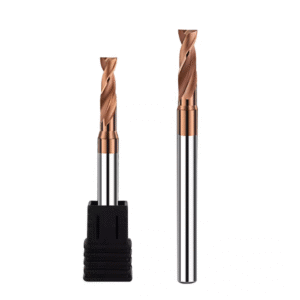
Carbide tools deliver substantially better machining efficiency than high-speed steel tools due to differences in material structure, heat resistance, and cutting stability. In high-load machining, continuous batch production, and high-speed operations, carbide tools maintain sharper edges and more stable cutting performance. This translates into better cutting efficiency, improved surface quality, tighter dimensional control, and reduced cycle times. For manufacturers seeking to increase production line capacity or minimize downtime, switching from HSS to carbide provides measurable and immediate productivity improvements.
Impact of Material Property Differences on Machining Efficiency
Carbide exhibits higher hardness and greater resistance to plastic deformation, enabling the tool to maintain a stable cutting edge even when machining high-strength materials. HSS softens rapidly at elevated temperatures, causing accelerated edge wear and reduced machining efficiency. Carbide tools support higher cutting speeds and feed rates, resulting in shorter cycle times and higher material removal rates. These advantages become even more significant when machining heat-resistant alloys, stainless steel, and carbon steel with high-speed spindles.
Impact of Tool Life and Tool Change Frequency on Productivity
Tool life greatly influences production line continuity. Carbide tools, with their excellent wear resistance and stable edge retention, maintain machining quality over longer periods, reducing tool changes and minimizing downtime. Fewer tool changes help prevent dimensional variations caused by uneven wear and improve cycle time predictability. In deep-hole machining, repetitive drilling, and combined milling-drilling operations, carbide’s long life directly boosts production output and process reliability.
Performance Under High-Temperature and High-Load Conditions
High-speed or heavy-load machining rapidly increases cutting zone temperatures. Carbide maintains its hardness and strength under these conditions, ensuring stable cutting forces and reducing thermal fatigue risk. HSS, however, softens at elevated temperatures, leading to edge deformation, accelerated wear, and lower efficiency. Carbide’s thermal fatigue resistance also prevents unexpected tool failures, ensuring smoother, uninterrupted machining.
These characteristics make carbide milling drill bits ideal for high-speed drilling, high-feed milling, and machining hard materials.
Performance of Carbide Milling Drill Bits in Different Processes
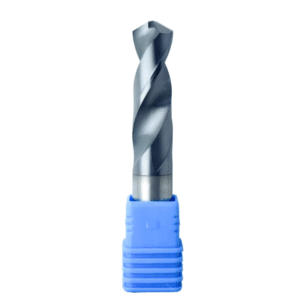
Carbide tools provide clear advantages in both roughing and finishing operations. Their rigidity, thermal resistance, and precision-engineered cutting edges ensure stable performance across different machining demands. In heavy-duty roughing, carbide withstands large depths of cut and high feed rates, while in precision finishing, it maintains sharp edges and smooth chip flow. Selecting the proper carbide milling drill bit for each process improves efficiency, ensures dimensional consistency, and reduces tool wear, resulting in a more stable and predictable production workflow.
Reasons for Achieving High Material Removal Rate and Low Vibration in Roughing
Roughing focuses on maximizing material removal rate, and carbide’s strength and rigidity support the heavy loads associated with high-feed or large-engagement machining. Reinforced cutting edges, engineered chip breakers, and large chip evacuation flutes reduce vibration, lower cutting forces, and prevent chip accumulation. Carbide maintains a sharp edge at high speeds, ensuring consistent chip formation and preventing thermal damage. These characteristics shorten roughing cycle times and increase overall production efficiency.
Key Points for Maintaining Dimensional Accuracy and Surface Quality in Finishing
Finishing emphasizes precision and surface quality. Carbide maintains a sharp cutting edge with low cutting resistance, minimizing deflection and reducing errors caused by workpiece deformation. Optimized flute design and smooth coatings improve chip evacuation and prevent surface defects. In light-cutting, high-speed finishing applications, carbide ensures a stable and uniform cutting path, delivering better surface finishes and reducing dimensional variations caused by uneven wear.
How to Select the Appropriate Cutting Edge Structure and Groove Shape Based on the Process
Different processes require different tool geometries.
• Roughing: Reinforced cutting edges, large chip gullets, and aggressive flute designs enhance chip breaking and evacuation under high-load conditions.
• Finishing: Sharper cutting edges, refined flute profiles, and smoother surfaces reduce friction and stabilize the cutting path.
Material-specific geometry—such as rake angle, groove shape, and coatings—further improves performance when machining stainless steel, die steel, or aluminum. Properly matching tool structure to machining stage ensures that carbide milling drill bits deliver optimal performance and consistency throughout the entire production cycle.
Efficiency Difference Between Milling Drill Bits and Standard Drill Bits
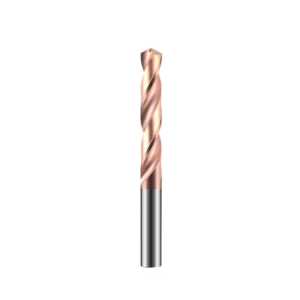
Milling-drilling combination tools are widely used in modern machining environments due to their ability to perform both milling and drilling operations within a single tool. Their structural stability, versatile cutting edge geometry, and ability to perform side cutting allow them to achieve higher efficiency compared to traditional standard drill bits. For production environments seeking fewer operations, shorter machining paths, improved hole quality, and better equipment utilization, milling drill bits provide measurable advantages—particularly in mass production, complex part machining, and multi-station machining centers.
Impact of Structural Design Differences on Machining Range and Efficiency
Milling drill bits are engineered for side cutting, end cutting, and combined cutting operations. Their edge geometry resembles that of miniature end mills, enabling them to perform chamfering, hole finishing, light milling, and drilling in a single tool. Standard drill bits, in contrast, are designed primarily for axial drilling and cannot withstand lateral cutting forces, which limits their machining range.
Higher tool rigidity and optimized flute design allow milling drill bits to maintain stability at higher feed rates, improving material removal efficiency. Their reinforced cutting edge layout reduces vibration, minimizes tool deflection, and shortens machining time per part. These structural and functional differences explain the significant performance gap between milling drill bits and standard drill bits, especially under high-speed or high-load machining conditions.
Multi-Functional Machining Reduces Clamping and Tool Change Time
A major productivity advantage of milling drill bits is their multi-functional capability. They can complete several operations—such as drilling, chamfering, light milling, and hole finishing—in a single setup. Standard drill bits typically provide only basic drilling, requiring additional tools and extra machining steps to complete follow-up operations.
Reducing the number of tool changes directly decreases machine downtime and creates a more streamlined machining cycle. This advantage is especially evident in machining centers, automated lines, and batch production. Multi-functional tools also reduce tool magazine usage and simplify tool management. For parts requiring frequent machining of complex hole features, milling drill bits significantly enhance production efficiency and machining consistency.
Factors That Improve Hole Quality and Positional Accuracy
Hole dimensional accuracy and positional precision depend largely on tool rigidity, cutting edge sharpness, and thermal stability. Milling drill bits typically feature a stronger end-cutting edge and a more stable core structure, reducing deviation during tool entry and improving hole location accuracy.
Optimized flute profiles support efficient chip evacuation, preventing chip blockage that could cause scratches or dimensional distortion on the hole wall. Proper cutting edge angles also help reduce burr formation, resulting in cleaner edges. In high-precision applications—such as jig holes, mounting holes, or precision alignment features—milling drill bits provide superior stability and accuracy compared to standard drill bits.
Milling drill bits outperform standard drill bits in structural design, versatility, machining stability, and overall efficiency, making them a key tooling option for high-efficiency metalworking processes.
How to Improve Production Line Efficiency Through a Suitable OEM Milling Drill Bit Manufacturer
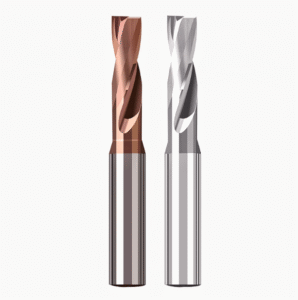
Selecting an OEM milling drill bit manufacturer with strong technical capability and consistent production quality is essential for improving machining efficiency. High-quality suppliers deliver not only customized tools tailored to specific materials and machining conditions but also ensure stability from raw material selection and cutting-edge grinding to coating treatment and final inspection. Partnering with an experienced OEM manufacturer enables improvements in tool life, dimensional consistency, machining predictability, and overall production cost-effectiveness.
Efficiency Optimization Through Customized Tool Geometry Parameters
Different materials, machining processes, and machine tool conditions require specific tool geometries. Customizable parameters—such as cutting edge angle, rake angle, helix angle, and core thickness—can significantly improve cutting behavior, reduce cutting resistance, and enhance chip evacuation efficiency.
Competent OEM manufacturers provide professional tool design support, allowing them to tailor the geometry to specific applications. For example, geometry may be reinforced for heavy-load machining or sharpened for fine finishing. Customized cutting tools operate more efficiently, producing less vibration and wear, reducing machining time per part, and increasing overall production speed.
Reliable Manufacturing Processes and Inspection Ensure Tool Performance
Tool performance is highly dependent on manufacturing quality. Key factors include raw material precision, sintering techniques, grinding accuracy, coating quality, and final inspection systems. High-end OEM suppliers typically use advanced equipment such as five-axis CNC grinders, automated measurement systems, and precise coating technologies to maintain strict tolerance control.
Consistent process control ensures reliable tool performance in high-speed cutting, deep-hole drilling, and high side-load milling. This reduces unexpected tool failures and enhances machining predictability. Stable batch quality also minimizes tool-related production interruptions and supports long-term production planning.
The Impact of Batch Stability on Long-Term Production Efficiency
For high-volume production environments, tooling consistency directly affects machining precision, cycle time, and yield rates. Inconsistent tools lead to frequent machine adjustments, rework, and higher scrap rates. Reliable OEM manufacturers ensure consistency in cutting edge sharpness, chip evacuation, and service life across batches, enabling predictable tool change intervals and stable production cycles.
Batch stability not only improves machining consistency but also reduces hidden costs such as downtime, rework, and production risk. A manufacturer capable of providing stable, consistent tooling becomes an essential partner for achieving long-term production efficiency and cost stability.

Key Practices for Enhancing Carbide Milling Drill Bit Productivity in Machining Production
To fully maximize the performance of carbide milling drill bits, manufacturers must combine appropriate machining strategies with proper equipment utilization and process management. Cutting parameters, coating selection, and tool maintenance all influence machining quality, tool life, and overall cycle time. By applying systematic production practices, companies can optimize tool efficiency for high-speed, long-duration, and batch machining applications, reducing costs and improving competitiveness.
Rationally Setting Cutting Parameters to Leverage Material Advantages
Proper cutting parameter selection—cutting speed, feed rate, depth of cut, and entry method—is essential for maximizing carbide performance. While carbide can withstand high-speed and high-feed operations, parameter adjustments must be made based on workpiece material, hardness, geometry, and machine rigidity.
Correct parameter settings reduce heat accumulation and cutting vibration, supporting uniform tool wear, longer service life, and stable hole quality. Parameter optimization also complements tool geometry differences between roughing and finishing, ensuring the best possible performance for each machining stage.
Selecting the Right Coating to Improve Wear Resistance and Chip Evacuation
Coatings significantly influence cutting performance by enhancing wear resistance, thermal stability, and chip flow. Coatings with high hot hardness are ideal for machining hardened steels, while low-friction coatings improve chip removal in materials like aluminum. The correct coating reduces adhesion, prevents chip packing, and minimizes edge chipping.
Choosing coatings suited to roughing and finishing requirements ensures optimal performance across different machining stages, improving stability and extending tool life.
Developing Tool Management and Maintenance Strategies to Ensure Continuous High-Efficiency Machining
Long-term machining stability requires a comprehensive tool management system, including life tracking, cutting edge inspections, tool usage records, and scheduled regrinding or replacement. Effective tool management prevents dimensional deviations, poor surface finish, and sudden tool failures caused by excessive wear.
Combined with the batch stability provided by a reliable OEM manufacturer, tool management helps maintain predictable production cycles and reduce hidden downtime costs. Through consistent maintenance practices, carbide milling drill bits maintain high-efficiency cutting performance throughout long-term operation.