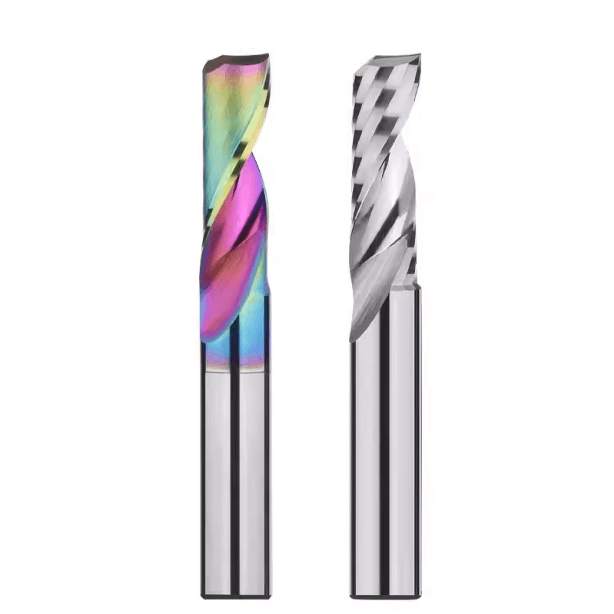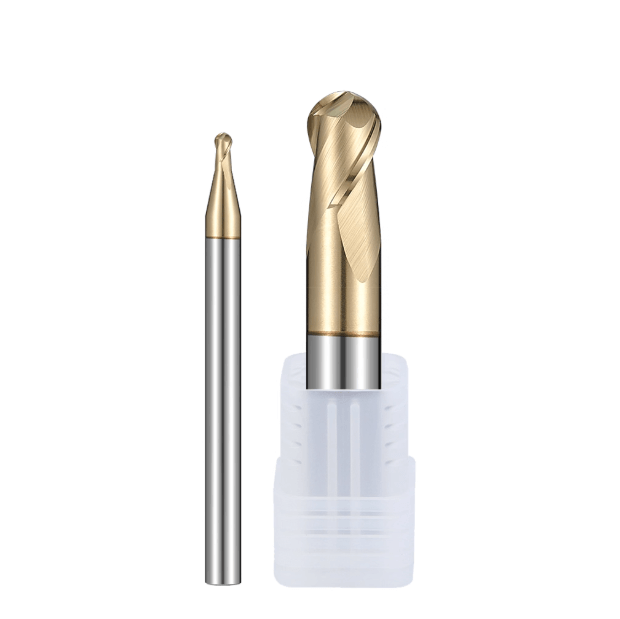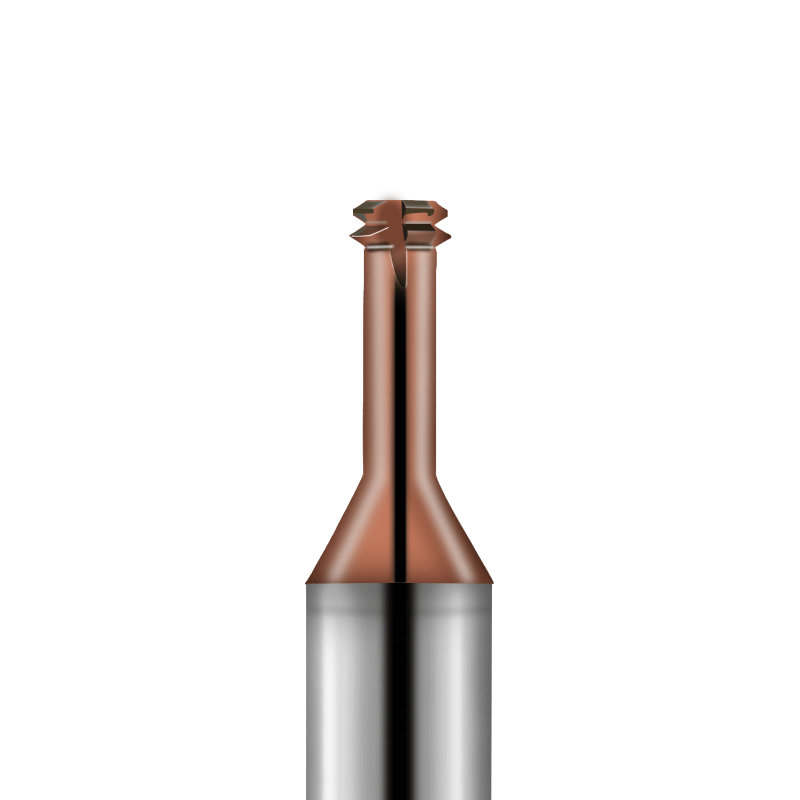
HRC65 hardened steel is widely used in the production of molds, precision components, and high-performance mechanical parts due to its high hardness and strength. Machining threads in this material requires tools that combine wear resistance, thermal stability, and cutting accuracy. The HRC65 carbide threadmill delivers these features, maintaining thread precision and surface quality even under high cutting forces. Compared to traditional taps or standard carbide threadmills, it offers superior heat resistance and reduced risk of breakage, making it suitable for various thread specifications and deep-hole machining.
In micro-thread applications, small threadmills address the challenges of deep holes and confined spaces, ensuring consistent thread dimensions and smooth chip evacuation. Selecting trusted threadmill suppliersr not only ensures consistent tool material and coating quality but also impacts the stability and efficiency of mass production. When combined with optimized cutting parameters, precise tool geometry, and well-planned machining strategies, the HRC65 carbide threadmill achieves efficient and reliable hardened steel threading.
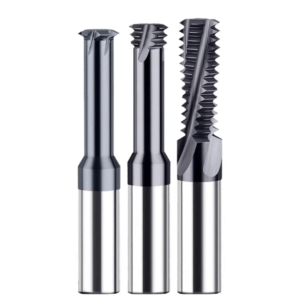
Core Requirements for Threadmills in Hardened Steel Machining
Machining high-hardness steel places high demands on tool rigidity and stability. The significant cutting forces generated when working with HRC65 materials can lead to vibration and deformation, affecting thread accuracy and surface finish. A properly designed tool core, optimized tooth profile, and sufficient structural strength ensure even load distribution across all cutting edges, improving machining consistency.
Effective chip evacuation and heat management are also critical. Poor heat dissipation can cause localized tool overheating, accelerated wear, and chipping. High-wear-resistant materials, optimized cutting angles, and carefully designed helical paths maintain cutting stability, particularly in deep-hole and micro-thread machining. Small threadmills enable precise cutting in confined spaces while minimizing tool stress on the workpiece.
Tool Body Rigidity Requirements for High-Hardness Materials
Tool rigidity directly affects vibration control and thread quality. Insufficient rigidity can lead to bending, chatter, or breakage. Increasing core thickness, using high-strength materials, and optimizing tooth count are effective strategies to enhance rigidity.
Small threadmills, especially in deep or micro-hole threading, are more sensitive to vibration due to their smaller diameter. Controlling cutting depth and feed rate while selecting high-modulus tool materials reduces vibration risk and improves thread consistency.
Cutting Edge Wear Resistance Challenges
High-hardness materials rapidly wear the cutting edge, particularly during high-speed or batch machining, shortening tool life. HRC65 carbide threadmills significantly improve wear and chipping resistance, maintaining thread accuracy over extended operations. Tool coatings and material hardness optimization are key to extending cutting edge longevity.
Machining strategies also influence wear. Selecting appropriate cutting parameters, controlling temperature, and optimizing helical feed paths reduce peak tool forces and frictional heat, thereby lowering wear rates. This is especially important for high-precision mold or mass-production threading.
Common Failure Problems in Hardened Steel Thread Machining
Frequent issues include tool chipping, thread size deviations, and poor surface finish. Causes often include inadequate rigidity, improper cutting parameters, or poor chip evacuation. Adjusting cutting depth, feed rate, and cutting strategy helps minimize failure and improves thread consistency.
Thread eccentricity from tool vibration is another common problem in deep-hole machining. Small threadmills require proper workpiece clamping and effective cooling/lubrication strategies. Choosing HRC65 carbide threadmills with optimized machining processes is essential for successful high-hardness threading.
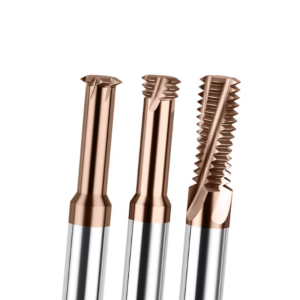
HRC65 Carbide Threadmills for Hardened Steel Thread Machining
Machining high-hardness steel demands tools with excellent cutting stability and wear resistance to ensure thread accuracy and production efficiency. Made from high-hardness alloys, HRC65 carbide threadmills feature optimized cutting edge geometry that improves vibration resistance and high-temperature performance. In mass production or deep-hole threading, these tools maintain long-term stability while minimizing thread size deviations caused by fluctuating cutting forces.
Small threadmills designed for micro-thread machining offer significant advantages for deep-hole applications. With optimized helical feed paths and effective chip evacuation, they maintain thread accuracy and surface finish while reducing tool wear. This makes HRC65 carbide threadmills suitable for both high-volume production and the precision machining of single, high-accuracy parts.
Cutting Stability in High-Hardness Materials
High-hardness materials generate strong vibrations and cutting impacts, making continuous stable machining difficult for ordinary tools. HRC65 carbide threadmills, with their hard alloy construction and optimized tool body structure, improve bending rigidity and thermal stability, enabling smooth cutting even in deep-hole or small-diameter thread applications.
Proper cutting parameters and helical feed methods further reduce peak tool stresses and vibrations. Small threadmills especially benefit from these strategies in micro-thread machining, maintaining uniform force distribution across cutting edges and improving overall machining efficiency.
Performance Comparison: HRC65 vs Standard Carbide Threadmills
Compared to standard carbide threadmills, HRC65 tools offer superior tool life and surface accuracy when machining high-hardness steel. Optimized edge geometry and material hardness resist chipping and wear, making deep-hole and small-diameter threading more reliable. In mass production, HRC65 carbide threadmills reduce tool replacement frequency, minimize downtime, and improve overall efficiency.
These threadmills also exhibit better heat resistance. Under high-speed or continuous machining, they retain cutting edge hardness, reducing deformation and thread accuracy loss due to elevated temperatures. This makes them ideal for machining hardened mold steels, precision mechanical components, and micro-threads.
Advantages in Controlling Tool Breakage
Tool breakage is a common risk in high-hardness steel threading, particularly in small-diameter or deep-hole applications. HRC65 carbide threadmills provide enhanced resistance to breakage. Optimized core thickness and cutting edge design distribute stress evenly, helping prevent tool failure.
Combining proper cutting parameters, cooling and lubrication strategies, and helical feed paths further protects the cutting edge and extends tool life. Small threadmills rely heavily on these strategies in micro-hole and complex threading to maintain thread integrity and surface finish while reducing downtime costs.

Structural and Geometric Design Highlights of HRC65 Carbide Threadmills
Effective machining of HRC65 hardened steel requires careful tool structural design. A well-designed tool body improves bending rigidity and reduces vibration risk in deep-hole and small-diameter threading. By optimizing core thickness, helix angle, and tooth count, HRC65 carbide threadmills distribute cutting forces evenly, improving stability and surface finish.
For small threadmills, compact, rigid designs enable precise machining in micro-holes and complex threads. Geometric design also affects chip evacuation and heat management. Optimizing cutting edge angles and tooth profiles allows efficient chip removal and reduces cutting heat accumulation, minimizing tool wear and chipping risks while extending tool life and batch processing efficiency.
Impact of Cutting Edge Angle
The cutting edge angle is critical for cutting stability and surface quality. An overly sharp edge may chip easily, while an overly blunt edge increases cutting forces and heat. HRC65 carbide threadmills optimize rake, relief, and helix angles to maintain cutting efficiency while reducing peak forces, improving thread accuracy and surface finish.
In small threadmills, angle optimization is even more crucial for deep-hole and micro-thread machining. Proper angles enhance chip evacuation, reduce vibration and heat buildup, and maintain consistent thread dimensions, directly impacting assembly accuracy and part longevity in high-precision molds and mechanical components.
Tool Core Thickness and Vibration Resistance
Core thickness significantly influences bending rigidity and vibration suppression. Increasing core thickness enhances stability under high cutting forces, reducing thread eccentricity and surface roughness caused by vibration.
Small threadmills, especially in deep-hole operations, rely on optimized core thickness to maintain smooth machining. Proper core thickness ensures uniform force distribution, minimizes vibration and heat accumulation, and extends tool life, which is critical when machining HRC65 hardened steel molds or precision parts.
Thread Profile Accuracy and Finished Product Quality
Thread profile accuracy determines the fit and performance of machined threads. HRC65 carbide threadmills, through precise profile machining and high-precision grinding, maintain consistent pitch and dimensions, ensuring smooth assembly for hardened steel components.
In micro-thread applications, even slight deviations can lead to poor thread fit or reduced strength. Optimized tooth geometry and cutting strategies maximize surface quality and thread consistency, meeting the strict requirements of high-precision molds and mechanical parts.

Application of Small Threadmills in Machining Small Holes in HRC65 Hardened Steel
Small threadmills are highly effective in high-hardness micro-hole threading, providing precise cutting and stable performance. Due to the high depth-to-diameter ratio in micro-holes, these tools are prone to bending and vibrations, which can affect thread accuracy and surface finish. Optimizing tool core thickness, cutting edge geometry, and helix angle ensures high rigidity, maintaining consistent thread quality in micro-hole machining.
Additionally, proper cutting parameters and machining strategies are critical. With optimized chip evacuation paths and effective cooling and lubrication, HRC65 carbide threadmills reduce tool wear and heat buildup, extending tool life and maintaining stable performance for deep-hole threads. This makes them ideal for molds, miniature precision parts, and high-accuracy mechanical components.
Stress Distribution in Small Threadmills During Micro-Thread Machining
In micro-thread machining, cutting forces are concentrated and vary rapidly. Small-diameter tools have limited cutting edge length, exposing each edge to high local stress. Optimizing helix angles and tooth profile distribution helps distribute cutting forces evenly, minimizing vibration, chipping, and ensuring thread consistency.
In deep-hole machining, forces are influenced by hole depth and feed method. Carefully designed core thickness and cutting edge angles control cutting force direction, reducing tool bending and vibration, and improving thread accuracy and surface finish. This is essential for high-precision molds and miniature mechanical parts.
Chip Evacuation and Heat Dissipation in Small-Hole Thread Machining
Chip evacuation and heat buildup are critical challenges in small and deep-hole threading. Poor chip removal leads to increased friction, localized heating, and accelerated tool wear. Small threadmills, combined with optimized helical feed paths and efficient chip grooves, remove chips effectively, reduce heat accumulation, and improve tool life and machining stability.
Coolant supply and lubrication are equally important. Continuous, effective cooling during HRC65 carbide threadmill machining lowers cutting temperature, minimizes tool wear, and preserves surface finish. Proper chip and heat management ensures high precision and reliability in micro-hole threading, meeting strict requirements for molds and miniature parts.
Stability Strategies for Deep-Hole Thread Machining
Deep-hole threading with small threadmills is prone to vibration and eccentricity due to higher cutting forces and tool length. Multi-pass cutting with reduced depth per pass, combined with helical feed, evenly distributes cutting forces, minimizing vibration and maintaining thread accuracy.
Proper clamping and tool support further enhance stability. HRC65 carbide threadmills, used with precision fixtures and effective cooling, resist deflection and thermal expansion, ensuring consistent surface finish and thread quality in deep-hole micro-thread machining.

Cutting Parameters and Machining Strategies for HRC65 Carbide Threadmills
Appropriate cutting parameters directly influence tool life, thread accuracy, and surface quality in HRC65 steel machining. Optimizing spindle speed, feed rate, and cutting depth minimizes tool wear and heat accumulation, ensuring stability in deep-hole and micro-thread machining. Small threadmills rely heavily on precise parameter control to maintain dimensional consistency and surface finish.
Selecting the right machining strategy is equally important. Combining helical feed with multi-pass cutting distributes cutting forces, reduces peak stress, prevents vibration and chipping, and extends tool life. These strategies improve thread quality while enhancing production efficiency in mass production and high-precision applications.
Optimal Spindle Speed Selection
High-hardness steel generates significant cutting forces and heat. Selecting the appropriate spindle speed is critical for tool life and machining stability. HRC65 carbide threadmills can operate efficiently at high speeds, but excessive speed may cause overheating and edge chipping. Spindle speed should match tool material, thread depth, and hole diameter.
Small-diameter threadmills are particularly sensitive in micro-hole applications. Optimal spindle speed, combined with cooling and lubrication, maintains consistency, surface finish, and machining stability.
Impact of Feed Rate on Tool Lifespan
Feed rate directly affects tool stress and durability. A consistent, uniform feed distributes cutting loads, reduces localized wear and edge chipping, and extends HRC65 carbide threadmill lifespan.
For small threadmills, gradual depth increases and stepped feeding in deep-hole machining reduce bending and vibration risks. Combining a proper feed strategy with high-rigidity tools and effective cooling ensures thread quality, reduces downtime, and lowers tool replacement costs.
Helical Interpolation vs. Side Cutting
Helical interpolation evenly distributes cutting forces along the tool axis, reducing vibration and concentrated stress, improving thread accuracy and surface finish. It is ideal for deep-hole and high-hardness workpieces. HRC65 carbide threadmills paired with helical interpolation maintain stable cutting and minimize chipping risks.
Side cutting is more suitable for shallow holes or small batches. While efficient, it concentrates cutting forces, potentially causing micro-vibrations and rough surfaces. Selecting the appropriate method based on hole depth, material hardness, and small threadmill characteristics balances efficiency, accuracy, and tool life.

Practical Applications of Threadmills in Mold and High-Precision Parts
Threading high-hardness steel in molds and precision components requires strict control of thread accuracy and surface finish. HRC65 carbide threadmills provide stable cutting and consistent thread dimensions. Small threadmills enable high-precision machining in confined spaces, meeting assembly requirements for micro-threaded parts.
Optimized cutting parameters and machining strategies are critical in mass production. Proper spindle speed, feed rate, and helical interpolation paths extend tool life, reduce downtime, lower replacement costs, and ensure consistent thread quality. These factors make HRC65 carbide threadmills indispensable in mold and precision component manufacturing.
Common Working Conditions for Mold Steel Threading (HRC60–65)
High-hardness mold steel threading often involves deep holes, small diameters, and high cutting loads. HRC65 carbide threadmills maintain stability under these conditions, preventing vibration and chipping while ensuring thread accuracy and surface finish.
Small threadmills are more susceptible to vibration and eccentricity in deep-hole applications. Proper control of cutting depth, feed rate, and cooling/lubrication stabilizes the process, improving thread consistency and mold assembly reliability.
Advantages in Mold Repair and Rework
During mold repair, precise machining of existing threads is often required. HRC65 carbide threadmills resist wear and chipping, allowing repair without damaging original threads. Small threadmills are ideal for micro-hole and localized repairs, restoring thread dimensions and shape accurately.
Helical feed and high-rigidity tool designs smooth the repair process, reduce cutting force impacts, extend tool life, lower costs, and improve maintenance efficiency, ensuring reliable reassembly.
Ensuring Consistency in High-Precision Parts
High-precision components demand consistent threads and surface quality. HRC65 carbide threadmills maintain size and pitch accuracy, avoiding errors from vibration or cutting fluctuations. Small threadmills ensure repeatable machining in micro-hole threads.
Optimized cutting parameters, helical feed, and tool support maintain stability in deep-hole and micro-hole operations, reducing deviation and surface roughness. High-rigidity, wear-resistant tools combined with proper machining strategies are key to achieving consistent batch processing and high assembly accuracy.
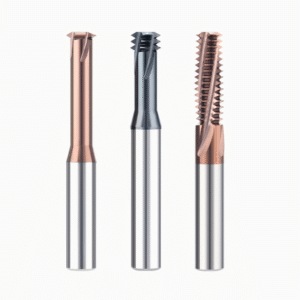
Common Machining Problems and Solutions for HRC65 Carbide Threadmills
Even with high-rigidity HRC65 carbide threadmills, machining high-hardness steel threads can encounter tool chipping, abnormal wear, and thread accuracy fluctuations. Small-diameter threadmills are particularly sensitive to concentrated cutting forces and vibrations in deep-hole or micro-hole machining, which may lead to inconsistent thread quality. Analyzing material characteristics, cutting force distribution, and chip evacuation can help optimize machining plans to reduce tool failure and thread deviations.
Effective machining strategies and parameter adjustments are essential. By controlling cutting depth, feed rate, and employing helical interpolation, peak cutting forces are reduced, tool wear is minimized, and thread size consistency is maintained. Combined with efficient cooling, lubrication, and optimized tool support, HRC65 carbide threadmills deliver stable long-term performance, improving production efficiency and part yield.
Causes of Threadmill Chipping and Abnormal Wear
Tool chipping and abnormal wear primarily result from excessive cutting forces, high cutting temperatures, and inadequate chip evacuation. In deep-hole or micro-hole threading, improper cutting parameters can create localized overheating and stress concentration at the cutting edge, leading to chipping. Small-diameter threadmills are particularly vulnerable and require stricter machining conditions.
Unstable workpiece clamping, suboptimal tool geometry, and insufficient cooling or lubrication further accelerate wear. Optimizing cutting edge angles, core thickness, and chip evacuation paths reduces local stress, improves cutting stability, and extends tool life.
Adjusting for Unstable Thread Accuracy
Thread size deviations and surface roughness issues in high-hardness steel threading often stem from variations in cutting forces, tool vibrations, or thermal expansion. Optimizing helical cutting paths, tiered cutting depths, and stable feed rates can reduce these fluctuations, ensuring consistent thread quality.
Small threadmills are particularly dependent on precise clamping and cooling in micro-hole and deep-hole machining. Proper tool support and effective lubrication reduce vibration and heat buildup, stabilizing the threading process and ensuring thread accuracy and surface finish for high-precision components.
Extending Carbide Threadmill Life Through Machining Strategies
Extending tool life relies on controlling cutting loads and optimizing machining rhythm. Tiered cutting, helical feed, and uniform feed rates reduce peak tool stress, prevent localized wear, and minimize edge chipping. These strategies are especially effective for small threadmills in micro-hole threading.
Efficient cooling and lubrication are also critical. Continuous supply of coolant reduces cutting temperatures, prevents tool deformation, and minimizes wear. Combined with high-rigidity clamping and precise tool geometry, HRC65 carbide threadmills achieve long-term stable operation, enhancing productivity and lowering tool costs in deep-hole and micro-hole machining.

Key Factors in Choosing Reliable Threadmill Suppliers
Tool performance and stability depend heavily on supplier quality and manufacturing processes. Reliable suppliers provide high-quality HRC65 carbide threadmills with precise geometry, consistent cutting edges, and optimized coatings. This is particularly important for precision threads in mass production or deep-hole machining, reducing wear and machining errors.
Supplier service capabilities and delivery reliability directly impact production continuity. Suppliers offering technical support, customization, and rapid response ensure optimal tool solutions for small-hole or high-precision threading. The stability of materials, coatings, and process control is critical for small threadmills to guarantee consistent machining efficiency.
Differences in Material and Process Control Among Suppliers
Supplier differences in tool materials and manufacturing processes affect wear resistance, chipping resistance, and cutting stability. High-quality suppliers use dense cemented carbide and precision edge grinding to maintain high accuracy in deep-hole and micro-hole threading. Low-quality tools may wear quickly or chip, causing thread deviations.
Tool coatings and thread profile precision also reflect supplier capabilities. Strict process control ensures stable performance under high-temperature cutting and continuous machining. Small threadmills achieve smooth chip evacuation and consistent thread accuracy, meeting mold and high-precision part requirements.
Importance of Batch Stability
Batch consistency is essential in mass production. Suppliers with stable HRC65 carbide threadmill batches ensure uniform edge geometry, core thickness, and hardness, reducing thread size deviations and surface quality fluctuations. Stability in deep-hole and micro-hole threading minimizes anomalies, rework, and improves efficiency.
Batch stability also affects tool life predictability. Inconsistent batches may cause premature wear or chipping, impacting production schedules and costs. Reliable suppliers guarantee consistent tool performance, providing assurance for high-precision machining.
Practical Value of Technical Support
Supplier technical support directly enhances threading performance. Guidance on cutting parameters, machining strategies, and troubleshooting reduces tool wear, prevents chipping, and improves thread accuracy. Small threadmills in micro-hole machining particularly benefit from expert support.
Customized tools and solutions for varying material hardness, thread specifications, and machining conditions save trial-and-error time, improve efficiency, and reduce costs. This support is valuable in mold manufacturing, high-precision parts production, and mass threading operations.

Comprehensive Cost Advantages of Carbide Threadmills in CNC Production
HRC65 carbide threadmills deliver both machining precision and cost benefits. Their high rigidity and wear resistance ensure stable performance in deep-hole and micro-hole threading, reducing downtime, tool replacement, and rework costs. Small threadmills further enhance efficiency in micro-threading and complex molds.
Optimized cutting parameters, helical interpolation, and multi-stage feeds maintain consistent performance in mass production, lowering tool replacement frequency and inventory needs. This reduces unit costs, improves production stability, increases yield, and enhances overall CNC manufacturing efficiency.
Multi-Specification Threadmills and Inventory Management
Universal multi-specification threadmills reduce tool variety and inventory pressure, lowering warehousing costs and increasing production flexibility. Small threadmills with universal specifications maintain consistent machining accuracy in micro-hole and high-precision part production.
Optimized inventory reduces procurement costs and production stoppages. Reliable suppliers ensure consistent batch quality across specifications, supporting stable batch processing and overall production quality.
Stable Performance in Batch Processing
HRC65 carbide threadmills improve efficiency in mass production and high-hardness workpiece machining. Their wear-resistant material and optimized geometry reduce downtime and rework from chipping or vibration. Small threadmills provide reliable performance in micro-hole machining for molds and precision parts.
Stable tool performance ensures consistent thread dimensions, surface finish, and assembly accuracy. Combined with optimized parameters, cooling, and machining strategies, these threadmills balance efficiency, precision, and cost, offering long-term economic benefits.
Evaluating Long-Term Value
From a long-term perspective, HRC65 carbide threadmills reduce tool replacement frequency, minimize downtime, and improve yield. Small threadmills reduce vibration, control cutting forces, and improve consistency and surface finish in deep-hole and micro-hole threading.
High-rigidity, wear-resistant threadmills guarantee machining quality while lowering production costs through extended tool life, optimized inventory, and efficient batch processing. For CNC manufacturers, this translates into reliable production stability and high workpiece accuracy, ensuring high-precision, efficient operations.