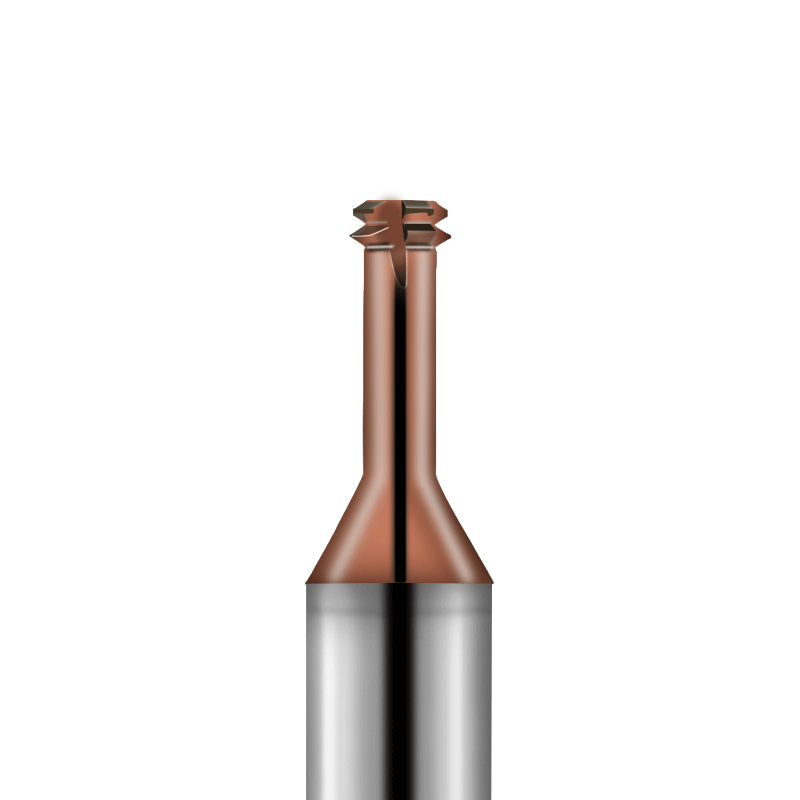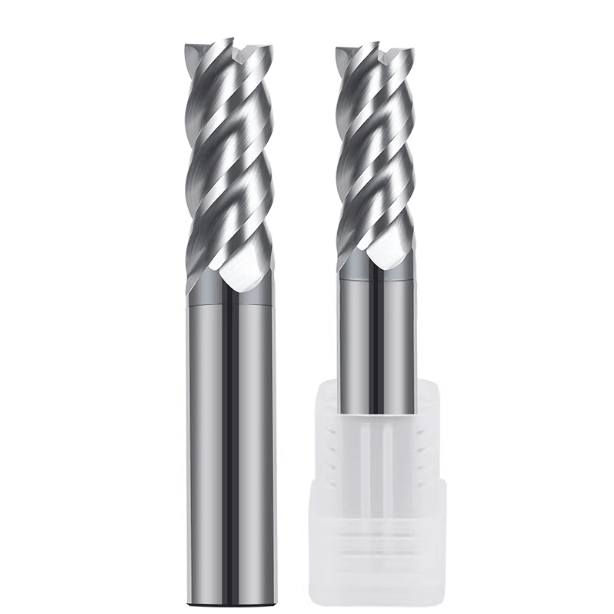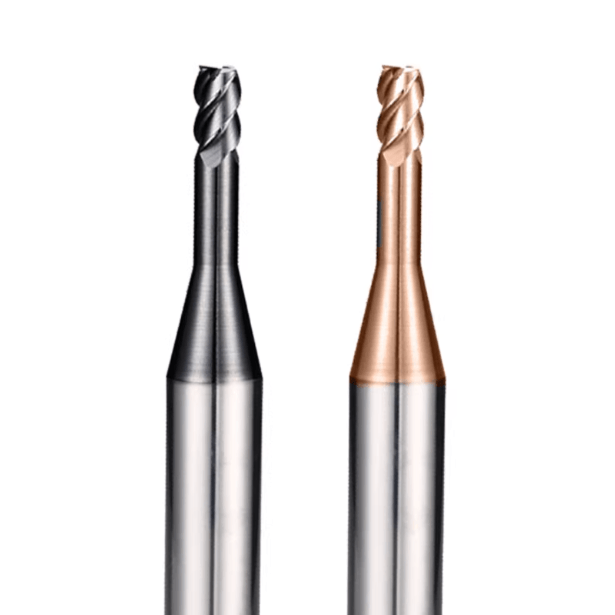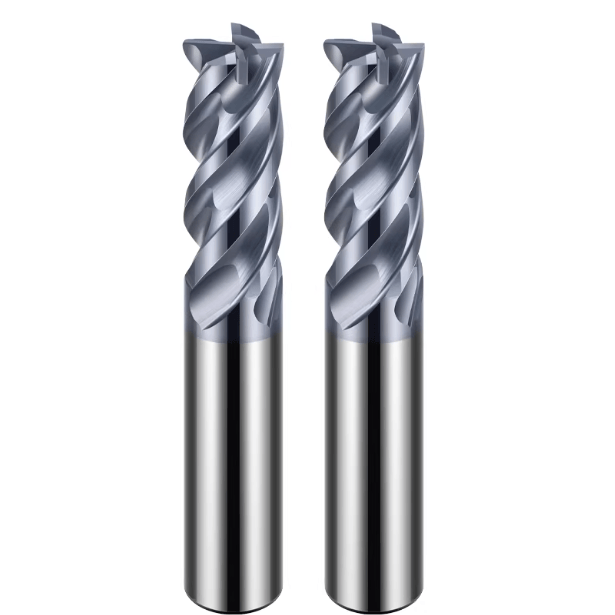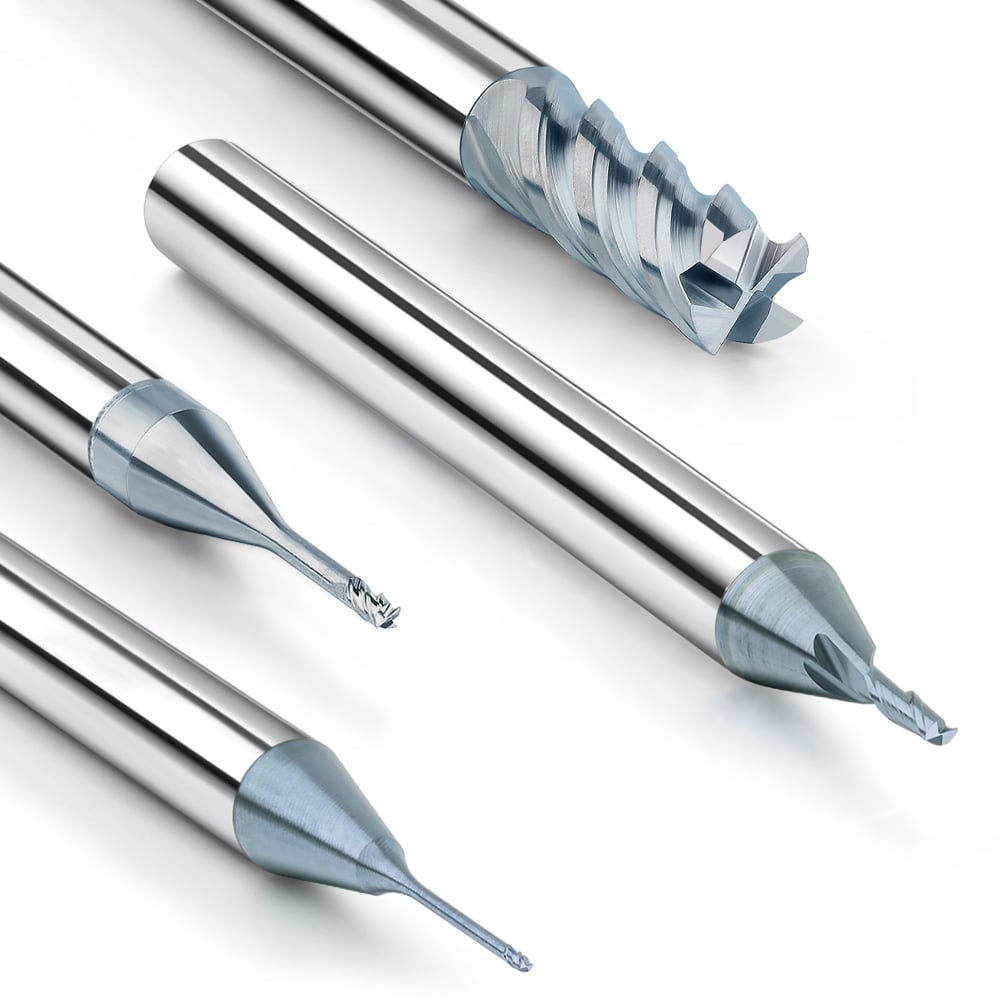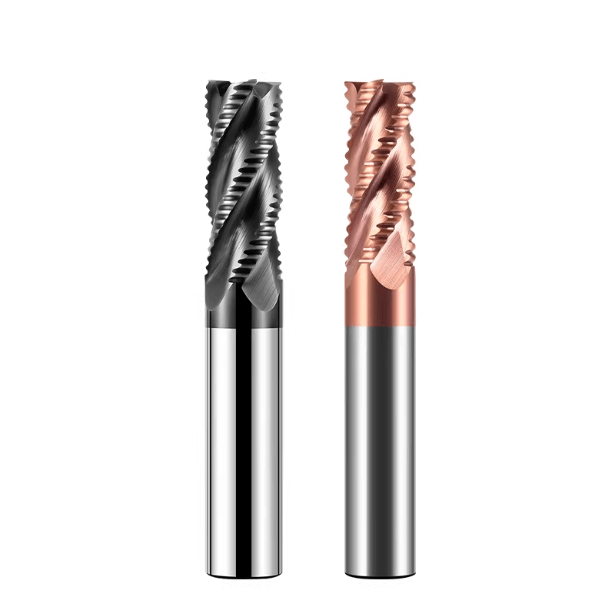
When machining ultra-high hardness materials at the HRC65 level, the roughing stage often determines overall machining efficiency and tool cost control. These materials exhibit high cutting resistance, rapid tool wear, and high sensitivity to vibration, which place higher demands on the tool’s structure, material properties, and stability. Under such conditions, ordinary roughing milling cutters struggle to maintain stable performance over extended periods, making HRC65 roughing milling cutters specifically designed for high-hardness materials a crucial solution.
For high-hardness steel and hardened mold steel, roughing milling cutters for hardened steel must achieve rapid, large-volume material removal under high-load conditions. This not only tests the cutting edge strength but also requires effective chip breaking and smooth chip evacuation. Proper tooth profile design and a stable tool body can reduce cutting impact and minimize machining vibration, ensuring continuity and controllability in the roughing process.
In practical applications, carbide roughing milling cutters show significant advantages due to their superior hardness, wear resistance, and thermal stability. The carbide substrate maintains edge integrity at high speeds and feed rates, while high-temperature resistant coatings extend tool life and reduce unit machining costs. Even under high-intensity continuous cutting, a well-designed carbide roughing milling cutter maintains stable cutting.
For complex geometries, uneven machining allowances, or limited machine tool rigidity, standard tools often fail to balance efficiency and stability. Custom roughing milling cutters can be optimized for material hardness, machining depth, and machine tool parameters, allowing higher overall performance in extreme hardness machining.

Core Machining Challenges Faced in Roughing HRC65 High-Hardness Materials
Machining ultra-high hardness materials at the HRC65 level makes the roughing stage particularly challenging. The material’s inherent hardness and toughness significantly increase cutting forces. This results in higher instantaneous loads on the tool. Without proper optimization of tool structure and cutting parameters, machining can become unstable, causing surface scratches or even premature tool failure.
High-hardness materials also produce long, tough chips that tend to entangle. Poor chip evacuation increases cutting heat, accelerates tool wear, and reduces machining efficiency and accuracy. Additionally, their low thermal conductivity makes it difficult for heat to dissipate, leading to rising tool edge temperatures that can accelerate wear and cause edge chipping. Optimizing cutting parameters, selecting high-strength tool materials, and designing the tooth profile carefully can significantly mitigate these challenges.
Requirements for the Edge Strength of Roughing Milling Cutters under High Cutting Forces
During roughing of HRC65 materials, cutting forces are much higher than in ordinary steel. The cutting edge must have sufficient strength and toughness to withstand impact and wear. If the tool material hardness or blade thickness is insufficient, edge chipping or micro-cracks can occur, directly reducing machining efficiency and surface quality.
To meet high material removal rates and feed speeds, the tool edge design must balance strength and chip evacuation. Thickening the tool tip or optimizing the helix angle can improve stability under high-load conditions, extend tool life, and ensure uniform distribution of cutting forces, reducing errors caused by machine vibration.
The Impact of Chip Breaking and Chip Evacuation Difficulties on Machining Stability
Effective chip breaking is critical for stable roughing of HRC65 materials. Long, tough chips can cause entanglement, heat buildup, and accelerated tool wear. Poor chip evacuation also increases the risk of surface scratches and dimensional deviations.
Well-designed chip breaker grooves and helical flutes help break and evacuate chips efficiently, maintaining stable cutting conditions. Applying cutting fluids appropriately and optimizing speed, feed, and depth further enhances stability, allowing carbide roughing milling cutters to operate consistently and reduce tool replacement frequency.
Tool Wear and Chipping Risk in High-Temperature Environments
During continuous roughing, tool edge temperatures can rise rapidly, especially under deep or heavy cuts. High temperatures increase tool wear and reduce edge toughness, raising the risk of chipping.
Using carbide roughing milling cutters with high-temperature resistant coatings improves thermal stability and maintains edge integrity. Adjusting speed and feed, employing intermittent or layered cuts, and optimizing edge geometry on custom roughing milling cutters further reduce wear and chipping, ensuring longer tool life even in extreme conditions.

Tool Structure and Design Considerations for HRC65 Roughing Milling Cutters
Tool structure directly affects cutting efficiency, stability, and lifespan. Roughing milling cutters must withstand high cutting forces while enabling smooth chip evacuation and heat resistance. Tool body structure, edge geometry, tooth distribution, and material selection are crucial for continuous machining and high material removal rates.
High-performance carbide roughing milling cutters typically use optimized helix angles and tooth designs to distribute cutting forces evenly, reducing vibration and tool tip impact. Enhanced tool body rigidity and proper tool holder design minimize runout. For complex parts or non-standard materials, custom roughing milling cutters can be tailored with specific edge geometry and tool body structure to maximize cutting efficiency and tool life.
Roughing Edge and Tooth Profile Design Suitable for HRC65
Effective roughing of HRC65 materials requires tools with strong edges and excellent chip control. Wavy or trapezoidal cutting edges distribute cutting forces evenly, reducing stress concentration and chipping risk. Optimized helix angles improve chip evacuation and continuous cutting stability.
Tooth spacing, number, and angles are also important. Well-designed tooth geometry ensures stable cutting under high loads and reduces surface defects. Custom roughing milling cutters can better match machine tool rigidity, balancing high material removal rates with machining efficiency.
The Role of Chip Breaker Grooves in Roughing Milling Cutters for Hardened Steel
Effective chip breaker grooves are essential for maintaining stable cutting when machining HRC65 materials. Properly designed grooves allow tough chips to break and evacuate efficiently, preventing heat concentration, tool wear, and edge chipping.
The groove geometry and depth must match tooth profile and number of teeth. Carbide roughing milling cutters with optimized grooves reduce cutting force peaks and improve tool durability. For complex workpieces, custom roughing milling cutters can adjust groove angles and widths according to cutting conditions for optimal chip evacuation.
Enhancing Tool Body Rigidity to Reduce Vibration and Tool Runout
Tool body rigidity is critical for stable cutting and long tool life. Under high cutting forces and deep cuts, runout and vibration can shorten tool life and degrade surface quality. Thickening the tool body and optimizing shank diameter and threaded connections improves bending and torsional strength.
Matching tool body rigidity with edge geometry, helix angle, and tooth design minimizes vibration. Carbide roughing milling cutters maintain uniform cutting forces and prevent chipping. Custom roughing milling cutters can be further optimized for non-standard machines or extreme machining conditions, ensuring continuous, stable performance.

Advantages of Carbide Roughing Milling Cutters in Machining Extremely Hard Materials
When machining high-hardness materials up to HRC65, the tool material’s performance directly affects cutting stability and lifespan. Ordinary high-speed steel tools are prone to edge wear and chipping under high cutting forces and elevated temperatures. In contrast, carbide tools offer superior wear resistance and thermal stability, providing significant advantages during roughing.
High-performance carbide roughing milling cutters feature optimized edge geometry and tooth design. They maintain stable cutting under high loads and high material removal rates, significantly improving machining efficiency. Carbide tools preserve edge strength even at high temperatures, reducing the risk of chipping and ensuring long-term rough machining performance for hardened steel.
For complex or non-standard workpieces, custom roughing milling cutters can be tailored in terms of tool material, coating, and edge geometry to suit specific machining conditions, further enhancing stability and tool life.
Adaptability of Carbide Substrates to High-Hardness Materials
The carbide substrate forms the foundation of the cutter’s performance when machining extremely hard materials. Carbide possesses high hardness, strength, and thermal resistance, allowing the cutter to withstand high cutting forces without chipping. The substrate maintains edge geometry integrity even in high-temperature cutting environments, ensuring continuity during roughing of hardened steel.
Optimizing carbide grain size and coating selection enables HRC65 roughing milling cutters to achieve efficient material removal under deep cuts and high feed rates while reducing the risk of tool failure. For non-standard workpieces, custom roughing milling cutters can be designed with specific carbide compositions based on material hardness and machining conditions, improving adaptability in extreme applications.
Stable Performance of Carbide Roughing Milling Cutters in Heavy-Duty Cutting
During heavy material removal, cutters must handle instantaneous high cutting forces and impact loads. Carbide roughing milling cutters achieve uniform cutting force distribution through thickened tips, optimized helix angles, and tooth spacing. This reduces vibration and tool deflection, improving surface quality and extending tool life.
Optimized tool body rigidity and cutting edge geometry allow stable cutting in deep grooves or complex surfaces. For non-standard machine tools or parts, custom roughing milling cutters can enhance bending and torsional resistance under heavy loads, balancing efficiency and stability in rough machining of high-hardness materials.
Practical Application Feedback under High-Speed Machining Conditions
At high speeds, centrifugal forces and cutting heat increase significantly. Carbide roughing milling cutters, with high-strength cemented carbide and high-temperature resistant coatings, maintain edge stability and reduce chipping and wear. In continuous cutting of HRC65 materials, they handle high-speed loads while maintaining accuracy and efficiency.
Selecting the appropriate speed, feed, and depth maximizes thermal stability and wear resistance. Custom roughing milling cutters can further optimize edge geometry and coating type according to machine performance and material characteristics, ensuring reliable high-speed machining and cost-effective operation.
Application Strategies of HRC65 Roughing Milling Cutters in Rough Machining of Hardened Steel
Rough machining of HRC65 high-hardness steel presents significant challenges, including high cutting forces, concentrated heat, and accelerated tool wear. Different workpiece materials and machining requirements demand targeted strategies. These strategies improve cutting efficiency and extend tool life.
High-performance carbide roughing milling cutters achieve high material removal rates while maintaining processing stability. This is achieved by optimizing edge geometry, tooth profile, and tool body rigidity.
Selecting the appropriate cutting method and machining path based on workpiece material type and hardness distribution is essential. Layered, segmented, or cyclic cutting can reduce instantaneous cutting loads, prevent tool chipping, and minimize surface scratches. For complex or non-standard parts, custom roughing milling cutters can be customized with specific cutting edge geometry and chip breaker designs to adapt to challenging conditions and enhance overall machining efficiency.
Selection of Rough Machining Methods for Different Hardened Steel Materials
Hardened steels vary significantly in machinability due to differences in chemical composition and heat treatment. For high-carbon mold steels with uniform hardness, low cutting depth combined with high feed rate preserves cutting edge integrity under high load.
For tougher materials prone to stringy chips, layered or intermittent cutting reduces cutting force peaks and prevents premature tool wear. Cutting method selection must also consider machine tool rigidity, fixture stability, and tool diameter.
Carbide roughing milling cutters can adapt to various cutting methods through optimized helix angles and tooth profile distribution. This ensures uniform cutting force distribution, reduces vibration, and improves surface quality. Custom cutters can further adjust edge geometry and helix angles for non-standard parts, ensuring the best match between cutting method and tool performance.
Cutting Depth and Feed Control of Roughing Milling Cutters for Hardened Steel
Proper cutting depth and feed rate are essential for achieving both high efficiency and long tool life in HRC65 rough machining. Excessive cutting depth can lead to tool tip chipping and tool body deflection, while too shallow a depth reduces material removal efficiency.
Fine adjustments should be based on carbide roughing milling cutter edge strength, tool rigidity, material hardness, and machine tool characteristics. High feed rates improve efficiency, but excessive load accelerates cutting edge wear. Optimized tooth profiles and edge geometry reduce cutting force peaks, enabling continuous, high-efficiency machining. Custom roughing milling cutters can be tailored with specific tooth pitch and helix angles to balance cutting depth and feed rate, improving tool stability and service life.
Key Operating Points for Reducing Machining Vibration and Abnormal Tool Wear
HRC65 hardened steel is highly susceptible to vibration and abnormal tool wear, affecting surface finish and tool longevity. Controlling vibration relies on tool rigidity, fixture stability, and proper cutting parameters.
Carbide roughing milling cutters, with optimized tool body structure and edge geometry, distribute cutting forces evenly and reduce vibration amplitude. Proper cutting path planning and layered cutting strategies further minimize instantaneous cutting force fluctuations. Custom roughing milling cutters with optimized cutting edge, helix angle, and chip breaker groove design improve performance in complex or high-hardness workpieces. Combined with cutting fluid control and machining condition monitoring, high-efficiency and stable rough machining of HRC65 materials is achievable.
The Impact of Coating and Edge Treatment on HRC65 Rough Machining Performance
Tool edge and coating treatments directly affect machining efficiency and tool life. High temperatures, cutting forces, and impacts accelerate tool wear and edge chipping. High-temperature resistant coatings and optimized edge treatments improve cutting stability and extend carbide roughing milling cutter lifespan.
Edge treatment and coating selection influence wear resistance, cutting force distribution, chip evacuation efficiency, and surface quality. Roughing milling cutters for hardened steel maintain edge integrity in high-hardness and high-toughness materials. Custom cutters can achieve optimal tool performance by tailoring coating and edge characteristics for complex workpieces or non-standard conditions.
The Role of High-Temperature Resistant Coatings in Carbide Roughing Milling Cutters
During HRC65 machining, tool edge temperatures can reach several hundred degrees Celsius. High-temperature resistant coatings, such as TiAlN and AlCrN, insulate against heat, reduce chipping risk, and maintain cutting stability.
These coatings also improve chip sliding and reduce cutting force fluctuations, enhancing efficiency and surface quality. For heavy-duty machining or large cutting depths, custom roughing milling cutters can be optimized for coating thickness, substrate, and edge geometry to maintain high lifespan and stable performance.
The Significance of Edge Passivation Treatment
Edge passivation improves tool durability by reducing stress concentration, lowering chipping probability, and minimizing microcrack formation. It slows wear and allows carbide roughing milling cutters to maintain stable cutting under high loads and temperatures.
Combined with high-temperature coatings, edge passivation extends service life. Custom cutters can optimize passivation angles based on workpiece material and machining depth, improving both tool life and machining efficiency.
Common Machining Problems Caused by Improper Coating Matching
Improper coating selection or mismatch with tool material can cause edge chipping, premature wear, unstable cutting forces, and rough surfaces. Unsuitable coatings accelerate thermal cracking, reduce chip breaking efficiency, increase cutting resistance, and decrease cutting stability.
These issues are avoided by selecting coatings that match substrate material and edge geometry, combined with proper edge passivation. Custom roughing milling cutters can be manufactured with tailored coatings to ensure optimal performance for non-standard workpieces or special machining conditions.
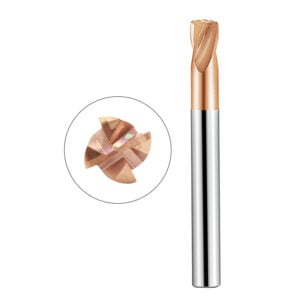
The Necessity of Custom Roughing Milling Cutters in HRC65 Machining
Machining HRC65 high-hardness materials often exposes the limitations of standard roughing tools. High cutting resistance, edge wear, and vibration, combined with complex workpiece geometries or uneven allowances, make it difficult for standard cutters to maintain stability and efficiency. Custom roughing milling cutters, designed for specific machining conditions, are therefore essential.
By tailoring cutting edge geometry, tooth profile, helix angle, and tool body rigidity, custom tools achieve high material removal rates while extending tool life. In high-volume or precision machining, this reduces downtime and tool changes, optimizing production costs. For special materials or non-standard parts, customization aligns tool performance with machine tool capabilities and cutting conditions.
Typical Machining Scenarios Where Standard Roughing Milling Cutters Fail
Standard cutters often experience rapid edge wear, unstable cutting, or poor chip evacuation when machining thick workpieces, hardened steels, or high-hardness mold steel. Deep groove machining or curved surface roughing can result in tool runout, vibration, surface scratches, and dimensional deviations. Under high material removal rates and heavy loads, standard tools cannot meet durability requirements for continuous operation.
Complex or non-standard parts, such as irregular molds or thick plate components, further highlight tool limitations. Tool length, helix angle, and number of teeth may not match machining conditions, leading to low efficiency or premature failure. In such scenarios, custom roughing milling cutters are necessary to optimize performance according to specific workpieces and material hardness.
Advantages of Custom Roughing Milling Cutters in Non-Standard Structural Parts
Non-standard parts often feature uneven allowances and localized strength differences, demanding high tool stability. Custom cutters can optimize cutting edge geometry, tooth distribution, and helix angle to balance cutting forces, reduce vibration and runout, and improve surface quality and dimensional accuracy.
Custom tools also optimize chip flute geometry and evacuation angles for specific machining paths and workpiece shapes. This enhances chip evacuation efficiency, reduces cutting edge wear, and maintains stable cutting under high load conditions. Custom carbide roughing milling cutters enable large material removal while improving production efficiency.
How Custom Tool Parameters Match Machine Rigidity and Machining Conditions
Machine rigidity, fixture stability, and machining conditions directly affect tool performance. Custom roughing milling cutters can be optimized by adjusting cutting edge thickness, helix angle, number of teeth, and tool body rigidity according to spindle power, fixture setup, cutting depth, and speed.
Targeted customization reduces vibration amplitude and cutting edge impact, allowing stable, accurate machining over extended periods. Combined with optimized coatings and edge passivation, custom cutters maximize tool material advantages, ensuring efficiency and durability in extreme HRC65 machining environments.
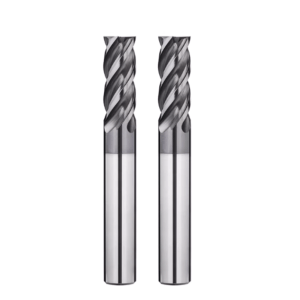
Typical Application Industries of HRC65 Roughing Milling Cutters
Rough machining of high-hardness materials places specific demands on tool performance across different industries. HRC65 roughing milling cutters, with high wear resistance, rigidity, and stable cutting performance, are widely used in mold manufacturing, high-wear-resistant parts machining, and high-load continuous operations. These industries require long tool life, high processing efficiency, and precise surface quality, making the optimization of tool material, cutting edge geometry, and cutting strategy critical.
High-hardness material machining often involves high cutting forces, vibration, and elevated temperatures. Carbide roughing milling cutters excel in these conditions. By selecting the optimal cutting edge structure, tooth profile, and tool body rigidity, manufacturers can improve efficiency while reducing tool wear and downtime. For special or non-standard workpieces, customized cutters further ensure stable, accurate machining.
Rough Machining Requirements for High-Hardness Materials in the Mold Industry
The mold industry typically uses hardened steels and high-hardness alloys, often exceeding HRC65. During rough machining, large volumes of material must be removed quickly while avoiding premature tool chipping or wear. HRC65 roughing milling cutters achieve high material removal rates and stable cutting through optimized cutting edge geometry and tooth profiles.
Mold parts frequently have deep grooves, curved surfaces, and uneven material allowances, which standard tools struggle to handle. High-rigidity carbide roughing milling cutters, combined with custom edge geometry and optimized chip breakers, reduce surface defects and improve machining stability. Proper cutting path planning and parameter optimization are essential to maintain tool life and efficiency.
Application of Roughing Milling Cutters in High-Wear-Resistant Parts Machining
High-wear-resistant components in aerospace, energy, and heavy machinery are often quenched or surface hardened, resulting in high hardness and strong wear resistance. Rough machining these parts requires tools that can withstand high cutting forces and continuous operation while maintaining cutting edge stability and accuracy.
Custom carbide roughing milling cutters optimize tooth profile, helix angle, and chip groove design for uniform cutting force distribution and smooth chip evacuation. This ensures stable, efficient machining of high-wear-resistant parts at high material removal rates. Optimized coatings further extend tool life and reduce production costs.
Tool Stability Requirements Under High-Load Continuous Machining Conditions
Continuous high-load machining can generate excessive cutting forces and heat accumulation, leading to tool runout, vibration, and edge chipping. HRC65 roughing milling cutters must possess sufficient rigidity and toughness. Tool body structure, helix angle, and tooth profile distribution must be optimized for stable cutting under deep, high-speed operations.
Carbide substrates and high-temperature resistant coatings resist wear and thermal deformation. Custom cutters can be tailored to machine rigidity and cutting paths to minimize vibration and balance forces, ensuring both surface quality and dimensional accuracy. This combination of optimized tool design and machining strategy maintains efficiency and tool life in demanding high-load environments.
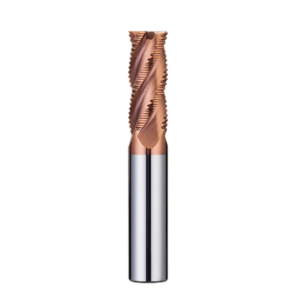
Key Operating Points for Improving the Machining Efficiency of HRC65 Roughing Milling Cutters
Achieving high machining efficiency requires coordination of tool selection, machine rigidity, cutting parameters, and operating strategy. Carbide roughing milling cutters, HRC65 optimized edge designs, and custom cutter modifications must align with machining conditions for stable, high-efficiency operation.
Practical considerations—proper clamping, machining path planning, and cutting parameter optimization—reduce vibration, prevent force spikes, extend tool life, and minimize downtime. In high-load and large-allowance scenarios, systematically considering tool structure, tooth design, coatings, and edge geometry is essential for stable cutting of hardened steel.
The Impact of Proper Clamping on Machining Stability
Clamping directly affects tool rigidity and stability. Unstable clamping during deep groove, thick plate, or curved part machining increases tool runout, vibration, edge wear, and chipping. Proper fixture layout and clamping force, combined with a high-rigidity tool body, ensure even cutting force distribution, reduced vibration, and stable operation.
Custom cutters can be further optimized in body length and diameter to match fixture and machine characteristics, ensuring consistent performance in continuous machining of high-hardness materials while improving surface quality and efficiency.
The Role of Machining Path Planning on Carbide Roughing Milling Cutter Life
Cutting path planning directly affects tool life and machining efficiency. Optimized paths evenly distribute cutting load, reduce tool tip impact, and prevent localized overload. Layered or helical feed paths decrease instantaneous cutting force peaks, minimizing wear and chipping.
Integrating path planning with chip groove and tooth profile optimization ensures smooth chip evacuation and stable cutting under high-load conditions. Custom cutters can maintain efficiency and stability on complex workpieces while reducing tool replacement frequency.
Summary of Practical Machining Experience to Avoid Early Tool Failure
Early tool failure in HRC65 rough machining usually results from overload, edge wear, excessive heat, or vibration. Best practices include:
-
Precisely match cutting depth and feed rate to prevent tool overload.
-
Use layered or intermittent cutting to reduce instantaneous cutting forces and control temperature.
-
Ensure secure clamping, optimize machine rigidity and fixture layout to reduce vibration.
-
Apply high-temperature resistant coatings or edge passivation to improve thermal stability and wear resistance.
-
Use custom cutters with tailored cutting edges, helix angles, and chip grooves for balanced cutting forces and efficient chip evacuation.
By integrating optimized tool selection, cutting parameters, fixturing, and machining paths, roughing efficiency is significantly improved, tool life is extended, and machining becomes more stable and reliable.