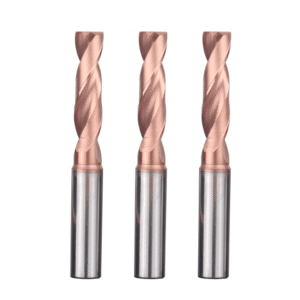
白底-主图2.jpg)
In the metalworking industry, the performance of steel drill bits directly influences machining efficiency and hole quality. Selecting the proper feed rate and spindle speed not only reduces tool wear but also significantly extends the lifespan of steel cutting tools. In high-precision applications, optimized cutting parameters ensure smooth hole surfaces, stable dimensional accuracy, and prevent common issues such as overheating, material smearing, or drill breakage.
Different steel drill bits vary in hardness, coating, and geometry, meaning each tool must be matched to specific material conditions and machining requirements. By accurately pairing spindle speed with feed rate, the full potential of CNC drilling tools for steel can be realized, resulting in higher productivity and lower operational cost. For manufacturers with high-volume production needs, working with a reliable OEM steel drill bit supplier ensures consistent quality and long-term operational stability.

The Importance of Cutting Parameters for Steel Drill Bits
During drilling operations, the proper setting of feed rate and spindle speed is a primary factor in determining machining accuracy and efficiency. These parameters influence hole diameter, surface finish, and process stability. Cutting speeds that are too high or too low can lead to premature drill wear, burr formation, and inconsistent material removal, increasing the workload of secondary finishing.
Different steel grades and diameters require parameter adjustments to optimize cutting force distribution, minimize vibration, and reduce runout. This not only improves hole consistency but also extends tool life. In practice, combining coated drill bits, metalworking fluids, and accurate fixture alignment further enhances machining quality and supports stable production under heavy-duty machining conditions.
How Drilling Accuracy and Surface Quality Are Affected
Drilling accuracy and surface finish are closely tied to feed rate and spindle speed. A properly set feed rate ensures balanced cutting forces and prevents drill wandering or scratching of the hole wall. An optimized spindle speed reduces heat accumulation, avoiding microcracks, surface roughness, and dimensional deviation.
For high-precision requirements, using multi-stage drilling or progressive reaming helps maintain diameter uniformity and reduces finishing time. When paired with the correct drill geometry and coating type, these strategies achieve more consistent and higher-quality hole machining.
Impact on Drill Bit Life and Wear Resistance
Cutting parameters directly affect tool durability. Excessively high feed rates or spindle speeds increase temperature at the cutting edge, accelerating wear and shortening tool life. Conversely, overly low cutting speeds increase friction and extend cycle time.
Balancing feed rate, cutting force, and tool speed reduces stress on the drill bit and maintains stable performance during extended machining. High-performance steel drills with wear-resistant coatings, combined with effective cooling and lubrication, further enhance tool life and overall process efficiency.

Feed Rate Optimization in CNC Steel Machining
Setting the proper feed rate is essential for maintaining both machining efficiency and drilling quality in steel applications. Different steel hardness levels and thicknesses respond differently to cutting forces. Excessive feed rate can cause drill overload, surface roughening, or burr formation, while insufficient feed rate extends cycle time and concentrates wear on localized areas of the cutting edge. By integrating drill geometry, coating properties, and appropriate cooling and lubrication, optimal cutting conditions can be achieved. This ensures consistent hole accuracy and surface finish while enhancing tool durability and overall productivity. In production, multi-stage or stepped feed strategies allow operators to control heat and vibration more effectively, improving process stability across various machining conditions.
Feed Strategies for Different Steel Hardnesses
Variations in steel hardness strongly influence cutting forces and drilling behavior.
• Medium-hard steels: A moderate feed rate maintains smooth chip formation and minimizes wear.
• High-hardness steels: The feed rate should be reduced while increasing coolant intensity to prevent overheating, edge softening, and material hardening.
• Low-hardness steels: A higher feed rate improves throughput, and the use of coated drill bits helps reduce friction and minimize slippage.
• Special alloy steels or tool steels: A segmented drilling strategy is recommended to decrease cutting load per pass, protecting the cutting edge and extending tool life.
Case Study of CNC Drilling Tools for Steel
In practical machining, adjusting feed rate and depth of cut is key to maximizing performance with CNC drilling tools for steel. For example, when drilling a 10 mm diameter hole in medium-hard steel with a coated steel drill bit, beginning with a reduced feed rate, dividing the hole into segments, and gradually increasing the feed rate ensures both diameter precision and smooth hole walls. Proper coolant flow helps regulate temperature, reduce wear, and improve cycle efficiency. This approach has proven highly stable and economical in mass production environments.
Techniques to Avoid Drill Bit Slippage and Material Stretch
Drill slippage and material stretching are common issues that compromise hole quality and reduce efficiency. Prevention requires:
-
Selecting drill geometry and coatings suited to steel hardness.
-
Balancing feed rate and spindle speed to maintain uniform cutting forces.
-
Using high-performance coolant to minimize heat and friction.
These practices reduce burr formation, improve hole consistency, and extend the service life of metalworking drill bits.
Methods for Adjusting the Spindle Speed of Steel Drill Bits
Spindle speed plays a decisive role in cutting efficiency, hole wall quality, and tool longevity. Drill bit diameter, steel hardness, and cooling method each require specific speed ranges. Excessive spindle speed generates rapid temperature increases, softening the edge and accelerating wear. Insufficient speed leads to poor chip evacuation, unstable cutting, and rough surfaces. By factoring in coating performance, material properties, cooling strategy, and machine rigidity, operators can fine-tune spindle speed to enhance overall cutting performance.
Comparison of Advantages and Disadvantages of High and Low Spindle Speeds
High spindle speeds
• Advantages: higher productivity, smoother finishes on thin or mild steel
• Disadvantages: heat buildup, edge burning, streaking, inconsistent hole diameter if cooling is inadequate
Low spindle speeds
• Advantages: lower heat buildup, reduced cutting load, better for hard or heat-resistant steels
• Disadvantages: reduced efficiency, increased chip accumulation in thick or deep holes, potential surface roughness
In production, the best performance typically results from balancing the efficiency of higher speeds with the stability of lower speeds, depending on drilling depth, steel characteristics, and drill type.
Thermal Management When Using Metalworking Drill Bits
Thermal control is essential for consistent drilling performance. As the drill penetrates steel, cutting temperatures rise quickly. Without effective cooling, hole wall quality deteriorates, coatings may delaminate, and cutting edges may anneal.
Effective heat management includes:
• applying high-efficiency coolant to reduce friction and dissipate heat
• using high-pressure cooling for deep holes or high-hardness steels
• employing intermittent or stepped drilling to limit heat concentration
These measures protect the drill bit, enhance surface integrity, and prevent burrs and deformation.
Rotation Speed Optimization for Drill Bits of Different Diameters
Drill diameter has a direct impact on spindle speed selection.
• Small-diameter drills require higher RPM to maintain proper cutting speed, though they demand enhanced cooling due to limited heat dissipation.
• Large-diameter drills require lower RPM to ensure stable cutting forces, but must be paired with optimized feed rate and effective chip evacuation to avoid vibration and surface roughness.
Test cuts, monitoring chip formation, and evaluating cutting noise help confirm whether spindle speed is within the correct range. When combined with coated drills, wear-resistant materials, and rigid clamping, optimal speed performance can be consistently maintained across different drill diameters.
The Principle of Matching Feed Rate and Spindle Speed
In steel drilling, the coordination between feed rate and spindle speed directly influences cutting stability, hole-wall integrity, and overall tool longevity. When these parameters are poorly matched, issues such as burr formation, inconsistent hole diameters, and poor chip evacuation often occur. In more severe cases, the drill may overheat, experience edge chipping, or fail prematurely. By considering drill diameter, steel hardness, coating characteristics, and drilling depth, an appropriate cutting parameter window can be established that balances productivity with process security.
For high-precision holemaking or long-run production environments, the correct pairing of feed rate and spindle speed is especially critical. A well-defined combination minimizes unnecessary tool wear, stabilizes machining conditions, and improves dimensional consistency across batches.
How to Choose the Optimal Feed/Spindle Speed Combination
Selecting a suitable feed and speed combination requires evaluating cutting surface speed, drill rigidity, and material machinability. Small-diameter drills typically require higher spindle speeds to maintain the proper surface speed, while a moderate feed helps ensure smooth chip evacuation. Larger-diameter drills, on the other hand, run more efficiently at lower spindle speeds paired with a slightly higher feed rate to ensure consistent penetration.
When machining high-hardness steel, both feed and speed must be reduced to lower cutting forces and avoid excessive heat. For structural steels or medium-hardness materials, the spindle speed can be increased and paired with a balanced feed rate, improving efficiency without compromising finish. Trial cuts, observation of chip color and shape, cutting noise, and hole-wall appearance all help fine-tune the parameters. Applying efficient lubrication and cooling further enhances stability and allows the selected feed/speed combination to perform at its fullest potential.
Impact on Wear of Metal Cutting Tools for Steel
Feed rate and spindle speed directly influence cutting forces and temperature, which in turn determine the wear behavior of steel-drilling tools. Excessively high spindle speed accelerates heat buildup, softens the cutting edge, and leads to rapid wear. Excessive feed introduces heavy cutting resistance, increasing the chance of chipping or irregular wear patterns.
A balanced parameter set helps maintain a controlled cutting temperature and steady load, enabling uniform wear and longer tool life. When machining alloy steel, heat-resistant steel, or high-strength steel, optimizing feed/speed matching significantly reduces abrasive and adhesive wear on the cutting edge. Using coated tools and effective cooling further improves wear resistance and contributes to stable production quality.
Actual Machining Case and Data Comparison
In a test involving 12 mm thick medium-hardness steel plates, a coated high-performance drill was used with two different parameter sets. The first set ran at high spindle speed and medium feed, achieving relatively fast drilling but causing noticeable edge erosion after about 80 holes. This degradation led to a drop in surface finish and chip evacuation quality.
The second parameter set reduced spindle speed by 15% and feed rate by 10%, while increasing coolant flow. Tool life improved by approximately 40%, hole-wall finish remained consistent, and chip removal was significantly smoother.
A separate deep-hole drilling comparison showed that lowering spindle speed slightly and using a progressive feed strategy kept cutting forces more uniform and reduced temperature rise. As a result, hole diameter variation was controlled more effectively, improving batch consistency.
These results demonstrate that proper parameter matching not only improves productivity but also minimizes tool wear and stabilizes machining quality.
Practical Techniques for Improving the Efficiency of Steel Drill Bits
Enhancing drilling efficiency in steel requires proper operating methods and supportive measures that improve cutting conditions and extend tool life. The combination of effective lubrication, optimized drilling strategy, and reliable tool sourcing reduces cutting resistance, limits heat buildup, and maintains stable performance. Whether machining high-strength steels, performing high-volume production, or producing precision holes, applying appropriate techniques ensures a smoother process and an improved balance between cost and output.
Selection and Application of Lubricants and Coolants
Using appropriate lubricants and coolants is essential for achieving stable cutting when drilling steel. Effective cooling reduces friction and temperature in the cutting zone, decreasing the likelihood of edge softening or coating failure. For high-speed or high-hardness applications, select coolants that offer strong thermal conductivity and penetration to dissipate heat quickly and aid chip removal.
During deep-hole or continuous drilling, higher coolant flow ensures full penetration into the bore, maintaining proper lubrication and preventing excessive cutting resistance. Choosing oil-based or water-based coolants according to steel characteristics helps minimize adhesion and preserve edge sharpness. A well-designed cooling plan improves surface finish and meaningfully extends tool life.
Drilling Depth and Multi-Stage Drilling Strategy
As drilling depth increases, so does the demand on chip removal, temperature control, and cutting load. In deep-hole machining, a multi-stage drilling approach effectively reduces cutting resistance and stabilizes tool load at each stage. Layer-by-layer penetration minimizes heat accumulation and reduces the risk of hole-wall deformation or drill wandering.
When machining tough or high-strength steels, staged drilling ensures more even force distribution and reduces the chance of edge chipping. Periodic retraction helps clear chips, improving drilling stability. For high-precision applications, pre-drilling can also improve entry accuracy and enhance the consistency of hole diameter and surface quality.
OEM Steel Drill Bit Manufacturer Recommendations and Selection Guide
Choosing a dependable supplier is essential for maintaining machining performance and reducing long-term costs. Manufacturers with strong production control provide drill bits with high material purity, consistent coatings, and precise geometry—all critical to cutting performance in steel. Many offer customization options such as specialized point angles, coatings for high-hardness materials, and wear-resistant designs optimized for automated lines.
When evaluating potential suppliers, consider process stability, material inspection protocols, batch consistency, and R&D capabilities. For facilities with high production demands, selecting a manufacturer that provides technical support and parameter guidance helps improve processing efficiency and ensures long-term tool reliability.
Common Problems and Solutions
Even with good operating practices, issues such as hole misalignment, burr formation, reduced efficiency, or accelerated tool wear may still arise during steel drilling. By analyzing cutting load, chip evacuation conditions, lubrication effectiveness, and tool condition, the root causes can be quickly identified. Applying the previously discussed strategies—including feed/speed adjustments, cooling optimization, and staged drilling—helps maintain tool longevity, machining stability, and consistent quality.
Handling Drill Misalignment, Burrs, and Drill Breakage
Hole misalignment often results from insufficient machine rigidity, worn drill edges, or uneven cutting forces. When deviation occurs, check the fixturing, inspect drill condition, and reduce feed to stabilize cutting direction. Burr formation is usually linked to inadequate chip evacuation or excessive spindle speed; improving cooling, adjusting speed, and selecting sharper geometry can reduce edge tearing.
Drill breakage frequently stems from excessive feed, material hardness beyond tool capability, or poor cooling that causes sudden thermal stress. When breakage occurs, reassess feed and speed settings, adopt multi-stage drilling when appropriate, and ensure coolant reaches the cutting zone effectively to minimize thermal fatigue.
Troubleshooting and Improvement Methods for Low Machining Efficiency
Efficiency issues may appear as prolonged cycle times, increased thermal load, or inconsistent hole quality. First, verify that cutting parameters are appropriate for the material type, drill diameter, and drilling depth. Poorly matched feed or speed values can lead to inadequate penetration force or poor chip evacuation.
Next, check the tool’s wear condition; a dull edge significantly increases cutting resistance. Applying proper cooling and lubrication helps maintain a stable cutting temperature. For deep holes or difficult materials, incorporating pre-drilling or stepped drilling reduces resistance and improves chip evacuation, restoring higher machining efficiency.
Operational Techniques for Extending Metalworking Drill Bit Life
Extending drill bit life requires controlling heat, stabilizing cutting forces, and minimizing friction. Key actions include selecting coolants suited to steel grade, using drills with wear-resistant coatings, and adjusting feed/speed values according to material hardness.
Regular tool inspections and timely re-sharpening maintain cutting performance. Multi-stage drilling for deep holes or hard materials reduces instantaneous loads and prevents edge chipping. Choosing a reliable supplier with consistent manufacturing standards further enhances tool durability and supports stable long-term machining performance.