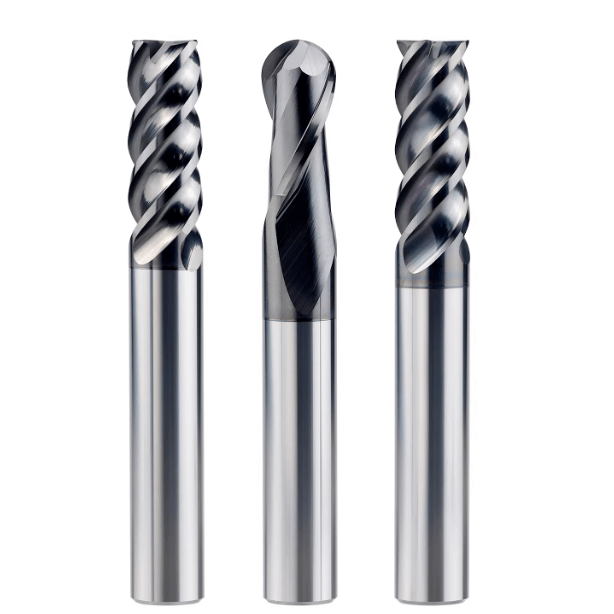
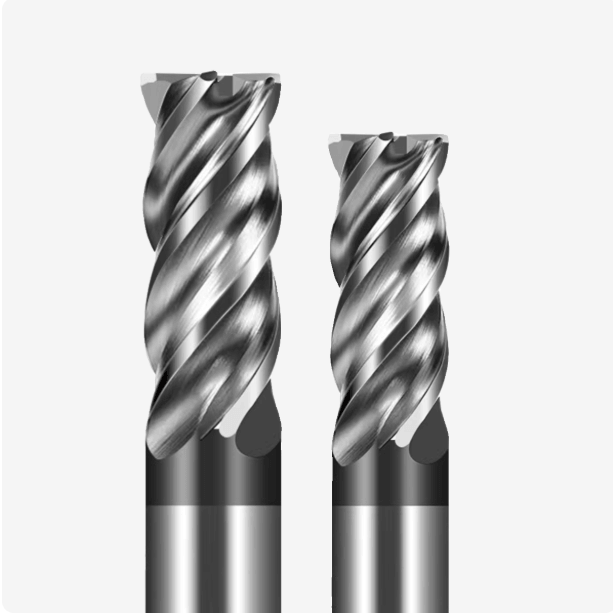
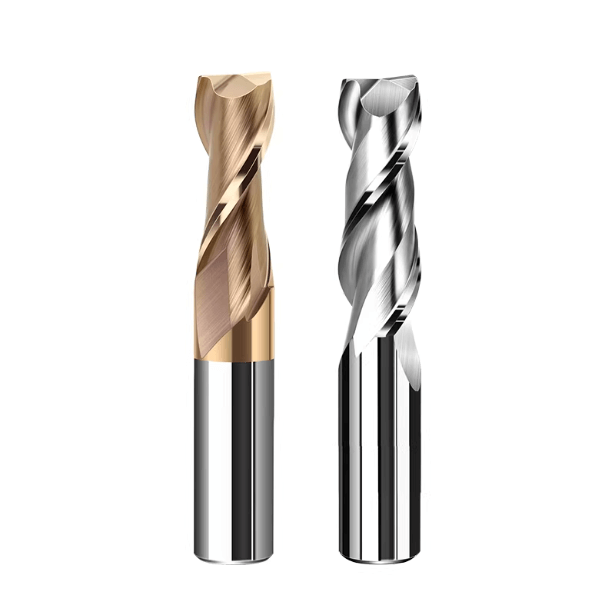
The Chinese corner radius milling cutter manufacturing industry has grown rapidly, particularly in producing high-precision and wear-resistant tools. As a leading global supplier, many Chinese factories provide a full range of products—from standard cutters to fully customized solutions. They reliably serve various fields, including mold making, automotive parts production, and precision machinery.
HRC55 corner radius milling cutters are popular for their excellent wear resistance when machining hardened steels and high-strength alloys. Round corner radius milling cutters, with their smooth edge transitions, reduce chipping and improve surface quality. Many factories offer a wide range of diameters and R-angle specifications while maintaining strict control over coatings, edge precision, and tool consistency. This ensures reliable performance in bulk production.
With rising international demand, Chinese corner radius milling cutter manufacturers continuously optimize production. From raw material selection and precision grinding to final inspection, every step emphasizes quality. Advanced R&D, custom solutions, and reliable delivery give buyers the flexibility to select the right cutter for specific machining requirements, improving efficiency and workpiece quality.
Industrial Foundation of Chinese Corner Radius Milling Cutter Manufacturers
China’s corner radius milling cutter industry has developed a comprehensive production system and supply chain. From raw materials and precision forming to coating and quality inspection, every step reflects strict process management. HRC55 corner radius milling cutters are produced in multiple industrial parks across China with high precision and volume capability. Continuous R&D and process improvements ensure round corner radius milling cutters meet diverse domestic and international needs.
Industrial clusters provide additional advantages: large-scale production and customization options for cutter radius, cutting length, and shank diameter. These factors, along with strong technical reserves and experienced teams, make Chinese factories highly competitive in the export market, providing stable, reliable tool supply globally.
Regional Distribution of Corner Radius Milling Cutter Factories
Production is concentrated in Jiangsu, Zhejiang, Guangdong, and Shandong. These regions have mature industrial bases and efficient logistics, forming high-density clusters of corner radius milling cutter factories. Technical exchanges and equipment sharing allow quick responses to market demand.
Jiangsu and Zhejiang factories typically offer full capabilities, from cemented carbide preparation and precision grinding to coating, ensuring consistent quality for both domestic and export markets. Regional concentration also reduces raw material and logistics costs, improving production efficiency.
Maturity of Chinese Tool Factories in Cemented Carbide Processing
Chinese manufacturers have extensive experience in cemented carbide processing, particularly in producing HRC55 corner radius milling cutters for medium- to high-hardness steels. Precision sintering and high-accuracy grinding ensure consistent edge geometry and runout control, maintaining stable tool performance in mass production.
Coating technologies, including multi-layer PVD and advanced surface treatments, enable round corner radius milling cutters to meet international standards for wear resistance and surface finish. These mature processes provide reliable machining performance and reduce the risk of chipping or premature wear.
Impact of Large-Scale Production on Corner Radius Milling Cutter Consistency
With expanded production capacity, manufacturers maintain consistency through standardized processes and automated grinding. Maintaining edge accuracy, R-angle consistency, and tool geometry is critical in large-scale production to ensure high-quality machining outcomes.
Many corner radius milling cutter factories employ advanced testing equipment and quality management systems for strict batch inspection. This ensures stable performance across different workpieces, enhancing productivity and competitiveness in international markets.
Main Product Structure of China Corner Radius Milling Cutters
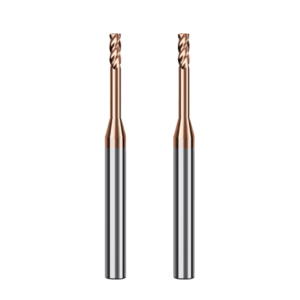
Most manufacturers in China provide a full range of corner radius milling cutters, from standard specifications to high-precision custom solutions. Their production lines cover various diameters, cutting lengths, and corner radii, optimized for multiple materials and hardness levels, including high-wear-resistant tools suitable for steel up to HRC55.
This diverse product structure allows buyers to select tools that best match workpiece geometry, machining methods, and machine tool capabilities, achieving efficient material removal and superior surface finish quality. Manufacturers also implement refined grading in tool geometry to meet conventional cutting needs as well as specialized applications, ensuring stable performance of both round and HRC55 corner radius milling cutters across different production environments.
Common Specifications of Round Corner Radius Milling Cutters
Round corner radius milling cutters typically range from 3mm to 20mm in diameter, with R-angles from 0.5mm to 3mm, and offer various cutting lengths and overall tool lengths. While factories produce standardized specifications in bulk to meet market demand, they can also customize R-angles and cutting lengths for specialized applications, such as mold making, automotive parts, and precision machining.
These cutters often feature coatings or base materials tailored to the hardness of the workpiece. This enhances tool life, minimizes chipping, and maintains cutting efficiency. The flexibility in specifications allows global buyers to easily select the most suitable tool model for their specific machining requirements.
Product Line Layout of HRC55 Corner Radius Milling Cutters
For high-hardness material applications, many manufacturers offer the HRC55 corner radius milling cutter series. This product line includes multiple R-angle sizes, cutting lengths, and shank diameters, all equipped with wear-resistant coatings to meet the demands of hardened steel machining. The series supports a range of operations from roughing to semi-finishing and finishing, providing a comprehensive solution from a single supplier.
The design emphasizes stability and consistency. Strict process control and mass production testing ensure that the geometric dimensions and cutting edge quality of each batch remain uniform, reducing tool chipping and minimizing workpiece surface defects.
Coverage Capabilities of Different Corner Radius Sizes in Mass Production
Different corner radii affect cutting forces, tool life, and workpiece surface quality. Chinese manufacturers typically offer a full range of corner radii, from small to large, to accommodate diverse part profiles and machining tolerances.
Standardized production and automated grinding equipment help maintain consistent radius accuracy in mass production, enabling suppliers to deliver stable and efficient machining performance. For complex parts or specialized profiles, factories can customize corner radii, offering full coverage from conventional machining to high-precision applications, enhancing production flexibility for buyers.
Manufacturing Process Control of HRC55 Corner Radius Milling Cutters
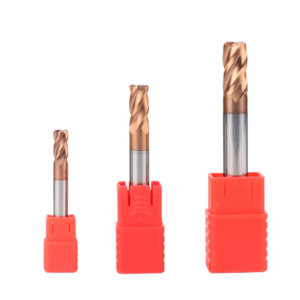
High-hardness machining demands precise control over tool stability and wear resistance. Chinese manufacturers optimize base materials, edge treatments, and coating processes to maintain geometric accuracy and consistent cutting performance. Strict inspections during grinding, sintering, and surface treatment ensure that both domestic and exported China corner radius milling cutters meet high-standard machining requirements.
Systematic process management helps maintain stable tool performance, reduces chipping, improves surface quality, and provides reliable solutions for long-term industrial use.
Impact of Base Material Selection on HRC55 Machining Stability
The base material is critical to cutting stability and wear resistance. High-hardness steel and cemented carbide are commonly used. Cemented carbide bodies, achieved through precision sintering and homogenization, withstand high cutting forces and impact loads while reducing vibration and tool runout.
The right material ratio enhances rigidity and directly influences wear resistance, toughness, and thermal stability. Material consistency is essential in mass production to ensure stable performance across all batches. Leading corner radius milling cutter factories have implemented strict material selection and supply chain management to provide a solid foundation for HRC55 series tools.
Influence of Edge Treatment on Chipping Resistance
The geometry and fine treatment of the cutting edge determine chipping resistance. Micro-chamfering, edge polishing, and tip strengthening disperse cutting forces, reduce tip chipping, and improve surface finish.
In HRC55 machining, robust and precise edge treatment is especially important. Chinese manufacturers employ CNC grinding during edge preparation to ensure uniform edge accuracy, maintaining stability during continuous and mass production, meeting high requirements for tool life and reliable performance.
Differences in Coating Processes Applied to HRC55 Corner Radius Milling Cutters
Coating technology plays a key role in enhancing tool performance. Multi-layer PVD, TiAlN, and wear-resistant composite coatings improve wear resistance and thermal stability. Different coatings offer varied high-temperature resistance, reduced adhesion, and lower friction, influencing tool efficiency when machining hardened steel or high-strength alloys.
Many manufacturers tailor coating type and thickness to specific machining conditions. Optimized coatings allow cutters to maintain peak performance across roughing, semi-finishing, and finishing operations, increasing cutting speeds, extending service life, reducing tool change frequency, and improving overall production efficiency.
Application Performance of Corner Radius Milling Cutters in Actual CNC Machining
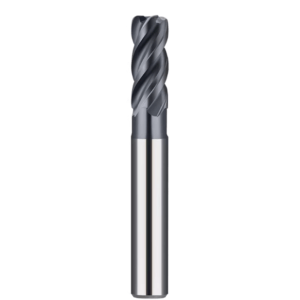
In actual machining, the performance of corner radius milling cutters directly affects machining efficiency, workpiece accuracy, and tool life. Different materials, hardness levels, and machining operations have specific requirements for tool performance. By selecting and matching tools appropriately, manufacturers optimize geometric structure, cutting edge design, and coating type for round corner radius milling cutters and HRC55 corner radius milling cutters to meet process demands.
With proper tool selection, manufacturers and global buyers can achieve high-efficiency, stable machining in mold manufacturing, automotive parts, and precision machining. Mass-produced China corner radius milling cutters ensure consistent performance while meeting diverse customer needs for tool life and surface finish quality, making the production process more reliable and machining costs more predictable.
Load Advantages of Round Corner Radius Milling Cutters in Mold Steel Machining
During mold steel machining, tools are subjected to high cutting forces and impact loads. Round corner radius milling cutters, with smooth edge transition design, effectively disperse cutting stress, reducing vibration and the risk of chipping. Compared with traditional flat-bottom end mills, these cutters demonstrate superior load-bearing capacity in high-hardness mold steel applications, allowing higher feed rates while minimizing surface defects.
Several Chinese manufacturers optimize cutting edge strength and tool body rigidity to ensure higher stability during continuous machining, extending tool life and enhancing the reliability of mass production.
Different Requirements for Corner Radius Milling Cutter Structure in Semi-Finishing and Finishing
Tool structure requirements differ between machining stages. In semi-finishing, cutters must handle larger cutting loads, so tool body rigidity, reinforced cutting edges, and overall geometry are critical. HRC55 corner radius milling cutters, with optimized R-angle and cutting edge length combinations, achieve high efficiency and wear resistance at this stage.
During finishing, higher standards are required for surface finish and dimensional accuracy. Tool runout, edge smoothness, and coating uniformity become crucial. Manufacturers design round corner milling cutters with varied R-angles and flute counts to meet finishing demands, ensuring workpiece surface quality and dimensional precision.
The Impact of Corner Radius Milling Cutters on Tool Life and Surface Quality
Tool life and surface quality are key indicators of machining stability. Rational corner radius design, cutting edge treatment, and optimized coatings help round corner radius milling cutters reduce chipping and wear, extending service life in high-hardness applications.
Through batch consistency control, Chinese manufacturers ensure uniform geometric dimensions and cutting edge quality for each production batch. This enhances machining efficiency and significantly improves surface finish, enabling molds, automotive components, and precision parts to achieve ideal results.
Quality Control System of Chinese Corner Radius Milling Cutter Factories
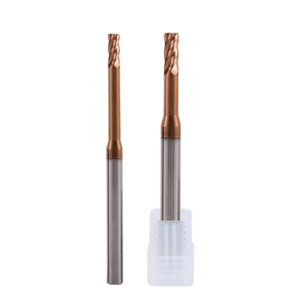
Chinese manufacturers have established strict quality control systems to maintain consistency and stability of corner radius milling cutters. High-performance HRC55 and round corner radius milling cutters undergo rigorous management and testing at every production stage—from raw material procurement to final inspection.
Advanced testing equipment and standardized procedures allow tools to maintain high precision even in large-scale production. For export-oriented products, quality control complies with international standards, ensuring global buyers receive reliable tools with consistent performance.
Key Quality Control Points in Raw Materials, Sintering, and Grinding
Cutting tool performance depends heavily on base material quality and manufacturing processes. Factories strictly control particle uniformity, chemical composition, and density of cemented carbide powders to ensure HRC55 corner radius milling cutters exhibit high rigidity and wear resistance.
During sintering, precise temperature and pressure control improves densification and structural stability. Grinding processes are carefully managed to maintain accurate R-angles and cutting edge geometry, ensuring consistent performance and surface finish.
Detection Methods for Runout, Tolerance, and Cutting Edge Consistency
Tool runout, tolerance, and cutting edge consistency are critical for machining accuracy. Many manufacturers use advanced measuring equipment, including coordinate measuring machines, tool profile testers, and online runout detectors, to inspect every batch.
Digital measurement and record-keeping ensure geometric precision and consistent cutting edges, reducing vibration, chipping, and surface defects. This rigorous system is particularly important for high-end or export-focused tools.
Common Quality Standards for Export-Oriented China Corner Radius Milling Cutters
Export-oriented tools must meet international standards and customer-specific requirements. China-made corner radius milling cutters are strictly inspected for cutting edge accuracy, runout, tolerances, and coating thickness according to ISO, DIN, or client specifications.
In addition, proper packaging and labeling prevent damage during shipment. This systematic quality management allows overseas buyers to use HRC55 and round corner radius milling cutters confidently, ensuring stable machining efficiency and surface finish.
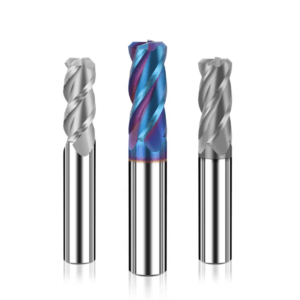
Factory Capability Assessment for Customized Corner Radius Milling Cutters
With growing demand for customized solutions, Chinese manufacturers demonstrate high capabilities in tailoring corner radius milling cutters. Whether for special R-angles, cutting edge lengths, shank diameters, or wear resistance for high-hardness applications, domestic factories respond quickly and maintain stable production using advanced R&D and precision machining equipment.
By leveraging mass production experience, manufacturers optimize tool design, cutting edge geometry, and coatings to ensure consistent performance of HRC55 and round corner radius milling cutters under diverse machining conditions. Standardized management and testing maintain product consistency across small and large-batch orders, delivering reliable solutions to customers.
Feasibility of Customizing Corner Radius, Flute Length, and Shank Diameter in Chinese Factories
Advanced grinding equipment and automated measurement systems enable efficient customization of corner radius, flute length, and shank diameter. Factories can rapidly adjust tool geometry and perform sample verification to meet specific client requirements.
For HRC55 cutters in high-hardness machining, precise control of cutting edge curvature and tip transitions ensures dimensional accuracy while maintaining stability, satisfying the diverse needs of mold, automotive, and precision machining industries.
Production Process of OEM/ODM Corner Radius Milling Cutters
OEM and ODM production typically involves design confirmation, material preparation, sintering, grinding, edge treatment, coating, and quality testing. Standardized processes ensure each batch meets dimensional, tolerance, and cutting edge requirements.
Tool geometry, flute length, and coating type are adjusted per client specifications, ensuring reliable performance of round corner radius milling cutters in domestic and export markets. This approach enhances production efficiency and reduces batch-to-batch performance variation.
Comparison of Delivery Stability for Small and Large-Batch Orders
Small-batch production allows short-cycle delivery of high-precision tools through flexible scheduling and rapid equipment changeover. Large-batch orders rely on standardized processes, automated grinding, and batch testing to maintain consistent geometry and edge accuracy.
This dual-mode capability makes Chinese corner radius milling cutter manufacturers both flexible and reliable, ensuring stability and long tool life for HRC55 and round corner radius milling cutters across diverse order types while improving overall delivery efficiency.
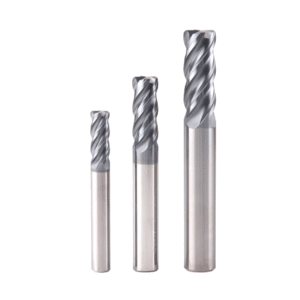
Core Differences Between China Corner Radius Milling Cutter Factories
When selecting a corner radius milling cutter supplier, significant differences exist among factories in equipment level, technical team experience, process management, and cost control. High-precision machining demands strict control over tool geometry, cutting edge stability, and wear resistance. As a result, variations in equipment investment and technological expertise directly influence product performance.
Some factories, by deploying advanced CNC grinding equipment and automated inspection systems, ensure round corner radius milling cutters maintain high precision and minimal runout during mass production. Meanwhile, manufacturers with experienced R&D teams, such as SAMHO TOOL, demonstrate substantial advantages in designing HRC55 tools and ensuring stable cutting performance. Through expert technical support, these factories optimize tool geometry, edge treatment, and coating strategies, allowing HRC55 corner radius milling cutters to perform reliably in high-hardness steel machining.
Cost management and product consistency strategies also vary. Some factories reduce unit costs through large-scale production and standardized processes, while high-end manufacturers balance cost with quality by optimizing production methods without compromising precision or stability.
The Impact of Equipment Level on Round Corner Radius Milling Cutter Precision
Tool precision directly affects workpiece surface quality and overall machining efficiency. High-precision grinding machines, CNC grinders, and accurate measuring instruments ensure consistent R-angle, cutting edge length, and tip roundness for round corner radius milling cutters.
Manufacturers with advanced equipment maintain geometric stability during mass production, reducing vibration and chipping risks, and improving reliability and surface finish in high-hardness steel operations.
The Role of Technical Team Experience in HRC55 Tool Stability
The expertise of a technical team is critical for high-hardness tool performance. For example, SAMHO TOOL’s R&D team has extensive experience in HRC55 material processing and tool geometry optimization. By scientifically designing cutting edge curves, optimizing R-angle transitions, and selecting appropriate coatings, they produce tools with stable performance and excellent wear resistance.
Experienced teams can also recommend optimal cutting parameters based on customer processing conditions, further enhancing tool life and efficiency. This accumulated expertise provides a competitive advantage in high-end mold, automotive, and precision machining markets.
Balancing Cost Control and Product Consistency
Mass production often requires a trade-off between cost and consistency. Some manufacturers lower costs through bulk material procurement, automation, and standardized workflows, but excessive cost-cutting may compromise tool geometry and edge quality under high-precision requirements.
High-end factories achieve a balance by refining processes and implementing strict inspection systems. They can control production costs while maintaining the geometric accuracy and edge consistency of round corner radius milling cutters and HRC55 tools, offering reliable, cost-effective solutions.

Key Evaluation Points for Overseas Procurement of Corner Radius Milling Cutters
In global procurement, selecting the right corner radius milling cutter supplier not only impacts processing efficiency but also directly affects part accuracy and mass production stability. Buyers typically focus on the actual performance of tool samples, the supplier’s technical communication capabilities, and the consistency of product batches in long-term cooperation. By evaluating these factors, overseas customers can better assess supplier reliability and achieve a balance between cost-effectiveness and stability when procuring HRC55 corner radius milling cutters and round corner radius milling cutters.
Many Chinese corner radius milling cutter factories have extensive experience in exporting and can provide sample verification, technical guidance, and mass production support, enabling buyers to evaluate tool performance under various processing conditions.
How to Judge the True Machining Capability of Chinese Corner Radius Milling Cutters from Samples
Samples are the most direct method for assessing tool performance. Machining tests on Chinese corner radius milling cutter samples allow buyers to observe cutting stability, edge wear resistance, and workpiece surface quality when processing mold steel or high-hardness steel.
During testing, attention should be paid to tool runout, cutting vibration, chip evacuation, and surface finish. These indicators reflect the reliability and service life of HRC55 corner radius milling cutters under actual working conditions. Additionally, comparing different corner radii, cutting edge lengths, and coating options helps buyers select the most suitable specifications for their applications.
Communication and Technical Support Capabilities of Corner Radius Milling Cutter Factories
Effective communication and professional technical support are essential for overseas procurement. Experienced suppliers can provide targeted tool recommendations and optimize cutting parameters based on workpiece material, process requirements, and machine tool capabilities.
For instance, when selecting round corner radius milling cutters or HRC55 tools for high-hardness machining, factories can provide detailed sample processing guidance, test records, and technical feedback to help buyers quickly verify tool performance and reduce procurement risks. High-level technical support improves processing efficiency and fosters long-term trust between suppliers and customers.
The Importance of Stable Batch Quality in Long-Term Cooperation
Tool consistency directly affects part accuracy and production efficiency in mass production. In long-term collaborations, stable batch quality ensures every batch of China corner radius milling cutters meets the same standards for geometric accuracy, cutting edge consistency, and coating quality.
Through strict production management and systematic inspection, suppliers maintain stability in large-volume orders. This reduces scrap caused by tool variations and strengthens customer trust, laying a foundation for sustainable partnerships.

Application Feedback of China Corner Radius Milling Cutters in the International Market
Chinese-made corner radius milling cutters are widely recognized in international markets for their stability, processing accuracy, and customization capabilities. Through strict material selection, precision sintering, grinding processes, and cutting edge treatment and coating control, HRC55 corner radius milling cutters and round corner radius milling cutters achieve high consistency, meeting the demands of applications in mold manufacturing, automotive parts, and precision machining.
Buyers report that Chinese factories excel in sample verification, technical guidance, and large-volume order delivery. These practices ensure stable geometric accuracy and cutting edge consistency across batches. Combined with OEM/ODM customization capabilities, suppliers can quickly respond to varying processing requirements, providing full coverage from standard to high-precision custom tools. Chinese factories are competitive not only in equipment and process control but also in technical team expertise, cost management, and long-term supply stability, earning a strong reputation in global markets.
Common Application Scenarios in the Mold and Automotive Parts Industries
After evaluating supplier reliability and tool performance, buyers can better understand how these cutters perform in actual production environments worldwide.
In the mold industry, corner radius milling cutters are widely used for contour machining and cavity cutting of high-hardness steel. Round corner radius milling cutters enhance load capacity and edge stability, reducing chipping and improving surface finish. In automotive parts manufacturing, tools must meet high-volume, high-precision operations. HRC55 corner radius milling cutters demonstrate exceptional wear resistance and thermal stability when machining engine components, gears, and brackets.
These application cases confirm the advantages of Chinese factories in material selection, edge treatment, coating technology, and batch consistency, ensuring reliable and efficient tool performance.
Main Performance Characteristics of HRC55 Corner Radius Milling Cutters
HRC55 corner radius milling cutters provide high wear resistance, low chipping rates, and long service life when machining high-hardness workpieces. Across roughing, semi-finishing, and finishing stages, optimized R-angle design, edge strengthening, and multi-layer coatings maintain cutting stability while delivering excellent surface finish.
Buyer feedback indicates that the HRC55 series requires minimal parameter adjustments during continuous operations and mass production, highlighting the reliability of Chinese factories in process control and the expertise of their technical teams.
Adaptability of Round Corner Radius Milling Cutters to Different Materials
Round corner radius milling cutters are highly adaptable to mold steel, stainless steel, aluminum alloys, and other materials. The rounded corner design disperses cutting forces, reduces vibration, extends tool life, and improves surface finish. Combined with various R-angles, cutting lengths, and coating options, factories provide targeted tools suitable for diverse materials and machining conditions, achieving high efficiency and consistent performance globally.
This adaptability ensures the reputation and application stability of Chinese corner radius milling cutters in both domestic and international markets.