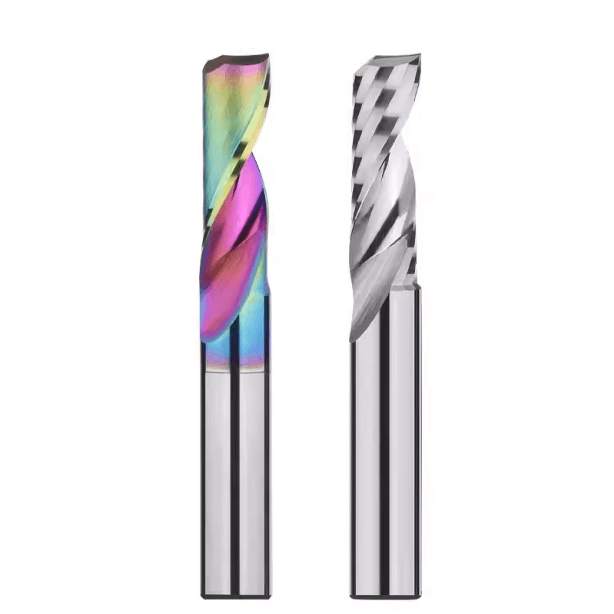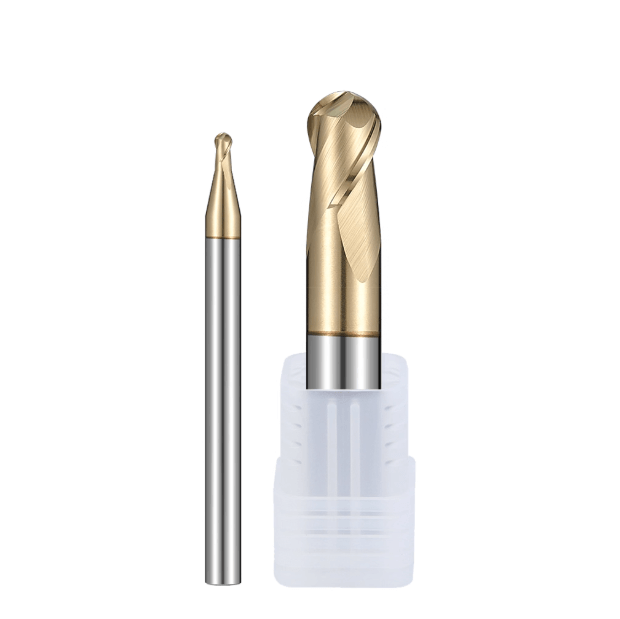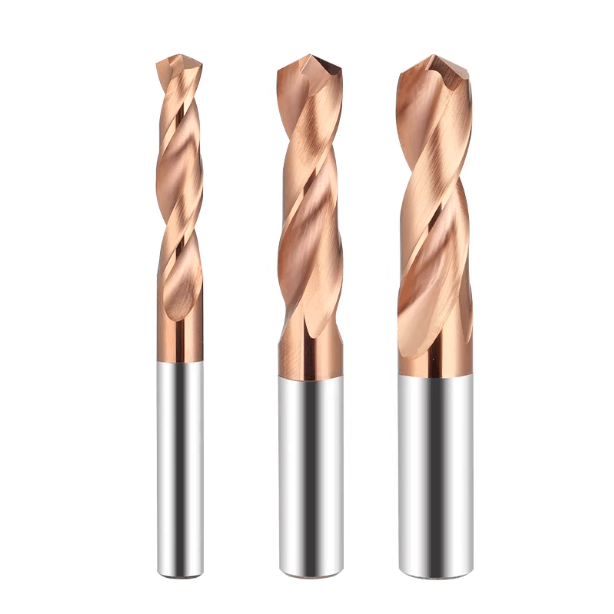
In the field of drilling, the design of a drill bit’s flutes directly affects machining stability, hole accuracy, and material suitability. Straight flute drills and twist drills have significant structural differences, which makes them suitable for different machining scenarios. Engineers seeking consistent hole diameters, smooth surface finishes, and long tool life must understand these differences to optimize machining outcomes.
Straight flute drill bits are characterized by their straight flute geometry. They excel when machining highly ductile materials such as aluminum, copper, brass, and plastics. The straight flute design reduces hole deviation caused by chip pulling, ensuring stability in shallow holes, blind holes, and high-precision machining. When made from carbide, straight flute drill bits offer enhanced rigidity and wear resistance, allowing for stable cutting at higher speeds.
Twist drills, on the other hand, rely on helical flutes for efficient chip evacuation. They are better suited for harder materials with long chips, such as steel and stainless steel. In deep or continuous drilling operations, helical flutes help remove chips efficiently, reducing the risk of tool overload and breakage.
As part geometries become more complex, standard drill bits may no longer suffice. Custom straight flute drills are increasingly used for non-standard hole diameters, special materials, and specific machining requirements. By adjusting flute geometry, point angle, and material combinations, custom straight flute drills can enhance machining stability while maintaining high hole accuracy.
Structural Differences Between Straight Flute Drills and Twist Drills for High-Precision Machining
In drilling operations, a drill bit’s flute design directly affects cutting efficiency, chip evacuation, and hole wall quality. Straight flute drills and twist drills have distinct geometric structures, which determine their performance across different materials and drilling depths.
Straight flute drills maintain a parallel channel from tip to shank, allowing chips to evacuate along the shortest path. This ensures stable hole diameters and minimizes eccentricity in shallow holes and high-precision applications. Helical flute twist drills, by contrast, guide chips through a helix angle, improving stability in deep hole drilling and continuous operations, though they require careful matching of feed rate and rotational speed.
Understanding these structural differences is critical for selecting the right drill bit for various materials, hole depths, and precision requirements. Straight flute drills excel at controlling lateral forces and radial vibrations, making them ideal for workpieces requiring smooth hole walls and high repeatability. Helical flute drills distribute forces more evenly along the tool body, reducing breakage risk, and are particularly effective for harder materials or long-chip conditions.
Impact of Straight Flute Drill Design on Chip Evacuation and Tool Stability
The straight-flute design allows chips to evacuate axially, minimizing curling or clogging. When machining ductile materials such as aluminum, copper, or plastics, chips are less likely to entangle, reducing the risk of hole eccentricity or material tearing. In shallow holes, blind holes, or high-precision applications, straight-flute drills maintain consistent hole diameter and surface finish while extending tool life.
For high-speed drilling or carbide straight flute drills, radial vibration is further reduced, maintaining drilling stability in small or non-standard diameter holes. Efficient chip evacuation in these scenarios directly improves machining efficiency, yield, and part quality. Custom straight flute drills for high-precision aluminum parts provide even greater control in micro-hole and small diameter applications.
Helical Flute Twist Drills for Deep Hole and Hard Material Machining
Helical flutes guide chips out continuously, making twist drills suitable for deep hole and continuous drilling operations. This continuous chip removal prevents clogging and overheating. For high-resistance materials such as steel or stainless steel, the helix design reduces lateral vibration and distributes cutting forces evenly, minimizing breakage and chipping.
Helical flute drills are sensitive to feed rate and speed adjustments. Optimizing these parameters based on material hardness and hole depth ensures efficiency and hole wall quality. In multilayer boards or high-volume production, helical flutes significantly improve drilling stability.
Influence of Flute Geometry on Drill Bit Rigidity
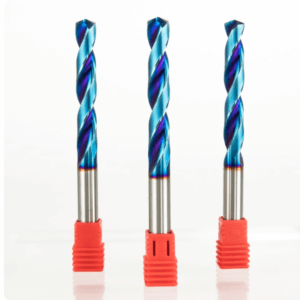
Flute geometry directly affects tool rigidity and stability. Straight-flute drills maintain high radial rigidity due to shallow, straight flutes, reducing vibration in small holes or high-precision machining and improving diameter repeatability. Helical-flute drill bodies have reduced rigidity, but the helix angle disperses cutting forces, enhancing stability in deep hole drilling.
For carbide or custom drill bits, adjusting flute depth and point angle optimizes chip evacuation while maintaining rigidity. For non-standard holes or special materials, custom straight-flute drills provide flexibility in balancing rigidity, chip removal, and machining stability.
Performance Comparison of Different Materials in Machining
Understanding how flute geometry interacts with material properties is critical for selecting the optimal drill bit for machining efficiency, hole accuracy, and tool longevity. The combination of drill bit design and material directly affects cutting performance, hole quality, and tool life. Different materials respond differently to cutting forces, chip evacuation, and heat generation.
Straight-flute drills are ideal for soft materials and shallow holes, offering high stability and precise hole diameters. Helical-flute drills excel in deep hole machining or hard materials, providing efficient chip evacuation and uniform force distribution. By selecting the proper drill type and material combination, tool life can be extended while maintaining high machining efficiency. Carbide drill bits, in particular, maintain exceptional cutting stability across various flute designs, making them suitable for high-speed or high-precision machining.
Performance of Straight Flute Drill Bits in Soft Materials such as Aluminum and Copper
Straight-flute drills prevent chip entanglement and hole wall deformation when machining ductile materials such as aluminum, copper, and brass. Chips evacuate smoothly along the axial direction, ensuring consistent hole diameter and surface finish. Custom straight-flute drills offer even greater advantages in micro-hole or shallow hole applications, especially for small diameter or high-precision parts.
In high-speed drilling or mass production, straight-flute drills reduce radial force fluctuations, preventing material tearing or edge chipping. Combining soft metals with carbide straight-flute drills for micro-holes significantly improves hole machining consistency while maintaining tool life and production efficiency.
Chip Evacuation Advantages of Helical Flute Twist Drills in Steel and Stainless Steel
Helical-flute twist drills efficiently handle high cutting forces and long chips encountered in machining hard metals such as steel and stainless steel. The helix angle guides chips for rapid evacuation, reducing radial vibration and the risk of tool overload.
In deep hole or continuous drilling operations, chips are continuously removed, preventing clogging and overheating of the hole surface, thus enhancing machining stability and hole quality. Choosing a carbide helical-flute drill with an appropriate helix angle and feed rate minimizes tool breakage and hole deviations. In mass production or thick plate drilling, helical-flute drills offer significant advantages in controllability and efficiency.
Cutting Stability of Carbide Drill Bits with Different Flute Designs
Carbide drill bits provide excellent rigidity and wear resistance for hard or temperature-sensitive materials. Flute geometry affects cutting force distribution and chip evacuation efficiency. Straight-flute drills offer higher radial rigidity for high-precision shallow holes or micro-holes in soft metals. Helical-flute drills reduce overload and vibration in deep hole applications, suitable for hard materials such as steel and stainless steel.
Custom carbide drill designs can optimize flute depth, point angle, and material combination. For example, custom straight-flute drills for high-precision soft metal machining enhance tool life, part consistency, and production yield while balancing chip evacuation and machining stability.

Analysis of Differences in Hole Accuracy and Surface Quality
Hole diameter consistency and wall finish are critical indicators of machining quality. Drill bit design and material directly influence these factors. Straight-flute and helical-flute drills have distinct advantages in cutting force distribution, chip evacuation, and rigidity, leading to measurable differences in hole accuracy and surface finish.
Straight-flute drills maintain radial stability in shallow or micro-hole machining, reducing hole eccentricity. Helical-flute drills control vibration in deep holes by guiding chips, minimizing wall roughness. For high-precision or custom parts, selecting the appropriate drill geometry and carbide material ensures excellent surface finish and consistent hole diameters.
Advantages of Straight Flute Drills in Hole Diameter Consistency
Straight-flute drills excel in shallow holes, blind holes, and high-precision applications. The straight axial flutes allow smooth chip evacuation, eliminating spiral pulling forces and preventing hole eccentricity or enlargement. Custom straight-flute drills are particularly suitable for small diameter, thin-walled, or soft metal components.
In mass production, straight-flute drills reduce vibration and radial deviation, improving hole diameter consistency and part yield. When combined with carbide materials, they maintain stable diameters at high cutting speeds, reducing rework and increasing production efficiency.
Impact of Helical-Flute Twist Drills on Deep Hole Machining
Helical-flute drills continuously guide chips out through the helix angle, reducing accumulation and overheating in deep holes. In steel, stainless steel, or thick plate parts, radial forces are distributed, minimizing vibration and improving wall uniformity. However, slight diameter deviations may occur due to the shearing effect of the flutes, requiring optimized feed rates and rotational speeds to maintain hole accuracy.
Choosing a drill with the proper helix angle and material can significantly enhance deep hole machining efficiency, wall quality, and tool life, especially in high-volume or continuous production.
Effect of Drill Bit Geometry on Hole Wall Quality
Drill bit point angle, flute depth, and tip design directly affect hole wall finish and cutting force distribution. Straight-flute drills reduce vibration and burrs, suitable for soft metals or micro-hole machining. Helical-flute drills guide chips and distribute forces, improving wall finish in deep holes and hard materials.
Optimized carbide geometry further improves wall quality and extends tool life. Custom straight-flute or helical-flute drills, combined with appropriate material selection and machining parameters, allow engineers to meet requirements for high-precision aluminum drilling or deep-hole steel drilling, enhancing efficiency, consistency, and hole accuracy.

The Impact of Chip Evacuation Methods on Machining Safety
Efficient chip evacuation directly affects machining stability, tool life, and hole wall quality. Drill bits with different flute designs evacuate chips differently, impacting both machining safety and efficiency. Straight-flute drills evacuate chips axially, along the shortest path. This makes them ideal for shallow or blind holes, reducing hole eccentricity and burr formation.
Helical-flute drills guide chips through their spiral channels, which distributes cutting forces effectively in deep or continuous drilling. Improper chip evacuation, however, can cause clogging, overheating, or tool failure. Using carbide drills with optimized flute design and coatings improves chip evacuation, ensuring stable drilling and consistent hole quality in high-speed or high-RPM operations.
Chip Evacuation Characteristics of Straight Flute Drills in Shallow and Blind Holes
Straight-flute drills excel at evacuating chips in shallow and blind holes. Chips exit smoothly along the axial path, minimizing entanglement and clogging. This ensures consistent hole diameters and smooth walls.
For micro-holes or high-precision parts, custom straight-flute drills for high precision reduce radial vibration and hole eccentricity, enhancing machining safety. In soft metals such as aluminum, copper, or brass, straight-flute drills prevent hole wall scratching, reduce tool wear, and maintain smooth cutting. When made from carbide, these drills maintain stable chip evacuation even at high speeds.
Chip Evacuation Risks of Helical Flute Drills in Continuous Deep Hole Machining
Helical-flute drills are ideal for deep-hole and continuous drilling, guiding chips along the helix angle. However, mismatched feed rates and rotational speeds can cause chip curling, clogging, or overheating, increasing the risk of tool breakage and hole wall damage.
For steel, stainless steel, or thick plates, selecting the proper helix angle and carbide material reduces these risks while maintaining hole wall uniformity. Still, continuous deep-hole drilling requires careful monitoring of chip accumulation and tool cooling to ensure machining safety and part quality.
Chip Control of Carbide Drill Bits at High Speeds
Carbide drill bits provide high rigidity and wear resistance, but chip evacuation design is critical for maintaining stability. By optimizing flute depth, point angle, and coatings, carbide drills for high-speed operations can evacuate chips effectively while maintaining cutting efficiency and preventing tool overheating.
In soft metals or high-precision parts, carbide straight-flute drills maintain smooth hole walls and extend tool life. In deep-hole or continuous drilling, carbide helical-flute drills improve chip evacuation, enhancing process safety, hole diameter consistency, and batch production stability.
Selection Recommendations for Different Machining Scenarios
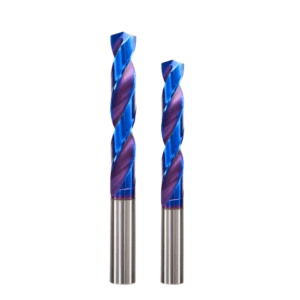
Workpiece material, hole diameter, and depth dictate drill bit selection. Proper selection enhances efficiency, tool life, and machining accuracy. Straight-flute drills perform stably in shallow holes, micro-holes, or high-precision applications, controlling hole eccentricity and wall vibration. Helical-flute drills excel in deep-hole or continuous operations, evacuating chips efficiently and reducing overheating risks.
When combined with carbide materials, both drill types improve batch consistency and safety in high-speed or repetitive machining. Optimizing drill type, flute design, material, and processing parameters ensures the best balance between machining quality and production efficiency.
Application Scenarios of Straight Flute Drills in CNC Machining Centers
Straight-flute drills are ideal for shallow holes, blind holes, and high-precision applications. Their radial rigidity and stable chip evacuation path allow consistent hole diameters, especially in custom straight-flute drills for micro-holes or thin-walled parts.
Carbide straight-flute drills reduce vibration and burr formation, improving surface finish. They prevent chip entanglement and eccentricity in soft metals, reducing secondary finishing and increasing part yield. Custom flute geometries accommodate non-standard hole diameters and special applications.
Application Scope of Twist Drills in General Machining
Helical-flute twist drills are widely used for steel, stainless steel, and medium-depth through holes. Their helix angle facilitates chip evacuation, evenly distributing cutting forces and reducing the risk of tool breakage.
Combined with carbide material, twist drills maintain stability in mass production or thick plate machining while ensuring hole wall finish. Proper selection of speed, feed, and coolant maximizes efficiency.
Choosing the Right Drill Bit Based on Material and Hole Depth
Shallow holes and soft metals benefit from straight-flute drills for stable diameters and smooth walls. Deep holes or hard materials require helical-flute drills to evacuate chips, prevent overheating, and maintain safety. Custom straight-flute drills or carbide helical-flute drills provide solutions for non-standard or high-precision requirements.
Tool selection must consider hole depth, material hardness, diameter accuracy, rigidity, and processing speed. Using carbide drills with optimized flute designs ensures stable, efficient, and controlled production across different scenarios.
The Impact of Carbide Material on Drill Performance
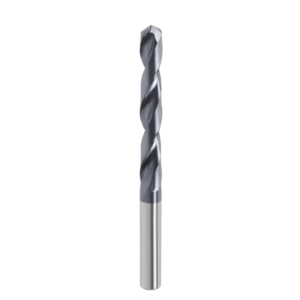
Carbide materials, due to their high rigidity, wear resistance, and thermal stability, excel in a variety of drilling operations. For drills with different flute designs, the advantages of carbide directly influence cutting stability, tool life, and hole machining accuracy.
Straight-flute drills benefit from carbide by maintaining high radial rigidity in shallow and micro-hole machining, reducing vibration and hole eccentricity. Helical-flute drills, on the other hand, leverage carbide’s wear resistance to sustain stable cutting in deep-hole or high-speed drilling while efficiently evacuating chips. Matching flute design with carbide geometry optimizes tool life, machining efficiency, and hole consistency across different processing conditions.
Rigidity and Lifespan of Carbide Straight-Flute Drills
Carbide straight flute drills feature shallow flutes and a thick body, providing high radial rigidity. This ensures stable hole diameters in high-precision machining and small-diameter micro-hole drilling. For soft metals such as aluminum and copper, or precision parts, these drills reduce hole wall vibration, eccentricity, and burr formation, ensuring consistent hole quality.
Carbide material further enhances wear resistance, maintaining steady cutting forces and smooth chip evacuation even in high-speed or repetitive drilling. For non-standard or custom diameters, carbide straight-flute drills for micro-holes provide reliable support for complex workpieces, improving yield rates in mass production.
Performance of Carbide Helical Flute Drills in High-Speed Cutting
Carbide helical-flute drills offer excellent heat resistance and wear resistance under high-speed cutting conditions. The helical design, combined with carbide, distributes cutting forces effectively in deep-hole or continuous drilling, reducing tool vibration and hole wall roughness.
High-speed carbide twist drills for steel, stainless steel, and thick plates maintain stable cutting forces while preventing chip clogging and overheating, enhancing the safety and efficiency of deep-hole operations. By optimizing helix angle, point angle, and cutting edge geometry, carbide helical-flute drills extend tool life and maintain high machining efficiency, making them ideal for precision drilling of thick plates, steel, and stainless steel components.
Comprehensive Influence of Material and Flute Geometry on Tool Wear
Tool wear depends on workpiece material, flute geometry, and cutting parameters. Straight-flute drills, with high radial rigidity, experience minimal wear in soft metal machining but may see faster tip wear when cutting hard materials or at elevated temperatures. Helical-flute drills excel in chip evacuation for deep-hole drilling, though cutting forces concentrated on flute walls can increase wear when machining hard steel or stainless steel.
Selecting the proper carbide material, flute depth, and point angle optimizes tool life under varying conditions. For high-precision or deep-hole operations, custom carbide straight flute drills for soft metals and carbide helical-flute drills for deep-hole steel drilling minimize wear while ensuring drilling stability, hole wall quality, and efficient chip evacuation. This approach enhances part consistency and production efficiency in mass manufacturing.
Application Value of Custom Straight Flute Drills
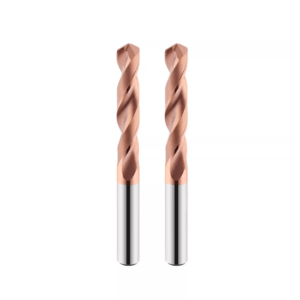
In modern machining environments, standard drill bits often cannot meet the requirements for complex workpieces, particularly for non-standard hole diameters, special materials, or high-precision mass production. Custom straight flute drills, by optimizing flute geometry, point angle, and material combinations, provide higher machining stability, consistent hole diameters, and improved chip evacuation efficiency.
For micro-holes, high-precision holes, or thin-walled parts, custom straight-flute drills for high-precision micro-holes ensure stable hole diameters, reduce burrs and eccentricity, and improve overall production efficiency. Carbide materials further enhance rigidity and wear resistance, enabling stable cutting even in high-speed machining. In mass production, custom straight-flute drills reduce secondary finishing, improve part qualification rates, and provide engineers with reliable machining solutions.
The Need for Straight Flute Drills for Non-Standard Hole Diameters
Workpieces with non-standard hole diameters require extremely high accuracy. Standard drills often cannot meet these requirements directly. Custom straight-flute drills can be designed based on hole diameter, hole depth, and material properties to ensure radial rigidity and smooth chip evacuation.
For micro-hole and small-diameter machining, these drills prevent hole eccentricity and wall chipping. In mass production, customized geometry reduces vibration and cutting force fluctuations, improving production stability and part consistency.
Customized Flute Design in Special Material Machining
Different materials require varying cutting forces, chip evacuation, and wear resistance. Carbide custom straight-flute drills can be optimized for aluminum, copper, brass, composites, or high-hardness steel by adjusting flute depth, point angle, and cutting edge geometry.
This allows efficient chip evacuation, improved hole wall quality, and extended tool life. For micro-holes, thin-walled parts, or exotic materials, custom straight-flute drills maintain machining stability, reduce rework, and enhance part quality consistency.
Stability of Custom Straight Flute Drills in Mass Production
In high-volume production, tool stability is critical for machining efficiency and part consistency. Custom straight-flute drills, optimized in flute geometry, material hardness, and coating, maintain cutting stability in high-speed, repetitive operations, reducing vibration, eccentricity, and hole wall defects.
Combined with carbide materials, these drills ensure consistent hole diameter and surface finish in continuous drilling or blind-hole machining, providing engineers with reliable, high-performance solutions for mass production.

Comparison of Straight Flute and Twist Drills from a Machining Efficiency Perspective
Machining efficiency depends on drill geometry, material, and chip evacuation capabilities. Straight-flute drills, with a short chip path and high radial rigidity, achieve higher feed rates while maintaining hole consistency in shallow, high-precision, or soft metal machining. Helical-flute drills, in contrast, distribute cutting forces efficiently and evacuate chips in deep or continuous drilling, maintaining stability and smooth hole walls.
Carbide materials further enhance efficiency and tool life in high-speed or repetitive machining. Matching flute geometry, spindle speed, and feed rates can increase machining speed and reduce secondary finishing, optimizing overall production efficiency.
Impact of Different Flute Geometries on Feed and Spindle Speed Settings
Straight-flute drills allow higher feed rates while maintaining stable hole diameters and smooth walls. Custom straight-flute drills for high-precision micro-holes are particularly effective for soft metals such as aluminum and copper.
Helical-flute drills require precise matching of feed rate and spindle speed in deep-hole machining. Excessive feed can cause chip clogging and overheating, while insufficient feed reduces efficiency. Proper parameter adjustment ensures deep-hole stability and machining efficiency.
Carbide Drill Bits: Balancing Efficiency and Lifespan
Carbide drill bits offer high rigidity and wear resistance, maintaining hole diameter consistency during high-speed operations. Carbide straight-flute drills for soft metals and carbide twist drills for deep-hole steel machining extend tool life and reduce downtime from frequent tool changes.
Optimizing drill material, flute geometry, and coatings achieves a balance between efficiency and durability, ensuring consistent holes, surface quality, and lower production costs.
Drill Bit Selection Strategies to Reduce Secondary Machining
Proper drill selection reduces post-drilling finishing. Straight-flute carbide drills minimize hole eccentricity and burrs, reducing reaming or grinding. Helical-flute carbide drills ensure smooth chip evacuation in deep-hole operations, decreasing wall roughness and secondary machining time.
Selecting custom straight-flute drills for precision production or optimized carbide twist drills for deep-hole work improves efficiency while maintaining machining accuracy, providing reliable solutions for high-volume parts processing.
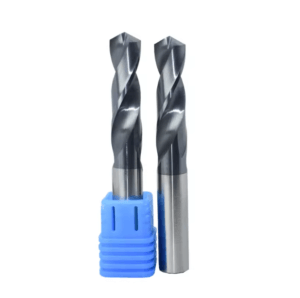
Comprehensive Comparison from an Engineer’s Perspective
From the perspective of machining and production management, straight-flute drills and helical-flute drills each have specific advantages in material adaptability, hole depth, machining accuracy, and efficiency.
In soft metals or shallow, high-precision hole machining, straight-flute drills provide consistent hole diameters, superior surface finish, and tool stability due to their short chip evacuation path and high radial rigidity. When combined with carbide materials or custom designs, they maintain stability in high-speed machining or mass production environments.
Helical-flute drills, on the other hand, excel in deep-hole drilling, continuous drilling, and hard-material machining. Their efficient chip evacuation disperses cutting forces, reduces hole wall vibration, and minimizes the risk of tool overheating, improving safety and efficiency in deep-hole operations.
In engineering practice, selecting the correct drill type, flute geometry, and material combination is essential for enhancing overall machining quality, extending tool life, and optimizing production efficiency. Engineers must evaluate multiple factors, including material, hole depth, machining accuracy, tool geometry, and chip evacuation method, while also considering mass production and non-standard hole requirements to achieve the best balance between machining stability and efficiency.
The Influence of Material, Hole Depth, and Accuracy on Straight Flute Selection
Straight-flute drills maintain high radial rigidity and smooth chip evacuation in soft metals and micro-hole machining, ensuring consistent hole diameters and surface quality. Material hardness, hole depth, and precision requirements are critical factors in determining whether to use a straight-flute drill.
For soft metals such as aluminum, copper, and brass, custom straight-flute drills for high-precision micro-holes reduce vibration, minimize burrs, and extend tool life in small-diameter, shallow-hole applications. Engineers should select the appropriate flute geometry and carbide material based on material type, hole depth, and diameter tolerance to maintain machining stability and consistency in both high-precision and mass-production scenarios.
Practical Advantages of Twist Drills in General Machining
Twist drills remain essential for general machining. For steel, stainless steel, and thick-plate through-hole operations, the helical-flute design efficiently evacuates chips, disperses cutting forces, and reduces vibration and the risk of tool breakage in deep-hole machining.
Carbide twist drills for deep-hole drilling can balance machining efficiency with hole wall quality in continuous or medium-depth drilling, making them the preferred choice for high-volume general machining. By matching the appropriate helix angle, feed rate, and spindle speed, engineers can achieve stable hole machining results while improving efficiency and extending tool life in mass-production environments.
Optimizing Overall Machining Stability with Straight-Flute Drill Bits
The key advantage of straight-flute drill bits lies in their stability when machining micro-holes, high-precision holes, and shallow holes. Custom straight-flute drills for high-volume production ensure consistent hole diameters, reduce burrs and hole eccentricity, and minimize the need for secondary processing or rework.
Combined with carbide materials and customized geometric designs, straight-flute drills maintain smooth chip evacuation and long tool life even in high-speed cutting environments. Engineers should select the drill type and material based on workpiece material, hole depth, and required machining accuracy to achieve the optimal balance between production stability and efficiency.