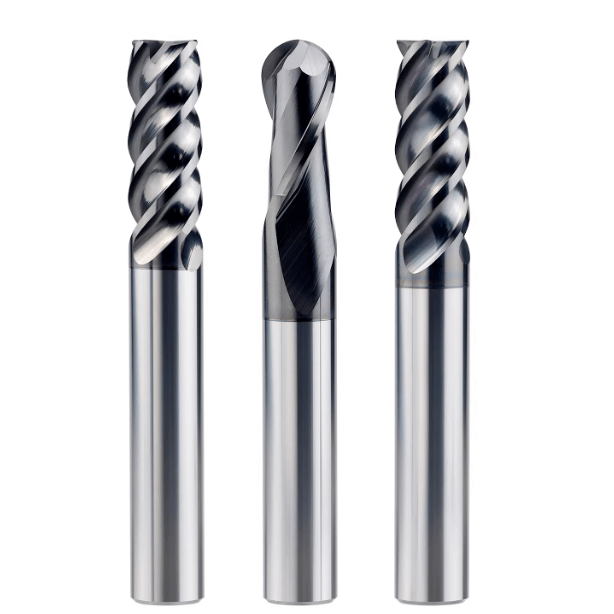
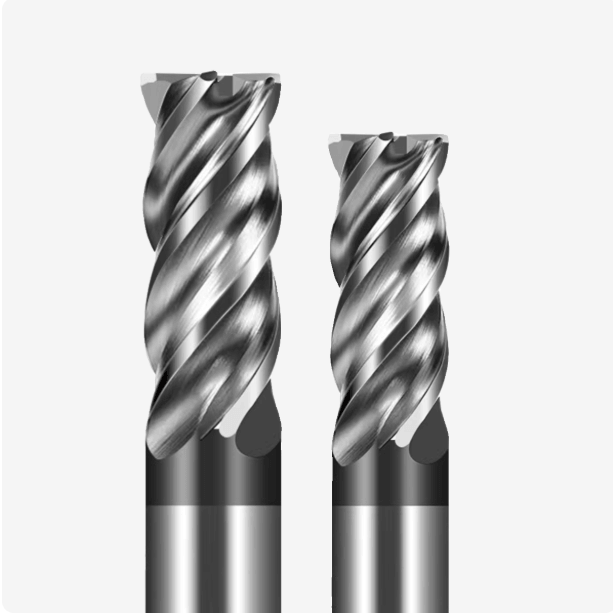
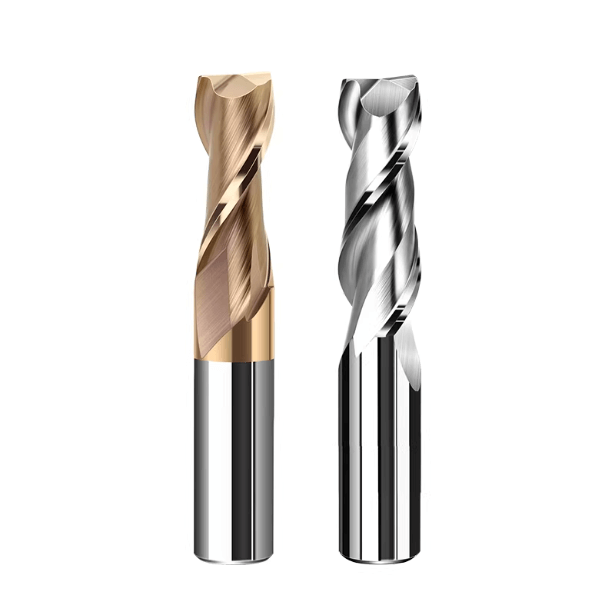
Mold manufacturing places extremely stringent demands on tool performance, involving not only precise machining of complex 3D surfaces but also achieving high efficiency and superior surface quality when cutting high-hardness materials. Different types of endmills serve various functions in mold production, from roughing to finishing. Their geometry, number of cutting edges, material, and coating directly influence machining efficiency, tool life, and dimensional accuracy.
Engineers typically select appropriate endmill types based on workpiece materials such as H13, P20, or tungsten carbide, machining stages, and surface finish requirements. Common tools include flat endmills, ball-nose endmills, roughing endmills, and T-slot cutters. In deep or complex cavity machining, understanding the difference between endmills and slot cutters is crucial: endmills excel at 3D contour and surface machining, whereas slot cutters are ideal for deep slots and structural grooves.
With advances in cemented carbide materials and coating technologies, carbide endmills have become the mainstream in mold manufacturing. Correctly setting the cutting speed for carbide endmills can reduce heat buildup, extend tool life, and improve surface finish. Optimizing coating type—such as TiAlN, AlCrN, or CVD Diamond—alongside tool geometry further enhances machining efficiency and tool wear resistance.
Increasingly, mold manufacturers collaborate with OEM/ODM endmill suppliers to create customized tools tailored to specific workpieces and machining processes. These solutions enhance tool-to-machine compatibility, improve machining consistency, and help control production costs, supporting high-precision, high-efficiency mold manufacturing.

Tool Characteristics and Application Requirements for Mold Machining
Mold manufacturing is a complex engineering process combining high-hardness material cutting with intricate geometric surface machining. This places exceptional demands on the performance and stability of cutting tools. Unlike conventional machining, mold parts often feature deep cavities, narrow grooves, and curved transitions, making the correct selection of endmill types and cutting parameters critical to final mold accuracy and longevity.
Engineers must consider not only tool geometry and material but also workpiece hardness, cutting load, heat dissipation, and machine rigidity. When machining high-hardness materials with carbide endmills, controlling cutting speed is essential to improve tool life and maintain machining quality. Each type of endmill—ball endmills, corner radius endmills, and roughing endmills—plays a distinct role in the mold manufacturing workflow. Understanding their characteristics and appropriate working conditions is essential for efficient mold production.
Typical Process Flow and Cutting Characteristics of Mold Manufacturing
Mold manufacturing typically follows three stages: roughing, semi-finishing, and finishing.
-
Roughing: Focuses on rapid material removal. Coarse-tooth endmills or roughing endmills efficiently remove material while reducing cutting time.
-
Semi-finishing: Emphasizes shape approximation and surface transition smoothing, often using corner radius endmills to improve dimensional stability and reduce tool load.
-
Finishing: Ensures surface finish and contour accuracy, where ball-nose endmills are ideal for precise 3D surface and cavity machining.
For grooving or deep cavity work, engineers must evaluate the suitability of endmills versus slot cutters. Endmills are optimal for contour and curved surface machining, whereas T-slot or slot cutters are better suited for deep or structured grooves. Selecting the right tool type and cutting strategy reduces tool wear, minimizes vibration, and maintains geometric consistency.
Tool Performance Requirements for Mold Materials
Different mold materials demand tailored tool design and coatings.
-
P20 pre-hardened steel: Moderate hardness allows TiAlN-coated carbide endmills to perform medium-to-high-speed cutting efficiently.
-
H13 hot-work steel: High hardness and heat resistance require AlCrN or CVD Diamond-coated endmills for wear resistance and cutting stability.
-
Tungsten carbide molds: Extremely high hardness and chipping resistance necessitate micro-grain carbide endmills for precision machining.
Cutting speed and feed rate must be carefully controlled to suppress heat, extend tool life, and maintain surface finish. OEM/ODM endmill customization can optimize edge angles, chip flute geometry, and coating types for each material, achieving optimal performance.
Key Factors Affecting Tool Selection
Tool selection depends on workpiece material, precision requirements, production cycle, and equipment capability.
-
Hardness: Determines tool material and coating; high-hardness steels require wear-resistant carbide or coated endmills.
-
Surface quality: Influences geometry and cutting edge design; ball endmills provide uniform roughness for freeform surfaces.
-
Machining efficiency: Relies on chip removal and thermal stability. Correctly setting cutting speed for carbide endmills extends tool life and improves metal removal rates.
OEM/ODM collaboration allows tool parameters to be customized for specific molds, balancing cost, efficiency, and precision.

Comparison of Commonly Used End Mill Types and Functions in Mold Manufacturing
Mold manufacturing demands high-performance endmills capable of precise cutting, high material removal rates, and superior surface finish. Different tool structures and machining stages require careful selection to ensure efficiency and accuracy. Among the commonly used endmills, flat-end, corner radius, ball-end, and roughing endmills each serve distinct roles during roughing, semi-finishing, and finishing stages. Additionally, T-slot endmills and slot cutters are critical for grooving, structural features, and reverse shoulder machining.
Selecting the appropriate endmill requires considering the mold material, such as H13, S136, or tungsten carbide. Engineers also need to evaluate machining depth, tool rigidity, chip evacuation space, and cutting speed for carbide endmills. By understanding design characteristics and application differences of various endmills, engineers can optimize high-precision mold machining, extend tool life, and improve production efficiency.
Flat End Mill – Suitable for Planar and Roughing Machining
Flat endmills are among the most widely used tools in mold making. They feature a flat tip, strong cutting edges, and efficient chip removal. They are ideal for planar milling, grooving, and contour roughing. The perpendicular cutting edge allows rapid material removal, making them suitable for the initial forming stages of pre-hardened or medium-hard mold steels.
Flat endmills are often used alternately with roughing endmills to balance machining efficiency and tool life. When combined with proper cutting speeds for carbide endmills and effective cooling strategies, they reduce heat buildup, minimize tool wear, and ensure dimensional accuracy for subsequent finishing stages.
Corner Radius Endmill – Smooth Transitions and Mold Cavity Corner Machining
Corner radius endmills combine characteristics of flat-end and ball-end tools. The rounded tip reduces stress concentration, improves cutting stability, and is ideal for machining mold cavity corners, chamfers, and curved surface transitions. Compared to a flat tip, the rounded design extends tool life and reduces the risk of chipping.
These tools excel during semi-finishing for shape trimming and localized transitions. For high-hardness mold steels like H13 and S136, corner radius endmills with TiAlN or AlCrN coatings maintain sharpness and wear resistance, providing an ideal balance between surface quality, tool life, and cost.
Ball Nose Endmill – 3D Surface and Freeform Surface Finishing
Ball nose endmills, with spherical tips, are essential for high-precision machining of 3D surfaces and freeform cavities. They are widely used in plastic molds, die-casting molds, and high-gloss surface components.
These tools perform best under low depth-of-cut, high-speed conditions, reducing tool marks and surface roughness. Proper control of cutting speed for carbide endmills and feed rate prevents tip overheating or surface ablation. For high-quality surface finish and dimensional consistency, CVD Diamond-coated ball endmills are critical for mirror-like finishes.
Roughing End Mill – High Material Removal Rate and Wear Resistance Design
Roughing endmills, also called wave-edge or coarse-tooth cutters, feature wave-shaped cutting edges for efficient chip removal and vibration damping. They are ideal for roughing cuts in the early stages of mold manufacturing. The multi-groove deep chip structure rapidly removes material while reducing heat buildup during cutting and preventing tool sintering.
These endmills are particularly suitable for heavy material removal in P20 or tungsten carbide molds. Optimizing cutting speed and feed rate for carbide roughing endmills extends tool life. OEM/ODM endmill customization allows adjusting cutting edge design based on mold size and machine rigidity, improving efficiency and tool longevity.
Functional Differences Between T-Slot End Mills and Slot Cutters
T-slot endmills machine hidden grooves or inverted T-shaped structures, offering structural rigidity and good cutting ability. Slot cutters excel in deep grooves and continuous paths, providing strong radial cutting and chip removal.
Engineers often pre-mill the contour using endmills before slot cutters for final shaping, balancing machining accuracy and efficiency. For mass-production molds, customized OEM/ODM endmill and slot cutter combinations improve machining consistency, tool life, and high-efficiency mold manufacturing outcomes.

Performance Optimization of Carbide End Mills in Mold Manufacturing
In mold manufacturing, carbide end mills have become the primary tool choice due to their excellent wear resistance and hot hardness. To maximize their potential, engineers must select the appropriate tool geometry. Optimizing cutting speed and feed rate is equally essential. Proper machining parameter settings not only extend tool life but also improve surface finish when machining materials such as pre-hardened steel, mold steel, hardened steel, and copper alloys.
Combining high-performance coatings with proper cooling strategies further enhances tool stability and cost efficiency under high-speed milling and dry cutting conditions. These performance optimization strategies are particularly critical in high-precision mold machining and 3D cavity finishing.
Advantages of Carbide End Mills in Mold Machining
Carbide end mills, sintered from tungsten carbide and a cobalt binder, offer high hardness and exceptional wear resistance. They withstand high-temperature friction and cutting impacts, significantly extending tool life. Compared to high-speed steel (HSS) or powder metallurgy tools, carbide endmills maintain edge stability at higher speeds and feed rates, making them suitable for difficult-to-machine materials such as pre-hardened steel, mold steel, hardened steel, and stainless steel.
Their excellent thermal stability reduces heat-induced deformation in the cutting zone, improving part accuracy and ensuring consistent surface quality. Each carbide endmill type plays a unique role, and selecting the right combination for the material and machining stage is key to maximizing performance.
Principles and Common Misconceptions Regarding Cutting Speed for Carbide End Mills
Cutting speed is a core factor affecting carbide endmill performance. Proper settings require considering tool diameter, workpiece hardness, coating type, and machine tool rigidity. Common misconceptions include: blindly pursuing high speeds at the expense of tool wear or using a fixed speed for all materials, leading to premature failure.
The correct approach is to optimize the speed-to-feed ratio based on the material type (e.g., P20, H13, S136) and machining conditions, following manufacturer recommendations to achieve stable and efficient cutting results.
Recommended Cutting Speed and Feed Rate Reference Table for Different Mold Materials
Different mold materials exhibit distinct wear mechanisms and heat conduction, so cutting speed (Vc) and feed per tooth (fz) must be adjusted accordingly:
-
Pre-hardened steel (P20): Vc 150–220 m/min, fz 0.03–0.06 mm/tooth
-
Hardened steel (H13, >50 HRC): Vc 80–150 m/min, fz 0.02–0.05 mm/tooth
-
Copper or aluminum alloy molds: Vc 300–600 m/min, fz 0.05–0.12 mm/tooth
Recording machining parameters and tool wear allows engineers to build a reliable cutting data library for future batch machining.
Practical Recommendations for Improving Tool Life and Machining Surface Quality
To achieve longer tool life and high surface finish (Ra ≤ 0.4 μm), in addition to optimizing parameters, attention should be paid to process control:
-
Use stable tool holders to reduce vibration and runout.
-
Employ air blast or MQL to reduce heat buildup.
-
Select tool type according to machining stage: roughing endmills for roughing, ball-nose endmills for finishing.
-
Regularly inspect for flank wear or chipping, replacing tools before critical wear occurs.
These measures enable highly efficient cavity machining while reducing overall costs and ensuring consistent mold quality.
The Key Influence of Coating and Tool Geometry
In mold machining, the performance of endmills depends not only on the tool material but also on the coating and geometry. Proper coating selection improves wear resistance, heat resistance, and anti-adhesion properties. Meanwhile, precise geometry directly affects cutting forces, chip removal efficiency, and surface finish. By optimizing coatings and geometric parameters, engineers can significantly enhance machining efficiency, extend tool life, and maintain dimensional accuracy for complex mold cavities.
This is particularly important when machining high-hardness steels, pre-hardened steels (P20, H13), and quenched steels, where thermal loads and cutting wear are significant. Leveraging the hardness of carbide endmills with suitable coatings can mitigate tool wear under high-temperature conditions and stabilize 3D surface and deep-cavity machining.
Common Coating Types and Applicable Mold Materials
Different coatings offer unique advantages depending on material and cutting conditions:
-
TiAlN Coating: Ideal for high-speed machining of hardened mold steels; provides excellent heat resistance and reduces wear under dry cutting.
-
AlCrN Coating: Offers high heat and oxidation resistance; suitable for hot-work steels (e.g., H13) at high speeds.
-
CVD Diamond Coating: Best for non-ferrous molds or high-hardness composites; reduces friction, improves surface finish, and extends tool life.
Engineers choose coatings based on mold material, machining depth, tool diameter, and cutting speed to balance stability and cost-effectiveness.
The Influence of Cutting Edge Design, Helix Angle, and Chip Groove Geometry
Tool geometry determines cutting behavior and chip removal efficiency. Key factors include:
-
Rake and Relief Angle: Affect chip formation and cutting forces, influencing tool life and surface quality.
-
Helix Angle: High helix angles provide smooth cutting and efficient chip evacuation for free-form surfaces and deep cavities. Low helix angles suit rigid machining and reduce vibration.
-
Flute Geometry: Proper flute number and shape improve chip removal and heat dissipation, preventing clogging and enhancing machining stability.
Optimizing these parameters reduces tool wear and vibration while maintaining high material removal rates and excellent finishing quality.
Tool Structure Optimization for High-Speed and Dry Cutting Conditions
High-speed and dry milling increase thermal load and cutting forces, making traditional tools prone to wear or chipping. Optimization strategies include:
-
Increasing tool rigidity and neck strength to minimize vibration in deep-cavity machining.
-
Using high-heat-resistant or composite coatings to reduce friction and heat.
-
Optimizing flute design for rapid chip removal and prevention of tool overheating.
-
Adjusting helix angle and tool tip geometry for small-diameter endmills to balance forces and surface quality.
These optimizations extend tool life, maintain dimensional accuracy, and ensure excellent surface finish under high-speed, high-feed, and dry-cutting conditions.

The Value of OEM/ODM Endmill Customization in the Mold Industry
Standardized tools often struggle with complex cavities, special materials, and high-precision requirements. OEM/ODM endmill customization enhances machining efficiency, consistency, and cost-effectiveness. By working with experienced suppliers, mold manufacturers can tailor tool geometry, coatings, and cutting edges to specific workpiece shapes, hardness, machining depths, and machine rigidity, ensuring precise mold machining and batch consistency.
Customized tools also improve efficiency, extend tool life, reduce machine downtime, and lower overall production costs. For high-end mold companies, flexible design capabilities and rapid OEM/ODM responses are crucial to remaining competitive.
Differences and Application Scenarios Between OEM and ODM Tooling Services
-
OEM Tools: Made according to customer-provided specifications or drawings; maintain performance consistent with prototypes. Ideal for precise replacements or mass production.
-
ODM Tools: Suppliers provide full design solutions based on machining needs, including tool geometry, coatings, and material selection. Suitable for new mold development or specialized machining.
Understanding the differences allows manufacturers to select the service that best fits their production rhythm, improving efficiency while ensuring quality.
How Custom Tools Improve Mold Machining Efficiency and Consistency
Custom tools optimize performance for complex cavities, deep grooves, and 3D curved surfaces:
-
Adjusting cutting edges, helix angle, and tool tip geometry improves stability and reduces vibration.
-
Optimizing flute design enhances chip removal in deep cavities and narrow grooves, reducing downtime.
-
Selecting appropriate coatings and carbide grades extends tool life and ensures consistent batch machining.
These improvements increase efficiency, maintain dimensional accuracy, and reduce rework and production costs.
Advantages of Partnering with Chinese OEM/ODM Endmill Manufacturers
Chinese OEM/ODM suppliers offer advantages in mold tooling customization:
-
Flexible Specifications: Diameter, cutting edges, helix angles, and coatings can be customized.
-
Batch Stability: Mature processes and strict quality control ensure consistency and accuracy.
-
Rapid Delivery: Efficient supply chains meet urgent production demands and shorten lead times.
-
Cost Advantage: Efficient manufacturing and material use reduce costs while maintaining performance.
Long-term partnerships enhance production flexibility, market competitiveness, and machining consistency.

Endmill Selection Strategies and Case Studies in Mold Machining
Endmill selection is a critical step in mold machining. Choosing the right tool ensures accuracy, efficiency, and longer tool life. An effective selection strategy considers not only the function of different endmill types but also mold structure, material hardness, machining stage, and machine tool capability. By analyzing the role of various tools in roughing, semi-finishing, and finishing stages, engineers can optimize machining solutions for high-precision mold cavities and efficient production.
Selection strategies typically follow these principles: choose tool types based on mold geometry and machining depth; set cutting parameters (cutting speed and feed per tooth) according to material properties; and match tools appropriately across machining stages to ensure a smooth transition from high material removal rates to surface finish. These strategies reduce tool wear, minimize machining vibration, and ensure batch consistency.
Selecting the Appropriate Tool Type Based on Mold Structure and Machining Stage
Mold structures are complex, with cavities, deep grooves, and freeform surfaces demanding different tools:
-
Roughing Stage: Use roughing endmills or flat endmills to rapidly remove material while maintaining tool rigidity.
-
Semi-Finishing Stage: Corner radius endmills improve cavity corner transitions and surface shapes, reducing stress concentration.
-
Finishing Stage: Ball nose endmills excel at machining 3D curved and freeform surfaces, delivering smooth surfaces and precise contours.
Selecting tools according to the machining stage and mold structure enhances efficiency, reduces defects, and ensures accuracy and consistency.
Tool Combination Recommendations for Roughing and Finishing Stages
Combining tools strategically during roughing and finishing stages improves both efficiency and surface quality:
-
Roughing: Large-diameter flat-end or coarse-tooth endmills quickly remove material at high feed rates.
-
Semi-Finishing: Ball-nose endmills refine contours and cavity corners, improving surface finish.
-
Finishing: Ball-end mills perform fine cuts on freeform surfaces and complex 3D cavities, achieving mirror-like or high-gloss surfaces.
Segmented machining with proper tool combinations reduces tool wear, lowers machine load, shortens machining time, and ensures high-precision batch production.
Case Study – Ball Nose Endmill + Corner Radius Endmill Combination
A plastic injection mold with a complex 3D cavity and deep transitions demonstrates this approach:
-
Roughing: 12mm coarse-tooth endmill quickly removes the main material.
-
Semi-Finishing: Corner radius endmill refines cavity corners and curved transitions, reducing tool load.
-
Finishing: Ball nose endmill completes precision cuts along curved surfaces, achieving a surface finish of Ra ≤ 0.4μm.
This combination reduces vibration, extends tool life, and maintains dimensional accuracy, highlighting the importance of tool selection and cutting parameter optimization for high-precision mold machining.

Engineering Experience and Maintenance Tips for Efficient Endmill Use
Even high-performance endmills require systematic usage and maintenance. Proper monitoring of tool wear, optimizing cooling and lubrication, and recording machining parameters extend tool life, improve consistency, and enable efficient mold production.
Efficient endmill use also involves setting regrinding cycles, optimizing cutting parameters, and managing tool scheduling. These practices maintain high precision and surface finish while minimizing production costs.
Tool Wear Monitoring and Regrinding Cycle Determination
Tool wear affects machining accuracy and efficiency. Common wear patterns include flank wear, chipping, and coating delamination. Regular inspection determines whether tools need regrinding or replacement.
Setting a regrinding interval depends on tool material, workpiece hardness, depth of cut, and machining process. For example, when machining H13 or S136 steel with carbide endmills, recording tool wear against cutting time or parts processed builds a database for predicting tool life and reducing rework.
Impact of Cooling and Lubrication Methods on Tool Life
Heat during cutting accelerates tool wear and affects surface quality. Appropriate cooling and lubrication extend tool life:
-
Flood Coolant: Rapidly reduces tool temperature during high-load cutting.
-
MQL: Conserves resources, reduces heat buildup, ideal for small-to-medium tools or dry conditions.
-
Air Cooling/Dry Milling: Prevents chemical reactions in high-speed or high-hardness material machining, extending tool life.
Choosing the right method according to material and stage improves surface quality and endmill longevity.
Importance of Tool Management System and Parameter Records
A scientific tool management system is vital for efficient mold production. It includes tool numbering, batch management, regrinding records, and parameter archiving. Recording cutting speed, feed rate, depth of cut, and parts processed allows accurate prediction of tool life and optimized maintenance schedules.
A robust system enables quick analysis of machining anomalies, reduces production risk, and provides reference data for new molds or batch production, ensuring consistency, precision, and efficiency.

Enhancing Mold Manufacturing Competitiveness Through Correct Endmill Selection
Selecting the right endmill types affects machining efficiency, surface quality, tool life, production consistency, and market competitiveness. Combining material characteristics, mold structure, and machining stages allows scientific tool selection for smooth transitions from roughing to finishing.
Proper cutting speed and feed for carbide endmills, along with their wear resistance and thermal stability, extend tool life while maintaining high precision and excellent surface finish. Optimizing coatings and geometric design (helix angle, chip flutes, cutting edge angle) ensures stable performance under high-speed and dry conditions.
OEM/ODM customization allows molds to be machined with tools tailored to specific processes, achieving batch consistency and flexible production. This reduces rework, lowers costs, and enhances competitiveness.
In summary, systematic endmill selection, cutting parameter optimization, coating and geometry improvements, OEM/ODM customization, and robust tool management are key strategies for efficient, stable, and precise mold manufacturing.