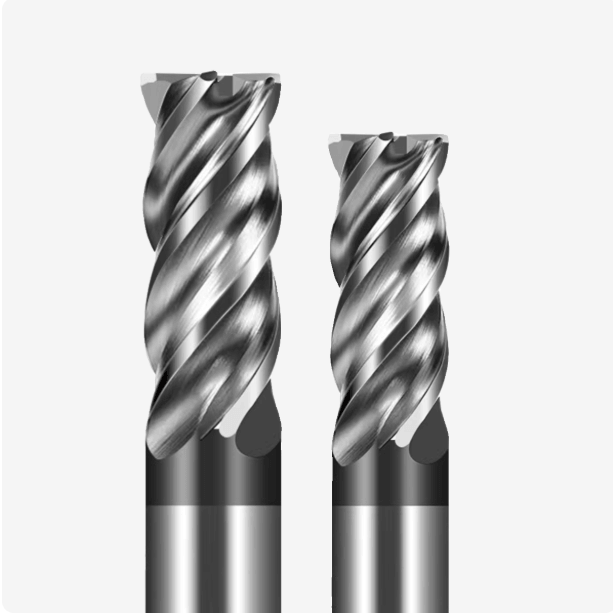
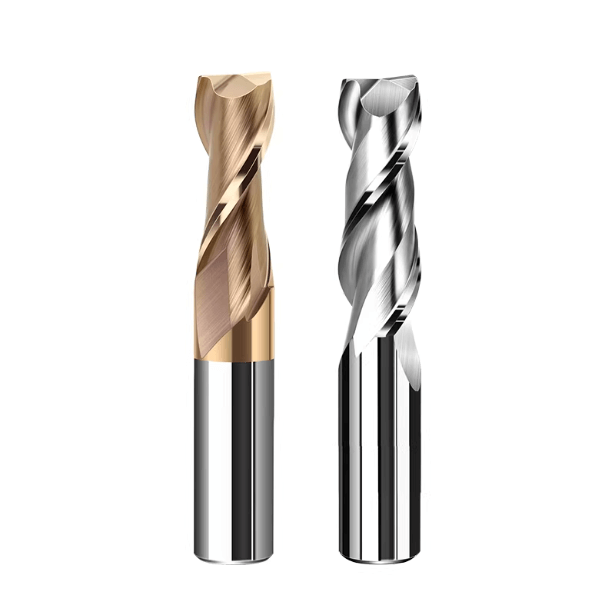
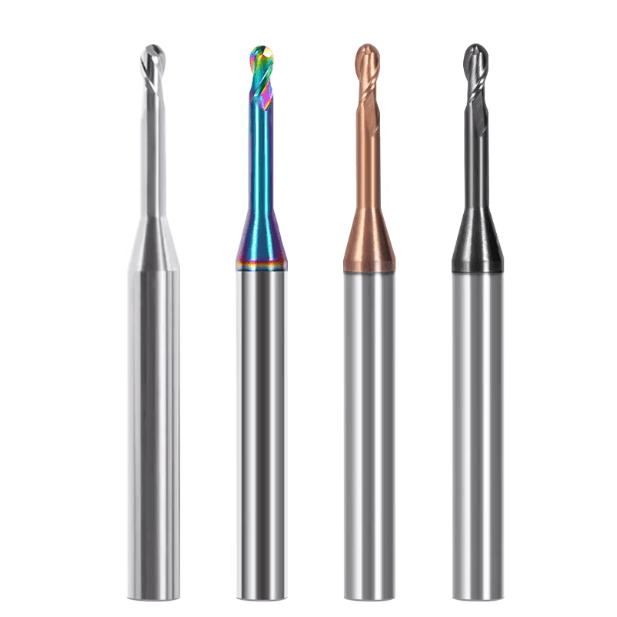
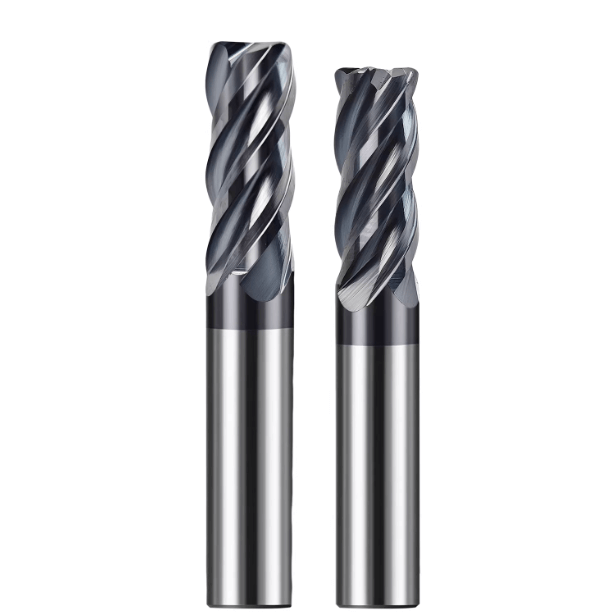
In the projects we handle for clients in Europe and the US, we often face the same recurring question: Should we use a 2-flute ball carbide end mill or a 4-flute carbide ball nose end mill? This choice is especially critical when finishing mold surfaces or machining deep-cavity parts, as it directly affects machining stability, tool life, and surface quality.
We notice that many clients focus only on the number of flutes, overlooking how factors like material hardness, tool diameter, long-neck designs (long-neck ball end mills carbide), and machining depth influence tool performance. For example, when working on hardened steel molds requiring tools rated for 55 HRC, a 2-flute tool ensures smooth chip evacuation but may lack sufficient rigidity. On the other hand, a 4-flute tool offers superior rigidity but can clog with chips and vibrate when machining aluminum at high speeds. This trade-off is something we encounter repeatedly in real-world projects, often requiring flexible adjustments based on the workpiece and the chosen machining strategy.
We have also found that tools from different carbide ball end mill factories—even if labeled as 2- or 4-flute—can vary significantly in flute geometry, helix angle, and coating processes. These differences directly affect machining results. This highlights the importance of integrating real machining experience into tool selection rather than relying solely on technical data sheets.
Based on years of technical support experience, we have distilled practical insights. For deep-cavity machining, a 2-flute long-neck ball end mill is often the better choice. For finishing high-hardness parts, a 4-flute ball carbide end mill delivers more consistent surface quality. These insights come from repeated validation in our projects, not just theory.
So, when you face tasks involving different materials, depths, and machine tools, are you confident about when to choose a 2-flute tool versus a 4-flute ball carbide end mill?

The Most Common Selection Dilemma We Encounter in Client Machining: 2-Flute or 4-Flute?
In actual projects, the same fundamental question keeps arising: Should we use a 2-flute or a 4-flute ball end mill for a given task? This is especially important when machining deep-cavity molds or complex 3D surfaces, where the right balance between tool rigidity, chip evacuation, and surface quality is critical. We often see that clients initially focus on material type or spindle speed, overlooking how flute count impacts performance in long-reach machining, deep slots, or thin-walled parts. Evaluating flute count in conjunction with workpiece hardness and machining depth is often necessary.
We also emphasize to clients that flute count is not a one-size-fits-all decision. Many European and North American customers flexibly switch between 2-flute and 4-flute tools depending on the toolpath stage. For instance, during roughing of high-hardness steel, we often recommend 2-flute tools for better chip evacuation. During finishing operations or when a superior surface finish is required, 4-flute tools provide enhanced cutting stability. This experience allows us to give practical, actionable advice during support interactions, rather than relying solely on theoretical specifications.
Why Do Many Customers Hesitate When Choosing Carbide Ball End Mills?
We frequently encounter clients who are unsure which flute count to use for different machining stages within the same batch of parts. The hesitation usually comes from a lack of understanding of how chip evacuation and rigidity vary across materials. For example, in high-speed aluminum machining, a 4-flute tool may seem rigid but is prone to chip clogging, whereas a 2-flute tool evacuates chips smoothly but can vibrate during deep-cavity or long-reach operations. We address this by performing on-site trials and adjusting toolpaths to demonstrate real results, helping clients make informed decisions.
Moreover, differences in tool manufacturing also contribute to hesitation. Tools from different carbide ball end mill factories can vary in edge sharpness, helix angle, and coating, all affecting machining stability. We often advise clients to test sample tools first and select flute counts based on surface finish, tool wear, and cutting forces. This experience-driven approach is far more reliable than relying solely on technical specs.
Typical Use Cases Observed Among Our Mold and Parts Machining Clients
In mold machining projects, we often see deep cavities and complex 3D surfaces combined. During roughing, we recommend 2-flute carbide ball nose end mills with long-neck designs for efficient chip evacuation and stable cutting. During semi-finishing or finishing, clients switch to 4-flute tools to achieve a superior surface finish. This strategy—adjusting flute count—significantly reduces tool breakage and chatter.
For high-hardness materials, like steel molds requiring 55 HRC, clients often use 2-flute tools for roughing to minimize cutting load. In finishing, the rigidity of 4-flute tools improves surface quality noticeably. We work closely with clients to fine-tune toolpaths and feeds so the flute count matches machining objectives rather than generic catalog data.
The Direct Impact of Flute Count on Machining Results
From practical experience, flute count directly affects tool stability and surface quality. Two-flute ball end mills reduce chatter and evacuate chips efficiently in deep cavities, but finishing high-hardness parts may leave slight ripples due to vibration. Four-flute tools distribute cutting forces evenly, improving surface finish, yet long overhangs or complex surfaces can cause chip clogging and higher tool load. We balance flute count with parameters like tool diameter, helix angle, and coating.
Machine tool rigidity and strategy also affect flute performance. High-speed machining centers benefit from 4-flute tools for surface finish, whereas machines with moderate rigidity achieve more stability with 2-flute cutters. We validate flute choices through test cuts and toolpath optimization before full-scale machining to prevent vibration and chipping.

Typical Advantages of 2-Flute Carbide Ball End Mills in Practical Machining
Across our projects, 2-flute ball end mills excel in roughing complex 3D surfaces and deep cavities. Fewer flutes reduce cutting load and allow efficient chip evacuation, minimizing vibration and edge chipping. We have seen this in aluminum alloys, high-chromium steels, and medium-to-low hardness mold steels. Optimizing feed and depth ensures tool longevity and a clean foundation for finishing operations.
Having fewer contact points also helps in high overhang or deep-cavity situations. For example, a client machining deep mold slots with a 4-flute tool experienced vibration and surface scratches; switching to a 2-flute long-neck ball end mill solved the problem. This illustrates why we recommend 2-flute tools at the start of projects while adjusting parameters based on machine rigidity and toolpaths.
Chip Evacuation Advantages in Aluminum and Soft Materials
In high-speed aluminum machining, we almost always use 2-flute tools. Aluminum sticks easily, so chip evacuation is critical for surface quality and stability. Two-flute tools prevent chip clogging and reduce rework. While 4-flute tools may offer slightly better theoretical finishes, they are prone to chip accumulation. Optimizing toolpaths and feed ensures 2-flute tools perform efficiently in real applications.
Cutting fluid flow and helix angle also influence chip evacuation. We select the proper 2-flute carbide ball nose end mill and fine-tune parameters to prevent chip buildup, vibration, or surface ripples. These insights come from practical experience, not just theoretical data.
Stable Performance of 2-Flute Tools in Complex 3D Surface Roughing
For roughing complex curved surfaces, 2-flute ball end mills are preferred. Fewer contact points reduce vibration or scratches, unlike 4-flute tools. Combining appropriate toolpaths, we achieve rapid material removal while maintaining tool life and preparing surfaces for finishing.
Tool overhang matters too. Long-neck 4-flute tools in deep cavities exacerbate vibration and uneven loads. Two-flute tools remain stable, making them the safer choice in high-overhang scenarios. This experience guides our recommendations from the project planning phase.
Why Clients Prefer Two-Flute Long-Neck Ball End Mills
Clients machining deep cavities with high overhangs prefer 2-flute long-neck ball end mills because 4-flute cutters vibrate and chip under the same conditions. Two-flute tools reduce contact area and cutting forces, enhancing stability.
We select flute counts based on material hardness and tool diameter. Softer materials allow higher feeds with 2-flute long-neck tools while maintaining surface quality. For high-hardness steel, we use 2-flute cutters in roughing and switch to 4-flute cutters for finishing. This balance and flexibility comes from years of technical support experience.
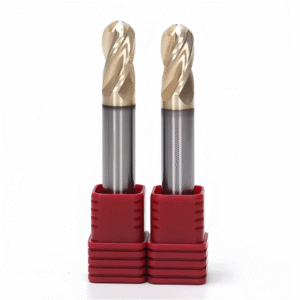
The Real-World Performance of 4-Flute Carbide Ball Nose End Mills in High-Precision Machining
In the mold and high-precision component projects we handle, the stability and surface quality advantages of 4-flute ball nose end mills are clear. Particularly during semi-finishing and finishing stages, we see that 4-flute tools generate more uniform cutting forces along continuous toolpaths. This reduces vibration and noticeably improves the surface finish of contoured surfaces. In our European and North American client projects, machining with 4-flute carbide ball nose end mills consistently reduces surface waviness, which in turn lowers the workload for polishing or EDM operations.
However, we also notice that 4-flute tools have limitations. When used with long overhangs or in deep cavities—especially if the machine tool lacks rigidity or the toolpath strategy is not optimized—cutting loads from 4-flute tools can cause chatter or edge chipping. Therefore, at the beginning of a project, we evaluate factors like tool diameter, overhang length, and material hardness. Often, we use a 2-flute tool for roughing before switching to a 4-flute tool for finishing. This judgment comes from years of on-site technical support experience and reflects practical best practices.
Surface Quality Advantages Delivered by 4-Flute Carbide Ball Nose End Mills in Mold Finishing
During mold finishing, 4-flute ball nose end mills consistently produce flatter contoured surfaces than 2-flute tools. The shorter cutting intervals per revolution and more uniform cutting forces allow these tools to minimize surface waviness and reduce minor vibrations along continuous toolpaths. For instance, in a European injection mold project, switching from a 2-flute to a 4-flute tool during semi-finishing reduced surface roughness from Ra 0.8 to Ra 0.4, without significant tool wear. This change reduced the number of corrective operations during final finishing.
Moreover, surface quality improvements depend not only on flute count but also on tool coating and helix angle. We select the appropriate 4-flute carbide ball nose end mill based on material and machining depth. By optimizing feed rate and depth of cut, we consistently achieve the surface flatness required by our clients. This experience allows us to provide actionable guidance rather than relying solely on theoretical values.
Rigidity and Stability of 4-Flute Ball End Mills in Steel Machining
For high-hardness steel components and mold steels, we often recommend 4-flute ball end mills. They provide superior rigidity and stability during continuous cutting. At client sites, especially in deep cavities or thick-walled structures, 4-flute tools vibrate less than 2-flute alternatives. They also show more uniform wear, helping maintain consistent surface quality along long toolpaths. This rigidity is essential when finishing mold steels, allowing the tool to handle high cutting forces without deflecting.
Still, rigidity must match machine tool conditions and toolpath strategy. On less rigid machines or with long tool overhangs, 4-flute tools can still chatter. To balance stability and performance, we typically use 2-flute tools for roughing, then switch to 4-flute ball carbide end mills for finishing. This phased approach optimizes both tool life and surface quality.
Advantages of the 4-Flute Structure in Continuous Finish Machining Toolpaths
In continuous finish machining, 4-flute tools reduce surface waviness and vibration thanks to shorter cutting intervals and uniform force distribution. This is especially evident on complex 3D surfaces and deep-cavity molds. Comparing 2-flute and 4-flute toolpaths in client projects, 4-flute tools consistently maintain dimensional accuracy and surface finish while reducing rework and manual finishing time.
Uniform wear is also critical. When the toolpath is properly designed, 4-flute ball carbide end mills wear evenly, extending tool life. This is crucial for batch production of high-hardness parts. We optimize cutting parameters—including speed, feed rate, and overhang length—to maintain stability throughout the continuous machining phase.
Why Our Customers Prefer 4-Flute Ball Nose End Mills When Machining 55 HRC Materials
For hardened steel components requiring 55 HRC-rated tungsten carbide ball nose end mills, our customers almost always choose 4-flute tools. High cutting forces in hardened materials demand the rigidity and balanced cutting of 4-flute tools to maintain stable toolpaths and prevent vibration or breakage. We routinely use 2-flute tools during roughing for chip evacuation, then switch to 4-flute tools for finishing to meet both surface finish and dimensional accuracy requirements.
We also adjust our strategy based on part geometry and machine rigidity. For long overhangs or deep cavities, even in 55 HRC steel, we may use a 2-flute tool for preliminary material removal and then a 4-flute tool for finishing. This flexible approach ensures stability and a balance between tool life and part precision, refined through years of hands-on experience.
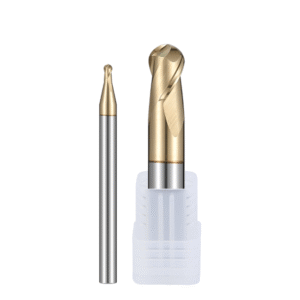
How We Help Customers Select the Optimal Number of Flutes for Different Materials
From our experience with European and North American clients, there is no one-size-fits-all formula for flute selection. It requires evaluating material characteristics, machining stage, and machine rigidity. We collaborate with clients to analyze hardness, geometry, and overhang length. This helps us decide when to use a 2-flute tool for roughing to ensure chip evacuation and stability, and when to switch to 4-flute tools for finishing to improve surface quality.
Tool manufacturing variations also matter. Carbide ball end mills from different factories differ in edge sharpness, helix angle, and coating, affecting performance in hard steels, mold steels, or stainless steels. We usually recommend preliminary test cuts to validate flute choice, then adjust based on surface finish and wear patterns, balancing stability and tool life.
Aluminum Alloy Machining: Why We Almost Always Recommend 2-Flute Carbide Ball End Mills
For high-speed aluminum machining, we almost always recommend 2-flute ball end mills. Aluminum tends to stick to the tool, so chip evacuation is key for surface quality and productivity. While 4-flute tools may theoretically offer better finishes, they often accumulate chips and vibrate. 2-flute tools evacuate chips smoothly at high speeds, increasing stability. Toolpath, feed strategy, and helix angle are further optimized based on part geometry.
For long overhangs or complex 3D surfaces, we prefer 2-flute long-neck ball end mills. Fewer flutes improve rigidity, reducing vibration and enabling smooth machining in deep cavities and along extended toolpaths. Depth of cut and step-over distances are adjusted to ensure efficient and stable material removal—a practice we consistently apply in client projects.
Insights on Flute Selection for Pre-Hardened and Mold Steels
For pre-hardened or medium-hardness mold steels, 2-flute ball end mills are used during roughing to ensure chip evacuation and minimize cutting load. Direct use of 4-flute tools in deep cavities can cause vibration and uneven finishes. Switching to 4-flute tools during semi-finishing or finishing improves surface quality and stability.
Flute selection also depends on tool diameter, overhang, and depth. For long overhangs or deep cavities, we may segment machining with 2-flute tools first, then use 4-flute tools for finishing critical contours. This balanced approach ensures precision, surface finish, and tool longevity.
Practical Tooling Configurations for Machining High-Hardness Materials (e.g., 55 HRC Steel)
For high-hardness steels, we use a phased approach: 2-flute cutters for roughing to reduce load and vibration, and 4-flute ball carbide end mills for finishing to maintain stable paths and excellent surface quality. Observations at client sites confirm this reduces breakage and ensures dimensional accuracy.
We adjust based on machine rigidity and overhang. For deep cavities or thin walls, we use localized strategies: 2-flute for bulk removal, 4-flute for finishing. This empirical trade-off ensures optimal balance between tool life and part quality.
Case Studies on Flute Count Selection for Stainless Steel and Difficult-to-Machine Materials
In stainless steel and other tough materials, flute count greatly affects stability. For instance, a client faced vibration and chip accumulation with a 4-flute ball end mill in deep cavities, resulting in poor surface finish. Switching to a 2-flute tool and optimizing toolpaths improved chip evacuation and stability.
For high-toughness or high-alloy steels, we start with 2-flute cutters for roughing, then switch to 4-flute for finishing. This flexible, experience-driven strategy minimizes chipping and rework while maintaining batch production efficiency.
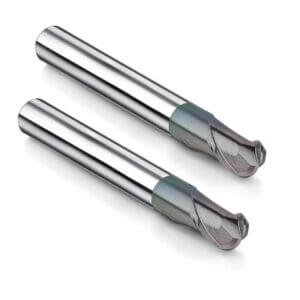
The Impact of Tool Geometry on the Performance of 2-Flute and 4-Flute Tools
Over many years of client projects, we have seen the clear impact of tool geometry on cutting performance. Factors such as flute count, diameter, tool length, helix angle, and coating combination directly influence machining stability and surface quality. Even among ball-nose end mills, different geometries can yield drastically different results when machining deep cavities or high-hardness materials.
At the start of a project, we test various tool geometries alongside the workpiece material and machine tool capabilities. This ensures the selected tool delivers consistent performance along the actual machining path.
Tool geometry also strongly affects tool life and machining path optimization. In long-overhang or high-speed operations, a careful combination of flute count, tool diameter, and coating can significantly reduce vibration and edge chipping. Our validation with European and North American clients confirms that optimized ball-nose end mills improve both machining efficiency and surface finish in deep cavities and complex 3D surfaces.
Empirical Guidelines for Matching Tool Diameter with Flute Count
For small-diameter tools, we recommend 2-flute carbide ball-nose end mills. Small tools have limited rigidity, and excessive flutes increase cutting load and vibration risk. In deep-cavity projects, small 4-flute tools often generate uneven edges or surface ripples, while 2-flute tools remain stable.
For larger-diameter tools, 4-flute carbide ball-nose end mills excel in continuous finishing or machining hard materials. More flutes help distribute cutting forces, improve rigidity, and enhance surface finish. Matching diameter and flute count ensures optimal performance across various workpieces and depths.
Selecting the Number of Flutes for Long-Neck Carbide Ball End Mills
In long-reach deep-cavity machining, two-flute long-neck carbide ball end mills are preferred. Longer overhangs reduce rigidity, and four-flute tools risk vibration and edge chipping. Two-flute tools provide smooth chip evacuation and stability during roughing while leaving surfaces ready for finishing.
We adjust flute selection based on material and diameter. For medium- or high-hardness steels with substantial overhangs, two-flute tools handle roughing, and four-flute tools finish localized areas to improve precision and surface quality. This empirical approach balances tool life and part accuracy in real-world operations.
The Impact of Tool Coatings and Flute Count on Machining Stability
Tool coatings significantly affect machining stability across flute counts. In aluminum, which requires high chip evacuation, two-flute tools with anti-stick coatings maintain smooth cutting, reducing chip adhesion and vibration. TiAlN or TiB2 coatings enhance performance on aluminum, while hard coatings protect steel components from wear.
For four-flute tools, coating selection is critical. In high-hardness steel or mold finishing, the right coating distributes load, minimizes localized wear, and stabilizes continuous toolpaths. Clients should consider coating, helix angle, and flute count synergy to ensure stable performance during long-duration machining.
Varying Tool Selection for High-Speed vs Conventional Machines
Machine rigidity and speed directly affect optimal flute count. High-speed machines with high spindle speeds and feed rates perform best with four-flute ball end mills, maintaining surface finish and dimensional accuracy. Two-flute cutters in these scenarios may vibrate or cause surface ripples.
For conventional or low-rigidity machines, two-flute cutters reduce chatter, maintain stability, and extend tool life. We adjust flute selection based on machine type, tool geometry, and machining depth to ensure consistent results across all setups.

Typical Case Studies from Our Technical Support Operations
Over years of technical support, we have seen that even highly experienced machine operators encounter machining issues caused by improper flute selection. Problems such as chip adhesion in aluminum, chatter in steel, or tool breakage in deep-cavity molds can significantly reduce machining efficiency and surface quality.
We identify root causes through on-site analysis, toolpath optimization, and test cuts. Recommendations consider tool overhang, machine rigidity, and workpiece characteristics. Additionally, carbide ball end mills from different manufacturers—even with the same flute count—can vary in flute geometry, helix angle, and coating, which can affect stability. Adjusting flute count and tool model based on real performance is often more effective than relying on specifications alone.
Case Study: Chip Adhesion in Aluminum with 4-Flute Carbide Ball End Mills
During high-speed aluminum alloy machining, we frequently observe chip adhesion with four-flute carbide ball end mills. Although these cutters are more rigid—which theoretically improves surface finish—the limited chip evacuation space often causes accumulation.
Solution: We adjust cutting parameters and coolant flow and test two-flute end mills. The result is smoother chip evacuation and consistent surface finish. Additionally, reducing the helix angle and using anti-stick coatings on two-flute tools further minimize chip buildup.
These findings help our clients select the most suitable tool configurations based on material and cavity geometry, improving machining efficiency in subsequent operations.
Vibration Issues in Steel with 2-Flute Carbide Ball Nose End Mills
When machining high-hardness steel, two-flute ball nose end mills can vibrate due to insufficient rigidity or fluctuating cutting forces, especially in deep cavities or long overhangs.
Solution: Increasing tool diameter or partially switching to four-flute end mills on critical surfaces reduces vibration. Adjusting feed rate and depth of cut first, then using four-flute cutters for finishing, ensures surface quality and dimensional accuracy.
This phased approach is a practical method validated over years of technical support experience.
Tool Breakage in Long Neck Ball End Mill Carbide Machining
Long-overhang, long-neck ball end mills often break due to insufficient rigidity and mismatch between flute count and cutting load.
Solution: Use two-flute tools for roughing to reduce cutting load, and switch to four-flute tools for finishing critical curved surfaces. Segmenting operations and adjusting cutting parameters ensures stability.
On-site validations confirm this method reduces breakage risk while maintaining dimensional accuracy and surface finish.
Resolving Machining Stability Issues by Adjusting Flute Count
For parts with noticeable vibration or chatter, we adjust flute count based on material hardness, tool overhang, and cavity geometry. Two-flute tools are used for roughing, followed by four-flute cutters for finishing.
Integrating coatings, helix angles, and optimized toolpaths further enhances surface finish and tool life. This phased, empirical strategy is derived from years of CNC project experience, helping clients minimize rework and reduce tool consumption.

Design Differences Between 2-Flute and 4-Flute Ball-Nose End Mills from a Tool Manufacturing Perspective
Through years of experience in ball carbide end mill manufacturing and customer support, we find that flute count affects not only cutting performance but also tool core thickness and rigidity.
A 2-flute carbide ball-nose end mill has a thicker core and higher rigidity. It excels in deep-cavity machining and long-overhang operations, though its cutting edge sharpness is slightly lower. Conversely, a 4-flute tool has a thinner core, shorter cutting intervals per flute, and more uniform force distribution. These factors improve surface quality during finishing operations. However, 4-flute tools can be more prone to vibration or edge chipping in long-overhang or high-load scenarios. We consistently validate this trade-off between flute count and core thickness in our production facilities and at client sites, confirming its critical role in machining stability.
Tool structure also impacts service life and thermal distribution. Two-flute tools have a smaller contact area with the workpiece, facilitating smooth chip evacuation and reducing heat buildup. In contrast, 4-flute tools generate concentrated heat due to larger contact areas, requiring carefully engineered coatings and helix angles. When manufacturing carbide ball-nose end mills, we optimize core thickness and flute count based on workpiece material and machining requirements, ensuring structural strength while maintaining high-precision cutting performance.
The Impact of Flute Count on Tool Core Thickness and Rigidity
In practice, tool core thickness is a key factor in determining flute count. Two-flute carbide ball-nose end mills provide high rigidity, ideal for deep cavities, long-reach tools, and hardened steel components. Four-flute tools have thinner cores, reducing rigidity but offering more uniform cutting forces and superior surface finishes during semi-finishing or finishing stages.
Tool diameter and overall length further influence flute selection. Small-diameter, long-overhang tools benefit from 2-flute designs, while large-diameter or short-length tools, especially for finishing, perform better with 4-flute designs. Client project validations confirm that matching flute count with core thickness prevents chatter, edge chipping, and premature wear.
The Impact of Flute Design on Machining Performance
Flute geometry significantly affects machining performance. Two-flute tools feature larger flute spaces, enabling smooth chip evacuation in deep cavities and long-reach operations. This reduces chatter and tool chipping. Four-flute tools have smaller flute spaces but more cutting edges, resulting in lower chip load per revolution—ideal for continuous finishing and high-hardness materials. Flute profile and helix angle are fine-tuned based on material type, tool diameter, and overhang length to ensure optimal performance.
Flute design also affects cutting temperatures and surface finish. Deep flutes prevent chip adhesion in aluminum machining, while optimized helix angles, shallower flute profiles, and protective coatings mitigate heat concentration and tool wear in hardened steels. Our tools are tailored for each machining task to deliver peak performance in real-world environments.
Why Designs Vary Across Carbide Ball End Mill Manufacturers
Even tools with identical flute counts can differ between manufacturers. Differences in cutting edge sharpness, helix angle, core thickness, and coating processes significantly affect chip evacuation, chatter suppression, and surface finish quality.
This highlights the importance of selecting tools based on practical machining experience, not solely on specifications. Manufacturing precision and grinding processes also influence tool consistency. In our production, we maintain strict control over edge geometry, core thickness, and coating uniformity. We benchmark our tools against client-supplied alternatives and analyze real-world machining trials, enabling us to recommend the best tools for specific machine tools and workpiece materials.
Balancing Sharpness and Strength in Ball Carbide End Mills
Sharpness improves cutting smoothness and surface finish but reduces core thickness and rigidity, increasing vibration risk in long-overhang or deep-cavity operations. We balance sharpness and strength by tailoring edge geometry and core thickness according to material and part structure.
Additionally, advanced coatings, helix angles, and flute geometries enhance tool life and machining stability. For high-hardness steels and deep-cavity molds, pairing appropriate coatings with two-flute or four-flute designs significantly extends tool life. Our empirical guidelines, derived from years of production and customer feedback, ensure optimal sharpness-strength balance across diverse machining conditions.

Our Expert Guide to Selecting the Right Number of Flutes
We provide technical support to clients across Europe and North America. From this experience, we have developed a practical methodology for selecting the optimal number of flutes.
Flute selection should not rely solely on theoretical parameters. Instead, it requires a holistic assessment of workpiece material, machining stage, tool overhang length, and machine tool rigidity. Typically, two-flute ball carbide end mills excel in chip evacuation and stability during deep-cavity machining. In contrast, four-flute ball nose end mills provide superior stability for finishing operations and machining high-hardness steels.
Variations in manufacturing processes, coating technologies, and helix angle designs can significantly affect performance. Tools from different manufacturers—even with the same nominal flute count—often differ in core thickness, cutting edge sharpness, and flute geometry. These differences impact vibration, edge chipping, and surface finish quality. For complex 3D surfaces, long overhangs, or hardened materials, flute selection should be based on both tool performance and real-world feedback. Our approach has been validated across multiple client projects in Europe and North America.
When to Prioritize 2-Flute Carbide Ball End Mills
Two-flute ball end mills are ideal for aluminum alloys, soft materials, deep cavities, or long-reach operations. Field tests at client sites show that 2-flute tools provide stable chip evacuation and vibration control, even during high-speed cutting.
For roughing complex curved surfaces, using long-neck 2-flute end mills reduces cutting load, extends tool life, and leaves a clean surface for finishing. Machines with limited rigidity or thin workpiece structures also benefit from 2-flute tools, as they minimize chatter and edge chipping. Feed rate, depth of cut, and toolpath strategy should be fine-tuned for optimal results.
When 4-Flute Carbide Ball Nose End Mills Offer Greater Stability
Four-flute ball nose end mills are recommended for finishing high-hardness steel components or molds. They generate more uniform cutting forces, reducing vibration and ensuring high dimensional accuracy and superior surface finish, especially for steel parts with hardness above 55 HRC.
Large-diameter tools or short-overhang setups also benefit from 4-flute designs, leveraging inherent rigidity. When paired with proper coatings and helix angles, these tools maintain uniform wear and extended tool life. This approach has been validated in multiple finishing projects.
Practical Recommendations for Long-Reach and Deep-Cavity Machining
For deep-cavity molds or long-reach parts, prioritize 2-flute long-neck end mills for stable machining. Excessive tool overhang can cause vibration or chipping with 4-flute cutters, whereas 2-flute tools maintain smooth chip evacuation and balanced cutting loads.
A phased approach works best: use 2-flute cutters for roughing to maximize tool life, then switch to 4-flute cutters for finishing to enhance surface quality and accuracy. Toolpath design and cutting parameters should match cavity geometry and material hardness. Our experience consistently shows this method improves both efficiency and quality.
Common Tooling Configurations for Batch Production
In batch production, combine 2-flute and 4-flute cutters based on material, machining stage, and machine capabilities. Our observations at client facilities in Europe and North America indicate this strategy balances high roughing efficiency, extended tool life, and superior finishing quality.
For deep cavities or complex parts, pre-determine tool overhang configurations, coatings, and toolpath strategies to minimize vibration and rework. This integrated approach ensures consistent part quality and maximizes production efficiency.