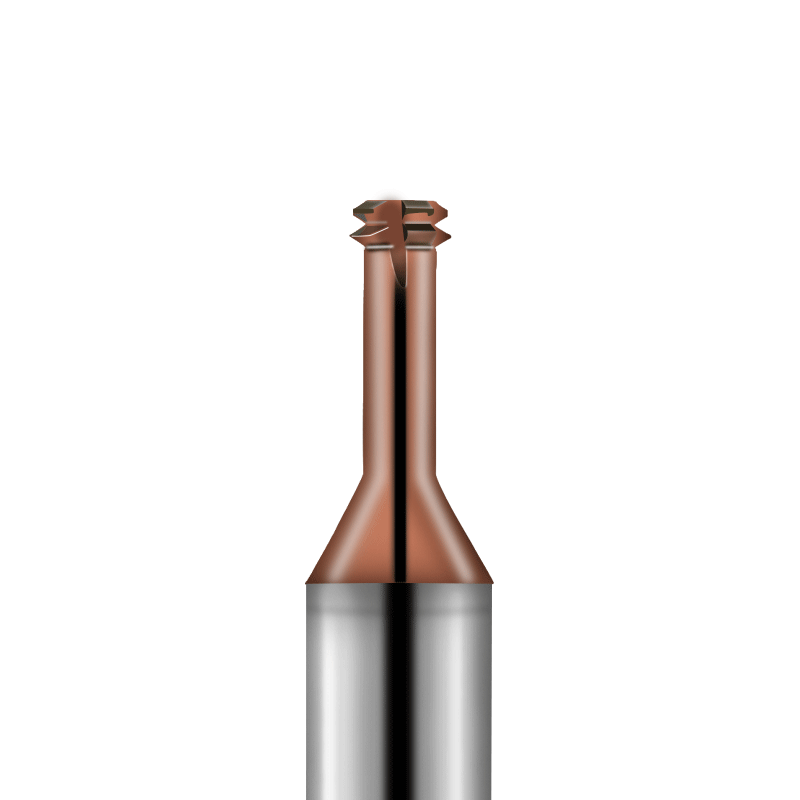
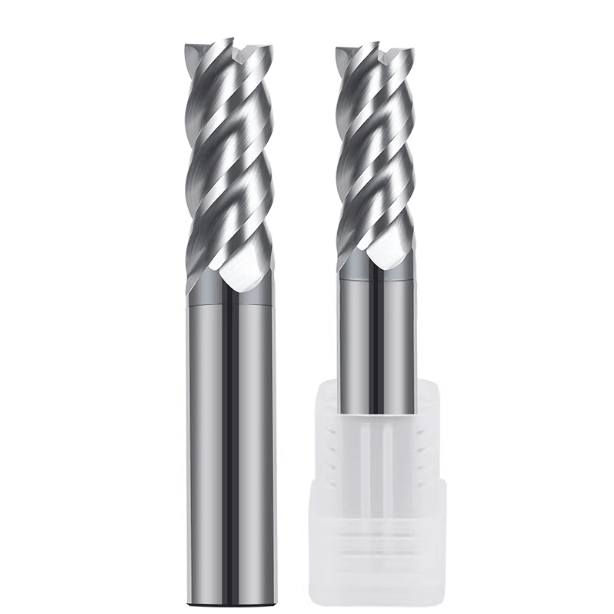
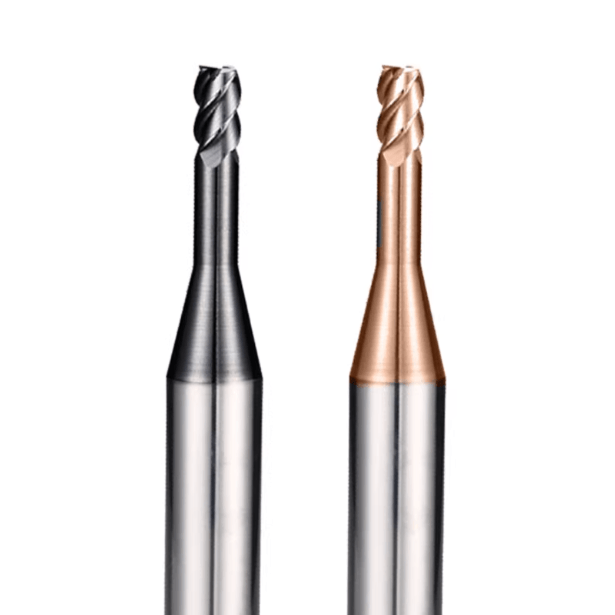
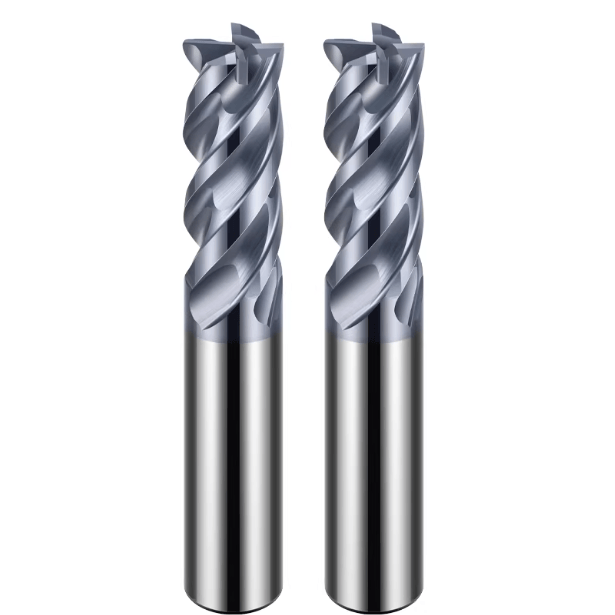
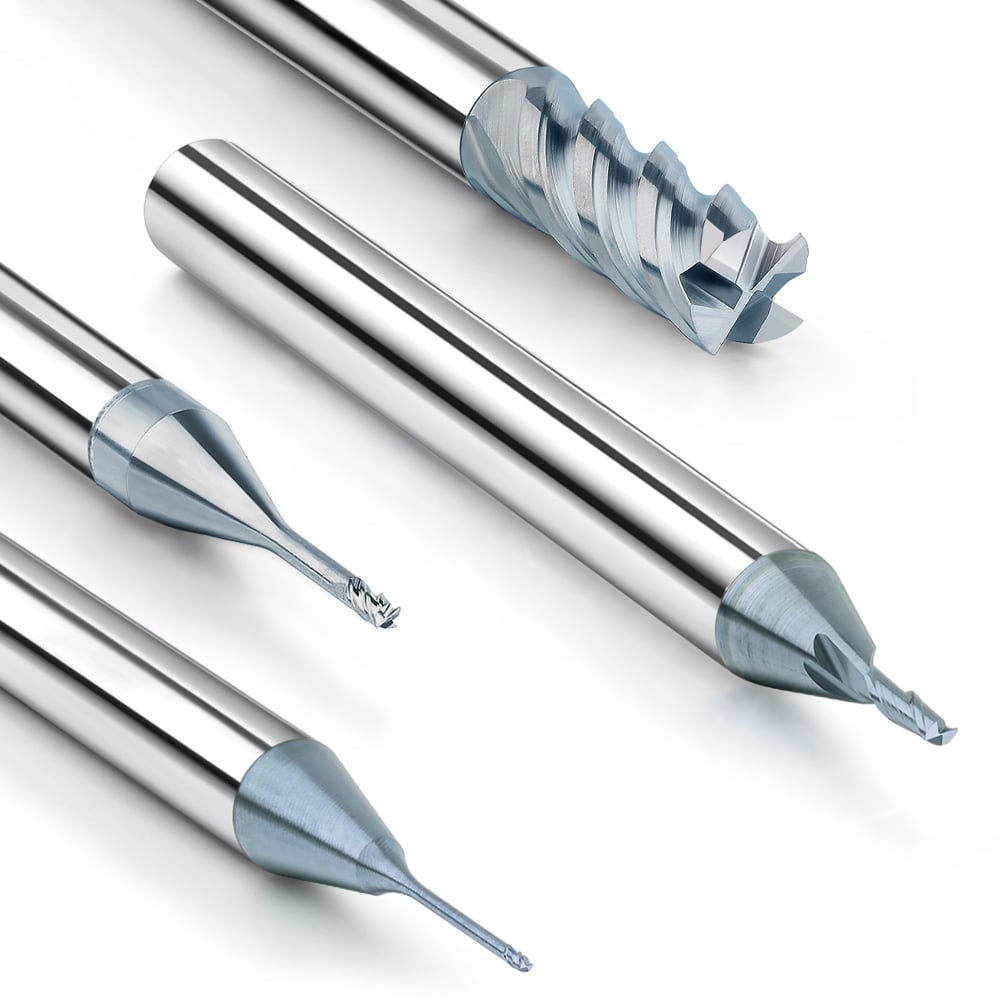
In modern precision machining, choosing the right ball end mill directly impacts machining efficiency, part surface quality, and tool life. 2-flute and 4-flute carbide ball end mills are common tool types. Each has unique cutting characteristics and specific application scenarios. 2-flute tools are known for smooth chip evacuation and stable cutting performance, making them ideal for deep cavity or softer material machining. 4-flute tools, on the other hand, offer advantages in rigidity, cutting stability, and surface finish, performing particularly well in high-hardness materials and precision finishing operations.
For machining small parts requiring extremely high precision, micro carbide ball end mills, with their small diameter and fine cutting edge design, can handle complex three-dimensional surfaces. For materials with hardness up to 55 HRC, high-performance 55 HRC tungsten carbide ball nose end mills provide excellent wear resistance and cutting stability. Partnering with a reliable supplier, such as an experienced China carbide ball end mill manufacturer, can offer customized flute types and sizes, along with professional guidance on material selection, coating processes, and cutting edge geometry, helping customers achieve optimal results across different machining conditions.

Performance Differences of Carbide Ball End Mills with Different Flute Counts in Actual Machining
In precision parts machining, the number of flutes on a tool directly affects cutting efficiency, chip evacuation, and surface quality. 2-flute and 4-flute ball end mills show distinct performance differences under varying materials and machining conditions. 2-flute ball end mills are generally more suitable for deep cavities or materials with lower cutting resistance. Their larger chip evacuation channels reduce material buildup and heat concentration, improving cutting stability and reducing the risk of tool breakage. For aluminum alloys, non-ferrous metals, or soft materials, proper use of 2-flute ball end mills allows higher feed rates while maintaining surface finish, especially in micro-parts or complex surface machining.
In contrast, 4-flute ball end mills provide higher rigidity, smoother cutting, and improved surface finish. More cutting edges mean reduced load per edge, minimizing vibrations and distributing cutting forces evenly during high-hardness steel and mold machining. This design also extends tool life and ensures stable performance under high-speed conditions. By analyzing cutting performance across different flute counts, machinists can select the most suitable tool for complex parts and high-hardness materials.
Characteristics of 2-Flute Carbide Ball End Mills in Chip Evacuation and Cutting Stability
2-flute ball end mills excel in chip evacuation and maintaining low cutting forces. Their wide channels make them ideal for machining long grooves, deep cavities, or intricate curved surfaces. In aluminum alloys and non-ferrous metals, 2-flute tools reduce material buildup and localized heat, ensuring consistent tool operation. For micro-parts, their low cutting force helps prevent tool breakage, improving consistency and surface quality. Matching spindle speed and feed rate appropriately can further enhance efficiency and extend tool life.
During deep cavity or complex 3D surface machining, 2-flute ball end mills reduce vibration and minimize surface scratches. These advantages are particularly significant for micro carbide ball end mills, which are prone to breakage under high cutting loads. Combined with precision equipment and optimized parameters, 2-flute tools achieve high productivity while maintaining surface quality and dimensional accuracy.
Performance Advantages of 4-Flute Carbide Ball End Mills in Hard Material Machining
4-flute ball end mills exhibit superior cutting stability and surface flatness when machining hardened steel or mold components. The reduced cutting load per edge decreases vibration amplitude, resulting in improved dimensional accuracy. 55 HRC tungsten carbide ball nose end mills benefit from this design, offering excellent wear resistance and consistent cutting performance under hard material conditions.
These tools provide uniform cutting forces on complex 3D surfaces, reducing chatter and tool marks while enhancing surface finish. In high-precision mold manufacturing or hardened parts machining, 4-flute tools maintain stability at greater depths and feed rates, extending tool life. Collaborating with an experienced China carbide ball end mill manufacturer allows for optimized flute design tailored to the workpiece material and machining strategy, ensuring reliable, high-quality results.
The Impact of Flute Count on Cutting Load Distribution in Carbide Ball Nose End Mills
Flute count influences not only cutting efficiency but also force distribution and heat generation. 2-flute tools experience larger cutting force fluctuations during deep cuts, while 4-flute tools distribute forces more evenly, enhancing stability. This is critical in complex surface machining or high-hardness steel, where unbalanced forces can cause tool deflection, machining errors, or premature wear.
In micro and high-precision ball end mills, flute number affects cutting force and heat accumulation more sensitively. Selecting the appropriate flute count optimizes stability, surface finish, and reduces breakage risk. Proper flute matching combined with optimized cutting parameters improves efficiency, tool life, and part accuracy.

Selection Logic for 2-Flute and 4-Flute Carbide Ball End Mills under Different Materials
Different materials impose varying demands on tool rigidity, chip evacuation, and cutting load. Soft materials like aluminum alloys and non-ferrous metals are best suited for 2-flute ball end mills due to their large chip evacuation channels and low resistance. High-hardness steel or precision mold machining requires 4-flute or high-hardness ball end mills to balance forces, reduce vibration, and extend tool life.
Flute count also impacts tool cost and lifespan. Proper matching of flute number, tool diameter, and material hardness reduces breakage and rework, increasing production efficiency. Partnering with a professional China carbide ball end mill manufacturer provides expert guidance on material selection, flute design, and tool configuration, ensuring optimal performance across diverse machining scenarios.
Practical Advantages of 2-Flute Carbide Ball End Mills When Machining Aluminum Alloys
In aluminum alloy machining, 2-flute ball end mills quickly remove chips, preventing built-up edge and maintaining stable cutting in deep cavities. Their low cutting load and wide channels minimize vibration and improve surface quality. Proper feed rates maximize efficiency and reduce tool wear.
For small parts or thin-walled components, low cutting force reduces vibration impact on dimensional accuracy and prevents micro-tool breakage. When combined with precision machinery and optimized cutting parameters, 2-flute tools provide high efficiency and superior surface finish for aluminum parts, making them ideal for high-volume production.
Applicability of 4-Flute Carbide Ball Nose End Mills When Machining Alloy Steel and Hardened Steel
4-flute ball end mills provide superior rigidity and cutting stability in alloy and hardened steel machining. Reduced load per edge minimizes vibration, maintaining flat surfaces and part accuracy. They also offer even heat distribution and controlled chip flow, preventing localized overheating or surface defects.
Collaborating with an experienced China carbide ball end mill manufacturer allows customization of tool geometry, ensuring optimal performance in high-hardness materials and complex parts. These tools maintain stable operation at higher feed rates and cutting depths, extending tool life while delivering high surface quality.
Flute Number Matching Principles for 55 HRC Tungsten Carbide Ball Nose End Mills in Hard Material Machining
For steel with 55 HRC or higher, flute count is critical. More flutes distribute cutting forces, reducing per-edge stress and enhancing tool life. Proper machine rigidity and cutting parameters maximize the performance of 55 HRC tungsten carbide ball nose end mills, enabling efficient, high-quality machining.
In deep cavity or complex surface machining, flute number must balance chip evacuation and heat management. Too many flutes can clog chips and overheat, while too few increase tool wear and breakage risk. Collaborating with a professional manufacturer to customize flute count and tool diameter ensures stability, precision, and optimal cutting performance in hard material machining.
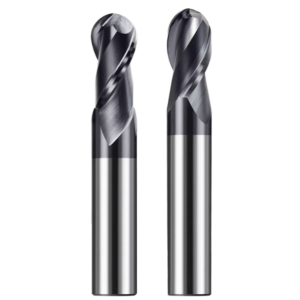
Key Factors in Selecting the Number of Flutes for Micro Carbide Ball End Mills
In micro-part machining, the small tool diameter and limited cutting force capacity make the number of flutes a critical factor in machining stability and tool life. Micro-diameter ball end mills require extremely high rigidity during high-speed cutting and precision surface machining. Too many flutes can create very small chip loads per flute, making chip evacuation difficult and increasing uneven stress on the cutting edge. Too few flutes, on the other hand, can cause tool vibration and instability, reducing accuracy and surface quality. Matching the number of flutes, tool diameter, and cutting parameters is essential for efficient operation of micro carbide ball end mills in complex workpiece machining.
Tool material and coating selection also influence the optimal number of flutes. High-rigidity, wear-resistant carbide provides stable cutting support for small diameters, while appropriate coatings reduce friction and tool wear, extending service life. Collaborating with professional manufacturers allows customization of tool geometry, flute count, and materials, meeting the stringent requirements of micro-part machining in aerospace, medical devices, electronics, and other high-precision industries.
Rigidity Requirements for Micro-Diameter Carbide Ball End Mills
Micro-diameter ball end mills are prone to deformation or vibration due to concentrated cutting forces. This can directly affect machining accuracy and tool life, especially during deep hole or complex 3D surface operations. Choosing high-rigidity tool materials and optimizing geometry improves stability and reduces the risk of breakage. Paired with high-speed spindles and precision fixtures, micro-diameter tools can achieve consistent, high-precision cutting.
Tool rigidity also impacts machining efficiency. Insufficient rigidity forces operators to reduce cutting depth or feed rate, lowering productivity. Using optimized micro carbide ball end mills with an appropriate number of flutes enhances cutting efficiency and surface quality while maintaining accuracy, particularly for small-batch, high-precision parts.
Tool Breakage Risks: 2-Flute vs 4-Flute Micro Carbide Ball End Mills
Tool breakage in micro ball end mills is closely related to flute count. 2-flute micro ball end mills have a larger cutting load but wider chip channels, which support stable cutting and reduce localized heat. However, under hard materials or high-speed conditions, concentrated force on each flute increases breakage risk.
4-flute micro ball end mills distribute cutting forces, improving stability, but narrower chip channels can lead to chip accumulation. Improper cutting parameters can still result in tool breakage or surface scratches. For micro-diameter machining, evaluating flute count based on material hardness, tool diameter, and cutting conditions is crucial. 2-flute tools are ideal for soft or medium-hard materials, while 4-flute tools reduce vibration and errors in hard material or deep machining, improving tool life and part accuracy.
Practical Applications of Micro Carbide Ball End Mills in High-Precision Part Machining
Micro ball end mills are widely used in machining complex surfaces, micro-grooves, and mold features. By carefully selecting flute count and tool diameter, and optimizing cutting parameters, tools maintain stable cutting while minimizing heat, producing smooth, consistent surfaces. Many high-precision applications demonstrate that small-diameter, high-rigidity micro carbide ball end mills achieve repeatable accuracy and excellent surface finish.
These tools are particularly effective for machining electronic components, medical devices, and aerospace parts. Working with experienced China carbide ball end mill manufacturers allows customization of flute geometry and coatings for specific materials and processes, further improving efficiency and tool life. Proper selection of flute count and tool geometry is key to successful micro-precision machining.
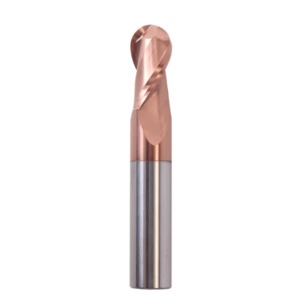
The Influence of Different Machining Processes on Flute Count in Carbide Ball End Mills
Different machining processes strongly affect flute selection. Rough machining focuses on removing large volumes of material, requiring high cutting load and chip evacuation. Ball end mills with fewer flutes ensure smooth chip removal and stable cutting forces. Semi-finishing balances efficiency and surface quality, where moderate flute numbers enable higher feed rates while maintaining accuracy. Optimizing tool design and parameters for each stage ensures efficient, high-precision machining.
Finishing and complex 3D surface machining demand higher tool stability and surface quality. Ball end mills with more flutes reduce load per flute, minimize vibration, and maintain surface flatness and dimensional accuracy. For miniature or high-precision parts, combining precision machines with optimized cutting parameters maximizes tool performance, efficiency, and lifespan.
Flute Selection Strategies for Rough and Semi-Finishing Stages
During rough machining, 2-flute ball end mills remove material quickly due to wide chip channels and low resistance, reducing overheating and vibration. Deep cavities, grooves, and curved surfaces benefit from proper feed rates and cutting depths combined with 2-flute designs for stable, efficient production. This is especially effective for aluminum alloys, non-ferrous metals, or low-hardness steels.
Semi-finishing requires balancing removal rate and surface quality. A moderate flute count allows higher feed rates while reducing cutting load per flute, distributing forces evenly and minimizing vibration. Customized tools from experienced China carbide ball end mill manufacturers help optimize flute count and geometry based on material and process needs, improving stability and surface finish.
Advantages of 4-Flute Carbide Ball End Mills in Finishing and 3D Surface Machining
In finishing and complex 3D machining, 4-flute ball end mills offer higher rigidity and cutting stability. Reduced load per flute and lower vibration enhance surface flatness and part accuracy. For mold finishing, hardened steel, or high-precision components, 4-flute tools maintain stability, extend tool life, and reduce rework risk.
These tools also ensure uniform force distribution, preventing tool deflection and surface scratches. Combined with optimized cutting parameters and precision machines, 4-flute ball end mills improve efficiency and produce high-gloss surfaces. Custom geometry and coatings from professional manufacturers further enhance results for aerospace parts, molds, and miniature high-precision components.
The Relationship Between Flute Count and Cutting Parameters in High-Speed Machining Centers
In high-speed machining centers, flute count affects cutting force distribution, tool rigidity, and stability. More flutes distribute cutting load, reducing per-flute force, extending tool life, and ensuring surface finish and geometric accuracy. Proper spindle speed, feed rate, and depth combined with flute count is essential for high-speed, high-precision machining.
Chip evacuation and heat control are also critical. Too many flutes can cause chip accumulation and overheating; too few increase vibration and errors. Collaborating with a China carbide ball end mill manufacturer to optimize flute count and match cutting parameters ensures efficient, high-quality machining with low tool breakage.
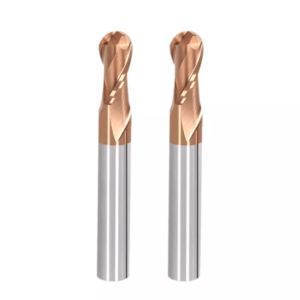
Structural Differences Between 2-Flute and 4-Flute Carbide Ball End Mills from a Manufacturing Perspective
Flute count affects cutting performance, tool rigidity, and durability. 2-flute ball end mills have thicker cores, providing stability under bending moments and vibrations during deep cavities or high-speed cutting. 4-flute tools have more edges but thinner cores, requiring precise material selection and manufacturing for long-edge or high-load operations.
Flute count also affects grinding and coating uniformity. Multi-flute designs demand consistent edge radius and helix angle to ensure stable cutting and high surface finish. Experienced China carbide ball end mill manufacturers optimize material selection, core thickness, and edge profiles to ensure consistent performance and extended tool life.
Impact of Flute Number on Tool Core Thickness and Vibration Resistance
Core thickness determines bending and vibration resistance. 2-flute ball end mills have thicker cores, offering high rigidity for deep cavities and heavy cuts, reducing breakage and maintaining accuracy. For harder materials, thicker cores better withstand cutting force fluctuations.
4-flute ball end mills have thinner cores but provide uniform cutting force distribution and adequate vibration resistance, suitable for finishing and high-quality surfaces in mold, aerospace, and hardened steel machining.
Dependence of Coating Performance on Flute Count
More flutes demand higher coating performance. Multi-flute designs reduce per-flute cutting but increase friction and heat, challenging coating wear resistance. Uniform, high-quality coatings reduce chipping and surface scratches, improving stability, especially for micro and high-hardness ball end mills.
2-flute tools experience higher per-flute forces, requiring tough coatings. Working with a professional China carbide ball end mill manufacturer ensures optimized coatings, materials, and flute design, extending tool life and maintaining cutting performance across materials.
Common Flute Design Solutions from China Carbide Ball End Mill Manufacturers
Manufacturers provide customized flute designs based on material, part structure, and diameter. 2-flute ball end mills are ideal for deep cavities, high chip evacuation, and soft materials, focusing on core thickness and bending resistance. 4-flute tools suit finishing or hard materials, optimizing cutting balance, surface finish, and vibration control.
Miniature and high-hardness ball end mills are further optimized with coating, material hardness, and diameter to ensure even cutting, smooth chip evacuation, and extended tool life. Partnering with a China carbide ball end mill manufacturer provides professional flute design solutions for stable, efficient machining in high-precision and hard material processing.
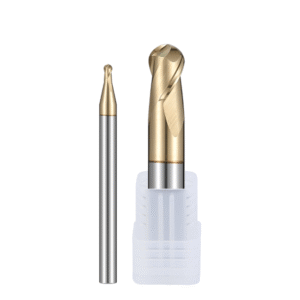
Common Misconceptions in Ball End Mill Selection Regarding the Number of Flutes
In ball end mill procurement and application, many operators focus solely on flute count when judging tool suitability. However, this approach often leads to errors. Material hardness, cutting resistance, and chip evacuation characteristics directly affect the optimal number of flutes. Ignoring these factors can result in premature tool wear, breakage, or inefficient machining. Evaluating material, part geometry, and machine tool rigidity is essential to maintain machining stability and surface quality.
Blindly pursuing multi-flute or single-flute tools without considering the machining process can also increase production costs and reduce part accuracy. Choosing the correct flute count not only improves tool life but also optimizes cutting parameters and chip evacuation, reducing downtime and rework. Collaborating with an experienced China carbide ball end mill manufacturer provides professional guidance tailored to material, tool diameter, and machining process, helping avoid misconceptions and ensure scientifically sound tool selection.
Analysis of Focusing Only on Flute Count and Ignoring Material
Many procurement professionals focus exclusively on flute count, ignoring material hardness and cutting characteristics. A 2-flute ball end mill works well in soft materials, but using it on hardened steel or high-HRC parts can concentrate cutting forces, causing vibration or breakage. Conversely, 4-flute tools may struggle with chip evacuation in soft materials, generating heat buildup and built-up edges, which reduces efficiency and surface quality.
The correct approach evaluates material hardness, part complexity, and machining parameters. Partnering with professional manufacturers ensures optimized flute count recommendations for different materials, enabling stable cutting, high surface finish, and extended tool life. Proper flute-material matching is essential for precision machining, improving yield and consistency.
Risks of Using 4-Flute Micro Carbide Ball End Mills in Small-Diameter Machining
Micro ball end mills have limited rigidity due to their small diameter. Blindly choosing a 4-flute micro ball end mill distributes cutting forces but restricts chip evacuation, leading to chip accumulation, localized overheating, and cutting edge chipping. High flute count in miniature tools also increases vibration sensitivity, reducing accuracy and raising breakage risk.
For small parts, selecting the appropriate flute count, feed rate, and depth is critical. Typically, 2-flute micro ball end mills provide more stable forces and smoother chip evacuation, especially in deep cavities or complex surfaces. Working with an experienced China carbide ball end mill manufacturer enables custom flute counts and tool geometry for the part size, material, and machining conditions, ensuring high-precision machining and extended tool life.
Limitations of 55 HRC Tungsten Carbide Ball Nose End Mills in Low-Rigidity Equipment
High-hardness ball end mills used on low-rigidity machines or fixtures are prone to vibration, deflection, or breakage. Even high-performance 55 HRC tungsten carbide ball nose end mills may underperform under insufficient rigidity, affecting accuracy and surface finish.
Comprehensive evaluation of machine rigidity, fixture stability, and cutting parameters is critical. Selecting the right flute count, feed rate, and cutting depth minimizes breakage risk and ensures consistent machining. Partnering with professional manufacturers for tool and parameter customization ensures high-precision, stable machining in hard materials across different equipment conditions.

How to Choose the Right Number of Flutes Based on Actual Machining Needs
Proper flute selection is central to machining efficiency, surface quality, and tool life. Factors including material hardness, machining process, and machine tool rigidity all affect flute count decisions. By considering flute number, diameter, material characteristics, and cutting parameters, operators can achieve optimal performance at each machining stage.
For miniature parts, hard materials, and complex 3D surfaces, the correct flute count reduces tool breakage risk, minimizes vibration and chip accumulation, and improves surface consistency. Collaborating with experienced China carbide ball end mill manufacturers provides scientifically guided flute selection and optimized tool design. From roughing to finishing, and from soft aluminum to 55 HRC steel, each working condition has an optimal flute configuration. Evaluating equipment rigidity, tool rigidity, material, and part structure ensures high-efficiency, high-precision machining while reducing costs and extending tool life.
Determining Flute Count Based on Equipment Rigidity and Spindle Speed
Equipment rigidity and spindle speed determine cutting stability and tool stress. On low-rigidity machines or at high speeds, too many flutes may cause poor chip evacuation and vibration, while too few increase cutting load per flute, raising breakage risk. Analyzing machine rigidity, spindle speed, and cutting depth enables informed decisions between 2-flute or 4-flute ball end mills, ensuring stable, efficient cutting.
Combining high-speed spindle capabilities with appropriate flute count balances cutting forces, reduces heat, and improves accuracy and surface finish. For micro-part machining, fully considering machine rigidity and spindle speed is critical to reduce breakage and machining errors.
Selecting 2-Flute or 4-Flute Ball End Mills Based on Part Complexity
Part geometry directly affects flute selection. For deep cavities, narrow grooves, or complex surfaces, 2-flute ball end mills suit roughing and semi-finishing due to smooth chip evacuation and stable cutting. For finishing or hardened steel, 4-flute ball end mills distribute forces and reduce vibration, enabling high-precision surfaces.
Flute selection must also consider cutting strategy, depth, and material hardness. For example, machining hardened parts with 55 HRC tungsten carbide ball nose end mills benefits from appropriate flute count to reduce vibration and improve cutting consistency. Evaluating part structure and process ensures stable, reliable performance.
Customizing Flute Count with a China Carbide Ball End Mill Manufacturer
Collaborating with professional manufacturers is critical for optimal flute selection. Providing detailed conditions—material, hardness, part geometry, depth, spindle speed, and machine rigidity—helps optimize flute design and number. Customized solutions extend tool life, enhance stability, and improve surface finish.
Experienced China carbide ball end mill manufacturers can recommend flute count and coating solutions based on machining stage, tool diameter, and micro-machining needs. Data-driven communication ensures high-precision, high-efficiency machining of micro-parts, hard materials, and complex surfaces while minimizing risk and production costs.