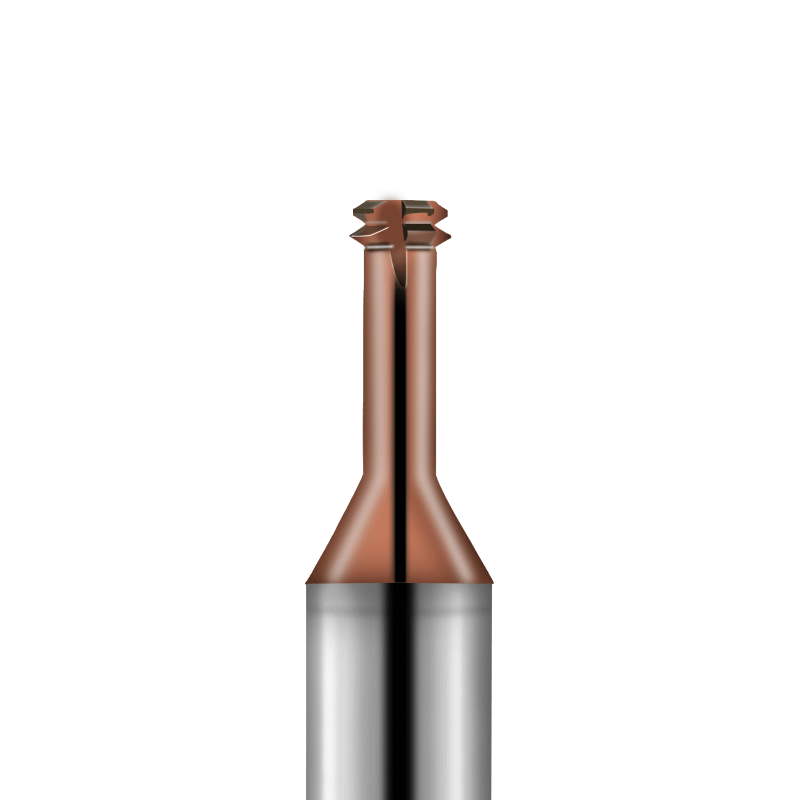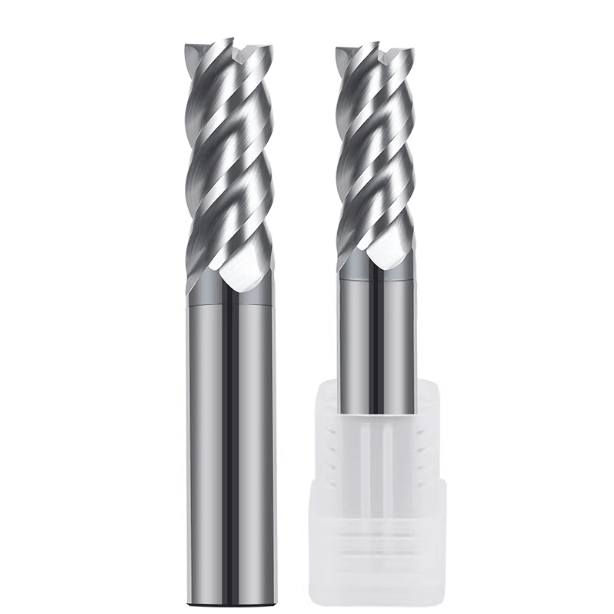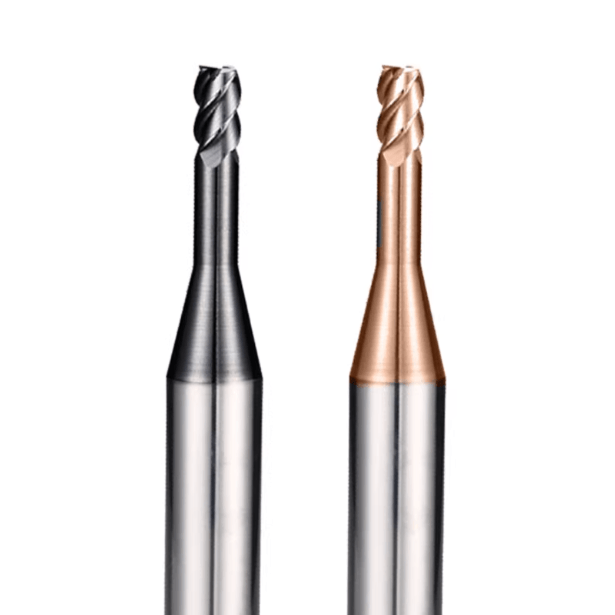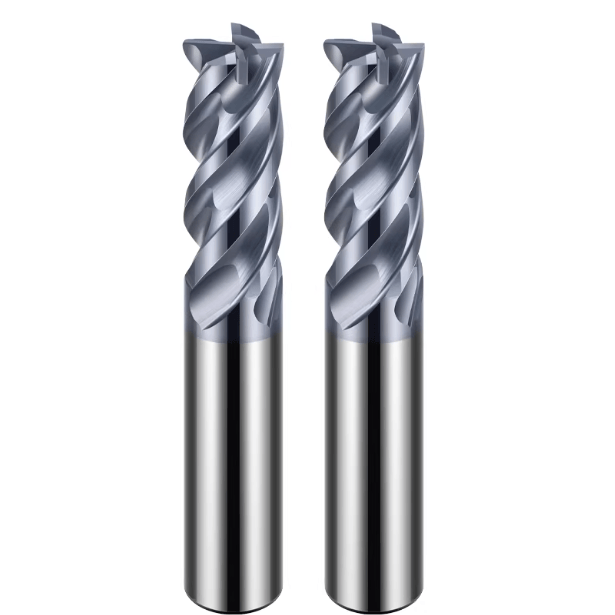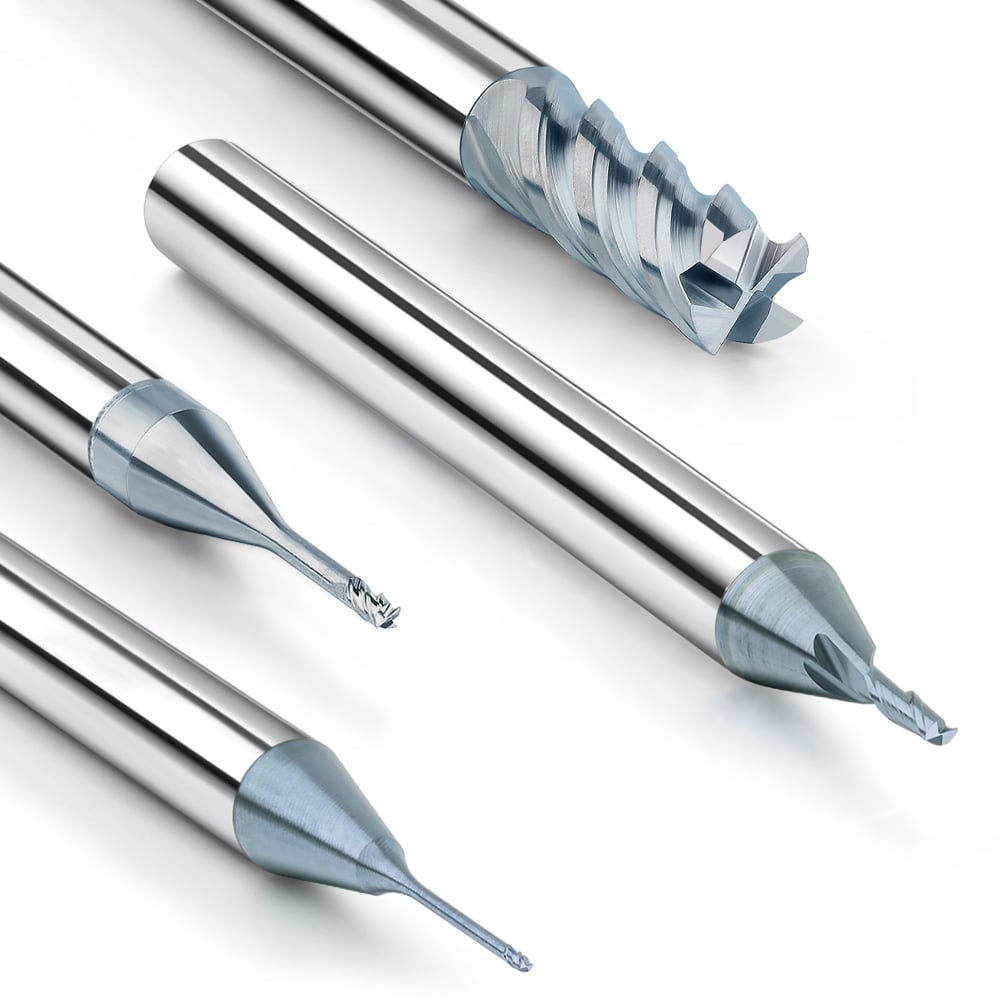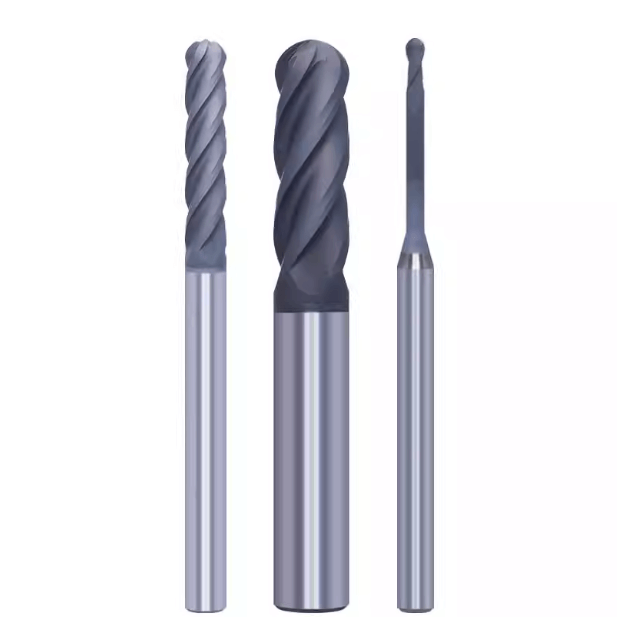
Graphite electrode machining places extremely high demands on cutting tools, particularly when machining complex surfaces and maintaining tight dimensional tolerances. Tool stability, wear resistance, and chip evacuation performance have a direct impact on machining efficiency and final product quality. With their spherical tip geometry and multi-flute design, ball nose end mills are well suited for high-precision three-dimensional machining of graphite materials, delivering consistent surface finish and dimensional accuracy.
At the same time, the use of an HRC55 ball nose end mill allows the cutting edge to remain sharp under high spindle speeds, significantly extending tool life while reducing the risks of chipping and unexpected tool failure. This makes such tools especially suitable for long-cycle and continuous graphite electrode machining.
When selecting cutting tools, sourcing ball nose cutter end mills from reliable suppliers is critical. A qualified ball nose end mill cutter supplier can provide not only high-quality standard tools, but also customized solutions based on electrode size, machining depth, and surface finish requirements. In this regard, China ball nose end mill cutter manufacturers offer strong advantages in cost control, customization flexibility, and supply stability, making them well suited for large-volume production and continuous machining operations.
In addition, proper tool parameter settings and cutting strategies are essential for stable machining performance. By optimizing helix angle, flute count, and tip radius, ball nose end mills can achieve efficient chip evacuation, reduced vibration, and consistent accuracy on complex three-dimensional surfaces. In practical applications, these tools perform effectively in both roughing operations for rapid material removal and finishing operations for smooth surfaces and precise contours, ultimately improving overall machining efficiency and product consistency for graphite electrodes.

Core Requirements of Ball Nose Cutter End Mills for Graphite Electrode Machining
Graphite electrode machining imposes demanding performance requirements on cutting tools. Although graphite has moderate hardness, its brittle nature makes it prone to generating dust and vibration during cutting. As a result, cutting tools must provide excellent chip evacuation capability and wear resistance to ensure stable cutting conditions, smooth surface finishes, and reduced risks of chipping or breakage. High-hardness, wear-resistant coated ball nose end mills can maintain stable performance under high-speed machining conditions, extending tool life while ensuring consistent electrode dimensions.
Machining efficiency and accuracy are also closely tied to tool geometry and cutting strategy. Well-designed helix angles, flute counts, and tip radii help reduce cutting resistance and optimize chip flow. When combined with properly selected feed rates and depths of cut, vibration and surface scratching can be effectively minimized. Selecting high-precision tools from an experienced ball nose end mill cutter supplier further enhances process stability and repeatability.
Influence of Graphite Material Characteristics on Ball Nose End Mill Cutting Performance
Although graphite exhibits moderate hardness, its loose granular structure makes it susceptible to micro-cracking and powder-like debris during machining. If the cutting edge is insufficiently sharp or chip evacuation is inadequate, surface scratching, edge chipping, or even tool breakage may occur. For this reason, graphite machining requires tools with sharp cutting edges, wear-resistant coatings, and optimized geometries to achieve superior surface finish and dimensional accuracy.
Graphite also has relatively low thermal conductivity, causing heat generated during machining to concentrate near the tool tip. Effective heat resistance and thermal stability are therefore essential. High-hardness tools such as HRC55 ball nose end mills are able to maintain cutting edge sharpness at elevated spindle speeds while managing localized heat buildup, ensuring stable performance during continuous machining and extended tool life.
Stability Requirements for Ball Nose End Mill Cutters in High-Speed Machining
During high-speed graphite electrode machining, cutting forces fluctuate frequently, making vibration a common source of dimensional deviation and surface inconsistency. A stable ball nose end mill maintains precise edge positioning under these conditions, reducing chatter and tip deflection while improving repeatability and machining accuracy. Optimized tool paths combined with suitable helix angles further enhance stability by minimizing cutting force variation and improving overall machining efficiency.
High-speed machining also places greater demands on tool materials and coatings. In addition to high hardness and wear resistance, the tool must offer sufficient thermal resistance to prevent accelerated edge wear caused by frictional heat. Selecting high-quality tools from a reliable ball nose end mill cutter supplier ensures stable cutting performance during extended machining cycles and consistent results across different electrode sizes and complex surface geometries.
Influence of Surface Quality and Electrode Accuracy on Tool Geometry
The surface finish and dimensional accuracy of graphite electrodes directly affect final EDM performance. Tool geometry factors such as flute count, tip radius, and R-angle play a decisive role in cutting stability and chip evacuation efficiency. Properly designed geometries reduce cutting vibration and particle scattering, producing smooth, scratch-free surfaces while improving machining accuracy and repeatability.
Matching tool geometry with cutting parameters is equally important. By adjusting depth of cut, feed rate, and helix angle, cutting forces and chip evacuation efficiency can be optimized for both roughing and finishing operations. High-precision ball nose end mills supplied by a China ball nose end mill cutter manufacturer can be geometrically optimized according to electrode size and surface complexity, improving machining stability and overall production yield.

Application of Ball Nose End Mills in Roughing and Finishing of Graphite Electrodes
Ball nose end mills provide an effective balance of efficiency and precision in graphite electrode machining, making them suitable for complex 3D surfaces and large electrode geometries. During roughing operations, the primary objective is rapid material removal while maintaining balanced cutting forces and stable machining conditions. Proper selection of tool diameter, helix angle, and flute count enhances chip evacuation efficiency, reduces vibration risk, and improves both machining efficiency and tool life. HRC55 ball nose end mills with wear-resistant coatings maintain sharp cutting edges under continuous high-speed cutting, meeting the demands of aggressive roughing operations.
In finishing operations, surface quality and dimensional accuracy become the primary focus. The rounded tip geometry of ball nose end mills smooths cutting transitions and minimizes the impact of micro-vibrations, resulting in uniform surface finishes. When combined with optimized tool paths and appropriate feed parameters, surface roughness can be tightly controlled without sacrificing productivity. Selecting high-precision tools from a reliable ball nose end mill cutter supplier ensures consistent and stable results across both roughing and finishing stages.
Advantages of Ball Nose Cutter End Mills in Machining Complex Three-Dimensional Electrode Surfaces
Ball nose end mills naturally conform to three-dimensional surface contours, reducing the need for frequent tool orientation changes and significantly minimizing chatter during machining. The spherical tip distributes cutting stress more evenly, reducing edge chipping and tip wear while improving machining stability. This is particularly important when machining intricate concave and convex graphite electrode geometries, where both accuracy and tool longevity are critical.
Additionally, ball nose end mills demonstrate excellent chip evacuation performance in multi-layer cutting processes. Graphite machining generates significant dust and fine debris, and inadequate evacuation can lead to surface damage or accelerated tool wear. Optimized geometry and helix angles improve chip flow, ensuring stable tool performance during continuous, high-speed machining and enabling high-quality three-dimensional surface finishes.
Tool Path and Cutting Strategy of Ball Nose End Mills in the Roughing Stage
Roughing operations prioritize rapid material removal while minimizing tool load. Contour-based or helical down-cutting tool paths help balance cutting forces, reduce vibration, and improve chip evacuation, thereby lowering the risk of tool breakage. Selecting appropriate tool diameters and depths of cut reduces excessive wear while maintaining high productivity, creating favorable conditions for subsequent finishing operations.
HRC55 ball nose end mills with wear-resistant coatings exhibit excellent thermal stability and edge durability during roughing, supporting continuous machining with large material removal volumes. By optimizing spindle speed and feed rate in combination with well-planned tool paths, overall machining efficiency can be increased while maintaining consistent electrode geometry and minimizing finishing allowances.
Control of Surface Finish by Ball Nose End Mill Cutters in the Finishing Stage
In finishing operations, achieving smooth surfaces and micron-level dimensional accuracy is critical. The small tip radius and rounded geometry of ball nose end mills reduce tool marks and improve surface uniformity. When paired with shallow depths of cut and moderate feed rates, vibration is minimized and surface quality is significantly enhanced, allowing the machined surface to closely match design specifications.
Selecting customized tools from a high-quality China ball nose end mill cutter manufacturer ensures consistent tool geometry and cutting edge sharpness throughout continuous machining cycles. This prevents surface scratching and roughness variation while extending tool life. Combined with optimized tool paths and cutting parameters, finishing operations achieve higher yields, improved consistency, and stable long-term machining performance.
Practical Performance of HRC55 Ball Nose End Mills in Graphite Machining
In graphite electrode machining, high-hardness ball nose end mills demonstrate excellent wear resistance and machining stability. The HRC55 hardness level allows the cutting edge to remain sharp under high spindle speeds, effectively preventing chipping and localized wear while significantly extending tool life. When combined with optimized cutting parameters and well-designed tool paths, these tools deliver efficient performance in both roughing and finishing operations, ensuring uniform electrode surfaces and accurate three-dimensional contours. Selecting high-quality tools from a reliable ball nose end mill cutter supplier further ensures consistent machining results across various electrode sizes and complex geometries.
HRC55 ball nose end mills also exhibit strong stability in continuous machining environments. Graphite materials generate fine dust and debris during cutting, and insufficient tool wear resistance can result in dimensional fluctuation or premature tool failure. High-hardness tools supplied by experienced China ball nose end mill cutter manufacturers offer improved heat resistance and abrasion resistance, maintaining machining consistency during long production cycles. This reduces tool change frequency and downtime, ultimately improving overall productivity.
Wear Resistance of HRC55 Ball Nose End Mills in High-Speed Graphite Cutting
Under high-speed machining conditions, cutting tools are exposed to fluctuating forces and concentrated heat at the cutting edge. Thanks to their high hardness and advanced coating performance, HRC55 ball nose end mills maintain sharp cutting edges and exhibit low wear rates during high-speed graphite cutting. Optimized tool geometry helps distribute cutting stress more evenly, enhancing edge durability during continuous machining while ensuring smooth surface finishes and minimizing chipping or micro-cracking.
Tool wear resistance has a direct impact on machining efficiency and cost control. Wear-resistant tools maintain stable cutting performance over extended periods, reducing interruptions caused by frequent tool changes. By sourcing ball nose end mill cutters from high-quality suppliers, consistent hardness and coating quality can be ensured, supporting high-efficiency machining across a wide range of electrode sizes and complex surface applications.
Differences in Usage Between HRC55 Ball Nose End Mills and Conventional Hardness Tools
Compared with conventional hardness tools, HRC55 ball nose end mills offer clear advantages in graphite machining. Standard tools are more susceptible to rapid wear, edge chipping, and vibration under high-speed cutting or larger depths of cut, which can increase surface roughness and lead to accumulated dimensional errors. In contrast, HRC55 tools maintain edge sharpness and dimensional accuracy under identical conditions, resulting in improved machining stability and repeatability.
High-hardness tools also provide greater flexibility across both roughing and finishing stages. By properly matching tool diameter, helix angle, and cutting depth, HRC55 ball nose end mills achieve efficient chip evacuation and reduced cutting resistance, improving surface quality without sacrificing machining speed. Customized solutions from a China ball nose end mill cutter manufacturer can further optimize tool performance and increase overall production yield.
Life Stability of HRC55 Ball Nose End Mills in Continuous Machining
During continuous graphite electrode machining, tools are subjected to prolonged high-speed cutting and repeated mechanical stress. The combination of high hardness and wear-resistant coatings allows HRC55 ball nose end mills to maintain sharp cutting edges, preventing dimensional deviation and surface defects caused by localized wear. This ensures stable tool life and consistent machining quality throughout long production runs.
Tool stability also directly affects machining consistency and operational efficiency. High-quality tools maintain uniform performance in continuous and batch production, reducing tool replacement frequency and minimizing downtime. When combined with customized tool geometries tailored to electrode size, surface complexity, and machining depth, continuous machining processes become more reliable, efficient, and predictable.
Key Factors Affecting Graphite Electrode Machining Efficiency with Ball Nose End Mills
Machining efficiency in graphite electrode production depends not only on machining strategy but also heavily on tool geometry and cutting conditions. Parameters such as flute count, helix angle, and tip radius directly influence cutting force distribution, chip evacuation efficiency, and surface quality. Well-designed tool geometry reduces vibration, lowers cutting resistance, and improves surface consistency, ensuring dimensional accuracy and repeatability. Selecting high-quality ball nose end mill cutters from reliable suppliers helps maintain stable performance under high-speed and heavy-load cutting conditions.
Machining stability is also influenced by tool wear resistance, thermal behavior, and chip evacuation capability. High-hardness HRC55 ball nose end mills retain edge sharpness during extended machining, significantly extending tool life. By optimizing tool paths and cutting parameters, chip evacuation efficiency and machining accuracy can be further improved. Customized tools from experienced China ball nose end mill cutter manufacturers enable smooth transitions between roughing and finishing operations, maximizing overall machining productivity.
Impact of Flute Count, Helix Angle, and Tip Radius on Chip Evacuation and Surface Quality
Flute count, helix angle, and tip radius play critical roles in chip evacuation and cutting stability during graphite machining. Excessive flute numbers may increase cutting forces, while too few flutes can limit material removal efficiency. An appropriate helix angle promotes smooth evacuation of graphite dust and chips, reducing clogging, vibration, and surface defects. A properly selected tip radius allows smooth transitions on curved surfaces, minimizing micro-vibration and improving surface accuracy.
Customized ball nose end mill cutters allow optimization of flute configuration and helix angle for different electrode sizes and complex surface profiles. When combined with suitable cutting parameters, these design optimizations enhance machining efficiency, reduce chipping risks, and significantly extend tool life.
Impact of Tool Runout on Graphite Electrode Dimensional Accuracy
Tool runout is a critical factor affecting dimensional accuracy and surface consistency. Even with high-hardness tools, insufficient machine rigidity or improper tool clamping can cause tool tip deviation, leading to contour errors and surface scratching. Persistent runout accelerates tool wear, increases tool change frequency, and reduces overall machining efficiency.
Using high-precision ball nose end mill cutters from reliable suppliers, along with proper clamping systems, effectively minimizes runout. When combined with optimized feed rates and tool path strategies, machining stability can be maintained throughout continuous production, protecting the cutting edge and extending the service life of HRC55 ball nose end mills.
Impact of Cooling Methods on Ball Nose End Mill Wear
Heat generation and graphite dust accumulation significantly influence tool wear during machining. Dry cutting avoids coolant contamination but may lead to elevated tool temperatures at high spindle speeds, accelerating wear. Minimum quantity lubrication (MQL) reduces friction, limits heat buildup, and improves chip evacuation, particularly in continuous machining and complex surface applications.
Selecting an appropriate cooling method in combination with wear-resistant tools from a high-quality China ball nose end mill cutter manufacturer helps minimize tool wear and surface defects. Proper cooling strategies protect tool geometry and coatings, enhance machining stability, and support high-efficiency, high-precision graphite electrode production.

Common Problems and Solutions for Ball Nose End Mill Cutters in Graphite Electrode Machining
Even when using high-hardness ball nose end mills, issues such as abnormal wear, tool breakage, and surface scratching may still occur in graphite machining. These problems are often caused by mismatched cutting parameters, improper tool geometry, or insufficient chip evacuation. In high-speed or large-volume production, poorly planned tool paths can negatively affect machining efficiency and increase tooling costs. Selecting high-quality ball nose end mill cutters from reliable suppliers improves wear resistance and dimensional stability, enhancing overall machining reliability.
Addressing these challenges requires optimization of tool selection and machining strategies. Proper tool diameter, flute count, helix angle, and tip radius help balance cutting forces, improve chip evacuation, and reduce vibration. Customized tools from experienced China ball nose end mill cutter manufacturers maintain stable performance in both roughing and finishing operations, reducing downtime and improving machining efficiency and yield.
Causes of Abnormal Tool Wear in Graphite Machining
Abnormal tool wear typically occurs during prolonged high-load cutting or when cutting forces are unevenly distributed. Graphite’s brittle nature generates fine dust and micro-debris, and poor chip evacuation or insufficient coating wear resistance can lead to rapid localized edge wear or chipping. Excessive vibration further accelerates wear, negatively impacting surface finish and dimensional accuracy.
Improper cutting parameters are another major contributor. Excessive depth of cut, overly high feed rates, or inefficient tool paths increase tool load and wear rate. Selecting high-quality tools from a reliable ball nose end mill cutter supplier and applying optimized cutting parameters effectively reduces wear and extends tool life.
Tool-Related Causes of Chipping and Surface Roughness
Chipping and excessive surface roughness are often linked to mismatches in cutting edge sharpness, flute configuration, or tip radius. Dull edges or poorly designed helix angles concentrate cutting forces, increasing vibration and chipping risk while degrading surface quality and dimensional accuracy.
Inferior tool coatings or inconsistent hardness further accelerate edge degradation, resulting in scratches and uneven surface textures. Customized tools from a professional China ball nose end mill cutter manufacturer ensure optimized geometry and coating quality, significantly reducing chipping and surface roughness when combined with appropriate cutting strategies.
Reducing Tool Breakage Risk by Optimizing Ball Nose End Mill Parameters
Tool breakage typically occurs under excessive load, severe vibration, or poor chip evacuation conditions. Optimizing cutting parameters—such as reducing depth of cut, controlling feed rates, and selecting appropriate tip radius and helix angle—helps distribute cutting stress and prevent localized overload. Proper tool path planning also plays a key role in maintaining balanced cutting forces.
High-hardness ball nose end mill cutters with wear-resistant coatings maintain edge integrity during continuous machining, reducing thermal stress and lowering breakage risk. Precision tools supplied by experienced China ball nose end mill cutter manufacturers ensure consistent performance and extended tool life, ultimately improving machining efficiency and overall production yield.

How to Choose the Right Ball Nose End Mill Cutter Supplier
Graphite electrode machining places extremely high demands on ball nose end mills, involving not only tool geometry and wear resistance but also the technical support and customization capabilities provided by the supplier. Selecting the right supplier ensures stable tool performance under high spindle speeds and large cutting volumes, reducing machining anomalies and improving overall yield. High-quality suppliers are able to offer comprehensive optimization solutions, covering tool materials, coatings, and geometric design, to ensure efficient and reliable performance in both roughing and finishing operations.
Supplier reliability and service capability are equally important during the selection process. Beyond providing standard tools, suppliers that can customize tooling based on electrode size, surface complexity, and specific machining processes can significantly enhance machining efficiency and consistency. Working with an experienced China ball nose end mill cutter manufacturer often provides greater flexibility in tool specifications and more stable supply cycles, supporting continuous machining and large-scale production requirements.
Requirements for Supplier Technical Capabilities in Graphite Machining Ball Nose End Mills
Graphite machining requires strict control over cutting edge sharpness, geometric accuracy, and coating performance. As a result, suppliers must possess strong R&D capabilities and advanced manufacturing processes. They should be able to optimize helix angles, flute counts, and tip radii according to machining speeds and graphite material characteristics, ensuring stable and predictable tool performance under high-speed cutting conditions. Technically capable suppliers can also provide machining recommendations, tool life analysis, and optimization guidance to reduce production risks and improve efficiency.
In addition, a complete inspection and quality control system is essential. From raw material selection to final tool inspection, consistency must be maintained across all production stages. Choosing a ball nose end mill cutter supplier with proven technical expertise and real-world machining experience ensures reliable tool geometry, stable coating performance, and effective customization support when special machining requirements arise.
Does the Ball Nose End Mill Cutter Supplier Support Specification and Flute Type Customization?
Graphite electrodes vary widely in size and surface geometry, and standard tools cannot meet all machining requirements. A supplier’s ability to customize tool diameter, flute number, helix angle, and tip radius plays a critical role in improving machining efficiency and surface quality. Customized tools help optimize cutting force distribution, improve chip evacuation, and extend tool life, while reducing the need for frequent parameter adjustments during production.
Reliable suppliers typically offer integrated services covering tool design, prototyping, and mass production. By working with a China ball nose end mill cutter manufacturer that supports customization, users can obtain tooling solutions tailored specifically to graphite machining characteristics. This enables smooth transitions between roughing and finishing operations, ensuring stable processing efficiency and consistent production yield.
Key Considerations for Quality Consistency and Delivery Time Control
Tool quality consistency has a direct impact on machining accuracy and yield. Suppliers must follow strict production standards and testing procedures to ensure uniform geometry, hardness, and coating quality across every batch of tools. Whether used in roughing or finishing operations, high-quality tools deliver consistent cutting performance, minimizing issues such as uneven wear, vibration, and surface defects.
Delivery reliability is another critical factor. A dependable supplier can ensure on-time delivery even for large-volume orders or urgent production schedules, maintaining uninterrupted machining operations. Partnering with an experienced ball nose end mill cutter supplier provides not only high-quality tooling but also greater flexibility in production planning, improving overall operational stability and efficiency.
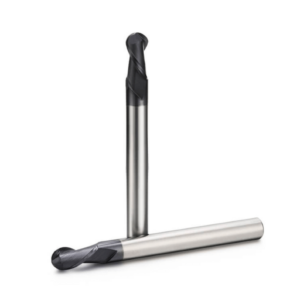
Advantages of Chinese Ball Nose Cutter End Mill Cutter Manufacturers in Graphite Machining
Chinese-manufactured ball nose end mills offer notable advantages in terms of cost efficiency and production flexibility for graphite machining applications. Compared with many international brands, Chinese manufacturers can provide competitively priced tools while maintaining reliable wear resistance and cutting stability. This allows manufacturers to reduce tooling costs without compromising machining efficiency or product consistency, particularly in continuous and large-volume production environments.
Chinese manufacturers also benefit from flexible supply chains and scalable production capacity, enabling fast response to customer requirements. Whether supplying standard tools or customized solutions, China ball nose end mill cutter manufacturers can meet the demands of complex surface machining, high material removal rates, and long tool life. While ensuring cutting performance and durability, they also provide tailored tooling solutions that enhance overall machining efficiency and consistency.
Cost Control Performance of Chinese Ball Nose End Mill Cutter Manufacturers
Chinese manufacturers hold strong advantages in cost control through optimized raw material sourcing, efficient production processes, and large-scale manufacturing. By refining tool material selection and coating technologies, they are able to reduce production costs while maintaining cutting edge sharpness and wear resistance. This enables graphite machining operations to control tooling expenses while achieving stable and efficient machining performance.
In addition, standardized manufacturing processes and mass production capabilities contribute to consistent cost structures. Collaborating with experienced ball nose end mill cutter suppliers helps minimize losses caused by tool inconsistency or premature wear, while improving inventory management and production planning efficiency.
Customization and Mass Production Capabilities of Chinese Ball Nose End Mill Cutter Manufacturers
Chinese manufacturers demonstrate strong capabilities in both tool customization and large-scale production. Based on electrode size, surface complexity, and machining depth, they can supply customized ball nose end mills with specific diameters, flute counts, helix angles, and tip radii. These tailored tools enhance cutting stability, chip evacuation efficiency, and dimensional accuracy, improving the performance of both roughing and finishing operations.
At the same time, large-scale manufacturing capacity allows for fast delivery while maintaining consistent tool quality. Whether for small-batch customized tools or high-volume production orders, Chinese manufacturers can ensure delivery reliability and performance consistency. This flexibility supports continuous production and stable output quality in graphite electrode machining.
Application Feedback of Chinese-Made Ball Nose End Mills in International Graphite Electrode Machining
Chinese-made ball nose end mills are widely adopted in the global graphite machining market. Many international graphite electrode manufacturers report stable wear resistance, reliable cutting performance, and consistent surface finish when using these tools under high-speed and high-load conditions. Competitive pricing further supports long-term production and large-scale machining requirements.
Additionally, Chinese manufacturers are able to provide customized tooling solutions for various machining needs, including different tip radii, flute configurations, and coating options. By working with experienced ball nose end mill cutter suppliers, international customers achieve stable machining results in both roughing and finishing stages, improving yield while reducing overall production costs.

Selection and Usage Recommendations for Ball Nose End Mills in Graphite Electrode Machining
In graphite electrode machining, tool selection directly affects machining efficiency, surface quality, and tool life. Based on the material characteristics, machining stages, tool geometry, cooling strategies, and supplier capabilities discussed above, proper selection requires careful consideration of tool hardness, flute count, helix angle, tip radius, and coating performance. High-hardness ball nose end mills maintain sharp cutting edges under high-speed and continuous machining conditions, ensuring stable performance in both roughing and finishing while reducing the risk of chipping and tool failure.
Tool selection should also account for supplier customization capability and delivery reliability. A qualified China ball nose end mill cutter manufacturer can provide tooling solutions matched to electrode size, surface complexity, and machining depth, ensuring consistent geometry accuracy, wear resistance, and coating quality across production batches. Proper selection not only improves machining efficiency but also significantly enhances surface finish and production yield, supporting high-quality graphite electrode manufacturing.
Logic for Selecting Ball Nose End Mill Diameters Based on Electrode Size
Different electrode sizes require different tool diameters. Large electrodes typically benefit from larger-diameter tools to ensure cutting stability and efficient material removal, while smaller or fine-feature electrodes require smaller tools to improve machining flexibility and surface accuracy. By optimizing flute count and helix angle, cutting force distribution can be balanced across different electrode sizes, reducing vibration and chipping while improving chip evacuation efficiency.
Selecting high-hardness, wear-resistant ball nose end mill cutters further ensures stable performance under high-speed and continuous machining conditions. This approach extends tool life and maintains consistent machining results across both roughing and finishing operations, ultimately improving efficiency and yield.
Matching the Appropriate Ball Nose Cutter End Mill Cutter Type to Each Machining Stage
During roughing operations, larger-diameter tools with moderate flute counts and high wear resistance are preferred to maximize material removal while maintaining cutting stability. Finishing operations require tools with smaller tip radii, sharper cutting edges, and optimized helix angles to achieve superior surface finish and dimensional accuracy. Properly matching tool types to each machining stage enables smooth transitions between roughing and finishing, reducing overall processing time.
Tools supplied by experienced China ball nose end mill cutter manufacturers are often optimized in geometry and coating for specific machining stages, ensuring stable performance during continuous operation. Combined with well-planned tool paths and cutting parameters, this approach minimizes vibration, chipping, and breakage risks.
Improving Machining Efficiency and Yield Through Rational Tool Selection
Rational tool selection optimizes the machining process while improving overall production yield. By selecting ball nose end mill cutters based on electrode size, machining stage, and tool performance requirements, chip evacuation efficiency can be maximized while vibration and wear are minimized. High-hardness tools combined with customized geometries significantly improve both roughing and finishing efficiency, reducing tool change frequency.
Selecting high-quality tools from reliable suppliers ensures consistent geometry and coating performance during large-volume and continuous machining. Through scientific selection and proper usage, manufacturers can achieve efficient, high-precision graphite electrode machining while lowering production costs and defect rates.