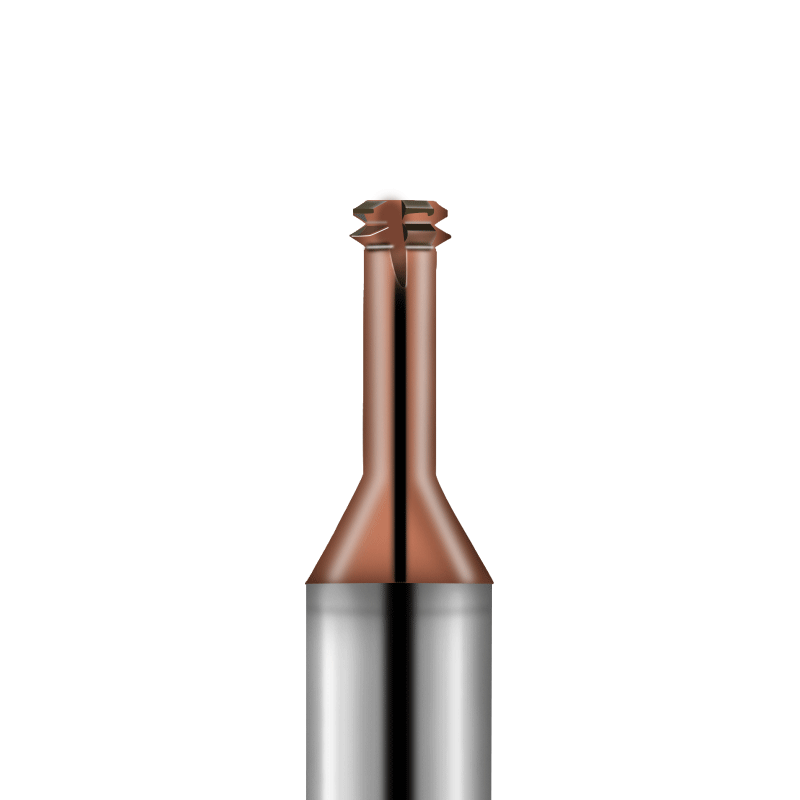
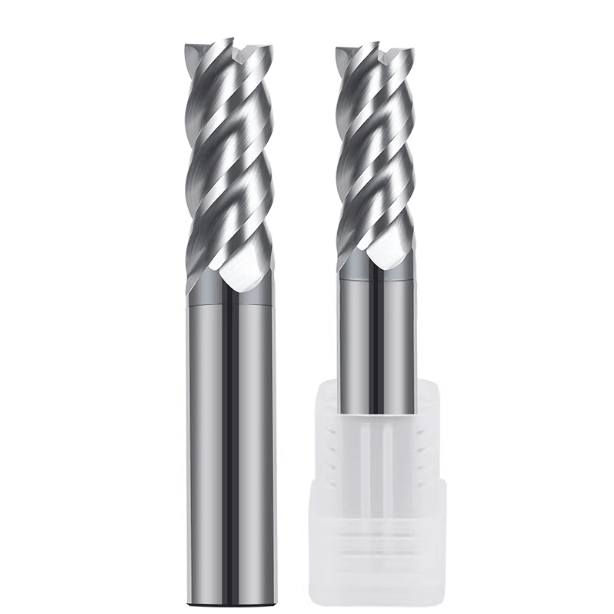
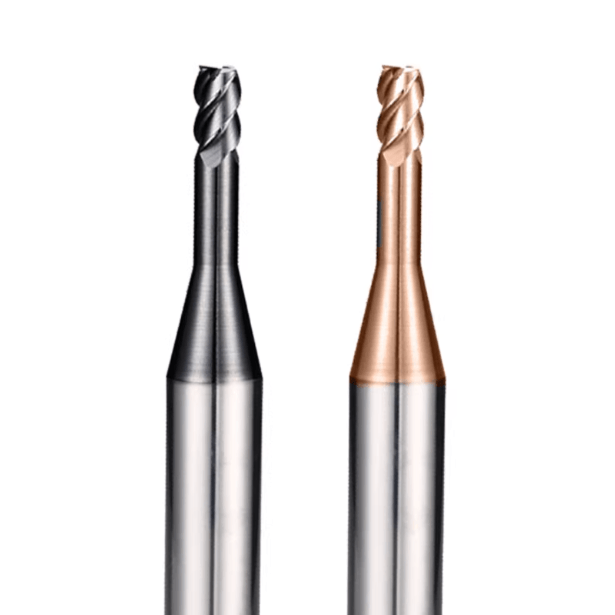
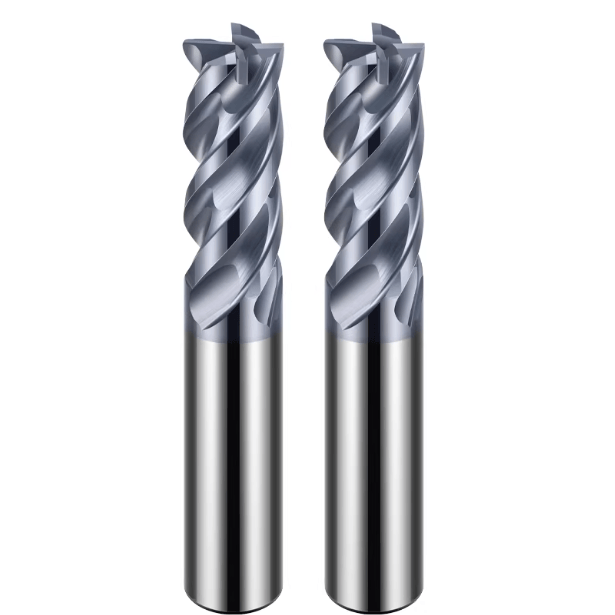
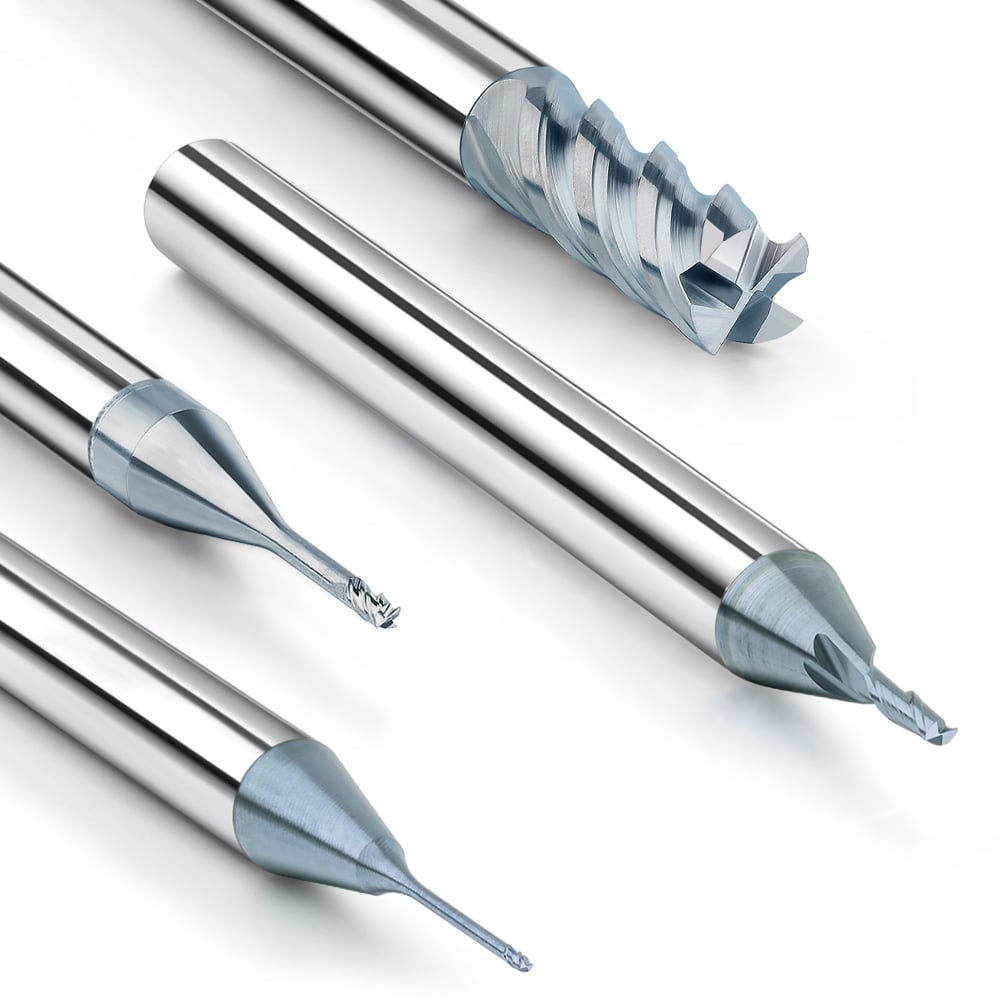
In mold and die manufacturing, the choice of cutting tools directly affects processing efficiency, cavity accuracy, and subsequent polishing costs. Among these tools, ball nose milling cutters have become indispensable due to their stable performance when machining complex curved surfaces and deep cavities. Whether working on plastic molds, die-casting molds, or precision stamping molds, there are increasing demands for ball nose milling cutters in terms of cutting stability, surface finish, and tool life.
With the continuous increase in mold material hardness and the widespread use of pre-hardened and high-hardness steels, the advantages of HRC55 ball nose milling cutters have become increasingly apparent in the semi-finishing and finishing stages. These cutters provide strong edge integrity while effectively controlling wear, reducing the risk of chipping, and delivering consistent quality on complex cavities and free-form surfaces. This is why many mold manufacturers pay particular attention to the hardness level of cutting tools during selection.
In practical machining, the number of flutes on a ball nose milling cutter significantly impacts its performance. The choice between 2-flute and 4-flute cutters often depends on the mold structure, machining stage, and requirements for chip evacuation and surface finish. Properly matching the flute count can improve cutting efficiency and ensure a more stable surface during mold finishing.
Additionally, the manufacturing process and batch consistency of the cutter play a key role in reliability. Increasingly, mold companies consider the comprehensive capabilities of Chinese manufacturers of ball nose end mills, including raw material control, edge design, and batch consistency. Choosing a factory with extensive mold application experience helps reduce long-term tool costs and minimize risks associated with performance variability.
Therefore, selecting the right ball nose milling cutter supplier from numerous brands and specifications—and establishing a stable long-term partnership—has become crucial for enhancing the competitiveness of mold manufacturing operations.
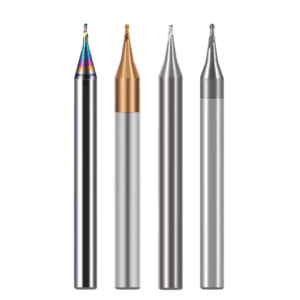
Core Requirements for Ball Nose Milling Cutters in Mold and Die Processing
In mold and die work, processing accuracy, surface finish, and tool life are key indicators of machining effectiveness. Ball nose end mills, with their spherical cutting edges, deliver stable performance when machining complex surfaces, deep cavities, and free-form shapes. They are particularly effective for achieving high consistency when processing mold cavities and precision concave or convex surfaces. Mold components often have complex geometries and frequently changing surfaces, which places higher demands on the radial and axial stability of the cutter. Meanwhile, chip evacuation and cutting temperature control are critical to avoid chatter marks or chipping.
Selecting the right ball nose end mill requires matching the cutter to the mold material hardness, machining depth, and cutting parameters. Optimized tool geometry, coating treatment, and edge strength can significantly reduce wear, extend tool life, and maintain high-quality surfaces during semi-finishing and finishing. Deep cavities, high surface finish requirements, and multi-axis machining common in mold work demand that the tool maintain consistency under cutting forces and vibration, ensuring dimensional accuracy and surface uniformity.
Requirements for Tool Stability in Complex Surface and Cavity Machining
Mold components often feature free-form surfaces with large curvature variations and deep cavity regions. Machining these areas generates complex cutting forces, and vibration or deflection can occur. High-precision work requires not only good cutting stability but also a constant contact area during machining to prevent irregular scratches or pits. By carefully selecting the ball radius, helix angle, and tool edge type, cutting vibrations can be minimized, ensuring uniform and accurate surfaces in deep cavities and on complex shapes.
Furthermore, efficient chip evacuation in these areas directly affects tool life. Proper flute count and coating processes can reduce heat buildup and improve wear resistance on high-hardness mold steel, enabling efficient and stable machining.
Characteristics of Cutting Load under High-Hardness Mold Steel Conditions
For mold steels such as P20, 718, and NAK80 in the HRC50–55 range, cutting loads increase significantly, placing higher radial and axial forces on the cutter. These conditions can easily cause chipping, surface tearing, or chatter marks. Maintaining processing quality requires optimizing cutting parameters, tool geometry, and material. High-hardness ball-end mills with optimized helix and rake angles, combined with wear-resistant coatings, can achieve long-term stable cutting.
During semi-finishing, adjusting cutting depth, feed rate, or cutting width can help balance the tool load. Finishing, however, focuses on edge strength and surface consistency to ensure smooth and accurate parts.
Different Requirements for Ball Nose Milling Cutters in Roughing and Finishing Stages
In roughing, the goal is efficient material removal. Tools need strong chip evacuation and impact resistance, while maintaining tip strength to prevent premature wear or breakage. Fewer-flute ball-end mills with robust tips are typically chosen to improve speed and stability.
Finishing emphasizes surface quality and dimensional accuracy. Tools require higher cutting stability, low vibration, and consistency to achieve smooth, uniform cavity surfaces. Proper selection of cutting parameters, ball radius, and coatings minimizes tool marks and chatter, reducing subsequent polishing and finishing costs.
Matching cutters to each processing stage ensures a balance of efficiency, precision, and tool life, resulting in high-quality mold and mold base machining.
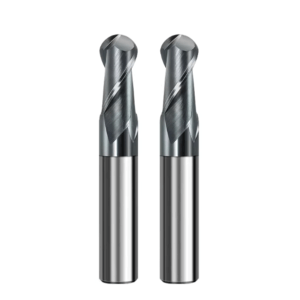
Influence of Commonly Used Mold Materials on Ball-End Milling Cutter Performance
The type and hardness of mold materials directly affect tool life, cutting stability, and surface finish. Different mold steels generate varying cutting forces, chip behavior, and wear demands. Selecting the right cutter and parameters is essential. High-hardness steels increase tool load and risk of chipping, requiring a combination of optimized tool geometry, coating, and feed strategy to maintain efficiency and accuracy.
In practice, manufacturers match cutters to material and machining stage. Roughing focuses on chip evacuation and impact resistance, while finishing emphasizes surface smoothness and dimensional consistency. Working with a reliable ball nose milling cutter supplier, combined with factory machining expertise, can extend tool life and improve quality in complex cavity and free-form surface machining.
Machining Characteristics of Pre-Hardened Steels such as P20, 718, and NAK80
Pre-hardened steels like P20, 718, and NAK80, typically HRC28–40, offer good toughness and machinability but still produce significant cutting forces and heat. These steels are best machined with sharp, geometrically optimized ball nose end mills to maintain efficiency and surface consistency.
For deep cavities and complex surfaces, effective chip evacuation and vibration control are essential. Correct cutting speeds and feeds reduce wear and surface roughness while ensuring cavity accuracy. This is a key factor considered by mold factories sourcing from Chinese ball nose end mill manufacturers.
Cutting Challenges of HRC50–55 Mold Steel
High-hardness steels (HRC50–55) pose significant machining challenges. They generate high cutting forces, tough chips, and heat, which can cause chipping, chatter marks, or surface scratches. Optimizing tool material, coating, and edge geometry, along with adjusting cutting depth and feed rate, ensures stable semi-finishing and finishing operations.
Poor chip evacuation can further reduce tool life. Ball nose end mills with strong chip evacuation, combined with optimized helix angles and flute counts, minimize heat buildup and improve wear resistance and machining stability.
Applicable Scenarios of HRC55 Ball Nose Milling Cutters in Mold Machining
Using high-hardness ball nose mills on HRC55 mold steel improves surface finish and dimensional consistency for complex cavities and free-form surfaces. Wear-resistant coatings and optimized edge design enable stable performance in deep cavity finishing, semi-finishing, and mold trimming.
Flute count is matched to machining stage and cavity depth: 2-flute mills suit roughing with high chip load, while 4-flute mills excel in finishing for stability and surface quality. Proper selection and machining strategy improve efficiency, reduce secondary polishing, and ensure tool life and consistency.
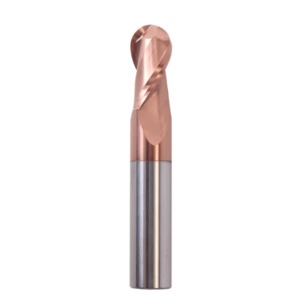
Advantages of HRC55 Ball Nose Milling Cutters in Mold Finishing
High-hardness mold steels present significant challenges due to high cutting forces and loads. They demand tools with excellent wear resistance and stability. Using HRC55 ball nose milling cutters can significantly improve efficiency and quality. These cutters feature high-strength cutting edges and wear-resistant coatings, maintaining sharpness during prolonged machining. This reduces tool wear and ensures consistent accuracy for complex cavities and free-form surfaces.
Moreover, these cutters excel in vibration control during deep cavity and complex surface machining. Stabilizing cutting forces helps prevent chatter marks and surface scratches. By selecting the appropriate number of flutes and cutting parameters, tool life is extended while maintaining high surface finish during semi-finishing and finishing stages.
Partnering with a ball nose milling cutter supplier experienced in mold machining ensures stable tool performance in mass production, reducing costs and improving overall efficiency.
Wear Resistance Performance in High-Hardness Mold Steel
Mold steels in the HRC55 range generate high cutting forces and heat, which can lead to premature tool wear. HRC55 ball nose milling cutters feature high-toughness bodies and wear-resistant coatings to maintain a sharp edge under high loads.
Optimized helix angles and cutting-edge designs reduce vibrations and improve chip evacuation efficiency. These features are critical for prolonged machining of deep cavities, free-form surfaces, or areas with variable hardness. Maintaining high wear resistance ensures consistent tool performance, reduces rework, and prevents surface defects.
Control of Surface Finish and Dimensional Consistency
During finishing, cavity surface quality and dimensional accuracy are essential indicators of mold quality. HRC55 ball nose end mills use fine edge treatment and coatings to maintain consistent cutting forces and constant tool contact. This prevents surface ripples, scratches, and micro-deformations.
Choosing the right ball radius and flute count optimizes cutting loads and tool paths. For complex curved surfaces and deep cavities, these tools provide stable machining, ensuring accuracy continuity between processes and improving the reliability of subsequent assembly.
Reducing Secondary Polishing and Manual Mold Repair
Achieving ideal surface finish during precision machining reduces the need for secondary polishing or manual mold repair. HRC55 ball nose end mills improve machining efficiency, reduce labor costs, and shorten production cycles, especially in high-volume mold production.
Consistent cutting performance also lowers surface defects and increases mold yield. Using high-quality cutters from experienced China ball nose end mill cutter factories further ensures stability and machining reliability during precision stages, delivering tangible benefits to manufacturers.

2 Flute vs 4 Flute Ball Nose Milling Cutter: A Practical Comparison in Mold Machining
In mold machining, the number of cutting edges on a tool directly affects cutting efficiency, chip evacuation, and surface finish. Ball nose end mills with different numbers of flutes offer distinct advantages in roughing and finishing stages. Matching the machining process and cavity structure appropriately can significantly improve processing efficiency and extend tool life.
Based on practical experience, mold manufacturers generally select 2-flute or 4-flute ball nose end mills according to cavity depth, material hardness, and processing objectives to achieve optimal results and economic efficiency. In machining high-hardness mold steel, factors such as chip evacuation, cutting vibration control, and surface quality are considered together. Rational design of flute count, helix angle, and rake angle reduces cutting load and ensures stable cutting in deep cavities and complex curved surfaces. Selecting tools from experienced China ball nose end mill cutter factories ensures consistent performance and high reliability in mass production.
Chip Evacuation Advantages of 2 Flute Ball Nose Milling Cutters in Roughing
2-flute ball nose end mills excel in the roughing stage due to their superior chip evacuation. Fewer flutes create a larger cutting thickness per flute, concentrating chip volume and allowing rapid evacuation from the cavity. This reduces heat accumulation, minimizes tool wear, and maintains stability during machining of deep cavities or large workpieces.
These cutters also maintain low cutting resistance under high-speed and high-feed conditions, which is critical for efficiency and tool life in mold roughing. A well-designed helix angle further optimizes the chip evacuation path, ensuring long-term tool stability and durability.
Stability of 4 Flute Ball Nose Milling Cutters in Finishing
In finishing, 4-flute ball nose end mills provide smoother cutting forces due to the increased number of cutting edges. This reduces per-flute load, lowers vibration and tip impact, and improves surface finish and dimensional consistency.
4-flute tools are particularly effective for high-hardness mold steel and complex free-form surfaces. They minimize surface ripples and micro-scratches while extending tool life. Combined with proper cutting parameters and feed rates, 4-flute cutters maximize surface finish quality and reduce secondary polishing or mold repair.
Selecting the Number of Flutes Based on Cavity Depth
Cavity depth is a key factor in flute selection. Shallow and medium-depth cavities benefit from 4-flute cutters for precision and surface stability, while deep cavities or narrow grooves require 2-flute cutters to ensure chip evacuation and cutting stability.
Practical experience shows that using 2-flute cutters for roughing followed by 4-flute cutters for finishing creates an efficient transition between stages. This strategy balances machining efficiency, tool life, and surface quality. For high-hardness mold steel, selecting cutters with high wear-resistant coatings and stable geometry is critical. Pairing these tools with products from a reliable ball nose milling cutter supplier ensures consistency across batches.

The Impact of Ball Nose Cutter End Mill Geometry on Mold Machining Quality
Tool geometry—helix angle, ball radius, rake angle, and edge treatment—directly affects cutting performance, surface finish, and tool life. Optimized geometry improves machining efficiency and ensures consistent results in deep cavities and complex surfaces, reducing defects and finishing costs.
Different mold materials and hardness levels require adjustments to tool geometry. For HRC55 high-hardness mold steel, edge strength and chip evacuation are critical. For shallow cavities or low-hardness materials, geometry can be further optimized for smooth cutting and surface finish. Combining proper tool geometry with machining process planning, cavity structure analysis, and high-precision tools from a reliable ball nose milling cutter supplier or China ball nose end mill cutter factory achieves optimal efficiency and quality.
Helix Angle: Influence on Cutting Force and Vibration
The helix angle affects cutting edge contact with the workpiece and force distribution. A larger helix angle facilitates smoother cutting, reduces radial vibration, stabilizes cutting in deep cavities, and improves chip evacuation.
In high-hardness mold steel machining, increasing the helix angle reduces vibration and improves surface finish. Matching the helix angle with flute count, feed rate, and cutting depth also prolongs tool life and reduces chipping.
Ball Radius: Effect on Surface Accuracy
The ball radius determines tool contact area and machining accuracy. Smaller radii provide high precision and conformity for detailed cavities but reduce cutting volume. Larger radii allow faster roughing and semi-finishing but may cause minor contour deviations.
In finishing, selecting an appropriate radius for cavity curvature ensures smooth and dimensionally accurate surfaces while minimizing secondary polishing. Properly matching flute count and cutting parameters balances efficiency and accuracy.
Edge Treatment: Extending Tool Life
High-precision grinding and coating of cutting edges reduce friction, heat buildup, and chipping risk. This extends tool life in HRC50–55 mold steel machining.
Sharpness and geometric consistency directly affect surface finish and accuracy. Proper edge design, combined with optimized helix angle and ball radius, maintains stable cutting in complex cavities, lowers defect rates, and reduces finishing costs. Reliable China ball nose end mill cutter factories provide these critical quality assurances.

How Mold Factories Select Ball Nose Milling Cutters for Different Machining Processes
Different machining stages demand different tool performance and geometry. Choosing the right ball nose milling cutter improves surface quality, efficiency, and reduces tool wear and rework. Mold factories typically develop strategies based on machining stage, cavity complexity, material hardness, and required surface finish, while sourcing from reliable ball nose milling cutter suppliers or China ball nose end mill cutter factories for consistency in mass production.
Rational matching of tool characteristics at roughing, semi-finishing, and finishing stages ensures an optimal balance of efficiency, tool life, and surface quality. Cutting parameters, flute count, and geometry play key roles at each stage.
Roughing Stage: Key Considerations
Roughing focuses on rapid material removal while maintaining tool stability under high loads. Fewer-flute ball nose end mills are typically used to improve chip evacuation and impact resistance. Larger depths and widths, combined with a tough tool body, reduce vibration and wear.
For HRC50–55 mold steels, roughing tools also require wear-resistant coatings and reinforced cutting edges. Optimized helix and rake angles improve chip evacuation and machining stability.
Semi-Finishing Stage: Tool Configuration Strategy
Semi-finishing removes excess material while preparing for finishing. Tools should balance chip removal capacity and stability. Ball nose cutters with moderate flute counts and cavity-matched ball radius ensure uniform machining allowance and reduce load fluctuations.
Controlling depth and feed rate minimizes vibration and wear, improving surface uniformity. Using high-precision tools from reliable suppliers ensures optimal results.
Finishing Stage: Cutter Consistency Requirements
Finishing demands high surface quality and dimensional accuracy. High-flute, high-stability ball nose cutters provide smooth cutting forces, reducing chatter marks and micro-scratches.
Wear-resistant coatings and optimized geometry maintain stability in complex cavities and free-form surfaces, minimizing secondary polishing or manual mold repair. Tool consistency directly affects mold yield and cost. Experienced China ball nose end mill cutter factories are essential for stable surface quality and dimensional accuracy in batch production.

Advantages of China Ball Nose End Mill Manufacturers in Mold Tooling
As mold processing demands higher precision, wear resistance, and batch consistency, selecting a tool manufacturer with mature design and production capabilities is crucial. Ball nose end mill manufacturers in China offer extensive experience in mold applications, rigorous production processes, and comprehensive quality control, providing cost-effective and reliable solutions for mold machining.
These manufacturers excel in tool geometry design, coating processes, and material selection. They can also provide customized solutions based on mold material, cavity structure, and machining requirements. In high-hardness mold steel machining, such as HRC55, their ball nose end mills maintain stable cutting edges and strong wear resistance, supporting continuous deep cavity machining and ensuring consistent processing quality.
Mature factories also guarantee tool performance consistency in mass production, maintaining stability in cutting force, vibration control, and surface finish—critical for large-scale mold projects.
Mold Tool Design Expertise
Experienced manufacturers have accumulated extensive mold machining cases and understand the cutting characteristics of various mold steels, complex cavities, and free-form surfaces.
During tool design, they optimize helix angle, rake angle, ball radius, and flute count for each machining stage. This ensures balanced cutting forces, low vibration, and efficient chip evacuation. Their expertise helps mold manufacturers select the most suitable ball nose end mills for roughing, semi-finishing, and finishing stages, improving processing efficiency and reducing tool wear.
Mature design also integrates wear-resistant coatings with high-toughness tool bodies, ideal for long-term machining of high-hardness mold steel.
HRC55 Ball Nose Cutter End Mill Batch Stability
Consistent wear resistance and edge stability are crucial when machining HRC55 mold steel. Leading manufacturers maintain consistent performance across all tools by strictly selecting materials, precision grinding tool edges, and controlling coatings.
This consistency ensures stable cutting force and low vibration during deep cavity and free-form surface machining. It reduces chipping, improves surface finish, and maintains dimensional accuracy. For high-volume production, this significantly lowers rework and production costs.
Custom Ball Nose Milling Cutter Solutions
Mold machining often involves complex cavities, non-standard dimensions, and unique surfaces. Experienced manufacturers provide custom ball nose milling cutters based on cavity drawings, material hardness, and machining requirements.
Custom tools guarantee machining accuracy, efficiency, and compatibility with existing machines and cutting strategies. Coupled with a reliable supplier network, mold manufacturers can quickly obtain non-standard tools, improving production efficiency, machining quality, and delivery times.
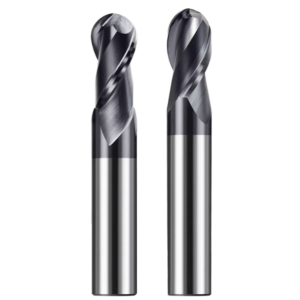
How to Evaluate a Ball Nose Milling Cutter Supplier for the Mold Industry
In mold machining, cutting tool performance, reliability, and supply stability directly affect production efficiency and part yield. Selecting the right supplier is not just about tool quality; it also determines surface finish, dimensional consistency, and machining costs. A professional ball nose end mill supplier provides high-precision, wear-resistant, and batch-consistent tools while offering technical support, selection guidance, and after-sales service. This helps mold manufacturers maintain stable and efficient production when machining complex cavities and high-hardness materials.
When evaluating suppliers, mold factories should focus on industry experience, tool batch consistency, and technical support capabilities. These factors ensure reliability in continuous and high-volume production and help meet the requirements of different machining stages. Examining case studies and real-world applications helps achieve the best balance of efficiency, cost, and machining quality.
Supplier Mold Machining Case Studies
Practical experience is a key indicator of supplier reliability. Suppliers with proven mold machining cases provide optimized tool solutions for various steels, cavity complexities, and machining stages. For example, in HRC55 high-hardness mold steel, they can recommend suitable ball nose cutter end mills for semi-finishing and finishing stages, including the ideal cutting settings and flute count.
Reviewing customer case studies allows mold manufacturers to assess supplier technical capability and tool performance stability in deep cavity, complex surface, and free-form machining, reducing production risks.
Ball Nose Cutter End Mill Batch Consistency
Consistent tool performance is critical for maintaining mold surface quality and dimensional accuracy. Leading suppliers maintain batch consistency through precise material selection, precision edge grinding, and controlled coating processes.
High batch consistency minimizes rework, ensures surface quality, and improves machining accuracy in deep cavity and free-form surfaces. Mold manufacturers should prioritize suppliers with strong quality control systems and mass production capability.
Supplier Technical Support & Tool Selection Guidance
Mold machining involves varying material hardness, cavity depth, and complex processes. Reliable suppliers provide guidance on flute count, ball radius, helix angle, and cutting settings.
Professional support helps engineers solve machining challenges, extend tool life, and improve efficiency. In HRC55 steel and complex cavity machining, supplier communication and responsiveness directly impact production stability and final product quality.

Common Ball Nose Milling Cutter Problems and Solutions in Mold Machining
Even with high-quality ball nose end mills, mold machining can encounter issues such as tool chipping, breakage, vibration marks, and unstable surface finish. These problems reduce machining efficiency and can lead to part rework or scrap, increasing production costs. To prevent this, mold manufacturers must adopt targeted solutions based on material hardness, cavity depth, and cutting settings. Rational tool selection, optimized cutting parameters, and accumulated machining experience are key to maintaining machining stability and reducing tool usage.
Analyzing common problem causes and adjusting machining strategies allows tool performance to be maximized in roughing, semi-finishing, and finishing stages. This approach improves surface quality and dimensional consistency in deep cavities, complex surfaces, and high-hardness mold steels, while controlling overall tool costs.
Causes of Chipping and Breakage
High-hardness mold steels such as HRC50–55 generate high cutting forces and heat, which are primary causes of tool chipping and breakage. In deep cavities or narrow grooves, improper cutting settings, insufficient tool rigidity, or poorly designed edges can overload the tool locally, leading to damage.
Cutting vibrations and poor chip evacuation can accelerate tool wear and chipping. Using ball nose end mills with wear-resistant coatings, high-toughness materials, and optimized edge designs, combined with appropriate feed and depth, significantly reduces breakage risk and stabilizes continuous machining.
Reducing Vibration Marks & Surface Defects
Vibration marks or uneven surfaces often stem from tool geometry, cutting force distribution, or machine rigidity. Selecting tools with appropriate helix angles and ball radii that match cavity curvature reduces vibration and ensures stable cutting.
For high-hardness mold steel and complex free-form surfaces, adjusting feed rate, cutting depth, and flute count further improves surface quality. High-precision suppliers ensure batch consistency, guaranteeing surface finish and dimensional accuracy while reducing secondary polishing and finishing work.
Reducing Tool Costs Through Rational Selection
Tool choice directly affects lifespan and machining efficiency. Selecting the proper number of flutes, ball radius, and wear-resistant coating according to machining stage, cavity depth, and material hardness extends tool life, reduces wear, and minimizes replacement costs.
During roughing, a 2-flute ball nose end mill improves chip evacuation. For finishing, a high-flute count tool enhances surface quality. Using stable tools from reliable China ball nose end mill cutter suppliers ensures processing results while minimizing overall tool costs and improving economic efficiency.
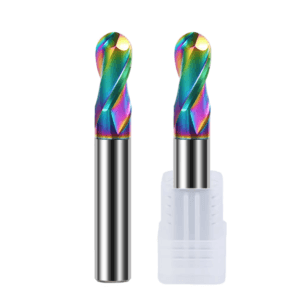
Comprehensive Application Experience: Choosing the Right Ball Nose End Mill for Mold Machining
Selecting the correct ball nose end mill determines machining efficiency, cavity accuracy, surface finish, and tool life. A thorough analysis of mold material, hardness, cavity complexity, and processing stage allows manufacturers to achieve the optimal balance between performance and cost.
High-hardness mold steels like HRC55 require tools that balance wear resistance, edge strength, and chip evacuation. Complex curved surfaces and deep cavities demand stable cutting, vibration control, and consistent surface quality.
Tool Selection by Machining Stage
-
Roughing: Use 2-flute ball nose end mills for excellent chip evacuation and cutting stability.
-
Semi-Finishing: Select a moderate flute count and a ball radius that matches cavity curvature for uniform material removal and stable cutting.
-
Finishing: High-flute, high-stability ball nose end mills ensure superior surface finish and dimensional consistency.
For high-hardness mold steel, wear-resistant coatings and robust edge designs are critical for continuous deep cavity and free-form surface machining. Optimizing helix angle, edge treatment, and ball radius minimizes vibration, improves surface finish, and extends tool life.
Balancing Efficiency, Tool Life, and Cost
Rationally matching flute count, ball radius, and cutting settings balances high-efficiency cutting with low wear. Roughing tools should prioritize chip evacuation to shorten machining time, while finishing tools focus on smooth cutting and surface quality to reduce secondary polishing.
Batch consistency is vital in mass production. High-stability tools reduce scrap, improve efficiency, and lower overall tool usage, achieving a comprehensive optimization of efficiency, lifespan, and cost.
Establishing Long-Term Supplier Cooperation
A reliable, long-term supplier ensures consistent tool performance and minimizes risks from fluctuations in tool quality. Experienced suppliers provide high-quality ball nose end mills, technical guidance, optimized cutting parameters, and custom solutions for various mold materials and cavity complexities.
Stable cooperation allows mold manufacturers to secure continuous support in tool procurement, production planning, and machining execution, achieving high efficiency, precision, and cost-effective production in high-hardness mold steel, deep cavities, and free-form surfaces.