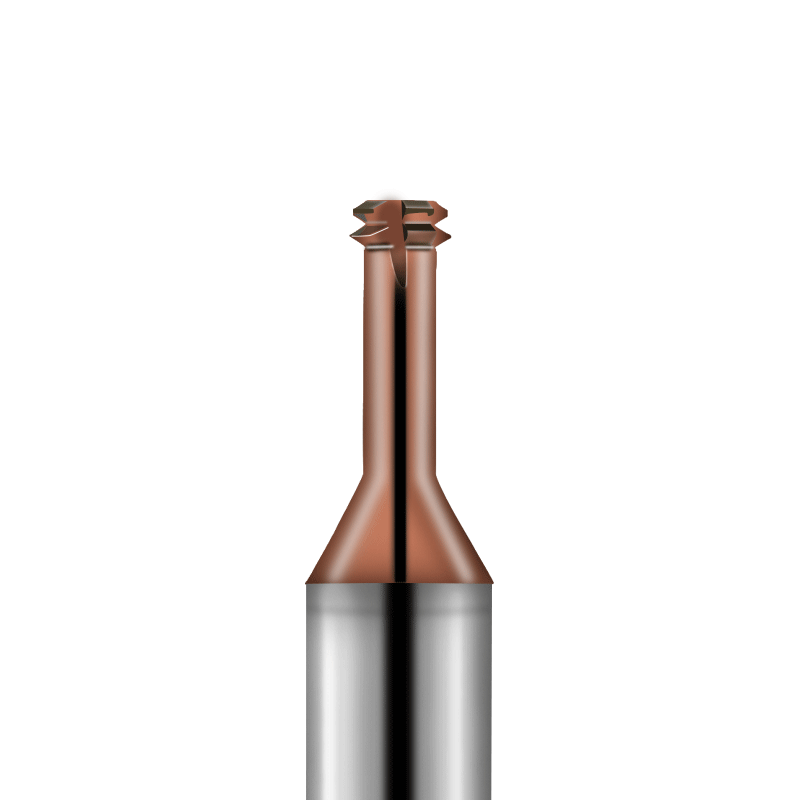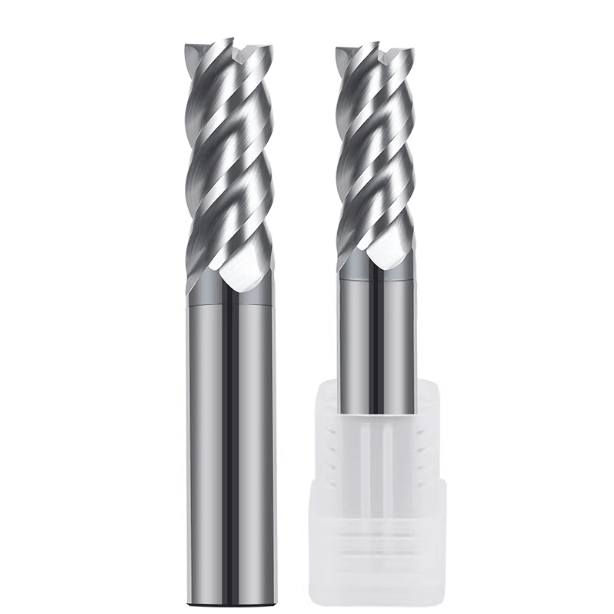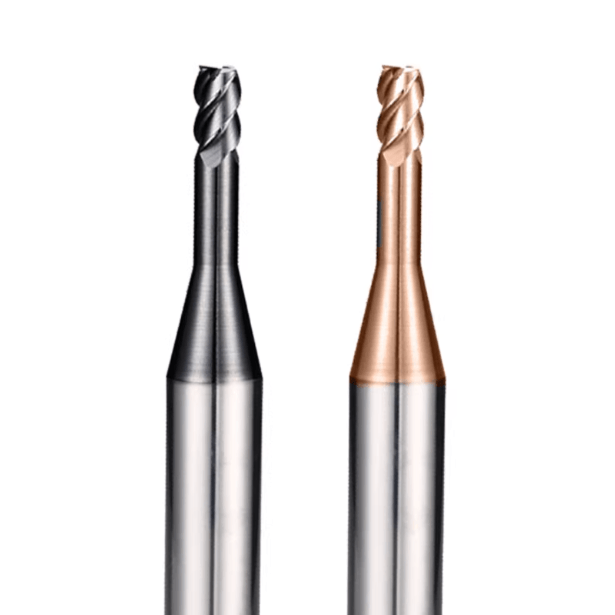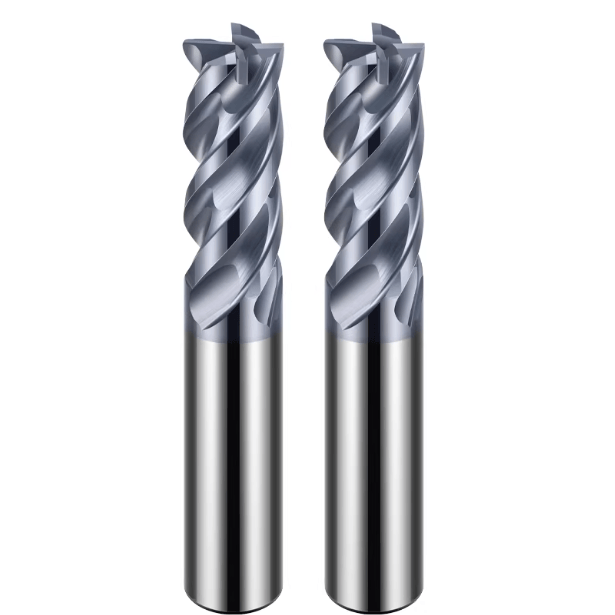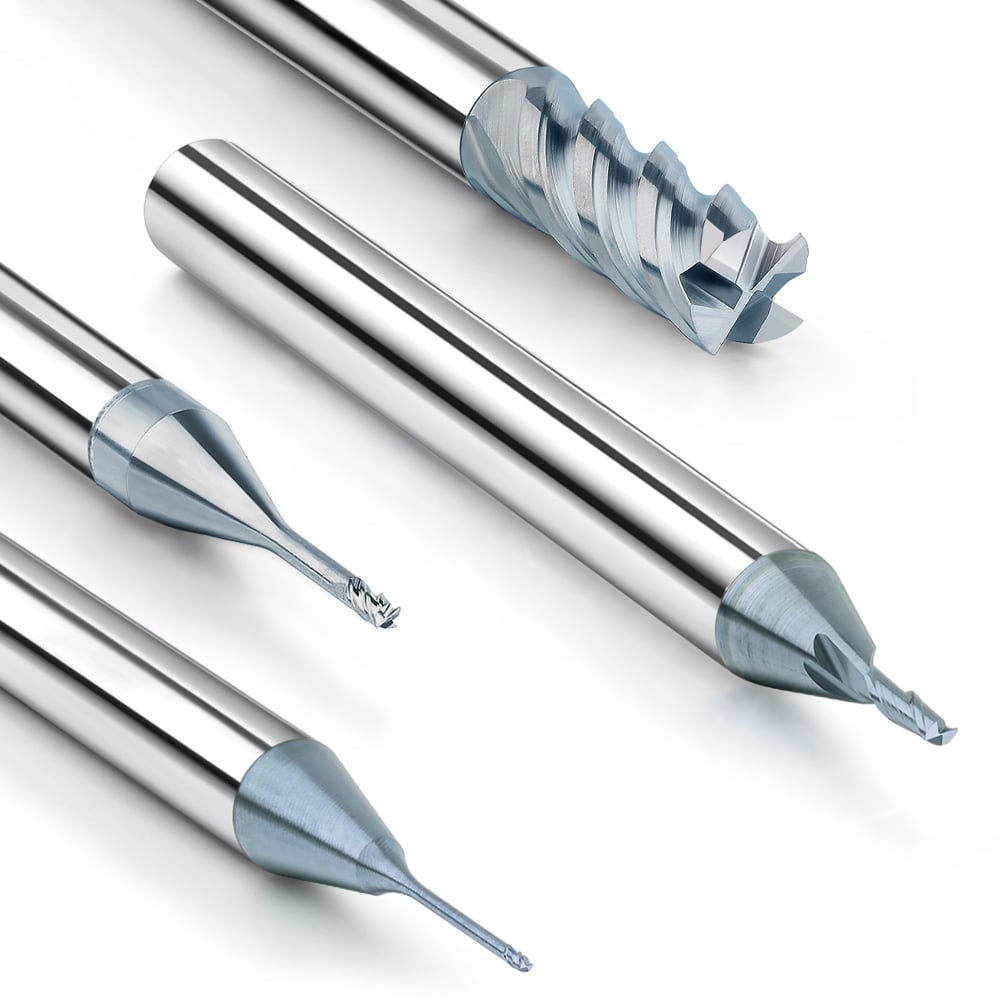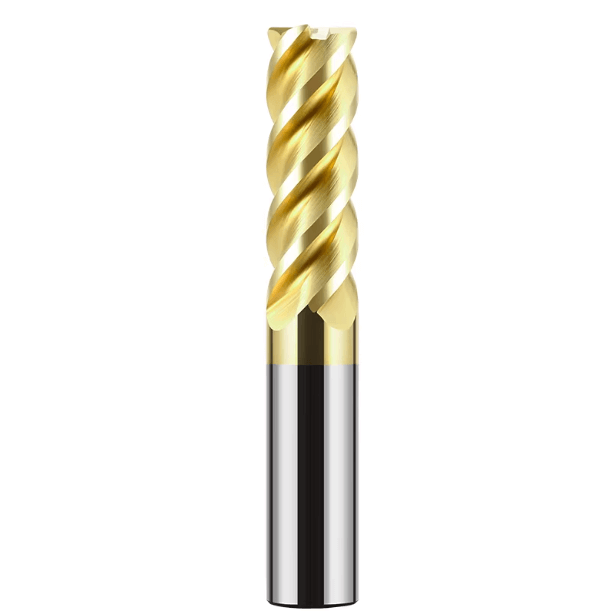
In stainless steel part machining, selecting the right bull nose milling cutter has a direct impact on machining efficiency, surface quality, and overall production stability. Compared with traditional square shoulder milling cutters, bull nose milling cutters distribute cutting forces more evenly during edge machining and radius transitions. This reduces tool chipping, minimizes vibration, and significantly extends tool life.
For different machining requirements, end mill bull nose cutters for stainless steel are available with various corner radius designs. These designs allow smoother tool paths while maintaining part strength, especially in internal corners, stepped features, and complex contours.
When machining high-hardness and high-toughness materials, solid carbide bull nose milling cutters provide superior rigidity and wear resistance. They perform reliably in high-speed and precision machining applications. In non-standard parts or special machining scenarios, custom bull nose milling cutters offer precise control of complex profiles and deep cavities through customized flute length, corner radius, and flute count.
Understanding the differences between bull nose and square shoulder milling cutters is also essential when selecting the optimal tool. Bull nose milling cutters consistently outperform square shoulder cutters in internal corner transitions, stepped contours, and edge strength optimization. At the same time, they maintain cutting stability and surface finish, making them a versatile and reliable solution for stainless steel machining.

Why Bull Nose Milling Cutter Is Suitable for Stainless Steel Machining
In stainless steel machining, tool stability and wear resistance play a critical role in maintaining machining efficiency and part quality. A bull nose milling cutter helps optimize cutting force distribution, reducing localized stress at the tool tip. This significantly lowers the risk of chipping and improves machining repeatability.
Compared with square shoulder milling cutters, bull nose milling cutters provide higher accuracy and stability when machining transition radii and contour edges. This leads to improved surface finish and, in many cases, reduces or eliminates secondary polishing operations.
In high-speed milling and long-duration cutting applications, a properly designed corner radius helps reduce cutting vibration and improves chip evacuation. When combined with the rigidity of solid carbide material, the tool maintains stable cutting performance under high cutting loads, ensuring consistent results in stainless steel part machining.
Cutting Load and Tool Tip Strength Requirements in Stainless Steel Machining
Stainless steel is characterized by high toughness and low thermal conductivity, which results in high localized cutting loads during machining. These conditions often cause stress concentration at the tool tip, leading to chipping or accelerated wear. Selecting appropriate tool geometry is essential for distributing cutting forces more evenly and maintaining tool stability.
In deep cavity machining or complex contour milling, tool tip strength becomes even more critical. The rounded transition of a bull nose end mill reduces stress concentration points, allowing the tool to withstand heavy cutting loads. This minimizes the risk of tool breakage and abnormal wear. Optimizing flute count and cutting parameters further balances cutting forces and feed efficiency, resulting in more stable machining performance.
The Practical Effect of R-Angle Structure in Reducing Chipping and Built-Up Edge Formation
The corner radius of a milling cutter plays a key role in strengthening the tool tip and improving cutting force distribution. In stainless steel machining, where material adhesion and built-up edge formation are common challenges, an appropriately designed corner radius is especially important.
A proper R-angle creates a smoother chip flow path, improving chip evacuation and reducing friction between the tool, chips, and workpiece surface. During semi-finishing and finishing operations, this structure significantly enhances surface finish while minimizing machining defects. As a result, it provides a more stable foundation for subsequent processing steps.
Advantages of Bull Nose End Mills in Stability and Machining Consistency
Bull nose end mills demonstrate excellent stability during continuous and long-run machining operations. With a well-designed corner radius, the tool maintains a consistent chip load, reducing vibration and uneven wear at the cutting edge. This directly improves machining consistency.
When combined with solid carbide construction, bull nose end mills maintain geometric accuracy even when cutting high-hardness and high-toughness materials. This reduces wear rates, improves surface quality, and lowers tool replacement frequency. For high-efficiency production lines and precision part machining, these advantages translate into reduced downtime and lower overall manufacturing costs.

Bull Nose vs Square Milling Cutter in Stainless Steel Applications
In stainless steel machining, different cutter geometries result in significant differences in contour accuracy, cutting stability, and tool life. Bull nose milling cutters distribute cutting forces more evenly due to their rounded corner design. This allows them to maintain stable cutting conditions in internal corners, stepped features, and transition areas.
Square shoulder milling cutters, while highly efficient for planar machining and large-area material removal, are more prone to chipping and accelerated wear when used in corner transitions and complex contours. Selecting the appropriate cutter geometry improves surface finish and significantly reduces rework rates and tool change frequency.
From practical machining experience, end mill bull nose cutters for stainless steel offer optimized chip evacuation and reduced built-up edge formation without sacrificing cutting efficiency. In specialized applications, custom bull nose milling cutters can be tailored to specific contour depths, radii, and flute lengths, further improving machining consistency. Solid carbide bull nose milling cutters provide superior rigidity and wear resistance, making them ideal for long-term, stable machining of tough materials.
Machining Differences in Internal Corners, Steps, and Transition Areas
Internal corners, steps, and transition radii present complex cutting conditions where stress concentration is common. The rounded corner of a bull nose milling cutter distributes cutting forces along the tool tip, reducing impact loads and improving edge surface quality.
Square shoulder milling cutters are more susceptible to chipping and uneven cutting in these areas, particularly when machining stainless steel. Bull nose milling cutters allow smoother transitions, reduce vibration, and prevent localized heat buildup. This improves machining consistency and ensures stable chip evacuation in deep cavities and complex contours.
Comparison of Tool Life and Tool Change Frequency
Bull nose milling cutters typically achieve longer tool life in extended machining operations. Their rounded geometry spreads cutting loads more evenly, reducing localized wear and stress at the tool tip. Improved chip evacuation also minimizes the negative effects of built-up edge, further extending tool life.
Square shoulder milling cutters may offer high efficiency in planar cutting, but when machining stainless steel, concentrated stress often leads to premature chipping and frequent tool changes. By selecting the appropriate corner radius, flute count, and tool material, bull nose milling cutters help reduce tool replacement costs and improve production stability.
When Square Shoulder Cutters Are Not Suitable for Stainless Steel
Square shoulder milling cutters are less suitable for internal corners, transition steps, and deep cavity machining. In stainless steel, these cutters are more likely to experience chipping, uneven cutting, and increased surface roughness due to built-up edge and localized overheating.
For applications requiring high surface quality, stable machining, and complex contour transitions, bull nose milling cutters provide clear advantages. Their rounded corner design, rigid construction, and optimized chip evacuation ensure consistent machining performance. In specialized cases, custom bull nose milling cutters allow tailored flute length and corner radius design, further reducing machining defects and tool waste.

How to Choose the Right End Mill Bull Nose for Stainless Steel
Tool selection plays a decisive role in machining efficiency, dimensional accuracy, and tool life when machining stainless steel. Choosing the appropriate bull nose milling cutter ensures cutting stability, optimizes chip evacuation, and reduces built-up edge formation and tool wear.
Solid carbide bull nose milling cutters perform particularly well under high cutting loads and high-speed conditions due to their rigidity and wear resistance. For complex geometries or deep cavity machining, custom bull nose milling cutters provide precise control through optimized flute length, corner radius, and flute count. Efficient chip evacuation and long tool life should always be key considerations during tool selection.
The Influence of Corner Radius on Cutting Forces
The corner radius directly affects cutting force distribution, tool tip stress, and machining stability. A larger corner radius increases tool strength, reduces stress concentration, and minimizes chipping and abnormal wear. It also promotes smoother chip flow and improved surface finish.
However, an excessively large radius may increase cutting resistance and heat generation. Therefore, cutting depth, feed rate, and material hardness must be considered together. In deep cavity and transition radius machining, a properly selected corner radius ensures stable cutting forces and reduces tool change frequency.
For mass production of stainless steel parts, a medium-to-large corner radius is commonly used to balance machining efficiency, tool life, and surface quality.
The Influence of Flute Count on Chip Evacuation and Surface Finish
Flute count directly affects chip evacuation, cutting force stability, and surface finish. Tools with fewer flutes provide wider chip spaces, reducing built-up edge formation, but place higher cutting loads on each flute. Tools with more flutes offer smoother cutting and better surface quality but may suffer from limited chip evacuation in stainless steel.
In practice, 4–6 flute bull nose end mills are commonly used for medium-depth and complex contour machining to balance chip evacuation and surface finish. For finishing or shallow cuts, higher flute counts can further improve surface quality. When combined with solid carbide construction, these tools offer extended life and stable performance in mass production.
Selection Strategies for Austenitic and Martensitic Stainless Steels
Different stainless steel grades exhibit distinct cutting characteristics. Austenitic stainless steel has high toughness and is prone to built-up edge formation. In these applications, a bull nose milling cutter with a larger corner radius and appropriate flute count helps maintain cutting stability and surface quality.
Martensitic stainless steel is harder and generates higher cutting forces, increasing the risk of tool wear and chipping. Selecting a rigid solid carbide bull nose milling cutter and carefully controlling cutting depth and feed rate are essential for maintaining tool life and machining consistency. For complex geometries, custom bull nose milling cutters allow tailored radius and flute length designs to ensure balanced cutting forces and smooth chip evacuation.
By optimizing tool selection based on stainless steel type, manufacturers can extend tool life, improve productivity, and reduce unexpected downtime while maintaining high surface quality standards.

Benefits of Using a Solid Carbide Bull Nose Milling Cutter
In stainless steel part machining, tool material plays a decisive role in machining efficiency, surface integrity, and overall production stability. Solid carbide bull nose milling cutters offer high rigidity and excellent wear resistance, allowing them to maintain a stable cutting condition under high-speed milling. This directly improves machining consistency and surface finish quality.
Compared with high-speed steel or coated steel tools, solid carbide cutters retain cutting edge sharpness and geometric accuracy much better during long-term machining. This reduces edge chipping, abnormal wear, and unplanned tool replacement. When combined with appropriate corner radius design and flute configuration, solid carbide bull nose milling cutters deliver high material removal rates during roughing while maintaining smooth and stable cutting forces during semi-finishing and finishing.
For complex contours and deep cavity machining, custom bull nose milling cutters allow optimization of flute length, corner radius, and flute count based on actual part geometry. This improves chip evacuation efficiency, enhances cutting stability, and further extends tool life in demanding stainless steel applications.
Advantages of Solid Carbide in High-Speed Milling of Stainless Steel
Stainless steel is characterized by high toughness and low thermal conductivity, which makes it prone to cutting vibration and built-up edge formation during high-speed machining. Solid carbide tools, due to their high rigidity, effectively suppress vibration and maintain balanced cutting forces at elevated spindle speeds.
Under high-speed milling conditions, solid carbide bull nose milling cutters can withstand higher radial and axial cutting loads without edge chipping. Their high hardness and thermal stability ensure excellent wear resistance even under high temperature and high load conditions. This results in improved machining efficiency and significantly longer tool life, which is especially important for mass production and precision part manufacturing.
Impact of Rigidity and Wear Resistance on Long-Term Machining
In long-run machining operations, tool rigidity and wear resistance directly affect surface quality and dimensional consistency. Solid carbide bull nose milling cutters maintain stable tool geometry during continuous cutting, reducing surface defects caused by uneven edge wear.
High wear resistance allows the tool to endure repeated cutting cycles and sustained cutting loads, reducing tool change frequency and minimizing production downtime. In deep cavity or complex contour machining, the high rigidity of solid carbide tools prevents deflection under load, preserving dimensional accuracy and avoiding scratches or chatter marks on stainless steel surfaces.
Performance of Solid Carbide Bull Nose End Mills in Finishing
During finishing operations, solid carbide bull nose end mills deliver excellent surface quality due to stable cutting force distribution and optimized tool geometry. Proper selection of corner radius and flute count enables smooth machining of transition fillets and edge features, significantly reducing the need for secondary polishing.
For high-precision parts, end mill bull nose tools designed for stainless steel maintain strong edge integrity during finishing passes, preventing micro-chipping that can degrade surface finish. In applications involving deep cavities or complex profiles, custom bull nose milling cutters allow tailored flute length and radius design, ensuring consistent surface quality and efficient machining in high-precision, high-volume production.

Cutting Parameters Optimization for Bull Nose Milling Cutter
In stainless steel machining, cutting parameter selection has a critical impact on machining efficiency, surface finish, and tool life. By optimizing spindle speed, feed rate, and cutting depth, bull nose milling cutters can achieve balanced cutting forces and smooth chip evacuation, maintaining stable and repeatable machining conditions.
Solid carbide bull nose milling cutters are well suited for higher cutting loads in high-speed applications, while custom bull nose milling cutters allow parameter optimization based on part depth, corner radius, and flute length. With proper parameter control, end mill bull nose tools for stainless steel can deliver high productivity without sacrificing surface quality or dimensional accuracy.
Rational Spindle Speed and Feed Rate Considerations
Spindle speed and feed rate directly influence cutting force distribution, heat generation, and tool wear. When machining austenitic stainless steel, higher spindle speeds can reduce cutting forces, but excessive speed may increase tool temperature and accelerate wear. Spindle speed should therefore be matched to tool diameter and material to ensure stable cutting conditions.
Feed rate selection must balance chip load per tooth and chip evacuation efficiency. Bull nose milling cutters with higher flute counts allow lower chip load per tooth and smoother cutting, while tools with fewer flutes require reduced feed rates to prevent excessive cutting forces. A balanced combination of spindle speed and feed rate is essential for extending tool life and maintaining consistent surface quality.
Practical Recommendations for Axial and Radial Cutting Depths
Axial and radial cutting depths significantly affect tool load and machining stability. Excessive cutting depth in stainless steel machining can lead to vibration, edge wear, and surface damage.
In practice, for solid carbide bull nose milling cutters, radial depth of cut is typically controlled within 20%–40% of tool diameter. Axial depth should be adjusted based on material hardness, part rigidity, and machine capability. For deep cavities and complex contours, custom bull nose milling cutters with optimized flute length and radius improve stability, enhance chip evacuation, and maintain surface consistency.
Parameter Adjustment Methods to Avoid Premature Tool Wear
Premature tool wear reduces machining efficiency and increases production cost. Proper parameter optimization is key to extending tool life. Cutting speed should be adjusted according to material hardness to prevent overheating or overloading the cutting edge. Coordinated feed rate and cutting depth help minimize vibration and maintain stable cutting forces.
The use of appropriate cutting fluids further reduces friction and cutting temperature, delaying wear progression. During finishing, reducing cutting depth and using smaller-diameter bull nose milling cutters can improve surface finish while minimizing the effect of minor edge wear. Through systematic parameter optimization, end mill bull nose tools for stainless steel can achieve long tool life, consistent machining quality, and high productivity.

Surface Finish Improvement Using Bull Nose Milling Cutters
In stainless steel machining, surface finish is a key indicator of both machining capability and part performance. By properly optimizing the cutting parameters of bull nose milling cutters, manufacturers can significantly improve surface quality while reducing or even eliminating the need for secondary finishing or polishing operations. A well-balanced combination of tool geometry, step-over control, and cutting strategy helps stabilize cutting forces, minimize vibration, and reduce edge wear, resulting in consistent surface quality during both semi-finishing and finishing stages.
For complex contours and deep cavity applications, leveraging the characteristics of solid carbide bull nose milling cutters and custom bull nose milling cutters allows manufacturers to fine-tune step-over distance, overlap ratio, and cutting parameters. This approach ensures efficient chip evacuation, stable cutting behavior, and repeatable surface quality, making it well suited for high-volume and precision stainless steel part production.
The Impact of Step Size and Overlap on Surface Roughness
Step size and tool overlap have a direct influence on surface roughness and overall machining efficiency. Excessive step-over often leaves visible tool marks, increasing surface roughness, while insufficient overlap can create small ridges or valleys at transition areas, negatively affecting both appearance and functional performance.
In stainless steel machining, reducing step size and increasing overlap helps smooth the cutting path and distribute cutting forces more evenly. This reduces vibration and limits the effects of localized tool edge wear. When combined with the inherent rigidity of solid carbide tools, geometric accuracy is maintained even under higher cutting loads, leading to a noticeable improvement in surface finish.
For complex contoured surfaces, optimizing step-over and overlap when using an end mill bull nose for stainless steel allows manufacturers to control surface roughness within acceptable limits while maintaining productivity, significantly reducing the need for downstream polishing processes.
Application Strategies of Bull Nose Milling Cutters in Semi-Finishing
The primary objective of the semi-finishing stage is to remove most remaining material while preparing a stable and uniform surface for final finishing. The rounded corner design of bull nose milling cutters reduces stress concentration at the cutting edge, helping to minimize vibration and maintain surface consistency across the workpiece.
By optimizing flute count, cutting depth, and feed rate, tool wear can be controlled without sacrificing machining efficiency. In deep cavities or complex geometries, custom bull nose milling cutters can be designed according to specific contour depths and radii. This ensures reliable chip evacuation during semi-finishing, reduces tool edge wear, and produces a more uniform surface condition. A well-executed semi-finishing strategy directly improves the effectiveness and consistency of the final finishing process.
Machining Strategies to Reduce Secondary Polishing Processes
Carefully selected cutting parameters and machining strategies can significantly reduce or eliminate the need for secondary polishing. In stainless steel machining, selecting the appropriate tool radius, flute count, and feed strategy allows high surface quality to be achieved in fewer passes, and in some cases, a single finishing pass.
Using solid carbide or custom bull nose milling cutters in combination with optimized step-over and controlled cutting forces helps reduce micro-chipping, tool marks, and thermal surface defects. At the same time, managing chip evacuation paths and cutting sequences lowers the risk of built-up edge formation. This integrated approach minimizes rework, reduces polishing time, and improves overall production efficiency and part consistency.

Common Problems When Milling Stainless Steel with Bull Nose Cutters
Even when using high-performance bull nose milling cutters, stainless steel machining often presents challenges such as built-up edge formation, accelerated tool wear, and inconsistent surface quality. These issues can reduce productivity and compromise part accuracy if not properly addressed. A systematic analysis of cutting forces, cutting temperature, and chip evacuation behavior helps identify the root causes and enables targeted corrective measures.
By combining solid carbide bull nose milling cutters with properly designed custom tools, and focusing on tool structure optimization rather than parameter adjustment alone, many of these problems can be effectively mitigated. For complex stainless steel components, maintaining balanced cutting forces and reliable chip evacuation is especially critical to achieving stable, repeatable results in production environments.
Analysis of the Causes of Built-Up Edge and Tool Adhesion
When machining austenitic stainless steel and other high-toughness alloys, low thermal conductivity and high ductility often cause chips to adhere to the cutting edge, leading to built-up edge formation. BUE alters the effective tool geometry, causes fluctuations in cutting forces, accelerates edge wear, and degrades surface finish.
Factors such as flute count, cutting speed, feed rate, and chip evacuation conditions all influence BUE formation. Excessive flute count or insufficient cutting speed can promote chip accumulation and restrict chip flow, while poor evacuation further aggravates adhesion. By optimizing tool geometry and selecting appropriate cutting parameters for an end mill bull nose for stainless steel, chip flow can be improved, significantly reducing BUE occurrence and maintaining stable cutting conditions and surface consistency.
Common Causes of Abnormal Tool Wear
Abnormal tool wear typically appears as edge chipping, excessive edge rounding, or thermal cracking along the cutting edge. These issues are especially common in stainless steel machining under high cutting forces, elevated temperatures, or deep cavity conditions.
Primary contributors include concentrated cutting loads, excessive heat generation, inadequate chip evacuation, and tool geometries not well matched to the material. For complex contours and high-volume production, solid carbide bull nose milling cutters offer improved rigidity and wear resistance, reducing the likelihood of premature failure. Custom bull nose milling cutters further enhance performance by optimizing cutting edge length, radius, and flute count, achieving more balanced force distribution and extending tool life while preserving surface quality.
Solving Problems Through Tool Structure, Not Just Parameters
Many machining challenges cannot be fully resolved through spindle speed, feed rate, or depth-of-cut adjustments alone. Tool structure plays a critical role in determining cutting force distribution, chip evacuation efficiency, and cutting edge durability. Key design elements such as corner radius, cutting edge length, flute count, and tool material directly influence machining stability.
In stainless steel applications, selecting an end mill bull nose for stainless steel with an appropriate radius and flute configuration—or using a custom bull nose milling cutter for specialized contours—can significantly reduce the risk of built-up edge, chipping, and vibration-related surface defects. Solid carbide tools maintain geometric stability under high-speed and high-load conditions, ensuring consistent performance and long-term reliability. By addressing problems at the tool design level, machining stability and surface quality can be improved more effectively than relying solely on parameter fine-tuning.

When to Choose a Custom Bull Nose Milling Cutter
In the machining of complex stainless steel parts, standard bull nose milling cutters do not always meet every production requirement. When dealing with special contours, deep cavities, or non-standard tolerance demands, custom bull nose milling cutters provide greater flexibility in tool geometry and material selection. By tailoring the radius, cutting length, and flute configuration, cutting forces can be better distributed, chip evacuation improved, and overall machining stability enhanced.
When combined with solid carbide bull nose milling cutters, custom tools maintain geometric accuracy and cutting edge integrity under high-speed and high-load conditions. This results in improved surface finish, longer tool life, and more consistent results. In high-volume production of deep cavity or complex-shaped stainless steel parts, customized end mill bull nose solutions help reduce machine downtime, lower scrap rates, and improve overall manufacturing efficiency.
Machining Scenarios Where Standard Bull Nose Milling Cutters Are Insufficient
Standard bull nose milling cutters perform reliably in conventional contouring operations, but limitations become apparent when machining complex geometries, deep cavities, or non-standard part designs. Features such as narrow internal corners, asymmetric steps, or multi-level transition surfaces often prevent standard tools from fully contacting the cutting area, leading to uneven material removal or unstable cutting forces.
Custom bull nose milling cutters address these limitations by optimizing corner radius, cutting length, and flute count to match the specific geometry of the part. This allows the tool to fully engage the contour, maintain balanced cutting forces, and evacuate chips smoothly. For difficult geometries or high-volume production, custom tools ensure consistent dimensional accuracy and surface quality across every workpiece, eliminating machining blind spots that standard tools cannot resolve.
Customization Needs for Non-Standard Radii, Cutting Lengths, and Tolerances
Stainless steel parts often feature varying internal radii, step depths, and edge-strength requirements, making it difficult for off-the-shelf tools to deliver optimal performance. Custom bull nose milling cutters allow the radius size, cutting length, and flute configuration to be designed according to part specifications, ensuring stable cutting behavior and reducing the risk of chipping or excessive wear.
Non-standard tolerance requirements place particularly high demands on tool geometry and consistency. By optimizing flute count and cutting edge length, cutting forces remain balanced during deep cavity and complex contour machining. Improved chip evacuation further reduces chip buildup and tool adhesion. A well-designed custom tool also enhances surface finish during finishing operations, minimizing the need for secondary polishing and improving overall production efficiency.
The Value of Custom Bull Nose Milling Cutters in High-Volume Stainless Steel Machining
In high-volume stainless steel machining, consistency and tool life are critical to maintaining productivity and controlling costs. Custom bull nose milling cutters significantly improve both by optimizing tool geometry and material selection for the specific application. Balanced cutting forces and efficient chip evacuation reduce wear, lower the risk of edge chipping, and extend tool life.
Custom tools also ensure consistent results across large production batches, particularly for deep cavity and complex contour parts. When paired with solid carbide bull nose milling cutters, stable cutting conditions are maintained even during high-speed machining and long production cycles. This combination delivers high precision, low rework rates, and reliable long-term performance, making custom tooling a strategic investment for large-scale stainless steel part production.

Application Cases of Bull Nose Milling Cutters in Stainless Steel Parts
Bull nose milling cutters are widely used in stainless steel machining for precision components and complex contours. Through proper selection of tool geometry, radius, and flute configuration, high-quality machining can be achieved for mold cavities, transition fillets, and structural component edges. In real-world production, the right tool selection and parameter setup not only improve machining consistency but also extend tool life, reduce rework, and enhance overall manufacturing efficiency.
By combining solid carbide bull nose milling cutters with custom bull nose milling cutters, manufacturers can achieve balanced cutting forces and reliable chip evacuation across a wide range of part geometries. For applications requiring high surface quality, bull nose cutters significantly reduce surface defects during semi-finishing and finishing, providing a stable foundation for downstream processes.
Examples of Mold Cavity and Transition Fillet Machining
Mold cavity machining often involves internal corners, transition fillets, and deep cavity features where cutting forces become concentrated and chip evacuation is challenging. Bull nose end mills distribute cutting forces more evenly through their rounded corner design, reducing the risk of edge chipping and preventing chip accumulation.
For example, in injection mold manufacturing, selecting an end mill bull nose with the appropriate radius for stainless steel enables smooth machining of internal radii and stepped transitions. Solid carbide bull nose milling cutters further improve tool tip stability during high-speed milling, ensuring consistent cavity geometry and surface finish while supporting efficient mass production.
Optimizing Edge Strength of Structural and Functional Components
For stainless steel structural and functional components, edge strength and transition quality directly affect durability and mechanical performance. Bull nose end mills create smooth internal transitions and reinforced edges, reducing stress concentration and minimizing the risk of localized cracking or damage.
In practical applications, custom bull nose milling cutters can be designed based on part thickness, edge-strength requirements, and overall geometry. Combined with the rigidity and wear resistance of solid carbide tools, this approach ensures consistent results during long machining cycles and high-volume production, significantly improving component strength and service life.
Tool Configuration Strategies for Improved Overall Machining Efficiency
Effective tool configuration plays a key role in improving machining efficiency, especially for complex parts and high-volume production. Selecting bull nose milling cutters with the appropriate flute count, radius, and cutting parameters helps balance cutting forces, improve chip evacuation, and reduce tool change frequency.
A common strategy is to use high-rigidity solid carbide bull nose milling cutters for roughing and high-speed material removal, followed by custom bull nose milling cutters during semi-finishing and finishing to optimize transition radii and surface quality. This staged tooling approach reduces surface defects, minimizes rework, and enables stable, repeatable mass production.
How to Select the Best Bull Nose Milling Cutter for Your CNC Shop
Selecting the right bull nose milling cutter is essential for achieving high machining efficiency, consistent quality, and long tool life in stainless steel applications. Tool selection should consider not only geometry, material, and flute count, but also machine tool rigidity, spindle characteristics, and production requirements. A well-matched tool setup ensures balanced cutting forces, reliable chip evacuation, and optimal surface finish while minimizing wear and downtime.
By combining standard tools, solid carbide bull nose milling cutters, and custom bull nose milling cutters, CNC shops can adapt their tooling strategy to different machining tasks. For complex contours, deep cavities, and high-volume production, optimizing tool radius, flute length, and flute count improves machining stability and extends tool life, creating a robust and efficient production system.
Selecting Tools Based on Machine Tool Rigidity and Spindle Characteristics
Tool selection must align with the rigidity and spindle capabilities of the CNC machine. On machines with limited rigidity, large-diameter or long-flute bull nose milling cutters can induce vibration, leading to unstable cutting forces, accelerated wear, and poor surface finish.
For high-speed spindles, solid carbide bull nose milling cutters provide superior stability and are well suited for aggressive material removal and semi-finishing operations. In deep cavity or complex contour machining, custom bull nose milling cutters allow flute length and radius to be optimized based on machine capability, ensuring stable cutting and efficient chip evacuation while minimizing tool replacement frequency.
Evaluating Tool Performance from a Long-Term Cost Perspective
In stainless steel machining, initial tool cost should not be the sole selection criterion. Long-term performance and cost efficiency are more critical. Although solid carbide bull nose milling cutters have a higher upfront cost, their superior rigidity, wear resistance, and extended tool life reduce downtime and tool changes, improving overall productivity.
Custom bull nose milling cutters further reduce total machining cost by minimizing defects, rework, and secondary finishing operations for complex or non-standard parts. Through a well-planned combination of end mill bull nose solutions and optimized cutting parameters, CNC shops can achieve lower cost per part while maintaining high quality standards.
Establishing a Stable Tooling System for Stainless Steel Machining
A stable and scalable tooling system is essential for long-term CNC production efficiency. This system typically includes standard tools for conventional operations, solid carbide tools for high-speed and deep cavity machining, and custom bull nose milling cutters for complex geometries and special transition features.
By integrating these tools with optimized cutting parameters, step-over control, and machining strategies, manufacturers can effectively reduce built-up edge, chipping, and tool wear. The result is improved surface finish, consistent quality, and a reliable, cost-effective stainless steel machining process suitable for sustained mass production.