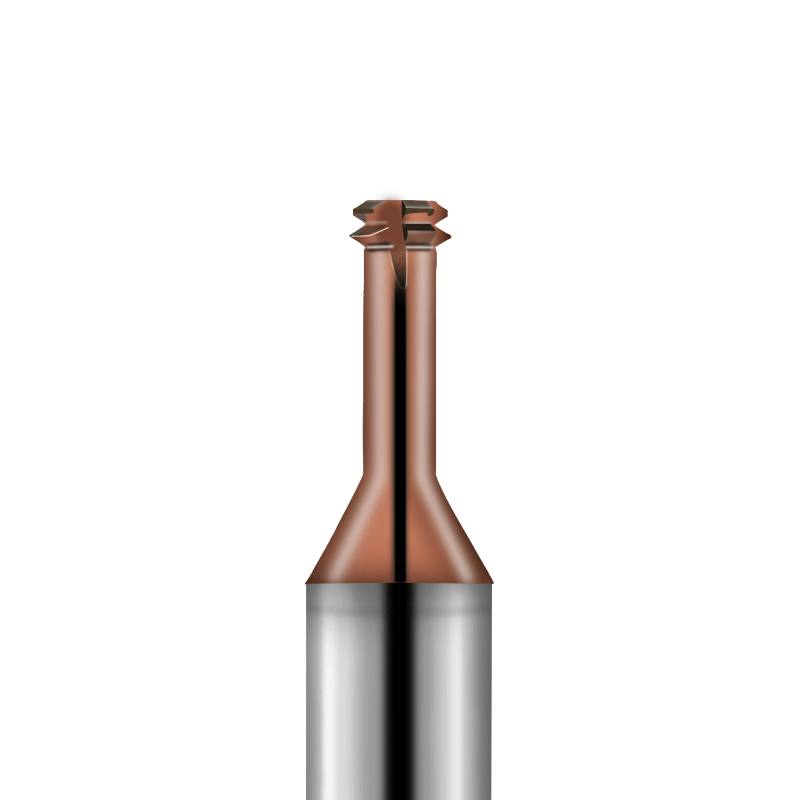
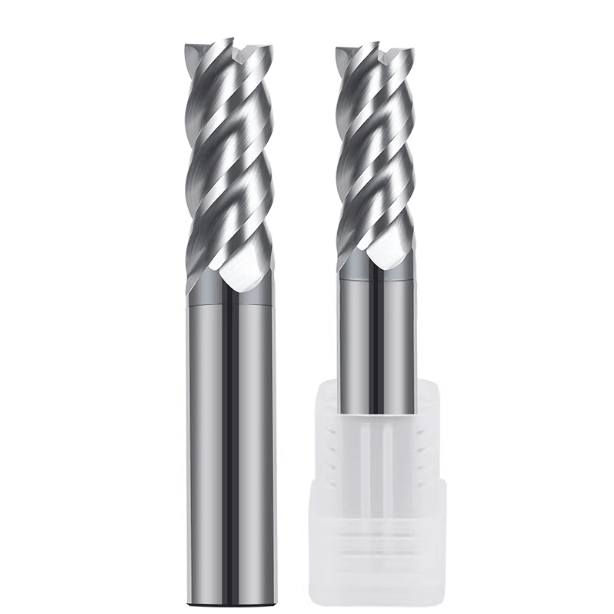
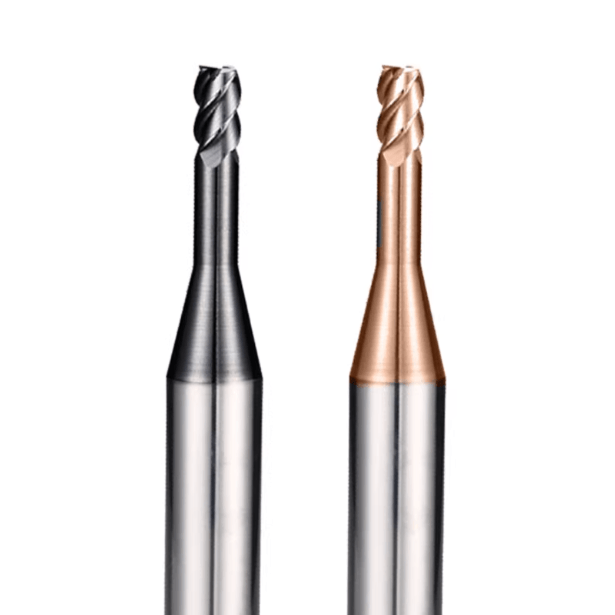
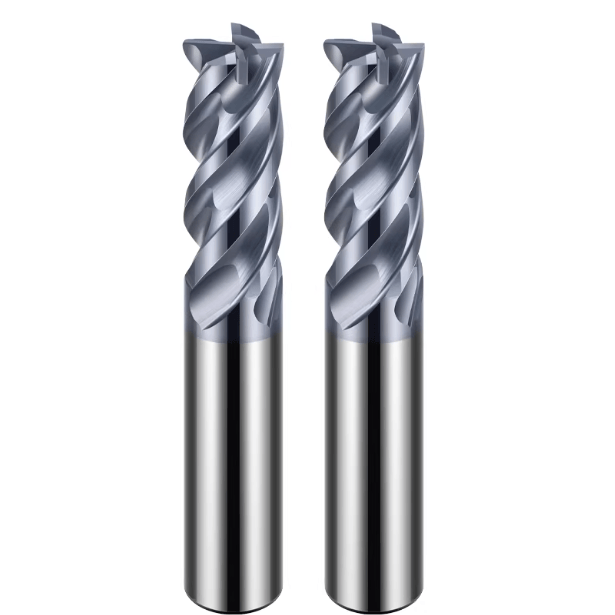
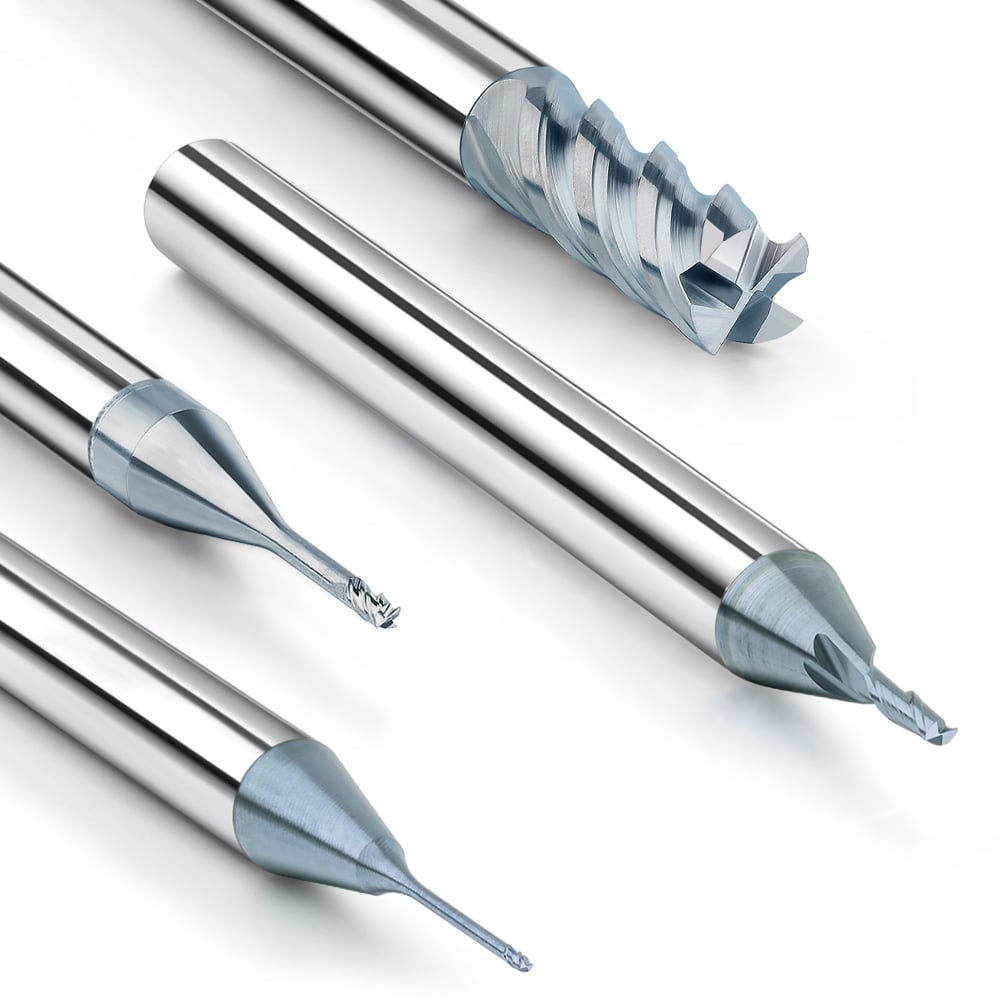
The machining of graphite molds, electrodes, and high-precision components places very high demands on tool performance. Due to graphite’s inherent hardness, brittleness, and dust generation, conventional milling cutters often struggle to maintain both accuracy and tool life. Selecting the right end mill for graphite is therefore critical for mold manufacturers and precision machining companies.
In graphite machining, key factors influencing performance include tool material, cutting edge geometry, coating type, and machining parameters. When comparing HSS end mills vs. carbide end mills, carbide end mills have become the mainstream choice for graphite electrode machining due to superior wear resistance and thermal stability. For high-precision surfaces and long tool life, diamond-coated or CVD-coated end mills can significantly reduce edge wear and dust accumulation.
Furthermore, many end mill factories in China now provide cost-effective solutions for global customers through advanced CVD coating technology, automated grinding processes, and OEM customization services. For complex curved surfaces or specialized electrode structures, selecting a custom end mill ensures better matching to the workpiece geometry, improving cutting stability and overall machining efficiency.
Characteristics of Graphite Machining and the Challenges Faced by Cutting Tools
Graphite is widely used in mold making, EDM electrodes, and the semiconductor industry due to its electrical conductivity, high temperature resistance, and machinability. However, graphite also exhibits high hardness, brittleness, and poor thermal conductivity, placing stringent demands on cutting tools. Even carbide or diamond-coated end mills may experience accelerated wear, chipping, or failure if improperly designed or applied.
The main challenges in graphite machining include:
-
Severe cutting wear: Abrasive graphite particles rapidly erode the tool edge.
-
Dust control difficulties: Fine graphite dust can infiltrate the tool-workpiece interface, causing secondary wear.
-
Poor thermal conductivity: Heat dissipates slowly, causing high local temperatures, accelerated oxidation, and fatigue damage.
Selecting an end mill specifically optimized for graphite—considering geometry, coating, and cooling—is essential for achieving high-precision, high-efficiency machining.
Physical Properties and Cutting Challenges of Graphite Materials
Graphite’s layered crystalline structure has low plasticity and high hardness. Its brittleness leads to micro-fractures during cutting, causing fluctuations in cutting force, rapid edge wear, and surface defects. High-speed dry cutting further challenges tools with continuous heat and abrasive particle contact. HSS end mills quickly lose sharpness, while poor thermal conductivity exacerbates edge temperature rise, leading to thermal fatigue and coating peeling.
Graphite dust is another critical concern. Excessive dust can accelerate tool wear, clog chip flutes, and damage machine components, affecting both precision and tool lifespan. Therefore, chip evacuation, edge geometry, and dust management must be integral to graphite-specific end mill design.
Limitations of Traditional Tools in Graphite Machining
Traditional HSS tools are cost-effective and tough but wear rapidly and struggle with high cutting temperatures. Standard carbide end mills perform better but still suffer edge dulling without optimized geometry or wear-resistant coatings.
High-speed dry cutting or complex graphite mold machining significantly reduces traditional carbide tool life. In contrast, diamond-coated carbide end mills for graphite improve wear resistance, thermal stability, and surface finish. Increasingly, Chinese end mill factories are developing custom solutions to meet the demands of diverse graphite workpieces and machining parameters.

Key Features of Graphite-Specific End Mills
Graphite, being a material with high hardness and brittleness, requires milling tools with excellent wear resistance, stable cutting performance, and efficient heat dissipation. Standard general-purpose end mills often fail to meet these requirements in graphite machining, making graphite-specific end mills essential. These tools emphasize hardness and thermal stability while incorporating optimized cutting edge geometry, coating technology, and structural design.
The primary objectives of graphite-specific end mills are:
-
Extend tool life by minimizing edge wear caused by abrasive graphite particles and high cutting temperatures.
-
Improve surface quality through stable cutting processes and reduced chipping and burr formation.
-
Reduce dust adhesion and heat accumulation by optimizing edge angles and coating designs, enhancing chip evacuation.
These features collectively determine performance in graphite mold and electrode machining, as well as in high-precision dry cutting operations.
Tool Material Selection: HSS End Mill vs Carbide End Mill for Graphite
Tool material fundamentally affects tool life and machining quality.
-
HSS End Mills: Offer excellent toughness and low cost, suitable for low-speed, small-batch machining or trial production. Their high impact resistance helps prevent brittle fracture. However, HSS’s limited hardness and wear resistance lead to rapid edge wear, reduced surface quality, and softening from thermal annealing during extended graphite machining.
-
Carbide End Mills: Known for high hardness (HRA ~90+) and excellent thermal conductivity, they resist the intense abrasion from graphite particles. Under high-speed dry cutting, carbide tools provide superior thermal fatigue resistance and dimensional stability, making them ideal for machining graphite molds and electrodes. When combined with diamond coatings (DLC or CVD), carbide end mills achieve significantly longer tool life than HSS, reducing long-term machining costs.
Optimization of Tool Geometry and Cutting Edge Design
Graphite’s brittleness requires careful geometry design to balance sharpness and chipping resistance.
-
Negative rake angle: Reduces cutting forces and prevents microcrack propagation along the cutting edge.
-
Sharp cutting edges: Lower friction and heat accumulation, improving surface finish.
-
High-flute-count end mills: Essential for finishing complex molds and electrodes; more flutes provide smoother cutting contact and better surface finish, especially for microstructures and mirror finishes.
-
Optimized chip evacuation: Prevents graphite dust buildup and secondary wear.
High-end custom end mills often tailor cutting edge angle, relief angle, and helix angle to specific workpiece geometry, depth of cut, and feed rate, enhancing strength while maintaining sharpness for high-speed dry cutting.
The Importance of Coating Technology
Coating is critical for tool life and precision in graphite machining. Graphite dust is highly abrasive; bare-edge tools wear quickly. Advanced coatings such as DLC or CVD diamond significantly enhance surface hardness and wear resistance.
-
DLC coatings: Extremely low friction reduces cutting heat and dust adhesion, suitable for high-speed finishing.
-
CVD diamond coatings: Hardness approaching natural diamond (HV > 8000) supports long-term batch processing of high-density graphite or electrode molds.
Coating selection must balance thickness, adhesion, and thermal conductivity. Too thick a coating may reduce edge sharpness, while too thin a coating may flake under high temperature. High-quality graphite-specific tools often combine high-bond CVD coatings with micro-polishing to reduce edge roughness, lower cutting resistance, and stabilize machining performance.

How to Select the Appropriate Milling Cutters for Different Graphite Machining Requirements
The choice of end mill for graphite depends on workpiece type, machining stage, and precision requirements. High-density mold graphite and low-density electrode graphite require different approaches for roughing and finishing. Proper matching of tool material, geometry, and coating ensures accuracy, extends tool life, reduces costs, and improves productivity.
Systematic analysis considers machining stage, material density and hardness, and custom tool requirements.
Tool Selection Strategies for Roughing vs. Finishing
-
Roughing End Mills: Focus on rapid material removal. Require strong, blunt edges and large chip flutes to withstand abrasive graphite particles while preventing dust clogging. Carbide or diamond-coated roughing end mills are ideal for bulk material removal from high-density mold graphite.
-
Finishing End Mills: Prioritize surface quality and dimensional accuracy. Require precise, sharp cutting edges and controlled tip radius to minimize microcracks and burrs. Multi-flute finishing end mills with CVD diamond coatings provide smooth surfaces and high-quality finishes, suitable for precise machining of molds or microelectrodes.
Tool Matching for High-Hardness Mold Graphite vs Graphite Electrodes
-
High-Density Mold Graphite: Diamond-coated carbide end mills are recommended. Their high hardness and wear resistance prevent edge chipping and maintain stable machining performance.
-
Low-Density Electrode Graphite: High-precision carbide end mills or customized HSS end mills maintain surface finish while controlling tooling costs for softer materials.
The Value of Custom End Mills
Complex graphite molds and electrodes often require custom end mills for geometry, surface finish, and cutting stability. Benefits include:
-
Tailored cutting edge radius, helix angle, lead angle, and flute count for workpiece geometry.
-
OEM-designed tools with CVD or DLC coatings and optimized chip evacuation reduce tool changes, scrap rates, and improve stability in high-speed dry cutting.
-
For mass production, customized tools optimize the balance of speed, precision, and tool life, maximizing productivity.
By matching roughing and finishing tools to graphite type and leveraging custom designs, companies achieve high precision, high efficiency, and low cost in graphite machining.

Competitive Advantages of End Mill Factories in China
With the global increase in demand for graphite machining, more companies are sourcing high-performance, cost-effective end mills for graphite from China. Chinese tool manufacturers demonstrate a clear competitive advantage due to their complete industrial chain, advanced material technology, and flexible OEM customization capabilities. Whether it’s carbide end mills, diamond-coated tools, or custom end mills, Chinese factories provide high-quality products at competitive costs, meeting the needs of mold manufacturing, graphite electrode processing, and high-precision part machining.
The competitive advantages of Chinese end mill factories include:
Advances in Carbide and Coating Technology by Chinese Tool Factories
Domestic tool manufacturing has rapidly advanced, particularly in the localization of CVD and DLC diamond coating technologies, narrowing the gap with international standards. By incorporating high-performance imported carbide raw materials and automated precision grinding equipment, Chinese factories produce graphite-specific end mills with sharp cutting edges, precise geometry, and superior wear resistance.
Continuous improvements in coating process control, thickness uniformity, and adhesion allow domestically produced diamond-coated end mills to maintain stable tool life and reliable cutting performance in high-volume graphite mold and electrode machining. These advancements reduce production costs while enhancing global competitiveness.
The Attractiveness of OEM and Customization Services to International Buyers
Chinese end mill manufacturers offer mature OEM custom end mill services, providing a one-stop solution from sample development and tool design optimization to small-batch trials and mass production.
International buyers rely on robust quality control and certification. Most Chinese suppliers hold certifications such as ISO 9001 and CE, ensuring dimensional accuracy, coating adhesion, and batch consistency, which meets stringent requirements for high-precision graphite machining. This reliable customization capability shortens product introduction cycles and builds confidence in selecting Chinese end mill factories.
Key Criteria for Selecting a Reliable Chinese Milling Cutter Supplier
When choosing a supplier for graphite-specific milling cutters, international clients focus on:
-
Factory size and production capacity: Ensure consistent supply for long-term mass production.
-
R&D capabilities and tool innovation: Develop custom end mills and specialized coatings based on workpiece geometry, hardness, and surface requirements.
-
Quality management system: Implement full-process inspection, including raw material testing, cutting edge accuracy, and coating adhesion.
-
After-sales support and technical services: Offer guidance on tool selection, machining parameter optimization, and troubleshooting.
Selecting a supplier with strong technical capability, guaranteed production capacity, and comprehensive after-sales service ensures smooth graphite machining, high efficiency, and lower costs.

Practical Tips for Improving Graphite Machining Efficiency and Tool Life
Even with high-performance end mills, improper cutting parameters, dust management, and tool handling can shorten tool life and reduce efficiency. To achieve high-precision, high-efficiency machining while extending diamond-coated or carbide end mill lifespan, companies should focus on:
-
Optimizing cutting parameters
-
Implementing dust control and cooling strategies
-
Regular tool monitoring and management
Proper process planning minimizes tool wear, reduces scrap, and improves overall productivity in mass-producing graphite electrodes or molds.
Optimizing Cutting Parameters
Cutting parameters directly affect machining efficiency and tool life:
-
Spindle Speed: Higher speeds improve efficiency, but excessive speed accelerates wear, particularly for uncoated carbide or HSS tools.
-
Feed Rate: Proper feed ensures balanced cutting forces and avoids localized overload that may chip the cutting edge.
-
Depth of Cut: Use deeper cuts for roughing to maximize material removal; reduce depth for finishing to ensure surface accuracy and tool stability.
Matching roughing and finishing end mills to appropriate parameters balances efficiency and cost while maintaining machining accuracy.
Dust Control and Cooling Strategies
Graphite dust is abrasive and can clog chip flutes or damage machines. Effective dust control is essential:
-
Dry Cutting with Dust Collection Systems: High-efficiency dust collection removes graphite dust and reduces tool wear.
-
Protecting Machines and Tools: Clean guideways and spindles prevent dust-related accuracy loss.
-
Cooling or Gas Purging: For high-density graphite or large-volume machining, lightweight cooling or gas purging reduces cutting-edge temperature and dust accumulation, extending tool life.
Importance of Regular Inspection and Tool Management
Even high-quality custom end mills require proper management:
-
Tool Wear Monitoring: Observe edge wear, tip chipping, and surface finish for timely intervention.
-
Replacement Cycle Management: Establish replacement schedules based on batch size and cutting conditions to avoid quality issues.
-
Digital Tool Management: Modern companies use software or smart monitoring to track graphite-specific end mill usage, ensuring batch consistency and minimizing downtime.
Optimizing cutting parameters, dust-proof cooling, and rigorous tool management improves machining efficiency and extends tool life for HSS, carbide, and diamond-coated end mills.

Selecting the Right Graphite Machining Cutter Improves Precision and Productivity
Graphite machining is crucial in mold, electrode, and high-precision part production. Tool choice directly affects accuracy, productivity, and cost.
Key points:
-
Tool Design and Material: Carbide end mills are ideal for high-speed dry cutting of high-density graphite. Diamond-coated end mills offer superior wear resistance and surface finish for precision molds. HSS end mills are suitable for low-speed, small-batch production.
-
Geometry and Coating: Negative rake angles, sharpened edges, multiple flutes, and optimized chip evacuation reduce chipping. CVD or DLC coatings minimize wear, friction, and heat.
-
Supplier Selection: High-quality Chinese end mill factories provide cost-effective carbide and diamond-coated tools with OEM customization for complex geometries.
-
Tool Management: Proper cutting parameters, efficient dust extraction, cooling systems, and monitoring extend tool life and maintain surface quality.
By combining high-performance carbide or diamond-coated end mills, custom designs, and scientific management, companies can achieve high precision, high efficiency, and low-cost graphite machining, significantly improving overall productivity and competitiveness.