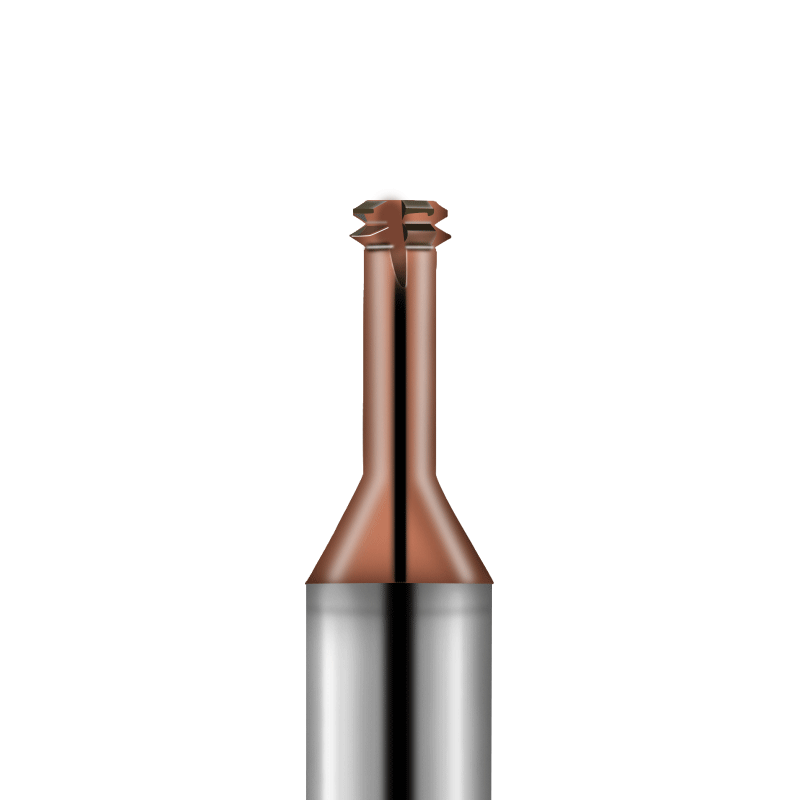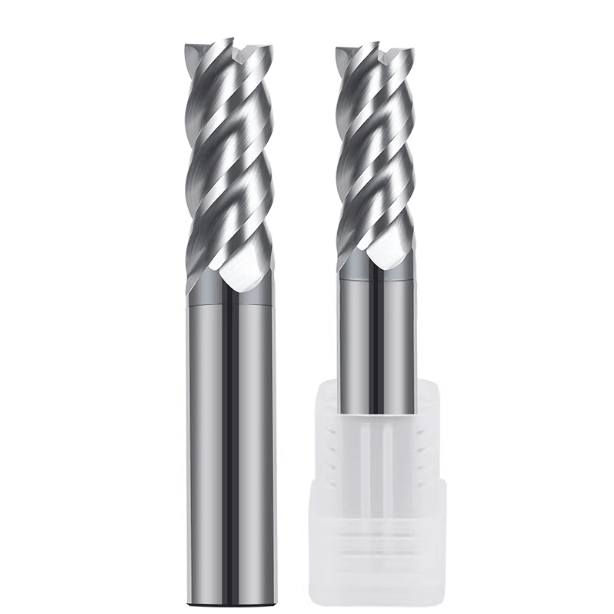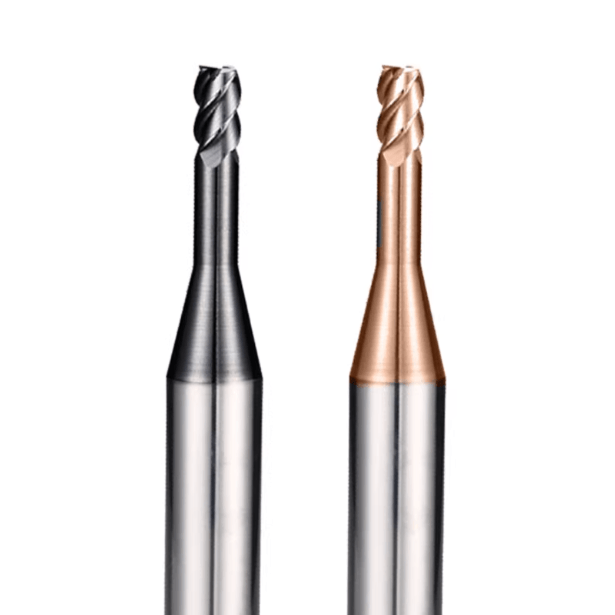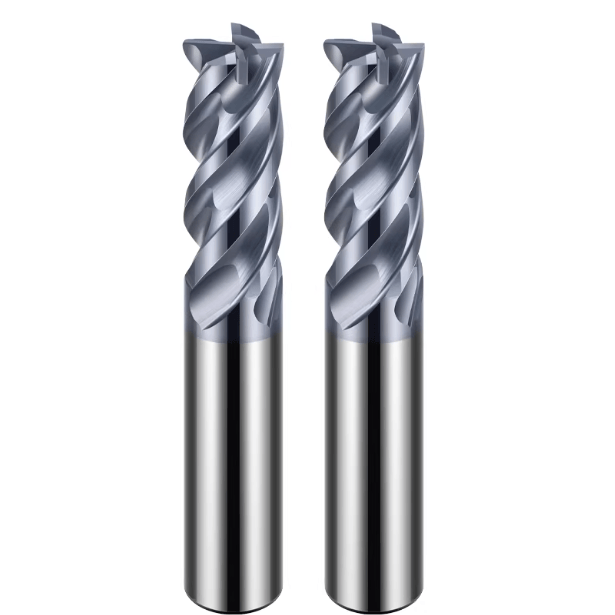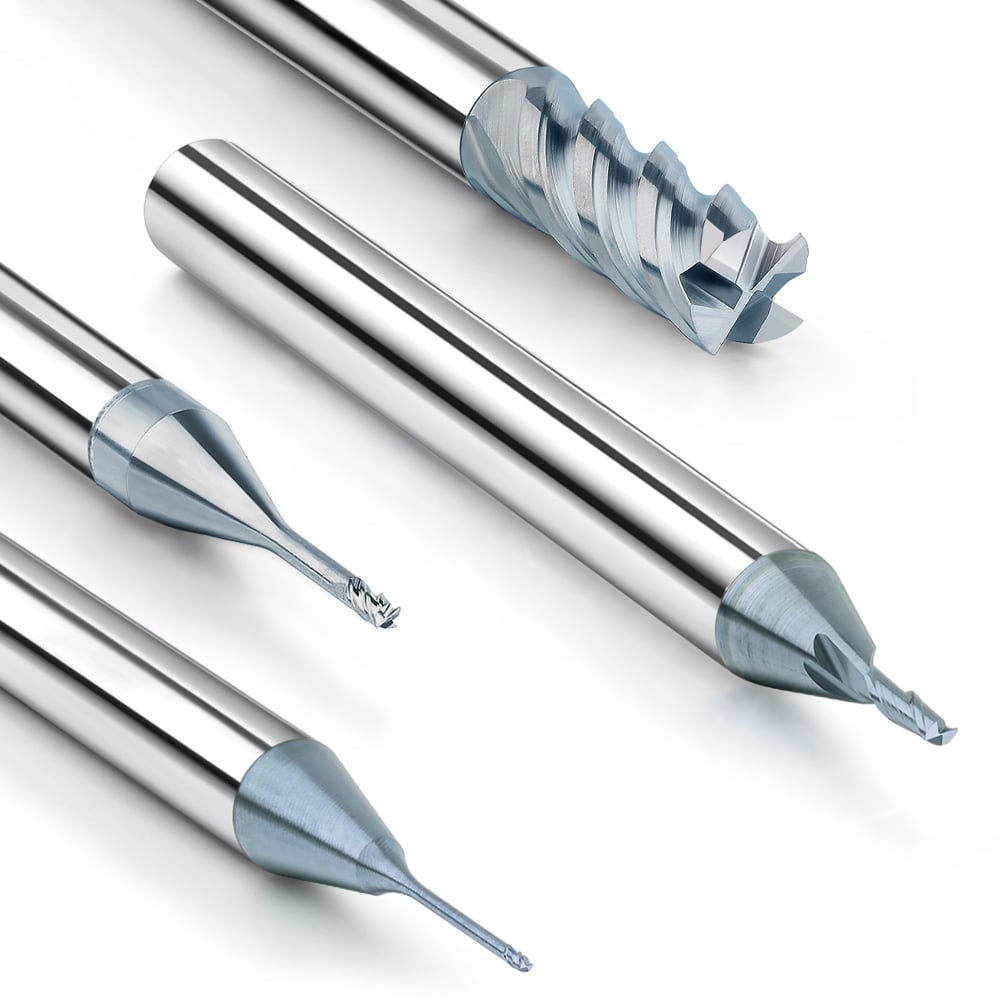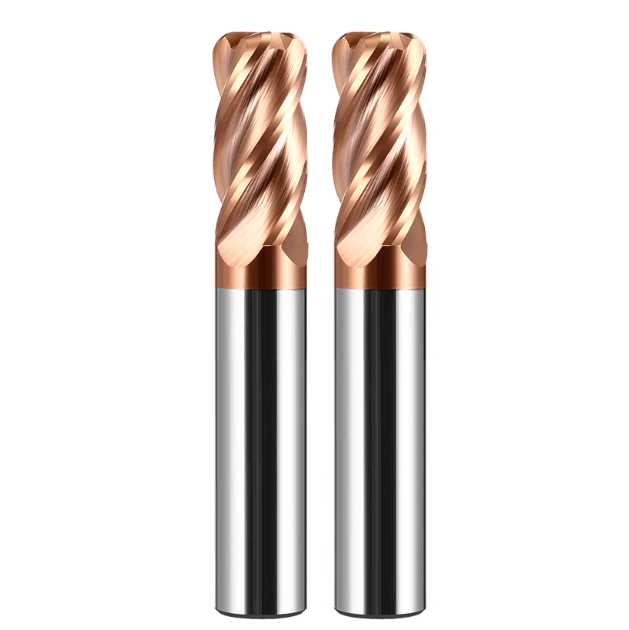
In high-volume metal machining, achieving a high material removal rate (HMRR) is essential for improving production efficiency and reducing processing costs. Selecting the right roughing end mill can significantly enhance cutting efficiency, extend tool life, and ensure stable machining. These tools play a central role in high-feed rough machining, as their geometry and material properties directly impact machining speed and surface quality.
For tasks demanding high material removal, carbide rougher end mills are the preferred choice. High-hardness tungsten carbide maintains a sharp cutting edge under sustained high-load conditions and allows smooth chip evacuation in deep grooves or large radial cuts. This design helps prevent tool vibration and damage caused by chip clogging. In particular, when machining hardened steel or high-alloy steel, specialized roughing end mills for hardened steel help control cutting forces and heat generation while maintaining a high feed rate, enabling stable, efficient production.
The number of flutes also influences machining efficiency. Two-flute roughing end mills are especially suitable for deep groove and high material removal applications due to their wide clearance and excellent chip evacuation. In high-feed machining of certain aluminum alloys or soft steel, these two-flute tools can significantly increase cutting speed while maintaining stability and surface quality.
Choosing a reliable supplier is equally critical. Many China CNC roughing end mill manufacturers offer high-quality carbide roughing tools and customized solutions, optimizing tool design based on workpiece material, cutting conditions, and machining depth. This not only reduces procurement costs but also enhances overall production stability and efficiency.
Core Requirements for Roughing End Mills in High Material Removal Rate Machining
In high material removal rate applications, tools must withstand extreme cutting loads while maintaining stable performance. A robust tool structure, durable body, and wear-resistant materials are fundamental to achieving efficient machining. Carbide rougher end mills maintain sharp cutting edges during deep groove or large radial cuts, ensuring machining accuracy and surface finish. Well-designed tools distribute cutting forces effectively, minimize vibration, and support large feed rates, improving overall productivity.
Chip evacuation capability is equally critical. Accumulated chips can cause clogging, heat buildup, and vibration, negatively affecting machining stability. Two-flute roughing end mills with optimized chip breaker grooves and wide spacing effectively guide chips away from the cutting zone, ensuring smooth cutting in deep or large-area operations. Combined with proper cooling and cutting parameters, these tools enable continuous, stable production while extending tool life.
Relationship between Cutting Load and Tool Structural Stability
Cutting load directly impacts tool stability and machining accuracy. Deep cuts and large radial depths create instantaneous forces on the tool body. Without sufficient structural strength, vibration, chipping, and machining errors may occur. Using a tough, wear-resistant roughing end mill for hardened steel, along with an optimized helix angle and cutting edge design, maintains stability under high loads, ensuring consistent machining during high-volume production.
The tool structure also helps distribute cutting forces. Appropriate flute count and chip groove layout reduce excessive load on a single cutting edge and improve heat distribution. For hardened and high-alloy steels, a high-rigidity tool body resists vibration, enhances accuracy, and extends tool life. Combining material and geometry is key to achieving high-load machining without compromising performance.
The Decisive Influence of Chip Evacuation Efficiency on High-Feed Rough Machining
In deep groove, wide slot, or high radial cutting, chip evacuation directly affects machining smoothness. Poor chip removal can lead to vibration, surface scratches, or tool chipping. Two-flute roughing end mills with optimized chip breaker grooves enhance chip removal speed, maintaining stability at high feed rates. Proper tool geometry guides chips away efficiently, reduces heat buildup, and supports continuous production.
Efficient chip evacuation not only improves machining quality but also enables higher cutting parameters, increasing material removal rates without accelerating tool wear. When combined with suitable cutting fluids or air-blast cooling, tool life is extended, and machining stability and surface consistency are preserved.
The Practical Challenges of High Material Removal Rates on Tool Life
High material removal rates impose greater cutting forces, heat, and vibration on tools, challenging their lifespan. High-performance carbide rougher end mills balance wear resistance and toughness, maintaining sharp edges under heavy loads and prolonging tool life. Proper chip flute and helix angle design reduce stress concentration and lower chipping risks.
Difficult-to-machine materials, such as hardened steel and high-alloy steel, accelerate tool wear. Optimizing cutting parameters and tool geometry reduces tool change frequency while sustaining high removal rates. Roughing end mills for hardened steel enable efficient, high-feed machining in production, effectively controlling tool costs and downtime.
Key Factors Affecting Material Removal Rate of Roughing End Mills
The material removal rate depends not only on machining parameters but also on the design and performance of the cutting tool itself. Factors such as tool material, cutting edge geometry, helix angle, and surface coating directly affect cutting force distribution, chip evacuation efficiency, and machining stability. Choosing the appropriate tool structure and material allows the end mill to withstand high cutting loads and maintain sharp cutting edges during deep groove or large radial cutting, achieving high-efficiency machining.
Furthermore, the hardness and toughness of the workpiece material impose different demands on tool performance. Materials such as hardened steel, high-alloy steel, or heat-resistant steel are prone to tool wear and vibration problems during high-feed roughing. By optimizing tool material, cutting edge geometry, and coating, combined with reasonable cutting parameters, tool life can be extended while maintaining a high material removal rate, improving overall production line efficiency.
Tool Material Selection – Advantages of Carbide Rougher End Mills
Tungsten carbide roughing end mills offer significant advantages in high material removal rate machining due to their high hardness and wear resistance. Compared to high-speed steel tools, carbide maintains sharp cutting edges even under prolonged high-load cutting, making it ideal for difficult-to-machine materials such as hardened steel or high-alloy steel. The high toughness and thermal stability of roughing end mills for hardened steel effectively resist vibration and chipping, ensuring stability during deep groove or large radial cutting.
Additionally, tungsten carbide tools support larger cutting parameters, significantly enhancing machining efficiency. Combined with custom tool designs, carbide rougher end mills can be optimized according to the workpiece material and machining conditions, making high-feed rate roughing both fast and safe. This makes them the preferred choice for mass production and roughing of high-hardness materials.
The Impact of Cutting Edge and Chip Flute Design on Cutting Efficiency
The cutting edge and chip flute design are critical for machining efficiency. Proper chip flute geometry ensures quick chip evacuation, preventing accumulation that can cause vibration or chipping while reducing heat buildup. In deep groove or high radial cutting, a 2-flute roughing end mill improves chip evacuation through its wide flute spacing, enabling smooth high-feed rate machining.
At the same time, the cutting edge geometry determines force distribution and balance on the tool. Optimizing rake angle and edge shape reduces stress concentration at the tip and cutting zone, improves tool life, and maintains machining stability. A well-designed chip breaker groove combined with the cutting edge geometry is essential for achieving high-efficiency roughing.
Balancing Helix Angle and Cutting Force Distribution
The helix angle directly influences cutting force distribution and chip evacuation efficiency. A larger helix angle facilitates smooth chip flow and reduces vibration, but an excessively large angle may increase radial cutting forces and reduce tool rigidity. Selecting an appropriate helix angle in deep groove or large radial cutting maintains cutting stability while ensuring smooth chip evacuation, achieving a high material removal rate.
Additionally, combining the helix angle with the number of flutes balances cutting loads and minimizes chipping risks caused by excessive localized stress. In high-load applications such as hardened steel or high-alloy steel, optimized helix angle design improves machining stability, extends tool life, and ensures continuous high-feed production efficiency.
The Practical Role of Coatings in High-Load Rough Machining
Coatings form a protective layer on the tool surface, reducing friction, minimizing heat accumulation, and enhancing wear resistance. In high material removal rate machining, using high-performance coated carbide rougher end mills significantly extends tool life, reduces chipping and wear, and maintains sharp cutting edges. Coatings also improve temperature distribution in the cutting zone, supporting machining stability.
Moreover, combining coating selection with tool material and cutting edge geometry provides optimized performance for different materials. In hardened steel or high-alloy steel, the appropriate coating reduces cutting forces and improves high-feed machining efficiency. When combined with proper tool structure, coatings help achieve safe, stable, and efficient high material removal rate machining.

Application Value of 2-Flute Roughing End Mills in High Material Removal Rate Machining
In high material removal rate machining, the number of flutes and tool geometry directly affect machining efficiency and stability. Two-flute roughing end mills offer wide chip clearance and low cutting resistance, allowing smooth chip evacuation from the cutting zone, making them particularly suited for deep groove or full-slot machining. These 2-flute roughing end mills maintain stable cutting forces under large radial cuts or high feed conditions, reducing vibration and chipping, thereby achieving high-efficiency machining.
The two-flute design also adapts well to hardened steel and high-alloy steels. Wider flute spacing and optimized chip breaker grooves effectively control cutting heat and cutting force distribution, ensuring sharp edges during long continuous machining. Combined with carbide roughing end mills for hardened steel, two-flute tools maintain surface quality and tool life even under high-load conditions.
Performance of 2-Flute Roughing End Mills in Deep Groove and Full Slot Machining
In deep groove or full-slot machining, limited cutting areas make chip evacuation difficult, and the tool is prone to clogging and vibration. Two-flute roughing end mills, with wide spacing and unobstructed chip channels, efficiently remove chips, reducing cutting temperature and tool wear. Case studies demonstrate that high material removal rates and high feed rates are maintained while achieving superior machining stability.
Lower radial cutting forces in full-slot machining reduce tool deformation and vibration, improving accuracy. Optimized cutting parameters allow 2-flute roughing end mills to deliver stable production under high material removal rates, ensuring long tool life.
Improvement of Chip Evacuation Efficiency with Two-Flute Design
Wide flute spacing and optimized chip breaker grooves allow metal chips to evacuate quickly, preventing clogging between the tool and workpiece. Smooth chip removal reduces heat buildup and minimizes vibration and chipping risks, especially in deep groove or wide-slot machining. Two-flute roughing end mills improve machining efficiency and surface quality in high-feed operations on aluminum alloys, high-carbon steel, and stainless steel.
Optimizing cutting edge geometry and helix angle further enhances chip evacuation, enabling stable performance for extended high material removal rate machining. For high-hardness materials or deep groove applications, two-flute roughing end mills with wear-resistant carbide maintain high feed rates and large cutting volumes while ensuring efficient chip evacuation.
Machining Conditions Favoring Two-Flute Roughing End Mills
Two-flute roughing end mills are ideal for high cutting loads, deep grooves, and large radial cuts. In deep cavities or long grooves, their lower cutting resistance and wide clearance enhance stability and reduce tool wear. They maintain sharp edges and good surface finish under high material removal rates and feed conditions.
For difficult-to-machine materials like hardened steel or high-alloy steel, two-flute roughing end mills provide better control of cutting forces and heat, minimizing vibration. Combined with the toughness and thermal stability of carbide tools, they enable continuous high-load machining, extending tool life and ensuring production efficiency and consistency.
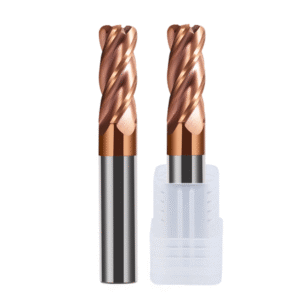
Machining Performance of Carbide Roughing End Mills in Different Materials
The hardness and cutting characteristics of different materials place varying demands on tool performance. High-hardness, tough, or chip-adhesive materials can cause rapid tool wear, vibration, and heat buildup during high-feed-rate roughing. Using high-performance carbide roughing end mills, combined with optimized cutting edge geometry, chip breaker design, and coatings, enables high material removal rates while maintaining tool life and surface quality.
Optimizing machining parameters and tool selection based on material characteristics is essential for high-efficiency machining. Matching the tool material, number of flutes, helix angle, and coating allows for stable performance under deep groove, high radial cutting, or high-feed-rate conditions. Whether machining hardened steel, alloy steel, aluminum alloys, or stainless steel, high-performance roughing tools provide reliable results.
High-Efficiency Roughing Solutions in Carbon Steel and Alloy Steel
Machining carbon steel and alloy steel requires tools with high wear resistance and rigidity due to large cutting forces and material hardness. Roughing end mills for hardened steel maintain stable cutting forces at high feed rates and large cutting volumes, reducing vibration and chipping. Combined with well-designed chip breakers and optimized cutting edge geometry, rapid chip evacuation improves efficiency in deep groove and full-slot machining.
Selecting high-hardness tungsten carbide tools extends tool life while maintaining high material removal rates. Increasing radial and axial cutting depths, when combined with the toughness of carbide roughing end mills, ensures efficient and stable batch processing of carbon and alloy steel.
Methods for Controlling Cutting Heat and Vibration in Stainless Steel Machining
Stainless steel’s high ductility and toughness often lead to heat buildup and vibration, affecting surface quality. Using a wide-gap 2-flute roughing end mill with optimized chip breaker design ensures quick chip evacuation, reducing tool load and heat concentration. High-performance coatings on carbide roughing end mills further enhance wear resistance and thermal stability, enabling stable roughing.
Controlling cutting parameters is equally critical. Reducing cutting speed, increasing feed rate, and applying sufficient cooling or lubrication minimize vibration and extend tool life. For deep grooves or complex cavities, matching tool geometry to machining conditions maintains stability at high material removal rates.
Tool Matching Considerations for High-Feed Rough Machining of Aluminum Alloys
Aluminum alloys have low cutting resistance but highly adhesive chips that can clog tools or compromise surface finish. A 2-flute roughing end mill with wide flutes ensures fast chip evacuation, reducing accumulation and vibration while maintaining high material removal rates. Coated carbide tools further minimize friction and improve surface finish.
In high-speed roughing, matching tool diameter and number of flutes to groove depth and cutting width ensures optimal stability. Combining proper axial and radial cutting depths allows efficient batch processing, smooth chip evacuation, and long tool life, improving overall production efficiency.
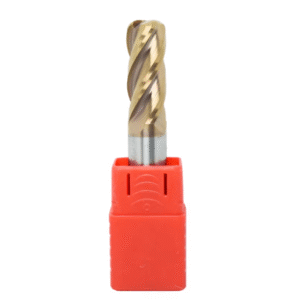
Selection Points for Roughing End Mills for Hardened Steel
Roughing hardened steel requires tools that withstand high cutting loads while ensuring machining stability and accuracy. High-hardness materials generate vibration and chipping risks, making tool rigidity, cutting edge geometry, and wear resistance critical. Tungsten carbide roughing end mills for hardened steel, combined with optimized cutting edge geometry, maintain stable cutting forces and long tool life under deep groove, large radial cuts, and high feed rates.
Chip evacuation and heat management are equally important. The tool’s chip breaker groove, number of flutes, and helix angle directly influence chip flow and heat distribution, determining efficiency and tool life. Combined with carbide’s thermal stability and wear resistance, these tools enable continuous, stable rough machining at high material removal rates.
Special Requirements for Tool Rigidity in High-Hardness Materials
Hardened steel and high-alloy steel generate significant cutting forces and localized stress. Insufficient rigidity can cause chatter, chipping, or errors. A 2-flute roughing end mill with a high-rigidity carbide body distributes forces, maintains cutting stability, and reduces localized wear. This ensures high material removal rates and machining quality under deep groove and large radial cuts.
High-rigidity designs improve durability at high feed rates, reducing surface defects and tool change frequency. Selecting a tool with an appropriate diameter-to-flute ratio and robust structure is crucial for stable production and lower machining costs.
The Importance of Chip Breaking Structure in Hardened Steel Roughing
Poor chip evacuation in hardened steel machining causes vibration, heat buildup, and tool chipping. A well-designed chip breaker groove removes chips efficiently, lowers cutting resistance, and improves machining stability. Optimized grooves for deep grooves, high feed rates, and large cutting volumes ensure long tool life during high material removal rate machining.
The chip breaker design also affects force distribution and heat dissipation. Proper design reduces stress on the cutting edge, lowers wear, and maintains surface flatness. Combined with carbide roughing end mills, optimized grooves significantly enhance efficiency and tool lifespan.
Parameter and Tool Matching Logic for Materials Above HRC45
Machining materials above HRC45 generates high cutting forces and heat, requiring optimized tool material, flute count, and cutting parameters. Properly balancing axial depth, radial depth, and cutting speed controls vibration and tool wear while ensuring high material removal rates.
2-flute roughing end mills perform well in high-hardness materials, suitable for mass production with high feed rates. Wider flute spacing and optimized helix angles ensure smooth chip evacuation and even heat distribution. Combined with high-toughness carbide, these tools achieve stable, efficient, and long-lasting rough machining for materials above HRC45.
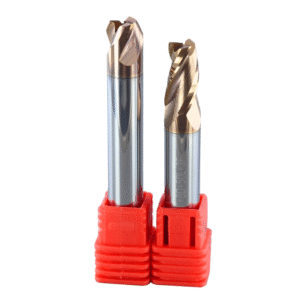
Practical Machining Parameter Strategies for High Material Removal Rate
High material removal rate machining requires rational tool parameter configuration to optimize efficiency and stability. Axial and radial depths, as well as feed rates, must be matched to tool geometry, material, and conditions. Optimized parameters leverage carbide roughing end mills’ toughness and load capacity for deep groove, large-area, and high-hardness machining.
Smooth chip evacuation, balanced cutting forces, and heat control are essential for high efficiency. Wide gaps and optimized chip breakers on 2-flute roughing end mills reduce vibration under high load, ensuring surface finish and tool life. Parameter optimization is indispensable for consistent high material removal rate machining.
Rational Combination of Axial Depth and Radial Depth
Matching axial and radial cutting depths is fundamental to maximizing material removal. Excessive radial depth can increase tool load and vibration. For deep groove or hardened steel machining, cutting depth and width must be scientifically matched to tool diameter and material properties to ensure stability and tool longevity.
For aluminum alloys or soft steels at high feed rates, 2-flute roughing end mills disperse cutting forces through optimized flute geometry and count, maintaining stability while improving machining efficiency.
Balancing Feed Rate Increase and Tool Load Control
Increasing feed rate boosts material removal but raises tool load and heat. Combining tool material, cutting edge geometry, and chip breaker design enables high-feed machining while preserving tool life. Carbide roughing end mills withstand high loads in deep groove and radial cuts, enabling continuous, efficient machining.
Feed rate and tool load must match material characteristics. Hardened steel or high-alloy steels require reduced cutting speed to control heat, while aluminum or low-hardness steels can run at high feed rates. Balancing load and feed ensures stability and tool longevity.
The Impact of Cooling Methods on Rough Machining Stability
Cutting heat affects tool life and accuracy. Appropriate cooling reduces tool temperature, heat buildup, and improves chip removal. For carbide roughing end mills in hardened steel, sufficient coolant or spray cooling maintains stable machining under deep groove and high feed conditions, minimizing vibration and wear.
Cooling requirements vary by material. Hardened and high-alloy steels need strong cooling, while aluminum and copper alloys benefit from moderate lubrication to prevent chip clogging. Leveraging 2-flute roughing end mills’ chip evacuation with optimized cooling strategies enables efficient, high material removal rate machining while preserving tool life and surface quality.
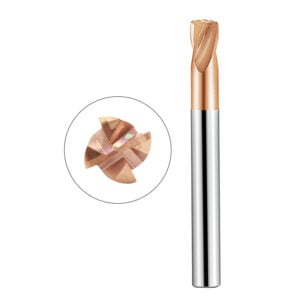
Common Problems and Optimization Directions in High Material Removal Rate Machining
In high material removal rate machining, even with high-performance tools, issues such as tool vibration, chipping, or reduced machining accuracy are common. These problems usually result from excessive cutting forces, poor chip evacuation, or heat buildup. Optimizing tool geometry, material selection, and machining parameters can effectively reduce risks while maintaining stable machining performance in deep groove, wide groove, or high-hardness material processing.
Carbide roughing end mills, with high rigidity and wear resistance, maintain stable performance under high cutting volumes and feed rates, ensuring consistent overall production efficiency.
Machining issues often have a chain effect. For example, chip clogging can cause vibration, which may lead to localized tool chipping and reduced tool life. Combining wide flute clearance with optimized chip breaker grooves on 2-flute roughing end mills improves chip evacuation, reduces machining fluctuations, and creates a stable and efficient machining cycle.
Typical Causes of Tool Vibration and Chipping
Tool vibration and chipping are usually caused by concentrated cutting forces, excessive cutting heat, or insufficient tool rigidity. In deep groove or large radial cutting, cutting forces concentrate at the tool tip and cutting edge. Insufficient tool rigidity or aggressive machining parameters increases the likelihood of vibration and tool damage. Using a high-rigidity roughing end mill for hardened steel, combined with optimized edge geometry and helix angle, effectively disperses cutting forces and reduces vibration risk.
Tool wear or poorly designed chip breaker grooves can also increase chipping. Chip clogging causes uneven force distribution and sudden impacts, easily chipping the tool tip. Optimizing tool geometry and chip breaker design ensures stable cutting in deep groove and high-load conditions, reducing vibration and chipping frequency.
Chain Effects of Poor Chip Evacuation on Tool Life
Poor chip evacuation leads to rapid heat buildup, raising local tool temperature, reducing wear resistance, and accelerating chipping. In deep groove or high-feed machining, clogged chips increase vibration, further affecting tool life and surface quality. A 2-flute roughing end mill with wide chip evacuation grooves ensures smooth chip removal and significantly extends tool life.
Chip evacuation issues also disrupt cutting force distribution, creating a cycle of localized wear. Combining the high toughness of carbide roughing end mills with heat-resistant coatings maintains tool performance during high material removal rate machining, reducing failure rates and enabling stable, efficient continuous production.
Improving Overall Machining Efficiency Through Tool Geometry Optimization
Adjusting tool geometry is key to improving machining efficiency. Optimizing cutting edge geometry, helix angle, flute spacing, and chip evacuation grooves reduces force concentration and ensures smooth chip removal, improving stability in deep groove and large radial cuts. Carbide roughing end mills for hardened steel, with optimized geometry, can handle higher feed rates and cutting capacities, enabling continuous and efficient processing.
Rationally matching tool diameter, number of flutes, and coating type to the material and machining conditions further extends tool life and reduces downtime. Combined with the chip evacuation advantages of 2-flute roughing end mills, tool geometry optimization improves machining efficiency, surface quality, and dimensional accuracy.

How to Choose a Reliable Roughing End Mill Supplier
Choosing a reliable supplier is critical in high material removal rate machining. Tool quality directly affects production efficiency, machining consistency, and tool life. For high-performance carbide roughing end mills or customized 2-flute roughing end mills in high-load or mass production, only suppliers with stable quality and strict process control can ensure consistent dimensions, cutting edge sharpness, and wear resistance.
Supplier service and technical support also play a key role. A reliable supplier offers standardized tools, optimized geometry, edge design, and coating solutions based on material and machining requirements. Combined with carbide roughing end mills for hardened steel, selecting the right supplier reduces production risks, improves efficiency, and extends tool life.
The Importance of Product Consistency in High-Volume Rough Machining
In deep groove, wide groove, or high-feed-rate batch machining, tool consistency determines machining quality and efficiency. Variations in size or cutting edge geometry can cause vibration, cutting force fluctuations, and chipping, increasing downtime and tool replacement frequency. Carbide roughing end mills from reliable suppliers ensure consistent hardness, cutting edge geometry, and coating thickness, guaranteeing stability in high-volume rough machining.
Consistency also impacts surface quality and final workpiece accuracy. Even minor tool errors can amplify cutting forces and vibration under high material removal rate conditions. Suppliers with standardized production and strict quality control provide reliable support for deep groove, high-load, and high-volume machining.
The Value of Technical Support and Customization Capabilities
Technical support and customization are crucial in production. Different materials, cutting conditions, and machining depths require specific tool designs. Supplier guidance can optimize flute count, helix angle, chip breaker design, and coatings for maximum efficiency and tool life.
For hardened or high-alloy steel, customized roughing end mills can be tailored to HRC value, groove depth, and machining width, ensuring high-load stability. Supplier services help optimize tool selection, parameter matching, and process recommendations, enabling continuous and efficient high material removal rate machining.
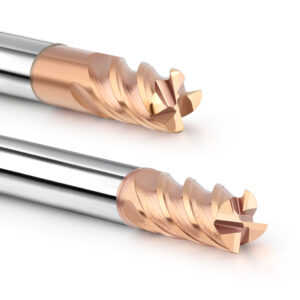
Advantages of China CNC Roughing End Mill Manufacturers
Chinese CNC roughing end mill manufacturers provide stable quality, competitive pricing, and extensive customization capabilities. Large-scale production and mature process control allow carbide roughing end mills to maintain toughness, wear resistance, and cutting stability while remaining cost-effective.
Chinese manufacturers increasingly provide R&D-driven customization. Based on material, groove depth, and cutting conditions, suppliers offer optimized tool geometry, edge design, and coatings for high-feed-rate 2-flute roughing end mills, enabling efficient and stable production in deep groove and high-hardness machining.
Cost Advantages of Chinese-Made Carbide Rougher End Mills
Large-scale production, automation, and mature supply chains reduce the cost of Chinese carbide roughing end mills. Compared with other regions, they offer competitive pricing while maintaining wear resistance and thermal stability, lowering overall production costs in high material removal rate machining.
Quality is not sacrificed for cost. Chinese manufacturers maintain strict control over material selection, cutting edge geometry, and coating, ensuring stable performance in roughing hardened steel or high-alloy steel. Bulk procurement further reduces cost while maintaining machining efficiency and tool life.
Supply Capabilities for Customized 2-Flute Roughing End Mills
Chinese manufacturers offer extensive customization. 2-flute roughing end mills can be tailored to groove depth, material, and cutting capacity, optimizing flute count, edge design, helix angle, and chip breaker structure. Customization improves efficiency and reduces vibration and chipping risks.
Small-batch or mass customization, coating selection, and tool material adjustments ensure performance in high-hardness and high-alloy steel machining, supporting continuous production with stable surface quality and tool life.
Evaluating Quality Stability of Chinese Roughing End Mill Manufacturers
Evaluate suppliers based on product consistency, material selection, cutting edge precision, and coating uniformity. Stable carbide roughing end mills maintain balanced forces under deep groove and large radial cuts, reducing vibration and chipping for high efficiency and tool longevity.
Assess manufacturer quality systems, technical support, and customer case studies. Suppliers providing testing data, process guidance, and customization typically perform better. Combining customization experience for 2-flute roughing end mills with deep groove machining capabilities ensures reliable selection.

Summary of Roughing End Mill Selection for Different Machining Scenarios
Different machining scenarios require different tool features. In deep grooves, large radial cuts, high-hardness materials, or high-feed-rate conditions, tool material, cutting edge geometry, flute count, helix angle, and chip breaker design affect efficiency, tool life, and surface quality. Combining high-rigidity carbide tools with 2-flute roughing end mills ensures scientifically optimized tool selection for stable, efficient roughing.
Supplier stability and customization are also essential. Reliable China CNC manufacturers provide consistent quality, superior materials, and customizable edge geometry and coatings to ensure high material removal rates, reduce downtime, and optimize machining costs.
Tool Selection Logic for High-Efficiency Mass Production
In high-efficiency mass production, consistency and durability are crucial. Carbide roughing end mills maintain stable cutting forces under deep grooves or large cutting volumes, minimizing vibration and chipping. Optimized flute count, edge geometry, and coatings ensure long-term stable operation under high-feed conditions. Rationally matching axial and radial depths and feed rates is key to achieving high material removal rates and balanced tool load. Supplier technical support and customization further improve efficiency and reduce tool change frequency.
Tooling Configuration Suggestions for Complex Cavities and Deep Grooves
Complex cavities and deep grooves require high chip evacuation, rigidity, and cutting stability. 2-flute roughing end mills with wide clearance and optimized chip breakers evacuate chips efficiently, reduce heat buildup, and minimize vibration. Combined with high-hardness carbide and proper helix angle, stable, high-precision machining is achieved under high material removal rates.
For high-hardness or high-alloy steel, wear-resistant roughing end mills for hardened steel, combined with optimized cutting parameters, maximize efficiency and stability. Tool diameter, flute count, and chip breaker structure should be matched to achieve balanced cutting forces and chip evacuation.
Reducing Machining Costs While Maintaining High Material Removal Rates
Reducing machining costs relies on tool selection, parameter optimization, and supplier support. High-consistency carbide roughing end mills from China, combined with optimized flute geometry, chip breakers, and coatings, extend tool life while maintaining high material removal rates, reducing tool change frequency.
Rationally configuring axial and radial depths, feed rates, and cooling strategies reduces heat and vibration risks, ensuring stable continuous production. Tool geometry optimization and customized solutions enable cost-effective, high-efficiency, high material removal rate machining, improving both processing quality and economic benefits.