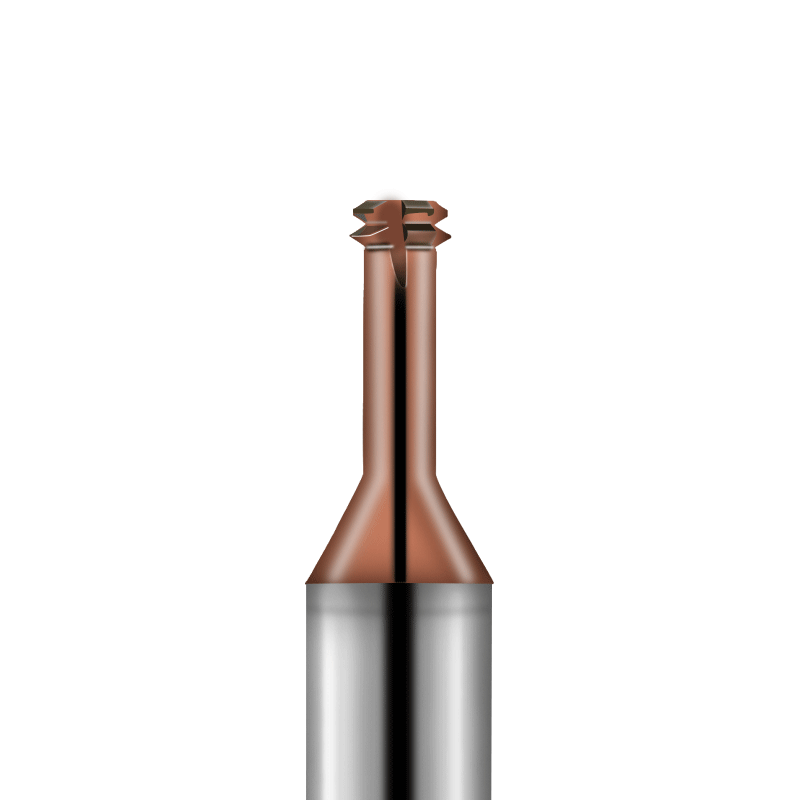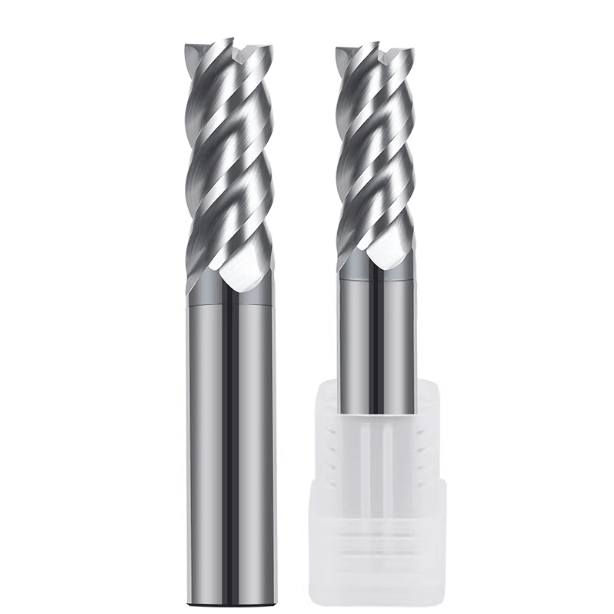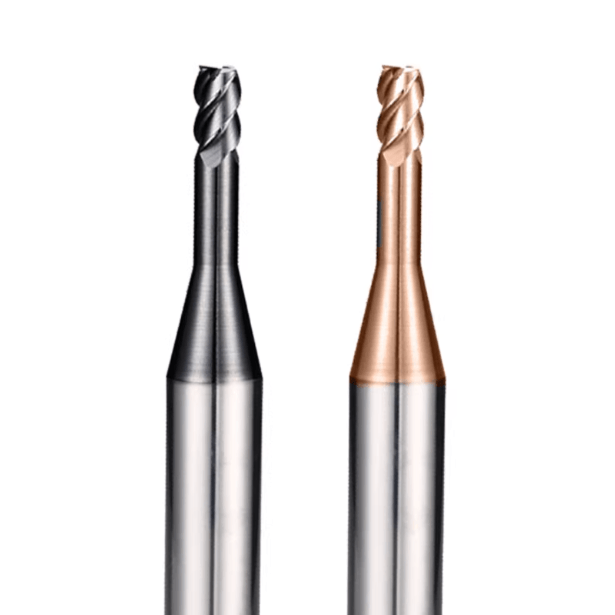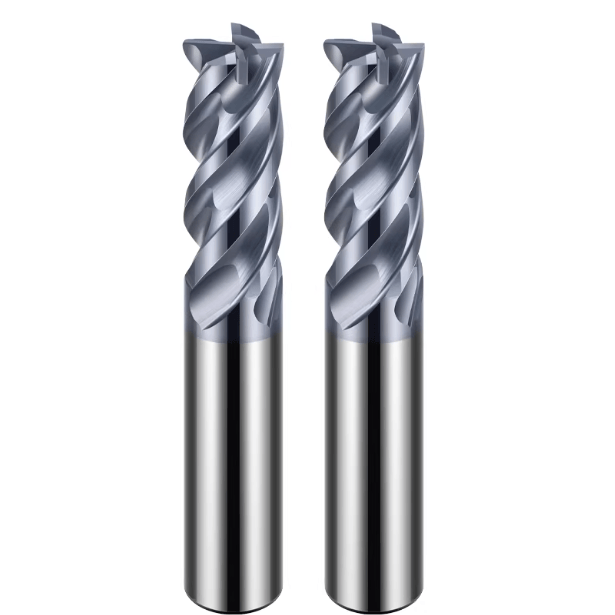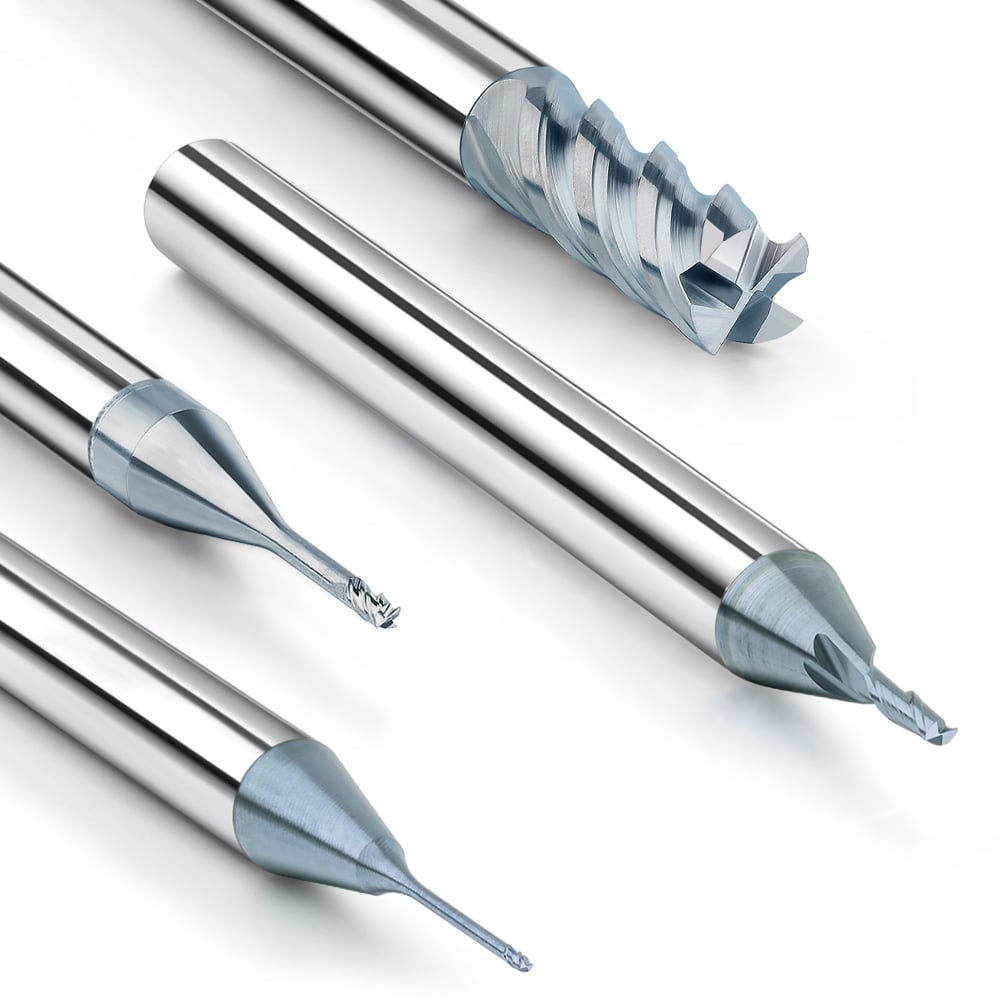
Over the past few years, we’ve repeatedly encountered a nearly identical scenario in various client projects. The part drawings weren’t particularly complex, but the requirements for surface accuracy, contour consistency, and finish were extremely high. Initially, the parameters seemed acceptable, and the CAM path had been optimized multiple times, yet the machining results remained inconsistent. Some parts had a dark surface, while others showed dimensional deviations during assembly.
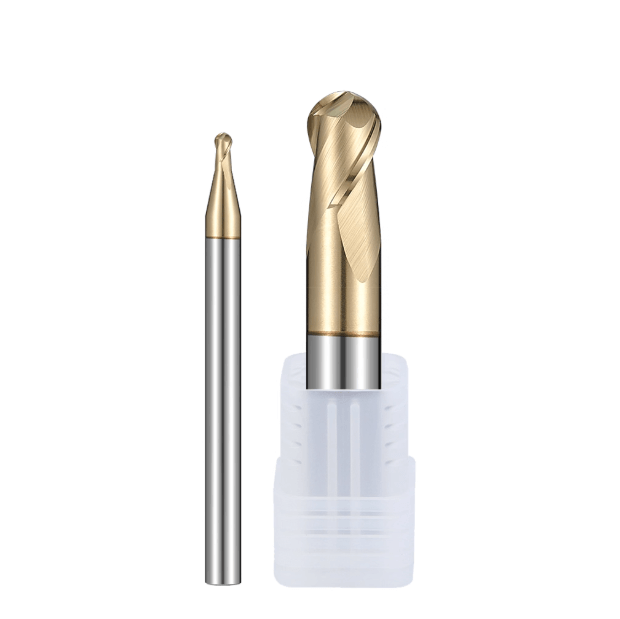
In these projects, we used ball end mills, almost exclusively during finishing or semi-finishing stages. Whether it was mold cavities, complex 3D contours, or the final toolpath for stainless steel parts, the problem was often not whether the part could be machined, but whether it could maintain consistency across batches. This is why the carbide ball end mill has become our recurring choice, not just a one-off trial.
I recall a stainless steel project where the client still couldn’t accept the surface quality after changing the end mill ball nose for stainless steel three times. The tool hadn’t broken, but the wear was completely unpredictable, leading to inconsistent results for each batch. Instead of adjusting feed rates or spindle speeds, we addressed the issue by reassessing the ball end radius, cutting edge geometry, and overall rigidity of the tool. This resolved the problem completely.
A similar situation is even more pronounced in deep cavity machining. When long reach ball end mills are required, any minor instability is amplified. Many customers initially don’t perceive a problem with the tooling until we switch to carbide ball end mills with optimized structures on the same machine and along the same toolpath. At that point, the difference in results becomes undeniable.
Through long-term collaborations with European and American clients, we’ve realized that when discussing China CNC ball end mills, the real focus should not be on the label but on whether performance under actual machining conditions is repeatable and predictable. This is why, when selecting a carbide ball end mill manufacturer, we prioritize machining verification and technical support over parameter sheets.
If you’ve repeatedly encountered “seemingly normal but inconsistent” results during finishing, have you thoroughly reviewed whether the problem truly lies in machining parameters?
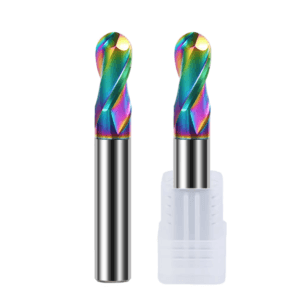
Why We Persist in Using Carbide Ball End Mills for High-Precision Machining
Over the past decade, while processing molds and precision parts for European and American clients, we’ve discovered that tool selection has a far greater impact on machining stability and batch consistency than theoretical parameters. Whether it’s mold cavities or complex 3D surfaces, we’ve seen discrepancies caused by different tools on the same machine using the same program. Sometimes a tool that appears durable can exhibit subtle deviations in surface finish, curvature accuracy, and even dimensional contours after multiple batches. Therefore, when selecting ball end mills, we prioritize the performance of carbide ball end mills in repetitive machining rather than theoretical cutting speeds or feed rates.
We’ve also noticed that clients’ actual needs often aren’t tied solely to machining efficiency. They are more concerned with whether each operation meets assembly requirements and whether mold cavities require rework. Years of experience have taught us that stability, repeatability, and tool rigidity are the fundamental reasons we consistently use carbide ball end mills. In deep cavity machining or long overhangs, we prefer proven long-neck ball end mills rather than risking short-term feed rate gains.
In Surface and Cavity Finishing, Dimensional Stability Is More Important Than Cutting Speed
I recall a client requesting finishing of complex curved surfaces on a stainless steel mold. Initially, we tried high-speed cutting parameters to improve efficiency. While machining time per piece dropped by 15%, surface finish and ball end radius accuracy fluctuated significantly. Observing tool wear revealed that even slight wear on the cutting edge was amplified in curved surface machining, causing small errors to accumulate along each toolpath, resulting in dimensional deviations. We then changed our approach: maintaining dimensional stability of the ball end mill is far more important than pursuing cutting speed.
We verified this approach on stainless steel and mold steel and found that carbide ball end mills provided more predictable rigidity and wear patterns. Even after prolonged use, surface accuracy fluctuations were smaller than with ordinary HSS or low-end alloy tools. In deep cavities or complex contours, minor geometric changes in the tool have a major impact on final assembly. We remind peers: stable tool geometry, not speed, ensures consistent machining.
Customers’ Real Complaints Aren’t About Efficiency, But About Repetitive Consistency
In our work with European and American clients, the most frequent complaints aren’t about slow machining speeds but surface and dimensional differences between parts in the same batch. In a medical device project, two different carbide ball end mills were used for semi-finishing. Machining time per part was nearly identical, yet assembly revealed parts that were unusable. Analysis showed uneven tool wear and tiny arc errors were the main causes, not machine or parameter issues.
We explain to clients why we insist on proven ball end mills for finishing instead of pursuing maximum feed rates. Once consistent results are achieved across consecutive batches, clients understand. From an engineering perspective, controllable repeatability is more important than single-piece efficiency.
Differences in Rework Rates Due to Different Ball End Mill Materials
Over the years, we’ve compared HSS, powder high-speed steel, and carbide ball end mills. Differences in rework rates are significant. For high-hardness stainless steel and mold steel, minor wear on HSS or low-end alloy tools immediately affects surface quality, while carbide ball end mills wear predictably, maintaining consistent dimensions and finish across batches.
In deep cavities or long overhangs, we often choose small-diameter carbide ball end mills to ensure contour accuracy rather than maximizing tool life or single-piece speed. Practical applications confirm that material and structure choices directly reduce rework and complaints. In finishing, controllability of the material itself outweighs advertised parameters.
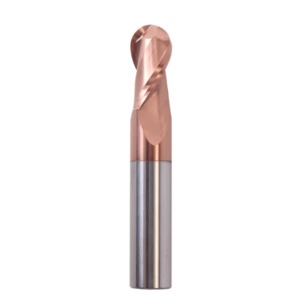
The Irreplaceable Advantages of Carbide Ball End Mills in Actual Machining
Handling complex parts and mold projects for European and American clients has shown that not all tools can deliver repeatable finishing results. For 3D curved surfaces, deep cavities, or stainless steel parts, even small geometric deviations affect assembly and surface quality. Years of field verification demonstrate that carbide ball end mills are virtually irreplaceable for surface accuracy and contour consistency, especially in batch processing and high-hardness materials.
Tool wear patterns are also critical. Ordinary ball end mills develop uneven tip wear or micro-cracks after hours of continuous use, causing ripples and dimensional drift. Carbide ball end mills, however, exhibit controllable wear curves, allowing precise tool-change timing and avoiding rework. Predictable wear has become a core factor in our tool selection.
The Direct Impact of Ball End Mill Accuracy on Mold and Part Assembly
A client requested complex 3D curved surfaces on an aerospace mold. Using ball end mills from different brands along the same toolpath revealed that even tiny errors in ball end radius caused inconsistent assembly clearances, preventing first-pass inspection success.
Since then, we check ball end mill accuracy on all carbide tools and compare measurements with the CAD model. This is standard practice for long overhangs or deep cavities. We ask colleagues: Have you ever scrapped a batch because you neglected tool radius? Experience shows this is often more critical than adjusting cutting parameters.
Controllability of Tool Wear Patterns During Continuous Long-Term Machining
In machining 50–60 medical device parts in a deep cavity, ordinary alloy cutters initially reduced machining time but caused fluctuating surface finish and dimensional stability. Uneven wear generated toolpath errors and unpredictable outcomes.
After switching to a carbide ball end mill, wear remained linear and controllable even after 10+ hours. We monitor tool tips on-site with magnification, examining micro-cracks and cutting edge radius changes to decide if machining can continue. This approach minimizes rework and ensures repeatable batch results.
How We Determine Whether Machining Is Still “Safe” Based on Tool Condition
In high-precision machining, we assess tool condition daily. Judgments combine cutting edge shape, ball end radius, and surface ripple observations. In stainless steel mold finishing, the tool surface may appear intact, but slight edge chipping can already cause micro-ripples. Continuing would affect the entire batch.
We inspect carbide ball end mill tips next to the machine using magnifying and measuring tools. Combining previous part measurements, we determine if machining is still safe. This method, repeatedly validated with European and American clients, maximizes tool life without sacrificing stability. Do you, like us, check tool condition before every operation rather than relying solely on machine parameters?
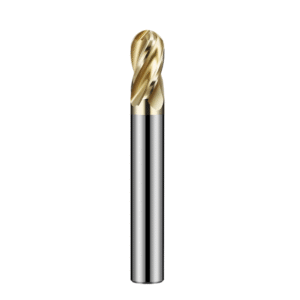
Long-Reach Ball End Mills: The Most Underestimated Risk in Deep Cavity Machining
In years of machining deep cavity molds and aerospace parts, we’ve found that many peers underestimate the risks of long-reach ball end mills during finishing. In one deep-cavity aerospace project, using a standard ball end mill, the overhang exceeded the design ratio by less than three times. Tool vibration increased significantly, surface ripples appeared, and results varied greatly between batches. Even minor vibrations were amplified into dimensional deviations during precision assembly. Through field verification, we’ve realized that with long overhangs, tool structure and rigidity are far more critical than simply adjusting feed or spindle speed.
Moreover, many customers oversimplify tool breakage. They assume low feed rates guarantee safety. In reality, with standard ball end mills, micro-vibrations and tool body deflection accumulate and are more likely to cause breakage or surface defects than any parameter setting. This is why we always evaluate the tool length-to-diameter ratio, rigidity, and material properties before each deep cavity operation. Experience tells me that preventing issues through tool structure is far more reliable than correcting them afterward.
What Happens to a Standard Ball End Mill Once the Overhang Exceeds a Certain Ratio?
We recall a deep cavity stainless steel mold where the tool overhang was nearly five times its diameter. Initially, a standard alloy ball end mill produced a relatively smooth surface. However, by the tenth part, surface ripples worsened, and slight chipping appeared. Under magnification, the tool tip was slightly bent. The accumulated vibration from each cut compromised the finish.
This experience taught me that standard ball end mills are prone to vibration amplification under long overhang conditions. Even high machine rigidity cannot fully compensate for insufficient tool rigidity. Therefore, for deep cavities or long channels, we almost always choose proven long-reach ball end mills rather than extending a standard tool arbitrarily.
How We Address Vibration Through Tool Structure Rather Than Parameters
In practice, we control vibration through tool design rather than only reducing feed or spindle speed. In a deep cavity mold project, we used long-reach ball end mills with reinforced necks and optimized helix angles. These improvements reduced deflection during overhang, ensuring smooth surfaces while maintaining cutting speed.
We also calculate natural frequency and potential resonance regions in advance, considering tool length, diameter, and helix design. Experience shows that proper tool structure is often more effective than parameter adjustments. On-site, we often ask colleagues: Do you evaluate tool structure before long overhang machining, rather than adjusting parameters first? Many vibration and surface issues can be avoided this way.
Why Not All Long-Reach Ball End Mills Are Suitable for Finishing
A client requested finishing deep cavities in high-hardness steel. We tried a long-neck ball end mill that seemed appropriate, but after a few parts, micro-vibrations and surface ripples appeared. Analysis revealed insufficient neck rigidity and an unsuitable cutting edge design for high-hardness finishing.
Now, when selecting long-overhang ball end mills, I consider material hardness, tool diameter, helix angle, number of cutting edges, and neck rigidity. Not all long-reach ball end mills perform stably in deep cavity finishing. Even manufacturer claims must be verified on-site. I ask colleagues: In high-precision deep cavity machining, have you verified tool stability during continuous operations rather than just consulting the parameter list?

The Real Machining Challenges of End Mill Ball Noses for Stainless Steel
In our long-term projects with European and American clients, finishing stainless steel parts has consistently been the most troublesome stage. Many assume that controlling feed and spindle speed ensures surface quality. However, the problem often lies in the tool itself. Our field verification shows that cutting edge design, number of cutting edges, and arc accuracy of carbide ball end mills play decisive roles in finishing stability.
For small-diameter deep cavities or complex 3D curves, even slight tip wear or micro-cracks cause surface roughening, burrs, or localized overcutting. Testing different end mill ball noses for stainless steel repeatedly shows that only proven carbide tools maintain consistent results. This is why we prioritize models validated in real projects over theoretical parameters.
Three Most Common Failure Signals in Stainless Steel Finishing
From our experience, three signals indicate potential problems:
-
Fine streaking or uneven gloss, caused by uneven tool tip wear.
-
Localized dimensional deviations after machining deep cavities or curves, linked to tool rigidity or cutting edge accuracy.
-
Surface ripples or vibration marks after prolonged machining, often caused by mismatch between flute number, helix angle, and material hardness.
We advise checking tool condition first instead of immediately adjusting machine parameters. Examining the tip and cutting edge allows us to predict batch variation early. Experience shows early detection is far more effective than post-processing corrections.
The Logic of Flute Type and Number Selection Validated for Stainless Steel
In practice, we tested different flute types and numbers. For deep cavities or complex contours, four- or six-flute carbide ball end mills provide better surface flatness but require a proper helix angle for chip removal. Small-diameter tools benefit from fewer flutes to reduce tip vibration and heat buildup.
We fine-tune cutting edge shape and flute number based on material hardness. In one project with five-flute tools, streaking appeared after a dozen parts. Adjusting helix angle and flute count eliminated the issue. Tool selection is about on-site verification, not formula application.
Abnormal Surface Quality Is Often a Tool Issue, Not a Parameter Issue
In one client project, surface finish repeatedly failed. Initially, we suspected feed or spindle mismatch, but changing the tool immediately resolved the issue. Magnified inspection revealed minor wear and uneven edges were the cause.
Since then, we check arc accuracy, edge integrity, and chip removal capability of end mill ball noses for stainless steel before each finishing operation. Even with proper parameters, poor tool condition leads to ripples, wire drawing, or overcutting. Peers, do you also judge based on tool condition before each operation rather than relying solely on machine settings?

How We Adjust Ball End Mill Usage Strategies Across Machining Scenarios
Tool requirements vary depending on the scenario. Mold finishing demands smooth surfaces and high contour accuracy, sensitive to arc accuracy and cutting edge integrity. Part finishing emphasizes batch consistency and dimensional stability. We’ve found that the same carbide ball end mill can perform differently across scenarios even with identical parameters.
We adjust strategies based on material, geometric complexity, and machine rigidity. For deep-cavity stainless steel molds, we may use long-reach tools and lower feed rates; for lower hardness parts, slightly higher feed rates are acceptable if wear and arc accuracy are controlled. This approach is a balance derived from experience, not a simple calculation chasing speed or tool life.
Mold Finishing vs. Part Finishing: Different Tool Requirements
In one mold project, the ball end arc deviation had to stay within 0.01 mm to avoid assembly issues. In aerospace part finishing on the same machine, ±0.02 mm was acceptable, but batch consistency remained critical. This showed us that evaluation criteria differ by scenario.
We pre-determine tool strategies based on the workpiece. Mold finishing focuses on cutting edge and tip rigidity; part finishing focuses on wear resistance and batch repeatability. Many problems stem from mismatched tool selection rather than machine or CAM path issues.
When Do We Sacrifice Efficiency for Stability?
In a deep-cavity mold of high-hardness stainless steel, maximizing feed rate caused ripples and vibrations. Reducing feed rate and using a proven carbide ball end mill increased machining time per part but ensured surface quality and dimensional consistency.
This experience reinforced that repeatability outweighs speed. Sometimes sacrificing efficiency proactively saves rework and enhances process control. Colleagues, have you ever reworked parts due to prioritizing speed over stability?
Same Carbide Ball End Mill, Different Machine Tools
We once machined aerospace parts on two five-axis machines with different rigidity using the same batch of tools. On the higher rigidity machine, the tool performed smoothly. On the lower rigidity machine, slight ripples appeared despite identical parameters. Tool wear observation confirmed machine rigidity impacts vibration, while tool structure partially compensates.
We adjust strategies on-site: selecting neck rigidity, cutting edge shape, and length according to machine conditions. Experience shows the same carbide ball end mill cannot perform identically across machines. Understanding machine characteristics and tool condition is key. Have you seen the same tool behave differently on different machines, forcing on-the-fly strategy adjustments?

Our Real Observations on China CNC Ball End Mills While Serving European and American Clients
Through long-term experience providing technical support for mold and high-precision parts machining to European and American clients, we have accumulated extensive practical experience with China-made ball end mills. Many clients initially focus on price. However, through on-site verification, we found that batch consistency and tool predictability are the true concerns. Even if the same model is cheaper, small differences in arc accuracy or cutting edge wear between batches can lead to serious assembly or surface quality issues.
We also observed that under certain machining conditions, China-made carbide ball end mills perform very stably, particularly in semi-finishing and finishing of deep-cavity molds and complex 3D parts. By comparing batches from different suppliers, we can identify tools that maintain consistency in continuous machining. This experience allows us to prioritize on-site verification results over catalog parameters or promotional specifications when recommending tools or adjusting machining strategies.
European and American Customers’ Top Concern Isn’t Price, But Batch Consistency
In multiple projects, we found that the primary evaluation criterion for clients is not unit cost, but repeatability of batch part machining. For instance, an aerospace parts customer initially focused on price for a domestically produced carbide ball end mill. After machining the first batch, inconsistencies in surface finish and dimensional stability required rework. Rigorous batch testing and tool condition monitoring ensured arc accuracy and cutting edge consistency for each batch, greatly improving client satisfaction.
We emphasize to clients that predictable machining results save more overall costs than price alone. In deep-cavity or high-hardness stainless steel machining, even lower-priced tools with high batch variation can increase rework and inspection burdens. Colleagues, have you noticed that batch consistency often impacts client satisfaction more than unit price?
Proven Machining Processes for China-Made Ball End Mills
Through years of field application and customer feedback, we identified machining scenarios where China-made carbide ball end mills have proven effective. These include semi-finishing of stainless steel deep-cavity molds, finishing complex 3D parts, and contour machining of high-hardness aerospace components. In these cases, arc accuracy, edge wear patterns, and surface quality have been repeatedly verified, yielding controllable batch machining results.
In actual operations, we record each batch’s performance: vibration during deep-cavity machining, surface roughness, and wear patterns. This data helps us assess tool reliability under similar conditions and builds client trust in long-term projects. Not every tool suits every scenario; only tools verified in real machining can be used with confidence.
Application Scenarios Where Caution Is Still Needed
We advise clients that some extreme applications require caution, even with China-made long-reach or small-diameter carbide ball end mills. Examples include ultra-deep cavities, continuous finishing of high-hardness mold steel, and 3D contour cutting under long overhang and high-speed conditions. In such cases, minor differences in tool rigidity, material, or cutting edge shape can lead to surface ripples or vibration.
We recommend small-batch verification, monitoring tool wear and arc accuracy before mass production. This approach leverages the cost-effectiveness of Chinese-made tools while ensuring part quality. Peers, when selecting tools for long overhangs or high hardness, do you also perform on-site verification rather than relying solely on parameter lists?

Core Competencies of Carbide Ball End Mill Manufacturers from an Engineer’s Perspective
Serving European and American clients over the years, we realized that choosing a tool supplier involves more than consulting catalogs and promotional parameters. As engineers, we focus on repeatability, wear patterns, and batch consistency in actual machining. A manufacturer’s production and quality control directly affect results and rework rates.
We often verify tool batches with suppliers, observing carbide ball end mill performance across materials and machine tool conditions. These on-site checks help us develop empirical standards for judging ball end mill manufacturer reliability. This enables actionable recommendations rather than relying solely on theoretical specifications.
Three Internal Indicators for Judging Manufacturer Reliability
In our experience, three indicators predict supplier reliability:
-
Raw material stability – Carbide ball end mill performance depends on powder quality and sintering density; fluctuations affect wear and arc accuracy.
-
Machining and grinding capabilities – Ball end accuracy and cutting edge quality require high-precision equipment and strict process control.
-
Inspection and quality tracking – Detailed records for each batch, including edge wear, arc accuracy, and hardness testing.
These indicators are better predictors of part results than advertised parameters. In one project, tools with identical specifications from two suppliers differed in surface finish and dimensional consistency due to inconsistent raw materials and grinding processes. Colleagues, do you also evaluate reliability based on these internal indicators rather than price or catalog specs?
The Real Factor Affecting Machining Results Isn’t Catalog Parameters
Many customers focus on diameter, number of cutting edges, and coating parameters. However, surface quality and batch consistency depend on arc accuracy, cutting edge integrity, and material uniformity, not advertised speed or wear resistance.
In stainless steel deep-cavity mold machining, we repeatedly found that even with identical parameters, tools from different manufacturers produced significant differences in surface roughness, vibration, and wear patterns. Parameters are only references; manufacturing quality and tool consistency drive results. Have you ever seen correct parameters produce unstable surfaces?
Why Technical Support Matters More Than a Catalog
Technical support often has a greater impact on machining efficiency than tool catalogs. Clients’ issues usually involve cutting edge selection, long overhang strategies, or chip removal solutions. Suppliers who provide tailored advice for materials and machine tools save trial-and-error time and reduce rework.
In one deep-cavity aerospace project, a client’s tool vibrated slightly, causing surface roughness. With supplier support, we adjusted cutting edge and helix angle, rather than merely changing parameters. Consecutive batches met surface and dimensional standards. Colleagues, have you realized technical support often impacts results more than catalog specifications?
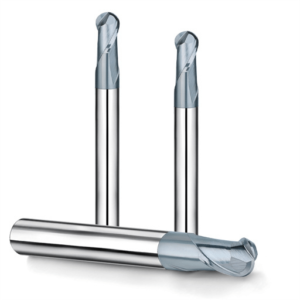
Some Practical Advice for Long-Term Ball End Mill Users
Through years of providing technical support for mold and precision parts machining to European and American clients, I have summarized directly applicable experiences that help reduce rework rates and tool wear when using carbide ball end mills. Whether you are performing deep-cavity machining, complex 3D surface machining, or stainless steel finishing, starting with proper tool selection, real-time machining monitoring, and systematic factory experience management is critical.
We consistently emphasize to clients that establishing tooling standards and verification methods early in a project prevents most subsequent machining problems. Experience shows that many rework issues and surface defects can be predicted and controlled during the tool selection phase. By comparing actual working conditions, material types, machine tool rigidity, and tool structure, you can maximize machining stability and batch consistency.
Most Machining Problems Can Be Avoided During Tooling Selection
When preparing to machine stainless steel molds or high-hardness parts, consider the tool material, ball end diameter, number of cutting edges, and cutting edge type. Make preliminary judgments based on cavity length, tool overhang, and machine tool rigidity. In multiple projects, we have found that selecting a suitable carbide ball end mill in advance and verifying the arc accuracy prevents surface roughening, waviness, or dimensional deviations later.
For complex three-dimensional curved surfaces, selecting the right long-reach ball end mill is particularly critical. I recommend small-batch trial runs to monitor vibration and surface finish before starting mass production. This approach mitigates most potential risks in advance rather than adjusting parameters after problems occur.
Don’t Wait Until the Tool Breaks to Suspect It
If you are continuously machining deep cavities or high-hardness materials, inspect the tool tip and cutting edge condition before each batch. Waiting for tool breakage or surface anomalies often leads to rework. In stainless steel finishing, even micro-cracks or slight cutting edge wear can affect surface quality and dimensional stability. Early detection not only reduces rework but also protects the machine tool and other components.
We combine batch part measurement with optical magnification inspections to assess tool suitability for continued machining. This practice has consistently proven effective in our projects with European and American clients. Timely monitoring of tool condition ensures greater stability of machining results than relying solely on feed or spindle speed adjustments. If needed, we can discuss specific working conditions, drawings, or materials to provide more targeted guidance.
Establish Your Own Ball End Mill Usage Experience Library
For production managers handling multiple lines or complex parts long-term, establishing a ball end mill usage experience library is invaluable. We typically record tool type, cutting edge shape, material, service life, workpiece material, depth of cut, machine tool type, and any surface anomalies or vibration during machining. Over time, this data provides a clear basis for tool selection, parameter adjustment, and tool change decisions, rather than relying solely on memory or experience.
I also encourage colleagues to use this database when facing special materials or deep-cavity contours, comparing it with actual machining results. Sharing specific working conditions, materials, or drawings allows us to analyze which tool combinations and usage strategies are most suitable. This systematic management significantly improves finishing stability while reducing the risk of accidental tool breakage and rework.