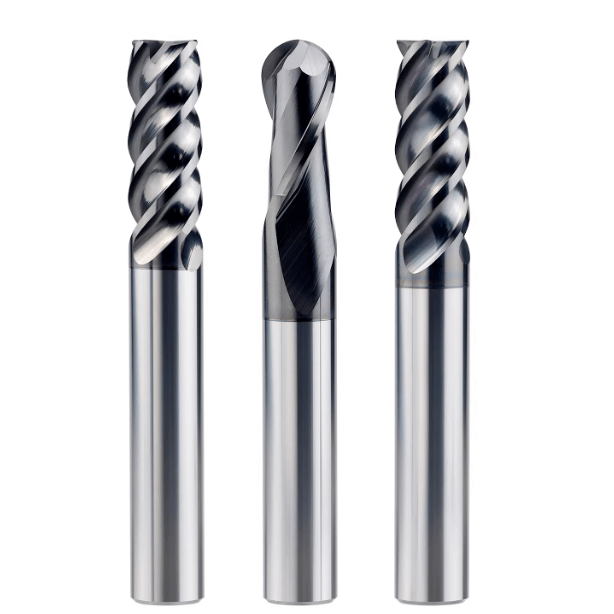
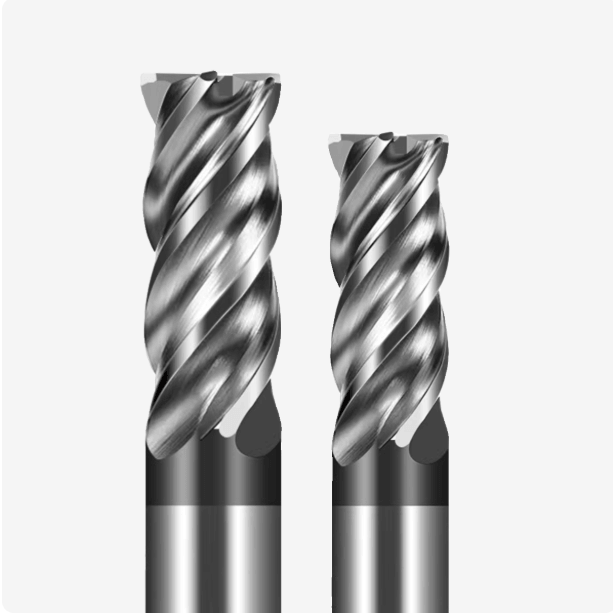
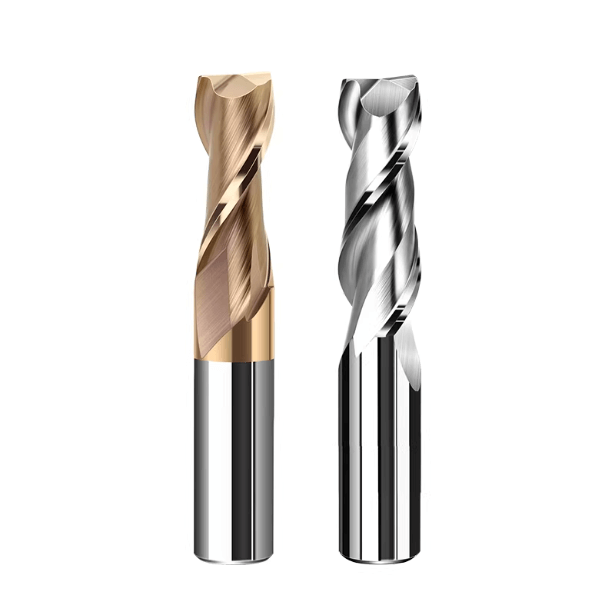
Carbide end mills are essential tools for precision machining and efficient cutting, and their market landscape is increasingly diversified. Global carbide end mill manufacturers offer both standardized tools and high-performance carbide end mills designed for various materials and machining processes. These products address the diverse needs of industrial manufacturing. As machining efficiency and tool life become critical purchasing indicators, selecting the right carbide end mill cutter brand is crucial for production and cost control.
Different brands of carbide end mills vary significantly in geometric design, coating technology, and material hardness. These differences directly affect tool performance under varying machining conditions. For example, some high-performance carbide end mills offer exceptional stability in high-speed aluminum machining and stainless steel cutting. Others excel in wear resistance for hard materials or mold machining. Mastering proper carbide end mill speeds and feeds parameters is essential to improve cutting efficiency and extend tool life.
In the global market, European, American, and Japanese carbide end mill manufacturers are renowned for technological innovation and high-precision machining. Asian manufacturers, meanwhile, have a competitive advantage in cost-effectiveness and customized solutions. Whether it is standard tools, micro end mills, or high-hardness material cutters, understanding the characteristics and performance of major brands is vital for selection and long-term partnership decisions.

Global Carbide End Mill Manufacturers Market Landscape Overview
Carbide end mills play a central role in the global precision machining tool market. Major manufacturers offer a wide range of carbide end mill cutters with various materials and coatings. They also develop high-performance carbide end mills for different machining processes to meet the high efficiency and precision requirements of aerospace, mold making, automotive, and high-end mechanical parts manufacturing.
With machining materials diversifying and customization demands increasing, the global carbide end mill market has become multi-layered, with parallel development across regions. Market data shows that standard carbide end mills still account for the largest share in conventional machining. However, demand for high-performance carbide end mills in hard materials and challenging applications continues to grow. Proper carbide end mill speeds and feeds have become a key metric for evaluating tool performance. This market distribution highlights both regional technological advantages and differences in product positioning, precision control, and durability among manufacturers.
Differences in Technological Positioning of Carbide End Mill Manufacturers in Different Regions
Manufacturers in Europe and the U.S. focus on precision and durability when developing carbide end mill cutters. They excel in high-hardness material processing and high-speed cutting. Many have launched high-performance carbide end mills that use optimized cutting edge geometry and advanced coating technologies. These tools ensure optimal tool life and cutting stability during continuous operations. They are widely used in aerospace components, molds, and high-end machining, making them suitable for industrial scenarios with stringent quality requirements.
Asian carbide end mill manufacturers emphasize cost-effectiveness and multifunctional adaptability. Their diverse product series meet needs ranging from standard steel processing to high-performance material cutting. They also provide flexible customization options to support small and medium enterprises and mass production. By continuously optimizing tool materials, coating processes, and geometric designs, they adapt to increasingly complex machining conditions and diverse customer requirements.
Comparison of Product Styles of Carbide End Mill Cutters from Europe, Japan, and Asia
European and American brands typically lead in tool precision, wear resistance, and performance on high-hardness materials. Their products are mostly high-performance tools suitable for high-end molds and aerospace components. Japanese manufacturers specialize in niche markets and small-diameter end mills, focusing on cutting edge quality, smooth cutting, and stability, making them ideal for precision parts and micro-machining.
Asian brands prioritize versatility and cost-effectiveness. Their standard carbide end mills are widely used for steel, aluminum, and low-hardness alloys. They also offer high-performance carbide end mills for hard materials or high-efficiency scenarios. This range makes them competitive in cost control and mass production while meeting mid-range and customized market demands.
Market Share of Standard and High-Performance Carbide End Mills
Standard carbide end mills still dominate the global market, particularly in general machining and mass production of low-hardness materials. They are versatile and cost-effective, achieving stable cutting performance and long tool life with appropriate carbide end mill speeds and feeds.
High-performance carbide end mills have a smaller share but are growing rapidly. Designed for hard materials, high-hardness mold steels, and high-precision parts, they offer superior wear and chipping resistance along with high-speed cutting stability. Manufacturers optimize tool geometry, coating, and material selection to ensure efficiency in complex machining environments while meeting strict quality requirements.

Classification of Renowned Carbide End Mill Manufacturers
In the global carbide end mill market, manufacturers have distinct product positioning. Some focus on high-end industrial applications, others target mid-to-high-end markets, and a number specialize in customized and OEM solutions. Based on machining materials, tool performance, and service capabilities, carbide end mill manufacturers can be divided into three main categories. This classification helps buyers quickly identify tools that meet their specific requirements for production and collaboration.
Brand differences are not limited to performance. They also include the completeness of the tool series, the development of high-performance carbide end mills, and the application solutions provided for various machining processes. By offering a mix of standard tools, micro tools, and high-wear-resistant cutters, manufacturers allow companies to flexibly apply them across different production scenarios while maintaining efficiency and tool life.
High-End Industrial-Grade Carbide End Mill Manufacturers
High-end industrial-grade manufacturers provide high-performance carbide end mills suitable for aerospace, mold making, and precision machinery parts. These brands focus on advanced tool geometry, coating technology, and material hardness selection. Their carbide end mill cutters demonstrate exceptional stability and wear resistance in high-speed cutting and high-hardness material applications. Products typically include both standard and specialized tools, enabling diverse machining needs while achieving high efficiency with optimized carbide end mill speeds and feeds.
These brands also invest heavily in R&D and technical support, providing tailored tooling solutions for complex processes. Whether multi-flute designs, micro-diameter end mills, or high-performance carbide end mills, the objective is to maximize cutting efficiency and surface quality while extending tool life, meeting the rigorous demands of high-end customers.
Mid-to-High Cost-Performance Carbide End Mill Cutter Manufacturers
Mid-to-high cost-performance manufacturers primarily serve small and medium enterprises and mass production markets. Their tools strike a balance between price and performance, offering versatility in machining steel, aluminum, and low-hardness alloys. Some high-performance carbide end mills are available to meet harder material or high-efficiency requirements. By optimizing geometry, coatings, and material selection, these manufacturers provide cost-effective solutions while ensuring durability and cutting stability.
Standardization and mass supply capabilities are key for these manufacturers, ensuring stable carbide end mill speeds and feeds in daily production. Companies can select suitable tools based on machining processes and material characteristics, enhancing production efficiency while balancing quality and tool life.
Carbide End Mill Manufacturers Specializing in Customization and OEM
Customization and OEM-focused manufacturers cater to specific machining needs. They offer full ranges from micro end mills to high-performance carbide end mills. Tool geometry, coating systems, and dimensions can be tailored to customer requirements, including machining materials, machine type, and production efficiency. Customized tools improve cutting efficiency and part accuracy, particularly in mold making, titanium alloys, and high-hardness materials.
OEM manufacturers also ensure unified standards for mass production, maintaining consistency and stability in tool performance. By precisely matching carbide end mill speeds and feeds to machining parameters, they enable high-quality machining under complex conditions while ensuring long-term tool durability and performance stability.

Key Features of High-End Carbide End Mill Cutters
High-end carbide end mill cutters offer significant advantages in both design and manufacturing. In addition to standard carbide end mills, these brands provide a series of high-performance tools for challenging machining tasks. Optimized geometry, edge treatment, coating systems, and material selection ensure stable performance in high-speed cutting, deep groove machining, and processing of hard materials. The consistency and batch control of high-end brands ensure high reliability in industrial production.
These brands focus on providing solutions tailored to specific machining conditions. Combined with proper carbide end mill speeds and feeds, they achieve an optimal balance between tool life and machining efficiency. Whether for precision parts, molds, or high-hardness materials, high-end cutters deliver stable cutting, low vibration, and excellent surface quality, enhancing both production efficiency and machining accuracy.
Tool Geometry Design and High-Performance Cutting Stability
Tool geometry is central to the performance of high-end carbide end mill cutters. By optimizing helix angle, number of flutes, core thickness, and tip radius, these tools reduce vibration and cutting resistance during high-speed machining, extending tool life. High-performance carbide end mills feature involute cutting edges and optimized cutting angles for smooth chip evacuation, preventing accumulation and chipping.
Tool geometry works in conjunction with multi-layer coatings and wear-resistant materials, allowing stable performance under high temperatures and heavy loads. Whether machining steel, aluminum, or high-hardness mold steel, combining proper carbide end mill speeds and feeds with optimized geometry ensures a stable, efficient cutting process while minimizing machine load and workpiece damage.
Performance of High-Performance Carbide End Mills in Complex Materials
In machining complex materials such as aerospace titanium alloys, high-hardness stainless steel, and mold steel, high-performance carbide end mills show distinct advantages. Optimized materials, coatings, and edge design minimize wear and resist chipping while handling high loads in high-speed and deep-cut machining. Paired with proper carbide end mill speeds and feeds, these tools maintain accuracy and extend tool life in demanding operations.
Stability also depends on effective chip control and heat management. By combining optimized geometry and coating systems, high-end carbide end mill cutters reduce heat buildup and tool wear, ensuring consistent part quality even in intensive machining environments.
Performance Differences of Carbide End Mill Cutters in Actual Machining
Different brands of carbide end mill cutters show noticeable differences in production performance. These differences affect cutting efficiency, tool life, surface quality, and stability, especially when machining high-hardness materials. High-end carbide end mill cutters generally offer superior resistance to chipping during high-speed and deep-groove machining. On the other hand, cost-effective brands provide economic advantages for general machining and low-hardness materials. Proper carbide end mill speeds and feeds are crucial to maximizing tool performance and ensuring both efficiency and tool life.
Tool geometry, coating technology, and material hardness directly influence high-performance carbide end mill performance across various workpieces. Comparing different brands in machining steel, aluminum, stainless steel, and high-hardness alloys allows companies to select the most suitable carbide end mill cutter. This helps achieve an optimal balance between machining stability and efficiency.
Comparison of Cutting Efficiency of Different Brands in Steel Machining
In medium-to-low hardness steel machining, brand differences primarily manifest in cutting efficiency and tool longevity. High-end carbide end mill cutters use optimized cutting edge geometry and wear-resistant coatings. This ensures stability during high-speed cutting and reduces chip buildup or chipping. Meanwhile, mid-to-high cost-effective brands may have slightly lower durability, but they can still achieve efficient and high-quality machining by properly adjusting carbide end mill speeds and feeds.
Tool adaptability to machine loads also varies. High-performance carbide end mills have strong structural rigidity, allowing higher cutting depths and feed rates. This enhances efficiency in mass production and continuous machining. Cost-effective brands are better suited for standard cutting conditions and conventional machining, offering reliable performance for cost-conscious production. Evaluating brand performance in steel machining provides a practical basis for procurement decisions.
Adaptability Differences of Carbide End Mill Speeds and Feeds in Aluminum Machining
In aluminum and low-hardness alloy machining, correct carbide end mill speeds and feeds are critical. High-end carbide end mill cutters support high-speed machining, with cutting edges designed for rapid chip evacuation. This prevents chip buildup and maintains stable cutting performance and surface finish. Value-oriented brands may experience slightly shorter tool life at high speeds due to increased cutting temperatures.
Tool adaptability to feed rates also differs. High-performance tools can handle higher feed rates while maintaining cutting stability and accuracy, making them ideal for mass production and high-efficiency machining. Value-for-money tools work best at moderate feed rates. With proper adjustment of carbide end mill speeds and feeds, they can still achieve good surface quality and controlled tool life in aluminum machining.
Stability Performance in Stainless Steel and High-Hardness Material Machining
Tool stability is crucial when machining stainless steel and high-hardness alloys. High-end carbide end mills typically use wear-resistant coatings and reinforced cutting edge designs. These features maintain geometric stability under high cutting forces, reduce vibration and chipping, and deliver high-quality part surfaces when combined with optimized carbide end mill speeds and feeds.
Cost-effective brands require more conservative cutting parameters for hard materials to avoid premature wear or breakage. Although slightly slower, stable results can still be achieved by adjusting cutting depth and feed rate. Comparing different brands in high-hardness material machining helps companies select the right tool for efficient and reliable production.
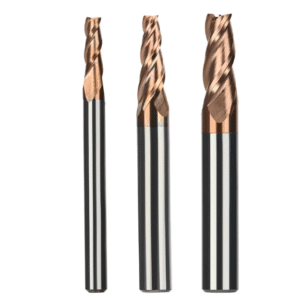
Key Technological Dimensions of High-Performance Carbide End Mills
High-performance carbide end mills excel in complex and high-efficiency cutting due to optimized tool design, material selection, and advanced coating systems. Features such as flute count, helix angle, core thickness, and cutting edge geometry ensure stability during high-speed, high-feed, and high-hardness material machining. Proper carbide end mill speeds and feeds further optimize performance, balancing tool life and machining efficiency.
Coating systems, vibration resistance, and thermal conductivity directly influence long-term cutting performance and durability. Whether machining precision parts, molds, or high-hardness steels and aluminum alloys, high-performance carbide end mills enhance stability, cutting efficiency, and surface quality through comprehensive optimization of geometry, edge treatment, and coatings.
The Influence of Number of Flutes and Helix Angle on High-Feed Machining
The number of flutes and helix angle are critical for high-feed machining. More flutes increase cutting volume per time but also increase cutting force, requiring careful matching with tool geometry and material hardness. A well-designed helix angle ensures smooth chip evacuation, reduces vibration and accumulation, and maintains machining accuracy under high-feed conditions.
Different combinations suit different materials. High-hardness steel and mold steel benefit from fewer flutes and lower helix angles for vibration resistance. Aluminum and low-hardness alloys benefit from multi-flute, higher helix angles for efficiency and surface finish. Optimizing these parameters maximizes machining efficiency and stability.
The Role of Coating Systems in Cutting Life and Thermal Control
Coating systems enhance tool life and thermal stability. Multi-layer wear-resistant coatings reduce friction, prevent wear, and improve oxidation resistance, allowing stable performance in high-speed cutting. Material-specific coatings optimize heat distribution, preventing localized overheating, chipping, and chip accumulation.
Coatings also improve surface finish by reducing adhesion between tool and workpiece. Combined with optimized carbide end mill speeds and feeds, high-performance coatings extend tool life and reduce production costs under high-load, high-speed conditions.
The Relationship Between Tool Core Thickness and Vibration Resistance
Tool core thickness is crucial for high-load stability. A thicker core improves rigidity, reduces vibration, and prevents tool deformation, maintaining accuracy during deep cuts and hard material machining. Proper core-to-flute length ratios enhance vibration resistance without increasing cutting forces.
Core thickness also affects tool life and cutting efficiency. Too thin a core risks vibration and chipping; too thick a core increases cutting load and reduces feed rates. Matching core thickness, flute count, and helix angle ensures high-efficiency cutting, stability, and long tool life, ideal for complex and high-precision machining.
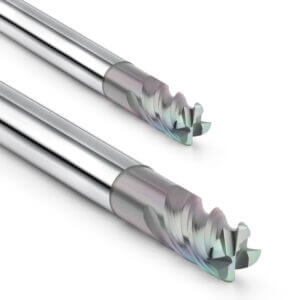
Carbide End Mill Speeds and Feeds and Brand Compatibility
Carbide end mills vary in adaptability to machining parameters. Matching speeds and feeds to each tool ensures optimal performance. High-performance carbide end mills maintain stable cutting at high speeds and feeds, while mid-to-high-performance tools may require parameter adjustments based on material and machine capabilities. Combining manufacturer recommendations with practical experience prevents chipping, chip buildup, and premature wear.
Brand compatibility affects efficiency, surface quality, and consistency in batch production. Variations in edge design, coatings, and hardness mean different tools respond differently to the same speeds and feeds. Selecting the right tool and parameters based on machine power, material, and depth ensures stable, efficient machining.
Analysis of Deviations Between Brand Recommended Parameters and Actual Machining Parameters
Manufacturer-recommended speeds and feeds are based on ideal conditions, but actual machining may differ due to machine rigidity, fixture stability, and material batch variations. Testing and analysis help determine optimal parameters for high-performance carbide end mills, improving efficiency and tool life.
High-end brands often tolerate slight deviations without affecting performance. Value-oriented tools require strict adherence to parameters to avoid chipping or excessive wear. Understanding these differences maximizes tool performance in production.
Performance of Different Carbide End Mill Cutters at High Speeds
Tool rigidity, edge design, and coatings determine high-speed performance. High-performance carbide end mills maintain efficiency and stability during high-speed aluminum or low-hardness alloy machining. Different brands vary in thermal expansion and vibration resistance, affecting quality and surface finish.
Tool diameter, core thickness, and flute length also influence high-speed performance. High-end tools sustain geometric stability in deep cuts, while cost-effective tools may need reduced feed rates or cutting depths. Proper selection and parameter adjustment ensure high-efficiency machining and tool longevity.
How to Adjust Carbide End Mill Speeds and Feeds Based on Machine Tool Performance
Machine rigidity, spindle power, and feed accuracy determine the adjustment range for speeds and feeds. High-performance tools achieve recommended parameters on robust machines. For less capable machines, speed or feed should be reduced to prevent vibration, chipping, and workpiece deformation.
Material hardness, cutting depth, and tool geometry must be considered. High-hardness or deep cuts need slower feeds and speeds; low-hardness materials allow faster speeds and feeds. Proper matching improves machining stability, extends tool life, and reduces production costs.

Differences in Quality Control Among Carbide End Mill Manufacturers
Quality control standards in carbide end mill production vary significantly among manufacturers, directly impacting tool performance and machining stability. High-end brands maintain strict control over raw material selection, coating processes, and edge treatment to ensure high-performance carbide end mills remain durable and stable under various machining conditions. In contrast, cost-effective manufacturers may offer economic advantages, but material consistency and tool accuracy can vary, leading to fluctuations in performance during mass production.
Effective quality control influences not only tool life but also machining efficiency and part surface quality. By employing rigorous testing and optimized production processes, leading brands ensure stable tool geometry, sharp edges, and coating adhesion. This is particularly critical for mold machining, precision components, and high-hardness material cutting, and should be a primary consideration in procurement and long-term partnerships.
The Impact of Raw Material Control on Tool Consistency
The base material of carbide end mills determines wear resistance and chipping resistance. High-end manufacturers typically use high-purity cemented carbide powder, ensuring consistent hardness, toughness, and microstructure across production batches through precision sintering and heat treatment. This consistency allows tools to maintain stability under high-speed and high-load machining while reducing breakage and premature wear.
Mid-to-low-end brands may experience batch variations in raw materials, affecting tool performance, especially in deep groove machining or high-hardness material cutting. Inconsistent raw material quality can impact carbide end mill speeds and feeds and lead to variable part quality. Strict material control is therefore essential for consistent machining results and long-term reliability.
Edge Treatment Process and Cutting Life Stability
Edge treatment directly impacts cutting performance and tool longevity. High-end carbide end mills undergo precision grinding, edge chamfering, and geometric fine-tuning, allowing stable cutting under high-speed and high-feed conditions while minimizing vibration and chip accumulation.
Different brands apply varying levels of edge treatment. Premium brands often use multi-stage precision grinding and laser inspection to ensure each tool has sharp, consistent geometry. Cost-effective brands may only treat critical cutting edges, which can reduce stability and tool life in challenging environments. Edge treatment precision is crucial for maintaining tool life and high-quality machined surfaces.
The Importance of Batch Consistency for CNC Continuous Machining
In CNC continuous production, batch consistency is essential for stable machining and part quality. High-end manufacturers control edge dimensions, coating thickness, and geometric accuracy across batches through strict production processes and full-process inspections. This ensures high-performance carbide end mills maintain stability in continuous machining, reducing tool replacements and production downtime.
Mid-to-high-value-for-money brands may show slight batch variations, particularly in large-volume or high-hardness material machining. Planning tool replacement schedules and adjusting carbide end mill speeds and feeds can mitigate these effects, ensuring continuous production and consistent part quality.

Recommendations for Choosing Carbide End Mill Manufacturers in Different Application Scenarios
Different machining scenarios require varying performance from carbide end mills. Mold manufacturing, precision components, mass production, and high-efficiency machining all demand specific levels of wear resistance, cutting stability, tool life, and machining accuracy. Selecting high-performance carbide end mills based on material and process requirements can improve efficiency, extend tool life, and reduce production costs.
Choosing the right manufacturer involves evaluating R&D capabilities, product range, and the ability to optimize tools for different applications. High-end brands excel in complex material machining and precision tasks, while cost-effective brands offer advantages in standard machining and high-volume production. Analyzing brand reputation, tool geometry, coating systems, and carbide end mill speeds and feeds helps achieve stable, efficient machining across various environments.
Carbide End Mill Brand Focus in Mold Machining Scenarios
Mold machining often involves high-hardness steel and complex tool paths, demanding exceptional wear resistance and cutting stability. High-end manufacturers optimize edge geometry, core thickness, and coatings to ensure high-performance carbide end mills excel in deep groove machining, fine chamfering, and intricate cavity work. Correct carbide end mill speeds and feeds further enhance machining accuracy and tool longevity.
Tool consistency and vibration resistance are particularly important in mold machining. Stable, heat-resistant tools directly improve part surface quality. Choosing carbide end mill cutters with precise manufacturing and full-process quality control reduces chipping, chip buildup, and tool replacements, increasing efficiency and part consistency.
Stability Requirements for Carbide End Mill Cutters in Mass Production
In mass production, tool stability is critical for efficiency and consistent part quality. Cost-effective carbide end mills deliver reliable performance at lower cost through optimized geometry and coatings. High-end tools provide superior wear resistance and rigidity, maintaining consistent quality under continuous cutting.
High-volume production also requires precise control of carbide end mill speeds and feeds. Optimized feed rates, cutting depths, and spindle speeds maximize performance while minimizing machine load and production risk. Selecting tools suitable for material characteristics and production scale improves efficiency, reduces downtime, and lowers replacement costs.
Requirements for High-Performance Carbide End Mills in High-Efficiency Machining
High-efficiency machining demands tools that withstand high feed rates and deep cuts while maintaining accuracy and surface quality. High-performance carbide end mills achieve stability in high-speed and high-hardness material cutting through optimized edge geometry, helix angle, and coatings, reducing vibration and chipping. Proper speeds and feeds settings further improve machining efficiency and continuous production quality.
High-efficiency machining also requires heat-resistant and wear-resistant tools. Premium carbide end mills are designed with optimized materials, coatings, and core thickness to sustain performance under high-load conditions, ensuring stable production and reliable high-quality output.

Key Factors in Purchasing and Evaluating Carbide End Mill Manufacturers
Selecting the right carbide end mill manufacturer impacts tool performance, machining efficiency, part accuracy, and production cost. High-end brands excel in hard material processing, complex tool paths, and high-efficiency production. Mid-to-high-value-for-money brands provide cost advantages for standard machining and mass production. Procurement decisions should consider tool performance, applicable machining scenarios, and brand technical support.
Manufacturer evaluation should cover tool consistency, raw material control, edge treatment, coating processes, and batch stability. By aligning tool performance with application scenarios such as mold machining, high-efficiency machining, and mass production, companies can select the best carbide end mill cutter for their needs, ensuring stability, part quality, and tool life.
Comparison of Price, Delivery Time, and Technical Support Capabilities
Price, delivery time, and technical support are crucial when evaluating manufacturers. High-end tools have higher costs but offer superior stability, wear resistance, and complex material machining capabilities, along with full technical support and parameter recommendations. Value-oriented brands offer lower costs suitable for standard processing, but companies may need to manage technical optimization themselves.
Delivery time reliability is also critical. High-end brands guarantee on-time delivery for standard and custom tools, while mid-to-high-value brands should be assessed for supply chain reliability in large orders. Comparing cost, delivery, and support ensures the optimal balance of performance and expense.
The Role of Sample Testing in Selecting Carbide End Mill Cutters
Sample testing verifies tool performance and suitability for production conditions. Testing carbide end mills in steel, aluminum, stainless steel, and high-hardness alloys helps assess cutting stability, tool life, and surface quality. Sample testing also validates the applicability of recommended carbide end mill speeds and feeds under actual machine conditions, reducing unexpected production losses.
It also reflects brand reliability in edge treatment, coatings, and batch consistency. Evaluating tools under different depths, feed rates, and speeds helps companies select the most suitable models, providing data support for high-precision machining and mass production.
Methods for Evaluating Tool Performance Consistency in Long-Term Partnerships
Tool performance consistency is essential for long-term production efficiency and part quality. High-end manufacturers maintain batch consistency in edge sharpness, geometry, and wear resistance through strict raw material control, edge processing precision, and coating. Companies can evaluate long-term reliability through regular testing of tool life, cutting stability, and surface quality.
Comparative analysis of tool batches using production data—including wear and cutting performance under different materials and conditions—helps establish a stable tool management system, ensuring consistent performance, lower costs, and reduced production risks.