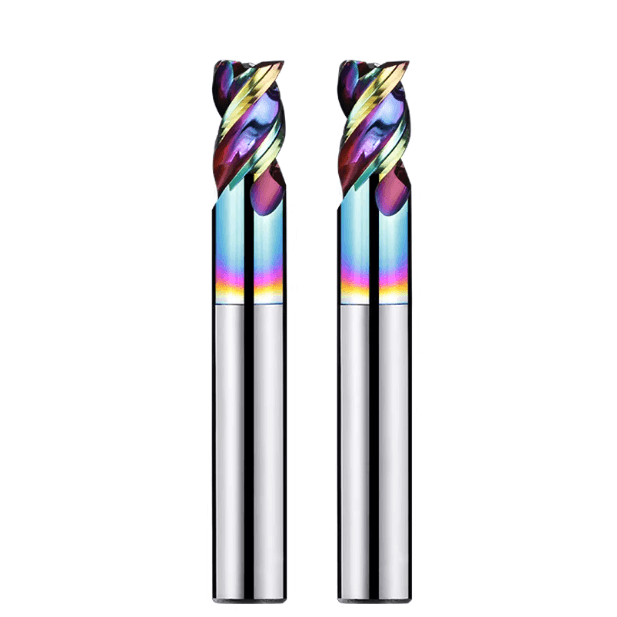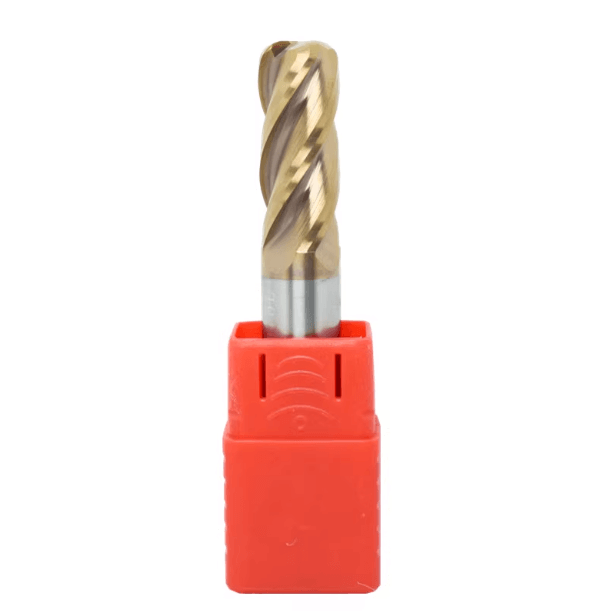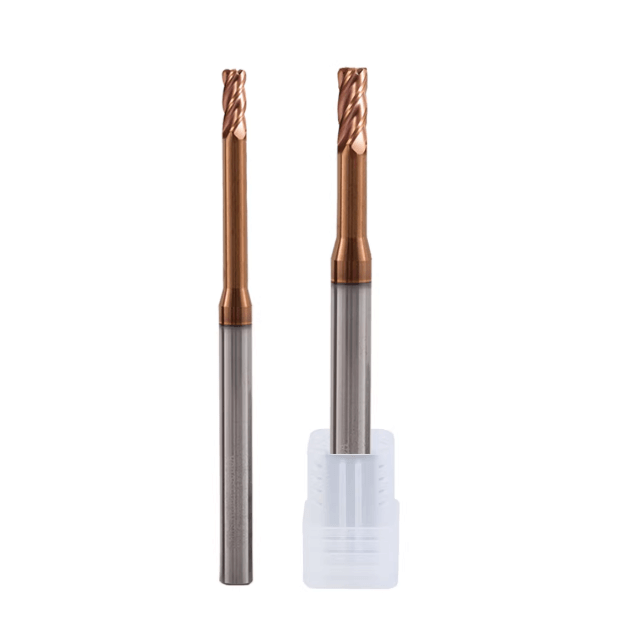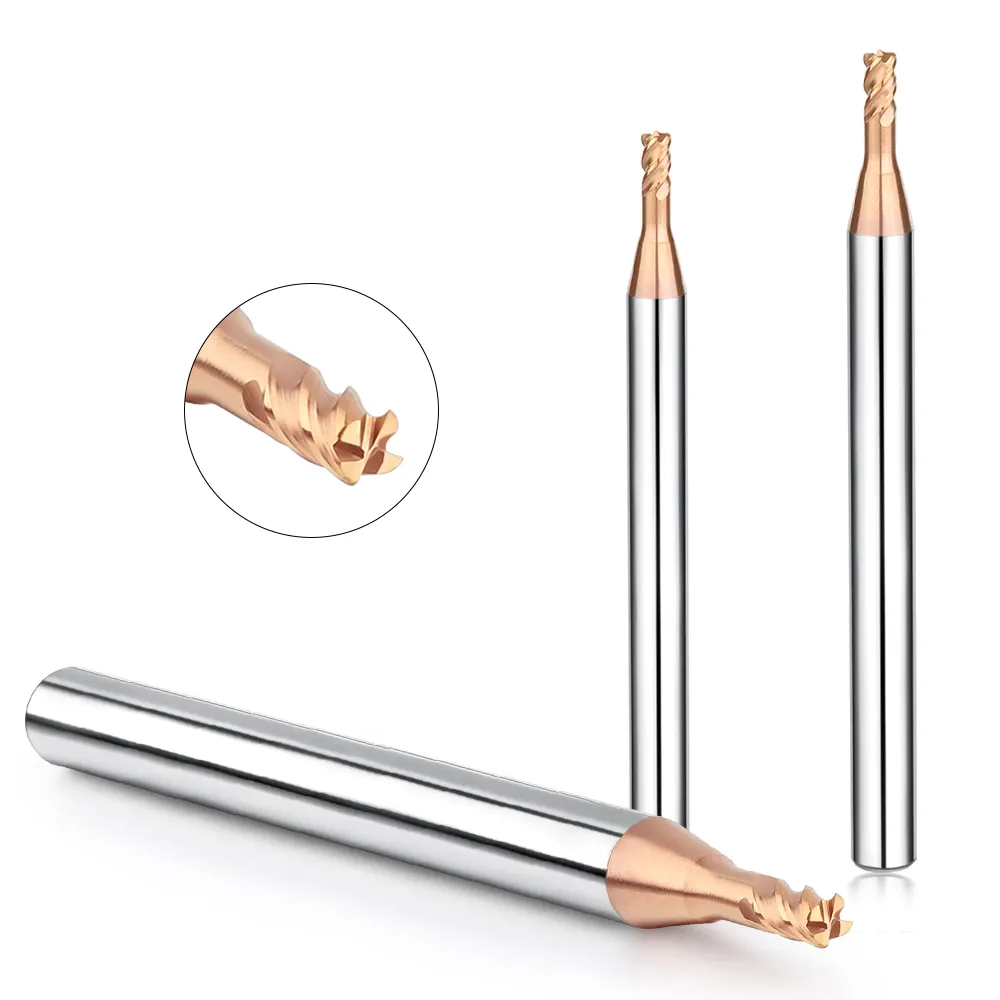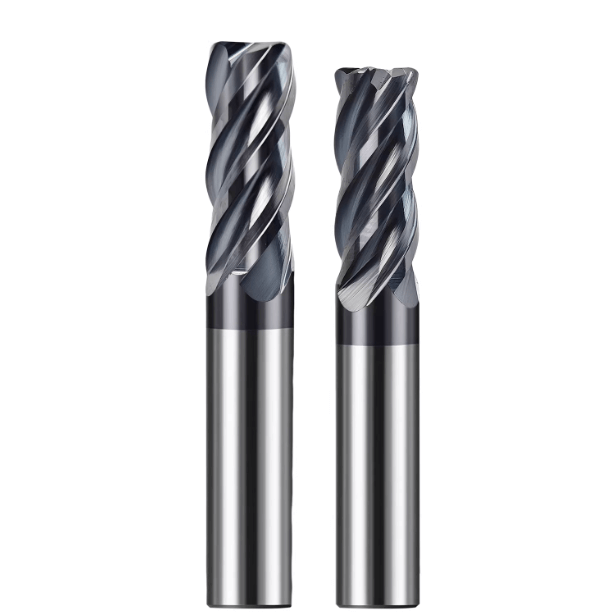
In numerous mold processing projects we’ve undertaken with clients in Europe and America, we frequently encounter the same problem. When machining hardened steel, even though the tools appear fine, the machining results are inconsistent, with noticeable tool marks or tool life far below expectations. This is especially true for high-hardness steel parts; many clients experience excessive cutting loads, tool vibration, and substandard surface finishes when using ordinary end mills or high-speed steel tools.
From our experience in the field and at client factories, carbide end mills for hardened steel are almost indispensable in these scenarios. Whether using solid carbide end mills or ball carbide end mills for 3D surface machining, proper tool selection and adjustments of cutting parameters directly impact machining efficiency and tool life. During roughing, the strategic use of carbide rougher end mills, combined with our tool arrangements, can significantly improve material removal rates, reduce machining time, and minimize tool wear.
We’ve also observed that the geometry and coating type of carbide end mill cutter tools play a crucial role in high-hardness steel machining. Small adjustments to the tip angle, number of cutting edges, and helix angle can often resolve long-standing vibration and tool mark issues for our clients—details rarely mentioned in standard manuals.
In these projects, we not only helped customers select the appropriate tools but also optimized feed, depth of cut, and cooling strategies based on material hardness and process requirements. This approach resulted in noticeable improvements in both machining stability and tool life.
So, the question arises: In your work with hardened steel, do you often encounter the dilemma of balancing tool life and surface finish?
Choosing the Right Carbide End Mill
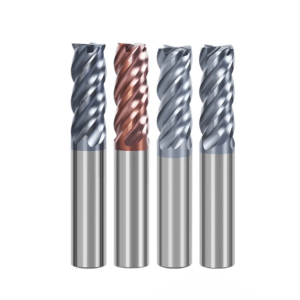
In our long-term experience solving high-hardness steel machining problems for European and American customers, tool selection is never simply a matter of brand or price. We match the tool type and geometry based on workpiece hardness, depth of cut, and machining pace. For steels with an HRC of 50 or higher, using a standard full-flute end mill often results in premature tool wear or breakage. This has repeatedly occurred in our clients’ factories, prompting us to adjust tool diameter, helix angle, and tip shape to maintain machining stability.
We also consider the differing needs of roughing and finishing stages when selecting tools. Roughing typically requires large-diameter tools with high helix angles to improve material removal, while finishing tends to use small-diameter end mills with low helix angles and fine cutting edges to ensure surface quality. In our experience, this segmented tool selection method reduces the risk of tool breakage and keeps production schedules more controllable.
Selecting a carbide end mill for hardened steel based on material hardness and machining depth
In practice, we often encounter clients complaining about short tool life when machining hardened steel. Through experiments and on-site adjustments, we found that for high-hardness steel parts, the tip angle, number of cutting edges, and cutting width of the carbide end mill for hardened steel must closely match the material. For example, when the machining depth exceeds 0.5 times the tool diameter, conventional cutting edges can easily develop micro-cracks early in the cut, leading to tool breakage. We fine-tune cutting depth and tool diameter to ensure even force distribution on the tool and smooth chip removal.
We also experimented with increasing the helix angle and adopting progressive cutting strategies to extend tool life. This method is especially effective on high-hardness, deep-cut workpieces. We recommend peers consider not only tool material but also actual machining depth and cutting load when selecting end mills, otherwise efficiency drops and tool life suffers.
When to Use a Ball Carbide End Mill for Complex Contours or 3D Surface Machining
We frequently encounter complex 3D surfaces in mold and aerospace parts, requiring precise contour machining. From our experience, ball carbide end mills outperform flat-end mills in such scenarios. Especially in areas with large curvature changes, ball end mills minimize tool marks while reducing localized tool load and extending tool life. Our typical approach is to rough out large material areas first, then use ball end mills for surface finishing, balancing efficiency and surface quality.
When selecting ball end mills, we also consider diameter, number of cutting edges, and tip radius. Small-diameter ball end mills suit detail work but have lower material removal rates; large-diameter ball end mills remove more material but are prone to vibration on complex surfaces. We usually make trade-offs based on workpiece geometry and machining pace to ensure smooth machining without sacrificing surface accuracy.
Experience with Matching Tool Diameter and Helix Angle in the Roughing Stage of Carbide Rougher End Mills
During roughing, we often use carbide rougher end mills to boost material removal. We found that matching tool diameter and helix angle is crucial: too small a diameter limits removal rate despite low cutting force; too large a diameter increases vibration, especially on long shafts or thin-walled parts. Adjusting the helix angle improves chip evacuation and heat distribution. We select diameter-helix combinations based on workpiece hardness and fixture rigidity to minimize tool wear while maintaining efficiency.
We’ve also validated combining roughing tools of different diameters to achieve stepped cutting. This strategy works well for hardened steel, reducing overload risks and heat accumulation during roughing, smoothing subsequent finishing. For peers, this practical matching experience often ensures machining stability better than relying solely on tool material.
Tool Geometry and Cutting Parameter Optimization
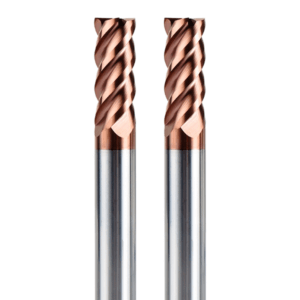
In machining high-hardness steel, matching tool geometry and cutting parameters determines machining stability and tool life. Ignoring the combination of helix angle, number of cutting edges, or depth of cut can cause premature wear, vibration, or poor surfaces—even with high-quality carbide end mill cutter tools. We fine-tune parameters on-site based on material hardness, fixture rigidity, and cutting strategy, rather than blindly following manuals.
For workpieces of different shapes and sizes, fine-tuning geometry often outperforms simply changing material. For long shafts or thin walls, excessive helix angles increase cutting force concentration, causing vibration; too few cutting edges reduce removal efficiency. We select a compromise of cutting edge number and helix angle, ensuring smooth chip removal and tool load management.
Practical Experience of Helix Angle, Number of Cutting Edges, and Tool Tip Angle on the Performance of Carbide End Mill Cutter Tools
Helix angle significantly affects chip evacuation and force distribution. In machining HRC 55 steel, standard helix angles caused tool marks and localized overheating in deep grooves. Adjusting the helix angle and slightly reducing depth of cut improved force distribution and extended tool life. This shows helix angle is not fixed but must be adapted to the cutting environment.
Cutting edge count and tip angle are equally important. For thin-walled molds, we reduce edges to lower peak forces and fine-tune tip angle to reduce wear. Too many edges can concentrate force and cause micro-vibrations. We select combinations that balance efficiency and surface quality; practical experience often surpasses theoretical guidance.
Feed Rate and Depth of Cut Combination to Avoid Premature Tool Wear or Breakage
We frequently see short tool life caused by mismatched feed rate and depth of cut. For deep grooves, excessive feed rates—even with carbide end mills for hardened steel—can cause micro-cracks or edge chipping. We conduct gradual tests to find combinations that control cutting load and ensure smooth chip evacuation, extending tool life.
Different diameters and tool shapes adapt differently to feed rate and depth. Small tools need shallower cuts to prevent breakage; large tools can handle more load. We make trade-offs based on geometry, fixture rigidity, and machining rhythm, recording wear data to continuously optimize parameters—essential for stable batch production.
The Influence of Groove Shape and Clearance Angle on Heat Distribution and Chip Emission in Machining Hardened Steel
Groove shape directly impacts heat distribution and chip evacuation. For long or deep grooves, wide grooves reduce resistance and aid chip removal; narrow grooves increase stability but concentrate heat, accelerating tool wear. We select groove shapes considering helix angle and cutting edges to balance stability and efficiency.
Clearance angle also matters. In HRC 52 mold machining, fine-tuning the angle produced uniform cutting force, lower surface temperature, and ~30% longer tool life. Proper clearance improves chip flow and reduces overheating, but excessive angles weaken the cutting edge. We adjust dynamically based on hardness and depth—a practice more valuable than theoretical tables.

Carbide End Mill Tool Life Extension Strategies
From our experience, tool life directly impacts production pace and costs, especially when machining high-hardness steel parts. We’ve observed significant differences in wear resistance and cutting stability between solid carbide end mills from different brands and with different coatings. Even tools with the same diameter and number of cutting edges can have lifespans that differ by several times. Therefore, when selecting tools, we typically consider the workpiece hardness, machining depth, and cutting speed rather than simply relying on specifications.
We have repeatedly verified the impact of different tool combination strategies on batch processing. For thin-walled parts, we tend to choose micro-coated or uncoated tools to reduce localized heat accumulation. For long shafts or large-diameter workpieces, coated tools handle high cutting forces and elevated temperatures better. This practical approach allows us to extend tool life, reduce machining interruptions, and maintain efficiency.
Performance Comparison of Coated and Uncoated Solid Carbide End Mills in Practical Applications
In mold processing projects for European and American clients, we often compare tools with different coatings. Coated tools resist wear under high temperature and high cutting loads, extending life during roughing. However, on thin-walled or small-diameter workpieces, excessively hard coatings can cause cutting force peaks, leading to microcracks. Uncoated tools, while slightly less heat-resistant, provide better cutting stability and are suitable for finishing or curved surfaces. We usually choose based on workpiece characteristics rather than a single approach.
We’ve also tested alternating coated and uncoated tools within the same process—using coated tools for roughing and uncoated for finishing. This phased strategy ensures high material removal rates, surface quality, and extended overall tool life. We recommend peers consider such staged approaches when selecting tools for high-hardness machining.
Coolant and Lubrication Strategies for Improving the Lifespan of Carbide End Mills for Hardened Steel
From our experience, cutting temperature is a key factor affecting the lifespan of carbide end mills for hardened steel. We typically combine high-pressure coolant with an appropriate amount of lubricant to control tool temperature. High-pressure cooling accelerates chip evacuation and reduces localized tool heat, minimizing edge chipping. We adjust coolant flow and spray angle based on workpiece material, depth of cut, and tool diameter—a practice honed through field testing.
Lubrication strategies also depend on cutting methods. For finishing curved surfaces, reducing cutting speed and increasing lubricant flow can reduce friction and vibration, preserving the tool surface. During roughing, focusing on cutting force control and chip removal helps maintain tool durability. Flexible adjustments like these have significantly reduced tool changes and prevented machining interruptions in customer factories.
Tool Inspection and Wear Analysis Methods to Avoid Machining Interruptions
Even with the most suitable tool, a lack of systematic inspection can lead to unexpected breakage. We inspect tool edges, tip shape, and cutting surfaces after each batch, using magnification or microscopy to record wear. This data allows us to predict tool life and adjust parameters promptly.
We also analyze chip morphology, surface texture, and cutting sound to detect early signs of chipping or rounding. This is particularly critical when machining deep grooves or complex curved surfaces in hardened steel. Regular inspection and recording ensure more stable continuous machining than relying solely on manuals.
Machining Practical Skills and Common Problems
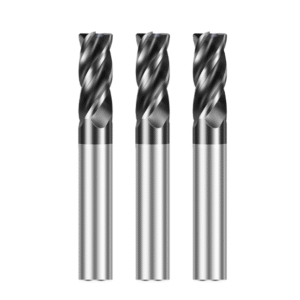
In our experience solving hardened steel machining challenges for European and American clients, even optimal carbide rougher end mills or finish cutters cannot guarantee stability without a phased strategy. Tool selection, cutting parameters, and feed strategies must align across roughing and finishing; otherwise, vibration, tool marks, or shortened tool life often occur. We develop phased plans based on geometry, hardness, and fixture rigidity, fine-tuning on-site to maintain efficiency and surface quality.
For complex geometry or deep grooves, tool matching and stage-specific cutting strategies directly affect heat accumulation and wear. By observing and recording on-site data, we can anticipate potential tool failures and adjust feed, depth of cut, or replace tools promptly—a more reliable approach than theoretical parameters for mass production consistency.
Experience in Using Carbide Rougher End Mills and Finish Mills in Combination for Roughing and Finishing
We typically use carbide rougher end mills to quickly remove large volumes during roughing, followed by small-diameter finish mills for surface refinement. Excessive roughing depth or improper feed can cause premature wear or surface burrs, affecting finishing. We determine optimal roughing parameters experimentally and fine-tune finishing feed for smooth surfaces and dimensional accuracy.
Tool diameter and helix angle selection depends on workpiece shape. Deep grooves or thin walls require large-diameter, high-helix roughers for fast removal but need attention to fixture rigidity and vibration. For finishing, small-diameter, low-helix mills reduce cutting load concentration and ensure surface quality. This phased strategy is highly effective in client factories.
Common Vibration, Tool Marks, and Deformation Solutions in Machining High-Hardness Materials
For HRC 50+ steels, we frequently encounter vibration, tool marks, and slight deformation. These issues often stem from mismatched tool rigidity, depth of cut, and feed rate. Adjusting parameters such as cutting depth, helix angle, or feed rate with carbide end mills for hardened steel can mitigate vibration, reduce marks, and stabilize dimensions.
We also optimize fixture and toolpath integration. Thin-walled or complex surfaces may deform even with proper tools. Segmented cutting or localized support, combined with chip removal strategies, reduces heat concentration and extends tool life—practices repeatedly validated on-site.
Case Studies: Common Problems in European and American Customer Workshops and Our Solutions
In one mold workshop, conventional roughing tools failed within two workpieces, causing chipped edges and tool marks. We analyzed tool selection and parameters, implemented segmented roughing with carbide rougher end mills, finished with small-diameter finish mills, and optimized coolant and tool path. Tool life increased by nearly 50%, with improved surface quality.
In aerospace part machining, thin-walled, high-hardness sections caused vibration and deformation. Adjusting helix angle, depth of cut, fixture support, and monitoring wear in real-time reduced vibration while maintaining dimensional accuracy and surface roughness. This confirms that effective problem-solving relies on tool geometry, machining strategy, and on-site conditions—not just tool material.
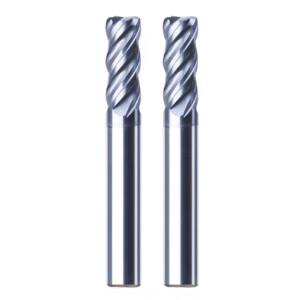
Carbide End Mill Tool Procurement and Supplier Experience
Through long-term collaboration with European and American clients, we’ve learned that tool procurement affects not only cost but also machining stability and production rhythm. Even high-quality solid carbide end mills can pose risks if batch consistency and supplier service are inadequate. We evaluate tool material, edge precision, coating quality, and supplier delivery and technical support capabilities—key factors validated multiple times on-site.
We also implement internal verification: incoming tool inspection, performance testing, and batch tracking. This allows early detection of potential issues, preventing dimensional errors or interruptions. For batch orders, tool consistency often matters more than individual tool performance—a principle we’ve verified across multiple client workshops.
Key Considerations for Selecting Reliable Solid Carbide End Mill Manufacturers
We focus on end mill tool material stability and geometric accuracy when selecting manufacturers. Some clients reported performance differences across batches of the same model. Minor edge deviations or hardness fluctuations can impact surface quality and tool life. Therefore, we examine production and inspection processes and verify samples before procurement.
Carbide end mill manufacturer technical support is equally critical. Projects often require guidance for special steels or complex geometries. Timely provision of process parameters and tool adjustments directly affects machining efficiency. We favor suppliers with both mature production capabilities and on-site or remote technical support.
Experience in Tool Consistency and Performance Verification in Batch Production
Tool consistency is more important than individual tool performance in batch production. We sample and measure diameter, cutting length, helix angle, and edge shape, verifying performance through test cuts. For HRC 55 hardened steel, even 0.02 mm diameter deviation affects deep groove straightness and surface quality. Batch verification reduces interruptions and scrap.
We also record tool wear and cutting status during machining and correlate with batch data. This helps quickly determine batch suitability for specific parts or conditions, maintaining stability in large-volume orders. Tool management in batch production is not just procurement—it is part of process control.
Customer-Customized Tools vs. Standard Carbide End Mill Cutter Tools Selection Practices
Clients often request custom tools for special materials or complex geometries. We recommend custom tools based on machining depth, surface complexity, and hardness, considering costs and cycle time. For standard operations, off-the-shelf carbide end mill cutter tools are fine-tuned through cutting parameters to achieve desired results.
Custom and standard tools are not mutually exclusive. Deep grooves or long shafts may require custom tools to solve vibration or cutting force issues; high-volume finishing may use standard tools after parameter optimization. Practical experience allows rapid tooling solutions in client factories while ensuring machining stability and tool life.