Types of CNC Milling Tools

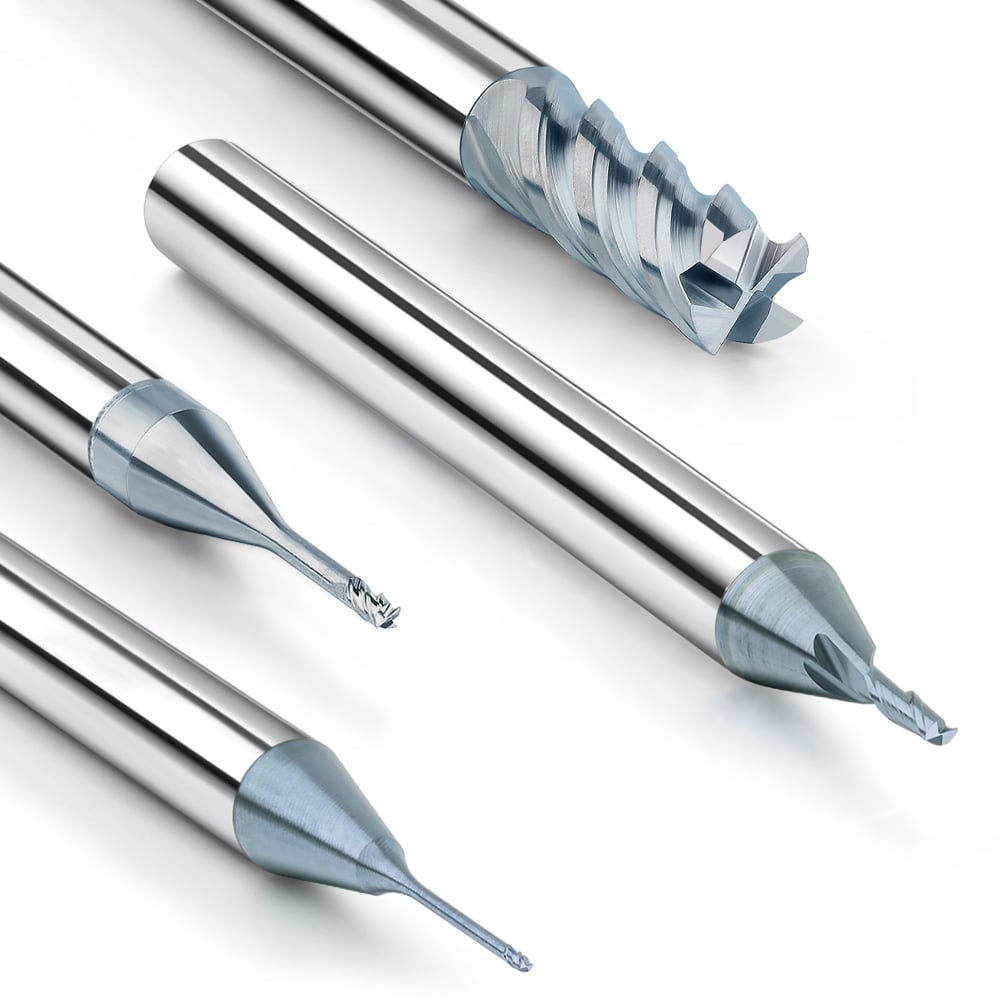
Introducing our high-performance End Mill, the perfect cutting tool for precision machining. Crafted from premium quality materials, this tool is designed to deliver exceptional performance and durability in various industrial applications.
Featuring a unique design with sharp, multi-flute edges, our End Mill delivers precise and efficient cuts on a variety of materials such as steel, aluminum, and more. Its advanced coating enhances wear resistance and prolongs the life of the tool for prolonged use.
Our End Mill is available in different sizes and styles to suit your specific machining needs. With its outstanding cutting capabilities and superior finish, it is the go-to choice for professional machinists and engineers.
Trust our End Mill to provide you with unmatched precision and efficiency in your machining operations. Upgrade your toolkit with our top-of-the-line End Mill today.

Tapered End Mills

Taper End Mill vs Straight End Mill: What’s the Difference and When to Use Each?

In CNC machining, tool selection directly impacts machining quality, efficiency, and cost control. Especially in precision applications such as mold manufacturing, complex curved surfaces, and deep cavity milling, tapered end mills and conventional straight end mills serve distinct roles. While they may look similar, these tools differ significantly in cutting performance, application suitability, and tool […]

Taper End Mill vs Straight End Mill: What’s the Difference and When to Use Each? Read More »

end mill coatings

How to Choose the Right Boring Tool for CNC Lathe and Milling Machines

In modern CNC machining, boring tools play a critical role in achieving high-precision internal hole machining. They are widely used across industries such as mold manufacturing, mechanical parts processing, aerospace, and automotive. Choosing the right boring tool for different types of equipment — whether CNC lathes or vertical/horizontal milling machines — directly impacts machining efficiency,

How to Choose the Right Boring Tool for CNC Lathe and Milling Machines Read More »

carbide-bits

How to Choose the Best Step Bit for Metal Drilling: A Complete Guide

In the field of metal processing, whether it’s sheet metal drilling, electrical cabinet installation, or custom machining of mechanical structures, step bits have become a preferred tool for many engineers and technicians due to their high efficiency and “one bit for multiple hole sizes” capability. Unlike traditional twist drill bits, step bits are specifically designed

How to Choose the Best Step Bit for Metal Drilling: A Complete Guide Read More »

End Mill Bits

Understanding Coatings: How to Extend the Life of Your End Mill Bits

In modern CNC machining, end mill bits are essential tools widely used for cutting metal materials such as aluminum alloys, stainless steel, carbon steel, and high-hardness steels. However, regardless of the tool’s base material, if there is no suitable coating protection, the tool can fail rapidly in high-temperature, high-speed, and high-wear environments—seriously impacting machining efficiency

Understanding Coatings: How to Extend the Life of Your End Mill Bits Read More »

types of milling bits

Roughing vs Finishing Milling Bits: What’s the Difference and When to Use Each?

In CNC machining, it is crucial to distinguish between the use cases of roughing and finishing milling bits to improve cutting efficiency and workpiece quality. Although these cutters may look similar, they have essential differences in cutting edge geometry, chip removal capacity, and machining purposes. Many beginners and even experienced engineers often ask, “When should

Roughing vs Finishing Milling Bits: What’s the Difference and When to Use Each? Read More »

End Mill Bit for Aluminum

How to Choose the Right End Mill Bit for Aluminum Machining

In modern CNC machining, aluminum alloy is a lightweight material with excellent thermal conductivity and low cutting resistance, widely used in aerospace, automotive, mold making, and electronics industries. However, machining aluminum is not as straightforward as “soft material equals easy machining,” especially in high-speed milling or mirror finish applications. Improper tool selection can easily lead

How to Choose the Right End Mill Bit for Aluminum Machining Read More »

Corner Radius End Mill

How to Choose the Right Corner Radius Milling Cutter for Hardened Steel or Aluminum?

In modern CNC machining, the corner radius milling cutter (also known as an R-angle end mill) has become one of the most commonly used tools for machining hardened steel and aluminum alloys due to its combination of strength and superior surface finish. Compared with traditional flat end mills, a corner radius milling cutter features a

How to Choose the Right Corner Radius Milling Cutter for Hardened Steel or Aluminum? Read More »

corner radius end mill

What Are Corner Radius End Mills and When Should You Use Them?

In modern CNC machining, corner radius end mills are a type of multifunctional tool that combines the characteristics of both square end mills and ball nose end mills. They are widely used in mold manufacturing, part finishing, and edge transition processing of high-hardness materials. The core feature of this tool is the fixed-radius fillet (R

What Are Corner Radius End Mills and When Should You Use Them? Read More »

ball mill bits

What Is a Ball End Mill and When Should You Use It?

In modern CNC machining, the ball end mill is a high-precision cutting tool widely used for three-dimensional contouring. Due to its spherical tip design, it easily handles complex curved surfaces, cavities, bevels, and other non-planar geometries—especially in mold manufacturing, aerospace components, and medical implants. Compared to traditional flat-bottomed tools, the ball end mill bit provides

What Is a Ball End Mill and When Should You Use It? Read More »

square end mill for aluminum

Toolpath Strategies to Maximize the Performance of Square End Mills in Aluminum

In modern CNC machining, aluminum alloys are widely used in aerospace, mold making, automotive parts, and other industries due to their lightweight nature, excellent thermal conductivity, and low cutting resistance. However, aluminum machining at high speeds often faces challenges such as built-up edge (BUE), tool adhesion, and poor chip evacuation. Balancing surface finish, tool life,

Toolpath Strategies to Maximize the Performance of Square End Mills in Aluminum Read More »