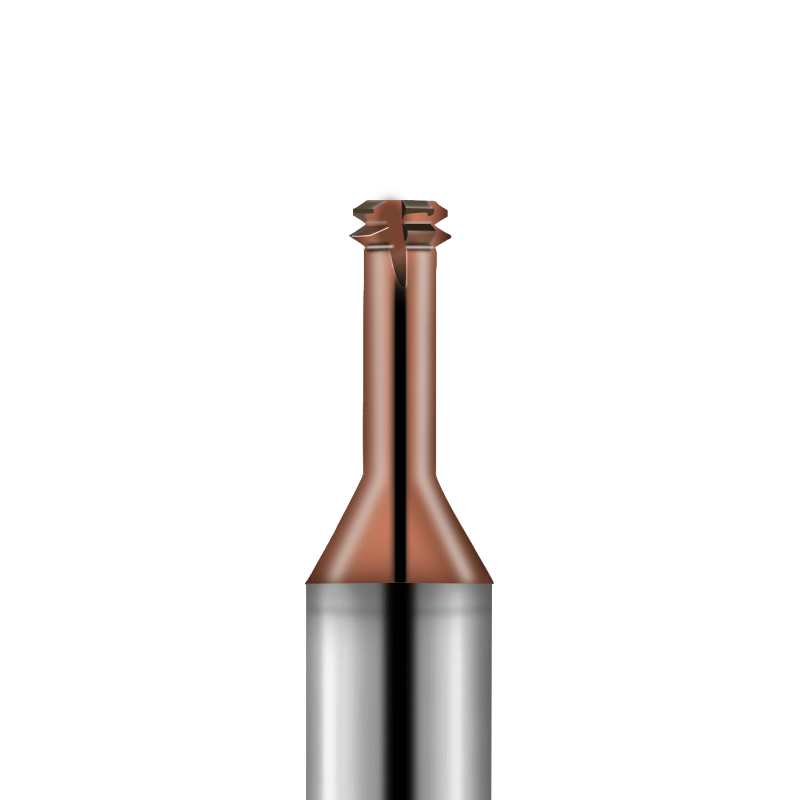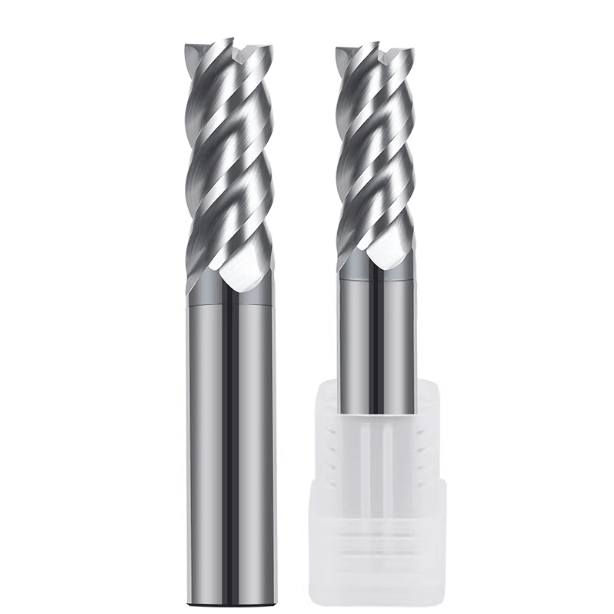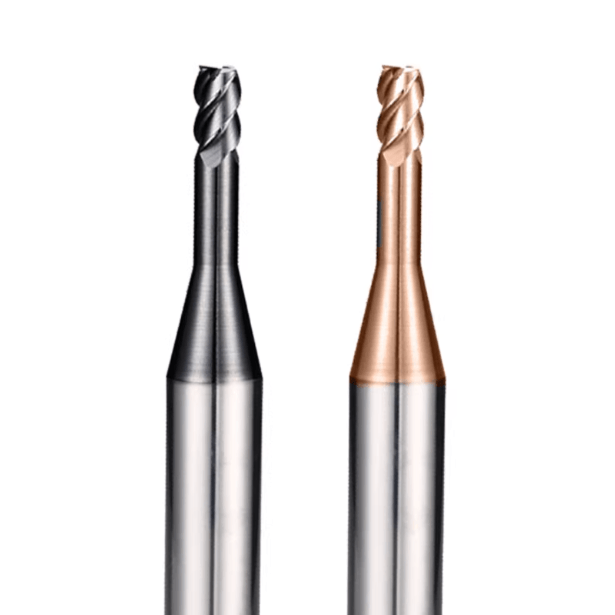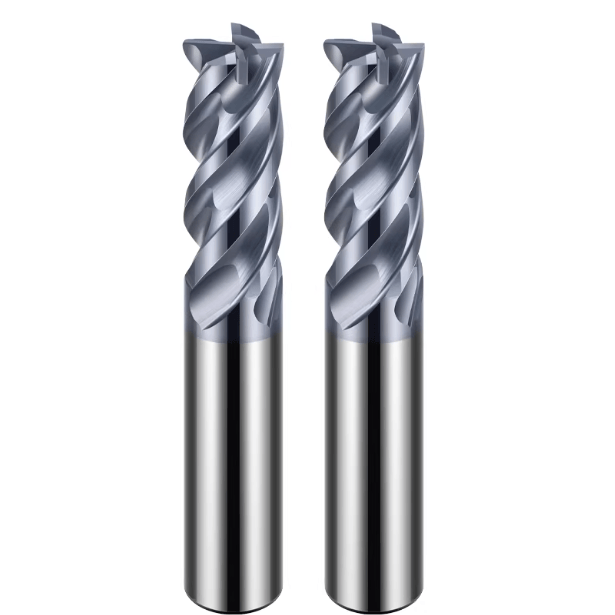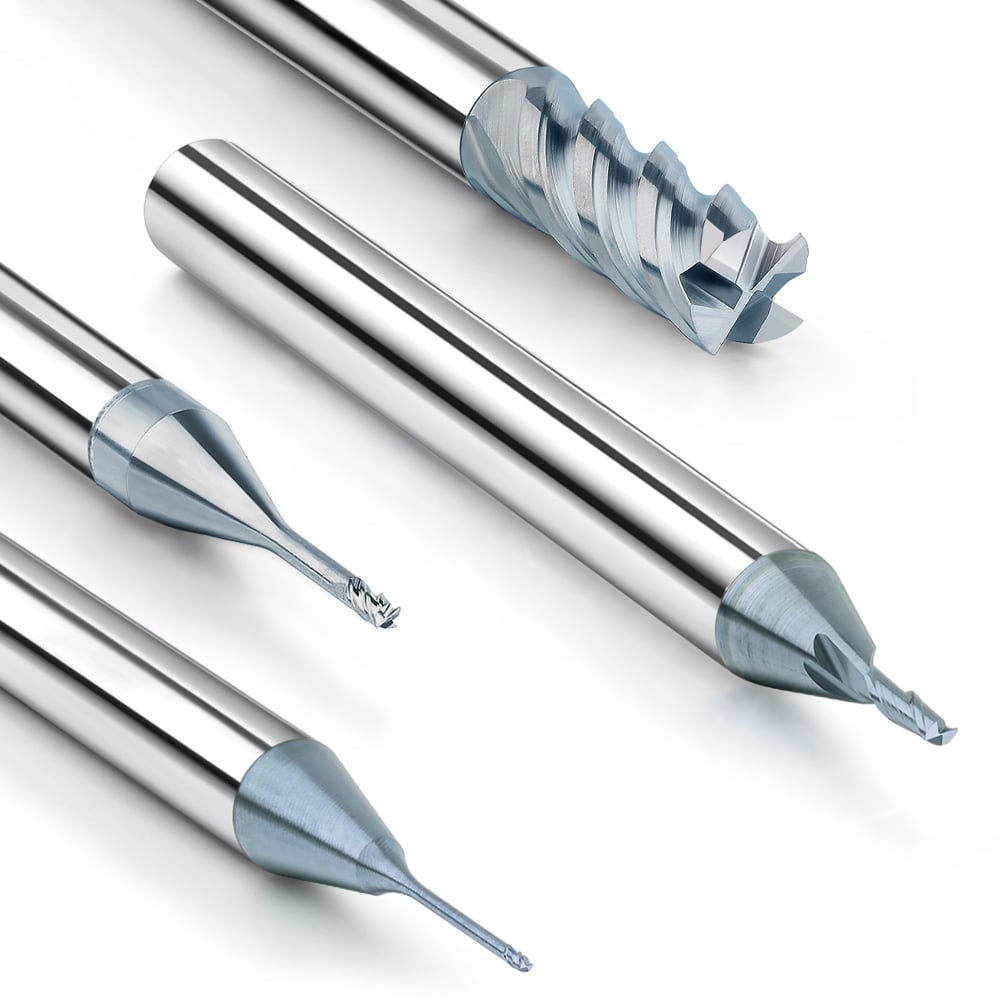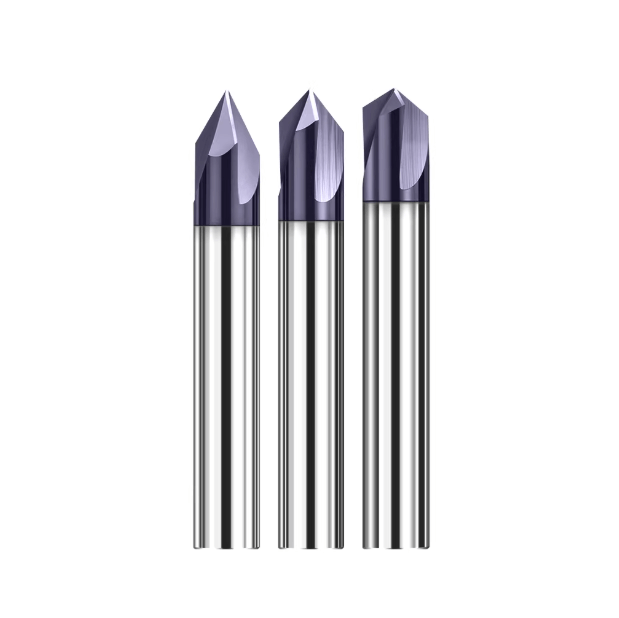
In mold and die manufacturing, the quality of part edges directly affects assembly accuracy, service life, and overall delivery quality. Chamfering is a critical step that not only ensures smooth assembly but also impacts subsequent polishing, mold fitting, and maintenance. Chamfer mills have become essential tools for mold shops seeking stable and consistent chamfering results.
Compared to traditional single-step methods, using a properly selected chamfer end mill improves processing speed and reduces manual touch-up while maintaining consistent chamfer dimensions. Especially in complex cavities, deep, narrow grooves, and high-hardness mold steel parts, chamfer mills provide significant advantages in edge control, surface integrity, and repeatability. By carefully selecting chamfer angles, tool diameters, and cutting edge geometries, mold manufacturers can flexibly integrate chamfer mills across multiple processing stages.
From a tool design perspective, the geometry of the chamfer mill bit directly influences surface finish and machining stability. For common materials such as pre-hardened steel, hardened steel, and stainless steel, variations in cutting edge type and tip strength can significantly affect performance. Standard tools often struggle to balance precision and efficiency in these complex mold applications.
As a result, more mold manufacturers are collaborating with custom chamfer end mill manufacturers to develop tailored tools based on specific mold drawings, machining requirements, and equipment capabilities. By customizing chamfer angles, tool lengths, and edge designs, these specialized tools improve machining stability and reduce overall process risk in complex mold production.

Core Requirements for Chamfering in Mold Manufacturing
Edge treatment in mold manufacturing is more than an auxiliary step; it directly affects part functionality and machining stability. Proper chamfering prevents assembly interference, reduces stress concentration, and enhances overall mold quality. As molds become increasingly complex and accuracy demands rise, controlling chamfer size, angle stability, and repeatability becomes critical, placing higher standards on tool performance and process design.
In practice, achieving consistent chamfering through stable milling processes ensures dimensional uniformity across production batches and reduces the risk of rework in multi-stage operations. This is why more mold shops are adopting dedicated chamfer milling solutions instead of relying on manual finishing.
Chamfer Accuracy Requirements for Mold Cavities, Cores, and Parting Surfaces
Mold cavities, cores, and parting surfaces are the most critical areas requiring precision. Chamfer accuracy affects molded part appearance and mold closure. Excessive chamfer width or angle deviation can cause uneven parting lines and poor mold fit.
When machining these areas, tools must maintain rigidity and cutting stability to avoid surface tool marks or dimensional inconsistencies caused by vibration. Optimizing tool geometry and processing parameters ensures efficiency while maintaining accuracy.
The Impact of Mold Part Assembly on Chamfer Consistency
Molds are composed of multiple components, and assembly accuracy is vital for mold longevity and operational reliability. Inconsistent chamfers can lead to local interference, uneven gaps, and stress concentrations. Such issues may not be immediately apparent but can accelerate wear or cause damage over time.
Standardized chamfering during machining improves part fit stability, simplifies assembly, and reduces manual adjustments, especially in multi-cavity molds or large mold frames.
Reducing the Impact of Manual Edge Finishing on Mold Delivery Time
Manual edge finishing is inefficient and often results in inconsistent chamfer dimensions, leading to rework and repeated trial assemblies. In tight-deadline projects, this can significantly delay delivery. Completing high-quality chamfering during the machining stage reduces subsequent finishing steps.
A stable chamfer milling solution can handle multiple edges in a single setup, minimizing manual intervention and shortening processing cycles. This improves overall mold process controllability and consistency, particularly for large-scale production.

Typical Applications of Chamfer Mills in Mold Machining Processes
In mold machining, edge treatment is a crucial step for both surface quality and smooth assembly. Chamfering at various stages requires strategies based on part structure, machining sequence, and material hardness to ensure dimensional stability and machining efficiency. Optimizing tool paths, selecting suitable tool diameters, and designing appropriate cutting edges can significantly reduce vibrations, tool wear, and repeated adjustments, thereby improving overall mold production consistency.
In practice, chamfering is often performed after rough machining and before finish machining. It is also applied to deep cavities, narrow grooves, and complex structures involving multi-process operations. By selecting the right chamfering method and tool type for each stage, edge quality can be improved while minimizing manual finishing and assembly adjustments.
Chamfering After Rough Machining and Pre-Finishing Preparation
After rough machining, mold edges often have burrs and sharp corners, which can affect surface quality and interfere with finishing. Performing chamfering at this stage removes burrs and establishes standardized chamfer dimensions, providing a stable reference surface for finishing operations.
This stage focuses on controlling chamfer angle and edge consistency while maintaining efficiency. Using specialized chamfer mills with optimized cutting parameters allows for large-area chamfering in a short time, reducing tool load and vibration. This ensures that parts enter the finishing stage with a solid machining foundation.
Chamfering Strategies for Deep, Confined Areas of Mold Cavities
Deep cavities and narrow areas present limited space and complex structures, where traditional tools may cause interference or fail to complete chamfering. High-rigidity, small-diameter chamfer end mills with optimized cutting edges are essential to smoothly reach these areas.
Multi-stage or layered chamfering can gradually remove sharp edges and form smooth surfaces. This approach maintains chamfer consistency while reducing tool wear and cutting load, ensuring both stability and surface quality in deep cavity machining.
Advantages of Chamfer Mills in Multi-Process Machining
Combining chamfering with other finishing processes in a single setup improves production efficiency. Completing chamfering, deburring, and fine finishing together reduces handling and repeated clamping while minimizing cumulative errors on chamfer dimensions.
Careful selection of tool geometry and cutting parameters enables uniform machining across various chamfer angles and widths. Multi-process integration not only shortens the machining cycle but also enhances process control, reduces rework, and minimizes manual intervention, providing stable support for high-precision mold manufacturing.

The Role of Chamfer End Mills in Precision Chamfering of Molds
Precision chamfering directly affects assembly accuracy and service life. It requires consistent dimensions, smooth surfaces, and accurate angles, especially in high-hardness materials or complex cavities. Using dedicated chamfer end mills improves edge quality, reduces manual touch-up, and ensures repeatability and process stability. By carefully selecting tool angles, edge design, and cutting parameters, a high-quality chamfering datum can be established between roughing and finishing, supporting subsequent operations.
Tool stability, micro-angle control, and repeatability under high-speed machining are critical for precision chamfering. These factors influence surface finish, assembly accuracy, and overall machining efficiency. With proper tool and process configuration, high-precision chamfering can be achieved for mold parts of various materials and structures.
Stability Performance of Fixed-Angle Chamfer End Mills
Fixed-angle chamfering tools offer high repeatability and dimensional stability, making them ideal for critical positions such as parting lines and cavity edges. The fixed angle ensures consistent cutting paths, avoiding deviations caused by tool adjustments or angle errors.
During multiple setups or extended machining, these tools reduce vibration impact and minimize chamfering errors from wear, making them preferred in precision mold manufacturing.
The Impact of Micro-Chamfering on Mold Surface Quality
Micro-chamfers, though small, significantly affect surface quality and assembly fit. Proper micro-chamfering reduces wear risks and prevents plastic part scratching, while enhancing assembly smoothness and operational stability.
Selecting the correct tool diameter and cutting edge geometry ensures uniform micro-chamfers and smooth surfaces, free from burrs or tool marks. Typical micro-chamfer sizes range from 0.1 mm to 0.3 mm, providing a reliable foundation for subsequent polishing and assembly.
Maintaining Chamfer Consistency at High Speeds
High-speed machining increases production efficiency but demands tool stability and repeatability. Tool vibration, thermal deformation, and cutting force fluctuations can affect chamfer quality.
Optimizing tool geometry, cutting parameters, and fixture rigidity ensures consistent chamfer size and angle. In complex cavities or deep hole parts, stable high-speed chamfering improves surface quality and reduces rework and finishing needs, enhancing overall mold production efficiency.

The Impact of Chamfer Mill Bit Geometry on Mold Machining
In mold machining, the geometry of a chamfer mill bit directly affects chamfer quality, machining stability, and tool life. A properly designed cutting edge, tip shape, and helix angle reduce cutting resistance, improve chip evacuation, and distribute heat more effectively. This enhances the consistency and surface finish of mold part edges.
This is particularly important for hard steel and high-hardness mold steel parts, where machining conditions are challenging. Selecting the right tool geometry for specific chamfer widths, angles, and depths can improve efficiency, maintain accuracy, and reduce rework or frequent tool changes.
Tool geometry also impacts tool vibration, burr formation, and surface quality. Choosing the appropriate tip strength, cutting edge design, and helix angle is essential for stable and consistent chamfering.
The Relationship Between Tool Tip Strength and Machining of Hard Mold Materials
Mold steels and high-hardness materials require tools with high tip strength. Insufficient tip strength can cause chipping or rapid wear, especially in deep cavities or long chamfers, leading to inconsistent chamfer dimensions and lower efficiency.
Optimizing tip material and coatings improves impact resistance and wear resistance, ensuring stable cutting under continuous high-stress conditions. High-strength tips reduce vibration and cutting marks, enhancing surface finish uniformity.
The Impact of Cutting Edge Design on Chamfer Surface Finish
Cutting edge geometry affects cutting force distribution, chip evacuation, and heat generation, which determine chamfer flatness and surface finish. Sharp edges increase cutting efficiency but can cause burrs on hard materials. Moderately rounded or chamfered edges maintain efficiency while improving surface quality.
Helix angle design further optimizes chip flow, reduces vibration, and controls heat accumulation—critical for deep cavities and micro-chamfering. Fine-tuning edge geometry improves machining stability and chamfer consistency.
Performance of Different Chamfer Mill Bit Structures in Mold Steel
Different chamfer mill bit structures perform differently on mold steel. Monolithic tools offer high precision and repeatability, while indexable tools provide cost-effective solutions for long-life, high-volume operations.
For deep cavities or narrow areas, extended holders with small-diameter tools improve access and control vibration. For large-area or multi-angle chamfering, helix angles and edge designs enhance chip evacuation and heat management. Selecting the appropriate tool structure improves efficiency, chamfer accuracy, and part consistency.
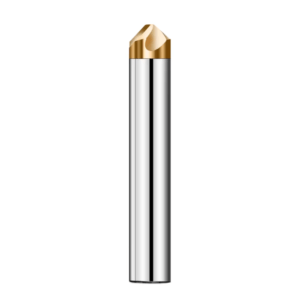
Chamfer Mill Selection Strategies for Different Mold Materials
In mold processing, the hardness and chemical composition of the workpiece material directly influence the choice of chamfering tools and machining methods. Different materials react differently to cutting forces, tool wear, and heat buildup. Therefore, a tailored chamfering process plan is essential for pre-hardened steel, hardened steel, or stainless steel molds. Correct tool selection ensures accurate chamfer dimensions, consistent surface quality, longer tool life, reduced vibration, and stable performance in high-volume production.
Matching tool material, coating, geometry, and cutting parameters allows for stable and efficient chamfering under various material conditions. Carefully sequencing operations and controlling cutting depth reduces tool load and improves overall part accuracy and surface quality, ensuring reliable performance for subsequent assembly.
Key Points for Chamfering Pre-hardened and Hardened Steel Molds
Pre-hardened steel is relatively soft, leading to slower tool wear, yet chamfer accuracy and surface finish still require control. Hardened steel is harder, producing higher cutting forces and increasing the risk of tool wear and chipping.
Selecting the appropriate carbide grade and edge design based on material hardness is essential. Optimizing cutting speed and feed rate ensures stable cutting. Using segmented or multi-layer chamfering reduces forces and heat buildup, improving chamfer dimension consistency and surface quality.
Controlling Chamfering Stability for Stainless Steel Mold Parts
Stainless steel has high toughness and low thermal conductivity, which can lead to vibration, burrs, and surface scratches. During chamfering, controlling cutting parameters and depth, and using high-strength, wear-resistant tools, is crucial.
Optimizing tool geometry, such as helix angle and tip radius, improves chip evacuation and reduces cutting resistance, resulting in flatter, consistent chamfers. In deep or complex cavities, fixture design and tool rigidity are also key to stable chamfering.
Wear Resistance Requirements of Chamfer Mills in High-Hardness Materials
In high-hardness materials, wear resistance is essential for maintaining chamfer accuracy and production efficiency. High-strength, tough tool materials with wear-resistant coatings resist chipping, wear, and heat buildup.
Controlling cutting depth, optimizing parameters, and selecting suitable edge geometry reduces the impact of cutting forces and vibration. This extends tool life and ensures precise, high-quality chamfers, even in deep cavities, narrow grooves, or complex parts.
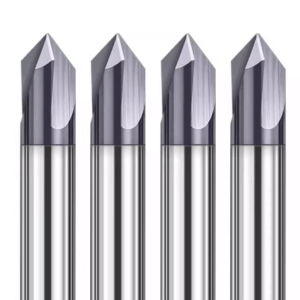
Chamfer Angle and Tool Matching Logic in Mold Machining
Chamfer angle selection impacts assembly accuracy, surface quality, and mold life. Different part structures require strict control of chamfer width, angle, and position. Matching tool geometry, diameter, and edge design ensures stable angles, reduces vibration and burrs, and improves machining efficiency.
Analyzing part structure, cavity depth, material hardness, and chamfer complexity allows for an optimized chamfering plan. This ensures consistent chamfers in mass production and supports high-precision mold manufacturing.
Application Scenarios of Common Chamfer Angles in the Mold Industry
-
45° chamfers: Parting surfaces and cavity edges, reduce interference, improve assembly.
-
30° chamfers: Small edges or fine structures, control stress concentration.
-
90° chamfers: Vertical edges, ensure tight assembly.
For different mold types—such as injection, stamping, or die-casting molds—choosing the correct chamfer angle affects surface contact, assembly clearance, and subsequent polishing and assembly adjustments.
The Impact of Chamfer Angle Errors on Mold Assembly
Angle deviations cause uneven assembly, interference, stress concentration, and reduce mold life. In multi-cavity molds, small errors can amplify misalignment, accelerate wear, or damage parts.
Strict control of tool geometry, cutting parameters, and processing sequence minimizes errors. Consistent chamfer dimensions and angles reduce assembly rework and improve overall production reliability.
Achieving Special Angle Requirements with Custom Chamfer End Mills
Non-standard molds or complex cavities may require chamfer angles that conventional tools cannot achieve. Custom chamfer end mills can be designed to match part drawings, including non-standard angles, widths, or edge shapes.
Custom tools improve processing efficiency and tool life, ensuring accurate angles and surface quality. For multi-angle, multi-size, or deep-cavity parts, custom tools provide highly matched solutions for stable and reliable chamfering.

Why Mold Factories Need Custom Chamfer Mills
Standard tools cannot meet the processing needs of all complex mold parts. As molds become more intricate, cavity shapes vary, and chamfer angles become non-standard, traditional tools often fall short in efficiency, chamfer accuracy, and assembly consistency. Custom tools allow mold factories to select optimal tool diameters, cutting edge angles, and tip lengths for each part, achieving precise and efficient chamfering.
Custom solutions also optimize tool paths, reduce vibration and cutting loads, maintain part surface quality, and ensure consistency in mass production, improving overall production efficiency. In practice, custom tools enhance process stability and reduce manual finishing and rework, especially in multi-cavity or high-volume mold projects.
Limitations on Chamfer Mill Size Due to Non-Standard Mold Structures
Complex mold parts often feature narrow grooves, deep cavities, or special chamfer angles, imposing strict requirements on tool diameter, shank length, and cutting edge geometry. Standard tools may not reach these areas, resulting in incomplete chamfers or excessive vibration.
Custom tools can be optimized based on part drawings and machining space. Adjustments to tool length, diameter, and cutting edge geometry ensure high-precision chamfering even in confined spaces or deep cavities. This guarantees edge quality, assembly accuracy, and overall machining efficiency.
Reducing Tool Changes to Improve Mold Machining Efficiency
Frequent tool changes in multi-process machining increase clamping time, accumulate errors, and extend production cycles. Custom tools allow multi-angle or multi-depth machining in a single setup, minimizing tool changes and clamping operations.
This approach reduces tool wear and vibration risks, ensures consistent edge quality, and significantly improves the efficiency and stability of the mold production line.
The Value of Custom Chamfer End Mills in Complex Mold Projects
For molds with intricate structures, diverse chamfer angles, and limited machining space, standard tools often cannot meet precision and stability requirements. Custom tools are designed with specific cutting edge geometry, diameter, and angles to achieve accurate chamfering and high surface quality.
Additionally, custom tools optimize cutting paths, reduce vibration and cutting forces, extend tool life, lower production costs, and standardize chamfer dimensions for assembly consistency, providing reliable process assurance in large or multi-cavity mold production.

The Role of Custom Chamfer End Mill Manufacturers in Mold Projects
In high-precision mold manufacturing, complex cavities, non-standard chamfers, and deep-hole features place demanding requirements on cutting tools. Custom chamfer end mill manufacturers address these challenges by delivering tailored tooling solutions through specialized design and production capabilities. By aligning tool design with part drawings and machining requirements, custom tools help balance chamfer accuracy, surface finish, and machining efficiency while ensuring process stability and repeatability.
Their value extends beyond single-part machining. In multi-batch production, complex mold structures, and multi-cavity mold projects, custom tooling plays a critical role in maintaining consistency, reducing variation, and supporting reliable, high-quality output.
Custom chamfer end mill manufacturers also work closely with mold machining teams, providing tool parameter optimization, machining strategy recommendations, and technical support. This collaboration improves machining efficiency, minimizes tool wear and rework risk, and ensures consistent mold quality throughout the production cycle.
Chamfer End Mill Parameter Matching Based on Mold Drawings
Custom chamfer end mill manufacturers design tool diameter, cutting edge geometry, and tip length based on chamfer width, angle, depth, and cavity structure defined in part drawings. For deep cavities or narrow grooves, optimized tool geometry improves chip evacuation and tool rigidity, enabling stable chamfering in restricted or complex machining areas.
Accurate parameter matching reduces vibration, burr formation, and dimensional deviation while maintaining machining accuracy. This drawing-driven tool design is especially important in multi-cavity molds and high-volume production, where consistency and repeatability are critical.
Support for Machining Stability from Custom Chamfer End Mills
When machining high-hardness materials or complex mold features, standard tools often struggle to achieve both accuracy and efficiency. Custom chamfer end mills, designed with optimized cutting edge geometry, enhanced tip strength, and suitable coating systems, maintain stable cutting forces and consistent chamfer dimensions during continuous operation.
Improved stability enhances surface finish and chamfer uniformity while reducing the negative effects of vibration and heat accumulation. As a result, mold components can maintain high dimensional accuracy and surface quality throughout long production runs.
Collaborating with Mold Machining Teams to Optimize Chamfering Processes
Custom chamfer end mill manufacturers typically collaborate closely with mold machining teams to develop tooling solutions aligned with process flow, machine capabilities, and production objectives. In multi-step machining or complex cavity applications, this cooperation helps integrate chamfering, deburring, and finishing operations, reducing setup changes and rework.
Through joint optimization of tooling and machining strategies, mold shops can achieve efficient and precise chamfering while ensuring consistent assembly fit and surface quality. This collaborative approach significantly enhances production efficiency and overall project reliability.
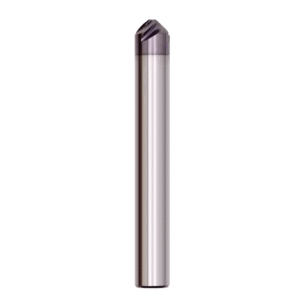
Controlling the Stability of Chamfer Mills in Mold Machining
In mold machining, chamfering stability directly affects surface quality, assembly accuracy, and tool life. Chamfering operations are prone to issues such as vibration, edge chipping, and burr formation, which can reduce productivity and increase rework. To achieve consistent results when machining high-hardness materials, deep cavities, or complex chamfer geometries, a systematic stability control approach is required.
This approach includes proper tool selection, optimized cutting parameters, and standardized operating practices. By carefully controlling cutting speed, feed rate, depth of cut, and tool path strategy, vibration and tool wear can be minimized, resulting in improved chamfer quality and process reliability.
Maintaining process stability is essential for improving mold production efficiency and ensuring part-to-part consistency. A well-designed machining strategy not only extends tool life but also reduces rework and enhances stability in mass production environments.
Avoiding Tool Vibration and Chipping in Chamfering
Tool vibration and edge chipping are common challenges in chamfering, particularly in deep cavities, narrow grooves, or when machining hardened materials. Excessive vibration can cause uneven chamfer edges, visible tool marks, and localized edge damage.
Selecting chamfer mills with high rigidity and sufficient tip strength, along with proper tool clamping, significantly reduces vibration risk. Combined with controlled cutting depth, appropriate feed rates, and stable tool paths, these measures enable smooth and uniform chamfering while minimizing chipping and surface defects.
The Impact of Cutting Parameters on Chamfer Quality
Chamfer quality is influenced not only by tool geometry but also by cutting speed, feed rate, and depth of cut. Excessive cutting speed can cause thermal deformation and surface scratching, while overly low feed rates reduce efficiency and increase cutting force fluctuation.
By setting cutting parameters appropriately, a stable cutting condition can be maintained, resulting in clean chamfer edges and consistent angles. Adjusting machining strategies according to material hardness and mold structure helps ensure dimensional consistency and surface quality in mass production while reducing vibration and tool wear.
Machining Practices to Extend Chamfer Mill Tool Life
Extending tool life depends on proper usage and maintenance. Controlling cutting parameters, avoiding overload conditions, balancing tool utilization, and regularly removing chips and coolant residue help slow wear and prevent edge chipping.
For deep or complex cavity chamfering, layered cutting, segmented feeding, and optimized tool paths further reduce tool stress. Establishing standardized machining practices improves chamfer quality, lowers production costs, and enhances the long-term stability and reliability of mold machining operations.

Improving Overall Mold Machining Quality with Chamfer Mills
In mold manufacturing, chamfering is not merely a surface-finishing operation; it is a critical process that influences assembly accuracy, mold lifespan, and production stability. Consistent, high-precision chamfering reduces part interference, minimizes stress concentration, and provides a solid foundation for subsequent polishing, assembly, and long-term use.
By selecting appropriate tool geometry, cutting edge design, machining parameters, and process sequencing, stable and efficient chamfering can be achieved across different materials, complex cavities, and deep-hole features.
When custom tooling is combined with standardized machining practices, mold shops can improve production efficiency while maintaining accuracy and surface quality. This approach reduces manual finishing and rework, ultimately improving overall mold quality and delivery reliability.
The Indirect Impact of Chamfer Consistency on Mold Lifespan
Chamfer consistency directly affects assembly conditions and stress distribution within mold components. Uneven edges or angular deviations can cause localized stress concentration, accelerated wear, and premature component failure.
Using high-precision chamfering tools and stable machining processes ensures uniform chamfer dimensions, angles, and surface finish. This consistency reduces part interference, improves assembly smoothness, and contributes to extended mold service life.
The Importance of High-Quality Chamfering for Mold Delivery
High-quality chamfering improves surface finish and directly influences assembly accuracy and customer acceptance. In deep cavities or complex mold features, poor chamfering can result in scratched plastic parts, uneven assembly gaps, and additional rework.
Optimizing tool design, cutting parameters, and tool paths enables high-quality chamfering to be completed in a single operation, reducing manual intervention and rework. This improves delivery quality, ensures repeatability, and supports stable mass production of molds.
The Role of Standardized Chamfering Processes in Mold Manufacturing
Standardized chamfering processes are essential for maintaining consistency and efficiency in mass production. By standardizing tool selection, cutting parameters, machining sequences, and inspection criteria, mold manufacturers can achieve reliable chamfer quality across different projects and production batches.
Standardization improves machining stability, reduces tool wear and vibration risks, and minimizes manual trimming and rework. When combined with custom tooling and optimized machining strategies, standardized chamfering processes provide a high-efficiency, high-precision, and highly reliable solution for mold manufacturing.