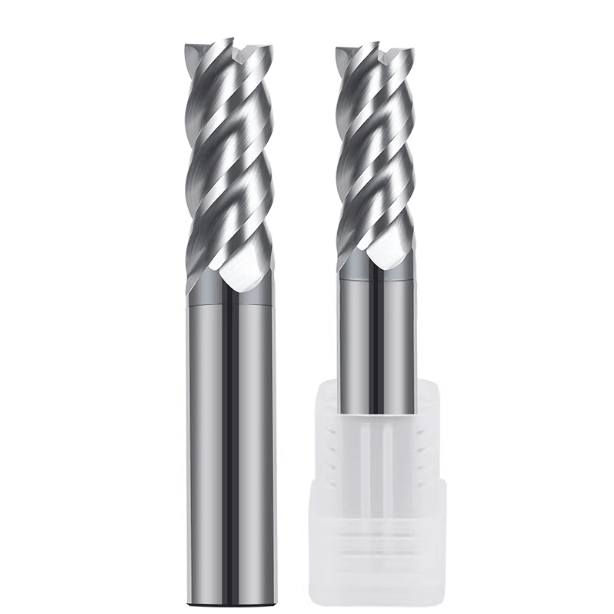
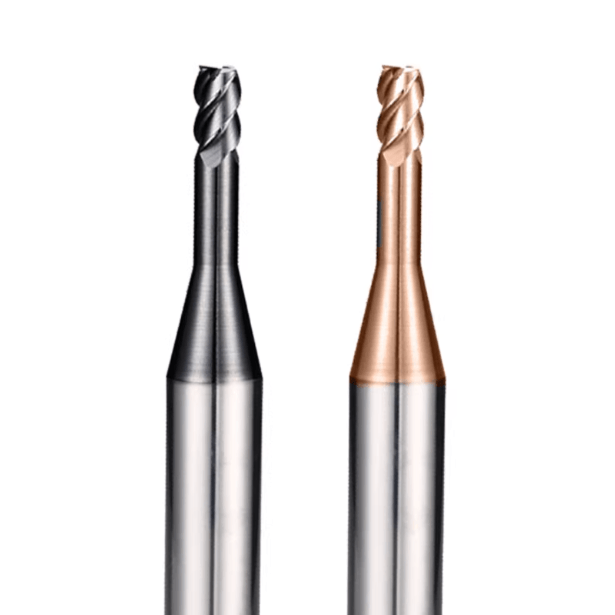
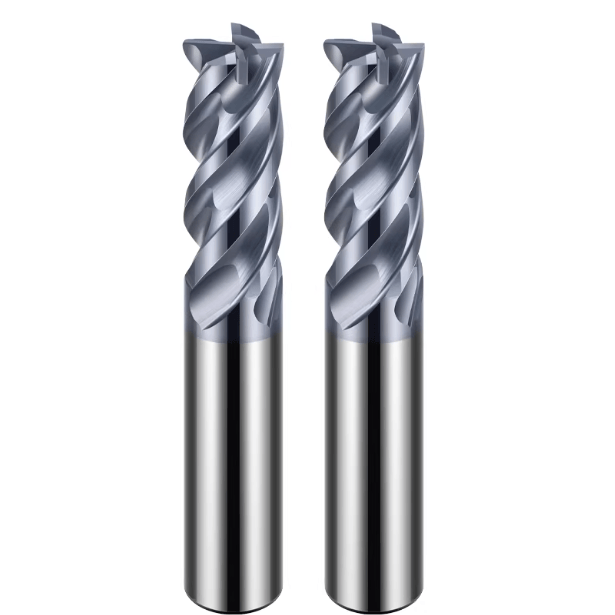
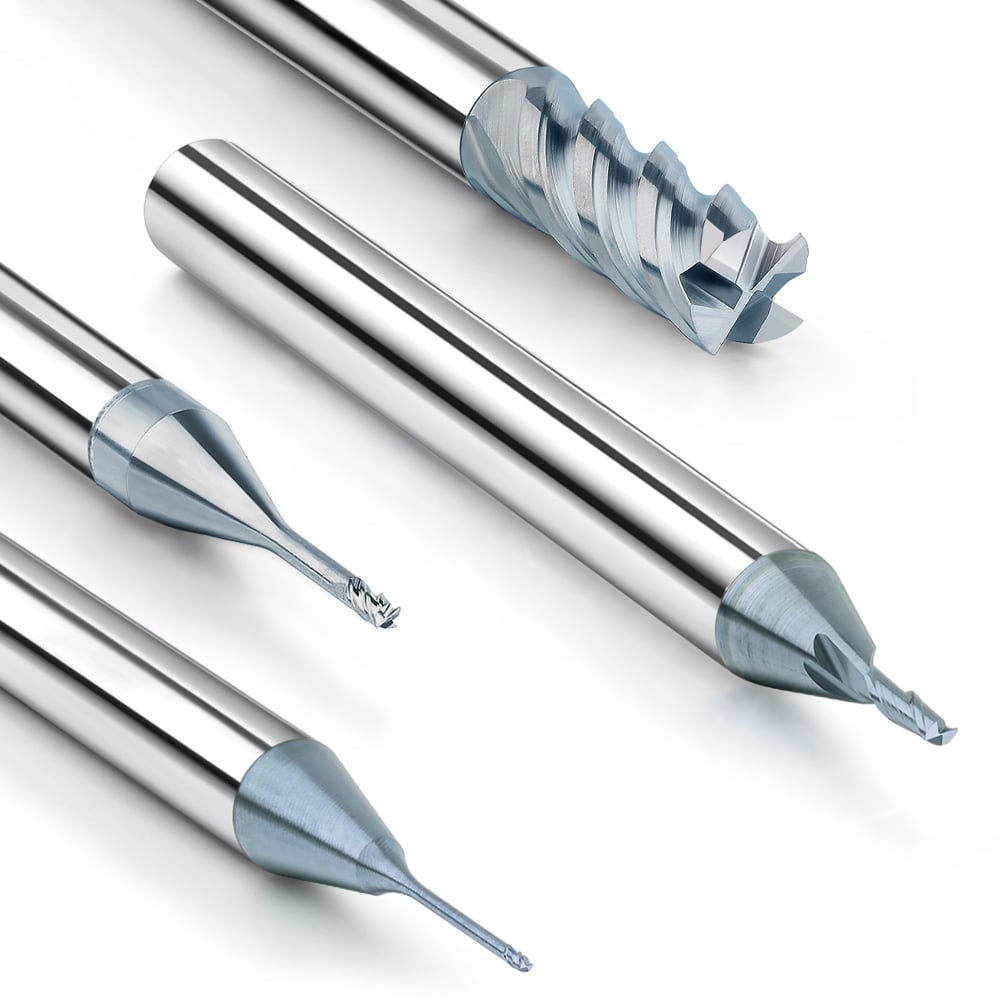
In our daily projects, we frequently encounter customers reporting short tool life, unstable surface finishes, or sudden chipping of end mills under high loads. This is especially true when using carbide end mill bits for machining deep grooves or high-hardness materials. Even with seemingly reasonable parameter settings, actual cutting results often fall short. These are not isolated incidents but typical phenomena we have repeatedly observed across various European and American customer sites.
Through years of practice, we have found that the root causes of many performance issues often lie in cutting edge selection, tool overhang control, and cutting parameter optimization. Even tools from the same batch can behave differently depending on material, machine tool rigidity, and subtle differences in cutting speed, feed rate, or depth of cut. Tool wear patterns, heat accumulation, and surface finish fluctuations often force secondary machining in production, affecting both efficiency and costs.
We’ve summarized our experiences on-site: from tool geometry and coating selection to load monitoring and cutting strategy optimization, every decision impacts machining stability and surface quality. Therefore, we adjust and verify cutting parameters based on actual machining conditions and the specific workpiece, rather than relying solely on theoretical calculations or manufacturer recommendations.
Repeated verification has also shown that many customers overlook matching carbide end mill bit manufacturers to actual machining conditions, often resulting in premature wear or breakage. We started organizing these experiences into practical methods that help significantly extend tool life while maintaining efficiency.
So, here’s a question for you: have you ever had a brand-new tool produce inconsistent results in your machining projects?

End Mill Performance Issues We Frequently Encounter
In our long-term projects, we often observe performance fluctuations of end mills during continuous production. Even when using the same batch of carbide end mill bits, significant differences in tool life and surface quality can occur when machining stainless steel, aluminum, or titanium alloys. Customers often follow recommended cutting parameters, yet the tool may still chip within two hours or develop severe built-up edge on aluminum parts, leading to rough surfaces.
These problems usually stem from a combination of factors, including tool overhang, cutting edge number, feed strategy, and depth of cut. Before each operation, we review similar materials and tools from previous work, monitor wear trends, spindle load, and vibration, and adjust cutting parameters or tool geometry as needed. Pre-analyzing and fine-tuning these factors can reduce breakage and machining instability while maintaining surface quality within customer specifications.
Typical Field Situation of Rapid Tool Wear
When machining stainless steel or high-hardness alloys, we often see carbide tools chipping within two hours, especially in deep grooves or with small-diameter, long-overhang tools. Localized blackening and edge chipping on the tool’s rake or flank face often indicate excessive cutting parameters or insufficient cooling.
To address this, we analyze the cutting conditions: appropriate cutting edge count, tool length, coating, feed rate, and depth of cut. On-site, we frequently recommend adjusting strategies, such as reducing depth of cut, decreasing feed per tooth, or switching to a more suitable high-speed milling tool configuration. These adjustments extend tool life while maintaining efficiency.
Reasons for Unstable Surface Roughness
Even with consistent programming, we observe fluctuations in surface roughness between batches. Minor tool wear or uneven cutting forces often translate directly into tool marks or microburrs on stainless steel or titanium workpieces. Machine rigidity, fixture stability, and machining sequence are also key contributors.
We analyze machining records with the customer, checking tool condition, spindle load, and cutting parameters. Fine-tuning feed rate, spindle speed, and cutting paths ensures consistent surface finish. Improving surface roughness is not a one-time fix—it requires continuous observation and strategy optimization.
Common Tool Breakage Conditions
Small-diameter, deep-groove, or long-overhang tools are most prone to breakage, usually due to high cutting parameters, poor tool paths, or insufficient machine rigidity. Tools may break on entry or during high-speed side milling, impacting efficiency and increasing scrap risk.
We recommend reducing depth of cut and feed rate for long-overhang or deep-groove conditions, using high-strength carbide end mill bits, or increasing the number of cutting edges to improve stability. Over years, we’ve developed empirical tables relating tool diameter, overhang, and material hardness to quickly assess breakage risk on-site.
Real-World Case Studies of Vibration and Abnormal Noise
When machining aluminum or stainless steel at high speeds, vibration or abnormal noise often occurs, particularly with long overhangs or uneven feed. Monitoring spindle load, tool vibration, and cutting forces reveals that improper tool-machine matching or incorrect cutting parameters are usually the source.
We advise shortening overhang, adjusting cutting paths, optimizing feed strategies, and selecting appropriate tool diameters and flute types. Oscillation problems are rarely solved by a single adjustment; a combined analysis of tool, parameters, and machine condition is required.

How We Choose the Right End Mill Bits
From our experience on multiple European and American customer sites, tool selection goes beyond material and cutting edge shape. It requires considering the workpiece material, geometry, and machine tool rigidity. For each selection, we review past machining records including tool life, surface finish, and cutting load. When using carbide end mill bits for high-hardness materials or complex parts, even slight differences in tool geometry can significantly impact results.
We also consider the trade-off between efficiency and tool cost. For better chip evacuation, we sometimes choose tools with fewer but more stable flutes. For high-strength materials, we may reduce cutting speed slightly to prevent chipping. Our on-site experience consistently shows that selecting tools based on actual working conditions yields more stable production results than relying solely on manuals or theoretical data.
Tool Selection Based on Material (Aluminum, Stainless Steel, Titanium Alloy)
Aluminum: For aluminum parts, we typically choose end mills with sharp edges, large helix angles, and smooth chip removal channels. Aluminum tends to produce built-up edge, so coated or surface-treated tools help reduce surface roughening. Even brand-new tools can produce slight surface irregularities if chip removal is poor. Fine-tuning feed rate and helix angle on-site often proves more effective than switching tools.
Stainless Steel & Titanium Alloys: For these harder materials, we prioritize carbide end mills with high strength and wear-resistant coatings. Tool diameter and flute number are selected based on material hardness, cutting depth, and machine rigidity. Chip evacuation and vibration resistance are critical; ignoring them often leads to premature wear or breakage.
Experience in Number of Flutes Selection (2-Flute/3-Flute/4-Flute)
We adjust flute count based on material and tool diameter. For aluminum or soft materials, two-flute tools ensure smooth chip removal but may lack rigidity in deep grooves. Three- or four-flute tools improve stability but may hinder chip evacuation. On-site, we select the number of flutes that balances tool life, surface quality, and machining efficiency.
For deep grooves or hard materials, we balance chip removal with cutting strength. Small-diameter tools typically have fewer flutes for stability, while multi-flute tools are used for wide-face roughing. Decisions are based on observed tool wear, load fluctuations, and surface quality feedback.
Importance of Tool Length and Overhang Control
Tool overhang directly affects stability and breakage risk. Long overhangs in deep grooves or small-diameter tools often cause vibration or chipping, even with high-strength carbide end mills. We choose the shortest overhang that meets cutting requirements and adjust feed/depth to reduce load.
We remind customers not to prioritize cost savings by using excessively long tools. On-site tests of different overhangs, combined with surface quality and load feedback, help us select a solution that is both stable and productive.
Actual Impact of Coating Selection on Tool Life
Coating choice strongly affects tool life, especially in high-hardness or abrasive materials. TiAlN-coated tools resist wear at high temperatures, ideal for stainless steel and titanium. AlTiN-coated tools perform better at high-speed aluminum milling, reducing chip buildup and burrs. On-site selection is always material- and condition-specific.
Coating also affects wear patterns. Tools with different coatings wear differently under the same conditions, impacting durability and surface finish. Selecting coatings based on tool geometry, material, and parameters ensures more reliable machining than simply using “wear-resistant” coatings.
Cutting Parameter Optimization: How We Help Customers Improve Efficiency by Over 30%
From our on-site experience, even with identical tools and machines, machining efficiency can vary by more than 30%, often due to cutting parameter settings. Many customers, when first using carbide end mill bits or machining new materials, apply manual recommendations without considering machine rigidity, tool diameter, material hardness, or chip evacuation. This can cause premature tool wear, surface roughness fluctuations, and increased vibration.
We typically analyze spindle speed, feed per tooth, depth of cut, and width of cut on-site. By ensuring the tool operates under stable loads, we can improve production efficiency while maintaining machining quality. We also develop repeatable, field-verified parameter adjustment methods that consider the end mill’s edge shape, coating, and tool length. Fine-tuning based on tool wear trends and chip evacuation often allows a 20–30% increase in machining speed without raising tooling costs, while extending tool life and reducing rework.
Common Errors in Feed and Spindle Speed Settings
We frequently see customers using excessively high feed rates for aluminum or too high spindle speeds for hard materials. For example, a 6mm carbide end mill used to mill a deep stainless steel groove with a slightly high feed chipped within 30 minutes. These errors usually stem from neglecting the relationship between tool diameter, flute count, and material hardness.
We recommend a step-by-step testing method: adjust feed per tooth and spindle speed on a small batch, observe spindle load and chip formation, then proceed with mass production. This field verification quickly identifies a safe parameter range without exceeding tool limits or compromising efficiency.
Recommended Parameter Adjustment Logic for Different Materials
We almost never rely on fixed values for different materials. Aluminum tends to produce chip buildup, so we use slightly higher spindle speeds with moderate feed, paying attention to helix angle and chip evacuation. Stainless steel and titanium require controlling load per tooth and reducing depth of cut to minimize wear and vibration.
Parameters are fine-tuned by observing tool wear and cutting forces. For instance, if titanium alloy machining shows flank wear or load fluctuations, we adjust feed rate or depth of cut. This dynamic approach maintains stable performance across batches while ensuring surface finish and machining accuracy.
How to Determine Parameter Appropriateness Through Load Monitoring
Tool cutting parameters should be validated not just by surface finish but also via load monitoring. Observing spindle load fluctuations, machine noise, and chip consistency helps determine suitability. For example, during deep groove stainless steel machining with a long overhang, a sudden spindle load spike indicated excessive feed, prompting an immediate reduction in feed per tooth and depth of cut.
Consistent monitoring also predicts tool wear trends. Stable loads and uniform chips usually indicate longer tool life, while irregular loads or chip formation suggest adjustments are needed. Combining this with our parameter optimization logic provides a practical guide for on-site adjustments.
Parameter Differences Between High-Speed and Conventional Machining
High-speed machining is not achieved simply by increasing spindle speed. We have seen aluminum programs marked “high-speed” where spindle speed increased without adjusting feed, causing rapid tool wear and surface burrs. High-speed milling requires holistic consideration of chip thickness, tool diameter, feed per tooth, and chip evacuation.
Conventional machining maintains lower spindle load and stable feed per tooth, ensuring uniform wear and consistent surface quality. We advise customers to flexibly switch machining modes based on material and tool condition rather than blindly pursuing speed or feed.
How to Effectively Extend the Service Life of Carbide End Mill Bits
From our on-site experience, tool life depends not only on the material and coating but also on cutting strategies, machine condition, and operating habits. Many customers, even when using carbide end mill bits for the first time, experience rapid wear or chipping despite selecting high-wear-resistant tools.
We start by analyzing tool wear patterns on-site, including flank wear, edge chipping, and plastic deformation. Next, we evaluate cutting parameters, chip evacuation, and cooling strategies to identify the root causes of reduced tool life.
Tool life management is not only about extending service life but also crucial for ensuring machining quality and reducing scrap rates. At customer sites, we integrate tool wear records with cutting load, feed rate, spindle speed, and chip evacuation to create an actionable tool management method. This approach often extends tool life by over 30% while maintaining production efficiency and reducing secondary machining and scrap.
Tool Wear Pattern Assessment
When assessing tool wear on-site, we observe flank wear, edge chipping, and plastic deformation in detail. For instance, during deep stainless steel groove machining, local blackening of the flank indicates excessive cutting force or uneven load, while minor edge chipping usually results from poor chip evacuation or aggressive parameters.
We also record wear trends considering the number of cutting edges, coating, and depth of cut. Early identification of wear patterns is more important than merely extending tool life, as it directly impacts surface finish and workpiece accuracy. We train customers to quickly assess tools using visual inspection and micro-measuring tools to take corrective action before severe wear occurs.
Practical Methods to Avoid Heat Accumulation
Heat accumulation is a primary cause of decreased tool life and surface roughness fluctuations. Even high-strength carbide end mill bits can overheat during continuous stainless steel or titanium machining if cooling is insufficient or cutting strategies are inappropriate.
To mitigate this, we combine cutting fluid application, localized spraying, and intermittent cutting. For high-speed aluminum machining, we pay special attention to chip formation and evacuation. Optimizing feed per tooth and cutting width ensures continuous chip removal, reducing surface temperature and significantly extending tool life while maintaining surface finish.
When Must End Mill Bits Be Replaced?
Customers often continue machining with worn tools, causing burrs, tool marks, or dimensional deviations. We recommend immediate replacement when flank wear exceeds a critical level, cutting edges chip, or abnormal surface textures persist.
Reference standards for replacement consider tool diameter, number of cutting edges, material, and cutting load. For example, during stainless steel machining, we proactively replace tools at 70–80% of recommended life if load fluctuations occur. Timely replacement reduces scrap and prevents machine or fixture damage.
Tool Maintenance Details Often Overlooked by Customers
Many machining issues stem from operating habits. Unstable clamping, dirty tool holders, and spindle runout accelerate wear and breakage. Regularly checking the tool-holder fit, cleaning chips from helical grooves, and ensuring spindle health are fundamental for extending carbide end mill life.
We also recommend archiving tool usage and maintenance records to monitor wear trends. Focusing on maintenance habits often ensures long-term stability and workpiece quality more effectively than simply using higher wear-resistant tools. With these practices, customers frequently extend tool life by 30% or more on-site.
Solving Vibration Issues: Our Most Commonly Used Effective Methods
Vibration is one of the most common challenges in high-precision machining or long overhang tooling. Even with new tools and correct programs, machines may vibrate or produce abnormal noise when machining deep grooves in aluminum or stainless steel at high speeds.
Vibration usually results from insufficient tool rigidity, poor machine rigidity, or mismatched cutting parameters. We systematically investigate these factors to identify the true source and take targeted measures. Observing tool wear, spindle load, and chip condition simultaneously provides direct evidence for decision-making.
Solving vibration is not just about increasing rigidity or reducing speed. Comprehensive adjustments of overhang, cutting path, feed rate, and spindle speed are required. These adjustments often reduce vibration, improve surface finish, and extend tool life while maintaining accuracy.
How to Determine the Source of Tool Vibration
When customers cannot identify the source of vibration, observing spindle load, chip morphology, and tool movement helps pinpoint the cause. Severe wear or irregular surface marks usually indicate inappropriate tool rigidity or diameter; vibration across all tools often suggests machine rigidity or fixture issues; program problems manifest in specific paths or directions.
We advise testing with short slices or small batches to gradually identify the source. Comparing tool diameters, flute count, depth of cut, and feed parameters reveals the root cause more reliably than blind adjustments, preventing additional wear or scrap.
Improving Stability by Reducing Overhang
Tool overhang length significantly affects vibration. Long overhang tools are prone to vibration during deep grooves or small-diameter machining. We recommend minimizing overhang and optimizing fixture and machine rigidity for stable tool support.
For deep grooves, we weigh overhang length against depth of cut. Using segmented cutting or helical descent reduces stress concentration. Proper overhang control both reduces vibration and extends tool life while maintaining surface finish.
The Effects of Changing the Cutting Path (Circular Infeed, Helical Descent)
Optimizing the cutting path often reduces vibration. Circular or helical descent distributes tool stress more evenly, preventing sudden impacts. Testing straight vs. helical descent in small batches shows helical descent produces more even tool wear and stable spindle load when machining deep grooves or complex contours.
Path strategy adjustments, combined with flute count, chip thickness, and feed rate, are often more effective than simply reducing spindle speed. Field verification ensures end mills perform stably under complex conditions.
Vibration Reduction Parameter Adjustment Techniques
We reduce vibration by fine-tuning depth of cut, feed per tooth, and spindle speed. Minor adjustments can significantly improve stability without reducing machining speed.
Tool geometry—including helix angle, flute count, and diameter ratio—is also critical. For high-load machining, we select high-rigidity carbide end mills with smooth chip evacuation, and fine-tune feed and cutting strategies on-site. This comprehensive approach reduces vibration and breakage risk while maintaining efficiency.

Machining Quality Improvement: Methods Validated in the Field
Based on years of on-site experience, we have found that final surface quality depends not only on tool material and coating but also on cutting strategy, tool wear condition, and machining sequence. Even high-quality carbide end mill bits can produce substandard surfaces if feed rate, spindle speed, and depth of cut are not aligned with the workpiece material. Uneven tool wear, poor chip evacuation, or micro-vibrations from the machine can directly cause tool marks, burrs, and edge chipping. We systematically analyze these factors to develop targeted cutting solutions that improve surface quality while maintaining machining efficiency.
At customer sites, we often combine roughing and finishing tools, optimize cutting parameters, and control tool overhang to improve results. Tool selection—including the number of cutting edges, diameter, and helix angle—must match the workpiece material and machining process. Small-batch trial cuts verify each solution’s feasibility, reducing surface defects and the need for secondary machining.
How to Achieve Better Surface Finish
We improve surface finish by fine-tuning feed per tooth and depth of cut. For instance, in aluminum machining, chip accumulation or excessively high feed rates can roughen surfaces or cause tool marks. Moderately reducing depth of cut while ensuring continuous chip removal significantly improves finish.
Tool wear also affects quality. Slight flank wear often indicates early surface deterioration. We adjust parameters or replace tools promptly to maintain consistent surface quality. Experience shows that achieving superior finish relies on both the tool and real-time cutting strategy adjustments.
How to Match Finishing and Roughing Tools
Properly pairing roughing and finishing tools significantly improves surface quality without compromising speed. During roughing, we select end mills with high rigidity, few flutes, and good chip removal to remove bulk material efficiently. For finishing, tools with more flutes and sharper points create smoother surfaces.
We monitor tool load and surface morphology post-roughing. If roughing leaves thick tool marks, finishing feed per tooth or cutting direction is adjusted to prevent secondary roughening. Over years, this approach has resulted in stable roughing-finishing combinations for diverse materials and geometries.
Techniques for Avoiding Burrs and Edge Chipping
Burrs and chipping mainly occur on thin-walled or sharp-edge parts. Optimal tool diameter, flute count, helix angle, and controlled depth of cut and feed per tooth are critical. Excessive overhang or unstable fixtures can also cause localized vibration, which we mitigate by fine-tuning cutting strategies and optimizing tool support.
Adjusting cutting paths, such as circular infeed or helical entry, reduces impact and ensures smooth chip removal. These on-site refinements often improve edge quality without increasing tooling costs.
How to Reduce Secondary Machining
In many cases, extensive post-processing is required due to suboptimal roughing strategies or tool selection. On-site, we optimize cutting depth, feed per tooth, and tool arrangement so the initial pass closely approaches final dimensions, minimizing secondary machining.
By monitoring tool wear and spindle load, we adjust roughing-finishing transitions to maintain surface quality and reduce additional tool wear. These strategies improve efficiency and are validated under diverse materials and machine conditions.
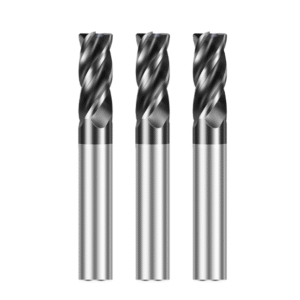
End Mill vs Drill Bit: Real-World Differences in Customer Site Usage
Some customers attempt to perform milling operations with drill bits, especially in side milling or grooving. This often leads to short tool life and unstable surfaces. Comparative on-site testing shows carbide end mills perform far better in transverse cutting, grooving, and contouring, with more uniform tool wear.
Drills concentrate cutting forces at the tip, causing tool breakage, surface chipping, and machine vibration. End mills disperse forces through helical and multi-flute edges, reducing stress and heat buildup. This data-driven comparison allows us to guide customers in tool selection and cutting parameters for more efficient and stable machining.
Why Drill Milling is Prone to Problems
Drills are designed for axial cutting. In transverse milling or grooving, the concentrated force on the tip can exceed tool limits, causing rapid wear or breakage. For deep grooved aluminum parts, drill tips often fail while end mills maintain uniform wear and improved surface finish.
Drills also have poor chip removal in deep holes or grooves, leading to heat buildup and accelerated wear. We advise selecting multi-flute end mills for non-axial milling to distribute cutting load effectively.
Advantages of End Mills in Side Milling and Grooving
Carbide end mills consistently outperform drills in side milling and grooving. Multi-flute end mills distribute cutting forces, maintain spindle stability, and ensure smooth chip removal, reducing heat and tool breakage.
For deep titanium grooves, four-flute end mills produced superior surface finish and uniform wear, while drills failed within 30 minutes. Proper flute count and diameter selection based on material hardness and groove depth ensures stable, accurate machining and minimizes secondary operations.
Machining Risks Caused by Incorrect Tool Use
Incorrect drill or end mill selection can lead to tool tip chipping, vibration, burrs, or machine downtime. Proper tool choice requires considering cutting force direction, chip evacuation, and tool rigidity—not just diameter or material.
Even end mills can produce poor surface quality if parameters are mismatched or overhang is excessive. We combine cutting data, tool deflection, and chip load to fine-tune strategies, reducing machining risks and ensuring accuracy.
Practical Experience Summarized from European and American Customer Sites
Through years of supporting European and American customers, we found that theoretical or manual data cannot always be applied directly. Each workpiece and machine tool is unique. We combine flute count, tool length, coating, and workpiece material with trial cuts and data monitoring to find solutions that improve efficiency and extend tool life.
We also maintain a database of tool wear and optimization results. Whether high-speed aluminum or deep stainless steel grooves, these field-validated insights reduce guesswork, improve production efficiency, and decrease tool and workpiece scrap.
Typical Optimization Case for High-Speed Machining of Aluminum Parts
At a European automotive client, high-speed aluminum milling previously caused rapid tool wear and surface roughness. By adjusting feed per tooth, spindle speed, depth of cut, and selecting an appropriate helix angle and flute count, chip buildup and vibration were significantly reduced. Tool life increased by ~40%, while surface finish met customer standards.
Circular infeed and helical cutting paths further minimized impact loads. Smooth chip removal and tool stability proved more critical than spindle speed alone, reducing secondary machining and improving efficiency.
Case Study on Improving Tool Life in Stainless Steel Machining
A client faced rapid tool wear when machining deep stainless steel grooves with 6mm end mills. By reducing feed per tooth, controlling depth of cut, optimizing cooling, and using TiAlN coatings, tool life was extended while maintaining surface finish.
Spindle load and chip monitoring allowed proactive adjustments before severe wear, demonstrating the importance of active tool management over reliance on wear-resistant coatings.
Deep Groove Machining Solution for Small Diameter Tools
Deep grooves with 3mm end mills caused significant vibration due to long overhangs. Reducing overhang, adjusting depth of cut and feed, and using helical cutting minimized vibration, ensuring accuracy and surface quality.
Optimizing flute count and helix angle further distributed forces and improved chip evacuation. Field verification showed nearly zero tool breakage and over 15% efficiency improvement.
How to Help Customers Reduce Tool Costs by More Than 20%
Tool costs can be reduced without compromising quality. By optimizing cutting parameters, selecting appropriate flute counts and coatings, controlling overhang, and combining roughing and finishing strategies, tool costs decreased >20%.
Clients are guided to record usage, monitor wear trends, and adjust parameters in real-time to prevent excessive wear. Field data-driven optimization ensures cost reduction while maintaining efficiency and surface quality.
How to Communicate Effectively with Carbide End Mill Bits Manufacturers
From our on-site experience, delays in tool selection and unstable machining results are often not caused by the tool itself, but by incomplete or inaccurate communication. The more complete the machining information you provide, the faster a end mill bits manufacturer can recommend a workable solution. In practice, we usually ask customers to prepare key details in advance, including workpiece material, part geometry, cutting depth, machine type, and spindle capability. When this information is clearly defined upfront, it significantly reduces trial-and-error and avoids unnecessary tool consumption.
We have also seen many cases where customers only provide partial information—such as stating the material is aluminum without clarifying slot depth, tolerance requirements, or machining strategy. In these situations, even a well-designed tool can perform poorly in real conditions. What we typically recommend is using drawings, photos, or short machining descriptions to explain the process. This allows the end mill bits manufacturer to better understand the actual cutting conditions and propose a solution that balances tool life, surface quality, and machining efficiency.
Key Machining Information Required from Customers
In field applications, we consistently request a complete set of machining conditions before recommending any tool. This includes material type, hardness, part geometry, depth and width of cut, machine rigidity, spindle speed range, and coolant type. When this information is clearly provided, tool geometry—such as flute count, diameter, coating, and overall length—can be selected to match the real cutting environment, leading to more predictable wear and stable machining results.
Beyond basic parameters, we also pay close attention to cutting load, chip evacuation requirements, and production volume. For example, whether the job involves high-speed machining, long cycle times, or tight tolerance finishing will directly influence tool design. In our experience, the more accurately you define tool life expectations and surface finish requirements, the more effectively a manufacturer can tailor a solution that performs consistently across different batches.
Common Communication Misconceptions
One of the most common issues we encounter is selecting tools based only on diameter or flute count, without considering material behavior or machine rigidity. In actual machining, this often leads to vibration, unstable cutting loads, or premature tool wear. We have seen cases where a tool that looks correct on paper fails quickly because the machine cannot support the cutting forces required. Tool selection must always be evaluated together with machine capability and cutting strategy.
Another frequent mistake is overlooking cutting parameters during communication. Many users assume that providing material and tool size is enough, but without feed rate, spindle speed, and depth of cut, it is difficult to recommend a reliable solution. In our on-site work, we often request the existing machining program or parameter range. This allows us to adjust tool geometry—such as helix angle, coating, and flute design—based on actual cutting conditions rather than theoretical assumptions.
How to Quickly Obtain the Correct Tooling Solution
In our experience, the fastest way to arrive at a reliable tooling solution is to combine structured information with real cutting validation. We usually guide customers to prepare a simple checklist that includes material, machine type, batch size, required tool life, and surface finish targets. With this information, a manufacturer can quickly narrow down suitable tool designs and recommend initial cutting parameters without repeated revisions.
However, we rarely rely on theoretical recommendations alone. We strongly suggest small-batch trial cuts under actual machining conditions. During these tests, we observe chip formation, spindle load, and tool wear patterns, then fine-tune feed per tooth, depth of cut, and cutting speed accordingly. This approach allows you to validate the tool’s performance quickly while minimizing the risk of scrap and unnecessary tooling costs.
Parameters That Must Be Confirmed When Customizing Tools
When it comes to custom tooling, incomplete parameter confirmation is one of the main causes of failure. In our projects, we always confirm core specifications such as tool diameter, tolerance, flute count, helix angle, coating, overall length, and clamping method. If any of these are unclear, the resulting tool may not match the actual machining conditions, leading to vibration, poor surface finish, or short tool life.
In addition, chip flute design and tool tip geometry are equally important. We have seen situations where insufficient chip evacuation caused heat buildup and edge chipping, or where an unsuitable tool tip increased burr formation. Before finalizing a custom tool, we recommend reviewing machining depth, material type, and expected production volume. When these factors are clearly defined, the customized tool can be applied directly in production with minimal adjustment.

Summary of Our Core Experiences in Actual Machining
Through years of on-site customer practice, we have summarized key experiences that directly impact tool life, surface finish, and machining efficiency:
-
Stability over Speed: High machine speeds are only effective if cutting loads are even and tool rigidity is sufficient. Unstable conditions cause chipping, wear, and surface defects. Ensure stable spindle load, optimized cutting paths, and controlled overhang before increasing speed.
-
Tool Selection Determines Outcomes: Using the wrong drill instead of an end mill, or selecting tools with inappropriate flute counts and helix angles, causes vibration, burrs, and scrap. For small-diameter or long-overhang deep groove tools, select cutting edge count and tool configuration based on material, machining depth, coating, and chip evacuation.
-
Parameter Optimization Based on Actual Load: Adjusting feed and speed according to manuals alone often causes premature wear or vibration. Monitor spindle load, chip pattern, and tool wear trends to fine-tune feed per tooth, depth of cut, and spindle speed, reducing secondary machining and scrap.
-
Material-Specific Strategies: Different materials require distinct strategies. For high-speed aluminum milling, choose end mills with smooth chip evacuation and optimized helix angles. For stainless steel, select high-temperature coated tools and controlled depth of cut. For titanium alloys, employ moderate feed rates and intermittent cutting. These targeted strategies improve tool life, surface finish, and machining efficiency.
These practices have been validated repeatedly at European and American customer sites. By comparing your machining conditions, workpiece drawings, and material specifications, we can provide optimized solutions that make carbide end mills more stable, longer-lasting, and efficient.