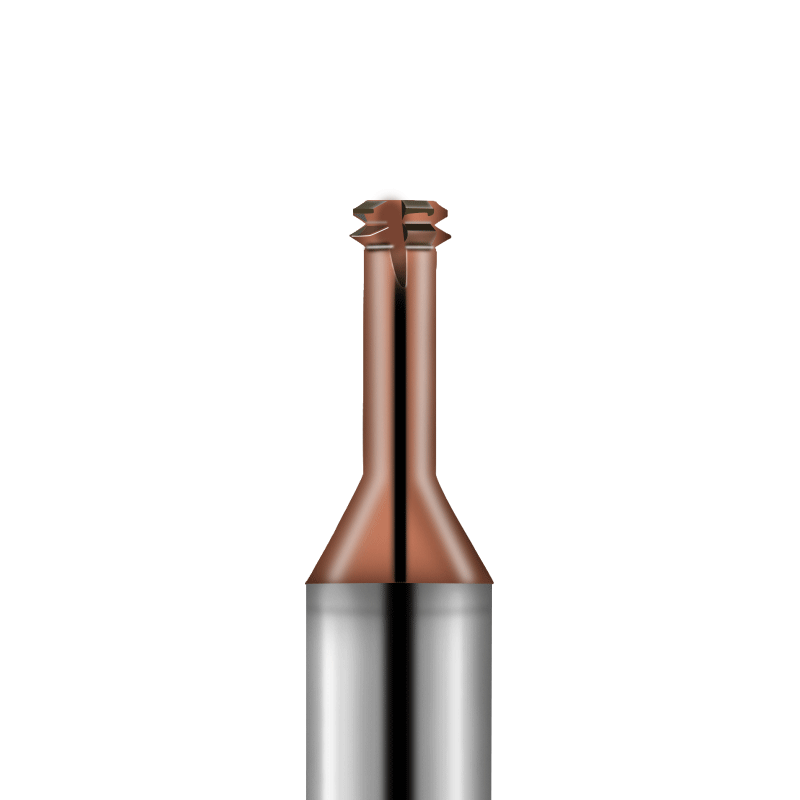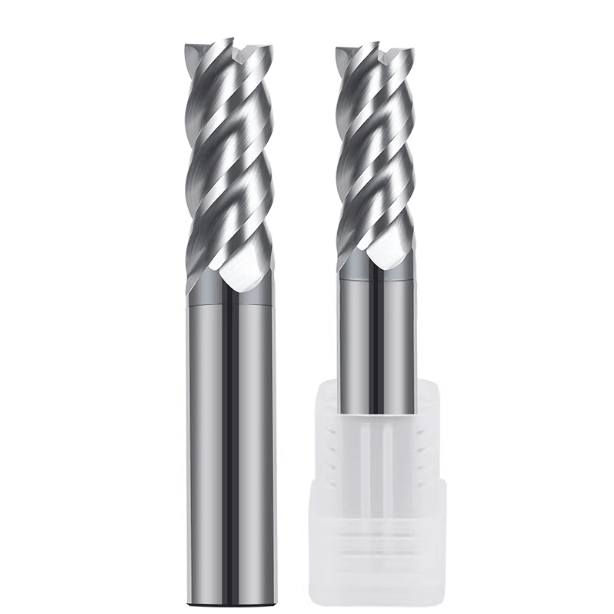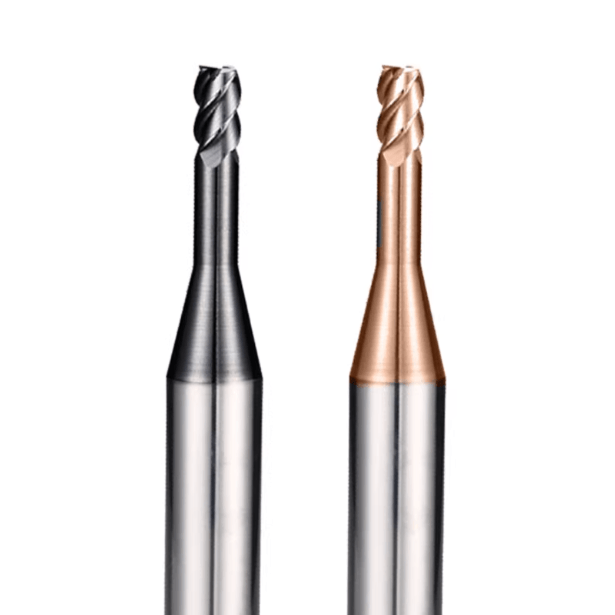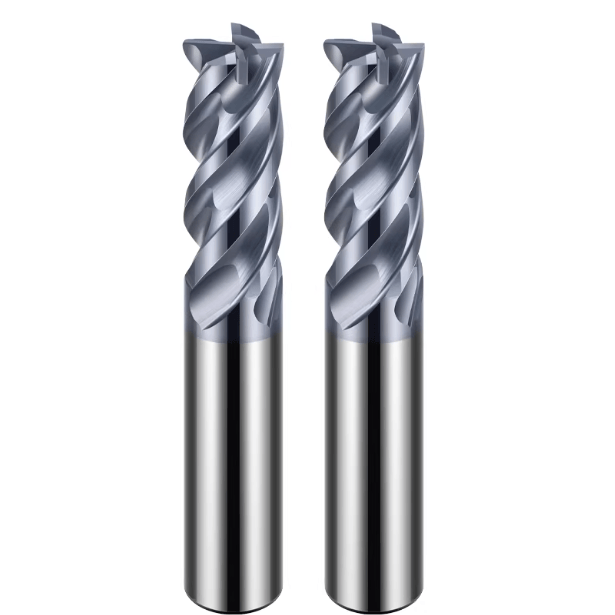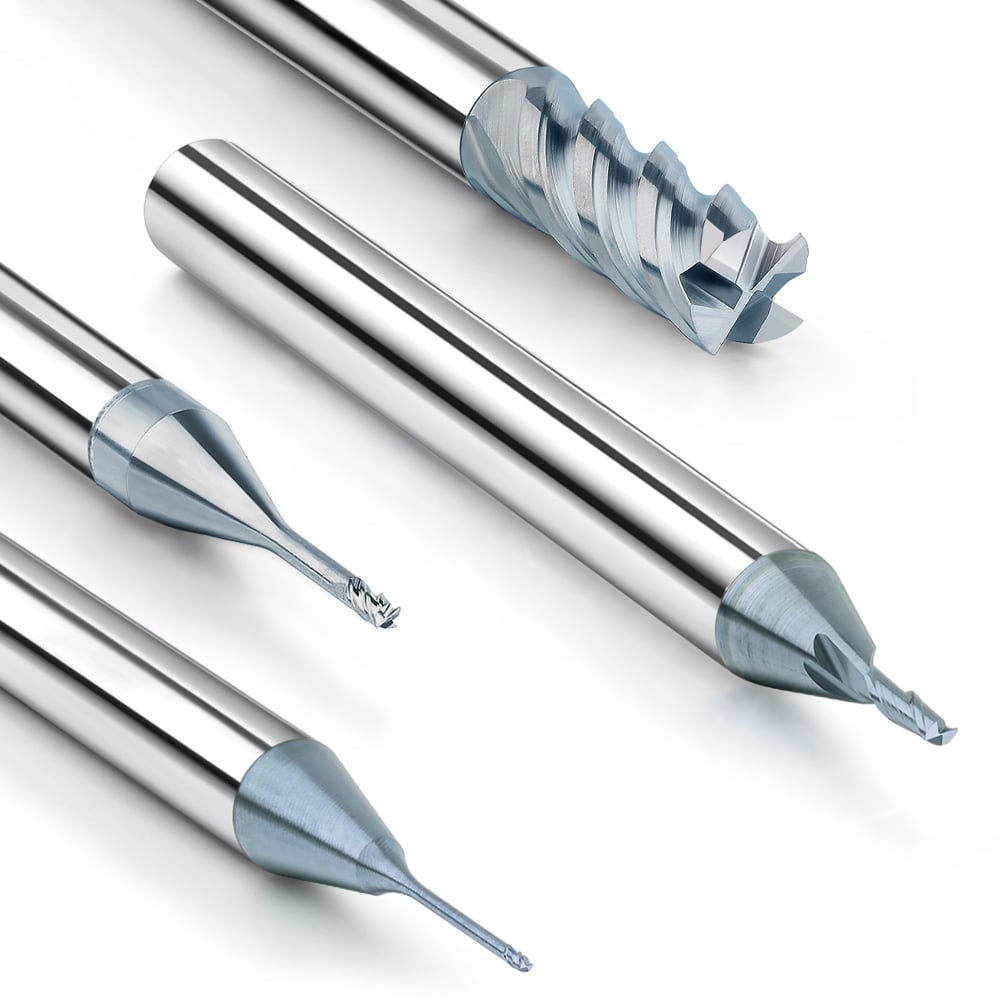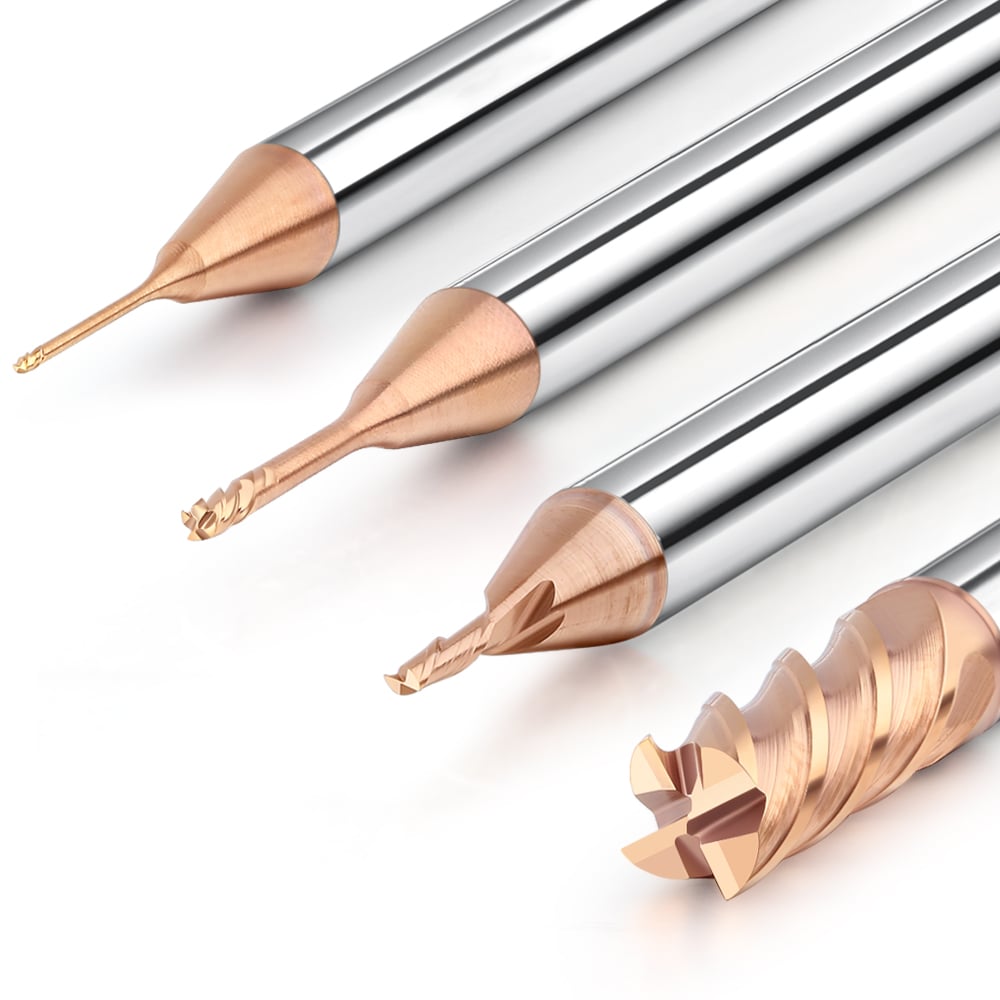
In the actual tool selection process, the difference between 2 flute and 4 flute end mills is often treated as nothing more than a choice of flute count. In reality, most machining performance issues stem from incorrect assumptions about how those differences affect real cutting conditions. Many users rely heavily on past experience or a single parameter when selecting end mills, overlooking how flute count influences chip evacuation, cutting stability, feed strategy, and overall machining efficiency.
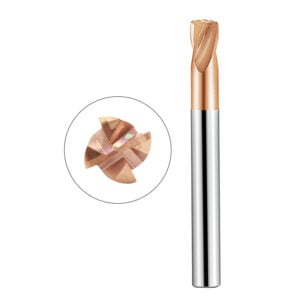
There is no absolute “better” or “worse” option among different flute configurations. The key factor is whether the tool matches the material characteristics, machining process, and machine tool capability. A 2-flute end mill prioritizes chip space and smooth material removal, while a 4-flute end mill offers greater rigidity and improved control over surface finish. When these distinctions are not properly understood, common issues such as reduced tool life, poor surface quality, and unstable cutting conditions are likely to occur.
Selection errors are also not limited to technical judgment alone. During procurement, many buyers focus only on tool specifications and pricing, while overlooking the application support and process guidance that qualified end mill suppliers can provide. As a result, tools that appear suitable on paper often perform poorly in actual production. This problem becomes especially apparent in batch machining and long-term production, where improper tool selection directly impacts cost control and delivery consistency.
Neglecting Machining Materials Leads to 2 vs 4 Flute End Mill Selection Errors
Material properties are one of the most influential factors in end-mill selection, yet they are frequently underestimated. Different metals vary significantly in chip formation, cutting resistance, and tendency to adhere to the cutting edge. When flute count is not adjusted to match these characteristics, it becomes easy to select the wrong tool configuration, ultimately affecting machining stability and tool life.
Misuse of 4 Flute End Mills for Easily Chip-Evacuated Materials Such as Aluminum and Copper
Aluminum, copper, and their alloys generate large chip volumes and exhibit high ductility during cutting, which places greater demands on chip evacuation space. Using tools with a higher flute count in these materials often leads to restricted chip flow, chip packing, and even edge buildup—particularly during slotting or deep cuts.
Some machinists choose four-flute tools in pursuit of higher rigidity or improved surface finish. However, under high spindle speeds or aggressive feed rates, this choice can increase cutting load and reduce overall machining efficiency. When material removal rate and smooth chip evacuation are the primary objectives, tools with larger chip pockets and lower cutting resistance are generally more effective.
Incorrect Selection of 2-Flute End Mills in Steel and Stainless Steel Machining
In carbon steel, stainless steel, and other high-strength materials, cutting forces are significantly higher. Using two-flute tools—designed mainly for chip clearance—often results in suboptimal performance. Lower flute counts concentrate cutting forces on fewer edges, increasing the likelihood of vibration, edge wear, and inconsistent dimensions.
This issue is especially evident during side milling and finishing operations, where rigidity and force distribution are critical. Failing to take advantage of the stability provided by multi-flute designs frequently leads to reduced efficiency and higher rework rates.
Failure to Understand the Difference Between 2 and 4 Flutes Based on Material Behavior
Many tool selection mistakes do not result from misunderstanding the tool itself, but from failing to analyze how different flute counts interact with specific materials. Flute count directly affects chip flow, cutting force distribution, allowable feed rates, and process safety margins.
Relying solely on past habits or generalized rules often leads to overlooking how strongly material behavior influences cutting performance. Only by evaluating material properties, machining strategy, and tool geometry together can a suitable flute count be selected, reducing trial-and-error costs and improving process reliability.
Focusing Only on the Number of Flutes While Ignoring Chip Evacuation Capability
When selecting end mills, many users focus exclusively on flute count while overlooking chip evacuation performance. Although increasing flute count can improve rigidity and surface finish, inadequate chip evacuation leads to heat buildup, accelerated wear, and in severe cases, tool jamming or breakage.
Chip evacuation efficiency depends on chip volume, depth of cut, feed rate, and tool geometry. Proper evaluation of these factors is essential to achieving stable, efficient machining and maximizing tool performance.
The Impact of Limited Chip Evacuation Space in Deep Groove Machining
In deep groove operations, insufficient chip space—regardless of flute count—causes chip accumulation and elevated cutting temperatures. Poor chip removal accelerates tool wear and often results in surface scratching or dimensional inaccuracies.
This issue is particularly severe when machining materials prone to adhesion, such as aluminum and copper alloys. In deep grooves, chip evacuation capability often has a greater impact on machining results than flute count alone.
Commonly Overlooked Limitations of 2 Flute End Mills in Slotting Operations
Two-flute tools provide excellent chip evacuation during slotting, but their rigidity and load-bearing capacity are limited. Under large axial depths or high feed conditions, tool deflection and vibration can occur, resulting in unstable slot width or poor surface finish.
Although multi-flute tools are often selected for rigidity, ignoring the evacuation advantages of two-flute designs in deep slotting can actually reduce efficiency and increase the risk of chip clogging.
Chip Evacuation Constraints of 4 Flute End Mills Under Heavy Cutting Loads
Four-flute end mills perform well in finishing and rigid setups, but limited chip space becomes a critical drawback during deep or aggressive roughing. Inadequate chip evacuation raises tool temperature rapidly, accelerating edge wear and increasing the risk of chipping.
This limitation is frequently overlooked in high-hardness materials or long-slot applications, where poor chip flow directly compromises stability and tool life. Tool selection must therefore balance rigidity, surface requirements, and chip evacuation demands.

Incorrect End Mill Flute Count Selection Without Considering the Machining Process
In end mill selection, the machining process is one of the most decisive factors in determining the appropriate number of flutes. Different stages of machining impose very different demands on cutting force distribution, chip evacuation efficiency, and surface finish quality. When process requirements are ignored and tools are selected solely based on flute count, machining efficiency often declines, tool wear accelerates, and surface quality becomes inconsistent.
Roughing operations prioritize high material removal rates and reliable chip evacuation, while finishing operations focus on cutting stability, dimensional accuracy, and surface quality. Aligning flute count with process intent allows the tool to operate within its optimal performance window, reducing rework, extending tool life, and improving overall productivity.
Incorrect Use of a 4 Flute End Mill in the Roughing Stage
The primary objective of roughing is to remove a large volume of material in the shortest possible time. This requires sufficient chip space and stable chip flow under high feed rates and deeper axial cuts. Using a four-flute end mill in roughing conditions often restricts chip evacuation, especially during slotting or aggressive cutting, leading to heat buildup, increased vibration, and a higher risk of tool failure.
In contrast, a two-flute end mill provides larger flute valleys, allowing chips to evacuate more freely under heavy cutting loads. Misapplying multi-flute tools during roughing not only reduces material removal efficiency but also increases spindle load and accelerates edge wear, ultimately limiting throughput.
Risks of Continuing to Use a 2 Flute End Mill in the Finishing Stage
Finishing operations involve lighter cuts but demand high dimensional accuracy and consistent surface quality. Although two-flute end mills offer excellent chip evacuation, their lower rigidity makes them more susceptible to deflection and vibration during finishing passes. This can result in visible tool marks, inconsistent surface roughness, and tolerance deviations.
Multi-flute tools distribute cutting forces across more edges, improving stability and surface consistency during finishing. Failing to transition to a more rigid tool design at this stage often leads to unnecessary rework, longer cycle times, and increased production costs.
Misconceptions About Matching Flute Count to Different Machining Processes
A common mistake in many shops is using the same flute count for all machining stages. This approach overlooks how flute count directly affects chip flow, cutting force balance, and vibration control. For example, a four-flute tool used in deep-slot roughing can quickly suffer from chip congestion, while a two-flute tool used for finishing may compromise surface quality.
A process-driven selection strategy is more effective: roughing favors open flute geometry and efficient chip evacuation, while finishing benefits from higher rigidity and smoother force distribution. Matching flute count to each machining stage significantly improves process stability and reduces overall tooling costs.
Ignoring the Impact of Machine Tool Rigidity on 2 Flute and 4 Flute End Mill Performance
Machine tool rigidity and structural stability play a critical role in determining how effectively an end mill performs. Even a well-designed cutting tool cannot compensate for insufficient machine stiffness or mismatched power capabilities. Poor rigidity often manifests as vibration, tool deflection, inconsistent surface finish, and reduced tool life.
At the same time, high-rigidity machining centers that fail to adjust cutting parameters to suit tool geometry do not fully capitalize on their capabilities. Effective tool selection must therefore account for machine stiffness, spindle power, and cutting conditions to achieve stable and efficient machining results.
Problems with Using 4-Flute End Mills on Low-Rigidity Equipment
Four-flute end mills generate higher cutting forces due to the increased number of engaged cutting edges. On machines with limited rigidity, these forces are not adequately absorbed, resulting in chatter, tool deflection, and uneven material removal. This often leads to poor dimensional accuracy, degraded surface finish, and premature edge chipping.
Low-rigidity equipment is generally better suited to tools with fewer flutes or more conservative cutting parameters. Reducing axial depth of cut, adjusting feed rates, or selecting tools with larger flute space helps maintain stability and extends tool life.
High-Rigidity Machining Centers Not Fully Utilizing 4 Flute End Mill Advantages
High-rigidity machining centers are designed to handle greater cutting loads with minimal vibration. When such machines continue to use two-flute tools for finishing operations, their stiffness and power capacity are underutilized. While chip evacuation may remain smooth, cutting forces are not optimally distributed, limiting achievable surface quality and dimensional consistency.
Properly pairing four-flute end mills with rigid machines enables higher feed rates, improved surface finishes, and more stable cutting under finishing and high-load conditions, maximizing both machine and tool performance.
Typical Cases of Machine Parameter Mismatch Between 2 Flute and 4 Flute End Mills
A frequent issue in production environments is failing to adjust spindle speed, feed rate, and depth of cut according to flute count. Two-flute tools subjected to aggressive feeds or deep cuts may experience excessive cutting forces and instability, while four-flute tools running at overly conservative parameters fail to leverage their rigidity and surface finish potential.
Such parameter mismatches reduce machining efficiency and accelerate tool wear. Optimizing cutting parameters based on machine rigidity and tool geometry ensures stable cutting conditions, maximizes tool life, and delivers consistent machining results across different applications.

Feed Rate and Spindle Speed Settings Not Adjusted for 2 Flute and 4 Flute End Mills
Machining efficiency and tool life are influenced not only by material selection and flute count, but also by how feed rate and spindle speed are set. End mills with different numbers of flutes behave very differently under the same cutting parameters due to variations in cutting force distribution and chip evacuation capacity. Applying identical settings to tools with different flute counts often prevents optimal performance and can result in abnormal wear, poor surface finish, vibration, or edge chipping.
Properly matching feed rate and spindle speed to flute count, cutting depth, and machining conditions allows the tool to operate within its intended performance range, improving stability, productivity, and tool longevity.
Using the Same Parameters Leads to Abnormal Tool Wear
A common habit in many shops is applying the same cutting parameters regardless of flute count. This approach creates distinct problems for both tool types. Two-flute tools have wider chip spaces, and when run at overly conservative speeds and feeds, they may not reach an effective cutting load, leading to rubbing, uneven wear, and shortened tool life.
Conversely, four-flute tools concentrate cutting forces across more edges. If feed rate and spindle speed are not properly adjusted, heat buildup, micro-chipping, or vibration can occur. These issues are especially evident in high-hardness materials or long continuous machining cycles, where parameter mismatch rapidly accelerates tool failure.
Insufficient Feed Rate for 2 Flute End Mills Wastes Productivity
Two-flute end mills are designed to evacuate chips efficiently and handle higher chip loads. When feed rates are set too low, cutting time increases and material removal rates drop, directly reducing productivity. In roughing operations on materials such as aluminum or copper, insufficient feed not only wastes machine time but can also cause chips to dwell in the cut, generating localized heat and uneven edge wear.
Increasing feed rate appropriately allows the tool to cut rather than rub, maintaining stable chip flow and significantly improving overall machining efficiency.
Excessive Feed Rate for 4 Flute End Mills Causes Vibration and Chipping
Four-flute end mills are well suited for finishing and rigid machining environments, but excessive feed rates or overly aggressive depths of cut can overload the cutting edges. This often results in vibration, edge chipping, and unstable surface finishes. Under high cutting loads, vibration can also introduce dimensional inaccuracies and reduce process repeatability.
To achieve stable performance with multi-flute tools, feed rate and spindle speed must be carefully balanced with machine rigidity, tool geometry, and material properties.

Misjudging Surface Quality Requirements Leads to Incorrect Flute Selection
Surface quality requirements play a critical role in tool selection and machining strategy. When finish requirements, surface consistency, or dimensional tolerances are not clearly defined, it is easy to choose an inappropriate flute count, leading to unnecessary rework and higher production costs.
Flute count directly affects cutting force distribution, vibration control, and surface finish. Using more flutes than necessary for low-finish applications can reduce efficiency, while insufficient flutes in high-precision machining often compromise surface quality. Accurately evaluating surface requirements helps align tool selection with actual machining needs.
Using a 4 Flute End Mill for Parts with Low Surface Finish Requirements
In rough machining or applications with minimal surface finish requirements, four-flute tools often provide limited benefits. Their reduced chip space can increase heat accumulation and tool wear, while their rigidity advantages remain underutilized at low cutting loads.
In these cases, two-flute tools typically offer higher cutting efficiency and smoother chip evacuation, making them a more economical and practical choice for balancing productivity and tool life.
Using a 2 Flute End Mill for High-Finish Components
During finishing operations, continuing to use a two-flute tool can introduce vibration, uneven cutting forces, and visible tool marks. High-finish components demand consistent force distribution and stable cutting conditions to achieve uniform surface texture and tight tolerances.
Increasing flute count, when matched with appropriate machine rigidity and cutting parameters, improves surface quality and reduces the likelihood of rework or secondary finishing operations.
Failing to Understand How Flute Count Affects Surface Quality
Many machinists rely on habit rather than analysis when choosing flute count, overlooking how different designs influence surface finish. Two-flute and four-flute tools differ significantly in vibration suppression, force balance, and chip flow, all of which directly impact surface integrity.
Without evaluating these factors alongside material properties, cutting depth, and feed strategy, tool selection errors are common in precision machining. A systematic understanding of how flute count affects surface quality helps achieve consistent results without sacrificing efficiency.

Neglecting Cutting Stability and Vibration Control
Cutting stability and vibration control directly influence machining accuracy, surface finish, and tool life. End mills with different flute counts respond differently to cutting forces, especially under high-speed or deep-cut conditions. When part geometry, cutting depth, or tool characteristics are not properly considered, vibration, deflection, or even tool breakage may occur.
Addressing stability during tool selection and parameter setup is essential for maintaining machining safety, consistency, and productivity.
Stability Differences Between 2 Flute and 4 Flute End Mills in Side Milling and Slotting
In side milling and full-width cutting, cutting forces are distributed differently, placing varying demands on tool rigidity. Two-flute tools provide better chip evacuation and damping but may lack stiffness in deep side milling operations. Four-flute tools offer higher rigidity but reduced chip space, which can amplify vibration or heat during full-slot cutting.
Understanding how each tool behaves under specific cutting conditions helps prevent surface waviness and dimensional variation.
Incorrect Use of 4 Flute End Mills in Thin-Walled Machining
Thin-walled components are highly sensitive to cutting force. Four-flute tools, with their higher edge engagement, can easily induce part deformation, chatter, or wall deflection. This may result in uneven wall thickness, surface distortion, or dimensional inaccuracies.
Two-flute tools often provide smoother cutting action and better vibration damping in thin-wall applications, reducing deformation and improving consistency. Selecting the wrong tool in these scenarios significantly increases scrap and rework rates.
Vibration Mistaken for Tool Quality Issues
Surface defects caused by vibration are frequently misattributed to poor tool quality. In most cases, the root cause lies in mismatched flute count, improper cutting parameters, or insufficient machine rigidity.
Misdiagnosing the problem leads to unnecessary tool changes without resolving the underlying issue. A comprehensive evaluation of tool geometry, machining conditions, material behavior, and machine capability allows vibration sources to be identified and corrected, improving both surface quality and process stability.

Focusing Solely on Individual Tool Price While Ignoring Overall Machining Costs
In production planning and tool procurement, placing too much emphasis on the purchase price of individual tools often leads to overlooking total machining costs. Tool selection affects not only material removal rate per cut, but also cycle time, machine load, rework frequency, and tool replacement intervals. While low-cost tools may reduce upfront expenses, poor efficiency in high-volume or long-cycle production frequently results in higher overall costs.
To achieve true cost optimization, tool performance, service life, machining efficiency, and process stability must be evaluated as a complete system rather than as isolated purchasing decisions.
2 Flute End Mills: Low Unit Price but Mismatched Efficiency
Two-flute end mills are generally lower in cost and provide excellent chip evacuation, making them suitable for high-speed roughing and easily machined materials. However, in high-volume production or applications with heavy cutting loads, selecting two-flute tools solely based on unit price can lead to longer cycle times, reduced machine utilization, and frequent tool changes.
When cutting efficiency does not match production requirements, the apparent cost advantage of low-priced tools quickly disappears, increasing per-part machining costs and extending production lead times.
4 Flute End Mills: Tool Life Not Fully Utilized
Four-flute end mills offer greater rigidity and improved surface finish control, but their advantages can be lost if cutting parameters are not properly matched. Running four-flute tools under light loads or shallow depths of cut fails to leverage their structural strength, resulting in no meaningful improvement in tool life or machining efficiency.
Properly matching application conditions, flute count, and machine capability allows four-flute tools to operate within their optimal performance range, maximizing tool life and reducing overall machining costs.
Failing to Evaluate Flute Count from a Total Cost Perspective
Many machining decision-makers evaluate tooling based only on individual purchase cost, overlooking how flute count affects material removal rate, cycle time, tool wear, and rework rates. Differences in chip evacuation, cutting force distribution, and stability have a direct impact on per-part cost and production efficiency.
Without analyzing these factors from a total cost perspective, short-term savings in tooling procurement often result in long-term increases in operational expenses. A comprehensive evaluation of tool performance and process requirements is essential for cost-effective production management.

Neglecting Professional Support from 2 Flute vs 4 Flute End Mill Suppliers
During end mill procurement and selection, supplier technical support is often underestimated. Tool performance depends not only on material and manufacturing quality, but also on application guidance, parameter recommendations, and after-sales technical assistance. Ignoring supplier support frequently leads to suboptimal tool performance, accelerated wear, unstable machining, and higher rework rates.
Working with suppliers who offer strong technical expertise helps ensure proper tool selection, optimized cutting parameters, and consistent production results.
Risks of Choosing a Non-Professional End Mill Supplier
End mill suppliers without application expertise often provide only standardized specifications, without considering material properties, machining processes, or equipment limitations. This can result in tools that appear suitable on paper but perform poorly in actual production, increasing vibration, wear, and scrap rates.
A lack of professional support also extends troubleshooting and setup time, reducing machine utilization and raising production costs. Experienced suppliers help minimize selection errors and production risks through practical application knowledge.
Lack of Application Guidance Leading to Selection Failures
Some end mill suppliers focus exclusively on sales and fail to provide process-specific recommendations. Without guidance, users may rely on generic parameters or trial-and-error methods, leading to poor surface quality or severely reduced tool life.
Professional suppliers tailor recommendations based on material type, machining stage, and machine rigidity, helping optimize cutting parameters and reduce tool wear while maintaining productivity and accuracy.
Insufficient Machining Guidance for Different Flute Configurations
Tools with different flute counts behave very differently in terms of chip evacuation, cutting force distribution, and vibration control. When end mill suppliers fail to provide specific guidance for different flute configurations, users are more likely to misapply feed rates, spindle speeds, cutting depths, or tool paths.
Clear, application-based guidance enables users to match machining parameters and processes correctly, maximizing tool performance, improving efficiency, and lowering overall production costs.

Applying General Experience to All Machining Scenarios
Many tool selection mistakes are not caused by a lack of technical knowledge, but by over-reliance on generalized experience. Simple rules are often applied directly to complex and variable machining environments without considering material behavior, chip evacuation, machining processes, machine rigidity, parameter matching, or surface finish requirements.
Experience is valuable, but it must be validated and adjusted based on specific machining conditions to be truly effective.
The Misconception of “2 Flutes for Aluminum” and “4 Flutes for Steel”
Matching materials to flute count using fixed rules is one of the most common misconceptions. Aluminum machining includes a wide range of conditions such as deep slotting, thin walls, and high feed rates, not all of which favor a two-flute design. Steel machining also involves roughing, finishing, and side milling operations, where flute requirements vary.
This oversimplified approach ignores cutting depth, feed strategy, machine rigidity, and machining objectives, often resulting in poor tool performance and unstable processes.
Failure to Analyze Tool Selection Based on Actual Working Conditions
Whether a two-flute or four-flute tool performs better depends entirely on the machining environment. Cutting method, depth of cut, load conditions, and machine capability all influence chip evacuation, stability, and cutting force behavior.
Selecting tools based solely on past success or external recommendations, without analyzing current working conditions, often leads to vibration, inconsistent surface quality, and reduced efficiency. Rational tool selection requires a comprehensive evaluation of machining goals and equipment limitations.
Ignoring the Importance of Practical Machining Verification
Even well-established theories and experience must be validated through real machining. Skipping trial cuts and parameter adjustments and moving directly into full production is a common cause of costly issues.
Small-batch testing allows problems such as vibration, chip evacuation issues, or parameter mismatches to be identified early and corrected before large-scale production begins. Combining experience-based judgment with practical verification is essential for developing stable, reliable machining processes that support long-term production efficiency.