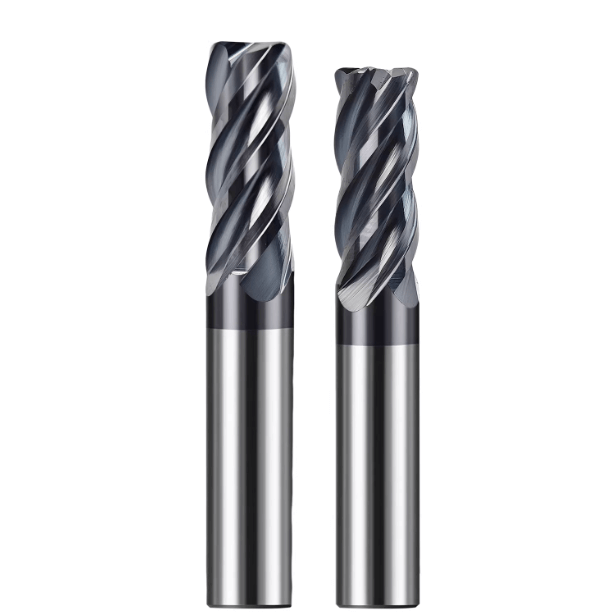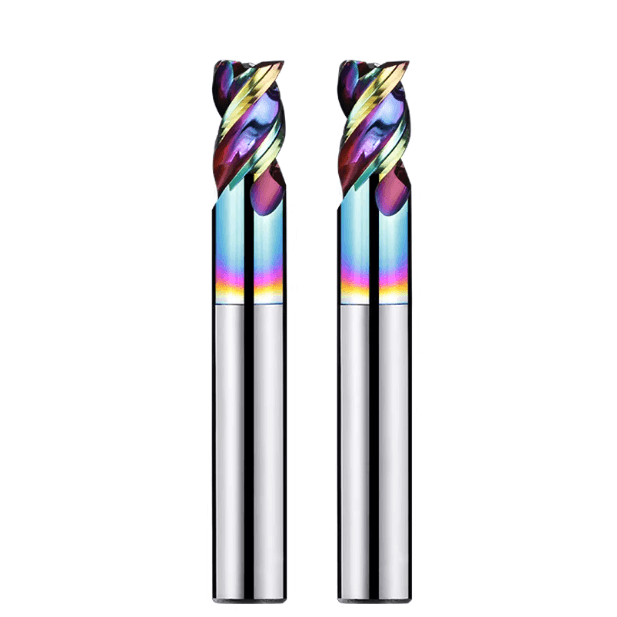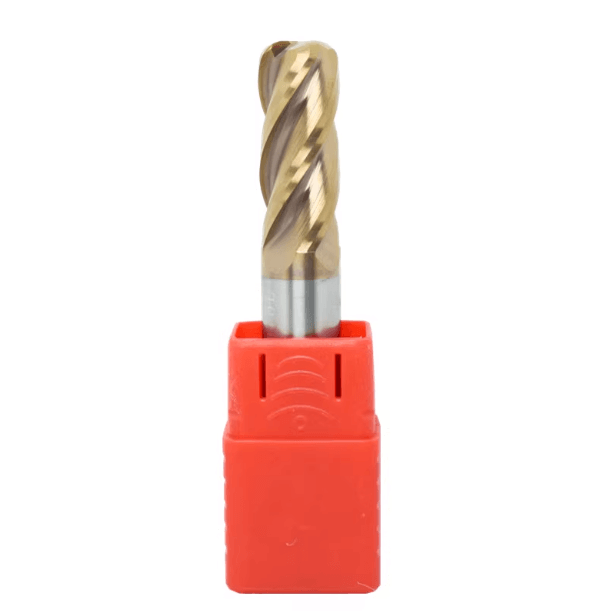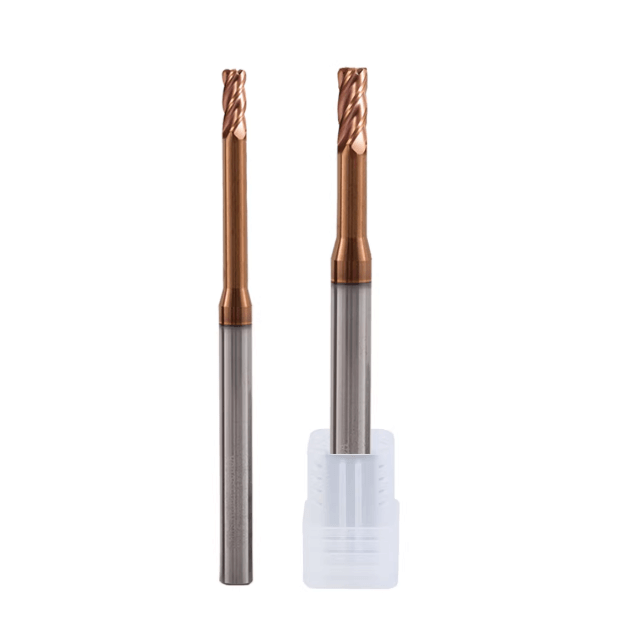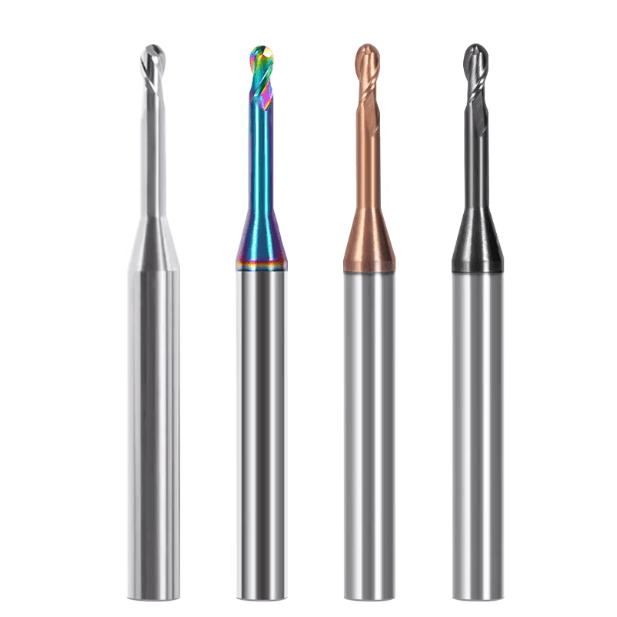
In a project with a precision machinery client in Europe, we repeatedly encountered a recurring problem: conventional end mills frequently experienced blade breakage or dimensional deviations when machining micro-parts, especially when using end mills smaller than 1 mm in diameter for high-precision cutting. This issue was particularly pronounced when working with high-hardness steels or titanium alloys. Although we tested various cutting parameter adjustments, optimized solid carbide end mill cutters consistently delivered successful batch production outcomes.
Through long-term field testing, our experience shows that the cutting edge geometry, coating, and tool length have a far greater impact on micro-machining accuracy than initially anticipated. In micro-hole and micro-groove operations, controlling tool vibration and cutting forces became the primary focus of repeated adjustments. Meanwhile, the client required strict adherence to tool life and repeatability standards for carbide end mill cutters for metal cutting, which necessitated verifying each batch under actual machining conditions.
As an experienced carbide end mill cutters manufacturer, we focus not only on tool materials and manufacturing precision but also on matching machining strategies to the tool. Over the years, we have developed reusable operating procedures, from tool selection to cutting parameter optimization, all grounded in real-world project data rather than theoretical derivations.
In this repeated verification process, one question comes to mind: In your micro-part machining projects, have you faced the same challenges of tool breakage and dimensional instability?
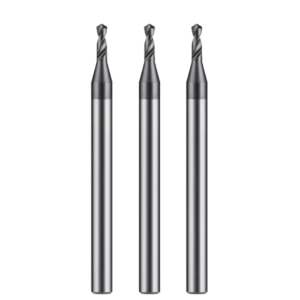
Our Practical Experience Using End Mills in Micro-Part Machining
When processing small batches of precision parts for European and American clients, we realized that micro-machining is not simply about reducing size—it is fundamentally about tool stability at extremely small diameters. Our commonly used solid carbide end mill cutters perform very well on aluminum and copper, but on high-hardness stainless steel and titanium alloys, the tools are prone to uneven wear or micro-cracks. This forces us to evaluate the material’s cutting characteristics, cutting force direction, and tool extension before each project. Through comparative testing across different materials, our experience shows that short-diameter tools work best with high feed rates and low depths of cut, while longer tools require strict control of depth and clamping; otherwise, micro-end mills almost inevitably break.
In practice, unstable tool life in batch machining remains a frequent challenge. We continuously refine cutting strategies by recording every cutting parameter, depth of cut, and feed rate, combined with material hardness and fixture conditions. For example, when using carbide end mill cutters for metal cutting to machine titanium alloys, gradually increasing depth of cut while maintaining a low feed rate can significantly extend tool life while preserving accuracy. Accumulating this field data and adjusting operations on-site has proven far more reliable than theoretical guidance alone.
The Influence of Different Materials on End Mill Selection
Our experience clearly demonstrates the decisive role of material properties in tool selection. When machining aluminum, chip adhesion is a common issue; coated end mill cutters help reduce this and improve chip evacuation. Copper, while soft, has high thermal conductivity, which can lead to edge burn if cutting parameters are poorly chosen. Stainless steel and titanium alloys, with high hardness and toughness, are prone to micro-end mill breakage due to vibration. Therefore, we prefer high-strength coated solid carbide end mills and carefully control tool extension and depth of cut.
For European and American clients, we often adjust tool diameter and cutting edge geometry according to part geometry and batch size. For example, when machining micro-thread grooves, we select tools with sharper cutting edges to ensure accuracy while using smaller diameters to reduce cutting forces. These decisions are based on field testing and material-specific feedback, rather than fixed standards, ensuring more consistent batch machining outcomes than simply relying on tool parameter tables.
Practical Case Study of Depth of Cut and Feed Rate
The most common issue in micro-part machining is tool breakage when cutting deep grooves or micro-holes, especially with diameters below 1 mm. Tool breakage typically results from excessive depth or mismatched feed rates relative to material hardness. To address this, we established a step-by-step optimization method: starting with extremely shallow cuts and low feed rates, then gradually increasing depth while monitoring chip flow and cutting force, until the tool approached its limit but could still operate stably. This approach not only prevents breakage but also extends the life of carbide end mill cutters for metal cutting.
In one titanium micro-hole project, initial machining based on recommended parameters led to two consecutive tool failures. By reducing the depth of cut to 60% of the original value, lowering the feed rate by roughly 30%, and optimizing fixture rigidity, we completed the batch with doubled tool life. Through experiences like this, we learned that micro-machining requires precise coordination between tool, material, and cutting parameters—a lesson validated repeatedly in European and American projects.
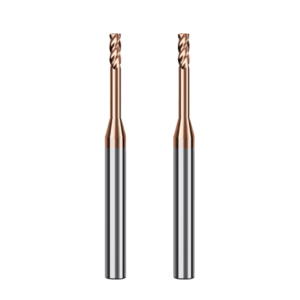
Application Experience with Solid Carbide End Mill Cutters
For high-precision parts, solid carbide end mills remain our go-to tool. Compared to high-speed steel, these tools offer superior rigidity and stability, especially on hard metals. Nevertheless, breakage risks persist in micro-hole and micro-groove machining. Our experience indicates that tool life is closely tied to depth of cut, feed rate, and spindle vibration. Prior to machining, we adjust tool extension and fixture setup according to part geometry and material, reducing breakage while maintaining accuracy.
Chip evacuation and cooling are critical for tool longevity. In micro-machining, chip accumulation or excessive cutting temperature accelerates wear, particularly on high-hardness stainless steel or titanium alloys. Combining low depth of cut with moderate coolant spraying ensures carbide end mill cutters for metal cutting maintain performance over prolonged operations. These practices are based on on-site observations, not theoretical assumptions.
Causes and Solutions for Tool Breakage
We have observed several common breakage patterns: tip overload leading to localized chipping, tool body vibration causing expanding micro-cracks, and local overheating from chip blockage during deep-hole machining. We respond not by blindly replacing tools but by adjusting machining strategies. For titanium micro-holes, reducing spindle speed, lowering depth per pass, and increasing targeted coolant flow suppressed vibration and temperature buildup. Although this slows cutting, it significantly enhances stability and tool life—especially in batch production.
For continuous microgrooves or micro-holes, we first perform test cuts to observe cutting force changes, then fine-tune feed rate and depth. In numerous European and American client projects, this iterative optimization reduced breakage and validated solid carbide end mill durability across various metal hardness levels.
Performance Comparison of Coated and Uncoated Tools
We often compare coated and uncoated solid carbide end mills in metal cutting. For high-hardness steels, coated tools outperform uncoated ones in wear resistance and cutting temperature management, particularly in microgrooving and small-diameter hole operations. Coatings reduce friction and improve chip evacuation. However, for soft aluminum and copper, uncoated tools sometimes offer more stable results, as coated tools may develop surface scratches or minor chipping due to chip adhesion.
In practice, tool selection involves trade-offs. In mass-producing high-hardness stainless steel parts, we use coated solid carbide end mills with controlled cutting parameters to balance tool life and accuracy. For miniature aluminum parts, uncoated tools help minimize chip clogging. These decisions stem from field experience and repeated testing with European and American clients, rather than absolute rules.
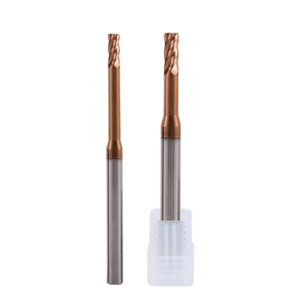
Key Operating Points for Carbide End Mill Cutters for Metal Cutting Projects
When processing high-precision metal parts for European and American clients, tungsten carbide end mills are essential tools in micro-machining. Our experience shows that tool selection and cutting parameter optimization directly determine batch processing stability. In micro-hole and micro-groove machining, tool diameter and cutting edge geometry must be matched to material hardness, depth of cut, and cutting force direction. We typically adjust tool length and diameter based on the dimensions and material properties of each batch, performing trial cuts in conjunction with spindle speed and feed rate to prevent vibration or premature wear.
Through long-term field testing, our data indicate that even micro-diameter carbide end mill cutters for metal cutting can achieve stable machining on high-hardness stainless steel and titanium alloys by properly controlling depth of cut and stepover. This operational experience helps extend tool life, reduce workpiece scrap, and ensure machining accuracy. In micro-part operations, field verification and parameter adjustment are far more reliable than theoretical calculations.
Case Study on Matching Tool Diameter with Machining Accuracy
In machining aerospace parts with micro-holes of only 0.5 mm in diameter, we observed a strong correlation between tool diameter and accuracy. Initially, standard diameter tools produced hole errors exceeding ±10 micrometers, especially in multi-layer deep-hole operations. By gradually reducing the tool diameter, optimizing the cutting edge, and adjusting parameters, we controlled the error within ±5 micrometers while ensuring smooth chip evacuation and preventing tool breakage.
Similarly, in a micro-groove project, tool rigidity played a critical role. Too small a diameter caused vibration, while too large a diameter could not achieve the required geometry. We ultimately used custom solid carbide end mill cutters, combined with low depths of cut and stable fixtures, achieving high repeatability and precision. This experience highlighted the importance of matching tool size with machining accuracy and provides a reusable reference for future projects.
Vibration Suppression and Tool Life Extension Techniques
In multi-batch machining, we found that tool life heavily depends on vibration control and clamping. Miniature end mills are prone to vibration under long extension, which can reduce accuracy and accelerate wear. Adjusting fixture rigidity, optimizing tool extension ratio, and reducing spindle speed during critical cuts effectively suppressed vibration. While these adjustments slightly reduce cutting speed, they improve stability and repeatability.
We also repeatedly verified the impact of coolant spray angle, cutting direction, and chip evacuation strategies on tool life. In titanium alloy and high-hardness steel micro-machining, layered cutting and intermittent chip removal extended the service life of carbide end mill cutters for metal cutting by over 50%. These operational trade-offs are based on actual machining experience, not theoretical assumptions, providing a solid foundation when facing challenging tasks.
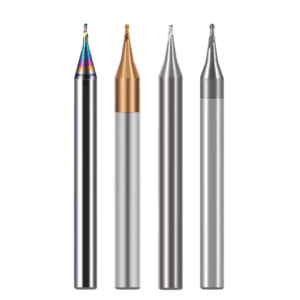
Experience Sharing as a Carbide End Mill Cutters Manufacturer
From our long-term work with European and American clients, we learned that manufacturing end mills involves not only material processing but also understanding and translating machining needs into actionable field experience. Parts often range from high-hardness steel and stainless steel to titanium alloys, requiring adjustments to cutting edge profiles, coating types, and tool geometry. This closed-loop experience ensures stable cutting and repeatable accuracy while maintaining high consistency in batch deliveries.
We also rely on extensive on-site validation data to make rapid decisions under varying machining conditions. For long-batch processing of high-hardness steel, we prioritize coating-optimized solid carbide end mill cutters, combined with precise cutting edge profiles and micro tip angles, balancing wear resistance and machining accuracy. These practices are based on repeated real-world verification rather than solely on tool tables.
Case Study of Customized Tools Solving Specific Machining Problems
In machining miniature titanium alloy parts for a European client, frequent tool breakage occurred during deep-hole operations. Standard tools failed to meet requirements. We customized carbide end mill cutters for metal cutting with sharper edges, fine-tuned tip angles, and wear-resistant coatings. After trial cuts and parameter optimization, the customized tools solved the breakage problem and improved accuracy, resulting in approximately a 40% increase in machining yield.
Similar approaches are applied to stainless steel miniature parts, where surface roughness and cutting conditions dictate the need for coatings or fine-tuning. Customization based on field data allows us to respond quickly to complex machining needs rather than relying on single tool models or standard manuals.
Quality Control Methods for Maintaining Tool Consistency in Batch Delivery
Even minute deviations in tool dimensions or coating thickness can cause major issues in micro-machining. We implement rigorous quality control processes, including multi-point inspections of tool dimensions, cutting edge accuracy, and coating thickness. Each batch undergoes machining verification to ensure consistent performance in micro-holes and micro-grooves.
Long-term projects show that even identical materials and tool models can perform differently due to fixture, spindle, and micro-cutting variations. We simulate machining environments and record tool performance data, allowing fine-tuning before production. This method ensures stability of tools from the carbide end mill cutters manufacturer and significantly reduces rework and scrap rates.
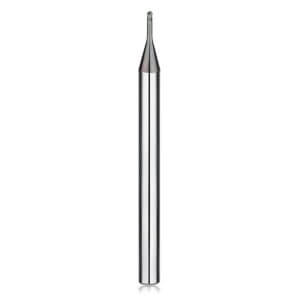
Machining Optimization and Tool Life Management
Our experience confirms that tool life is closely tied to cutting parameter optimization. Each material—from aluminum and copper to high-hardness stainless steel and titanium alloys—responds differently to cutting speed, feed rate, and depth of cut. To reduce wear and breakage, we established a reusable machining database recording material, tool type, cutting parameters, and tool life for each batch. This allows quick selection of suitable carbide end mill cutters for metal cutting, avoiding trial-and-error and improving stability.
Optimization also involves operation sequences and cutting strategies. In micro-hole machining, shallow cuts followed by gradual deepening reduce stress concentration. In micro-groove or high-aspect-ratio workpieces, segmented feeds and spindle vibration control are critical. Repeated verification and data recording help us develop operation templates for different materials, extending tool life while maintaining accuracy—far more reliable than theoretical calculations alone.
Cutting Parameter Recording and Reuse Experience
Cutting force, chip morphology, and tool wear from previous operations are valuable references for similar parts. We maintain detailed databases of spindle speed, feed rate, depth, tool type, and tool life. This allows us to quickly select the best solid carbide end mill cutters for current workpieces and provides reliable initial parameters for new projects, avoiding waste from blind trial cuts.
Field data combined with customer feedback informs decision-making. For example, in micro-hole titanium alloy machining, excessive depth or feed rate drastically reduces tool life. Comparing this data allows us to choose parameter schemes that balance accuracy and tool longevity—a practice that cannot be replaced by theoretical tables.
Tool Regrinding and Reuse Practices for Extended Tool Life
In mass production, worn but still usable tools are candidates for regrinding. Determining suitability requires evaluating wear type, material, and machining difficulty. Minor tip chipping on micro end mills does not necessarily render them unusable. Precision grinding can restore geometry, extending tool life by 30%-50% in European and American batch projects.
We optimize regrinding by controlling tool diameter and cutting edge accuracy, ensuring regrinded carbide end mill cutters meet micro-hole and micro-groove accuracy requirements. Cutting parameters are adjusted based on pre- and post-regrind machining data to further extend tool life. This practice reduces tool costs while maintaining quality and provides clients with confidence in batch machining stability.