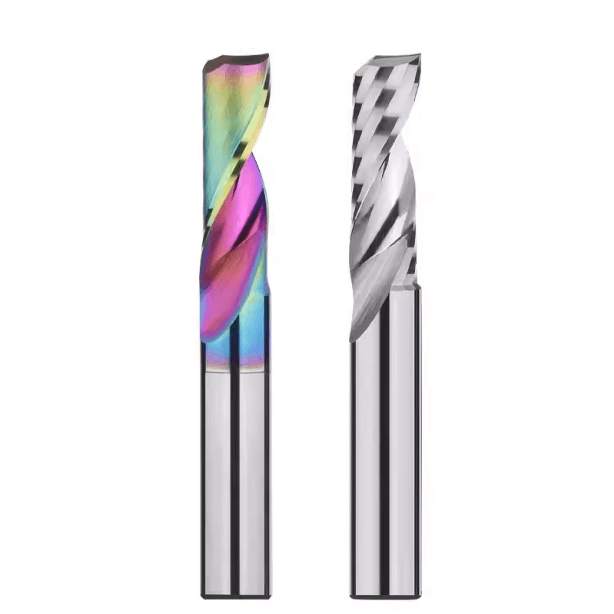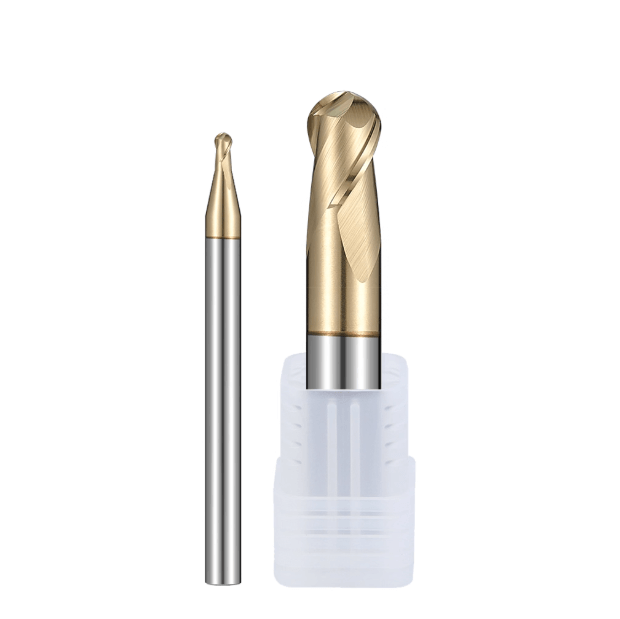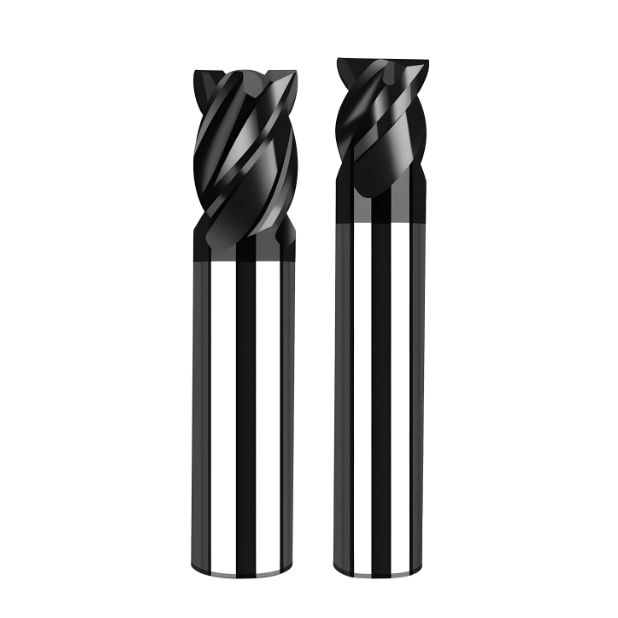
In the global metalworking industry, demand for high-efficiency, high-precision cutting tools is rapidly increasing. High feed end mills, with their superior material removal capabilities and stable performance, have become the preferred choice for many manufacturers. Among various suppliers, Chinese high feed end mill manufacturers have earned global recognition due to their mature production processes, strict quality control, and flexible customization options.
Whether used for large-scale rough machining with high feed roughing end mills or for finishing operations requiring precise surface quality with high feed finishing end mills, these tools deliver excellent results. At the same time, Chinese manufacturers continuously optimize tool coatings, geometric designs, and durability, allowing for extended tool life and improved processing efficiency.
Choosing the right high feed end mill can significantly boost production efficiency while reducing overall machining costs. Buyers should consider differences in material selection, grinding processes, and after-sales support to ensure stable long-term supply and consistent tool performance.
Overview of Chinese High Feed End Mill Manufacturers
China’s metalworking tool industry has developed a comprehensive production system and a mature supply chain. Several regions boast a rich industrial base and advanced technology, attracting numerous professional tool manufacturers. These companies combine modern equipment with extensive experience in tool geometry, coating technology, wear resistance, and machining accuracy. Strict quality control and precision testing ensure tools maintain consistent performance and long life, even under high-intensity and continuous production conditions.
Main Regions and Manufacturers Producing High Feed End Mills
High feed end mill production is concentrated in core industrial regions, including Jiangsu, Zhejiang, Guangdong, and Shandong. These regions host numerous manufacturers that offer one-stop solutions, from standard tools to fully customized high feed end mills. Some companies specialize in high feed roughing and finishing end mills, optimizing helix angles, cutting edge lengths, and geometry to maximize cutting efficiency and material removal rates. Advanced coating and heat treatment processes further enhance wear resistance and tool longevity, especially when machining hard metals.
Comparison of High Feed Roughing End Mill Production Capabilities
High-feed roughing end mills are designed for high-volume, efficient material removal. Production capacity varies by manufacturer based on tool hardness, cutting edge design, coating technology, and machine compatibility. Some excel at roughing steel, large aluminum, and stainless steel, while others focus on custom tools for special parts. Overall, Chinese manufacturers achieve a balance between high volume and quality, improving efficiency and extending tool life through optimized cutting parameters and material selection.
Supply Situation of High Feed Finishing End Mills
High-feed finishing end mills are used for parts that require strict surface finish and dimensional accuracy. Manufacturers focus on sharp cutting edges, tool stability, and heat treatment to ensure repeatable, long-lasting performance. Some offer coating optimization and custom solutions for machining titanium alloys, stainless steel, and high-hardness steel. By combining rigorous production processes with strict quality control, these finishing end mills maintain high efficiency and stability in continuous production, meeting the needs of precision parts.
High Feed End Mill Production Process and Quality Control
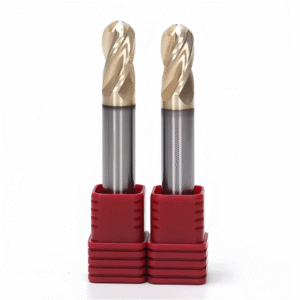
Producing high-feed tools relies not only on advanced equipment but also on systematic workflows and rigorous quality management. Each tool undergoes high-precision cutting, grinding, heat treatment, and coating. Comprehensive quality control ensures dimensional accuracy and edge sharpness while providing stable cutting performance and long wear life during continuous machining. Continuous process optimization allows manufacturers to deliver reliable tools suitable for various materials and complex parts.
End Mill Material Selection and Machining Challenges
Tool material selection directly impacts cutting efficiency, wear resistance, and longevity. High-hardness alloy steel, cemented carbide, and coated composites are commonly used for machining steel, aluminum, stainless steel, and titanium alloys. Material properties such as hardness, thermal conductivity, and toughness present challenges. Hard steel can accelerate tool wear, while titanium alloys are prone to high-temperature hard spots. Controlling heat treatment and precise edge grinding enhances wear resistance and tool life.
High Precision End Mill Grinding and Coating Processes
High-precision grinding ensures edge sharpness and dimensional consistency, critical for tool performance. Cutting tool coatings reduce friction, improve wear resistance, and extend tool life. Common coatings include TiAlN, TiN, and AlTiN, tailored to the material being machined. Combining optimized geometry and edge treatment improves material removal rates and cutting efficiency, meeting the demands of high-strength, high-precision machining.
Cutting Tool Inspection and Stability Assurance in CNC Machining
Tool stability is critical in CNC machining. Each tool undergoes dimensional inspection, edge integrity checks, and coating uniformity testing to ensure consistent performance under high-speed, high-feed conditions. Precision measuring equipment and online detection help identify defects early, preventing chipping and vibration. Proper clamping and cutting parameter adjustments further enhance stability and material removal efficiency.

Application and Selection of High Feed Roughing End Mills
High feed roughing end mills excel in high-volume part machining with high material removal rates and stable cutting. Optimized geometry and coatings allow efficient machining across different materials while reducing tool wear and vibration. Selecting the appropriate tool affects processing efficiency, part quality, and cost. Scientific configuration of tool type and cutting parameters based on material, part shape, and machine capability ensures optimal performance and tool life.
High Material Removal Rate for Steel, Aluminum, Stainless Steel, and Other Materials
High feed roughing end mills provide excellent performance across multiple metals. High-strength cutting edges and wear-resistant coatings allow continuous high-speed cutting of medium-hard steel. Optimized geometry improves chip evacuation in aluminum, maximizing material removal and efficiency. Heat-resistant and tough tools reduce wear and maintain stability in stainless steel machining. Proper tool diameter, flute number, and helix angle further enhance cutting efficiency and reduce cycle time.
Comparison of Cutting Efficiency Between Roughing End Mills and Traditional End Mills
Compared to traditional end mills, high feed roughing tools significantly increase cutting efficiency and material removal rates. Large helix angles and short cutting edges maintain stability under high feeds, reducing cycle time. Wear-resistant coatings and optimized geometry extend tool life. Applying high feed roughing end mills boosts material removal rates and production efficiency while ensuring dimensional accuracy, particularly in high-volume, continuous production.
Considerations When Purchasing High Feed Roughing End Mills from Chinese Manufacturers
When buying high-feed roughing tools, consider the manufacturer’s capabilities in material selection, machining precision, coating technology, and quality control. High-quality suppliers offer standard sizes and custom solutions, optimize cutting edges and coatings for specific parts, and provide factory testing and after-sales support. Delivery time, batch consistency, and processing parameter guidance are key factors for ensuring optimal performance.
Optimized Use of High Feed Finishing End Mills
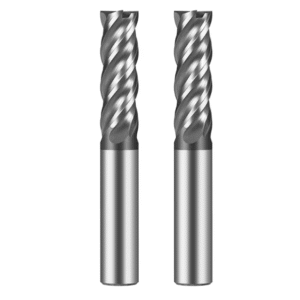
High-feed finishing end mills play a critical role in machining processes that demand high surface quality and dimensional accuracy. Optimizing tool geometry, coatings, and cutting parameters allows manufacturers to achieve stable surface finish and part accuracy while maintaining high machining efficiency. During production, cutting edge sharpness and coating uniformity are carefully controlled, ensuring excellent wear resistance and stable cutting performance under high-speed conditions. Proper selection of tool diameter, flute number, and helix angle helps reduce vibration and chip buildup, supporting continuous and stable cutting throughout the machining process and extending tool life while lowering production costs.
Techniques for Improving Surface Finish and Machining Accuracy
In finishing operations, surface quality and dimensional accuracy are crucial. Optimized cutting edge design, increased tool rigidity, and carefully controlled cutting parameters significantly reduce machining vibration and tool wear, resulting in smoother surfaces. Selecting the appropriate cutting speed, feed rate, and coating type also reduces friction between the tool and material, improving cutting efficiency. For hard materials such as high-hardness steel, stainless steel, or titanium alloys, combining effective cooling and lubrication strategies further enhances machining accuracy and prolongs tool life.
Recommendations for Adjusting Cutting Parameters of Finishing End Mills
Proper cutting parameter configuration is essential to high feed finishing end mill performance. Adjust cutting speed, feed rate, and cutting depth according to material hardness, part geometry, and machine rigidity to achieve efficient and stable machining. Smaller depths of cut and precise feed control reduce wear and heat buildup. Optimal helix angles and flute lengths improve material removal rates and surface finish. Regularly monitoring tool wear and adjusting parameters as needed is key to maintaining machining consistency and extending tool life.
Quality Assessment Indicators for High Feed Finishing Tools
When selecting finishing tools, consider cutting edge sharpness, coating uniformity, tool rigidity, and wear resistance. High-quality tools maintain surface finish and dimensional accuracy under continuous high-load machining. Suppliers offering standard sizes and customized solutions, along with cutting parameter guidance and responsive after-sales support, help ensure stable and efficient production. Tool heat resistance and material adaptability directly affect machining efficiency and part quality. Comprehensive evaluation enables the selection of finishing tools that deliver stable, economical, and high-performance machining.
Operational Recommendations for High Feed End Mills in CNC Production
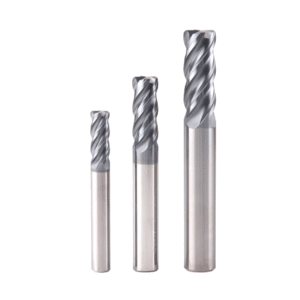
Proper operation and maintenance of high-feed tools directly influence machining efficiency, part accuracy, and tool life. Scientific adjustment of cutting parameters, optimized tool paths, and efficient chip evacuation enhance performance and production stability. Correct operating procedures reduce tool wear and machining vibration while increasing material removal rate and surface quality. Using wear-resistant coatings and high-rigidity clamping systems further extends tool life and ensures stability during long-term production.
Cutting Parameter Optimization and Machining Efficiency Improvement
Adjust cutting speed, feed rate, depth of cut, and helix angle based on material hardness, machine rigidity, and part geometry to maximize material removal rates and maintain stable cutting. Higher feed rates combined with appropriate cutting depths shorten cycles, while optimized edge geometry and cutting speeds reduce wear and vibration. Accurate tool path planning and high-rigidity clamping further enhance machining efficiency and part consistency.
Tool Life Extension Techniques and Vibration Control
Tool life depends on material, coating, vibration control, and proper parameter settings. Optimizing cutting depth and feed rate reduces tool load, while proper clamping and machine rigidity suppress vibrations. Regularly inspecting tool wear, regrinding edges, or replacing coatings maintains stable cutting. Advanced cooling and lubrication strategies reduce heat buildup, preventing chipping and machining errors.
Chip Evacuation and Machining Stability Improvement Solutions
Efficient chip evacuation prevents overheating, excessive wear, and vibration. Designing tool geometry, selecting optimal flute numbers and helix angles improves chip removal, supporting continuous stable cutting. Using effective chip removal devices and cooling/lubrication methods reduces heat buildup and tool load, ensuring consistent accuracy and surface finish even under high-demand machining conditions. Effective chip management improves efficiency and extends tool life.
China High Feed End Mill Manufacturer Procurement Guide
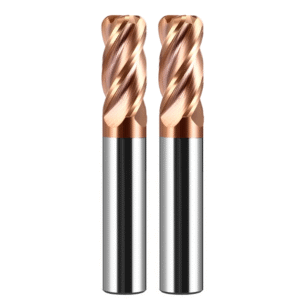
Purchasers should evaluate both tool performance and manufacturer capabilities, including production capacity, quality management systems, and service guarantees. Top suppliers deliver high-precision, durable tools with excellent wear resistance, cutting stability, and machining efficiency. Sound procurement ensures continuous production, reduces downtime, and lowers overall costs. Some manufacturers also provide custom tool services and cutting parameter optimization, enabling higher efficiency and consistent part quality.
How to Choose the Right High Feed End Mill Factory in China
Consider production capacity, machining processes, and product quality stability. Manufacturers with advanced grinding and coating technologies provide high-precision, wear-resistant tools suitable for diverse materials and machining challenges. Optimized tool geometry and cutting parameter guidance improve material removal rates and efficiency. Ensure the supplier offers a range of standard and customized solutions and can respond quickly to production volume or part-specific needs.
Supplier Reputation and After-Sales Service Considerations
Supplier reputation and support are vital for long-term production stability. Quality manufacturers have rigorous quality management and factory inspection standards, ensuring reliable tool performance. Comprehensive after-sales support, including technical guidance, tool replacement, and responsive service, reduces downtime and processing risks. Evaluate industry reputation, delivery reliability, and customer feedback to choose dependable partners.
Considerations for Customizing High Feed End Mills
Customized tools enhance machining efficiency and part quality for special applications. Clearly define material, part geometry, surface accuracy, and batch requirements while coordinating with the manufacturer on tool geometry, coating, and wear resistance. Cutting parameter recommendations and test feedback ensure successful implementation. Delivery time, batch consistency, and after-sales support are key to production stability.
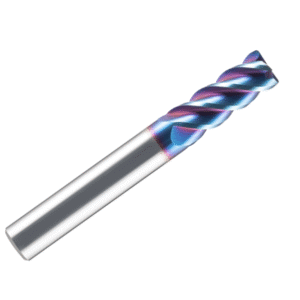
High Feed End Mill Case Studies
Practical cases highlight the advantages of high-feed tools in complex machining. Proper tool selection, optimized cutting parameters, and stable supply improve efficiency, surface quality, and tool life. Continuous improvements by domestic manufacturers in production capacity, quality management, and customization allow high-efficiency machining while maintaining accuracy. These cases demonstrate tool performance and underscore the importance of supply chain, process optimization, and after-sales service in production.
Application Examples of High Feed Roughing End Mills in Automotive Parts
High-feed roughing tools boost material removal and machining efficiency in automotive parts. Optimized geometry and wear-resistant coatings stabilize batch machining of steel, aluminum, and stainless steel, reducing vibration and tool wear. Proper cutting parameter adjustment and high-rigidity clamping ensure dimensional accuracy, surface consistency, and reduced downtime, achieving both efficiency and cost control.
Application Examples of High Feed Finishing End Mills in Aerospace Parts
Aerospace parts require extremely high surface finish and dimensional accuracy. High-feed finishing tools maintain stable cutting of hard steel, titanium, and composites through precise edge grinding and optimized coatings. Adjusting cutting parameters and improving chip evacuation enhances efficiency while ensuring surface quality and batch consistency. Customized tools enable complex parts machining within short cycles, extending tool life and reducing processing costs.
Case Study of Efficient Delivery by Chinese Manufacturer SAMHO Tool
SAMHO Tool demonstrates mature production and supply capabilities. Advanced grinding, coating, quality control, and flexible customization ensure high-performance tools for continuous machining. Rapid delivery, responsive after-sales service, and technical support shorten production preparation and enhance continuity. Companies choosing such suppliers can achieve stable, efficient production and gain economic benefits through improved cutting efficiency and tool wear resistance.