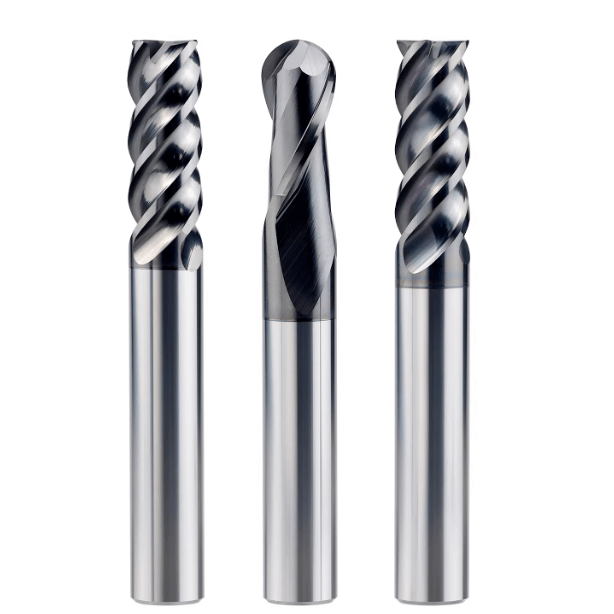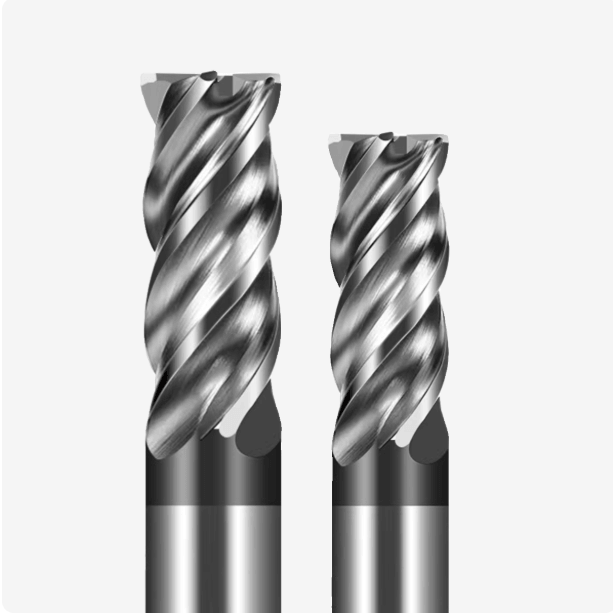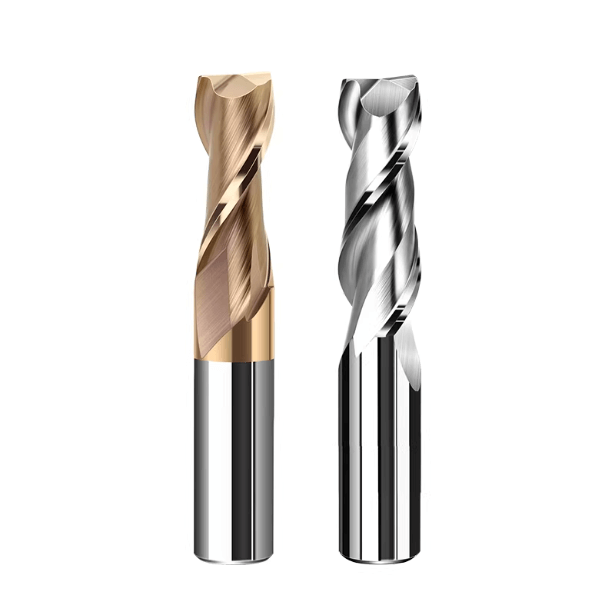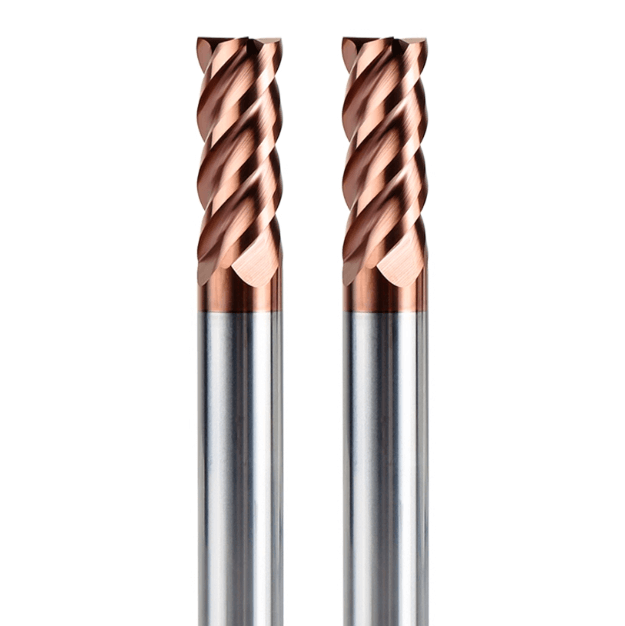
In the machining of high-hardness materials, tool performance often directly determines processing efficiency, dimensional stability, and overall manufacturing costs. As the strength and complexity of materials continue to increase, the performance of end mills under high-load, high-impact conditions has become a crucial factor in evaluating the reliability of machining solutions. Solid carbide end mills, with their excellent rigidity, wear resistance, and stable cutting performance, are widely used for machining hardened steels, mold steels, and high-strength alloys.
Compared to general-purpose tools, the suitability of different types of end mills for hard material machining varies significantly. The number of flutes, helix angle design, and tool body structure all directly influence cutting load distribution, chip evacuation, and tool life. Selecting the right type of end mill for hard matels not only helps increase material removal rates but also effectively reduces common machining risks such as edge chipping, vibration, and abnormal wear.
In practical production, high-performance solid carbide end mills often need to be combined with stable cutting parameters and well-planned tool paths to fully utilize their design advantages. Whether it’s achieving high material removal rates during roughing or maintaining surface finish and dimensional accuracy during finishing, the correct tool selection and application strategy are essential. Understanding end mills, therefore, involves more than the tool itself—it requires a systematic approach across the entire machining process.
End mill suppliers also play a critical role in hard material machining. Consistent product quality, reliable geometric control, and technical support tailored to specific applications are all key factors when evaluating a supplier’s capabilities. Choosing experienced and technologically mature suppliers helps maintain consistent machining quality over long production runs and reduces overall operating costs.
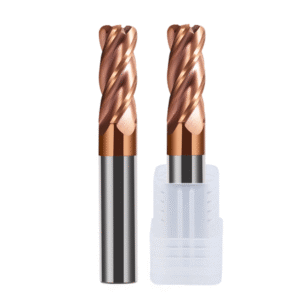
Core Requirements for End Mills in Hard Material Machining
Tools used on high-hardness metals must withstand higher cutting forces while also enduring extreme wear and thermal stress. The high strength and low thermal conductivity of these materials cause cutting temperatures to rise quickly. Inadequate tool design or insufficient chip evacuation can easily lead to dimensional deviation, increased surface roughness, and reduced tool life. Therefore, end mills must be designed with rigidity, wear resistance, and vibration suppression in mind to maintain stable performance during prolonged high-load cutting.
Optimizing tool geometry, selecting high-performance materials, and applying appropriate cutting parameters can significantly reduce the risk of chipping and wear while improving machining efficiency and surface quality. In practice, properly sequencing roughing and finishing tool combinations and adopting staged cutting strategies are key measures to ensure stability, particularly in complex conditions such as deep cavities and narrow slots.
Common Machining Challenges and Failure Modes of Hard Materials
During high-hardness workpiece machining, end mills are exposed to various wear mechanisms. Edge wear increases cutting forces and concentrates heat, while chipping or tool breakage often occurs at excessive radial or axial depths of cut. Thermal cracks may develop under continuous high-temperature impact, especially when machining hardened steel or mold steel, where microcracks can form on the tool edge and propagate rapidly. These failure modes not only affect machining accuracy but can also cause interruptions, increasing production costs.
To mitigate these risks, it is crucial to select appropriate tool designs for each machining stage. For roughing, prioritize high-rigidity, wear-resistant tools and control cutting depth and feed rate. For finishing, ensure sharp cutting edges and minimal vibration to maintain surface finish and dimensional accuracy.
The Importance of Cutting Stability to End Mill Design
Tool rigidity and vibration resistance are critical to performance under high-load cutting. Insufficient rigidity leads to fluctuating cutting forces and machining vibrations, reducing accuracy and accelerating wear. Vibration-resistant designs suppress elastic deformation during machining, ensuring stability in deep cavities or with long tool overhangs.
Under high-speed, high-load conditions, tool stability also affects chip evacuation efficiency and heat dissipation. Optimizing helix angle, number of flutes, and tool holder interfaces can significantly reduce vibration and tool overload. Combining these design features with proper cutting parameters and tool paths maximizes the benefits of high-performance solid carbide tools for long-term, efficient machining.
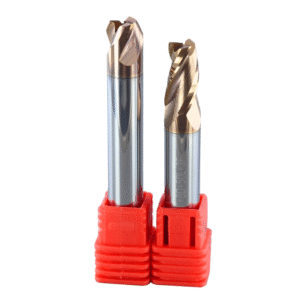
Key Structural Features of Solid Carbide End Mills for Hard Materials
The structural design of end mills directly affects wear resistance, cutting stability, and machining efficiency. Solid carbide materials offer excellent hardness and thermal stability, allowing tools to maintain dimensional accuracy under high loads and speeds while minimizing chipping and premature wear. A well-balanced combination of tool body strength and wear resistance increases tool life and maintains stable cutting forces during deep cavity or continuous cutting, reducing vibrations and the risk of tool failure.
Optimized tool geometry also significantly influences machining performance. Configuring the number of flutes, helix angle, and tip angle improves cutting load distribution and chip evacuation efficiency, ensuring smooth machining and high-quality surface finish. The emphasis of tool design varies by stage: rough machining prioritizes rigidity and chip evacuation, while finish machining focuses on cutting precision and surface quality.
Advantages of Solid Carbide Materials in End Mills
Solid carbide offers high hardness, compressive strength, and heat resistance, allowing tools to withstand high cutting forces and temperatures without deformation. The uniform hard-phase distribution reduces wear and improves edge retention, extending tool life. In machining deep cavities, narrow slots, or high-strength mold steels, solid carbide tools resist continuous cutting impacts without chipping, ensuring accuracy and dimensional stability.
Combined with optimized geometry, the wear resistance of solid carbide tools maintains consistent cutting forces under high-load and high-speed conditions, reducing vibration and heat concentration while improving machining efficiency. For long-term production, tool reliability and repeatable performance are essential to ensure consistent product quality.
Influence of Geometric Parameters of End Mills on Hard Material Cutting
Flute count, helix angle, and tip shape are critical parameters affecting cutting performance. More flutes distribute cutting forces evenly, improving surface finish, but increase cutting load and require a matching feed rate. Optimized helix angles enhance chip evacuation, reduce vibrations, and improve tool stability.
In hard material machining, balancing radial and axial depths of cut with tool geometry significantly reduces localized overload and extends tool life. Tool tip angle selection influences cutting force direction and surface quality, particularly in deep-hole or finish machining, helping prevent scratches and burrs.
Applicable Scenarios of Different Types of End Mills in Hard Materials
During roughing, tools need high rigidity and strong chip evacuation. Large helix angles, multiple flutes, or reinforced coatings help achieve high material removal rates and reduce chipping risk. For deep cavities or complex contours, the tool’s length-to-diameter ratio must match the operation to ensure stability.
During finishing, sharp edges and cutting stability are prioritized for surface quality and dimensional accuracy. Small-diameter or micro tools are suitable for narrow grooves and curved contours, while multi-flute finishing tools improve surface consistency and minimize vibration. Rationally combining different end mill types achieves a balance between high efficiency and quality in hard material machining.

Common End Mill Combination Strategies in Hard Material Machining
In the machining of high-hardness workpieces, a single tool is usually insufficient to achieve both efficient material removal and high surface quality. Therefore, a rational combination of tools with different geometries and flute counts is crucial for efficient and stable machining. By employing differentiated tool designs for roughing, semi-finishing, and finishing, the wear resistance and cutting stability of solid carbide tools can be fully utilized. This approach also helps reduce the potential for edge failure, abnormal tool wear, and dimensional deviations.
Tool selection at each machining stage depends not only on workpiece hardness and cutting depth but also on chip evacuation efficiency, tool rigidity, and cutting load distribution. Optimizing tool combination strategies can extend tool life, maintain high material removal rates, and improve machining consistency and surface finish.
Selection Considerations for Solid Carbide End Mills in the Roughing Stage
During roughing, the primary goal is achieving high material removal rates while maintaining tool stability and durability. Tools must possess sufficient rigidity and wear resistance to withstand deep axial and radial cuts and high cutting loads. Solid carbide end mills with large helix angles, multi-flute designs, or reinforced coatings can maintain stable cutting under heavy loads and minimize machining vibrations and heat concentration.
Stable chip evacuation is especially critical when machining deep cavities or narrow slots. Proper tool geometry and helix angle configuration ensure efficient chip removal, preventing localized overload caused by chip clogging. Controlling radial depth of cut and feed rate further helps extend tool life while achieving high material removal efficiency.
Combined Use of End Mills in Semi-Finishing and Finishing
In semi-finishing and finishing stages, surface quality and dimensional accuracy take priority. Tool selection should match the complexity of the machining profile, cutting depth, and required surface finish. Multi-flute finishing tools distribute cutting loads evenly, reduce machining vibrations, and deliver a smooth surface. Micro-tools are well suited for deep cavities, narrow slots, and fine profile machining.
Matching the tool path strategy with tool type is essential for maximizing efficiency and accuracy. Segmented cutting or alternating between roughing and finishing tools can reduce secondary machining operations and dimensional deviations while avoiding concentrated tool loads. A well-planned tool combination not only enhances machining efficiency but also extends the service life of solid carbide end mills, ensuring long-term production stability.

The Impact of Machining Parameters on the Performance of Solid Carbide End Mills
Once tool types and combinations are selected, machining parameters play a critical role in realizing the full potential of solid carbide end mills. Parameters such as cutting speed, feed rate, and axial and radial depths of cut directly affect cutting load distribution, tool temperature, and chip evacuation efficiency, ultimately determining tool life and machining stability. Setting machining parameters scientifically maximizes the benefits of tool rigidity, wear resistance, and thermal stability while reducing the potential for edge failure, abnormal wear, and machining vibrations.
Proper parameter selection also balances cutting load distribution, allowing stable machining in deep cavities, narrow slots, or complex contours. This improves consistency, ensures surface quality and dimensional accuracy, and reduces tool replacement costs and production downtime.
The Impact of Cutting Speed and Feed Rate on End Mill Life
Cutting speed and feed rate are key factors influencing tool life. Excessive cutting speeds can cause localized overheating of the tool edge, increasing wear and the potential for chipping. Conversely, too low speeds may result in cutting load fluctuations and lower machining efficiency. Maintaining a safe and appropriate speed range preserves edge sharpness and keeps tool temperatures within acceptable limits.
Feed rate is equally critical. Excessive feed rates increase localized cutting loads, accelerating wear or causing microcracks in the tool. Too low feed rates can lead to chip accumulation and machining vibrations. Optimizing feed rate in conjunction with cutting speed extends tool life while maintaining high material removal rates and excellent surface quality.
Key Control Points for Axial and Radial Depth of Cut
Proper axial and radial depths of cut are essential to prevent localized overloading. Excessive depth concentrates stress on the cutting edge, causing chipping or tool breakage. Too shallow a cut reduces machining efficiency. Controlling cutting depth balances tool stress, reduces vibration and impact, and improves overall stability.
Combining cutting depth with tool geometry and material hardness optimizes chip evacuation and heat distribution, minimizing concentrated wear areas. In deep cavities, narrow slots, or complex contour machining, controlling cutting depth ensures tool safety, maintains surface quality, and reduces the need for rework or secondary operations.

Application Experience of End Mills under Different Hard Material Conditions
Material characteristics and machining conditions directly influence tool performance and workpiece quality. Different steels and alloys impose varying demands on tool wear resistance, chip evacuation, and cutting stability. By integrating workpiece hardness, tool geometry, and machining parameters, tool life can be extended while maintaining high efficiency, surface accuracy, and machining consistency. Targeted tool selection and machining strategies for different materials are critical for minimizing chipping, vibrations, and thermal stresses.
In complex contour, deep cavity, or narrow slot machining, tool combinations and optimized tool paths further enhance machining stability. Proper sequencing of roughing, semi-finishing, and finishing tools, combined with stable parameters and monitoring, reduces abnormal tool wear and dimensional deviations, ensuring reliable long-term production.
Key Points for Using Solid Carbide End Mills in Hardened Steel Machining
Machining hardened steel requires extremely high wear resistance and thermal stability. Regular tool wear monitoring, including checking cutting edge condition, cutting load, and surface quality, is essential for determining replacement timing. Appropriate replacement intervals prevent machining interruptions from chipping or breakage and reduce scrap and rework costs.
Maintaining a stable machining rhythm is equally important. By appropriately matching cutting speed, feed rate, and depth of cut with wear-resistant solid carbide tools, cutting forces are distributed evenly, vibrations and heat are minimized, and continuous, high-precision machining of high-hardness workpieces is achieved.
Practical Application Strategies of End Mills in Mold Steel Machining
Mold steel machining often involves deep cavities, narrow slots, and complex contours, demanding high tool rigidity, chip evacuation efficiency, and vibration control. Tool combination strategies are critical: roughing tools should prioritize high rigidity, multi-flute or coated designs for high material removal rates and smooth chip evacuation, while finishing tools must focus on sharp cutting edges and vibration suppression to ensure surface finish and dimensional accuracy.
Tool runout also impacts machining accuracy. Deep holes or slender contours can exacerbate runout, resulting in uneven surfaces or dimensional deviations. Optimizing tool holder rigidity, minimizing tool overhang, and adjusting cutting parameters effectively reduce runout risk, ensuring machining accuracy, repeatability, and overall production efficiency.

Evaluating End Mill Suppliers from a Machining Practice Perspective
In hard material machining, the stability and performance of cutting tools depend not only on their design and materials but also on the quality and service provided by the supplier. Machining high-strength, high-hardness workpieces requires cutting tools to maintain consistent performance and dimensional accuracy over long production cycles. Failure to do so can result in chipping, abnormal tool wear, and reduced surface quality. When evaluating suppliers, it is important to consider the consistency of their products between batches, the stability of geometric accuracy and coating quality, and the level of technical support they provide, ensuring that the tools achieve expected results under different working conditions.
Choosing a reliable supplier is more than a procurement decision—it is critical for maintaining production efficiency and machining quality. Technical support, customization capabilities, and rapid response services directly affect the adaptability of cutting tools in complex hard material machining and overall production costs. By systematically evaluating supplier performance, manufacturers can optimize tool selection and production strategies while maintaining stable machining conditions.
Technical Requirements for End Mill Suppliers in Hard Material Machining
Machining high-hardness workpieces places stringent demands on cutting tool consistency. Tools must maintain uniform geometric accuracy, edge sharpness, and coating quality across batches to ensure stable cutting forces, smooth chip evacuation, and reduced vibration and edge failure during machining. The supplier’s ability to control tolerances of solid carbide end mills, maintain coating process stability, and ensure material homogeneity are key indicators of long-term production consistency.
Furthermore, in deep cavity or complex contour machining, the repeatability and predictability of cutting tools are critical. Tools with consistent geometry and coatings reduce setup time, improve production efficiency, and lower rework rates caused by fluctuations in tool performance.
What Support Can Reliable End Mill Suppliers Provide?
Reliable suppliers provide comprehensive technical support for hard material machining. This may include feedback and optimization suggestions for machining issues, such as cutting parameter adjustments, tool life monitoring strategies, and tool combination schemes for specific working conditions. Such support helps reduce the risk of chipping, premature wear, and inconsistent surface quality in production.
Suppliers with customization capabilities for non-standard solid carbide end mills can deliver specially designed tools based on workpiece geometry, machining depth, and cutting conditions. This customization not only enhances processing efficiency but also ensures the controllability and stability of tool performance when machining deep cavities, narrow slots, or complex contours, providing reliable support for long-term production.

Summary of End Mill Selection for Optimizing Hard Material Machining Efficiency
Proper tool selection directly impacts machining efficiency, surface quality, and tool life in hard material machining. By combining the characteristics of different machining stages, workpiece hardness, and tool structure, a systematic tool combination plan can be formed to achieve efficient and stable machining. High-performance solid carbide end mills leverage their rigidity, wear resistance, and thermal stability in roughing, semi-finishing, and finishing stages, increasing material removal rates, controlling vibration, and reducing abnormal tool wear.
Tool selection must also consider the alignment of geometric parameters, number of flutes, helix angle, and cutting parameters to ensure balanced cutting forces and smooth chip evacuation in deep cavities, narrow slots, or complex contours. In addition, reliable supplier products and customization capabilities are essential for consistent tool performance and long-term machining stability. Through a structured selection process, manufacturers can optimize efficiency while reducing production costs and overall machining risks.
End Mill Combination Logic for Different Machining Stages
During roughing, high-rigidity, wear-resistant solid carbide end mills should be prioritized to achieve high material removal rates and maintain cutting stability. For deep cavities or narrow contours, the chip evacuation capability and the tool’s length-to-diameter ratio must be optimized to reduce vibration and the risk of edge failure.
In semi-finishing, cutting depth and feed rate are controlled to balance material removal and surface quality. In finishing, tools with sharp edges and smooth cutting are selected to ensure surface finish and dimensional accuracy. Strategically combining tools across machining stages improves efficiency, controls tool costs, and minimizes unnecessary tool changes and production interruptions.
Reducing Comprehensive Machining Risks Through Proper Selection of Solid Carbide End Mills
In addition to tool combination by stage, strategic selection of solid carbide end mills reduces overall machining risks such as edge chipping, abnormal wear, and thermal cracking. By optimizing cutting parameters—including speed, feed rate, and axial and radial depths of cut—cutting tools are subjected to uniform stress and efficient chip evacuation, ensuring long-term stable machining.
For specialized conditions or complex workpiece geometries, leveraging the customization capabilities and technical support of reliable suppliers allows for tailored tool combinations. These specially designed tools enhance safety in machining deep cavities, narrow slots, and intricate contours, while ensuring consistent dimensional accuracy and surface quality, achieving high-efficiency, low-risk hard material machining.