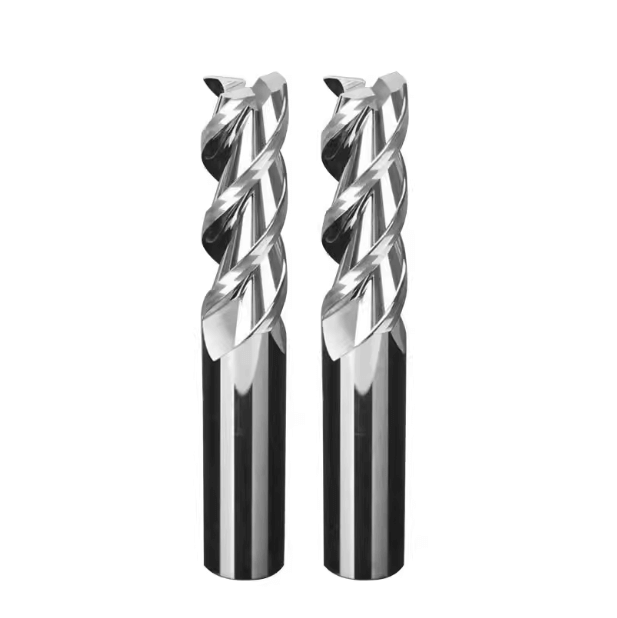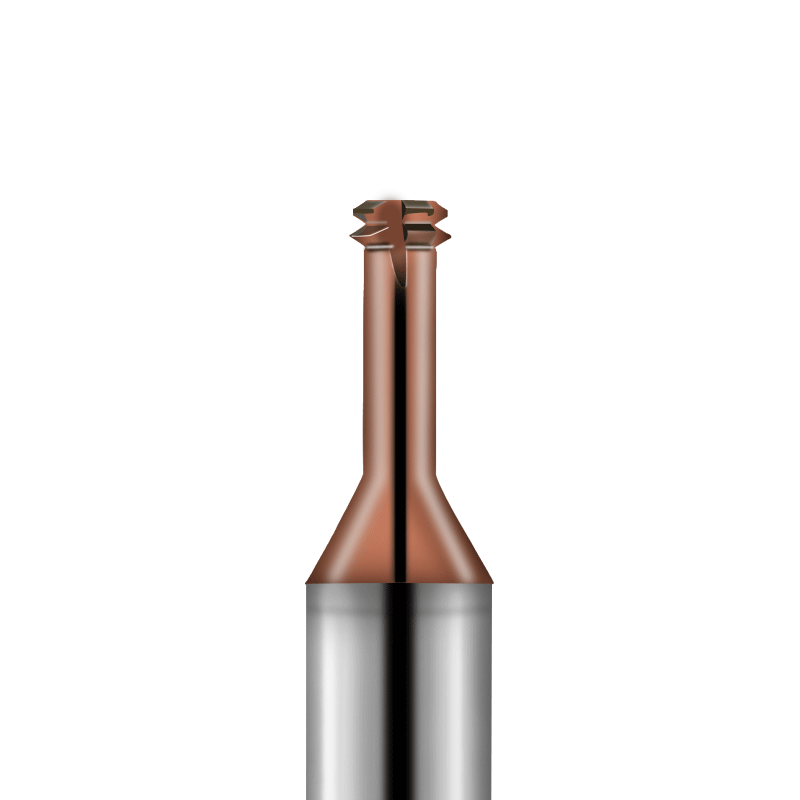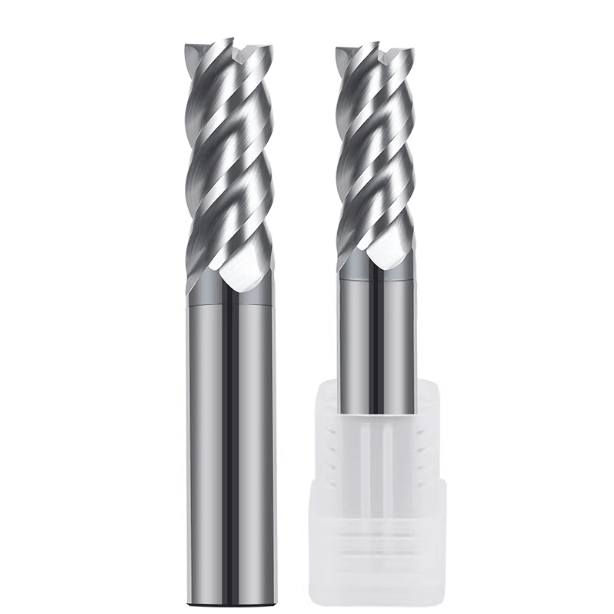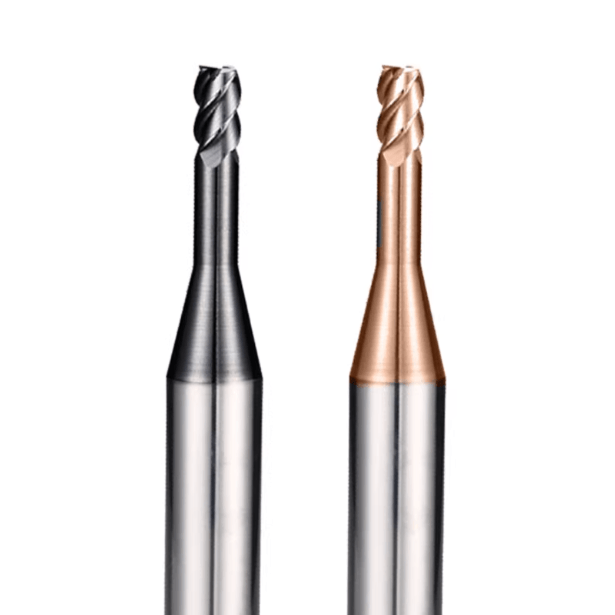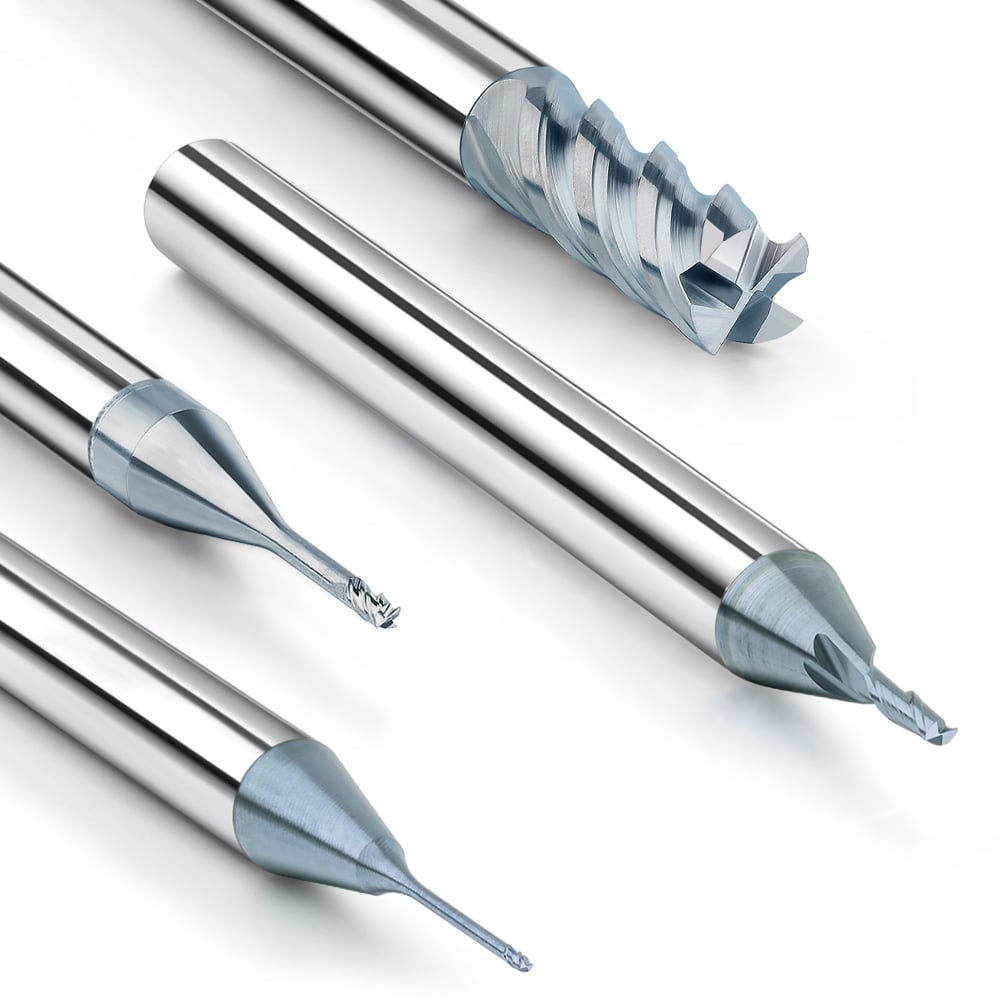
Over the past 15 years of working with top-tier machine shops across North America and Europe, we’ve noticed a frustrating trend. Many shop owners gladly drop $500,000 on a precision 5-axis machining center, yet they agonize over a $5 difference in the unit price of an end mill tool.
In reality, procurement price is rarely what kills your margins. The true “profit killers” are frequent tool changes, unplanned downtime, and scrapped parts caused by inefficient toolpaths.
Just last month, we helped a Texas-based aerospace client resolve a nightmare with 316 stainless steel. They were using a high-performance cutting tool end mill for deep-cavity work. However, their traditional constant-feed paths caused radial loads to spike at every corner. The result? Constant chipping. Even after they switched to expensive diamond end mill cutting tools, the coating peeled off at a heartbreaking rate because the underlying toolpath logic was fundamentally flawed.
We intervened by introducing an AI-driven dynamic trochoidal optimization strategy. This isn’t just about “going faster.” It’s about using algorithms to redistribute cutting forces in real-time. Whether you are using a ball end mill tool for 3D finishing or a customized cutting tools end mill for a specific alloy, AI ensures the tool tip stays in the “sweet spot” for heat dissipation rather than brute-forcing through corners.
In our experience, under identical conditions, this approach extends actual tool life by 30% to 50%. A broken tool can be replaced, but the hidden costs of a flawed strategy are what keep production supervisors awake at night. Wouldn’t you agree?

Bidding Farewell to Intermittent Shock: How AI-Driven Trochoidal Milling Stabilizes Cutting Tool End Mill Loading
In our workshop trials, we’ve seen that traditional linear paths are “silent killers.” Even with a constant feed rate, the mechanical shock as the tool enters and exits the metal fluctuates violently. This is a massive issue when machining titanium or high-nickel alloys. These inconsistent radial depths of cut trigger microscopic chipping on the cutting tool end mill. By using AI-driven dynamic trochoidal milling, we use algorithms to guide the tool along an arc-shaped trajectory. This ensures every mill maintains a consistent “Arc of Engagement.”
The benefits go far beyond “smoothness.” In trials on precision aerospace components, we found that traditional paths concentrated wear at the leading edge, often causing chatter. Switching to an AI-optimized dynamic path distributed the cutting forces uniformly across the entire length of the helical flute. This transition from “hard impact” to “gentle cutting” is what every veteran engineer wants to see. It means you no longer have to hover over the override dial, worrying the spindle load meter will redline.
Solving the “Corner-Bite” Conundrum: Preventing End Mill Chipping
We’ve seen countless tools meet a premature end at 90-degree corners. As an end mill tool enters a right-angle turn, the contact area can surge from a safe 10% to a catastrophic 100% “Full Engagement” cut. This spikes the thrust, causing micron-level deflection and a sharp snap in the slot. To fix this, our AI algorithms mandate a stepped deceleration and an arc-shaped transition path before the tool even hits the corner.
This automatic fine-tuning keeps the feed per tooth (IPT) within an extremely narrow range. Whether it’s a standard mill or a ball end mill tool, the cutting resistance becomes virtually indistinguishable between straight lines and corners. We no longer rely on operators to manually adjust dials; the program handles compensation in milliseconds. This is the foundational pillar for true workshop automation.
Thermal Fatigue Management: The Secret to Extending General-Purpose End Mill Life
On long-cycle jobs, heat accumulation is deadlier than mechanical wear. When cutting forces fluctuate, the temperature at the edge oscillates in a jagged pattern. This “thermal shock” creates micro-cracks in the carbide substrate, causing the coating to flake off. Our AI optimization stabilizes the thermal field by maintaining a constant cutting force. When heat is evacuated efficiently with the chips, even a standard cutting tool end mill performs like a premium one.
By performing real-time micro-adjustments to the radial depth of cut (RDOC), our algorithms prevent localized overheating. If an end mill tool stays within its ideal temperature range, its chemical wear resistance is maximized. We’ve had clients skip buying expensive specialty tools simply by optimizing their thermal management. Sound physics always carries more weight than marketing rhetoric.
Protecting the Investment: How AI Toolpaths Shield Expensive Diamond End Mill Cutting Tools
The procurement cost of diamond end mill cutting tools is often 5x higher than standard carbide. We are acutely sensitive to every micron of wear on those edges. On abrasive materials like CFRP or high-silicon aluminum, traditional paths generate intense pressure the instant the tool engages. This shatters PCD or CVD coatings and tears the workpiece edges. Our AI-driven approach replaces abrupt entries with smooth, tangential “roll-in” arcs. This ensures the diamond coating is loaded uniformly, preventing premature chipping from impact.
The key to protecting high-value tools is “uniform wear.” Through algorithmic intervention, we implement a dynamic depth-of-cut distribution. Instead of grinding down one localized spot on your diamond end mill cutting tools, we engage the entire cutting height. It might take a few extra minutes in programming, but when you compare that to the cost of replacing a $400 tool and the associated downtime, the ROI is undeniable.
Mitigating Delamination in Carbon Fiber and Composites
While customizing a solution for a Boeing Tier 2 supplier, we found that the biggest challenge wasn’t speed—it was “delamination.” If the entry angle of your diamond end mill cutting tools isn’t perfect, the fibers tear instead of cutting cleanly. Our AI logic adjusts the tool path in real-time based on the fiber layup orientation. This ensures cutting forces always align with a vector that suppresses delamination, eliminating the edge burrs that plague composite shops.
Furthermore, wear resistance in these materials depends on chip evacuation. AI-optimized paths prevent “secondary grinding,” where powdery chips get trapped and act as an abrasive against the tool. By precisely controlling lateral step-over, we’ve seen the sharpness of diamond end mill cutting tools last nearly twice as long. This is critical for maintaining tight dimensional tolerances over long production runs.
Alleviating Lateral Stress on Brittle Materials: Ceramics and Graphite
When machining brittle materials, radial (lateral) forces are the primary cause of fracture. Since ceramics have zero plastic deformation, the force hits the delicate tool tip instantly. We recommend an AI-generated “high feed, shallow depth” strategy. By using a tiny radial engagement (Ae) and a high feed rate, we convert the load into axial pressure. This leverages the high axial rigidity of the end mill tool to counteract its lateral fragility.
In extreme-hardness environments (60+ HRC), AI algorithms micro-adjust the chip load based on localized material variations. This allows your diamond end mill cutting tools to operate in a state of “precision grinding” rather than “aggressive cutting.” This load distribution delivers a stable surface finish and nearly eliminates the need for tedious post-process polishing.
When you see a brand-new diamond tool fail at a corner, ask yourself: was it the tool, or was it a “brute-force” legacy toolpath eroding your profits?
Breakthrough in Mold Finishing: Balancing Surface Quality and Tool Life for Ball End Mills via AI
In the final stages of mold making, the performance of your ball end mill tool determines the final quality of the set. Every experienced machinist knows the struggle: the cutting speed of a ball-nose cutter drops to zero at its center “dead point.” This geometric reality makes the tool incredibly sensitive to the path you choose. Suboptimal path planning leads to violent transitions between high-speed cutting and “squeezing” the metal, leaving behind those dreaded visual striations. By using AI to dynamically adjust spindle speed and feed rates, we compensate for that low linear velocity at the tip, minimizing microscopic wear while keeping surface roughness (Ra) within strict limits.
In our shop, we prioritize “dynamic equilibrium.” Traditionally, conservative engineers would simply drop the feed rate to play it safe. However, that just creates excessive frictional heat between the ball end mill tool and the workpiece. We now use AI models to track the contact trajectory in real-time, ensuring the spherical tip always engages at the optimal angle. This doesn’t just save your expensive tools; it stabilizes the thermal load on the machine itself. For shops chasing micron-level precision, that stability is worth far more than raw cutting speed.
Eliminating Stock Fluctuations: How AI Path Planning Mitigates Vibration
During “Rest Machining,” the biggest enemy of a ball end mill tool is uneven residual stock. If the material left by a previous op suddenly doubles in a corner, your cutter shifts from a light finishing load to a heavy-duty “plunge” in an instant. This is the #1 cause of chipped tips. Our approach uses AI to digitally scan the remaining stock before generating the path. If we find a heavy spot, the software automatically adds smooth “semi-finishing” passes. This ensures the load stays consistent as the tool enters the corner.
This preventive logic has drastically cut vibrations in deep cavities. Remember: vibration doesn’t just kill the tool; it leaves chatter marks that are a nightmare to polish out. My advice to industry peers is simple: don’t expect one ball end mill tool to be a hero in every tight corner. Use an AI-optimized, staged strategy to keep the tool at its ideal feed-per-tooth. It’s the only reliable way to prevent breakage and hit your surface finish targets every time.
Helical Entry and Constant Engagement: Practical Tips for Tip Durability
I still see novice operators plunging ball-nose cutters vertically into hard molds. That is a recipe for disaster. The center of a ball nose has almost no structural strength; a direct hit causes instant thermal cracks. We exclusively recommend AI-optimized helical entry paths. By entering at a tiny tilt angle, the algorithm shifts the impact force away from the fragile center and onto the reinforced outer edges. This allows heat to dissipate evenly, exponentially extending your tool life.
We also focus on maintaining a constant engagement point. When machining complex freeform surfaces, our AI toolpaths adjust the axial tilt in real-time. This keeps the “dead center” of the ball end mill tool from ever directly hitting the material. Avoiding that zero-speed zone is the secret to achieving a mirror-like finish. A great toolpath should flow over contours like water. Have you ever walked the floor at night and heard that heart-wrenching shriek of a ball-nose buried in a corner? That’s exactly what we’re trying to eliminate.
The Ultimate Balance: AI Strategies Tailored for Customized Cutting Tools End Mill
In the world of non-standard machining, off-the-shelf tools are a compromise. A customized cutting tools end mill is designed for one thing: maximum Metal Removal Rate (MRR). We often work with clients in the EV chassis sector who need to mill, chamfer, and profile in one shot. This puts massive stress on the tool geometry at the step transitions. If you use a standard CAM path, these custom tools will see violent torque spikes. We now create AI geometric models for every specific edge of a custom tool, allowing the machine to compensate for load changes at different depths. This “unified tool-and-path” philosophy is the only way to push custom tooling to its limit.
Real-world experience has taught us that an expensive customized cutting tools end mill can actually fail faster than a standard tool if the path is wrong. Because these tools have complex chip flutes and unique helix angles, they need perfect chip evacuation. We use AI to simulate chip flow and adjust trochoidal diameters on the fly. This ensures every custom edge operates within its load parameters. It turns a “big tool investment” into “tangible capacity” rather than a pile of broken shanks in the scrap bin.
Maximizing Efficiency with Complex Profile Machining
When we develop a customized cutting tools end mill with multiple steps or specialized radii, the challenge is engaging all edges without overloading the weakest point. Usually, programmers slow the whole job down to protect one small segment. That defeats the purpose of a custom tool. Our AI paths use “variable-load cutting.” As the tool hits a complex feature, the program fine-tunes the spindle speed based on the engagement length of each tool segment. You get the high-speed removal of the primary edge and the precision of the secondary edge in one integrated move.
We’ve seen the biggest leap in aerospace titanium. We recently paired a customized cutting tools end mill featuring chip-breaker grooves with an AI pulsed-feed strategy. We collapsed a three-tool process into a single op. It required a deep understanding of material toughness, but the algorithm allowed us to avoid resonance zones that traditional calculations just couldn’t see. In high-end manufacturing, this level of tool-and-path coupling is a massive competitive advantage.
Reducing Costs via AI Data Feedback
We offer more than just a customized cutting tools end mill; we offer a closed-loop system. Every bit of data—load profiles, vibration, and wear patterns—is fed back into our AI. If the data shows that the relief angle is wearing faster than the rake angle under a specific path, we immediately tweak the geometry for the next batch. This isn’t guesswork; it’s a cost-reduction solution that evolves with every part you cut.
This loop lets us identify the real factors behind your Cost Per Part. For example, on a high-volume engine block job, we used AI feedback to fine-tune the unequal helix angles of a customized cutting tools end mill. We eliminated self-excited vibrations that were previously invisible. When you’re running tens of thousands of parts, that micro-optimization saves a fortune in labor and tooling. Most skilled engineers know that the truth of the process isn’t on the drawing—it’s hidden in the cutting data.
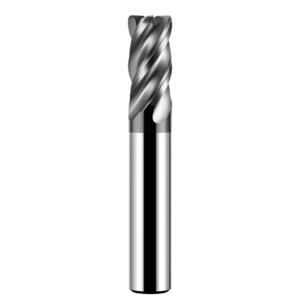
An Engineer’s Practical Guide: Evaluating AI Path and End Mill Tool Compatibility
After visiting hundreds of shops, I’ve realized one thing: no end mill tool is a magic bullet, and no AI path is perfect for every job. The real “secret sauce” is the synergy between the two. If you’re evaluating this for your own shop, don’t get distracted by flashy software demos. Go back to the fundamentals of cutting mechanics. Here is my simple test: watch the spindle load meter during the maximum radial depth of cut. If the AI-optimized path keeps that amperage as steady as a flatline on an EKG, you’ve already won half the battle.
When testing compatibility, look at the interplay between thermal stability and chip evacuation. If you’re pushing high-feed strategies, watch the chips. When the AI and the cutting tool end mill are in sync, the chips should be consistent, curled, and show a healthy oxidized color (for steel). If they look like dust or are scorched black, something is wrong. Trust your physical feedback over a software report every time.
Avoiding Pitfalls: Choosing the Right Cutting Tool End Mill
Here is a harsh reality: trying to run a high-frequency trochoidal path with a standard, low-speed/high-torque cutting tool end mill is usually a disaster. AI paths involve high-frequency reversals that demand extreme core rigidity. If you’re doing deep-cavity work, check your toolholder clamping force first. Often, “tool failure” is actually just the tool slipping slightly due to high-speed oscillations. Always confirm your tool’s helix angle and flute design are rated for dynamic cutting before you hit “Cycle Start.”
Also, don’t blindly chase speed with diamond end mill cutting tools. On non-homogeneous materials, you should actually reduce your entry speeds in the AI plan. Diamond is hard, but it’s brittle and hates micro-vibration. AI is an optimization tool, not a miracle worker. If your fixturing or workholding is weak, no algorithm can save you. In our experience, a slightly “conservative” AI path usually delivers better long-term ROI than one pushed to the edge of failure.
The ROI Reality: Feedback from the Shop Floor
Is the effort to optimize toolpaths via AI worth it? Let’s crunch the numbers. If you run high-volume lines, track your “output-per-edge.” In one case, we used AI paths for a ball end mill tool and saw an 8% time saving per part. But the real win was that tool changes dropped by 40%. The machine’s Overall Equipment Effectiveness (OEE) jumped by 12%. That’s where the real money is—not just in the cost of the tools, but in the hours of machine time and labor you save.
With a high-value customized cutting tools end mill, the ROI is even faster. If you’re cutting aerospace alloys, look at your scrap rate. By removing shock loads, AI-generated paths virtually eliminate the risk of a broken tool ruining a $50,000 workpiece. Factor in tool life, spindle wear, and finishing labor, and you’ll see that the true savings are hidden in the downtime that didn’t happen.
If you’re struggling with a complex drawing or a new composite material, let’s talk shop. We can look at your specific conditions and find the right mix of geometry and algorithms for your material. After all, real progress comes from obsessing over the details of the cut, doesn’t it?