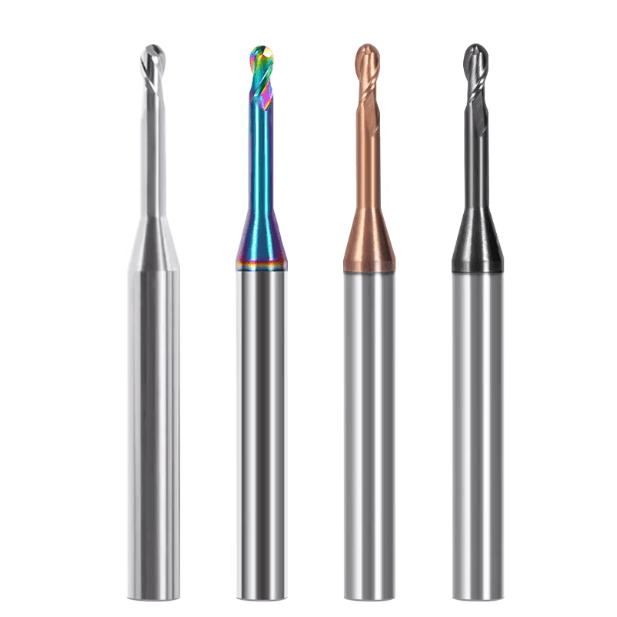
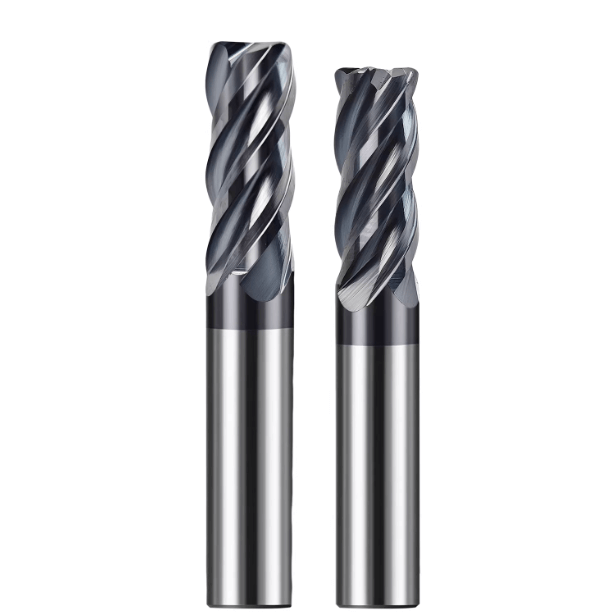
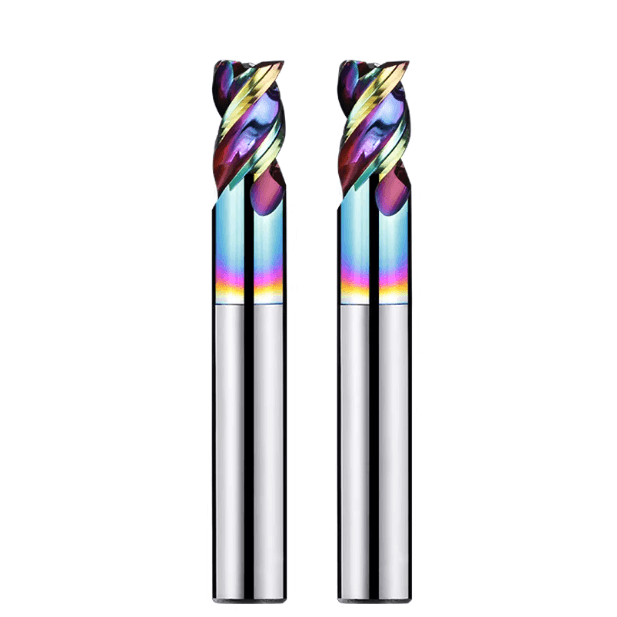
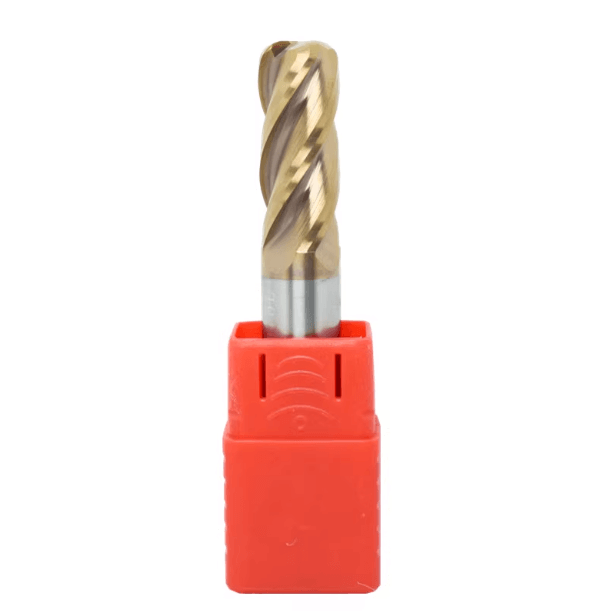
In our process of customizing machining solutions for European and American clients, we frequently encounter a recurring challenge: even when using high-precision corner radius end mill cutters, tool life often falls short of expectations, and surface quality can become inconsistent during continuous high-speed machining of stainless steel or high-hardness alloys. From years of hands-on experience, we found that the core issue isn’t the tool geometry itself, but rather how well the coating matches the tool material and the cutting conditions.
We’ve observed that corner radius end mills consistently outperform square end mills in resisting tip chipping and vibration. However, if the coating isn’t properly selected, these advantages can be significantly reduced. In the machining of stainless steel, issues such as built-up edge and accelerated wear in the fillet area are almost universal across factories. Only a thoughtfully chosen coating strategy can effectively mitigate these problems.
As a China corner radius end mill manufacturer, we have accumulated extensive practical experience in optimizing coatings for our clients. From selecting coating type and thickness to matching it with machining materials and cutting parameters, every detail directly impacts tool life and process stability. By combining real-world machining data and on-site customer feedback, we can develop coatings that are genuinely effective rather than relying solely on theory or marketing claims.
So, in your machining operations, do you really know if your corner radius end mill cutter is performing as expected?
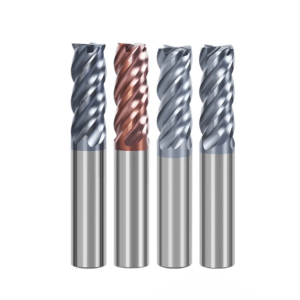
Why Coating Optimization Is Essential for Corner Radius End Mills in Actual Machining
When machining high-hardness alloys and stainless steel parts in batches for European and American clients, we frequently encounter tool life far below theoretical expectations. Using uncoated corner radius end mill cutters, even under consistent conditions, wear and micro-cracks quickly appear in the fillet area of the tool tip during high-speed milling. In roughing operations, these tools chip prematurely, increasing surface roughness and requiring reduced feed rates in subsequent finishing. Observing the wear morphology firsthand, we realized that coatings play a crucial role in dispersing heat, reducing friction, and stabilizing cutting forces. Without them, tool stability is compromised.
We also noticed that machining requirements vary significantly depending on material. When milling stainless steel corner radius end mills, uncoated tools are prone to adhesive wear and built-up edge, causing sudden increases in cutting forces and vibrations. Cutting data collected at customer sites confirmed that even minor wear in the corner tip can affect toolpath accuracy and surface finish. From this, we concluded that only through proper coating optimization can tool life and machining consistency be maintained under high-speed or high-feed conditions.
Actual Wear of Uncoated Corner Radius End Mill Cutters in High-Speed Milling
We once ran a batch of 316 stainless steel parts using uncoated corner radius end mill cutters, with feed rates set according to the manual. After machining several dozen parts, significant chipping appeared at the corner tip, cutting forces fluctuated, and surface finish declined. Measurements showed micro-cracks propagating along the corner radius, resulting in tool life reaching only about 40% of expected values. This scenario repeated across multiple customer sites, highlighting the critical role of coatings in corner radius tools.
Additionally, during prolonged high-speed milling, heat concentrated in the fillet area, micro-cracks propagated faster, and tool vibration increased. Small-diameter tools with radii below 1mm were especially affected. Without targeted coating optimization, even carbide tools cannot reliably machine high-hardness materials. This experience underscores the need to carefully select coating type, thickness, and wear resistance when designing tooling solutions.
Why the Fillet Area of the Tool Tip Relies More on Coating Protection Than a Square-End Tool
By comparing corner radius vs square end mills, we found that while fillet tips distribute cutting stress more evenly, the larger contact area under high load makes the fillet region more prone to localized wear. Without proper coating, micro-cracks appear first in the fillet and gradually propagate, affecting surface finish and tool life. We repeatedly confirmed this during on-site machining of aluminum and stainless steel parts. Proper coatings significantly reduce wear, especially when machining complex contours with frequent angle changes.
In contrast, square-end mills are more prone to tip chipping but wear is concentrated, while rounded-corner cutters have wider wear coverage. This means that selecting a coating requires balancing wear resistance, lubricity, and thermal stability. Our on-site tests of TiAlN and AlTiN showed that properly matched coatings can maintain tool stability during prolonged machining of high-hardness stainless steel, reducing downtime and improving overall process reliability.
Typical Tool Failure Cases at European and American Customer Sites
At a German automotive parts factory, using an uncoated corner radius end mill for finishing 17-4PH stainless steel resulted in tool life less than half the expected value. On-site monitoring indicated a sharp increase in cutting force after the third part, with slight surface roughening. Inspection revealed multiple micro-cracks on the fillet surface and significant thermal wear. This demonstrated that even high-precision carbide tools cannot maintain stability without appropriate coatings.
Similarly, at a French aerospace machining site, uncoated corner radius end mills used on complex contours experienced frequent chipping, causing accuracy loss. Switching to coatings optimized for high-temperature, high-hardness materials increased tool life by ~35% and reduced vibration. These experiences confirmed that coating optimization is essential not just for tool life, but also for consistent machining performance and part quality.
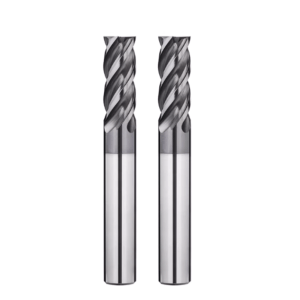
The Actual Impact of Different Coatings on Corner Radius End Mill Cutter Performance
Different coatings produce substantial performance differences, even on tools with identical geometry. For high-speed milling of high-hardness materials, coating choice directly affects tool life and surface finish. Through numerous tests at customer sites, we found TiAlN, AlTiN, and TiSiN coatings exhibit varying heat resistance, wear resistance, and chipping suppression. Matching coating type to material hardness and machining conditions is more effective than a one-size-fits-all approach.
We also observed that coating compatibility with the tool substrate is critical. In stainless steel machining, carbide tools with TiAlN maintained stable cutting forces, while high-speed steel tools wore faster under the same coating. Empirical evidence suggests that coating optimization must consider tool material, machining material, and cutting parameters to maximize corner radius end mill performance.
Differences in TiAlN Coating Performance on HSS and Carbide Tools
In machining 17-4PH stainless steel, TiAlN-coated carbide tools showed stable cutting forces, with wear concentrated in the fillet zone. HSS tools exhibited tip chipping and built-up edge under identical conditions. TiAlN adheres better and provides higher heat resistance on carbide, making it more suitable for high-speed cutting of hard materials. HSS tools require reduced cutting speeds under high load to avoid rapid wear.
Field observations confirmed TiAlN slows corner tip wear on carbide, maintaining toolpath accuracy. For HSS, although TiAlN improves surface hardness, prolonged machining still accelerates wear due to heat accumulation. This comparison highlights the importance of evaluating tool material-coating compatibility rather than focusing solely on coating type.
Experience with AlTiN Stability in High-Temperature Machining
AlTiN performed exceptionally when milling 316L stainless steel for aerospace parts. Corner radius temperatures exceeded 600°C, uncoated tools wore rapidly, while AlTiN maintained tip hardness and reduced adhesive wear. After more than 50 consecutive parts, tool life increased ~30%, and cutting force fluctuations were minimized.
We also observed AlTiN is more stable on carbide than HSS tools. In deep-groove stainless steel machining, AlTiN effectively suppresses tip chipping and thermal wear, enabling stable cutting under high load and feed. This experience favors AlTiN for high-temperature applications, beyond simple geometry optimization.
Advantages of TiSiN in High-Hardness Material Machining
TiSiN-coated corner radius end mills showed superior wear resistance when machining 50CrMo4 steel and high-hardness alloys. Micro-crack propagation in the tip radius slowed, cutting forces remained stable, and surface finish was maintained under deep, high-speed cuts.
TiSiN also reduces built-up edge formation, especially in stainless steel and nickel-based alloys. Field tests concluded TiSiN is ideal for long-term, high-load machining of hard materials. Coating selection must consider tool diameter, corner radius, and cut depth to fully realize these benefits.
Influence of Coatings on Tool Wear Patterns
Comparing tools with different coatings on the same batch revealed distinct wear patterns. TiAlN wear concentrated in the fillet transition zone with controllable micro-cracks; AlTiN wore uniformly under high temperature, reducing built-up edge; TiSiN had the slowest overall wear but showed localized adhesive wear during low-speed roughing. Cutting strategies were adjusted based on field data, combining speed, feed, and coating type to extend tool life.
Coatings also affect surface finish. In deep-groove stainless steel machining, evenly worn coated tools maintained stable roughness, while uneven wear or micro-chipping caused rough surfaces and accuracy fluctuations. We use these insights to guide customers in selecting corner radius end mills, factoring in coating performance, material hardness, and machining method.
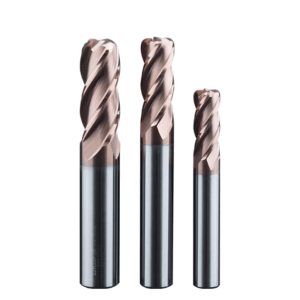
How Coatings Change the Stress and Tool Life of Corner Radius End Mills
In our actual machining processes, stress often concentrates in the rounded corner areas, which are also the parts of corner radius end mill cutters most prone to wear and chipping. When machining deep-groove stainless steel parts for European and American clients, uncoated tools quickly developed micro-cracks at the rounded tips during high-speed milling. This caused cutting force fluctuations and decreased surface finish. By selecting a suitable coating, we significantly improved thermal stability and wear resistance at the tool tip, leading to a more uniform distribution of cutting force and extended tool life.
Our comparative experiments across different materials also show that coatings not only change wear patterns but directly affect cutting efficiency. In deep grooves and complex contours of stainless steel corner radius end mills, coatings reduce chip buildup and edge wear, allowing the tool to maintain stable performance even at high feed rates and depths of cut. This allows us to incorporate coating characteristics into the overall machining strategy rather than relying solely on tool geometry.
Wear Variation in the Stress Concentration Area of the Corner End Mill
During field observations, we noticed that high-hardness steel parts cause significantly more wear in the corner radius than on the right-angle cutting edge. In high-speed milling and deep grooving, uncoated tools developed visible wear grooves, with micro-cracks spreading along the radius, sharply reducing tool life. Applying TiAlN or AlTiN coatings resulted in more uniform wear distribution, reduced thermal stress concentration, and improved overall tool stability.
Tool tip wear patterns directly affect cutting force stability. In high-feed machining, rapid corner wear increases vibration and leads to surface roughness and dimensional deviations. Coated tools maintain stable wear patterns, enabling higher feed rates and fewer tool changes—an observation we’ve repeatedly confirmed on European and American customer projects.
The Inhibiting Effect of Coatings on Edge Chipping and Microcracks
When machining 304 and 316 stainless steel, uncoated tools often developed micro-cracks at the corner radius and tip transition zone, leading to localized chipping. This issue is especially pronounced under complex contour machining and high-speed conditions. AlTiN or TiSiN coated corner radius end mill cutters significantly slowed micro-crack propagation, suppressed tip chipping, and stabilized the cutting process.
The coating also plays a critical role in resisting thermal wear and mechanical stress. In continuous machining of stainless steel corner radius end mills, coatings withstand high temperatures and localized impacts, reducing uneven tool wear and extending life. Therefore, when selecting tools, coating type and thickness must be considered alongside geometry.
Tool Life Improvements Observed in High-Feed Machining
In high-speed, high-feed scenarios, coated corner radius end mills consistently achieved 30%-50% longer tool life compared to uncoated tools. For example, when machining aerospace parts for a German client, AlTiN-coated tools allowed higher depths of cut and feed rates while maintaining stable surface roughness—something nearly impossible with uncoated tools.
We also observed that tool life improvement varies with diameter and corner radius. Micro-corner, small-diameter tools are prone to chipping in high-hardness materials. Coating optimization significantly delayed chipping onset, allowing stable cutting even under high loads. This experience reinforces the need to consider coating performance alongside tool geometry when planning machining strategies.
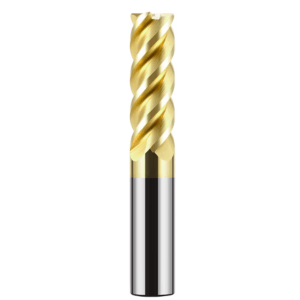
Corner Radius vs Square End Mill: Differences in Coating Performance
In practice, corner radius and square end mills show significant differences in stress distribution and wear resistance. In comparative tests using identical coatings on 304 stainless steel complex contours, corner radius end mills exhibited uniform wear at the tool tip, while square end mills showed localized chipping and unstable surface finish. This confirmed that coating optimization must be combined with tool geometry; otherwise, even excellent coatings cannot fully counteract tip stress caused by geometry.
We also noted that coating performance differs between tool types. During high-speed milling of high-hardness stainless steel, AlTiN and TiSiN coatings effectively suppressed wear on corner radius end mills but had limited impact on square end mills. Rounded end mills with proper coatings maintained high feed rates and cutting depths, while square tools required reduced parameters to preserve surface accuracy. This emphasizes the importance of matching geometry and coating in machining solutions.
Fundamental Difference in Tip Strength Between Corner Radius and Square End Mills
Corner radius end mills have higher tip strength than square end mills. When machining 17-4PH stainless steel, stress is distributed more evenly on rounded tips, with micro-cracks mostly at the outer edge, whereas square tips experience concentrated impact across the entire tip. This explains the greater stability of corner radius end mills under high-speed, high-load conditions and their reduced vibration and surface roughening.
Tip strength varies with diameter and corner radius. Small-diameter corner radius end mills remain more durable than square end mills in deep grooving but may still experience concentrated wear under extreme feed rates. Therefore, corner radius selection must consider machining depth, material hardness, and diameter to balance tool life and efficiency.
Why Square End Mills Are More Prone to Tip Chipping
Square end mills frequently show higher tip chipping rates during high-speed or high-feed machining. Force concentrates at the tip, heat and impact accumulate, and micro-cracks propagate rapidly. This is especially true with stainless steel or chromium-molybdenum alloys. Without adjusting cutting parameters, tool life declines sharply.
Square end mills also experience localized wear in continuous deep grooving, especially when tip-workpiece angles change frequently. We confirmed that without coating optimization, right-angle tools quickly exhibit edge chipping and surface roughening, making careful parameter selection essential.
Lifespan Comparison Under the Same Coating Conditions
Comparing rounded and square tools with TiAlN and AlTiN coatings on high-hardness stainless steel, corner radius end mills lasted 25%-40% longer than square tools, particularly in high-speed, deep-groove machining. Rounded geometry allows coatings to evenly distribute cutting forces, whereas localized stress on square tips limits coating effectiveness.
Coating impact on tool life depends on material and feed conditions. In stainless steel corner radius machining, coatings delay wear propagation. On square tools, coatings mainly slow localized chipping but cannot fully eliminate it. This highlights the need to select coatings and cutting parameters flexibly, based on tool type, material hardness, and machining strategy.
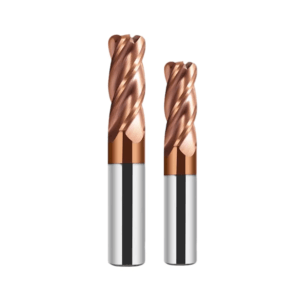
The Critical Role of Coating on End Mill Corner Radius in Stainless Steel Machining
In our experience machining 304 and 316 stainless steel parts for European and American clients, we noticed that even high-precision corner radius end mill cutters experience rapid tool wear if the coating is not properly selected. This is especially true when machining deep grooves and complex contours. In these areas, stress concentrates in the fillet of the tool tip, and high temperatures combined with friction cause microcracks to extend quickly. Without targeted coating protection, tool life can drop to half of its theoretical value. Repeated field testing of various coatings has shown us that coating optimization not only extends tool life but also directly influences surface finish and cutting stability.
We also observed that stainless steel’s wear resistance and plasticity place higher demands on cutting tools. Even the same carbide corner radius end mill behaves differently when machining 304 versus 316 stainless steel. High-nickel 316 stainless steel tends to develop chip buildup and adhesive wear at the tool tip, while 304 stainless steel is more sensitive to thermal wear. Our experience indicates that choosing the appropriate coating type and thickness, combined with tool geometry, is key to ensuring stable performance in stainless steel machining.
Tool Wear Characteristics in 304/316 Stainless Steel Machining
Through years of machining, we identified consistent wear patterns on 304/316 stainless steel. Micro-cracks and localized wear mostly occur at the fillet tip, while the tool edge shows relatively uniform wear. During deep groove machining, we found that when the tool tip temperature exceeded 550°C, uncoated tools rapidly chipped in the fillet, causing cutting force fluctuations. This confirmed the importance of thermal protection and wear resistance at the fillet tip.
Tool diameter and fillet radius also significantly affect wear. Small-diameter, micro-fillet tools concentrate stress during high-speed machining, whereas larger-diameter tools or those with larger fillets distribute stress more evenly and wear more slowly. We adjust tool specifications based on part depth and cutting conditions while matching coatings suitable for stainless steel, optimizing both tool life and machining stability.
Tool Adhesion Wear and Built-Up Edge Issues
Adhesive wear and built-up edge frequently occur on corner radius end mills during deep grooving of 316 stainless steel. Uncoated or mismatched tools experience material sticking at the tip and fillet, resulting in uneven cutting forces, increased vibration, and reduced surface quality. On-site measurements at a German customer site showed that this effect is most pronounced under high feed and deep cut conditions.
Using AlTiN or TiSiN coatings, we observed a significant reduction in material adhesion, a lower rate of built-up edge formation, and more stable cutting forces. Based on our experience, we recommend high-wear-resistant, high-hardness coatings for deep stainless steel grooves to reduce production problems while improving feed rate and machining efficiency.
Comparison of Actual Tool Life of Different Coatings
We conducted tests on multiple batches of corner radius end mills, recording tool life in machining 304 and 316 stainless steel. AlTiN-coated tools lasted approximately 30%-40% longer than uncoated tools under high-speed, high-temperature conditions. TiSiN coatings provided greater stability on high-hardness materials, while TiAlN offered better wear control at medium to high speeds. Observations at customer sites confirmed that tool life improvements depend not only on coating type but also on cutting parameters and material hardness.
In deep groove and complex contour machining, improved coating life significantly enhances production efficiency. After coating optimization, tool change frequency decreased, machine downtime reduced, and surface roughness and dimensional stability were maintained. This reinforces the importance of matching coatings with machining conditions, rather than solely focusing on tool geometry or coating specifications.
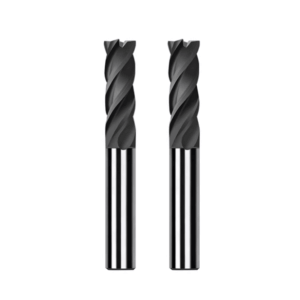
Our Selection Logic for Customizing Corner Radius End Mill Cutter Coatings
Through years of work with European and American clients, we developed a practical selection approach: coating choice cannot be based solely on tool type. It must account for machining material, method, and machine tool performance. On-site observations in Germany and France revealed that even tools with identical geometry may underperform if coatings are mismatched, especially during high-speed milling of stainless steel or chromium-molybdenum steel. Tool tip wear and cutting force data showed that coating selection directly influences stability and tool life.
We also match coatings to material properties and hardness. For example, 316 stainless steel tends to form built-up edges and high tool-tip temperatures, while 17-4PH steel primarily shows thermal wear and microcracks. We choose AlTiN, TiAlN, or TiSiN coatings and adjust thickness to ensure stable cutting and uniform wear, emphasizing material-coating compatibility over tool type alone.
Choose Coatings Based on Material, Not Just Tool Type
Material properties often dictate coating importance. In machining 304 stainless steel for a German client, uncoated carbide tools quickly wore at the corner radius, leading to surface instability. Using AlTiN-coated tools under the same conditions achieved uniform wear, stable cutting forces, and significantly longer tool life. Material hardness and wear resistance should therefore guide coating selection more than tool geometry alone.
For high-nickel 316 stainless steel or high-hardness chromium-molybdenum steel, we often prefer TiSiN coatings or thicker coatings to reduce chip buildup and microcrack propagation. Different materials require different coating wear resistance and adhesion, and only proper matching ensures stable machining at high feed rates and depths.
Adjusting Coating Based on Machining Method (Roughing/Finishing)
During roughing, cutting loads are high, especially at the corner radius tip. Coatings with insufficient hardness or adhesion allow micro-cracks and chipping. Field tests show that AlTiN or TiSiN coatings with high wear resistance and moderate thickness are optimal for roughing, maintaining tool life under deep, high-feed cuts.
In finishing, we prioritize surface quality. Thick coatings may slightly increase cutting force, affecting smoothness. Thin coatings or well-lubricated TiAlN coatings can balance tool life and surface finish. This shows that coating selection should align with machining method, not applied uniformly.
Matching Coatings to Machine Tool Stability and Speed Range
Even with proper tool geometry and coatings, insufficient rigidity or inappropriate speed can accelerate wear. High-speed machining of stainless steel or high-hardness alloys generates vibration, increasing corner tip wear. Selecting coatings with strong adhesion and heat resistance, like AlTiN or TiSiN, helps resist impacts and thermal wear. Adjusting cutting parameters to match machine capabilities further ensures optimal tool performance.
High-rigidity machines allow thick-coated tools to achieve higher feeds and depths, while moderate-rigidity machines require thin or lubricating coatings to prevent chipping. Matching coatings to machine tool stability and speed ensures consistent lifespan and machining accuracy.
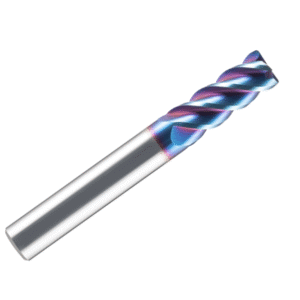
Our Manufacturing Experience in Coating as a China Corner Radius End Mill Manufacturer
Coating quality depends heavily on substrate. Even a high-hardness coating underperforms if substrate hardness or surface finish is inadequate. For carbide corner radius end mills for European and American clients, we emphasize substrate hardness uniformity and surface roughness control. Precision grinding and rigorous testing ensure uniform coating adhesion at fillets, stabilizing lifespan under high-load stainless steel machining.
Tool geometry, diameter, and fillet radius also influence coating performance. Small micro-fillet tools experience localized stress, and minor substrate defects can cause coating peeling or microcracks. Optimizing substrate machining improves adhesion and wear resistance, especially in continuous deep grooving or high-speed milling of stainless steel.
Tool Substrate Quality and Coating Effectiveness
Even with the same coating, substrate hardness or surface roughness significantly impacts tool life. In high-hardness chromium-molybdenum steel or 316 stainless steel, microcracks on the substrate often initiate coating peeling. Tests at a German client site showed that tools with optimized substrates had uniform coating adhesion, even wear, and minimal cutting force fluctuations. Poor substrate quality reduced tool life despite identical coatings.
Substrate uniformity also affects heat resistance. Uneven hardness causes stress concentration, accelerating microcracks in corner radius tips. Strictly controlling hardness and dimensional tolerances ensures coatings perform optimally in high-temperature, high-cutting-force conditions, stabilizing tool performance.
Coating Thickness Control and Tool Life
Coating thickness directly affects tool life. Thick coatings improve wear resistance but can increase tip stress and microcrack risk. Thin coatings fail to protect the tip, especially in high-speed stainless steel machining, leading to chipping. Our experiments at European and American sites identified optimal thickness ranges based on tool diameter, corner radius, and material, ensuring stable cutting under high feed and deep cuts.
Thickness should also match machining method. Roughing requires high wear resistance and moderate thickness, finishing prefers thinner coatings for surface quality. Flexible thickness control has significantly extended corner radius end mill cutter life in deep groove and complex contour machining.
Why Some Customers See Over 30% Tool Life Improvement After Coating Changes
Many European and American clients report >30% longer tool life after switching to optimized coatings. This improvement stems not only from coating wear resistance but also from matching coating with material, tool geometry, and cutting parameters. On-site analysis showed slower microcrack propagation, reduced chip buildup, and decreased adhesive wear, extending tool life.
Coatings tailored for specific materials and methods yield the greatest improvement on high-temperature stainless steel, chromium-molybdenum steel, and high-hardness alloys. In high-speed or deep-groove machining, clients also experienced more stable surface finish and dimensional accuracy. Comprehensive matching of coating, substrate, and machining parameters is essential for stable cutting performance.
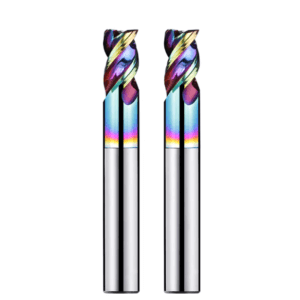
Common Problems Using Coated Corner Radius End Mills
Even high-quality coated tools may experience rapid wear or unexpected tool life due to poor matching between machining material, cutting parameters, machine rigidity, and substrate. Excessive feed or depth in high-speed stainless steel deep grooves can still cause microcracks, chip buildup, or localized tip chipping.
Discrepancies between wear patterns and theoretical predictions are common in complex contours or high-hardness materials. Coating type, thickness, and tool diameter directly affect wear, heat distribution, and cutting force. If tool life is below expectations, evaluate coating choice, machining parameters, material type, and machine capabilities. We can also exchange specific work conditions, drawings, or materials to optimize performance.
Why Do Coated Tools Still Wear Out Rapidly?
Rapid wear often results from a mismatch between substrate quality, geometry, and coating, or cutting parameters exceeding coating tolerance. Check substrate hardness, corner radius, and surface treatment, then adjust speed and feed. Proper alignment allows the coating’s wear resistance advantage to be realized.
Material characteristics also influence tool life. High-nickel stainless steel accelerates corner tip wear through chip buildup and adhesive wear. If tip wear is concentrated in the corner transition, choose a coating suitable for high-temperature, anti-adhesion processes and adjust cutting parameters accordingly.
Failure Modes Under Incorrect Cutting Parameters
Exceeding recommended cutting parameters typically leads to tip chipping, microcrack propagation, and built-up edge accumulation. This is common in deep grooves of 316 stainless steel at high speed. Compare coating, machine tool speed, rigidity, and material hardness before increasing feed or depth. Gradual adjustments prevent premature failure while maintaining surface quality.
Excessive localized heat can still cause coating peeling and tip microcracks even with high-wear coatings. Monitoring cutting force and tip temperature helps detect parameter mismatch. Sharing work conditions and drawings can help solve similar issues.
When to Change the Coating Type Instead of Tool Structure
Many customers replace the tool structure first, but often changing the coating is more effective. Switching to a coating suited to material and operating conditions can extend corner radius end mill life by >30% without redesigning geometry.
For high-hardness materials or deep grooves, first assess whether the existing coating matches conditions before changing tool type. Compare machining parameters, material, and machine setup to determine if coating optimization is needed. Sharing specific operating conditions, drawings, or materials allows more stable cutting and longer tool life.