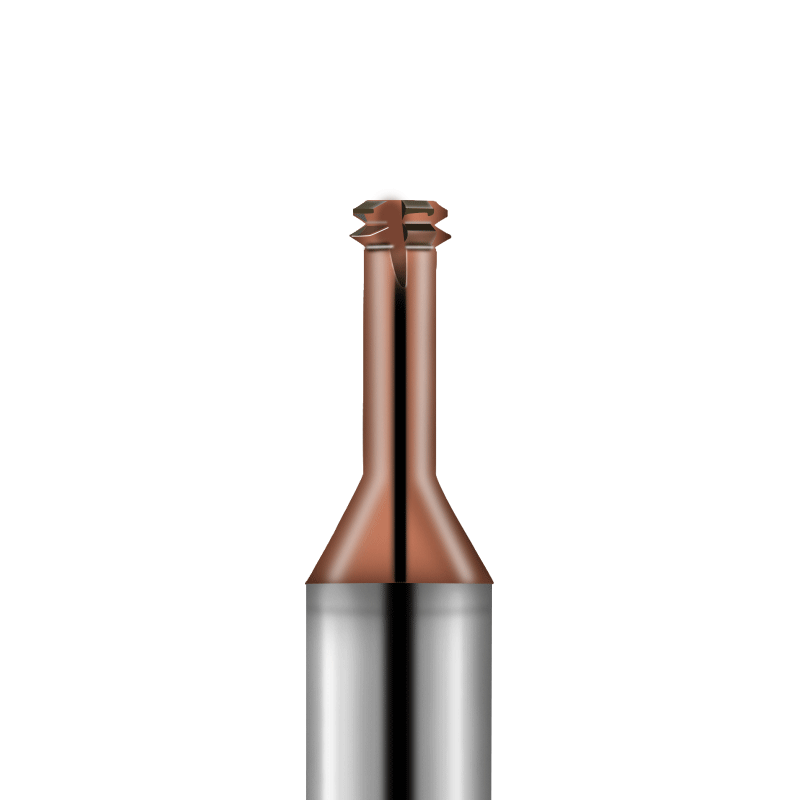
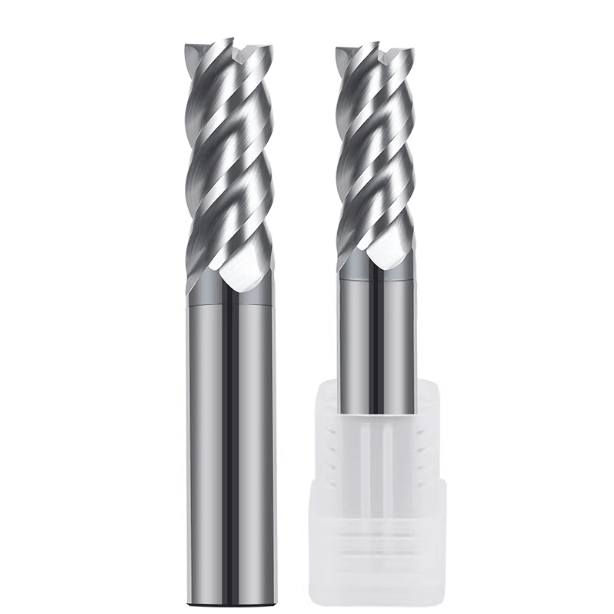
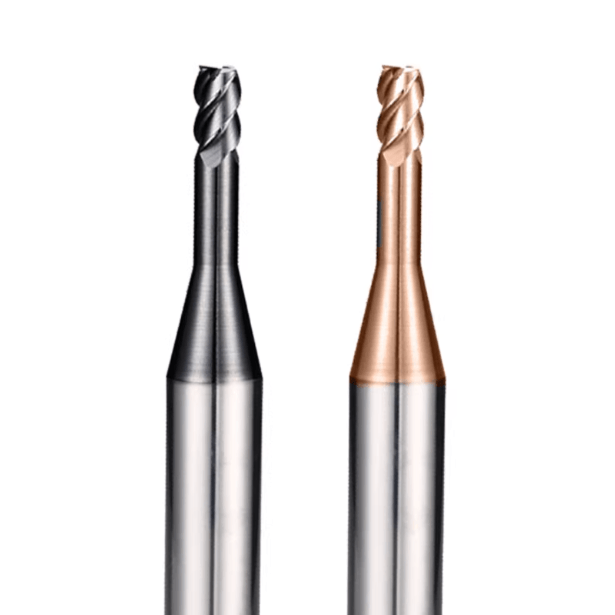
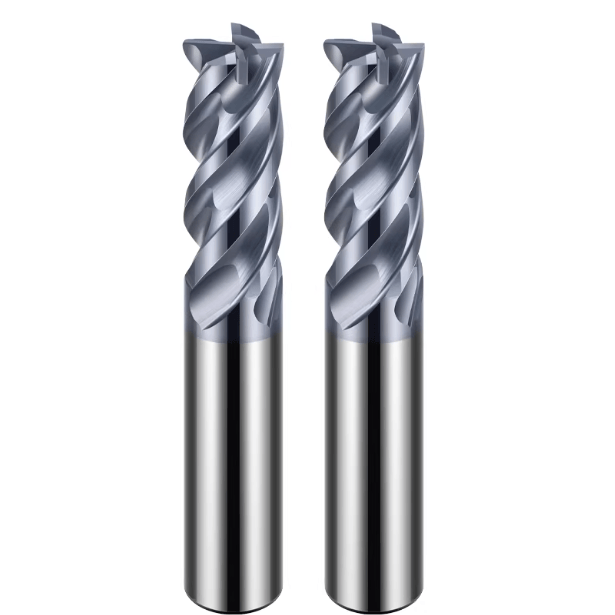
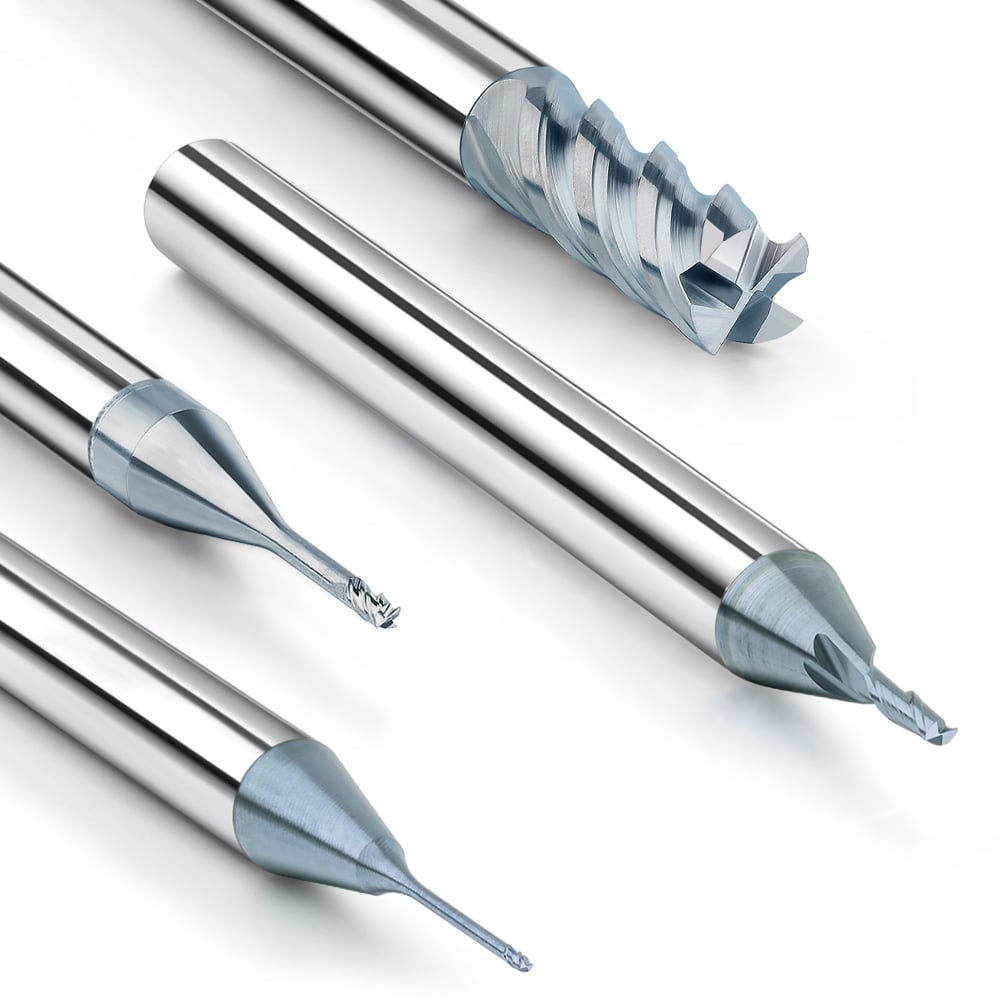
In machining high-strength materials, tool durability and stability directly impact processing efficiency and product quality. Using radius end mills for hard milling helps reduce the risk of edge chipping, improving tool life and surface finish. Compared to traditional square-edge end mills, corner radius end mills optimize cutting edge geometry to distribute cutting stress, reducing localized impact during entry and exit and effectively controlling micro-chipping.
When machining high-hardness steels or mold steels (HRC55–HRC65), selecting carbide radius end mills plays a critical role. Carbide provides high wear resistance and excellent fracture toughness, allowing tools to maintain edge stability during long, continuous cutting operations. The HRC65 corner radius end mill is particularly effective in finishing and semi-finishing hard materials, handling the high-stress environment of complex contours and surfaces.
China corner radius end mill suppliers offer cost-effective, high-quality tools through mature manufacturing processes and strict quality control. These radius end mills meet standards in edge geometry and carbide material, and coatings and geometric optimization further enhance processing stability, providing reliable solutions for hard milling applications.

Real-World Machining Scenarios of Tool Chipping Problems in Hard Milling
Cutting tools in high-hardness materials often face extreme forces and thermal stress. Improper cutting parameters or the wrong tool choice makes the cutting edge highly susceptible to chipping, leading to surface roughness, reduced accuracy, and even scrap parts. In continuous cutting of mold steels or hard alloys, traditional tools experience concentrated stress, forming localized micro-cracks that can develop into larger chipping. Corner radius end mills distribute cutting impact through the rounded corner, mitigating these issues.
Chipping also increases machine vibration and tool replacement frequency, reducing production efficiency. Combining a high-rigidity machine tool with a carbide radius end mill maintains edge stability during cutting, preventing micro-chipping from instantaneous impact. This is especially important when machining materials with HRC55–HRC65 hardness, where tools must resist wear and brittle fracture under strong cutting forces.
Common Chipping Forms in HRC55–HRC65 Material Machining
The most common forms of cutting edge damage include tip chipping, edge spalling, and microcrack propagation. Entry and exit points are particularly vulnerable, creating stress concentration zones. Straight-edge end mills are especially prone to this damage, while HRC65 corner radius end mills effectively disperse stress through their rounded transitions, reducing microcrack formation.
Continuous machining further accelerates chipping due to localized wear. During semi-finishing and finishing, using an inappropriate material or failing to replace the tool in time can cause pitting, burrs, and crack propagation. Carbide radius end mills maintain high wear resistance and improve chipping resistance, extending tool life and ensuring surface quality.
The Actual Impact of High-Hardness Steel on End Mill Cutting Edge
Strong cutting forces and high frictional heat cause instantaneous impact on cutting edges, potentially leading to micro-chipping or edge fragmentation. This is most pronounced in deep holes or complex mold contours. Using a radius end mill mitigates impact by optimizing cutting angles and transition radius, maintaining edge stability under high-hardness conditions.
Edge damage also affects machining efficiency. Increased vibration prevents optimal cutting parameters and reduces accuracy. Frequent tool changes add production costs. A corner radius end mill made of carbide effectively reduces these adverse effects and improves overall machining stability.
Limitations of Traditional Flat-Bottom End Mills in Hard Milling
Flat-bottom end mills concentrate stress on the cutting edge, leading to microcracks and chipping, especially in mold steels above HRC60. Right-angle cutting edges experience high impact during entry and exit, shortening tool life and causing burrs or pits.
They are also prone to vibration and deflection during continuous cutting, affecting accuracy. In contrast, carbide radius end mills increase cutting edge strength and impact resistance with a rounded design, maintaining stability in hard milling and reducing chipping.
Core Advantages of Radius End Mills in Reducing Chipping
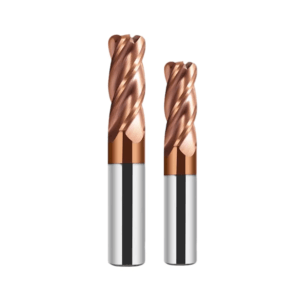
Radius end mills offer strong resistance to chipping when machining high-hardness materials. Their main advantage lies in optimizing cutting edge stress and maintaining cutting stability. Compared to right-angle cutting edges, corner radius end mills disperse concentrated cutting forces through a rounded edge design, reducing localized impact and minimizing microcrack formation.
When machining mold steel with HRC55–HRC65 hardness, selecting a radius end mill with the appropriate corner radius reduces cutting edge stress, extends tool life, and ensures stable performance during continuous cutting operations. High-rigidity carbide tools, such as carbide radius end mills, further enhance wear resistance and fracture toughness. In finishing and semi-finishing operations, cutting edge stability directly affects workpiece surface quality. Optimized geometry ensures an even distribution of cutting forces, significantly reducing chipping and improving hard milling efficiency.
How the Corner Radius Structure Distributes Cutting Stress
The corner radius design smoothly transitions cutting forces from the sharp edge to the tool body, preventing stress concentration that can cause chipping. During entry and exit, traditional right-angle end mills are prone to instantaneous micro-cracks. A radius end mill distributes the localized impact over a larger area, helping keep the cutting edge intact under high-stress conditions and improving overall stability.
The rounded transition also reduces instantaneous impact and cutting vibrations, improving surface finish. For HRC65 materials requiring continuous, high-precision cutting, the corner radius of an HRC65 corner radius end mill effectively spreads stress, reduces tool wear, and controls micro-chipping, resulting in smoother and more reliable machining.
The Improvement in Cutting Edge Strength Provided by Radius End Mills
Corner radius end mills increase the thickness at the cutting edge root, improving bending and fracture resistance. When paired with carbide material, this rounded geometry enhances tool strength and wear resistance, reducing chipping caused by weak edges.
Improved cutting edge strength ensures consistent performance during long machining runs. In complex contours or deep cavities, stable cutting edges directly affect surface accuracy and machining efficiency. Optimized geometry increases load-bearing capacity, reduces tool replacement frequency, lowers production costs, and ensures consistent quality in HRC55–HRC65 mold steel machining.
Comparative Analysis of Entry and Exit Phases (vs Right-Angle Cutting Edges)
Entry and exit are the stages most prone to tool chipping. Right-angle end mills are vulnerable to tip impact during entry, causing micro-cracks to propagate, and experience chipping at exit due to instantaneous friction and force changes. Radius end mills, with rounded transitions, distribute impact forces evenly during these phases, significantly reducing the risk of chipping.
When hard milling high-hardness materials, corner radius end mills maintain stability, minimize vibration, and improve surface finish. Using an HRC65 corner radius end mill for deep cavities or complex surfaces significantly reduces chipping of right-angle edges, maintaining high strength and wear resistance throughout the machining process, and providing reliable precision machining performance.
Stability Performance of Corner Radius End Mills in Hard Milling
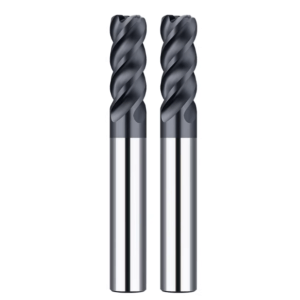
Tool stability directly affects machining efficiency and surface quality when cutting high-hardness materials. Rounded corner designs improve edge strength and maintain cutting stability in mold steels or cemented carbide. Compared to right-angle edges, the transition distributes forces more evenly, reducing local stress concentration and micro-chipping. For HRC55–HRC65 materials, a properly sized radius helps preserve edge integrity during continuous operations.
Combining corner radius geometry with carbide material ensures stable cutting forces and resistance to brittle fracture in long-term hard milling. Tools retain edge integrity even under high-stress conditions, enhancing surface finish and reducing burrs and pits. For precision molds and complex surfaces, stable corner radius end mills improve efficiency while reducing tool replacement and maintenance costs.
Actual Effects of Corner Radius End Mills in Preventing Micro-Chipping
Rounded corners reduce micro-chipping by evenly distributing cutting forces along the edge root, preventing stress concentration at the tip. Using an HRC65 corner radius end mill on HRC65 mold steel significantly reduces micro-chips, extends tool life, and ensures stable surface quality.
The rounded edge also cushions the cutting edge during entry and exit, lowering chipping risk. Compared to flat-bottom end mills, this design provides more stable conditions during finishing and semi-finishing, making micro-chipping control more reliable.
The Impact of Different Corner Radius Sizes on Tool Life
Corner radius size directly affects tool life and cutting performance. A larger radius increases cutting edge root thickness, improving bending strength and wear resistance, extending tool life in hard milling. Excessively large radii, however, may increase cutting forces and vibration, affecting stability.
Optimizing radius size is crucial in finishing and semi-finishing. Proper selection reduces downtime due to tool changes, improves overall production efficiency, and ensures consistent edge stability and workpiece surface quality.
The Ability of Rounded Corners to Suppress Cutting Vibrations
Cutting vibrations are common in high-hardness material machining, leading to chipping and lower surface accuracy. Rounded corner end mills disperse instantaneous forces to the tool body, effectively reducing vibration amplitude.
Combined with a rigid carbide tool body, rounded corners maintain stable cutting forces under high-speed, high-load conditions. This minimizes oscillation and chipping, extending tool life and ensuring consistent surface quality and machining accuracy.
Machining Advantages of Carbide Radius End Mills in High-Hardness Materials
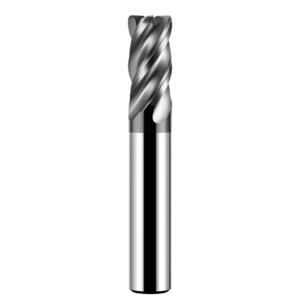
Carbide radius end mills offer significant advantages when machining high-hardness materials. Compared to high-speed steel tools, their carbide substrate provides superior wear resistance and minimizes micro-cracking and brittle fracture during machining of mold steel or HRC65 materials. The rounded edge design further enhances the cutting edge’s load-bearing capacity, maintaining stable performance during long, continuous cutting and extending tool life.
Additionally, the combination of a high-rigidity tool body and carbide material ensures accurate, stable cutting under high-speed and high-load conditions. When machining complex surfaces or deep cavities, vibration impact on the cutting edge is significantly reduced, ensuring consistent surface finish and reducing the need for frequent tool changes, thereby optimizing production efficiency.
The Carbide Substrate’s Resistance to Brittle Fracture
The high hardness and toughness of carbide allow the tool to withstand cutting edge fracture in high-hardness mold steel. During high-impact cutting, the carbide substrate of an HRC65 corner radius end mill disperses stress effectively, reducing the risk of brittle fracture at the tool tip. This is particularly beneficial for deep grooves or complex contours, where edge integrity is critical for stable continuous machining.
Carbide also resists temperature fluctuations, minimizing micro-crack propagation due to thermal stress during hard milling. Paired with a rounded edge, the tool maintains uniform force distribution, improving cutting edge stability and providing reliable performance in both finishing and semi-finishing operations.
Wear Resistance Performance in Continuous Cutting
During extended cutting, the tool edge experiences friction and high cutting forces. The carbide substrate provides excellent wear resistance, preserving edge integrity even when machining mold steel above HRC60. This reduces micro-chipping and edge flaking, maintaining consistent cutting performance and surface quality over long periods.
High wear resistance also lowers tool change frequency and production downtime. Combined with a rounded edge, the tool experiences even force distribution during entry, exit, and contour machining, further reducing edge wear and ensuring stable, efficient machining of high-hardness materials.
The Role of High-Rigidity Tool Bodies in Reducing Edge Damage
A rigid tool body is essential for edge stability during high-hardness material machining. High-rigidity bodies minimize deflection and vibration, allowing the corner radius end mill to maintain edge integrity even under high-speed or deep cuts. For HRC65 mold steel, tool body rigidity directly affects micro-chipping frequency and surface quality.
Combined with a carbide cutting edge, a rigid tool body increases overall fracture resistance. In continuous cutting or deep cavities, reduced vibration and uniform force distribution lower edge damage and flaking, ensuring stable machining accuracy and long-term tool reliability.
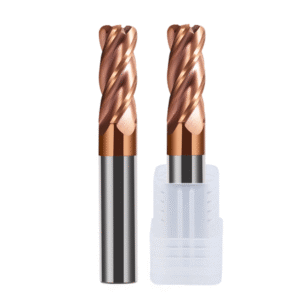
Practical Application Experience of HRC65 Corner Radius End Mill
HRC65 mold steel requires tools with high strength and wear resistance. An HRC65 corner radius end mill, featuring carbide material and a rounded edge, distributes cutting forces effectively, reducing edge chipping during finish and semi-finish operations. Tool stability directly affects surface quality and machining efficiency, making proper corner radius selection critical for complex or deep contours.
Under continuous or high-load conditions, the tool maintains edge integrity, limiting micro-crack propagation. The combination of optimized geometry and carbide material extends tool life and improves overall machining stability, offering reliable performance for high-hardness mold steel applications.
Tool Stress Characteristics in HRC65 Mold Steel Machining
During HRC65 mold steel machining, the cutting edge faces combined effects of concentrated forces, frictional heat, and instantaneous impact. Radius end mills distribute stress across the tool body through their rounded corner, reducing micro-cracks and chipping risk. For deep cavities and complex contours, this design ensures more uniform stress distribution and enhanced stability.
In addition, fluctuations in cutting forces during high-hardness machining can accelerate edge wear if tool material or geometry is inadequate. The carbide material of HRC65 corner radius end mills improves fracture resistance, maintaining long-term stability and high surface quality during precision machining.
Chipping Control in Finish Machining
In finishing HRC65 materials, micro-chipping impacts both surface and contour accuracy. The corner radius end mill reduces entry and exit impact forces through optimized edge thickness and transition radius, preserving edge integrity. Appropriate cutting parameters combined with rounded edges further suppress micro-cracks, ensuring surface finish and dimensional accuracy.
Wear control is critical in finishing; carbide material and rounded geometry reduce edge wear and maintain stable cutting forces. This approach significantly decreases chipping, extends tool life, and minimizes production downtime.
Stability under Dry or Minimal Lubrication Conditions
Dry or minimal lubrication increases demands on tool stability. The carbide substrate and rounded edge of HRC65 corner radius end mills withstand high temperatures and friction while distributing cutting stress, reducing chipping and wear.
Rounded corners also suppress cutting vibrations, maintaining consistency and surface quality. For complex molds and contours, this combination reduces edge damage, prolongs tool life, and ensures efficient, reliable machining in low-lubrication environments.
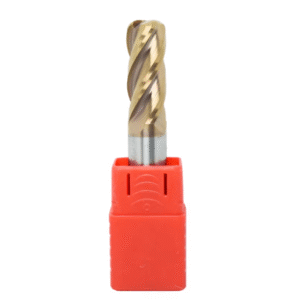
The Impact of Machining Parameters on Chipping Control of Radius End Mills
Machining parameters critically affect cutting edge stability in hard milling. Cutting depth, feed rate, and spindle speed determine stress distribution and wear. Excessive depth or uneven feed increases stress, promoting micro-chipping, especially in HRC65 mold steel. Optimized parameters extend carbide radius end mill life while maintaining surface finish.
Proper parameters stabilize the cutting process, reduce vibration and impact, and ensure uniform force distribution in deep or complex cuts, improving machining consistency and efficiency.
Relationship Between Cutting Depth and Stress
Deeper cuts increase bending stress at the cutting edge root, promoting micro-cracks and localized chipping. HRC65 corner radius end mills distribute stress across a larger area, reducing concentrated stress and improving stability.
Controlling depth reduces cutting vibrations, improves surface finish, and prevents accelerated edge wear, ensuring tool life and machining consistency.
Effect of Feed Rate and Spindle Speed on Cutting Edge Impact
High feed rates increase instantaneous cutting forces, causing micro-chipping. Excessive spindle speed generates frictional heat, accelerating wear. Proper feed and speed settings allow uniform stress distribution, reducing chipping risk.
Parameter optimization also improves milling efficiency and surface quality. Combined with rounded edge geometry and carbide material, the tool remains stable under continuous cutting.
Typical Case Analysis of Chipping from Improper Parameters
Improper parameters, such as excessive depth or feed, commonly cause cutting edge chipping. Local overload during entry or exit accelerates micro-cracks, reducing tool life and surface quality.
In deep groove machining, unadjusted spindle speeds for the tool geometry can cause force fluctuations, rapid crack formation, and frequent micro-chipping, requiring tool replacement. Optimizing parameters based on empirical data and matching the tool’s rounded design prevents chipping, ensuring stable, efficient hard milling.

Strategies for Using Radius End Mills in Different Machining Processes
Hard milling involves multiple stages, each requiring specific tool performance. Roughing demands high material removal capacity, while semi-finishing and finishing prioritize edge stability and surface finish. Selecting corner radius end mills for each stage should consider material hardness, cutting depth, and tool geometry to minimize micro-chipping, extend tool life, and ensure consistent machining performance.
Using carbide tools, such as carbide radius end mills, across different stages allows the tool to resist high cutting forces during roughing and maintain edge integrity during finishing. Proper selection, combined with optimized cutting parameters and tool geometry, ensures uniform force distribution and reduces vibration, achieving stable and efficient machining of high-hardness materials.
Selection of Corner Radius End Mills in Hard Milling Roughing
During roughing, tools face high cutting forces and deep cuts. Carbide radius end mills, with their rounded corners, effectively distribute cutting stress at the edge, reducing chipping risk. Choosing the right corner radius and tool diameter balances material removal with tool stability, ideal for HRC55–HRC65 mold steel.
Using square end mills in roughing can lead to cracks and chipping. Rounded corner end mills increase edge strength and reduce cutting vibrations, maintaining tool life under continuous high-load cutting, and providing a stable foundation for subsequent semi-finishing and finishing operations.
Stability Advantages of Corner Radius End Mills in Semi-Finishing
Semi-finishing requires high edge stability and a balance between efficiency and surface quality. Rounded corner end mills distribute cutting stress during entry and exit, reducing micro-chipping risk. In HRC65 mold steel or high-hardness alloys, this ensures uniform force distribution, stable cutting, and consistent machining results.
Carbide tools offer excellent wear resistance, supporting continuous cutting and moderate depth loads. Combined with optimized corner radius and cutting parameters, the tool lifespan is extended during semi-finishing, maintaining surface quality and preparing for finishing.
Key Details for Reducing Edge Chipping in Finishing
Finishing emphasizes surface finish and contour accuracy. HRC65 corner radius end mills, with optimized edge thickness and radius, evenly distribute impact forces during entry and exit, minimizing micro-chacking and localized chipping. Low cutting depth, high tool rigidity, and stable cutting forces preserve edge integrity throughout continuous finishing.
Selecting proper spindle speed and feed, combined with carbide material and rounded geometry, suppresses vibration and edge wear. This optimization extends tool life, reduces tool change frequency, and ensures precise machining of high-hardness mold steel and complex contours.

Manufacturing Characteristics of Chinese Corner Radius End Mill Suppliers
Chinese radius end mill manufacturers have developed technological strengths in high-hardness material machining, particularly in carbide radius end mills suitable for HRC65 mold steel. Advanced carbide selection, precise edge grinding, and strict quality control ensure edge stability and wear resistance during hard milling.
Consistency and batch stability are emphasized, guaranteeing uniform edge radius, core thickness, and coatings. With proper cutting parameters and process guidance, these tools offer performance comparable to international brands, while being more cost-effective, making them reliable for global manufacturing.
Technical Focus of Chinese Suppliers on Hard Milling Tools
Chinese manufacturers focus on carbide selection, edge geometry optimization, and coating technologies. Radius end mills disperse cutting stress, reducing micro-chipping in HRC65 mold steel and high-hardness alloys. Helix angle, edge thickness, and core diameter are optimized to maintain rigidity under high-load conditions.
Process control, including grinding accuracy and edge shape consistency, ensures batch-to-batch reliability. Advanced coatings enhance wear and heat resistance, supporting continuous precision machining of high-hardness materials.
Consistency and Batch Stability of Chinese Carbide Corner Radius End Mills
High-hardness machining requires consistent and stable tools. Chinese corner radius end mills maintain uniform edge radius, transition, and core thickness, minimizing cutting force fluctuations and micro-chipping. Batch stability ensures reliable continuous machining and surface quality.
Carbide material combined with precise edge processing provides long-lasting durability across roughing, semi-finishing, and finishing stages, ensuring consistent cutting performance in mass production.
Experience in Selecting Chinese Tools for Hard Milling
Selecting the right tool involves considering machining stage, material hardness, and cutting conditions. For HRC55–HRC65 mold steel, an HRC65 corner radius end mill withstands high cutting forces and preserves edge integrity. Tool diameter, radius, feed rate, and spindle speed should align with tool geometry for optimized chipping resistance.
Attention to coating, core thickness, and corner transition further ensures stability in roughing, semi-finishing, and finishing. With process guidance and batch consistency, properly selected Chinese tools extend tool life, improve machining stability, and offer cost-effective solutions.

Comprehensive Tooling Strategies to Reduce Chipping in Actual Production
Reducing tool chipping requires integrated strategies: tool geometry, material, machining parameters, and machine tool conditions. Radius end mills distribute cutting forces via rounded edges and carbide construction, increasing edge strength and absorbing impacts during entry and exit. Proper cutting depth, feed rate, and spindle speed maintain uniform force distribution, extending tool life and ensuring machining stability.
Optimizing radius size, coatings, and carbide selection across roughing, semi-finishing, and finishing further reduces tool replacement frequency. High-rigidity machines, stable tool holders, and standardized carbide tools ensure reliable deep cavity and complex contour machining, minimizing chipping and improving overall efficiency.
Matching Radius End Mills with Machine Tool Rigidity
Tool performance depends on machine rigidity. Even carbide radius end mills can suffer micro-chipping if machines vibrate. High-rigidity machines withstand cutting force fluctuations, maintaining stable cutting forces and extending tool life.
In deep grooves or complex contours, matching machine rigidity with tool length and radius reduces edge impact and vibration, maximizing chipping resistance during high-load hard milling.
Tool Holder and Clamping Impact on Cutting Edge Life
Tool holders and clamping affect vibration and cutting stability. Properly designed holders and precise clamping reduce runout and uneven cutting forces, lowering micro-chipping. Tool length, diameter, and clamping method are critical for maintaining cutting edge integrity.
Optimized clamping also improves heat transfer and minimizes vibrations, extending tool life and maintaining surface quality. Along with tool geometry, carbide material, and corner radius design, clamping is essential for chipping control and machining efficiency.
Reducing Overall Machining Costs Through Tool Selection
Correct tool selection improves quality and lowers costs. Selecting the right carbide radius end mill based on material hardness and machining stage ensures high material removal in roughing and edge stability in finishing, reducing downtime.
Optimizing radius size, coatings, and carbide properties extends tool life, minimizes micro-chipping, and maintains surface quality. Combined with machine rigidity and clamping optimization, this forms a complete strategy that controls production costs while ensuring efficient hard milling.