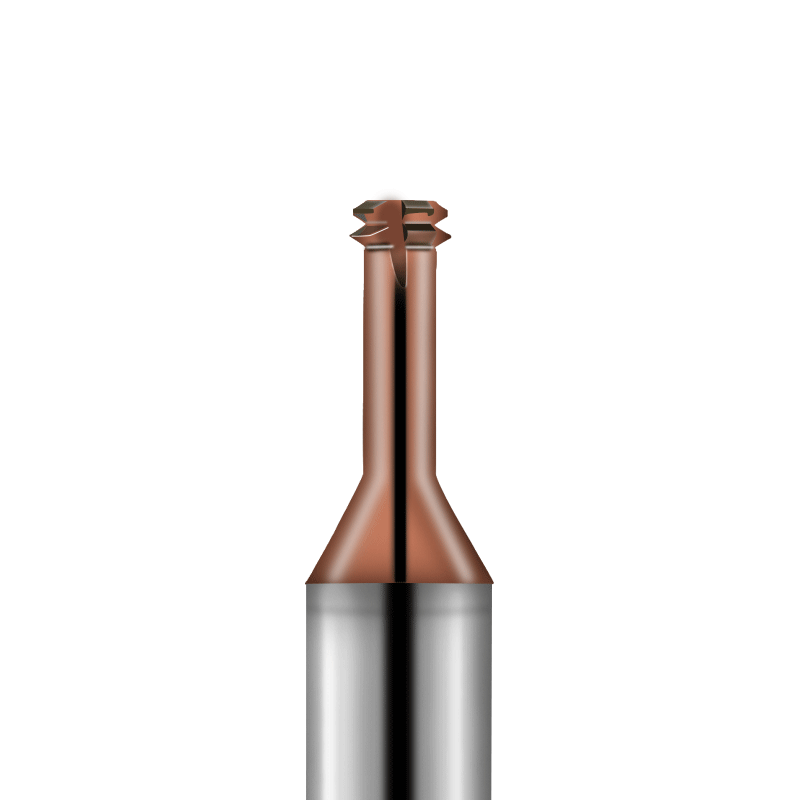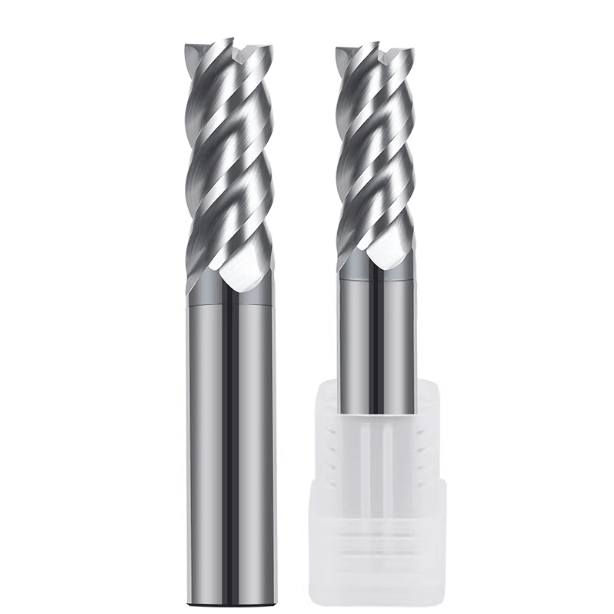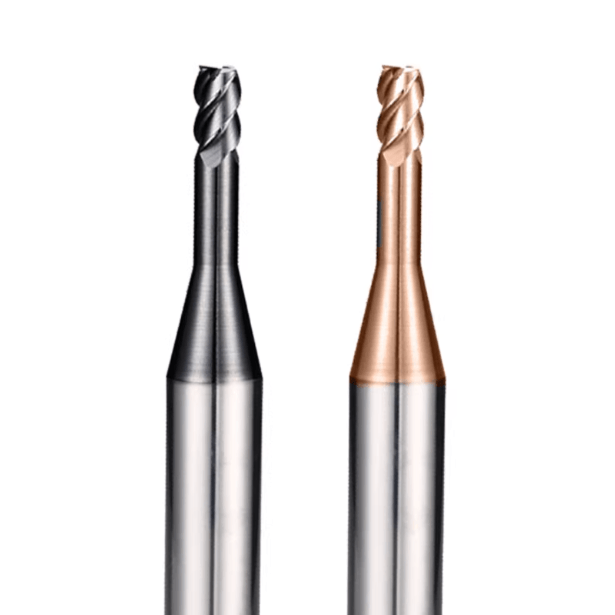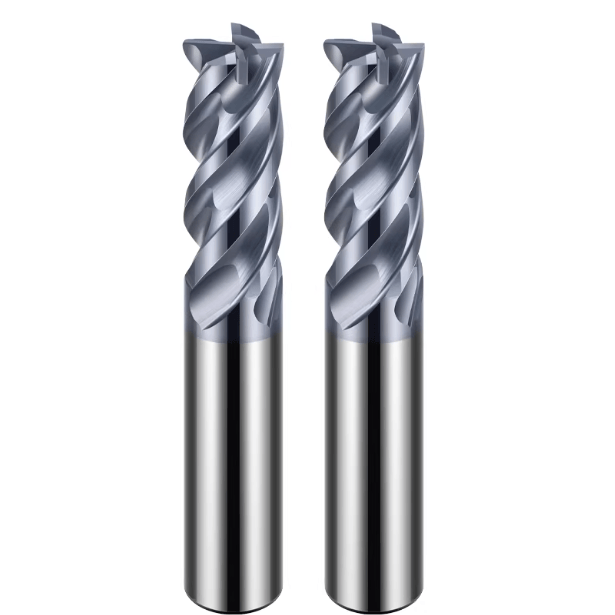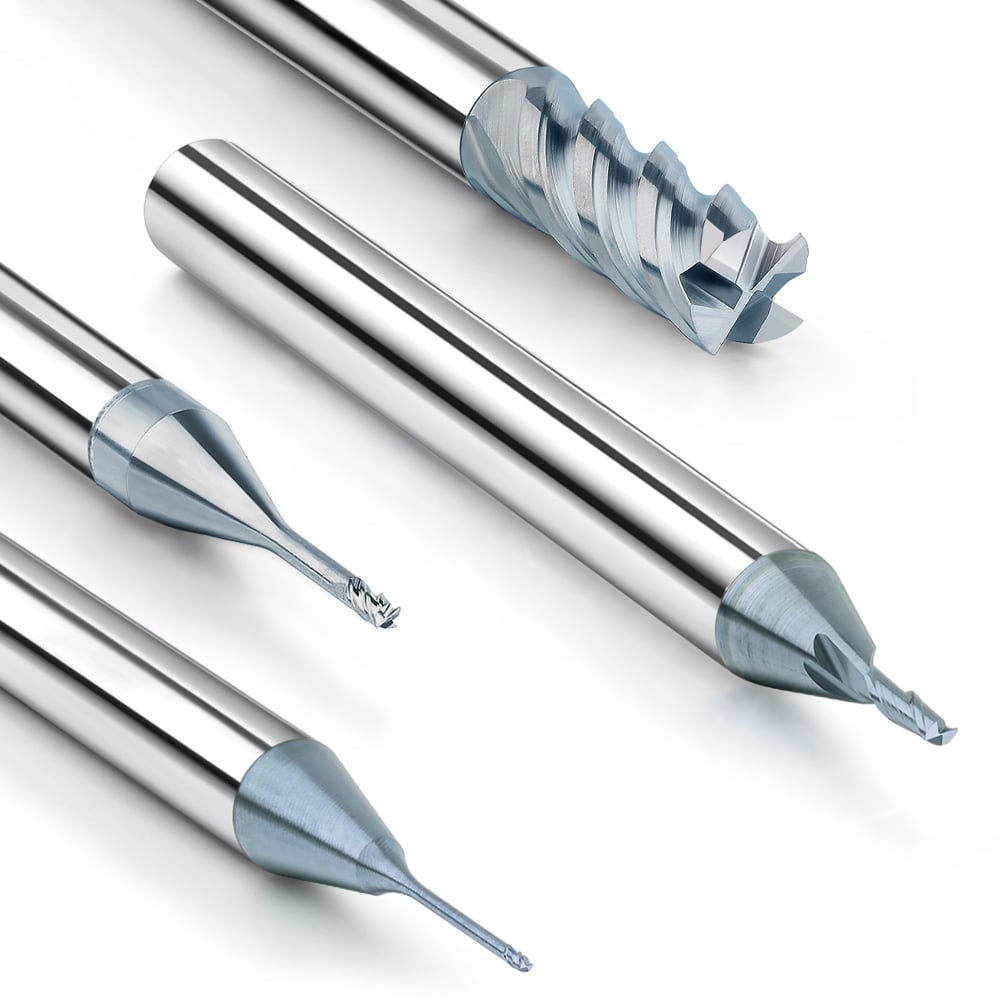
When selecting a tool supplier, the reliability of flat milling cutter manufacturers directly affects machining stability, cost control, and delivery assurance. Manufacturers differ significantly in raw material selection, production processes, quality management, and technical support. Without a systematic evaluation, issues such as inconsistent tool life, dimensional deviations, or poor batch consistency can occur in production.
For users with specific machining requirements, choosing flat milling cutters is not just about price. A comprehensive assessment should consider the manufacturer’s ability to provide consistent supply, matching cutting methods, materials, and equipment conditions. For instance, in mold steel or high-strength steel machining, HRC55 flat milling cutters demand higher control over tool body hardness, edge strength, and wear resistance. In non-ferrous metals or high-speed machining, the performance of milling cutter flat 2 flute in chip evacuation and dimensional stability is equally important for assessing manufacturer competence.
The actual performance of flat end mill cutters depends on manufacturing details rather than a single parameter. Tool blank quality, grinding precision, coating consistency, and factory inspection procedures directly affect tool life and workpiece surface finish. Especially when sourcing China flat milling cutter suppliers, technical capabilities and quality control vary widely. Judging suppliers based solely on origin or price often fails to meet long-term needs.
Understanding how to evaluate flat milling cutter manufacturers systematically—from product structure and manufacturing capability to technical support—is key to building a reliable tool supply chain.
Clearly Defining Your Machining Needs is the First Step
Before purchasing cutting tools, clearly define your machining requirements, including workpiece material, machining accuracy, and production pace. These factors directly influence tool performance, lifespan, and machining efficiency. Materials such as mold steel, carbon steel, stainless steel, and aluminum alloys differ in hardness, toughness, and thermal conductivity. Each material places unique demands on tool wear resistance, edge retention, and chip evacuation.
Machining processes also dictate tool requirements. Roughing requires high fracture resistance and large tolerances to remove material efficiently. Semi-finishing balances efficiency with surface quality and dimensional accuracy. Finishing emphasizes surface finish and machining stability, where even minor tool deviations can affect final part quality. Selecting the right tool type and flute count ensures stability, extends tool life, and improves overall machining efficiency.
Matching Flat Milling Cutter Performance to Material Requirements
-
Mold Steel: Requires high tool body strength and wear-resistant edges to prevent chipping and premature wear.
-
Stainless Steel: Needs thermal stability and effective chip evacuation to prevent heat buildup and surface scratches.
-
Aluminum and Soft Materials: Sharp edges and smooth chip flow are critical to avoid clogging and reduce cycle time.
Tool material, coating type, and edge design collectively determine cutting performance and tool longevity.
Application Requirements of HRC55 Flat Milling Cutters
HRC55 flat milling cutters are widely used for mold steel and tool steel due to superior wear resistance and edge retention. Cutting tools must maintain machining stability, avoid chipping or burning, and provide balanced wear resistance to support mass production. Consistent lifespan and cutting quality are key indicators of supplier reliability. Evaluators should examine heat treatment processes, edge precision, and coating quality to ensure stable performance during continuous machining.
Core Requirements for Flat End Mill Cutters in Different Machining Processes
-
Roughing: High fracture resistance and large tolerances for heavy material removal.
-
Semi-Finishing: Maintains efficiency while ensuring surface quality and dimensional accuracy.
-
Finishing: Edge sharpness, corner radii, and geometric precision dictate surface finish and tolerance stability.
Choosing the correct tool model and number of flutes, such as a 2-flute flat end mill, reduces rework and extends tool life while maintaining efficiency.

Judging the Professionalism of Flat Milling Cutter Manufacturers from Product Structure and Specifications
One of the main criteria for evaluating a tool supplier is their product structure design and specification control. High-quality flat milling cutters not only use superior materials and coatings but also maintain stable performance in geometric accuracy, cutting edge geometry, and tolerance consistency. These factors directly affect machining efficiency, cutting stability, and part surface quality. By examining cutting edge count, edge length ratio, tool body diameter, and tolerance control, you can gauge the supplier’s maturity in R&D and mass production and predict tool performance under different materials and processes.
Good structural design and strict specification management ensure consistent tool performance in mass production, reducing machining errors caused by tool variations and lowering rework rates and downtime. Especially when processing high-hardness materials or performing high-speed cutting, proper tool geometry ensures cutting stability and efficient chip evacuation, reflecting the manufacturer’s technical strength.
Does the Design of the 2-Flute Flat Milling Cutter Meet High-Speed and Chip Evacuation Requirements?
Two-flute flat end mills are highly effective for high-speed machining and chip removal. A well-designed helix angle and cutting edge spacing allow rapid chip evacuation, reduce heat buildup, and prevent clogging that can damage the tool or workpiece surface.
These cutters are suitable for aluminum alloys, non-ferrous metals, and roughing high-hardness steel. When evaluating suppliers, check their precision in helix angle, cutting edge sharpness, and tip radius control, as these factors directly affect tool stability and surface finish under high-speed cutting conditions.
Cutting Edge Geometry, Edge Length, and Tolerance Control of Flat Milling Cutters
Cutting edge geometry, edge length ratio, and tolerance control are crucial indicators of tool performance:
-
Proper cutting edge design reduces cutting force variation, minimizes vibration, and improves surface finish.
-
A correct edge length-to-tool diameter ratio ensures stability at different cutting depths.
-
Strict tolerance control guarantees consistent dimensions for each tool in mass production, preventing machining errors.
Suppliers with high-precision grinding machines, meticulous inspection procedures, and standardized production systems can reliably deliver durable, high-performance flat milling cutters.
Consistency Performance of HRC55 Flat Milling Cutters Across Specifications
For high-hardness HRC55 tools, consistency across diameters and edge lengths reflects the manufacturer’s craftsmanship. Heat treatment, edge grinding, and coating uniformity all affect cutting stability and wear resistance.
Suppliers who can maintain consistent cutting force, edge strength, and dimensional accuracy across different HRC55 specifications demonstrate strong mass production capabilities and a mature quality management system. In mass production, consistent tools reduce rework, improve machining efficiency, and minimize material waste.
Manufacturing Process and Equipment Level Determine the True Quality of Flat Milling Cutters
Tool performance depends on design, geometry, and manufacturing processes. High-precision equipment and standardized production ensure sharp edges, stable dimensions, and batch consistency, resulting in high efficiency and long tool life.
For continuous machining or high-hardness materials, the supplier’s equipment and process control determine long-term tool reliability. Advanced CNC grinding machines, precise heat treatment, and a comprehensive quality management system are essential to maintain machining stability and durability.
Optimized manufacturing processes affect surface finish, cutting force distribution, chip evacuation efficiency, and vibration resistance. Superior manufacturing capabilities minimize dimensional deviations and defects, ensuring reliable production. Consistency and stability are especially critical in mass production or high-speed cutting conditions.
The Impact of Tool Blank Material and Heat Treatment on Flat Milling Cutter Performance
-
Tool blank hardness, toughness, and purity directly affect resistance to chipping and wear.
-
High-quality blanks combined with precise heat treatment improve edge strength and hardness distribution.
-
This ensures the tool maintains stable performance even when machining high-hardness materials or during continuous cutting.
-
Heat treatment includes quenching, tempering, and pre-treatment before coating. Poor process control can cause uneven stress or insufficient hardness, affecting tool life and stability.
When evaluating suppliers, consider material sourcing, heat treatment precision, and process standardization.
The Impact of Grinding Accuracy and Production Process on Flat End Mill Cutter Stability
Grinding precision determines the tool’s geometric accuracy, including edge sharpness, helix angle, tip radius, and flute length ratio. High-precision grinding ensures consistent dimensions across batches, minimizing vibration and cutting force variation.
Process standardization—from rough grinding and fine grinding to coating and final inspection—ensures consistent tool performance. Mature production systems maintain HRC55 or other high-hardness tool stability during mass production, avoiding defects caused by process variation.
Capability to Reliably Mass Produce HRC55 Flat Milling Cutters
The ability to mass-produce high-hardness HRC55 tools is a key indicator of supplier strength. Stable mass production requires precise processes, advanced equipment, and a rigorous quality management system.
Suppliers must maintain consistent edge quality, tool hardness, and dimensional accuracy across different specifications and batches. For high-load machining of mold steel, high-strength steel, and similar materials, reliably mass-produced HRC55 tools ensure continuous cutting without chipping or burning, reducing production interruptions and material waste.
Quality Control System: A Key Criterion for Evaluating Flat Milling Cutter Manufacturers
The machining performance of flat milling cutters depends not only on design and materials but also heavily on the manufacturer’s quality control system. A robust testing and control process ensures each tool maintains dimensional accuracy, edge sharpness, and surface quality. This guarantees consistent machining performance and high production efficiency.
For high-hardness materials or mass production, tools from suppliers with inadequate quality control are prone to chipping, premature wear, or machining errors, increasing production costs and downtime. A systematic quality control system and comprehensive testing capabilities are therefore critical indicators of reliability and long-term cooperation potential.
A comprehensive quality control system should cover raw material inspection, heat treatment process monitoring, grinding precision checks, coating thickness verification, and full performance testing before shipment. Manufacturers with rigorous processes maintain consistent tool performance across batches while quickly identifying and correcting potential defects, ensuring reliable operation in production.
Does the Flat Milling Cutter Undergo Full-Process Testing?
Full-process testing is essential to guarantee stable performance of flat milling cutters. Key tests include:
-
Dynamic balancing: Minimizes tool vibration during rotation, reducing surface waviness and machine load.
-
Runout testing: Ensures consistent tool diameter and edge length, improving machining accuracy.
-
Cutting edge inspection: Directly impacts cutting efficiency and surface finish.
Suppliers that implement rigorous testing at every stage can maintain stable tool performance during continuous cutting, reducing rework and downtime.
The Importance of Batch Consistency for CNC Mass Production
In mass production, consistent batch performance directly affects dimensional accuracy and surface quality. Even small variations in hardness, edge sharpness, or geometry can lead to machining errors and higher scrap rates.
For high-hardness materials using HRC55 flat end mills or 2-flute flat milling cutters, batch consistency is critical. Suppliers with strict batch control and performance verification can meet the high precision and efficiency requirements of industrial production.
Defect Rate and Repair Rate Reflect the Manufacturer’s Capabilities
Low defect and repair rates indicate mature production processes and reliable quality management systems.
-
Low defect rate: Confirms stable cutting tool performance in continuous use.
-
Low repair rate: Shows tools are durable, minimizing production interruptions and material waste.
For those purchasing China flat milling cutters or HRC55 flat milling cutters, statistical data and actual test feedback from suppliers are reliable measures of their capabilities.
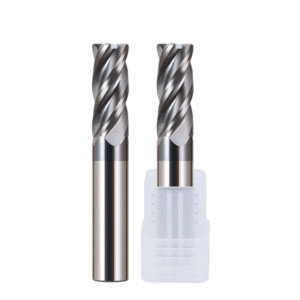
Advantages and Potential Differences of China Flat Milling Cutter Manufacturers
Chinese flat milling cutter manufacturers offer competitive pricing, flexible delivery, and extensive production experience. They typically have mature supply chains and large-scale production capabilities, providing cost-effective flat end mills and HRC55 flat milling cutters for both single-piece customization and mass production.
Many manufacturers also offer customized solutions, such as tool geometry optimization, coating selection, and special flute designs, ensuring precise performance for various materials and machining processes.
However, significant differences exist in technical capability. Leading companies like SAMHO TOOL have advanced equipment and mature processes for tool blank selection, heat treatment, precision grinding, and coating technology. These capabilities ensure stable performance and long tool life for flat end mills and 2-flute flat milling cutters in high-speed or high-hardness operations. Smaller factories may focus on cost advantages, with less standardized processes, leading to potential batch inconsistency and tool durability issues.
Cost and Delivery Advantages
Chinese manufacturers leverage large-scale production and mature supply chains to optimize costs. Automated grinding equipment, efficient raw material sourcing, and batch processing reduce production costs while maintaining tool quality.
Quick response capabilities allow flexible scheduling of production based on customer orders, shortening delivery times. This is particularly beneficial when sourcing large quantities of HRC55 flat milling cutters or custom 2-flute flat milling cutters, ensuring production continuity.
Technological Gaps Between Different Factories
Despite similar product claims, technological capabilities vary. Leading manufacturers, such as SAMHO TOOL, excel in tool blank selection, heat treatment, precision grinding, and coating, enabling high-speed machining and long tool life.
Smaller factories may have shortcomings in edge precision, batch consistency, and coating uniformity, leading to faster tool wear or inconsistent surface quality. Evaluating actual process capabilities and inspection procedures is essential to identify suppliers capable of long-term cooperation.
Distinguishing Real Manufacturers from Intermediaries
Some suppliers act as traders or agents, relying on external factories. Indicators of a true manufacturer include:
-
Factory size, production equipment, and testing instrument availability
-
R&D and batch production capabilities
-
Sample testing and batch consistency reports
-
Ability to support processing parameters for HRC55 flat milling cutters, flat end mills, or 2-flute flat milling cutters
A real manufacturer controls tool blank material, heat treatment, grinding, and coating, ensuring stability and reliability in high-speed, high-hardness, and continuous machining operations.

Technical Support Capabilities Reflect Long-Term Value
Technical support is a key factor in supplier evaluation. High-quality support helps optimize cutting parameters, extend tool life, improve surface quality, and resolve machining issues promptly.
For high-hardness materials or complex parts, the supplier’s engineers should provide precise processing recommendations, adjust tool paths, and refine cutting strategies. Effective technical support reduces rework, ensures consistent performance in mass production, and improves overall machining reliability.
Can They Provide Parameter Recommendations for HRC55 Flat Milling Cutters?
HRC55 flat end mills require strict control over speed, feed, cutting depth, and tool life. Leading suppliers provide precise recommendations based on material hardness, machine capabilities, and environmental conditions, preventing chipping, burning, or surface defects.
Recommendations can be adapted for unique workpiece shapes or specialized processes, maximizing tool life, efficiency, and material utilization.
Do They Support Machining Scheme Optimization for 2-Flute Flat Milling Cutters?
2-flute flat end mills rely on efficient chip evacuation and cutting performance. Manufacturers who offer tool path optimization, cutting angle adjustments, and feed strategy improvements enable higher efficiency and reduced wear.
Proper scheme optimization ensures machining accuracy and surface quality, especially in high-speed cutting or deep groove operations, directly affecting production stability and cost.
Responsiveness and Problem-Solving for Abnormal Wear or Chipping
Abnormal tool wear, chipping, or heat buildup can disrupt production. A supplier’s ability to respond quickly and provide solutions—such as cause analysis, parameter adjustments, or tool replacement—ensures continuity and part quality.
Professional technical teams can analyze tool usage, cutting conditions, and optimize machining, reducing rework and material waste. Timely, accurate support demonstrates the manufacturer’s service capabilities and ensures consistent tool performance and reliability.

The Impact of Customization and Collaboration Models on Flat Milling Cutter Procurement Decisions
Standard cutting tools often cannot meet all industrial machining requirements. The ability to customize non-standard or special specification flat milling cutters is a critical measure of a supplier’s capability. Customization allows suppliers to adapt flat end mill cutters or HRC55 flat milling cutters to specific materials, part geometries, and machining needs, improving accuracy, efficiency, and cost control.
Additionally, collaboration models and long-term supply reliability significantly influence procurement decisions. In OEM or ODM partnerships, the supplier’s ability to quickly respond to technical requirements, adjust production schedules, and ensure consistent quality is essential for smooth batch production and special orders.
A well-structured collaboration model balances cost, delivery, and quality. Long-term cooperation requires not only competitive pricing but also consistent tool performance and reliable delivery schedules. Suppliers with mature customization and strong cooperation capabilities can provide technical guidance and cutting solution optimization early in the project, reducing risks and ensuring smooth production.
Customization Capabilities of Non-Standard Flat Milling Cutters and Special Flat End Mill Cutters
Suppliers capable of customizing cutting tools demonstrate strong R&D and production capabilities. Adjustments in flute number, flute length, helix angle, shank design, and coating type enable precise matching to material properties and machining processes, improving efficiency and surface finish.
For high-hardness steel or complex mold components, machining accuracy and tool life directly affect production stability. Manufacturers who can rapidly develop and verify samples meet the needs of small batches or special parts while ensuring consistency in large-scale production.
Level of Cooperation in OEM/ODM Partnerships
In OEM or ODM arrangements, the supplier’s cooperation level directly impacts production schedules and delivery reliability. Highly cooperative manufacturers provide not only customized HRC55 flat milling cutters or 2-flute flat milling cutters but also technical support, tool geometry optimization, and machining process design assistance.
Quick responses to design changes, sample verification, and production guidance reduce communication costs and ensure machining accuracy. Strong technical cooperation is a key factor for long-term partnership stability.
Stability of Price, Quality, and Delivery Time in Long-Term Cooperation
Long-term procurement depends on stability in pricing, quality, and delivery schedules. Even superior tools fail to ensure smooth production if the supplier cannot maintain batch consistency or meet delivery commitments.
Top-tier manufacturers offer reasonable pricing, predictable delivery, and consistent HRC55 flat milling cutter or flat end mill cutter performance, enabling cost optimization, stable production, and reliable product quality. This reflects strong management and provides a foundation for a reliable supply chain.

Verifying the Reliability of Flat Milling Cutter Manufacturers Through Actual Machining Tests
When selecting a tool supplier, relying solely on specifications is not enough to assess actual performance. Actual machining tests provide a direct evaluation of a tool’s cutting stability, wear resistance, and service life under real working conditions. Especially when machining high-hardness materials or performing high-speed cutting, small differences in tool performance can significantly affect efficiency, surface quality, and part accuracy.
Sample machining tests verify batch consistency, durability, and can also reveal potential design or manufacturing defects, providing actionable data for purchasing decisions before mass production.
Actual machining verification typically includes cutting experiments with various materials and machining processes. A comprehensive analysis of cutting force, surface finish, tool wear, and chip evacuation efficiency determines whether the supplier’s flat milling cutters, HRC55 flat milling cutters, and 2-flute flat milling cutters are suitable for real production conditions. Only tools that have passed verification can ensure stable continuous machining and consistent product quality, reducing rework rates and production risks.
Key Flat Milling Cutter Indicators to Focus on During Sample Testing
During sample testing, monitor the following key indicators:
-
Tool edge sharpness: Affects cutting efficiency and surface finish.
-
Tool runout and dimensional accuracy: Directly influence machining precision and vibration.
-
Cutting force fluctuations: Reflect tool stability under varying loads.
-
Chip evacuation efficiency, coating uniformity, and thermal behavior: Indicate real-world performance.
Observing these parameters allows early detection of potential problems, preventing defects and production interruptions during mass machining.
Life Performance of HRC55 Flat Milling Cutters in Continuous Machining
For high-hardness tools like HRC55 flat milling cutters, lifespan and stability are critical for continuous machining. Tool wear resistance, edge retention, and thermal stability directly determine machining efficiency and part quality.
Through actual machining tests, wear rates and chipping can be evaluated across different materials, cutting depths, and feed rates. For mold steel, high-strength steel, or other high-hardness materials, consistent tool performance and uniform wear are essential for stable continuous production and minimizing rework.
Real Cutting Performance of 2-Flute Flat Milling Cutters on Different Materials
The cutting stability and chip evacuation efficiency of 2-flute flat milling cutters vary depending on material. Machining tests on aluminum alloys, copper, and steel allow observation of cutting force, chip flow, and surface finish.
These tests evaluate edge strength, tool geometry, and batch consistency, helping select suppliers that maintain stable performance across materials and machining processes. This ensures continuous production and high-quality part output.

Comprehensive Evaluation Method for Selecting Suitable Flat Milling Cutter Manufacturers
Selecting a supplier requires a thorough evaluation of price, product specifications, machining needs, quality control, manufacturing processes, and technical support. Factors such as tool structure, materials and heat treatment, batch consistency, machining verification, and customization/cooperation form a complete evaluation framework.
This framework emphasizes performance, reliability, and sustainable supply. Equipment level and process maturity determine actual machining performance of flat milling cutters, HRC55 flat milling cutters, and 2-flute flat milling cutters. Quality control and sample verification ensure batch consistency and tool life. Technical support and customization capabilities guarantee smooth execution of special processes, non-standard part machining, and high-load continuous cutting. Systematic evaluation reduces production risks, improves efficiency, and enables informed purchasing decisions.
Balancing Price, Quality, and Technical Support
Price is important, but it should not compromise quality or technical support. Leading manufacturers offer reasonable pricing and reliable delivery while ensuring high performance and batch consistency of HRC55 flat milling cutters and flat end mill cutters.
Technical support, including cutting parameter optimization, machining plan adjustments, and rapid response to abnormal wear or chipping, is crucial for maintaining production stability and tool longevity. Balancing price, quality, and technical support is key for long-term stable production and cost control.
Different Evaluation Priorities for Short-Term Procurement and Long-Term Cooperation
Short-term procurement prioritizes price and delivery, suitable for trial production or small-batch orders. Supplier responsiveness, sample quality, and timely delivery are critical.
Long-term cooperation emphasizes batch consistency, tool performance stability, and technical support, particularly for HRC55 flat milling cutters and 2-flute flat milling cutters in high-hardness materials or continuous machining. Long-term evaluation considers overall strength, including manufacturing processes, quality systems, customization capabilities, and supply chain stability.
Key Factors in Establishing a Stable Flat Milling Cutter Supply Chain
A reliable supply chain requires:
-
Consistent performance across tool specifications
-
Lifespan stability of HRC55 flat milling cutters
-
Cutting reliability of 2-flute flat milling cutters on various materials
-
Flexible customization, rapid technical support, and reasonable pricing/delivery
By combining scientific evaluation with strategic collaboration, machining companies can build a long-term, reliable supply system, ensuring production continuity and cost optimization.