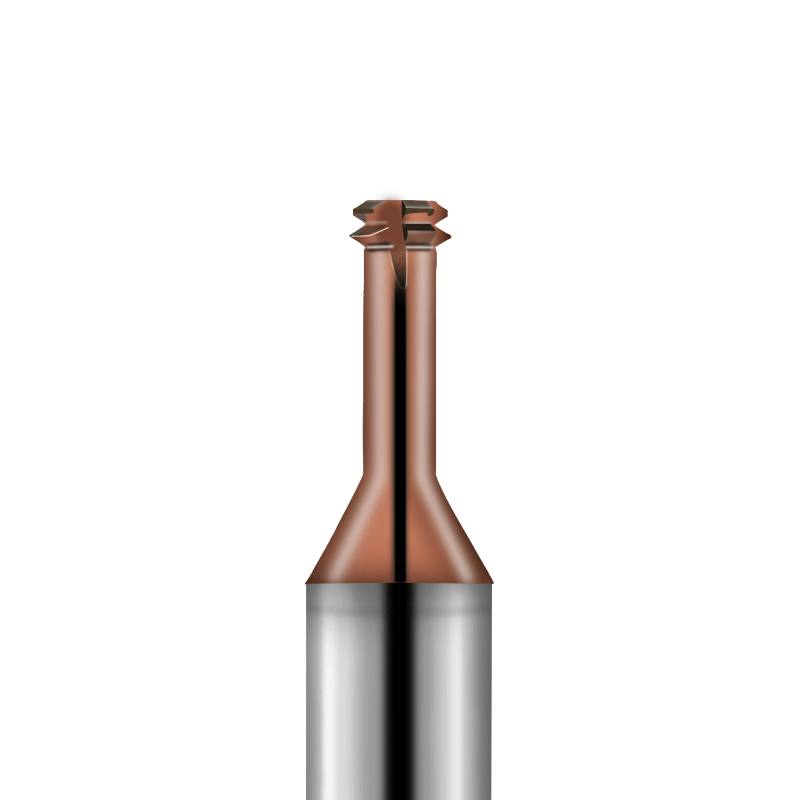
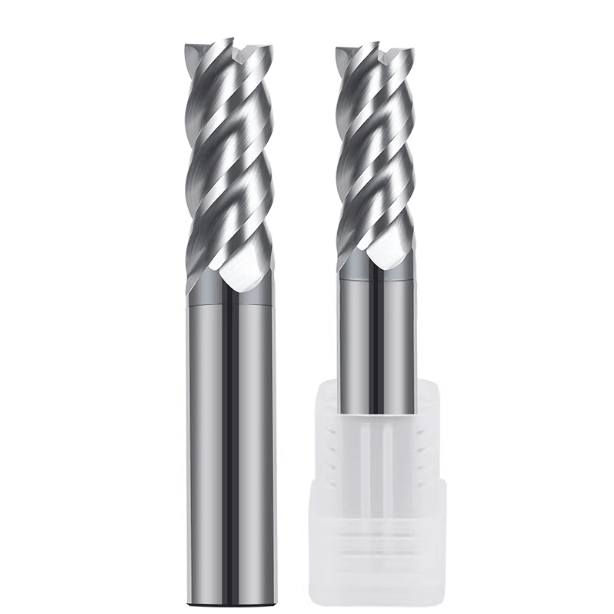
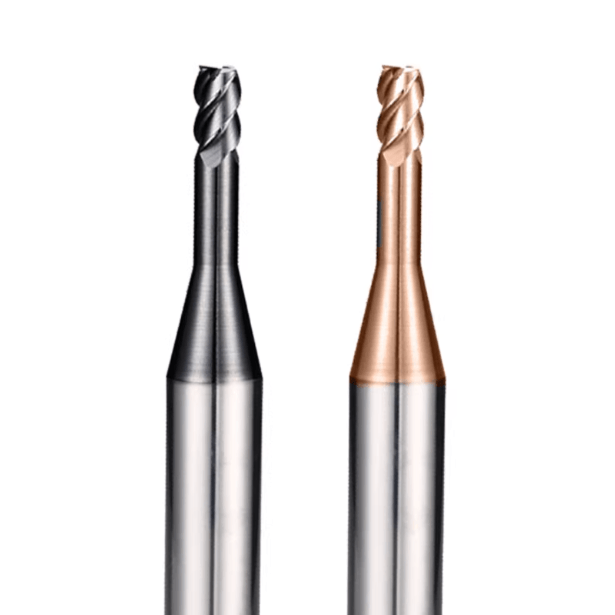
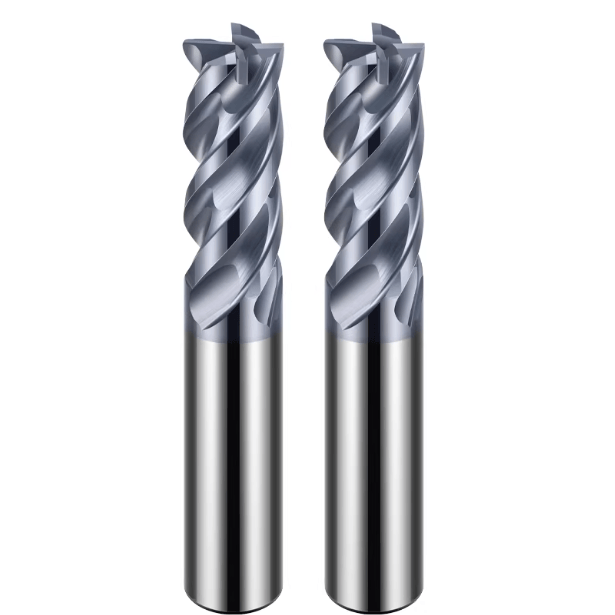
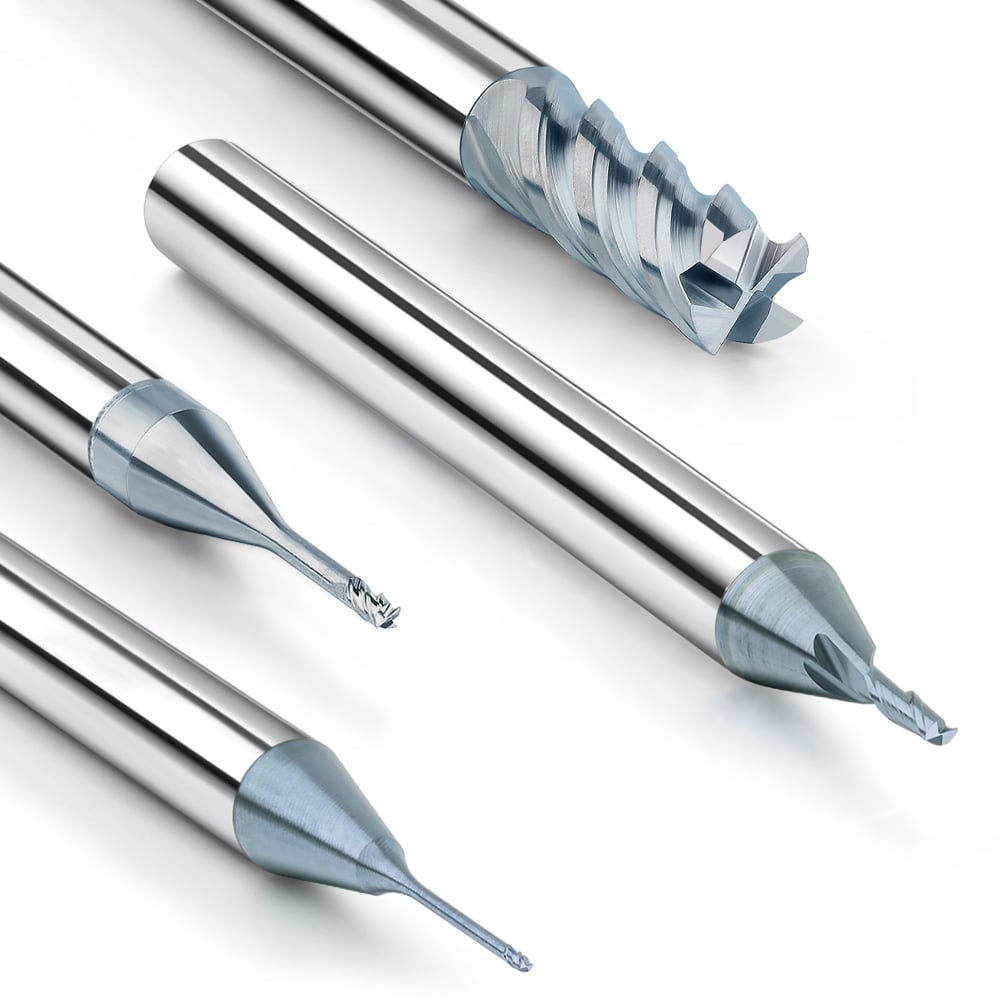
Rougher end mills play a decisive role in mold making, directly affecting cutting efficiency, tool life, and mold surface finish during the roughing stage. When dealing with complex mold cavities, large material removal requirements, and high-hardness materials, selecting the right rougher end mill is crucial to ensure machining quality and production efficiency.
Mold manufacturers must carefully consider material properties, machining stages, and tool geometry when selecting the most suitable tool. Carbide rougher end mills are widely used for efficiently cutting mold steel and hardened steel due to their excellent wear resistance and thermal stability. Properly distinguishing the functional differences between roughing vs finishing end mills can significantly improve overall machining efficiency and surface quality.
For hardened steel or high-strength alloy materials, using a roughing end mill with a high-hardness substrate and a heat-resistant coating effectively reduces tool chipping and wear, extending tool life. Increasingly, companies are collaborating with custom roughing end mill manufacturers to achieve precise matching to specific mold structures through customized tool geometry and optimized coatings.
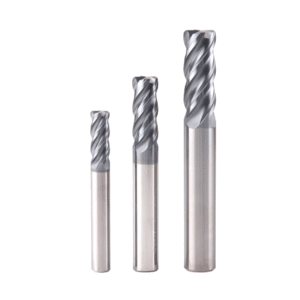
Key Tool Selection in Mold Roughing
Roughing often sets the foundation for overall mold production efficiency and tool life. Mold materials generally have high hardness, complex cavity structures, and high strength, requiring tools with strong vibration resistance, wear resistance, and stable cutting performance. Rougher end mills meet these requirements with special tooth profiles and high-strength carbide substrates, achieving high metal removal rates even under deep cuts and heavy loads.
The right rougher end mill influences not only machining time but also the quality of subsequent finishing and polishing. For difficult-to-machine materials like mold steel, pre-hardened steel, hardened steel, and high-temperature alloys, selecting carbide rougher end mills with wavy edges, optimized chip flutes, and high-temperature resistant coatings reduces vibration and chipping, improves tool life and surface finish, and lays a solid foundation for finishing operations.
Cutting Characteristics and Challenges of Mold Roughing
The roughing stage faces three major challenges: high material removal, machining high-hardness materials, and maintaining surface precision. Tools must not only be efficient but also provide stable chip evacuation and wear resistance under continuous high loads.
When cutting hardened steel, pre-hardened steel, or hot-work mold steel, roughing end mills must withstand extreme cutting forces and temperatures. Tools with strong chip-breaking capability and thermal stability are essential.
Wavy edge designs disperse cutting forces, reduce spindle load, and improve chip breaking, enhancing machining smoothness and tool durability. Well-designed chip flutes prevent chip buildup, reducing tool wear and workpiece scratches, giving wavy rougher end mills a clear advantage in deep-cavity, high-hardness mold roughing.
Why Roughing End Mills Are Crucial in Mold Machining
Roughing is the first step toward efficient, cost-effective mold production. High-performance rougher end mills increase metal removal rates while maintaining tool stability, shortening machining cycles. Compared to standard finish mills, wavy rougher end mills allow higher feed rates at the same depth of cut and reduce cutting resistance.
When used alongside finishing end mills, roughers ensure a seamless transition from rapid material removal to high-precision surface finishing. Optimizing the parameters and cutting paths of both roughing and finishing mills improves efficiency and surface quality. Collaborating with a custom roughing end mill manufacturer allows for tool geometry and coating customization, maximizing cutting performance and tool life.
In summary, roughing end mills are the foundation of mold roughing, affecting cycle time, process accuracy, and cost control. Rational selection and optimization of roughers is a core strategy for efficient mold manufacturing.
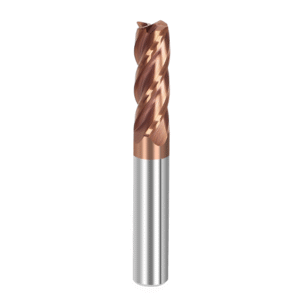
Process Differences and Tool Selection Logic Between Rough Milling and Finish Milling
In mold manufacturing, rough milling and finish milling are two critical stages with distinct objectives. Rough milling focuses on quickly removing excess material, achieving high cutting efficiency, and maintaining a stable machining process. Finish milling, on the other hand, aims to achieve precise dimensions and high surface quality. Understanding the differences between roughing vs finishing end mills, and making a rational division of labor based on mold material, machining allowance, and surface requirements, is key to optimizing both machining quality and cycle time.
During roughing, corrugated rougher end mills are commonly selected to handle heavy cutting loads and large material removal. Their unique tooth profiles and unequal pitch design effectively disperse cutting forces, reduce vibration, and improve chip evacuation efficiency. For finishing, end mills with sharp cutting edges, high geometric accuracy, and smooth coatings are ideal to ensure a clean, tool-mark-free mold surface. Proper selection and combination of both stages balance high efficiency and precision.
Differences in Cutting Objectives and Parameters Between Roughing and Finishing Mills
Roughing and finishing differ significantly in cutting parameters and objectives. Rough milling aims for high material removal rates, typically using a larger depth of cut (ap) and higher feed per tooth (fz), along with robust tools such as carbide rougher end mills. These tools resist chipping and provide excellent wear resistance, making them suitable for tough materials like mold steel, cast iron, and hardened steel.
Finishing milling focuses on dimensional accuracy and surface quality, using smaller depths of cut and feed rates, while controlling spindle speed to reduce thermal deformation. Finish mills with sharp cutting edges and high geometric accuracy achieve a mirror-like finish with minimal material removal.
A proper roughing vs finishing strategy also impacts tool life and subsequent polishing time. By controlling the residual material during roughing, more stable cutting conditions are provided for finishing, enhancing overall process efficiency.
How to Rationally Divide Labor Between Rough Milling and Finish Milling
In mold process planning, connecting rough and finish milling rationally is key for efficient production. Rough milling removes large allowances, leaving 0.2–0.5 mm for finishing to ensure stable cutting and prevent tool damage from workpiece hardening.
High-performance rougher end mills remove substantial material quickly, improving machine utilization. Precision finish milling with finishing end mills ensures surface quality and dimensional accuracy.
For example, when machining high-hardness mold steel, a carbide rougher end mill with a wave-edge design can be used for deep roughing to disperse forces and minimize vibration. A coated finish mill then completes the surface finishing.
For complex or deep-cavity workpieces, collaborating with custom roughing end mill manufacturers allows optimized tool geometry and chip flute designs, smoothing the transition between roughing and finishing.
By scientifically dividing roughing and finishing stages and selecting cutting parameters and tools appropriately, mold processing efficiency improves, tool life extends, and overall costs decrease.
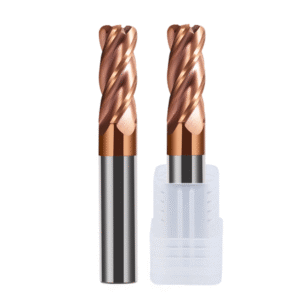
Performance and Selection Considerations of Carbide Roughing End Mills
Tool performance during roughing directly impacts efficiency and cost. Carbide rougher end mills offer superior hardness, wear resistance, and thermal stability compared to HSS or coated steel tools, making them ideal for prolonged cutting of mold steel, pre-hardened steel, hardened steel, and other high-strength alloys.
Selecting the right carbide roughing end mill requires evaluating substrate material, tool geometry, coating, and process compatibility. Different mold structures and materials demand different cutting strategies. For large material removal, anti-chipping and chip evacuation are crucial; for high-hardness workpieces, heat-resistant coatings combined with high-strength substrates are essential.
Collaborating with experienced custom roughing end mill manufacturers allows optimization of helix angles, tooth pitch, and cutting edge geometry, significantly extending tool life while maintaining machining efficiency.
Advantages of Carbide Roughing End Mills for Mold Steel
-
High hardness and wear resistance for stable cutting under heavy loads and elevated temperatures.
-
Suitable for mold steels (P20, H13, S136) and pre-hardened steel.
-
Achieve high metal removal rates during roughing, leaving uniform residual material for finishing, improving overall accuracy and efficiency.
Influence of Fluted Edge Geometry, Tooth Count, and Coating
-
Serrated edges disperse cutting forces, reduce vibration, and promote chip breaking.
-
Tooth count balances material removal efficiency and smooth cutting. Fewer teeth favor heavy cuts, more teeth favor smoother medium cuts.
-
Coatings (HG, HH, nanocomposites) enhance thermal stability, reduce chip adhesion, and extend tool life.
-
For high-hardness steels, select roughing end mill for hardened steel with high-hardness substrate and heat-resistant coating.
These factors collectively ensure high-speed, high-feed, and stable roughing operations in mold manufacturing.
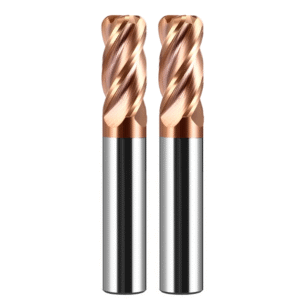
Roughing End Mill Selection Strategy for Hardened Steel
Hardened steel is among the most challenging materials in mold making and high-hardness workpiece machining. Its high hardness, low thermal conductivity, and strong cutting stress make ordinary tools prone to wear, chipping, or breakage. Selecting a suitable roughing end mill for hardened steel is critical for machining efficiency, tool life, and workpiece quality.
An effective selection strategy considers tool material, geometry, coating, and cutting parameters. High-performance roughing end mills must withstand heavy cutting forces while maintaining a sharp edge under high temperatures, reducing thermal deformation and tool wear. Proper cutting parameters, cooling, and chip evacuation further ensure machining stability and surface quality. A systematic tool selection strategy significantly enhances the reliability and productivity of hardened steel mold machining.
Machining Characteristics and Challenges of Hardened Steel
Hardened steel (HRC 45+) generates intense cutting stress and heat, posing high demands on tools during roughing:
-
Accelerated wear, decreasing dimensional accuracy.
-
Cutting edge chipping or breakage, affecting machining continuity.
-
Heat accumulation, causing workpiece surface burns or thermal deformation.
Its low thermal conductivity causes rapid tool temperature rise. Without high-temperature resistant, chipping-resistant roughing end mills, failure under high feed and deep cuts is likely. Prioritizing appropriate tool materials and coatings is essential for hardened steel roughing.
Characteristics of Roughing End Mills for Hardened Steel
Key features include:
-
High-hardness carbide substrate: Maintains sharp edge under heavy forces and high impacts.
-
High-temperature resistant coatings: TiAlN, AlCrN, or nanocomposite coatings reduce chipping and chip adhesion.
-
Optimized cutting parameters and cooling: Proper spindle speed, feed rate, and MQL or wet cutting improve heat dissipation and chip evacuation.
-
Optimized geometry: Wave edge design and unequal tooth pitch disperse forces, reduce vibration; well-designed chip flutes enable rapid chip removal.
Combining these features with custom tooling solutions allows optimization for specific mold structures, achieving efficient, stable, and repeatable roughing.
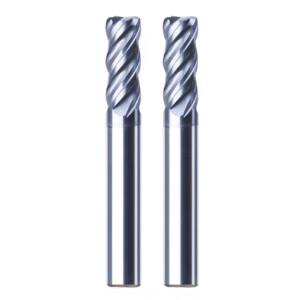
Advantages of Custom Roughing End Mills in Mold Manufacturing
In mold manufacturing, workpieces often feature complex structures, high material hardness, and strict accuracy requirements. Standard tools frequently fail to meet these needs. Custom roughing end mill manufacturers provide specialized tooling solutions tailored to mold design, machine tool capabilities, and machining processes, customizing geometry, coating type, and tool size to balance machining efficiency and tool life.
Custom roughing end mills optimize cutting paths, reduce vibration, and minimize tool wear while maintaining stable cutting forces and high metal removal rates in deep-cavity, high-hardness mold machining. Compared to standard tools, custom solutions excel in complex surfaces, large-volume material removal, and high-precision applications. Collaborating with experienced manufacturers ensures personalized tool designs, high tool-process matching, reduced machining costs, and increased yield.
Why Mold Factories Need Custom Roughing End Mills
Mold factories handle workpieces with diverse shapes, cavity depths, and material properties. Standard tools often struggle to balance cutting efficiency and tool life. Custom roughing end mills optimize tool length, helix angle, tooth pitch, and cutting edge shape for specific mold cavity structures, maximizing the high material removal rate during roughing.
Benefits of custom tools include:
-
Better tool-workpiece fit, reducing vibration and chipping.
-
Optimized chip removal, maintaining machining stability.
-
Increased machining efficiency and shorter mold production cycles.
-
Extended tool life, lowering overall tooling costs.
Custom roughing end mills are essential for high-hardness materials or complex mold structures, ensuring the quality of subsequent finishing and polishing.
Criteria for Selecting a High-Quality Roughing End Mill Manufacturer
When choosing a custom roughing end mill manufacturer, consider:
-
Material and substrate quality: High-quality cemented carbide ensures wear resistance and chipping resistance.
-
Coating technology and machining precision: Advanced coatings protect the cutting edge at high temperatures, while precision grinding maintains dimensional accuracy and cutting stability.
-
R&D and customization capabilities: Ability to design tools for specific mold materials, machine tools, and processes.
-
Delivery and after-sales support: Reliable production timelines and technical support ensure smooth operations.
Comparing technical expertise, manufacturing capabilities, and service systems helps companies select the best partner and maximize the value of custom tooling in mold roughing.

Practical Tips for Improving Mold Roughing Efficiency
Roughing efficiency directly affects the production cycle and cost control. Even with high-performance roughing end mills, their full potential is realized only when process parameters, tool management, and cutting conditions are optimized.
Proper adjustment of feed rate, depth of cut, and spindle speed improves metal removal rates, reduces tool wear, and minimizes vibration. Coupled with regular maintenance, appropriate coolant use, and effective chip removal, these strategies ensure machining stability and continuous production.
Process Parameter Optimization Recommendations
Optimizing roughing parameters is critical for efficiency and tool longevity, especially with die steel, hardened steel, or high-hardness alloys:
-
Spindle Speed (RPM): Reduce for high-hardness materials to lower thermal load and prevent chipping.
-
Feed per tooth (fz): Adjust based on tool geometry and tooth count; wavy-edge roughing end mills support higher feed rates.
-
Step over and Depth of Cut (ap, ae): Evenly distribute cutting forces, reduce vibration, and prevent workpiece deformation.
Scientific parameter selection maximizes material removal and tool life while maintaining surface quality.
Tool Life and Wear Management Methods
High-hardness materials and large allowance cuts accelerate tool wear or chipping. Key measures include:
-
Regularly inspect and replace or regrind tools to maintain accuracy.
-
Optimize cutting sequence: rough with large allowances first, then shallow finishing.
-
Use high-performance coated tools (TiAlN, AlCrN) for enhanced wear and thermal resistance.
A structured tool life management system reduces downtime, improves efficiency, and ensures stable, repeatable mold quality.
Effective Coolant and Chip Removal Strategies
Coolant and chip evacuation directly impact efficiency and tool life. Measures include:
-
Adequate cooling: Use MQL or wet cutting to lower tool temperature.
-
Optimized chip channels: Wavy-edge tools and proper helix angles enhance chip evacuation and prevent clogging.
-
Cutting sequence and feed direction adjustment: Ensures smooth chip removal, especially in deep or complex cavities.
Optimized parameters, tool management, and coolant/chip strategies enable stable, efficient, and low-cost roughing.

Selecting the Right Roughing End Mill Cutter for Efficient and Stable Mold Roughing
Choosing the right roughing end mill and applying a scientific process strategy is key to efficient, stable machining. High-performance carbide roughing end mills, a well-planned roughing-finishing division, and customized tooling solutions improve production efficiency, extend tool life, and ensure surface quality in large-volume, high-hardness, complex mold machining.
Proper roughing not only handles heavy material removal but also provides stable conditions for subsequent finishing and polishing. Systematic tool selection and process optimization reduce tool and machine wear while maintaining machining accuracy, achieving high efficiency, stability, and cost-effectiveness in mold manufacturing.
Summary of Three Key Factors for Tool Selection
-
Material Matching: Select high-hardness, wear-resistant, heat-resistant carbide roughing end mills for mold steels, hardened steels, and high-strength alloys.
-
Geometry: Optimized wave-edge design, tooth count, helix angle, and chip flutes disperse forces, enhance chip removal, and improve tool life.
-
Manufacturer Strength: Experienced custom tooling partners provide high compatibility with molds and machine tools for optimal machining results.
Boost Efficiency and Tool Life with Carbide Rougher End Mills and Custom Solutions
-
Enhanced Machining Efficiency: Optimized cutting parameters reduce vibration and chipping, maximizing metal removal rate.
-
Extended Tool Life: High-hardness substrates with heat-resistant coatings and wave-edge design reduce wear and thermal chipping.
-
Stable Machining Quality: Custom tools matched to machine processes ensure consistent results in deep and complex cavities, providing uniform margins for finishing.
In summary, combining proper tool selection, process optimization, and custom tooling solutions significantly improves mold production efficiency, reduces costs, and ensures repeatable, high-quality results—providing a competitive advantage in mold manufacturing.