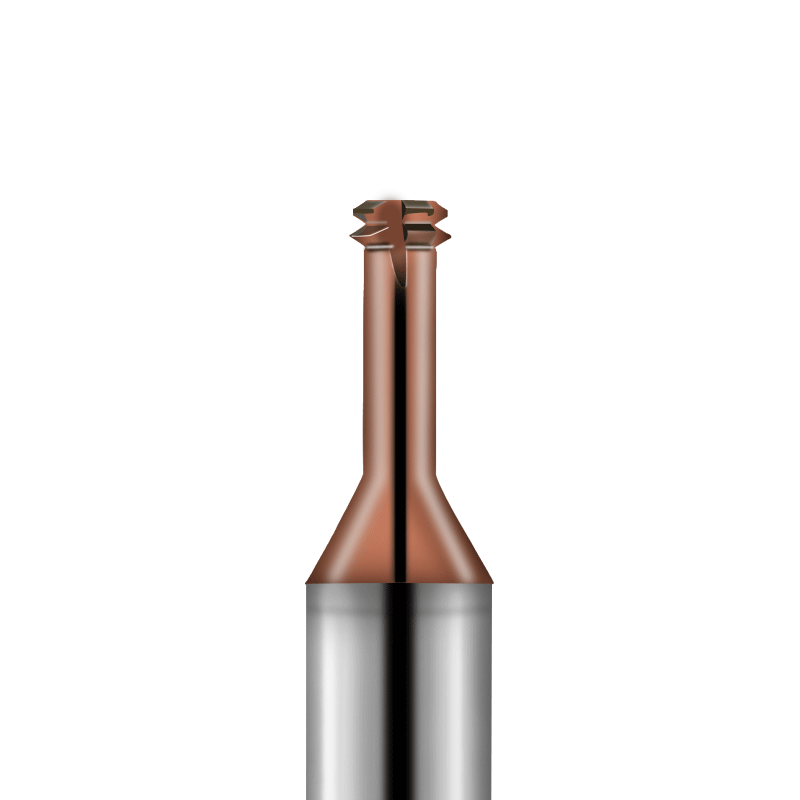
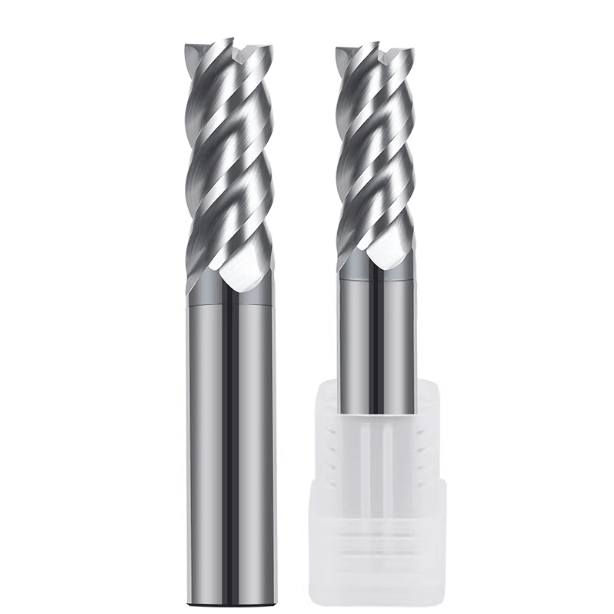
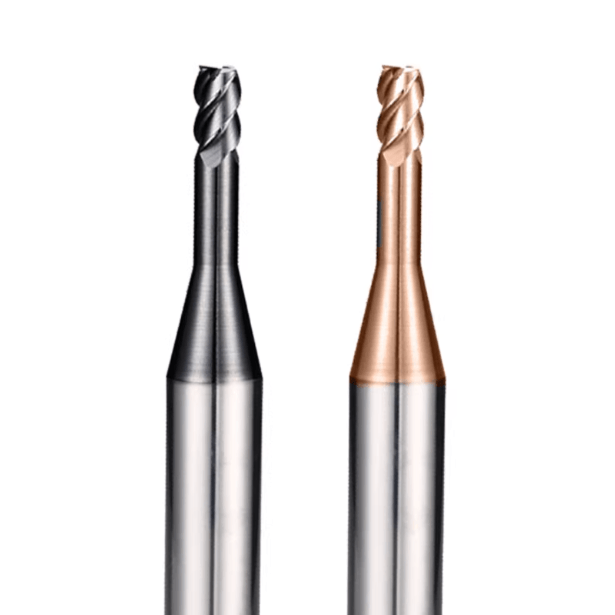
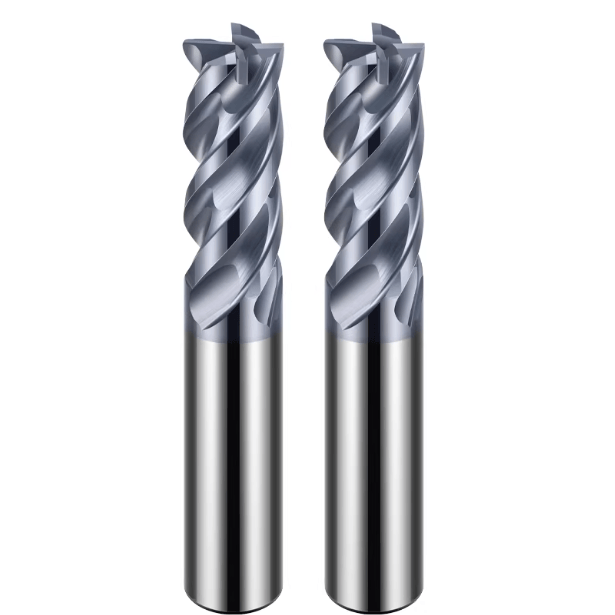
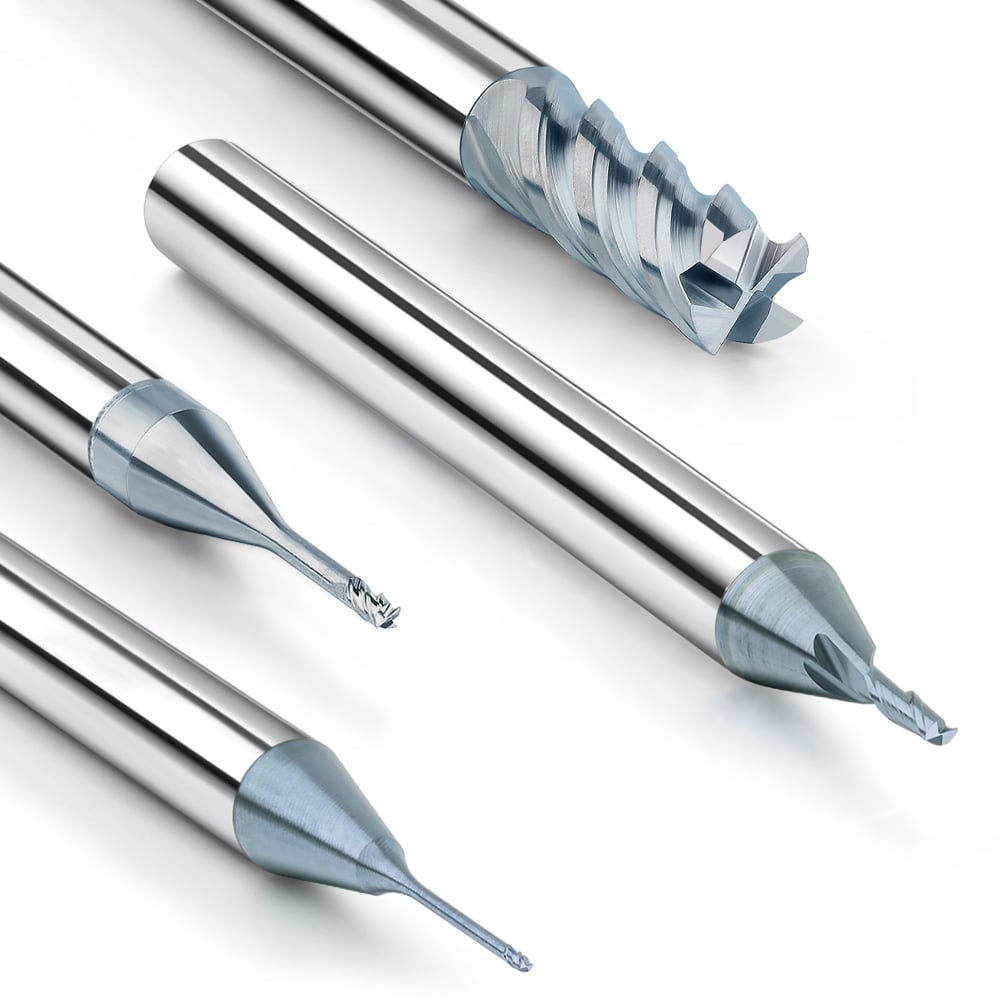
In precision machining of hardened steel, tool performance directly impacts machining stability, surface finish, and overall production efficiency. When workpiece hardness reaches or exceeds HRC60, conventional tools often fail to meet the demands for long-term continuous machining in terms of wear resistance, edge strength, and thermal stability. This makes the HRC65 ball nose end mill a preferred solution for precision machining of hardened steel.
Compared to standard tools, ball nose end mills designed for high-hardness materials emphasize tip strength and stability. In complex cavities, 3D surfaces, and fine contour machining, these tools maintain continuous, stable cutting contact, effectively reducing localized stress concentrations. Especially when machining hardened mold steel and high-hardness alloys, a well-designed ball nose cutter end mill minimizes chipping and abnormal wear, improving consistency and surface quality.
Carbide ball nose end mills are the mainstream choice due to their high rigidity and wear resistance. With HRC65 tool hardness, these end mills maintain a stable cutting edge under high loads and temperatures, making them suitable for long-term precision machining and high-accuracy forming operations. Optimized tool geometry and edge treatments further improve chip evacuation and surface finish.
For different machining scenarios, HRC65 ball nose end mills are widely used in semi-finishing and finishing of mold cavities, cores, and high-precision components. By matching cutting parameters and tool path strategies, tool life can be extended while maintaining dimensional accuracy and surface quality. This stability provides significant value in demanding production environments.
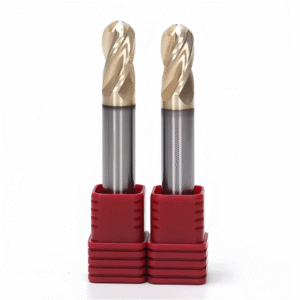
Common Challenges and Tool Requirements in Hardened Steel Machining
Machining hardened steel introduces challenges due to the material’s high strength and low ductility. When hardness exceeds HRC60, cutting forces increase significantly, often causing tool chipping, vibration, or surface scratches. Complex cavities and deep holes place additional demands on tool rigidity, chip evacuation, and thermal stability. Selecting the right tool and optimizing cutting parameters improves tool life and efficiency while maintaining machining accuracy.
Key challenges include: tip strength requirements, wear resistance and thermal stability under continuous cutting, and tool stability in complex cavity machining. Addressing these challenges requires rational tool geometry, high-wear-resistant materials, and optimized chip evacuation and cooling strategies.
Requirements for Ball Nose End Mill Tip Strength
In hardened steel machining, cutting edges experience significantly higher loads than conventional materials, and localized stress can easily lead to chipping. To ensure stable machining, the tool must combine high hardness with sufficient toughness. Tip geometry and radius should be designed to distribute cutting stress and reduce localized overload.
Appropriate coatings and surface treatments, such as multi-layer nano-coatings or high-temperature wear-resistant coatings, enhance tip wear resistance, reduce adhesion, and maintain stable cutting performance in high-hardness applications.
Tool Wear Resistance and Thermal Stability under Continuous Cutting
Long-term machining of hardened steel subjects tools to high forces and elevated temperatures, accelerating wear and potential thermal deformation. Inadequate wear resistance can lead to chipping, dimensional deviation, and reduced surface finish, while insufficient thermal stability may affect tool geometry and accuracy.
Optimizing cutting speed, feed rate, and depth of cut reduces heat accumulation and prolongs tool life. Effective cooling and lubrication are critical for maintaining tool temperature and minimizing wear and vibration, particularly in deep hole and complex cavity machining.
Impact of Complex Cavity Machining on Stability
Machining complex 3D cavities or deep pockets causes the tool-workpiece contact point to change constantly, generating uneven forces and vibrations. This demands high bending rigidity and stability. Insufficient rigidity may result in deflection, edge chipping, or machining errors.
Proper tool radius selection, tool holder support, and layered or contour cutting paths evenly distribute cutting loads and reduce force fluctuations. Optimized chip evacuation and coolant flow further enhance stability and surface finish.
Advantages of HRC65 Ball Nose End Mills in Hard Steel Machining
In the precision machining of high-hardness steel parts, tool performance directly impacts machining stability, surface finish, and production efficiency. HRC65 grade ball nose end mills, with their high hardness and excellent toughness, maintain a stable cutting edge during long-term continuous cutting and complex cavity machining, significantly reducing the risk of chipping and abnormal wear. These tools are particularly effective in deep hole, cavity, and 3D surface machining, ensuring dimensional accuracy and smooth cutting under high-load conditions, thereby improving production cycle times and machining consistency.
Rational matching of cutting parameters and tool structure fully utilizes their wear resistance, thermal stability, and rigidity, minimizing unplanned downtime and tool changes. These advantages make high-performance ball nose end mills a preferred choice for machining hardened steel components.
Adaptability of HRC65 Hardness for Precision Machining
HRC65 hardness enables the tool to resist local overloads during cutting, reducing tip chipping and cutting vibrations while maintaining a stable force distribution. For parts requiring high surface finish and dimensional precision, this hardness ensures smooth, continuous machining and reduces the need for secondary finishing.
The tool maintains a sharp edge even at high speeds and feed rates, making it suitable for efficient, high-throughput machining strategies. Combined with optimized tool paths and effective cooling and lubrication, thermal effects and wear are minimized, extending tool life in demanding hardened steel applications.
Improvement of Ball Nose Rigidity through Overall Structure
The overall structural design of the cutting tool is critical for machining stability. Optimized tool body geometry and ball nose design enhance bending and torsional rigidity, keeping the tool stable in deep-hole, complex cavity, and long-shank applications. High-rigidity structures reduce cutting vibrations and ensure cavity contour accuracy, preventing errors and surface waviness.
Proper edge angles and tip radius designs distribute cutting forces evenly, reducing local stress concentrations and improving tool durability. Combined with precision manufacturing, structural optimization enhances chip evacuation, reducing clogging and wear during continuous machining.
Machining Performance with Reduced Chipping and Abnormal Wear
Under long-term, high-load cutting, tools are prone to chipping and abnormal wear. The combination of hardness and structural design minimizes edge damage and irregular wear. Stable cutting improves surface finish and ensures consistent dimensions, reducing rework and production costs.
Selecting appropriate coatings and surface hardening treatments further enhances wear resistance and anti-adhesion properties. Paired with optimized cutting parameters and tool paths, these tools achieve efficient, stable performance in deep-hole and complex cavity machining.
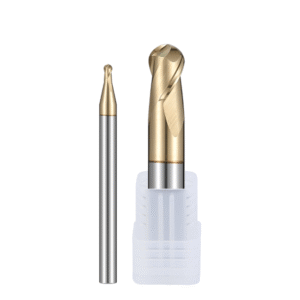
Material and Structural Design Highlights of Carbide Ball Nose End Mills
Machining hardened steel and high-strength alloy steels places extreme demands on tool material and structure. Solid carbide end mills provide high rigidity, wear resistance, and thermal stability, maintaining stable cutting under high loads and temperatures.
A rational structural design improves bending and torsional rigidity, optimizes chip evacuation, and ensures even cutting force distribution, enhancing machining accuracy and surface finish. In deep-hole, complex cavity, and 3D surface machining, tool material stability directly affects machining consistency and tool life.
Scientific design of tool geometry, cutting edge angles, and ball nose radius ensures even load distribution and effective vibration control, significantly reducing the risk of chipping and abnormal wear. High-performance coatings and surface hardening treatments, combined with optimized structural design, further improve wear resistance and machining stability, providing reliable performance for continuous precision machining and efficient production.
Performance of Solid Carbide Substrates under High Loads
Solid carbide substrates exhibit excellent bending and torsional resistance under high-load cutting. Compared to multi-layer or composite tools, solid carbide end mills maintain near-zero deformation in deep-hole and long-shank applications, ensuring stable contact between the tool tip and workpiece. This disperses cutting forces, reduces localized overload, and allows consistent machining accuracy and surface finish while extending tool life.
Carbide’s thermal stability handles heat accumulation from prolonged cutting, reducing thermal deformation and ensuring contour accuracy in deep cavities and complex parts.
Influence of Cutting Edge Treatment on Machining Stability
Cutting edge treatments, such as precision grinding, chamfering, or micro-radius design, reduce stress concentrations, chipping, and abnormal wear. Optimized edges also minimize cutting vibrations, maintain stable cutting, and enhance surface finish and dimensional consistency.
Combined with high-performance coatings and surface hardening, these treatments extend tool life in high-load, high-temperature cutting, especially in deep holes, complex surfaces, or continuous machining operations.
Relationship between Ball Nose Radius and Actual Cutting Contact Point
The ball nose radius determines the tool-workpiece contact and cutting force distribution. Smaller radii are ideal for finishing and detailed cavity machining, improving surface accuracy, but they concentrate cutting forces, requiring sufficient rigidity and thermal stability. Larger radii are better for semi-finishing or large-area machining, dispersing forces to improve stability and tool life.
By selecting the appropriate ball end radius and coordinating it with depth of cut, feed rate, and tool path, contact point distribution is optimized, minimizing local overload, chipping, and tool wear while maintaining surface finish and dimensional accuracy. This is crucial in complex cavities, hardened steel finishing, and long-shank machining.

Typical Machining Applications of HRC65 Ball Nose End Mills
In machining hardened steel components, selecting the appropriate ball nose end mill can significantly improve dimensional accuracy, surface finish, and tool life. HRC65 ball nose end mills, with high hardness and excellent toughness, are widely used in the semi-finishing and finishing stages of mold cavities, cores, and complex three-dimensional surface components. Optimizing tool geometry, ball radius, and edge treatment, combined with reasonable cutting parameters and tool path strategies, maintains stable cutting, reduces chipping, abnormal wear, and vibration, and improves overall production efficiency and machining consistency.
In actual production, hardened steel components often feature deep holes, complex cavities, or high-precision surfaces, where conventional tools struggle to maintain stable, continuous cutting. High-performance ball nose end mills handle long-term cutting loads and complex geometries, ensuring surface finish, dimensional accuracy, and cavity contour fidelity. High wear-resistant materials and optimized tool paths extend tool life, reduce tool changes, and improve production economics.
Semi-finishing and Finishing of Mold Cavities and Cores
In mold manufacturing, semi-finishing requires removing large volumes of material, while finishing demands extremely high surface quality and contour accuracy. A well-designed tool structure and appropriate ball radius ensure even cutting force distribution, enabling efficient material removal in semi-finishing while maintaining edge stability during finishing. This prevents chatter and tool tip chipping.
Combining optimal cutting speed, feed rate, and layered tool path strategies reduces variations in cutting load, optimizes chip evacuation, and improves machining consistency. This approach is critical for complex cavity molds, automotive molds, and high-precision mechanical components.
Machining Complex Three-Dimensional Surfaces
Machining 3D surface components requires continuous contact and stable cutting to avoid surface waviness and dimensional deviation. Hardened steel demands high tool rigidity and thermal stability. A suitable ball nose radius and overall tool body design distribute cutting forces, reduce localized stress concentrations, and ensure smooth surface machining.
For deep cavities, inclined surfaces, or curved transition zones, combining contouring, layered, or hybrid tool path strategies helps control cutting forces and temperatures, improving tool durability and surface finish. This method is suitable for aerospace components, mold cores, and high-precision mechanical parts.
Fine Toolpath Machining for High Surface Finish Requirements
For components requiring mirror-like surfaces, surface roughness and machining consistency are crucial. Optimized cutting edges, suitable tool radius, and wear-resistant materials allow stable contact during continuous cutting, minimizing edge chipping and vibration.
Using low feed rates, shallow depths of cut, and high-precision tool path planning enables precise control of cutting volume and forces, avoiding tool marks or ripples. This approach is widely applied in mold finishing, precision five-axis machining, and high-end mechanical parts manufacturing, reducing secondary processing and polishing costs.
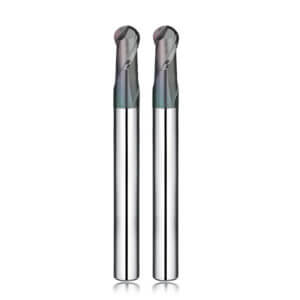
Parameter Control of Ball Nose End Mills in Hardened Steel Machining
Machining hardened steel components requires precise control of cutting parameters. Appropriate cutting speed, feed rate, and depth of cut directly affect tool life, part accuracy, and surface finish. During machining of high-hardness materials, cutting forces and friction are high. Improper parameters can cause tool chipping, overheating, or abnormal wear, reducing production efficiency and machining consistency. Precise control of cutting parameters extends the life of HRC65 ball nose end mills while ensuring dimensional accuracy and optimizing production costs.
In practice, cutting parameters should be considered in conjunction with tool material, geometry, ball radius, and workpiece hardness. A reasonable combination of cutting speed, feed rate, stepover, and depth of cut helps control cutting forces, maintain surface finish in deep cavities and complex curved surfaces, and minimize vibration and edge chipping. Scientific parameter optimization ensures efficient and stable production of hardened steel components.
The Impact of Cutting Speed on HRC65 Ball Nose End Mill Life
Cutting speed is a key factor affecting tool life. High speeds can improve machining efficiency but also increase tool tip temperature and friction, leading to chipping or abnormal wear. Conversely, excessively low speeds may cause variations in cutting force, resulting in uneven tool stress and poor surface finish.
In machining hardened steel, combining wear-resistant coatings with solid carbide construction, a moderate cutting speed balances tool wear and machining efficiency. Effective cooling and lubrication further reduce cutting zone temperature, enhance thermal stability, and extend tool life.
The Role of Feed Rate and Stepover in Surface Quality Control
Feed rate and stepover affect surface finish, contour accuracy, and tool load. Larger feed rates or stepovers increase cutting force variations, causing tool vibration and deeper tool marks. Smaller values improve surface quality but increase machining time.
Optimizing tool path planning and layered cutting strategies balances tool forces, reduces edge wear and chipping risks, and ensures surface flatness. Precise control of feed rate and step size is critical for machining complex cavities and fine 3D surfaces in hardened steel.
Reasonable Cutting Depth to Avoid Tool Tip Overload
Cutting depth affects tool tip stress and load. Excessive depth causes localized overload, leading to chipping or deformation. Insufficient depth underutilizes tool rigidity and increases the number of machining passes, reducing efficiency.
For hardened steel, combining the ball radius and tool rigidity with an appropriate cutting depth for each pass distributes forces evenly, reduces tip stress, and extends tool life. Layered cutting and gradual finishing strategies also control heat accumulation, maintain tool stability, and ensure dimensional accuracy and surface finish in deep holes and complex cavities.

Common Machining Problems and Solutions for HRC65 Ball Nose End Mills
Even with high-performance ball nose end mills, problems such as chipping, abnormal wear, and vibration can occur, affecting part accuracy, surface finish, and productivity. These issues often stem from material hardness, tool rigidity, cutting parameters, or machining strategies.
Analyzing failure causes and combining tool structure optimization, proper cutting parameters, and effective cooling and lubrication can significantly extend tool life and improve machining stability and surface quality.
Hardened steel parts often involve deep holes, complex cavities, or 3D surfaces, requiring high tool bending rigidity, thermal deformation resistance, and efficient chip evacuation. Proper tool selection, ball nose radius matching, edge design, and cutting parameter optimization prevent chipping and abnormal wear. Monitoring vibration and implementing damping measures further enhance surface finish and consistency.
Analysis of Chipping Causes and Improvement Methods
Chipping is caused by localized stress, excessive load, or tool vibration. In hardened steel machining, cutting forces on the tool edge are much higher than with ordinary materials. Constantly changing contact points between the ball nose end mill and the surface increase localized stress, leading to chipping.
Improvement methods:
-
Optimize ball nose radius and tool tip geometry to distribute cutting forces.
-
Adjust cutting speed, feed rate, and depth to prevent overload.
-
Use high-wear-resistant coatings or solid carbide tools to improve edge durability.
-
Employ contour or layered tool paths to reduce cutting fluctuations.
These measures improve edge stability, ensuring dimensional accuracy and surface quality in deep-hole and complex cavity machining.
Adjustments for Abnormal Wear and Reduced Tool Life
Abnormal wear manifests as irregular edge wear, localized burning, or premature tool failure. Causes include heat accumulation, poor chip evacuation, or improper parameters.
Adjustment strategies:
-
Use high-wear-resistant coatings or solid carbide tools to enhance thermal stability.
-
Optimize cutting parameters, such as reducing speed or increasing feed rate to distribute heat load.
-
Improve cooling and lubrication to maintain safe cutting zone temperatures.
-
Regularly inspect and regrind or replace tools to maintain machining stability.
These measures extend tool life and improve consistency and surface finish in complex hardened steel parts.
The Impact of Machining Vibration and Optimization Solutions
Vibration affects surface finish, contour accuracy, and tool life. Causes include high cutting forces, long tool lengths, and complex cavities.
Optimization solutions:
-
Increase tool rigidity with appropriate ball radius and shank length.
-
Adjust feed rate and depth to reduce force fluctuations.
-
Use layered or contour tool paths to minimize sudden force changes.
-
Apply efficient fixtures and vibration damping devices.
Controlling vibration improves surface finish, part contour accuracy, reduces tool wear, and increases overall production efficiency.

Tool Path Strategies for Ball Nose End Mills in Mold Finishing
In precision machining of high-hardness steel molds, the tool path strategy directly affects machining efficiency, surface finish, and tool life. A well-designed tool path evenly distributes cutting load, reduces edge chipping and abnormal wear, and optimizes chip removal and heat management. For complex cavities and 3D surfaces, scientific planning of ball nose end mill paths ensures stable cutting, improves contour accuracy, and minimizes vibration and thermal stress accumulation.
Efficient tool path strategies maintain the stability of HRC65 ball nose end mills during deep cavity and long-shank machining. They also extend tool life, reduce downtime, and minimize secondary finishing operations. By combining optimized cutting parameters, tool structure, and residual material control, surface finish and dimensional accuracy of the finished part can be significantly improved.
Advantages of Contour Milling in Ball Nose End Mill Machining
Contour milling is a layered cutting strategy that follows the contour lines of the workpiece surface. It maintains uniform contact between the ball nose end mill and the workpiece, reducing localized cutting loads. This approach is particularly effective for complex cavities and 3D surfaces, preventing sudden force spikes, reducing tool tip chipping, and improving consistency and surface quality.
Contour milling also shortens cutting path length, reduces idle tool time, and increases machining efficiency. When combined with a properly sized ball nose radius and optimized cutting parameters, this method significantly extends tool life and minimizes surface defects caused by cutting vibrations.
The Impact of Residual Material Control on Ball Nose End Mill Stability
Residual material control is critical for stable cutting. Uneven or excessive residual material can overload the tool, increasing the risk of chipping and abnormal wear. By planning residual material thickness for semi-finishing and finishing, the ball nose end mill experiences consistent cutting forces in each pass, ensuring a stable cutting state.
Effective residual material management also improves chip evacuation, reduces cutting temperatures and friction, and enhances surface finish and dimensional accuracy. In deep cavities and complex mold features, combining residual material control with tool rigidity and optimized cutting parameters ensures precise machining of hardened steel components and reduces tool change frequency.
Improvement of Cutting Edge Stress Distribution through Tool Axis Angle Adjustment
The tool axis angle in ball nose end milling affects cutting force direction and stress distribution across the cutting edge. Proper tilt or offset angles distribute load evenly, reducing localized stress and minimizing the risk of edge chipping and abnormal wear.
When combined with contour or layered tool path strategies, optimizing the tool axis angle improves cutting stability, reduces vibration, and enhances surface finish in complex curved surfaces and deep cavities. Adjusting the tool axis angle also improves chip evacuation direction, decreases heat accumulation, and ensures continuous and efficient machining of high-hardness steel molds.

Performance Differences of Carbide Ball Nose End Mills in Different Hardened Steel Materials
In hardened steel machining, material hardness, microstructure, and heat treatment conditions have a direct impact on cutting performance and tool service life. When machining hardened mold steel, powder high-speed steel, or pre-hardened steel, solid carbide ball nose end mills exhibit noticeable differences in cutting force behavior, wear patterns, and edge stability. By selecting appropriate ball nose geometry, edge preparation, and cutting parameters, machining efficiency and surface quality can be optimized according to the characteristics of each material.
Material hardness and toughness determine how cutting stress is transferred to the tool. During complex cavity and 3D surface machining, fluctuating contact conditions generate different wear mechanisms depending on the material structure. A scientific combination of cutting speed, feed rate, depth of cut, and tool path strategy allows tool life to be extended while maintaining machining accuracy, especially in mold manufacturing, precision components, and high-hardness steel applications.
Practical Cutting Feedback in Hardened Mold Steel Machining
Hardened mold steel features high hardness and strength, placing extremely high demands on cutting edge wear resistance and chipping resistance. In actual machining, concentrated cutting forces and repeated contact at the tool tip often result in localized wear. If cutting parameters are not properly controlled, vibration and edge chipping may occur.
High-performance ball nose end mills maintain a stable cutting edge during hardened mold steel machining, effectively reducing chipping while delivering smooth surface quality in finishing operations. By optimizing ball radius, cutting edge geometry, and cooling or lubrication methods, cutting heat accumulation can be significantly reduced, improving dimensional accuracy and machining consistency in deep cavities and complex curved surfaces.
Comparison of Machining Powder High-Speed Steel and Pre-Hardened Steel
Powder high-speed steel (PM-HSS) and pre-hardened steel differ significantly in microstructure and cutting behavior. PM-HSS offers high hardness and excellent wear resistance but relatively lower toughness, making it more susceptible to localized chipping during high-speed or deep cavity machining. Pre-hardened steel, with its lower hardness, generally produces more stable cutting forces, although tool life and surface consistency may be less predictable compared to PM-HSS in long-cycle machining.
In practical applications, solid carbide ball nose end mills can be adapted to both materials by adjusting cutting strategies. For PM-HSS, reducing depth of cut and optimizing tool axis angle helps control localized stress. For pre-hardened steel, higher cutting speeds and feed rates can be applied to improve productivity while maintaining stable cutting conditions.
Influence of Material Microstructure on Tool Wear Patterns
Material microstructure plays a critical role in determining cutting force distribution and wear characteristics. Fine, uniform grain structures typically result in even wear patterns, while coarse grains, carbides, or non-metallic inclusions can cause localized edge chipping and irregular wear.
Through optimized ball nose geometry and cutting edge preparation, localized stress can be redistributed and wear patterns controlled when machining different hardened steel materials. Combined with proper cutting parameters and cooling strategies, tool life can be extended while maintaining surface accuracy and consistency in deep hole and complex cavity machining.

How to Evaluate the Cost-Effectiveness of HRC65 Ball Nose End Mills
In hardened steel machining, both performance and economic efficiency are critical factors in tool selection. Evaluating cost-effectiveness requires more than considering initial purchase price; tool life, machining efficiency, surface quality, and maintenance costs must all be included. Stable cutting in complex cavities, deep holes, and 3D surfaces reduces unplanned tool changes and downtime, directly lowering overall production costs and improving cycle time consistency.
By analyzing single-edge machining length, tool change frequency, and overall machining efficiency, the economic value of ball nose end mills can be quantified, supporting rational tool investment and production planning while maintaining high machining accuracy.
Single-Edge Machining Length and Comprehensive Cost Analysis
Single-edge machining length directly affects material removal capacity and production efficiency. Longer effective cutting length allows more material to be removed per tool, reducing tool changes and idle time. In contrast, insufficient cutting length in deep cavity or complex surface machining increases downtime and labor costs.
By evaluating cutting length together with tool durability, manufacturers can better assess economic efficiency in hardened steel machining. Proper matching of ball radius, edge geometry, and cutting parameters ensures surface quality while maximizing material removal efficiency and reducing overall machining cost.
Relationship Between Stability and Tool Change Frequency
Tool stability is essential for continuous production and consistent machining results. A stable ball nose end mill maintains smooth cutting in deep cavities and complex geometries, reducing chipping and abnormal wear and, in turn, lowering tool change frequency. Frequent tool changes interrupt production flow and increase labor and maintenance costs.
Selecting wear-resistant materials, optimizing edge design, and applying appropriate cutting parameters significantly improve tool stability under high-load conditions. Combined with effective tool path planning, these factors extend tool life and enhance overall production efficiency.
Impact of Machining Efficiency on the Overall Production Cycle
Machining efficiency directly influences production throughput and workshop capacity. High-efficiency tools reduce machining time while maintaining surface finish and dimensional accuracy. Efficiency is determined not only by cutting speed and feed rate, but also by tool stability, tool path strategy, and cooling effectiveness.
In hardened steel machining, optimized tool geometry, ball radius selection, and cutting edge treatment—combined with layered tool paths—can significantly improve efficiency. Higher efficiency shortens production cycles, lowers unit costs, and ensures stable output in mold and precision component manufacturing.

Key Considerations When Choosing Ball Nose End Mill Suppliers
In high-hardness steel machining, the choice of ball nose end mill supplier has a direct impact on production efficiency, machining quality, and overall cost control. The stability, wear resistance, and dimensional consistency of high-performance ball nose end mills are critical for reliable machining of complex cavities, deep holes, and three-dimensional surfaces. A qualified supplier not only delivers consistent tooling but also provides application-specific customization and technical support based on real machining conditions. This helps manufacturers improve productivity, reduce tool replacement frequency, and maintain stable machining results.
In both mass production and precision machining environments, selecting the right supplier significantly reduces operational risk. A supplier’s machining experience, quality control system, and after-sales technical capability are key factors when evaluating long-term economic efficiency and process stability. By carefully assessing product consistency, customization capability, and technical support strength, manufacturers can ensure smooth implementation of hardened steel machining projects while improving tool utilization and overall production cycle time.
The Impact of Product Consistency on Mass Production Stability
Mass production requires strict consistency in tool dimensions and cutting edge performance. Even small variations between tools can lead to uneven cutting forces, dimensional deviations, surface inconsistency, or increased vibration during machining.
Consistent tooling ensures uniform cutting load in deep cavities, complex surfaces, and high-precision applications, improving surface finish and dimensional accuracy. At the same time, minimizing process variation caused by tooling differences reduces downtime, maintenance costs, and quality risks, supporting stable and reliable large-scale production.
The Value of Non-Standard Customization in Special Hardened Steel Machining
For special hardened steel components or complex mold cavities, standard ball nose end mills may not fully meet machining requirements. Suppliers with non-standard customization capabilities can develop tailored tooling solutions based on material hardness, cavity geometry, and machining strategy. These may include customized ball radius, cutting edge geometry, tool body length, and coating selection.
Customized tools allow cutting forces to be distributed more evenly, improve edge stability, reduce chipping and abnormal wear, and enhance surface quality in deep hole and complex surface machining. In demanding applications, customized solutions can significantly improve machining efficiency and tool life, resulting in better overall cost-effectiveness.
The Importance of Technical Support and Practical Machining Experience
Hardened steel machining involves complex processes, high cutting forces, and significant thermal loads, making supplier technical support and practical experience essential. Experienced suppliers can provide reliable cutting parameter recommendations, tool path optimization guidance, and coating selection support, helping manufacturers shorten process optimization cycles.
Effective technical support not only resolves tooling issues during production but also improves machining stability, reduces trial cutting costs, and accelerates process validation. Extensive real-world machining experience ensures that tooling recommendations are practical and proven, enabling stable and predictable performance in deep hole, complex cavity, and high-hardness steel machining.

Summary of HRC65 Ball Nose End Mill Applications in Actual CNC Production
In hardened steel machining, HRC65 ball nose end mills demonstrate excellent cutting stability and wear resistance due to their high hardness, strong toughness, and solid carbide construction. In actual CNC production, they perform reliably in semi-finishing and finishing of mold cavities and cores, as well as in complex 3D surface and high-gloss machining applications. With proper tool selection, precise parameter control, and optimized tool path strategies, stable cutting can be maintained in deep holes, complex cavities, and high-load conditions, significantly improving surface finish, dimensional accuracy, and machining efficiency.
Practical production experience confirms that tool performance, cutting parameters, tool path design, and supplier support work together to determine machining stability and economic efficiency. By integrating these factors scientifically, manufacturers can reduce tooling costs and overall production expenses while maintaining consistent machining quality, achieving efficient and continuous CNC operations.
Improved Quality of Hardened Steel Parts Through Stable Machining
Stable cutting is the foundation of high-quality machining for deep cavities, complex surfaces, and hardened steel components. With high-rigidity design and optimized ball radius geometry, HRC65 ball nose end mills maintain edge stability under high cutting forces and complex tool paths, reducing chipping, abnormal wear, and machining vibration.
Stable machining not only improves surface finish but also ensures dimensional consistency and cavity contour accuracy, significantly reducing rework and secondary polishing costs. When combined with proper cooling and optimized tool paths, heat accumulation and tool wear are further controlled, enabling efficient and precise machining of hardened steel parts.
The Synergistic Effect of Rational Tool Selection and Parameter Control
Selecting the appropriate ball nose end mill type, ball radius, and cutting edge design—combined with precise control of cutting speed, feed rate, depth of cut, and tool path strategy—is essential for machining stability and tool life. Scientific selection and parameter control help balance cutting forces, optimize chip evacuation and thermal management, and reduce localized stress and chipping risk.
In deep cavity, complex geometry, and high-precision machining, this synergistic approach significantly improves machining efficiency and tool life while lowering production costs and reducing downtime risk.
The Value of Mature Ball Nose End Mill Solutions in Production
Proven, high-performance ball nose end mill solutions provide reliable stability and cost efficiency in hardened steel machining. Optimized tool geometry, refined cutting edge design, validated tool path strategies, and strong supplier technical support make production processes more predictable, controllable, and efficient.
These mature solutions improve surface quality and consistency in mass production while reducing tool replacement frequency and overall machining costs. They deliver substantial value in complex cavity machining, mold core production, and high-precision component manufacturing, supporting efficient, stable, and economical CNC machining operations.