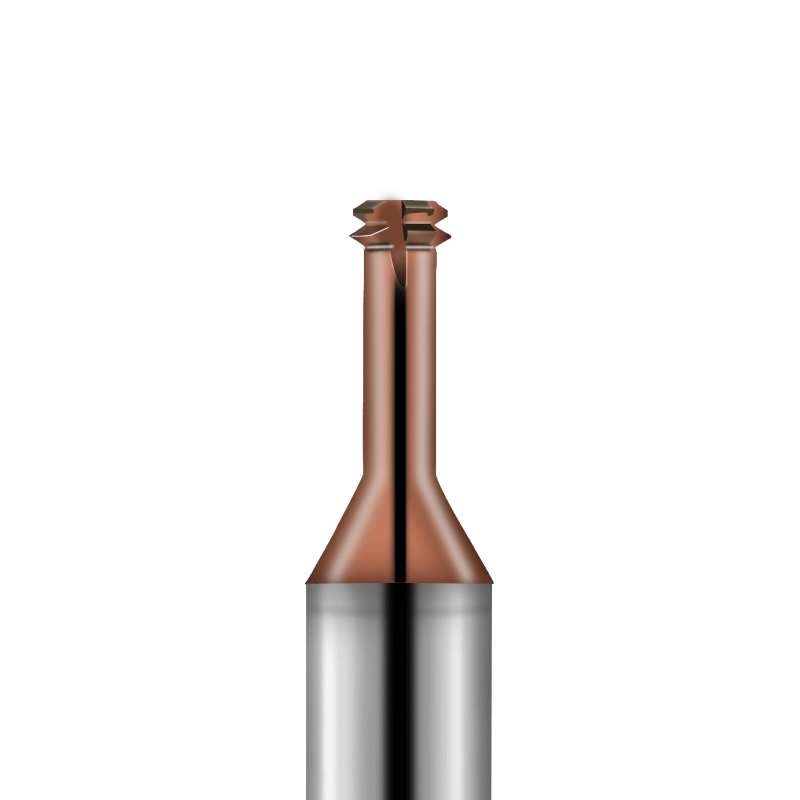
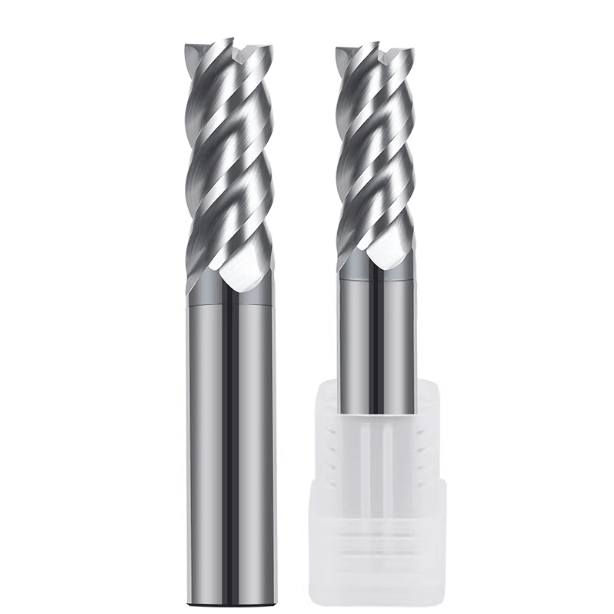
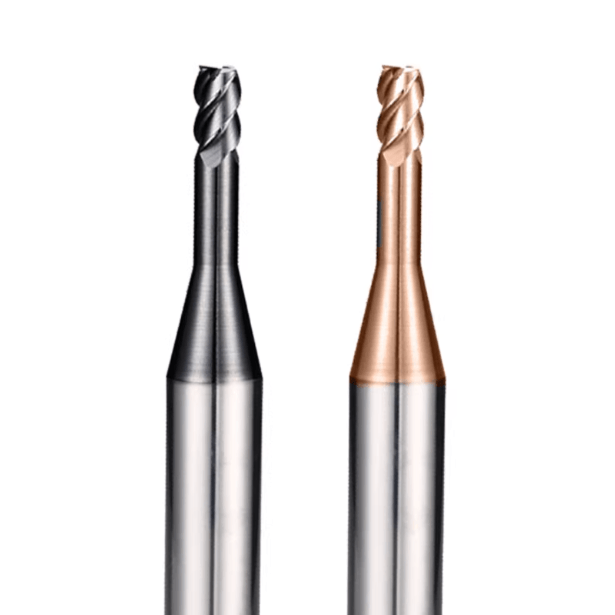
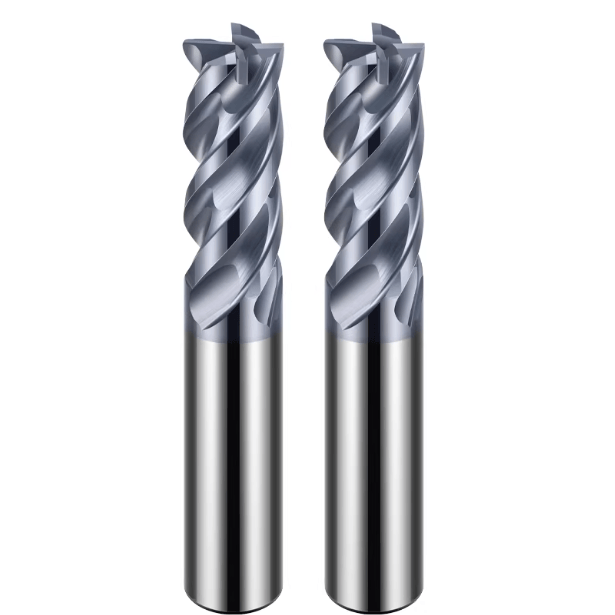
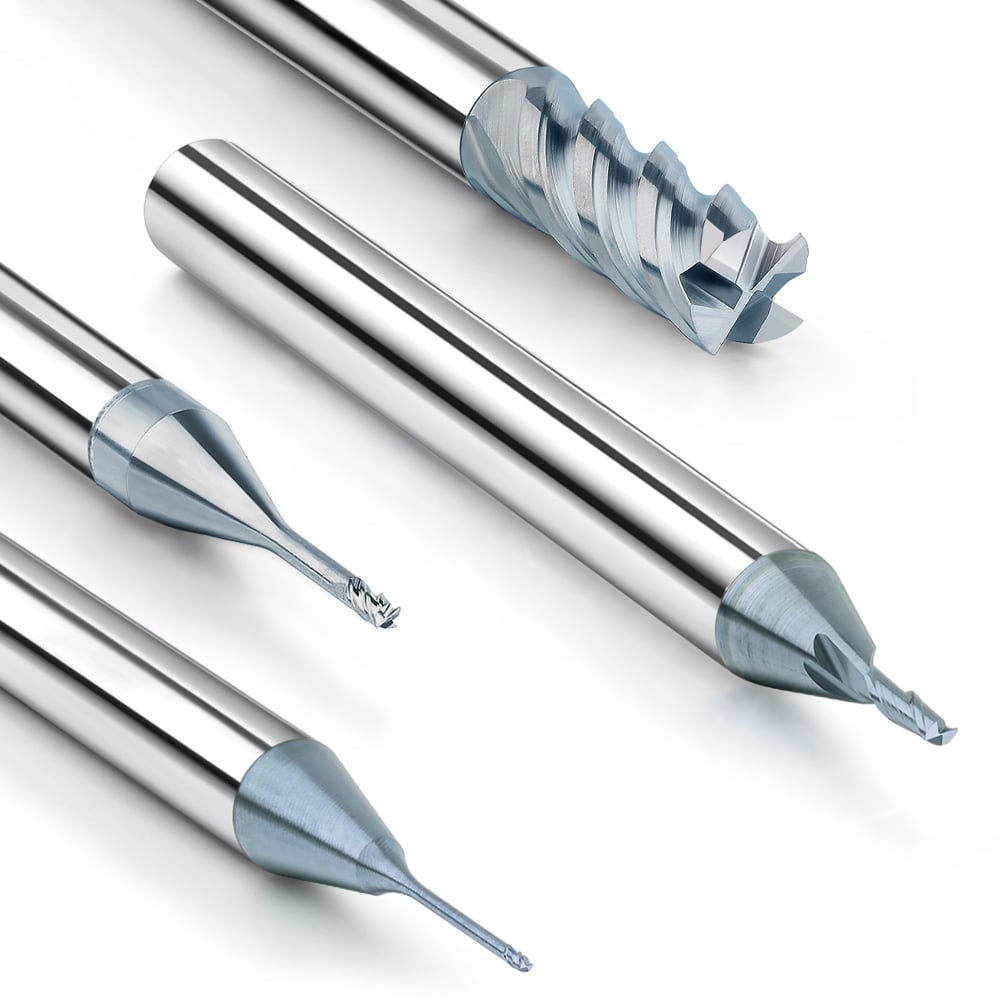
In the precision machining of high-hardness steels, tool performance directly affects machining stability, dimensional consistency, and overall production efficiency. When material hardness exceeds HRC50, conventional milling tools often face challenges such as rapid wear, edge chipping, and vibration, placing higher demands on the tool’s base strength, edge design, and wear resistance. Under these conditions, the HRC65 square milling cutter has become a preferred solution for hard milling operations.
Compared to conventional milling tools, the square milling cutter excels in forming right-angle shoulders and maintaining stable sidewall performance when machining hardened steel. Its square shoulder structure preserves excellent perpendicularity and corner accuracy under high-load cutting conditions, reducing the need for secondary finishing. This makes it especially suitable for mold cavities, sliders, inserts, and other components requiring high perpendicularity and surface quality. In practical production scenarios, applying square end mill cutters appropriately can improve single-pass machining efficiency while maintaining precision.
From a material standpoint, solid carbide square milling cutters offer higher overall rigidity and better resistance to deformation during high-hardness steel machining. The solid carbide base remains stable under high-speed and heavy cutting conditions, suppressing micro-vibrations and extending tool life. In HRC65 hard milling, maintaining a balance between wear resistance and edge strength is essential for stable operation and consistent performance.
In continuous or large-volume machining of hardened steel, tool consistency is critical. A reliable square milling cutter supplier not only ensures stable product quality but also provides technical guidance for tool selection, cutting parameter recommendations, and real-world application validation. This support reduces trial-cut costs, shortens setup cycles, and ensures predictable machining results.
Core Requirements for Square Milling Cutters in Hardened Steel Machining
Machining high-hardness steel demands tools that can withstand extreme cutting stresses while maintaining edge stability under high temperatures and wear. HRC50–65 hardened steels generate high cutting forces and exhibit low plasticity, requiring advanced tool materials, coating technology, and precise geometry. To achieve surface quality, right-angle shoulder accuracy, and machining efficiency, cutters must offer high rigidity, chipping resistance, and excellent wear resistance. Optimized chip evacuation is essential to prevent buildup or excessive vibration during cutting.
In practice, cutting parameters must align with tool geometry. Proper radial depth, speed, and feed rate reduce edge wear and minimize vibration effects on surface roughness. Cooling strategies and minimum quantity lubrication extend tool life while maintaining stable performance. For deep cavities or grooves, tool rigidity and edge design directly influence perpendicularity and corner accuracy.
Typical Cutting Characteristics of HRC50–65 Hardened Steel
HRC50–65 hardened steel combines high hardness with low toughness. Cutting generates high forces and localized heat, accelerating tool wear. The material’s elastic rebound makes edges prone to micro-chipping, particularly in deep grooves or right-angle shoulders. Uneven cutting forces can cause micro-vibrations and burrs, complicating finishing operations.
Chips are typically continuous or semi-continuous. Poor evacuation increases cutting temperature, further reducing tool life and surface quality. Selecting the appropriate tool edge length, helix angle, and cutting parameters ensures controlled chip flow, heat management, and machining stability.
Main Challenges Faced by Square Milling Cutters Under High Cutting Hardness
High-hardness material machining presents three main challenges: edge chipping, accelerated wear, and increased vibration. Cutting edges are prone to micro-chipping under high temperature and pressure, reducing right-angle corner accuracy and increasing burr formation. Extended machining can degrade coatings due to heat, lowering wear resistance and thermal stability.
Concentrated cutting forces may cause tool-spindle vibrations, affecting surface finish and consistency. In deep or narrow grooves, insufficient rigidity can lead to radial deviation or deflection, increasing secondary finishing requirements. Selecting high-strength substrates and optimized edge geometry is crucial for stable, efficient machining.
Advantages of Square Shoulder Structure in Side Milling and Right-Angle Shoulder Machining
Square shoulder tools provide stable edges and a large contact area, allowing higher cutting loads while maintaining perpendicularity and corner accuracy. In deep grooves or mold cavities, the structure supports the cutting edge, reducing deflection and micro-vibrations, ensuring straight sidewalls and sharp right angles.
Optimized geometry improves chip evacuation, reduces heat accumulation, and extends tool life. In high-hardness machining, square shoulder cutters minimize burrs and secondary finishing, enhancing production efficiency and part quality. Matching cutting parameters with edge design ensures stable, efficient, and controllable performance.
Practical Advantages of HRC65 Square Milling Cutters in Hardened Steel Machining
Machining high-hardness steels demands tools with high stability and wear resistance to ensure dimensional accuracy and efficient production. HRC65 square milling cutters, with optimized cutting edge geometry and solid carbide construction, offer exceptional wear and chipping resistance under heavy cutting loads. Compared to conventional high-speed steel or indexable insert tools, these cutters significantly reduce tool change frequency in hard milling, supporting stable continuous operation over extended periods and improving overall production efficiency. Proper geometry and advanced coatings also enhance chip evacuation and heat distribution, extending tool life.
In production, HRC65 cutters perform well in roughing, semi-finishing, and finishing operations. They consistently provide excellent surface quality and dimensional accuracy in deep grooves, cavities, and right-angle shoulders, reducing secondary finishing requirements and ensuring efficient machining of complex parts. Combined with proper cutting parameters and machine rigidity, they deliver a balance of high efficiency, precision, and low tooling costs.
Wear Resistance and Chipping Resistance in High-Hardness Materials
Machining high-hardness steels generates higher cutting forces and frictional heat than ordinary steels, which can cause microcracks, edge chipping, and accelerated wear. HRC65 solid carbide square shoulder cutters, made with high-strength substrates and advanced coatings, maintain edge integrity under heavy loads. Optimized edge and rake angles reduce stress concentration, providing excellent chipping resistance in deep grooves, right-angle shoulders, and mold cavities.
Good thermal stability and low-friction coatings lower cutting temperature, preserving sharp edges during continuous operations. This extends tool life, reduces tool changes, and ensures consistent part dimensions and machining efficiency.
Stability Performance in Continuous Cutting
In high-volume or long-duration machining, tool stability directly affects surface quality and cycle times. Thanks to their rigidity and strong cutting edges, HRC65 square shoulder cutters suppress vibration and deflection, producing flat surfaces and precise right angles.
For deep groove or mold cavity operations, matching radial depth, cutting speed, and feed rate fully leverages the tool’s stability, avoiding burrs or edge damage. Optimized chip evacuation and cooling further enhance reliability. Using a solid carbide square end mill cutter can improve continuous cutting performance and machining repeatability.
Reduced Secondary Finishing and Improved Consistency
High-hardness materials often produce burrs and right-angle deviations, requiring secondary finishing with conventional tools. HRC65 square shoulder cutters, with optimized edge and shoulder geometry, achieve stable right-angle corners and uniform surfaces in a single pass.
This high-consistency machining reduces secondary finishing, lowers manual intervention and rework, and improves overall efficiency. Excellent repeatability also minimizes part-to-part variation in mass production, ensuring reliable machining for molds, precision components, and hardened steel parts.

Application Performance of Solid Carbide Square Milling Cutters in Hardened Steel
For high-hardness steel, tool rigidity and wear resistance are critical for accurate and efficient machining. Solid carbide square shoulder cutters, made from a high-strength matrix with uniform microstructure, demonstrate superior stability and long tool life under heavy cutting conditions. Compared to welded or indexable tools, they maintain edge accuracy and surface finish in deep grooves, cavities, and right-angle shoulders, reducing secondary finishing and machining errors.
In practice, matching cutting parameters, machine rigidity, and tool geometry maximizes the benefits of solid carbide cutters. Selecting a reliable square milling cutter supplier ensures consistent performance of HRC65 square end mill cutters in both mass production and complex machining operations.
Enhanced Tool Rigidity with Solid Carbide Substrate
The key advantage of solid carbide cutters lies in their seamless construction, which provides higher overall rigidity than welded or insert-based tools. High-rigidity cutters resist bending and deflection from cutting forces, maintaining accuracy in deep grooves, narrow channels, and right-angle shoulders.
The carbide material’s inherent strength and heat resistance suppress edge deformation and micro-chipping under high speeds and feed rates, ensuring surface finish and tool longevity. Using solid carbide tools reduces vibration and machine load fluctuations, improving consistency and tool life.
Advantages in Heavy-Duty Cutting
Machining deep grooves, mold cavities, or thick-walled hardened steel parts generates high cutting loads, which can accelerate wear and reduce surface quality. Solid carbide square shoulder cutters maintain rigidity and edge stability under high depth-of-cut and radial engagement conditions.
This improves machining efficiency, reduces vibration and burr formation, and ensures continuous operation stability. Combined with coating and heat treatment, they deliver long-term, reliable performance in hard steel machining.
Comparison with Welded and Indexable Tools
Welded and indexable tools may be cost-effective and allow easy insert replacement but are prone to micro-vibration, edge displacement, and thermal expansion during hard milling, affecting surface finish and dimensional accuracy. Solid carbide square shoulder cutters, with seamless construction, provide higher rigidity, thermal stability, and consistent performance during heavy-duty and continuous operations.
Additionally, solid carbide tools offer superior edge uniformity and wear resistance, minimizing burrs and secondary finishing. For mass production and high-precision molds, their advantages are even more pronounced, enabling reliable and efficient hard milling.
Typical Application Scenarios of Square End Mill Cutters in Hardened Steel Machining
In high-hardness steel machining, the tool’s structural design and cutting edge geometry directly affect surface quality, right-angle shoulder accuracy, and overall machining efficiency. Square end mill cutters, with stable right-angle edges and high rigidity, deliver excellent performance in deep groove machining of mold cavities, sliders, and complex parts. By optimizing cutting parameters, tool geometry, and machine rigidity, cutting vibrations and heat accumulation can be minimized, improving machining consistency and tool life.
These cutters are suitable for precision right-angle shoulder operations while maintaining efficient chip evacuation in deep and narrow grooves. This reduces burr formation and the need for secondary finishing. Additionally, their compatibility with three-axis and five-axis machine tools allows full utilization of their stability and high cutting efficiency, providing reliable performance for mass production and complex part machining.
Precision Machining of Mold Cavity Sidewalls and Right-Angle Shoulders
In mold cavity machining, sidewall straightness and shoulder sharpness are critical quality indicators. Square end mill cutters maintain stable cutting forces during hard milling, reducing vibration and burr formation.
This ensures consistent corner dimensions, minimizing secondary chamfering and finishing operations. When combined with proper cutting depth, feed rate, and speed, square end mill cutters significantly enhance sidewall straightness and surface finish, achieving high-precision mold part machining.
Key Selection Points for Square End Mill Cutters in Narrow and Deep Groove Machining
Deep and narrow grooves demand high tool rigidity and precise cutting edge design. When selecting a square end mill cutter, consider the diameter-to-flute length ratio, number of cutting edges, edge angles, and chip evacuation design to prevent bending or vibration under heavy loads.
Optimizing radial depth of cut and cutting parameters extends tool life and ensures groove wall straightness. Advanced coatings and heat treatment improve wear resistance, preventing micro-chipping and tip wear during continuous cutting and maintaining process stability.
Practical Machining Adaptability on Three-Axis and Five-Axis Machine Tools
On three-axis machines, square end mills excel in straight grooves, cavity sidewalls, and right-angle shoulder machining, utilizing cutting edge rigidity for stable operation. On five-axis machines, flexible tool positioning enables precise machining of curved cavities, deep cavities, and multi-angle shoulders.
Matching tool length, helix angle, and holder system ensures surface finish, dimensional accuracy, and efficiency across machine types. By optimizing feed rate and cutting depth, square end mills achieve stable hard milling on both three-axis and five-axis machines, meeting the demands of complex parts and mold production.
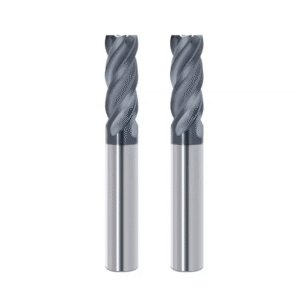
Key Parameters Affecting the Machining Performance of HRC65 Square Milling Cutters
Tool performance in high-hardness steel machining depends not only on material and geometric design but also on cutting parameters. Properly matching cutting speed, feed rate, and depth of cut can extend tool life, reduce vibration, and minimize heat buildup while maintaining machining accuracy. Parameter optimization is especially important for deep grooves, cavities, and right-angle shoulder operations, where high-hardness materials are prone to cutting force fluctuations, accelerated edge wear, and increased surface roughness.
Combining machine rigidity, tool geometry, and cooling or lubrication strategies can achieve efficient, low-wear, and stable hard milling results. Additionally, radial depth of cut significantly impacts machining stability and tool life. Excessive radial depth under heavy-load cutting conditions can cause tool deflection and edge chipping, while too shallow a cut reduces efficiency. Precise control of radial and axial depths, combined with tool rigidity and edge design, maximizes productivity while maintaining consistent machining results.
The machining environment also plays a critical role. Dry machining reduces coolant usage but can increase cutting edge temperature and thermal wear. Minimum quantity lubrication (MQL) provides localized lubrication and heat dissipation, helping maintain tool stability and surface quality. Selecting the right cutting strategy and tool coating combination for specific conditions is key to achieving high-precision, high-efficiency hard milling.
Rational Matching of Cutting Speed, Feed Rate, and Depth of Cut
Cutting speed, feed rate, and depth of cut are the most critical parameters in high-hardness steel machining. Excessively high cutting speeds cause rapid tool surface temperature increases, reducing coating life. Conversely, too low cutting speeds decrease productivity. The feed rate should be coordinated with depth of cut to ensure balanced edge loading and prevent localized overloading or edge chipping.
In deep grooves, narrow grooves, and mold cavities, a rational parameter combination controls cutting force fluctuations, reduces vibration, improves surface finish, and extends the service life of HRC65 square shoulder cutters.
The Impact of Radial Depth of Cut on Tool Life
Radial depth of cut directly affects cutting force magnitude and tool stress. Excessive radial depth increases lateral forces, stressing the cutting edge and causing deflection or micro-cracking. Shallow cuts reduce tool load but decrease efficiency and prolong cycle times.
By setting radial depth appropriately and combining it with tool rigidity and cutting edge design, stable cutting and extended tool life can be achieved, while ensuring flatness and dimensional accuracy in right-angle shoulders and deep groove surfaces.
Stability Differences under Dry Machining and Minimum Quantity Lubrication Conditions
Dry machining reduces coolant use but raises tool temperatures, accelerating cutting edge wear and thermal cracking, which negatively affects machining consistency and tool life. MQL provides localized lubrication and heat dissipation, effectively lowering edge wear while improving force stability and surface finish.
In complex cavities, deep grooves, or right-angle shoulder machining, using MQL along with optimized cutting parameters ensures stable operation of HRC65 square shoulder cutters, reduces vibration and burr formation, and improves machining efficiency and part dimensional consistency.
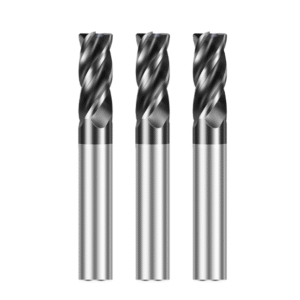
Analysis of Common Square Milling Cutter Failure Modes in Hardened Steel Machining
Even high-performance square shoulder cutters can experience edge wear, chipping, or reduced tool life. These failures impact surface quality, machining accuracy, production costs, and machine load. Major contributing factors include cutting force fluctuations, vibration, heat concentration, low rigidity in the tool holder system, and improper clamping.
For deep groove, narrow groove, or right-angle shoulder machining, controlling cutting parameters, optimizing tool geometry, and using a high-rigidity clamping system effectively extend tool life, improve consistency, and enhance production efficiency. Analyzing these failure modes allows targeted adjustment of cutting parameters, chip removal methods, and cooling/lubrication strategies to reduce edge chipping and premature wear.
Main Causes of Edge Micro-Chipping and Early Wear
Edge micro-chipping and early wear result from excessive edge load, heat buildup, uneven material hardness, or chip clogging. Excessive radial depth or feed rate can create localized stress, causing micro-cracks or chipping. High cutting temperatures reduce coating effectiveness, accelerating wear. Poor chip evacuation increases localized friction, further promoting edge wear.
For deep groove, cavity, or right-angle shoulder machining, controlling cutting parameters, optimizing edge geometry, and selecting appropriate coatings are key to minimizing early edge failure.
Influence of Machining Vibration on Square Milling Cutter Life
Vibration reduces tool life and surface quality. In high-hardness steel machining, cutting force fluctuations generate vibration between the tool and workpiece, causing micro-chipping and localized wear. Vibration also increases tool deflection, lowering dimensional accuracy and increasing secondary finishing or rework requirements.
Optimizing cutting parameters, increasing tool rigidity, and improving chip evacuation and cooling effectively suppress vibration, improving stability and tool life. Proper use of MQL or cutting fluid further reduces cutting force fluctuations and protects the cutting edge.
Influence of Tool Holder System and Clamping Method on Machining Stability
Tool holder rigidity and clamping methods directly affect tool performance. Low-rigidity holders or insecure clamping increase tool deflection and vibration, accelerating edge wear and chipping.
For deep groove, narrow groove, or right-angle shoulder operations, using a high-rigidity tool holder and optimizing clamping length and method improves cutting stability. Matching the holder with the machine spindle and incorporating vibration-damping designs ensures consistent part dimensions and extended tool life during continuous machining.
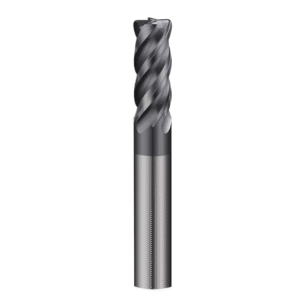
How to Select the Appropriate Square Milling Cutter Specifications Based on Machining Conditions
Selecting the right square shoulder milling cutter specifications is critical for achieving part accuracy, machining efficiency, and extended tool life in hardened steel machining. Tool diameter, cutting edge length, number of cutting edges, and cutting edge geometry must be properly matched to cutting depth, workpiece rigidity, and machine tool capabilities. Properly specified tools maintain stable cutting force distribution in deep grooves, cavities, and right-angle shoulder machining, minimize vibration and burr formation, and extend tool life, ultimately improving overall productivity.
Different machining stages have distinct requirements for tool specifications. Roughing requires high-rigidity tools with larger diameters and moderate cutting edge lengths to withstand heavy cutting forces. Semi-finishing demands a balance of rigidity and edge sharpness to ensure surface finish and dimensional accuracy. Finishing emphasizes cutting edge stability and surface quality, where moderate or short cutting edges maintain straightness in right-angle shoulders and deep grooves.
Balancing Tool Diameter and Cutting Edge Length in Hardened Steel Machining
Tool diameter and cutting edge length are key factors that determine rigidity and machining stability. Small-diameter tools are prone to deflection and vibration in deep grooves or cavities, reducing corner accuracy. Large-diameter tools increase cutting load and machine power requirements. Similarly, long cutting edges reduce rigidity and increase vibration and wear, while short edges may limit machining depth and efficiency.
By balancing tool diameter and cutting edge length, HRC65 square shoulder cutters achieve high rigidity and sufficient cutting depth, improving machining accuracy in right-angle shoulders, cavity sidewalls, and deep grooves while extending tool life.
Advantages of Short Cutting Edge Design in HRC65 Square Milling Cutters
Short cutting edges improve overall tool rigidity, reducing the risk of vibration and micro-chipping. In deep or narrow groove machining, short-edge cutters maintain straightness and corner accuracy while distributing cutting forces more evenly.
Combined with high-hardness HRC65 square shoulder cutters and advanced coating technologies, short-edge designs provide stable continuous cutting, extend tool life, and reduce secondary trimming or rework, improving production efficiency and part consistency.
Tool Selection Strategies for Different Machining Stages
-
Roughing: Use larger diameter cutters with moderate edge lengths and fewer cutting edges to withstand high cutting forces and feed rates while maintaining efficient material removal.
-
Semi-finishing: Select sharp, moderately rigid cutters to balance surface quality and cutting forces. Optimize radial and axial depths to maintain cavity sidewall straightness and right-angle shoulder accuracy, reducing vibration and burr formation.
-
Finishing: Employ short-edge, high-rigidity cutters with sharp edges for precise right-angle shoulders, consistent corners, and superior surface finish. Combine with minimal lubrication or cooling strategies to achieve high-precision, stable machining.
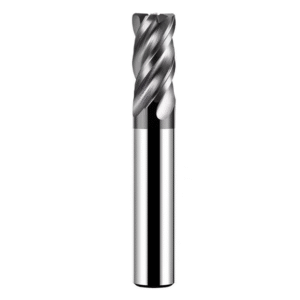
The Importance of Square Milling Cutter Suppliers in Hardened Steel Machining Projects
In high-hardness steel machining, the reliability of tool supply directly affects production stability, part accuracy, and machining costs. For deep grooves, narrow grooves, or right-angle shoulder machining, the batch consistency and material performance of high-quality tools are essential for achieving consistent results.
Choosing an experienced and technologically mature supplier ensures consistent tool performance across batches. It also provides guidance on tool selection for different machining conditions, cutting parameter optimization, and after-sales technical support, reducing trial-and-error risks and improving production efficiency. Supplier-provided sample testing and real-world condition verification help confirm tool feasibility before formal production, preventing problems such as edge chipping, premature wear, or poor surface finish.
In hardened steel projects, a supplier’s technical capabilities, batch management, and customer service directly influence machining stability and production costs. This is especially critical when machining materials at HRC65 hardness or above, where tool performance consistency is paramount.
The Impact of Batch Stability on the Performance Consistency of HRC65 Tools
Machining high-hardness steel requires extremely high tool performance. Minor differences in material quality or cutting edge tolerances can lead to variations in surface finish, decreased right-angle shoulder accuracy, or reduced tool life. Tools with high batch stability maintain consistent cutting forces, edge sharpness, and wear resistance across multiple parts, ensuring continuous machining stability and uniform part dimensions.
For HRC65 hardened steel, batch consistency affects not just individual tools but also the efficiency and production cost of the entire line. Choosing a reliable milling cutter supplier is therefore critical.
The Value of Technical Support from Square Milling Cutter Suppliers
Experienced suppliers offer professional guidance on cutting parameters, tool selection, and process optimization. Technical support may include machining case studies, chip evacuation strategies, coating recommendations, and micro-lubrication guidance. These services reduce trial-and-error costs and production risks.
In mass production and complex part machining, supplier technical services improve line stability and help companies fully leverage the advantages of high-hardness square shoulder milling cutters.
The Importance of Sample Testing and Real-World Condition Verification
Conducting sample tool testing and real-world verification before production is crucial for process stability. Simulating deep groove, narrow groove, or right-angle shoulder machining allows evaluation of cutting edge wear, force fluctuations, surface finish, and overall efficiency.
This step ensures the tool meets workpiece requirements, allows optimization of cutting parameters and strategies, and prevents rework or scrap caused by unsuitable tools. Combined with supplier data analysis and technical advice, it maximizes tool life and improves overall machining efficiency.
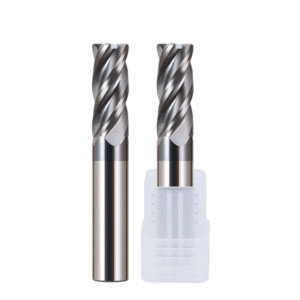
Improving Overall Machining Efficiency Through Optimized Square Milling Cutters
Optimizing square shoulder milling cutter specifications, geometry, and cutting parameters can significantly enhance machining efficiency and part quality in high-hardness steel. Machining HRC65 materials demands high rigidity, edge wear resistance, and thermal stability. Solid carbide HRC65 square shoulder cutters maintain stable cutting in deep grooves, cavities, and right-angle shoulders, reducing vibration and micro-chipping.
By optimizing cutting speed, feed rate, depth of cut, radial engagement, and using appropriate cooling or minimum quantity lubrication (MQL), tool life can be extended, part accuracy maintained, and secondary finishing minimized, achieving efficient, low-cost continuous production.
Reliable supplier guarantees—including batch consistency, technical support, and real-world verification—further strengthen machining stability and optimize production cycles. Considering tool performance, machining processes, and supply chain reliability allows companies to achieve improved efficiency, consistent quality, and controllable costs.
Reducing Tool Change Frequency to Improve Machining Cycle Time
High-rigidity, wear-resistant square shoulder cutters maintain stable cutting edges during continuous machining, significantly reducing tool change frequency. Fewer tool changes shorten downtime and setup time, optimize production cycles, and increase overall efficiency.
By selecting the proper tool diameter, cutting edge length, and geometry, and optimizing cutting parameters, long-term stable cutting can be achieved while ensuring part accuracy, maximizing production line utilization.
Enhancing Machining Perpendicularity and Surface Quality
Optimized cutter geometry and a rigid base reduce vibration and cutting edge micro-chipping, improving right-angle shoulder accuracy and surface finish. In deep grooves, narrow grooves, and mold cavities, tool stability directly affects corner sharpness, sidewall straightness, and surface roughness.
Precise control of cutting parameters and efficient chip evacuation further reduces burrs and secondary finishing, improving part consistency. These benefits increase machining quality while lowering downstream processing costs and boosting overall production efficiency.
Achieving Cost-Controllable and Stable Production in High-Hardness Machining
For materials at HRC65 and above, high-performance solid carbide square shoulder cutters extend tool life, reduce wear and chipping, and lower tool consumption costs. Combined with supplier-provided technical support and application validation, companies can optimize cutting parameters, select appropriate tool specifications, and ensure batch consistency, achieving controllable production processes.
Reducing tool changes, optimizing machining paths, and improving accuracy shortens cycles, lowers rework rates, and ensures stable, efficient, and cost-effective production while maintaining part quality. This ultimately improves overall production efficiency and competitiveness.