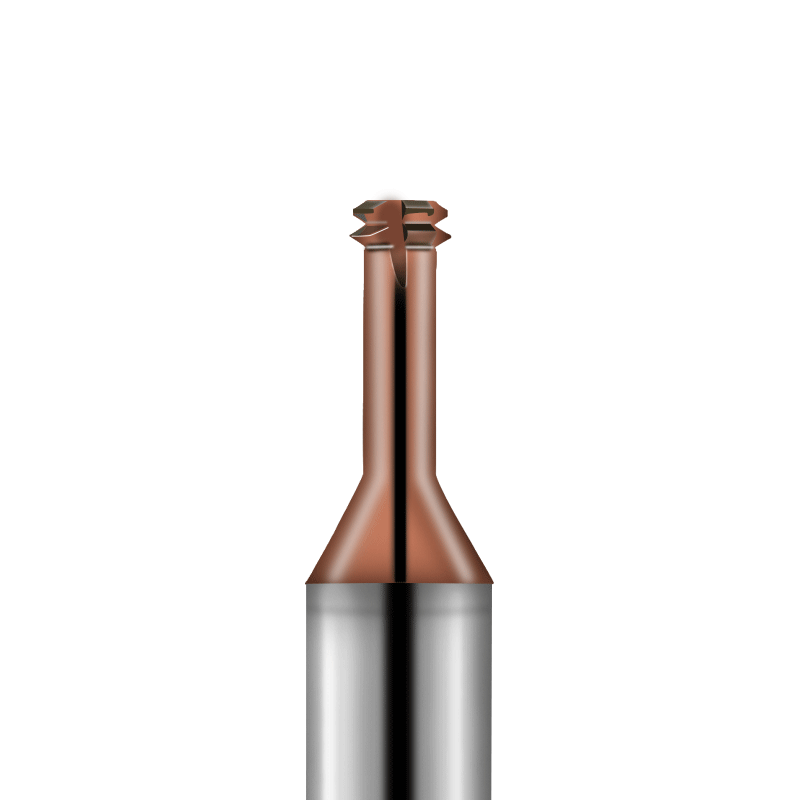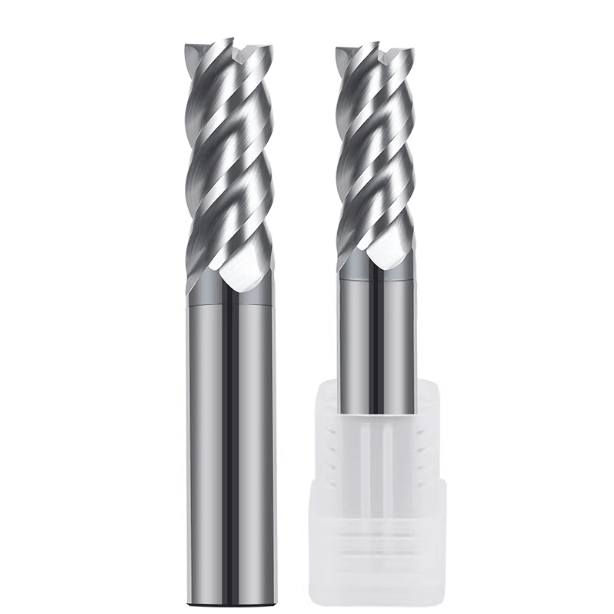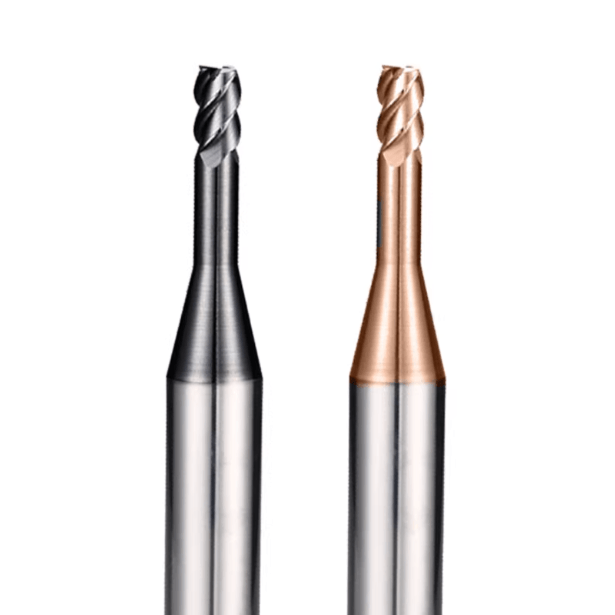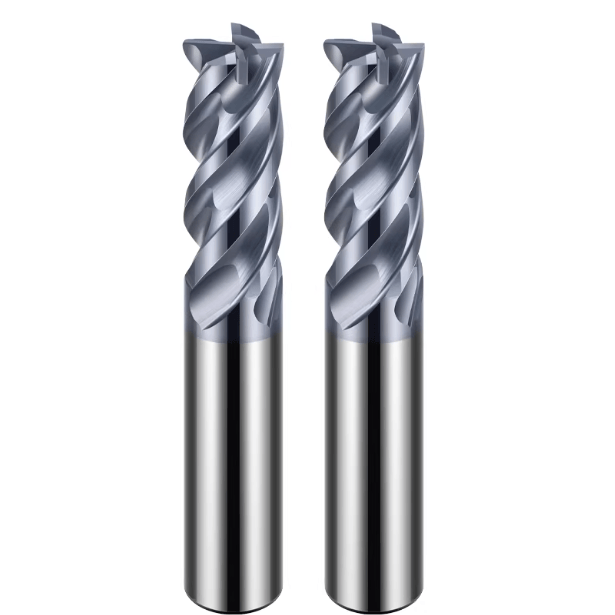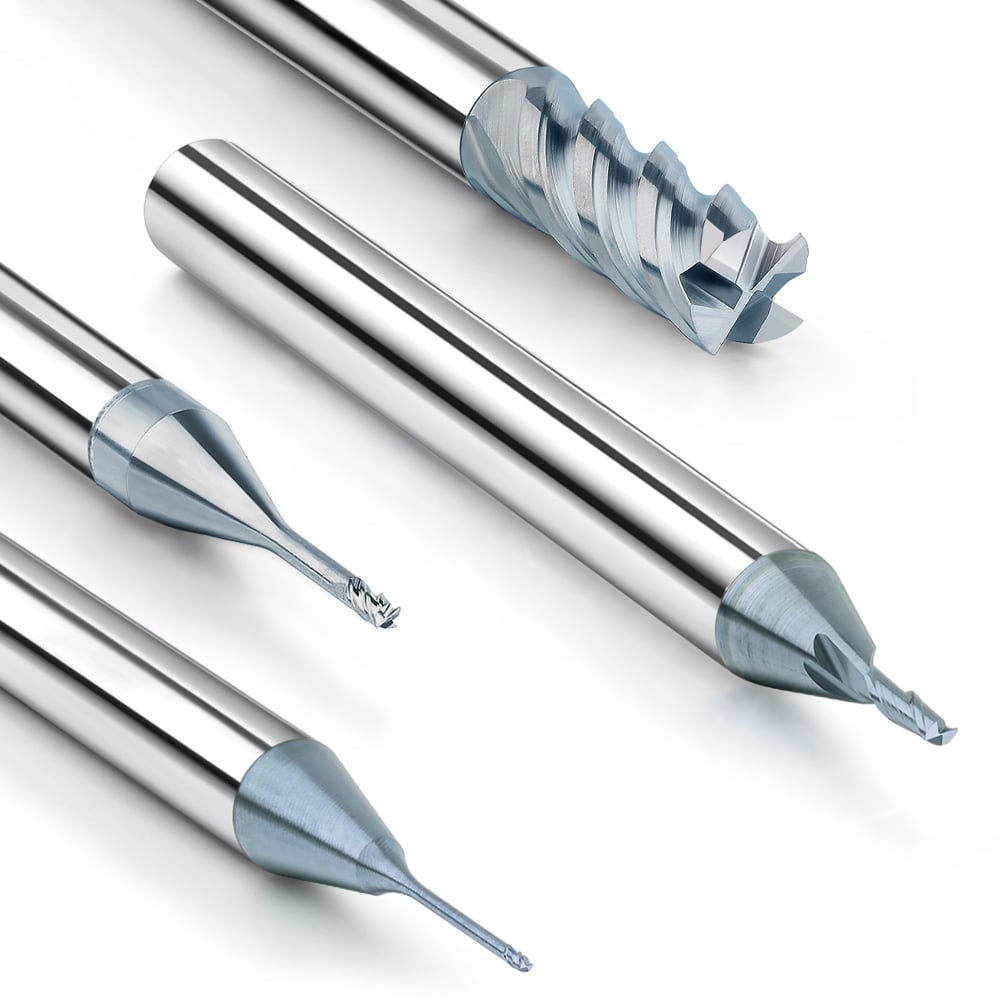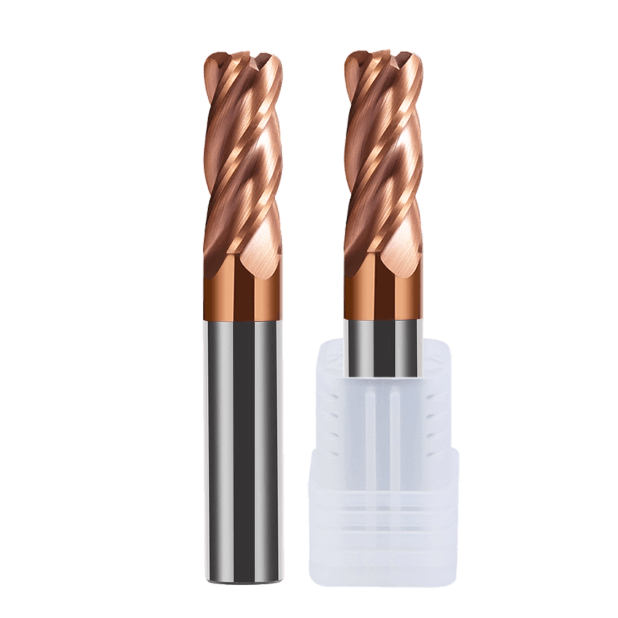
In precision machining, the performance of a bull end mill directly affects machining efficiency and the surface quality of workpieces. Different corner radii significantly influence cutting stability, force distribution, and tool life. By selecting an appropriate corner radius, cutting paths can be optimized, vibrations minimized, and cutting stresses reduced, improving both the accuracy and repeatability of CNC bull end milling tools.
The performance of 2-flute vs 4-flute bull end mills varies depending on the material. Two-flute tools excel in chip evacuation and light cutting operations, while four-flute tools are ideal for high-feed, high-surface quality finishing applications. When combined with bull nose end mill cutters for precision finishing, these tools can achieve high-precision contour machining and complex surface processing while maintaining excellent surface finish.
Selecting a reliable OEM bull end mill manufacturer in China ensures consistent tool material and geometry while providing customized solutions for specific applications. This is particularly crucial in production environments requiring high machining efficiency and long tool life. By optimizing the combination of corner radius and tool type, companies can achieve superior production efficiency without compromising machining quality.
The Core Role of Bull End Mill Corner Radius in CNC Machining
In high-precision machining, the corner radius design of a bull end mill affects both cutting stability and workpiece quality. A well-chosen corner radius disperses cutting stress, reduces localized high-pressure points between the tool and workpiece, and extends tool life, improving the reliability of CNC bull end milling tools. The corner radius selection also correlates with cutting depth, feed rate, and material hardness, making it a key factor in achieving precise contour machining and complex surface finishing. For applications demanding high surface quality, optimizing the corner radius of bull nose end mill cutters for precision finishing ensures smooth contours without steps or irregularities.
Impact of Corner Radius on Tool Strength and Chipping Resistance
During machining, the tool experiences cutting forces and vibrations. A larger corner radius increases the force-bearing area of the cutting edge, enhancing chipping resistance and overall tool strength. This is especially critical in precision machining of cemented carbide or high-strength steel, where a proper radius can prevent premature wear or edge breakage, extending the CNC bull end milling tool’s service life. When comparing 2-flute and 4-flute bull end mills, the corner radius plays an even more significant role in maintaining tool durability under high-feed conditions.
The Influence of Corner Radius on Cutting Load and Contact Area
The tool’s corner radius directly affects the contact area between the tool and workpiece during cutting. A larger radius distributes cutting forces more evenly, reducing load per unit area, vibrations, and heat buildup. This is particularly important when machining hard materials or during extended cutting operations. Additionally, proper radius selection improves chip evacuation efficiency and enhances the performance of 2-flute vs 4-flute bull end mills. By carefully matching corner radius with feed rate and cutting depth, machining stability is improved, and tool runout effects on workpiece contours are minimized.
The Relationship Between Corner Radius and Surface Finish
Surface quality is influenced not only by cutting parameters but also by the tool’s corner radius. An appropriate radius smooths the contact between tool and workpiece, minimizes micro-vibrations and tool marks, and enhances the surface finish achieved by bull nose end mill cutters for precision finishing. In high-precision applications, matching the corner radius to the material and machining conditions ensures flat, smooth surfaces and reduces the need for additional finishing operations.
Analysis of the Impact of Different Corner Radius Specifications on Machining Performance
The corner radius size significantly affects a tool’s mechanical performance and machining outcomes. Small-radius tools are ideal for fine contouring and achieving high precision on complex features, whereas large-radius tools provide greater stability and durability under heavy cutting forces and rigid machining conditions. Depending on the material, flute count, and feed parameters, an optimized corner radius improves both the machining efficiency and surface quality of CNC bull end milling tools. Combining small and large-radius tools with bull nose end mill cutters for precision finishing enables a complementary approach, covering scenarios from fine detailing to heavy cutting.
Performance of Small Radius Bull End Mills in Fine Feature Machining
Small-radius tools excel in precision contouring and machining complex geometries. Their sharp cutting edges allow entry into narrow spaces and stepped surfaces, ensuring high-precision results. For 2-flute vs 4-flute bull end mills, small-radius tools are better suited for 2-flute designs, promoting smooth chip evacuation, reduced vibration, and consistent surface quality. Small-radius tools are widely applied in custom solutions from OEM bull end mill manufacturers in China, meeting specific requirements for mold details and precision part contours.
Advantages of Large Radius Bull End Mills in Heavy Cutting and High Rigidity Scenarios
Large-radius tools, with greater edge contact areas, offer higher chipping resistance and overall strength. They perform stably under high feed rates, deep cuts, and hard material machining, reducing vibration and overload risk. When combined with a 4-flute design, these tools improve cutting efficiency and tool life while maintaining surface finish, especially in high-load CNC bull end milling operations or large-part machining.
Impact of Corner Radius on Mold Cavities, Stepped Surfaces, and Transition Areas
In mold cavity and complex transition area machining, corner radius selection influences cutting paths and surface quality. Small-radius tools handle small steps and sharp corners effectively, while large-radius tools smooth transition surfaces, reduce stress concentrations, and minimize tool marks. Optimizing radius combinations in bull nose end mill cutters for precision finishing enhances precision in mold cavities, stepped surfaces, and curved transition areas, boosting overall CNC bull end milling tool performance.

2 Flute vs 4 Flute Bull End Mills: Radius Matching Strategy
Tools with different flute counts have distinct radius matching requirements. Two-flute tools, with larger chip evacuation space and lower cutting interference, are ideal for small-radius precision machining and light cutting. Four-flute tools provide higher cutting strength and surface finish, suited for large-radius heavy cutting and rigid machining conditions. Properly matching corner radius with flute count balances efficiency, tool life, and surface quality. In bull nose end mill cutters for precision finishing, various flute and radius combinations achieve optimization across precision contour machining and high-load cutting applications.
Combination Selection of Flutes and Radius in Aluminum Machining
Aluminum machining demands high cutting speeds and smooth chip evacuation. A 2-flute tool with a moderate radius prevents material buildup and burrs while ensuring contour accuracy. High-volume precision aluminum machining can also benefit from 4-flute tools with small-to-medium radii for improved surface finish and consistency. Optimizing flute and radius combinations allows CNC bull end milling tools to achieve efficiency and low tool wear, aligned with OEM bull end mill manufacturer China custom solutions.
Impact of Flutes and Radius on Stability in Stainless Steel and Hard Material Machining
Machining hard materials and stainless steel requires high rigidity and chipping resistance. Large-radius, 4-flute tools enhance cutting stability, reduce vibration and surface waviness, and maintain consistency during long machining operations. Suitable radius selection distributes cutting forces, extends tool life, and mitigates thermal deformation in CNC bull end milling tools, ideal for complex parts and high-strength molds.
Synergistic Effect of Radius and Flutes in Chip Evacuation and Tool Mark Control
Flute count and corner radius work together to optimize chip evacuation and surface quality. A 2-flute cutter with a small radius enhances chip removal and reduces burrs, while a 4-flute cutter with a larger radius improves surface finish and minimizes tool marks. Properly matching flutes and radius ensures high-precision contours, uniform surfaces, and stable cutting performance with bull nose end mill cutters for precision finishing, while balancing tool life and machining efficiency.

Key Considerations for Selecting Corner Radius in CNC Bull End Milling Tools for Different Materials
The requirements for tool corner radius vary significantly depending on the material being machined. Soft metals prioritize smooth chip evacuation and burr prevention, while hard materials and heat-resistant alloys emphasize tool strength, wear resistance, and cutting stability. Selecting an appropriate corner radius optimizes cutting force distribution, enhances machining accuracy, and improves the surface finish of bull nose end mill cutters for precision finishing. In CNC bull end milling tool applications, considering material characteristics together with the number of flutes, cutting depth, and feed rate ensures a balance between machining efficiency and tool life. Customized tool solutions from OEM bull end mill manufacturers in China can meet the specific needs of different materials.
Light Cutting Radius Solutions for Soft Metals such as Aluminum and Copper
When machining aluminum, copper, and other soft metals, tools must ensure smooth cutting while preventing burrs. Small to medium corner radii, combined with a 2-flute bull end mill design, improve chip evacuation efficiency, reduce cutting heat, and minimize material adhesion. This radius also maintains dimensional accuracy for fine contour machining and optimizes surface finish. In high-volume precision operations, this combination allows CNC bull end milling tools to balance efficiency and tool life. OEM bull end mill manufacturers in China often provide customized versions of these tools to meet specific soft metal machining requirements.
Wear-Resistant Radius Solutions for Steel and Mold Steel
Machining steel and mold steel requires high resistance to chipping and wear. A large corner radius increases the tool edge strength, distributes cutting forces, and reduces vibration and heat accumulation. Paired with a 4-flute bull end mill, this design enables stable cutting in high-rigidity applications while maintaining surface finish. These tools are especially effective in high-load or complex part machining scenarios, ensuring efficient production of precision mold cavities and wear-resistant components.
High-Speed, Light-Load Angle and Radius Matching for Heat-Resistant Alloys
Machining heat-resistant alloys is sensitive to cutting heat and forces. Under high-speed, light-load conditions, a carefully matched radius and flute count reduce thermal stress, minimize tool wear, and maintain contour accuracy. Small to medium radii enhance chip evacuation and surface finish, while larger radii improve tool strength at greater cutting depths. Optimizing the corner radius of CNC bull end milling tools, in combination with bull nose end mill cutters for precision finishing, enables precise and efficient machining while extending tool life.

Optimization of Corner Radius for Bull Nose End Mill Cutter for Precision Finishing
In precision machining, optimizing the corner radius is crucial for surface quality and contour accuracy. A properly designed radius reduces tool vibration and cutting stress while improving continuity and smoothness in free-form surface and complex contour machining. By selecting the appropriate corner radius for bull nose end mill cutters for precision finishing, high precision and surface quality can be achieved in fine machining, deep cavity operations, and transition areas. OEM bull end mill manufacturers in China can provide customized tools to adjust the radius for specific machining needs, achieving an optimal balance between efficiency and precision.
Impact of Radius on Surface Blending in Free-Form Surface Finishing
In free-form surface finishing, the corner radius affects cutting path continuity and surface blending. A smaller radius captures subtle variations and improves contour accuracy, but may increase tool wear and machining time. A larger radius smooths surface transitions and reduces tool vibration, though overcutting or undercutting may occur in detailed areas. Matching the radius with the number of flutes ensures smooth surface blending and improves the efficiency of bull nose end mill cutters for precision finishing.
Considerations for Radius Selection in Narrow Groove and Deep Cavity Finishing
For narrow grooves and deep cavities, tool contact area is limited. Radius selection must balance chip evacuation and cutting stability. Small-radius tools access tight spaces for precise contouring but concentrate cutting forces, requiring careful feed rate and depth control. Medium to large radii suit wider, deeper cavities, enhancing chipping resistance and machining stability. Optimized radius configurations improve CNC bull end milling tool performance in deep cavity and complex groove machining, reducing tool wear and defects.
Radius Control Methods for Reducing Boundary Tool Marks and Improving Right-Angle Transition Zones
Boundary tool marks and poor finishing in right-angle transitions are common. Precisely controlling the fillet radius smooths the tool-workpiece interaction, reduces marks, and improves surface quality in right-angle and transition zones. Proper radius selection with bull nose end mill cutters for precision finishing minimizes secondary finishing and increases overall CNC bull end milling tool efficiency. Customized solutions from OEM bull end mill manufacturers in China allow optimal radius configuration for specific transition zones, balancing precision and durability.

Key Points of Non-Standard Fillet Radius Customization from an OEM Bull End Mill Manufacturer in China
Customized non-standard fillet radius tools improve machining accuracy, tool life, and production efficiency. Considering material properties, part geometry, and machining conditions allows CNC bull end milling tools to perform optimally in complex contour and fine feature machining. Customized bull nose end mill cutters for precision finishing optimize contact area and cutting force distribution, reducing vibration and tool marks. OEM bull end mill manufacturers in China can adjust tool designs for specific machining scenarios, providing support from light cutting to high-load operations.
Customizing Angle, Radius, and Cutting Edge Design Based on Machined Part Features
Part geometry, groove depth, and surface complexity determine the cutting edge and fillet radius design. Small radii with fine cutting edges ensure contour accuracy in micro-feature machining, while large radii with reinforced edges improve chipping resistance and tool rigidity in large parts or high-load cutting. Matching cutting parameters with the CNC bull end milling tool ensures surface flatness and machining stability for precision finishing.
Coating and Radius Combination Solutions for High-Hardness Materials
For high-hardness materials, tool wear resistance and heat management are crucial. Appropriate coatings combined with optimized radius designs improve wear resistance, reduce cutting force concentration, and minimize vibration. 4-flute tools with large radii excel in high-rigidity applications, maintaining stability and surface quality. OEM bull end mill manufacturers in China provide customized coating-radius combinations for different hardness levels, ensuring precision and tool longevity.
Stability Advantages of Customized Tools in Batch Processing
In mass production, non-standard corner radius tools with optimized cutting edge, radius, and geometry maintain consistency and stability. Proper radius design reduces wear and vibration, ensuring high precision and surface finish in continuous CNC bull end milling tool operations. Customized bull nose end mill cutters for precision finishing improve production efficiency and reduce downtime in mold cavities, large parts, and complex surfaces.
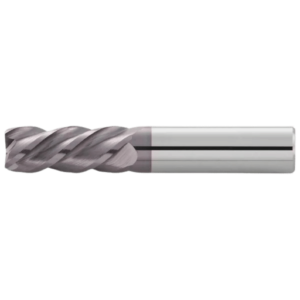
Comprehensive Impact of Corner Radius Selection on Machining Efficiency and Tool Life
The corner radius affects surface finish, machining accuracy, efficiency, and tool life. A properly selected radius optimizes cutting force distribution, reduces vibration and heat, and extends bull nose end mill cutter service life. Considering material, flute count, cutting depth, and feed rate ensures efficient chip evacuation, cutting stability, and surface quality. Combining radius optimization with OEM bull end mill manufacturer China custom solutions improves performance from light cutting of soft metals to high-load machining of steel, mold steel, and heat-resistant alloys.
Adjustment Strategies for Feed Rate and Cutting Depth Based on Different Radii
Corner radius directly affects cutting stress and stability, influencing feed rate and cutting depth. Small-radius tools suit precision, light cutting but require controlled depth and feed rate. Large-radius tools maintain stable cutting at high feed rates and depths, particularly with 4-flute bull end mills for hard materials. Matching radius with cutting parameters improves efficiency and surface quality.
Correlation Analysis of Radius and Tool Wear Patterns
Radius size significantly impacts tool wear. Small-radius tools may experience localized edge wear, while large-radius tools wear more uniformly in heavy cutting or high-rigidity operations. Different materials demand different wear characteristics. Analyzing radius and wear patterns allows CNC bull end milling tools to achieve stable, efficient machining while extending tool life.
Radius Selection Method for Maximizing Tool Life
Maximizing tool life requires selecting the optimal radius based on material, flute count, cutting depth, and surface quality. Small to medium radii suit fine contours and free-form surfaces; large radii enhance edge strength and chipping resistance in deep cavities and high-rigidity machining. Combined with bull nose end mill cutters for precision finishing and OEM customization, this achieves high tool life, stability, and efficiency across diverse machining scenarios.