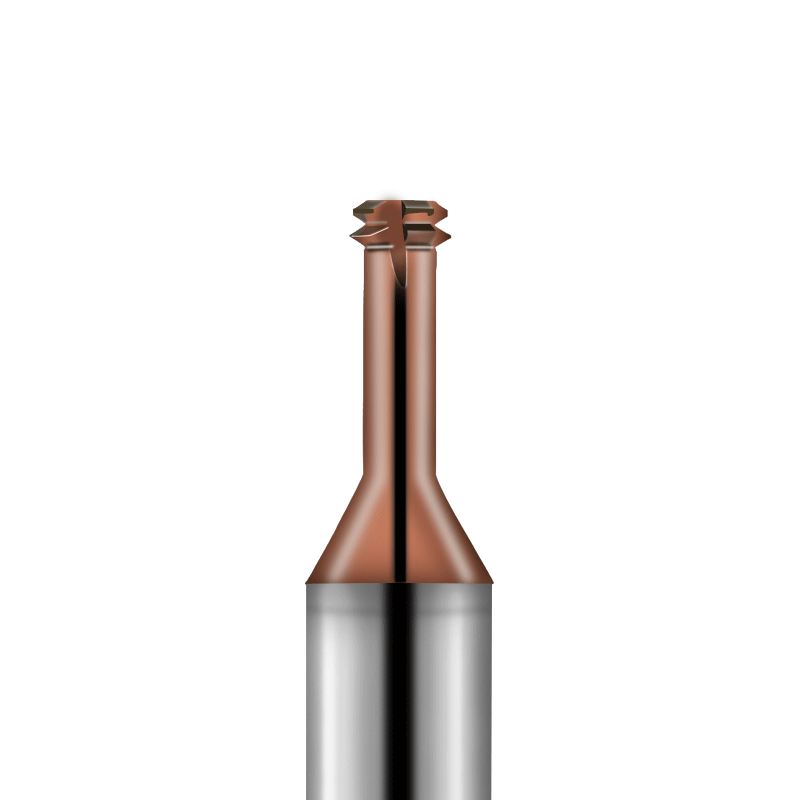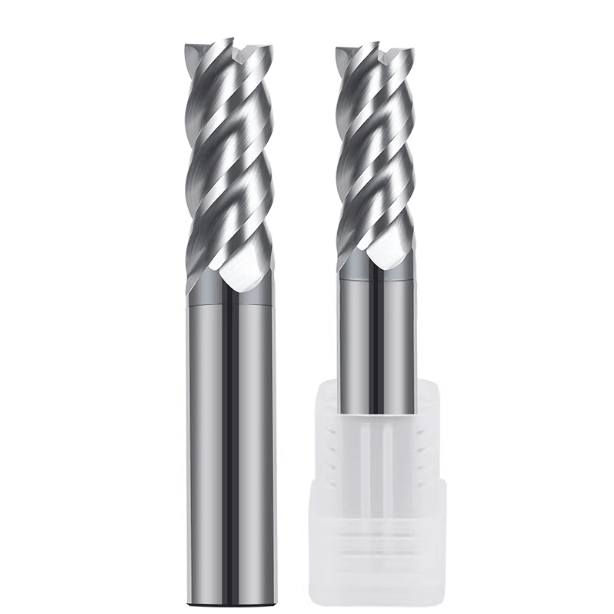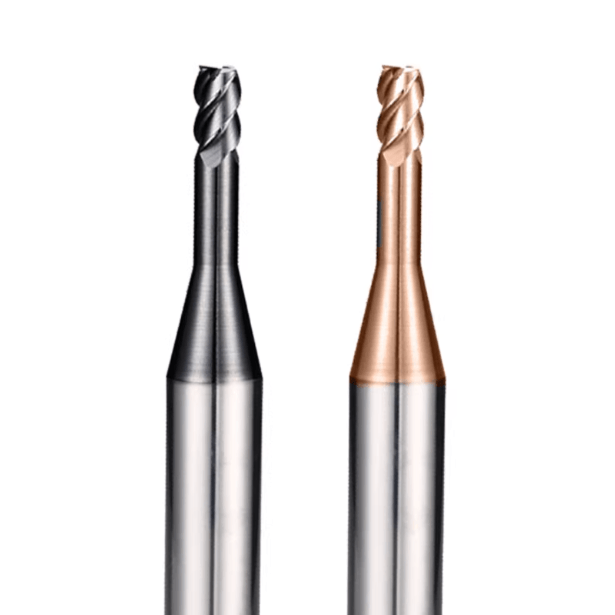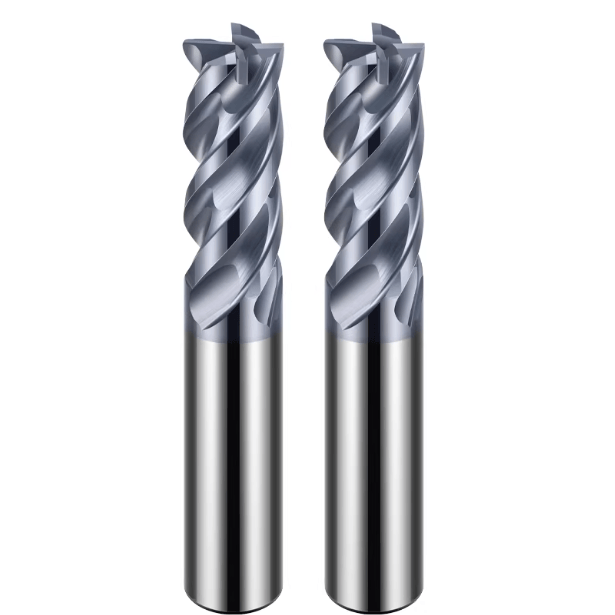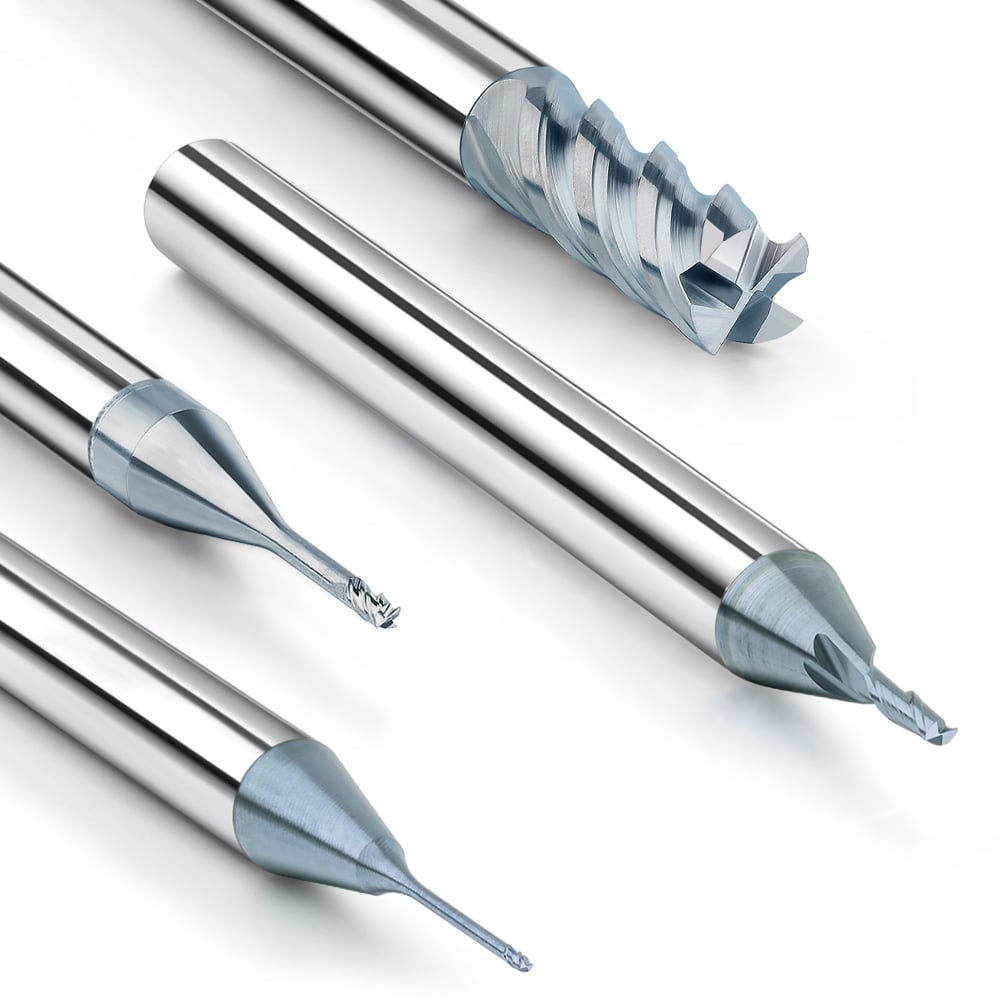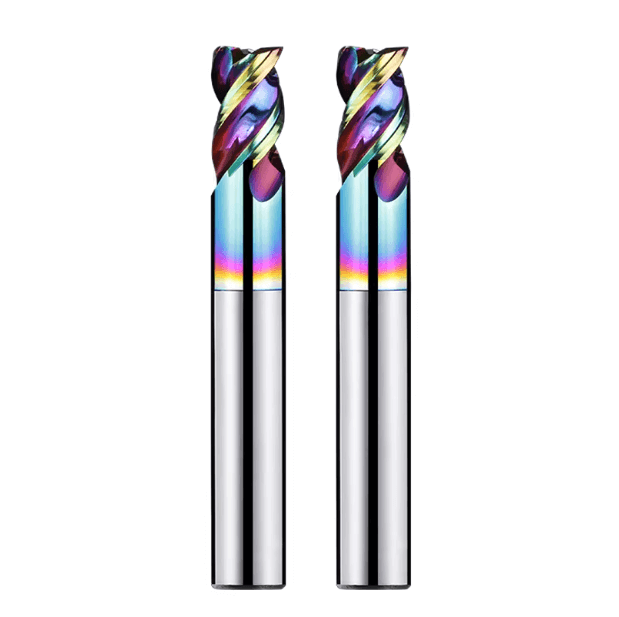
In aluminum alloy machining, different milling methods place distinct demands on tool performance. While slotting and side milling are both milling processes, they differ significantly in cutting load, chip evacuation, tool force direction, and machining stability. As efficiency and surface quality requirements increase, 3 flute end mills for aluminum have become a common choice for both operations.
Compared to traditional two-flute tools, 3 flute end mills provide a better balance between chip evacuation capacity and tool rigidity. During slotting, the tool must endure continuous full-width cuts while maintaining smooth chip evacuation. Side milling, on the other hand, emphasizes stable cutting contact and allows higher feed rates. Therefore, the choice between 2 flute vs 3 flute end mills for aluminum should be based on the specific machining method rather than simply the number of flutes.
In practice, the performance of 3 flute end mills largely depends on matching the tool geometry, cutting edge design, and flute configuration to the specific operation. Under high-speed or high-feed conditions, an inappropriate tool can amplify vibration, built-up edge, and tool marks.
Increasingly, manufacturers are turning to custom 3-flute end mills suppliers to optimize tools for specific slotting depths, side milling allowances, and machine tool conditions. Customized solutions can significantly improve efficiency while maintaining machining stability.

Common Machining Conditions for Aluminum Alloy Machining Using a 3 Flute End Mill
In aluminum alloy milling, different machining methods have distinct impacts on tool performance and stability. Slotting and side milling are the two most frequently used operations. They differ in cutting contact area, chip evacuation path, and tool load. Understanding these differences helps fully leverage the advantages of 3 flute end mills in aluminum machining.
Common Slotting Machining Requirements in Aluminum Alloy Parts
In slotting, the tool typically engages the full width of the cut, with cutting edges continuously in contact for extended periods. This requires efficient chip evacuation and stable cutting, especially in deeper slots or high-speed machining, where chips can accumulate and increase cutting resistance.
Compared to tools with fewer flutes, a 3 flute design provides higher tool body rigidity while maintaining sufficient chip evacuation space, improving stability during aluminum slotting. Slot width, depth, and machining allowance directly affect tool stress. For long slots or high-precision parts, a 3 flute structure helps reduce tool deflection and improve process control. Adjusting feed and cutting parameters allows for an optimal balance between efficiency and tool life.
Application Characteristics of Side Milling in Aluminum Alloy Profile Machining
Side milling is commonly used for external contours, cavity walls, and local trimming. The tool usually engages partially, resulting in a more balanced cutting load compared to slotting. This allows higher feed rates, improving overall efficiency. Tool rigidity and stable cutting contact are critical for maintaining surface quality.
In side milling, 3 flute end mills maintain cutting continuity at higher linear speeds, reducing vibration and tool marks. Multi-flute cutting distributes load among cutting edges, producing smoother contours and better dimensional consistency.
Why 3 Flute End Mills Are Often Used in Both Slotting and Side Milling
The three-flute design balances chip evacuation capacity with tool rigidity, adapting to both full-width and partial-width cuts. In aluminum milling, this balance improves cutting stability and allows higher feed rates.
Customized tools with optimized geometry for specific conditions—such as helix angle, cutting edge sharpness, and flute design—can further enhance performance, ensuring excellent results in both slotting and side milling. This explains why many companies prefer custom 3-flute end mills for complex aluminum components.
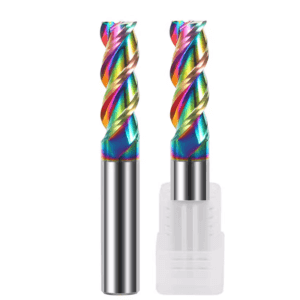
Actual Performance of 3 Flute End Mills for Aluminum in Slotting Operations
In aluminum slotting operations, the cutting tool must withstand complex loads from continuous cutting over extended periods, placing higher demands on tool rigidity and machining parameters. Compared to side milling, slotting is a high-contact area operation with concentrated and frequently changing cutting forces. Insufficient tool rigidity or poor chip evacuation can lead to vibration, chip clogging, or even tool breakage.
The 3 flute end mill for aluminum increases the number of effective cutting edges while maintaining adequate chip evacuation space, significantly improving cutting stability under these conditions.
Cutting Load and Chip Evacuation during Full-Width Slotting
Full-width slotting engages the tool across the entire slot width, with cutting resistance continuously acting on the tool body. Aluminum alloys often produce long chips at high speeds; if not evacuated efficiently, chips compress repeatedly, disrupting smooth cutting.
A well-designed 3-flute end mill for aluminum distributes cutting forces across the flutes and guides chips along the helical path for rapid evacuation. In practice, reducing radial cutting depth and maintaining a stable axial feed further enhance chip evacuation and reduce processing anomalies.
Stability Analysis of 3 Flute End Mills in Aluminum Slotting
Tool stability directly affects slot wall quality and dimensional consistency. The increased number of flutes and larger tool cross-section in 3-flute end mills reduces radial runout at high speeds. This structural feature improves vibration resistance during long continuous cuts, making them suitable for deep slots or high-precision applications.
Multiple flutes also share the cutting load, balancing forces across the tool and slowing edge wear, resulting in improved tool life and overall machining reliability.
Influence of Slot Depth and Width on Tool Stress and Machining Results
Slot depth and width are critical factors in slotting difficulty. Deeper slots lengthen the chip evacuation path, while wider slots increase cutting resistance. A 3-flute end mill enhances structural strength to counteract these challenges.
By controlling cutting depth and employing layered slotting strategies, stable results can be achieved while maintaining machining efficiency.
Key Differences Between 2 Flute and 3 Flute End Mills for Aluminum in Slotting
Two-flute tools offer larger chip evacuation space, ideal for shallow grooves or low-load applications. However, their reduced rigidity limits performance at higher feed rates.
In contrast, 3 flute end mills for aluminum maintain good chip evacuation while improving rigidity and cutting continuity. This makes them better suited for medium- to high-load slotting operations. Proper tool selection and parameter optimization based on groove type and machine tool conditions are essential for stable and efficient machining.
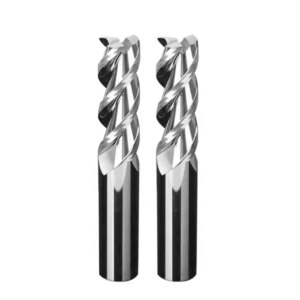
Advantages of 3-Flute End Mills for Aluminum in Side Milling Applications
Side milling is commonly used for contouring, cavity machining, and local trimming in aluminum alloy parts. Compared to slotting, side milling typically involves smaller cutting contact and a more evenly distributed load, requiring different considerations for tool rigidity, cutting stability, and feed efficiency. 3 flute end mills for aluminum maximize structural advantages in this operation, delivering high-efficiency machining while maintaining excellent surface finish.
By selecting optimal flute length, helix angle, and tool diameter, and adjusting cutting depth and feed parameters, cutting force distribution can be optimized. This reduces vibration, minimizes tool marks, and improves machining consistency and cycle time. Such configurations are ideal for medium- to high-speed aluminum alloy machining environments.
Balancing Tool Rigidity and Cutting Efficiency
Tool rigidity affects cutting stability and dimensional accuracy, while feed rate controls machining efficiency. 3-flute end mills for aluminum increase bending rigidity by adding flutes and enlarging tool cross-section, allowing stable cutting at higher feed rates with reduced deflection and vibration.
By matching cutting depth and radial engagement, material removal per unit time can be increased without compromising surface quality, achieving an optimal balance between efficiency and tool life.
Performance in High-Feed Side Milling
High-feed side milling increases material removal per revolution, demanding greater tool rigidity and chip evacuation. 3-flute end mills for aluminum, with a moderate number of flutes, provide sufficient cutting while preventing chip evacuation issues caused by too many flutes.
This design maintains stable cutting, reduces vibration and tool marks, and improves contour edge surface finish. Balanced load distribution also slows edge wear, enhancing tool durability during continuous machining.
Controlling Surface Finish and Dimensional Consistency
Surface finish and dimensional accuracy are critical for aluminum contour machining. The 3-flute design maintains stable cutting contact, reducing force fluctuations and minimizing micro-vibrations or surface ripples.
Optimizing tool geometry, helix angle, and cutting parameters further enhances cutting continuity, ensuring consistent dimensional accuracy. This is crucial for molds, aerospace components, and precision mechanical parts.
Why Side Milling Conditions Favor 3 Flute End Mills
Side milling distributes cutting load more evenly and allows better chip evacuation than slotting. 3-flute end mills for aluminum maintain stability at high feed rates and moderate cutting depths, ensuring cutting continuity and high surface quality.
This balance between efficiency and stability explains why many manufacturers prefer 3-flute end mills for contouring and cavity machining applications.
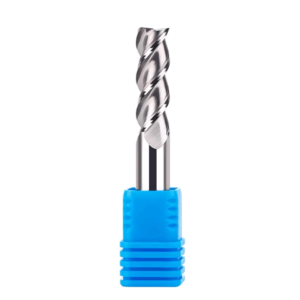
Different Requirements of Slotting and Side Milling with 3-Flute End Mills for Aluminum
In aluminum alloy machining, slotting and side milling are both widely used, but they have distinct requirements for tool performance and cutting parameters. Slotting typically involves full-width cutting, generating concentrated forces and limited chip evacuation paths. Side milling, in contrast, mainly uses partial-width contact, resulting in a more balanced cutting load and easier chip evacuation. These differences affect tool rigidity, cutting stability, and spindle/feed strategy selection, which are critical for machining efficiency and part quality.
3 flute end mills for aluminum adapt well to both operations, but matching the tool’s geometry to the specific machining method is essential for stability and extended tool life. Optimizing chip evacuation, cutting force distribution, and cutting parameters ensures the tool performs effectively under different conditions.
Impact of Chip Evacuation Space on Tool Flute Performance
In slotting operations, large chip volumes require adequate evacuation space. Excessive flutes can compress this space, increasing the risk of chip clogging and cutting resistance, while too few flutes reduce efficiency. The 3-flute design balances flute count and chip flute geometry, providing effective evacuation channels while maintaining tool rigidity for deep or high-load slotting.
In side milling, cutting edges engage only partially, and chip evacuation pressure is lower. The three-flute structure maintains high feed efficiency, avoids instability from insufficient cutting edges, and fully utilizes the chip evacuation path for continuous cutting performance.
Effect of Cutting Force Direction on Tool Life
Cutting force direction varies between operations. During slotting, radial forces dominate, subjecting the tool to bending moments over extended full-width cuts. This places high demands on tool rigidity and the clamping system. Uneven force distribution can cause vibration, localized wear, and shorter tool life.
In side milling, cutting forces are primarily axial, producing a more balanced load and slightly lower vibration requirements. The 3-flute end mill distributes forces evenly, extending tool life while maintaining surface quality and dimensional accuracy.
Optimizing Spindle Speed and Feed Rate for Slotting and Side Milling
For slotting, high spindle speed combined with moderate axial feed reduces cutting force peaks and vibration. Radial depth adjustments help ensure smooth chip evacuation and prolong tool life.
In side milling, more balanced loading allows higher feed rates while maintaining stable tool-material contact. Selecting appropriate spindle speed and feed parameters leverages the rigidity advantage of 3-flute end mills, optimizes cutting continuity, and achieves high-quality surface finishes.
By adjusting chip evacuation, cutting forces, and feed strategies according to machining conditions, 3-flute end mills for aluminum can deliver ideal efficiency and stability in both slotting and side milling.

2 Flute vs 3 Flute End Mills for Aluminum: Selection Logic for Slotting and Side Milling
In aluminum alloy machining, slotting and side milling have distinct requirements for tool structure. Selecting the appropriate number of flutes is critical for machining efficiency, tool life, and surface quality. Two-flute end mills offer larger chip evacuation space, making them suitable for deep slotting or low-load operations, while three-flute end mills provide higher rigidity and are ideal for high-feed, high-precision side milling. Tool selection should consider cutting load, chip evacuation conditions, machine rigidity, and spindle performance to ensure stable machining and consistent results.
By analyzing cutting force distribution, chip evacuation challenges, and machine capabilities under different conditions, manufacturers can determine the optimal flute count for slotting and side milling, improving efficiency and tool life while maintaining surface finish and dimensional accuracy.
Typical Scenarios for Choosing a 2-Flute End Mill in Slotting
For deep slots or full-width cuts, chip volumes are high and evacuation channels are limited. Two-flute tools provide larger chip evacuation space, reducing the risk of clogging and built-up edge formation, improving stability.
Under low to medium load conditions, two-flute tools distribute cutting forces more evenly, reducing vibration. This makes them suitable for deep or long continuous slots, where surface finish is less critical but smooth chip evacuation and tool longevity are prioritized.
Why Choose a 3 Flute End Mill for Side Milling
Side milling typically involves partial-width engagement, producing a balanced cutting load. High feed rates demand high tool rigidity. Three-flute tools increase cross-sectional area, enhancing bending rigidity and ensuring stability at high feeds.
Multiple flutes also reduce the load per flute, minimizing vibration and tool marks, while improving surface finish and dimensional accuracy. This makes them ideal for aluminum cavity machining and high-precision components, increasing efficiency while extending tool life.
Selecting the Right Tool Based on Machine Rigidity and Spindle Performance
Machine rigidity and spindle capability are crucial in tool selection. For low-rigidity machines or limited spindle power, two-flute tools are preferred for deep slotting to ensure smooth chip evacuation and stable cutting. High-rigidity machines with sufficient spindle power can fully exploit the benefits of three-flute end mills for side milling or medium-load slotting.
A comprehensive assessment of machine characteristics, cutting depth, groove width, and material properties ensures the optimal tool structure for each operation, balancing efficiency, surface quality, and tool life.
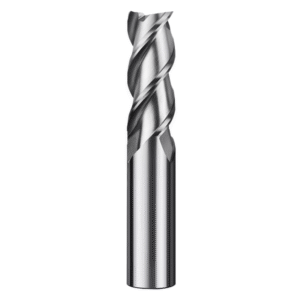
Key Tool Design Considerations for Improving Slotting and Side Milling Efficiency
In aluminum alloy machining, whether slotting or side milling, the geometric design of the cutting tool is critical for machining efficiency, surface quality, and tool life. Optimizing rake angle, helix angle, and the tool length-to-overhang ratio improves cutting smoothness, chip evacuation, and machining stability, boosting overall production efficiency. Under high-feed, high-speed conditions, precise tool design ensures minimal vibration and excellent surface finish.
By analyzing cutting force direction, chip flow path, and tool rigidity requirements, the most suitable design parameters can be selected for different operations, allowing the tool to fully exploit its performance advantages in both slotting and side milling.
Rake Angle and Cutting Smoothness
The rake angle influences cutting smoothness and chip evacuation. A smaller angle increases tool strength for harder or thicker-walled aluminum but may lead to chip accumulation. A larger angle reduces cutting resistance and allows chips to evacuate smoothly, improving machining stability.
-
Slotting: Appropriate rake angles reduce instantaneous force peaks during full-width cutting.
-
Side Milling: Maintains stable cutting at high feeds, minimizing tool marks and surface irregularities, improving efficiency and surface quality.
Helix Angle for Chip Evacuation and Cutting Stability
Helix angle determines chip evacuation direction and force distribution. Optimizing the angle balances radial and axial forces, reduces vibration, and maximizes tool rigidity efficiency.
-
Larger angle: Smooth chip evacuation, lower cutting resistance.
-
Smaller angle: Increased radial rigidity, ideal for deep or high-load slotting.
Matching helix angle to the machining method enhances cutting stability, surface quality, and tool life under high-feed conditions.
Tool Length and Overhang for Vibration Control
Tool length and overhang affect bending stiffness and vibration control. Excessive overhang increases vibration, reducing accuracy and surface finish; an appropriate overhang improves stability while covering the cutting range.
-
Slotting: Minimize overhang, use layered cutting and proper feed.
-
Side Milling: Short overhang with stable clamping allows higher feed rates and reduces surface defects.
Optimizing overhang, rake angle, and helix angle improves slotting and side milling stability and efficiency.
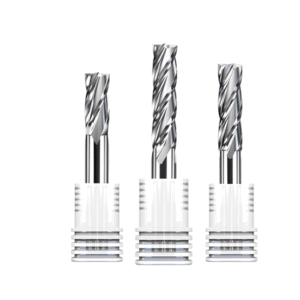
The Practical Value of Custom End Mills in Aluminum Alloy Slotting and Side Milling
In aluminum alloy machining, complex part geometries, varying slot depths, and high precision requirements make it difficult for standard cutting tools to achieve optimal efficiency, stability, and surface quality under all conditions. Custom 3 flute end mills, designed for specific machining methods, maximize performance by optimizing geometry, chip flute design, helix angle, and cutting edge sharpness.
Customized solutions improve cutting efficiency, extend tool life, and control vibration and cutting force fluctuations in both slotting and side milling. For demanding aluminum part machining, custom end mills increase production speed and reduce scrap caused by tools unsuitable for specific conditions.
Why Standard Cutting Tools Cannot Fully Cover All Machining Conditions
Standard cutting tools are designed with general specifications, making it difficult to handle deep slots, high feed rates, or complex contours. In slotting, standard tools may experience chip clogging due to limited evacuation space. In high-feed side milling, insufficient rigidity can lead to vibration and tool marks.
Additionally, differences in aluminum alloy grades, part thickness, and machine tool performance affect standard tool effectiveness. Custom end mills ensure machining stability, surface quality, and production efficiency.
Design Considerations for Custom 3-Flute End Mills Optimized for Slotting
Slotting operations require stable cutting and smooth chip evacuation during full-width cuts. Custom end mills optimize the rake angle and helix angle to reduce cutting resistance and chip accumulation. Simultaneously, adjusting tool diameter and flute length ratio enhances bending rigidity and tool life.
Chip flute shape and depth are also tailored to slot width and depth to ensure rapid chip evacuation, reduce cutting force fluctuations, and improve machining efficiency and slot wall surface quality.
Customization Solutions for 3 Flute End Mills Optimized for Side Milling
In side milling, the tool mainly engages in partial-width cutting. Customization focuses on rigidity and high-feed machining performance. Optimizing the number of flutes, cutting edge geometry, and helix angle reduces single-flute load, minimizes vibration and tool marks, and improves surface finish and dimensional consistency.
For complex cavities or high-precision parts, machining allowance, cutting depth, and tool overhang are optimized to maintain stable cutting under high-feed conditions.
How to Choose a Reliable Custom 3 Flute End Mill Supplier
Focus on suppliers with machining experience, material expertise, and custom design capabilities. A reliable supplier provides:
-
Optimized tool solutions based on part drawings and machining conditions.
-
Cutting parameter recommendations and technical support.
-
High production capacity, precise quality control, after-sales service, and fast response.
Partnering with a professional supplier improves machining efficiency, surface quality, and reduces tool replacement frequency and production costs.

Common Problems and Optimization Strategies in CNC Machining of Aluminum Alloys
In aluminum alloy machining, slotting and side milling are different processes but often face similar challenges in production, including tool sticking, vibration, tool marks, and limited tool life. These issues reduce machining efficiency and directly affect surface quality and dimensional consistency. By analyzing the characteristics of slotting and side milling, tool structure, and cutting parameters, effective optimization measures can improve overall machining stability and productivity.
Rational tool selection, optimized tool geometry, and proper cutting parameter adjustment are key to addressing these challenges. Using 3-flute end mills for aluminum with high rigidity, efficient chip evacuation, and high-feed adaptability can reduce vibration and cutting force peaks while maintaining smooth groove walls and contour surfaces.
Differences in Tool Sticking During Aluminum Slotting and Side Milling
-
Slotting: Full-width cutting increases chip retention between the tool and workpiece, promoting built-up edge formation and tool sticking. Selecting a 3-flute end mill with sharp cutting edges, appropriate rake angles, and optimized chip flute design minimizes chip accumulation and improves cutting smoothness.
-
Side milling: Only part of the cutting edge engages the material, allowing smoother chip evacuation. However, high-feed or high-speed operations may still cause localized sticking or surface scratches. Adjusting feed rate and cutting depth, along with using high-rigidity tools, effectively mitigates tool adhesion problems.
Causes and Prevention of Vibration and Tool Marks in Aluminum Machining
-
Slotting: Prolonged full-width contact generates concentrated radial forces. Long tool overhang or insufficient machine rigidity amplifies vibrations, producing uneven groove walls and tool marks.
-
Side milling: Vibration is influenced by high feed loads and tool rigidity; fluctuating cutting forces may create ripples along contours.
Optimizing flute count, helix angle, and flute length-to-overhang ratio reduces vibration amplitude and improves surface quality. In high-precision part machining, controlling vibration and maintaining cutting continuity are critical for dimensional consistency and surface finish.
Enhancing Machining Stability Through Rational Tool Selection
By combining the characteristics of slotting and side milling, rationally selecting 2-flute, 3-flute, or custom 3-flute end mills ensures smooth chip evacuation, tool rigidity, and machining efficiency under different conditions:
-
Deep grooves or low-load conditions: Prioritize 2-flute tools for smooth chip evacuation.
-
High-feed side milling or medium-load conditions: Use 3-flute end mills to improve rigidity and cutting stability.
Optimizing machine tool rigidity, spindle performance, and cutting parameters minimizes vibration and tool marks, enhances machining quality, and extends tool life, achieving efficient, stable, and controllable aluminum alloy machining.