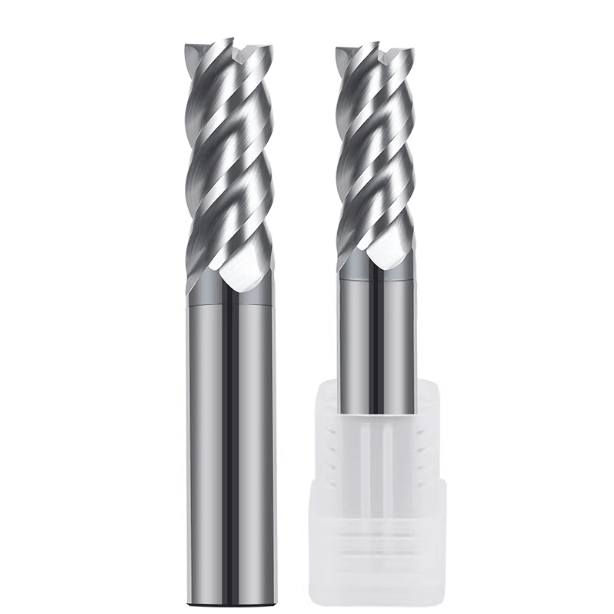
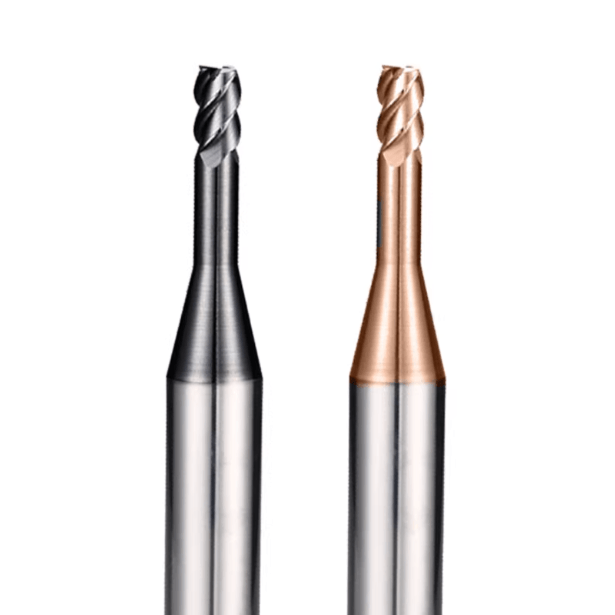
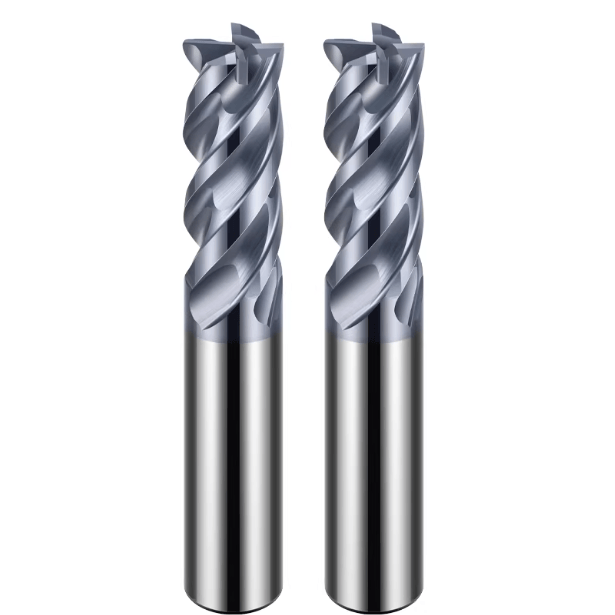
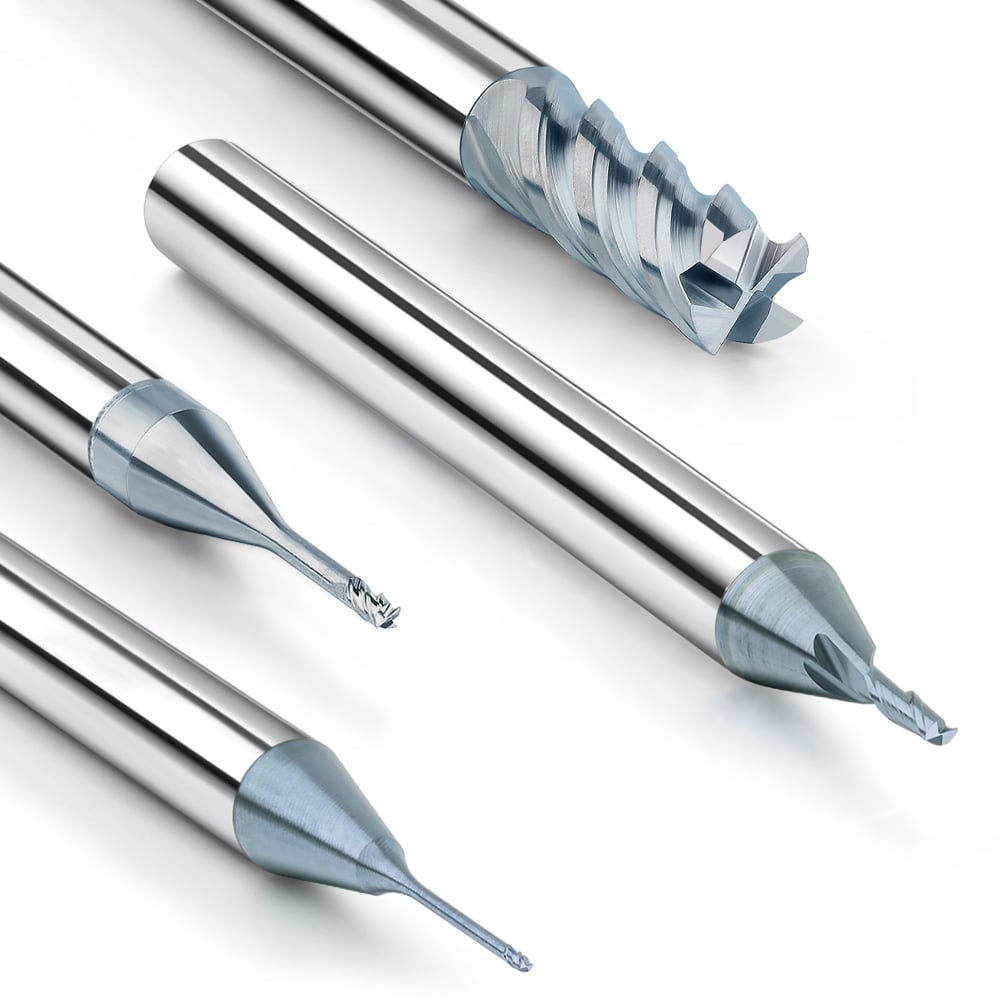
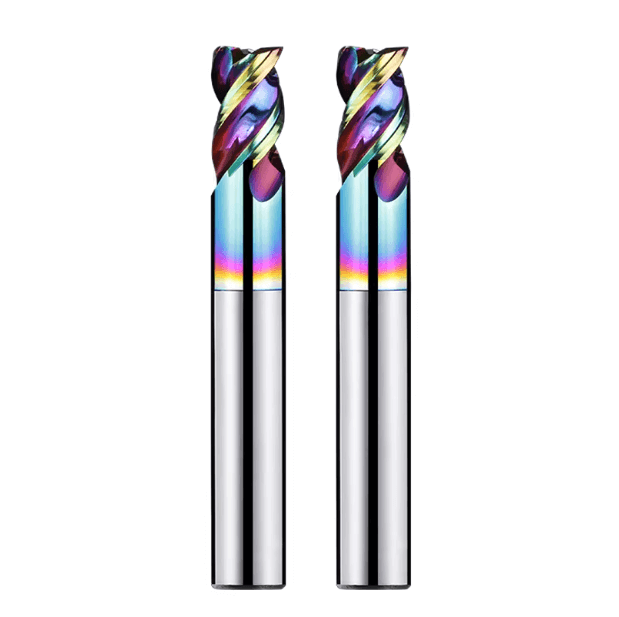
Just last week, we solved an urgent crisis for a long-standing client in Boston. He was machining 4140 quenched and tempered steel bases using a T-slot end mill from a “big name” global brand. After milling fewer than 10 slots, the tool began emitting a piercing screech. The surface finish immediately failed, with an Ra value exceeding 3.2.
In our technical logs, we call this “choking.” It is a classic failure caused by poor chip evacuation and insufficient hot hardness. We see this issue so often that we’ve lost count.
As an engineer who spent 15 years on the shop floor—and now manages overseas technical support for a leading China T-slot end mill manufacturer—I know your real pain point. B2B clients don’t just need to buy a tool; they need a carbide T-slotting end mill that can reliably finish 500 parts without snapping.
In 2026, simply making a tool harder isn’t enough. Our project data shows that the “secret formula” for a world-class T-slot end mill cutter lies in two areas: the chip-breaker design on the side edges and the adhesion strength of the coating. For a T-slot end mill for steel, if a manufacturer doesn’t use “Uneven Indexing” (variable flute spacing) to kill harmonic resonance, even the best speeds and feeds will result in chipped tips.
This guide strips away the flashy marketing. I want to show you how a genuine manufacturer solves the problems that keep operators awake at night. We do this through Walter 5-axis grinding precision, nACo nano-coating temperature control, and feed-rate optimization tailored for the rigidity of Western machine tools.
Have you ever faced a situation where the tool chips the exact moment it retracts, even with conservative parameters?
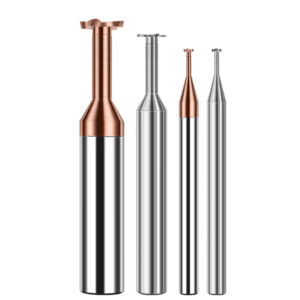
Why Substrate Material is the #1 Factor for Machining Stability
In our labs, we have a saying: “You can buy a great coating, but you have to build a great substrate.” The substrate of a carbide T-slotting end mill is its foundation. If the foundation is weak, no amount of optimization will save the tool.
T-slot machining is inherently unstable. You have long overhangs, alternating radial forces, and almost no space for heat to escape. If the substrate cannot handle this cyclical shock and thermal fatigue, the tool will develop micro-chipping. This is often invisible to the eye but fatal to your workpiece.
We’ve tested dozens of carbide rod batches. We found that microstructure uniformity directly determines the Transverse Rupture Strength (TRS) of the T-slot end mill cutter. When a tool snaps during retraction, it’s rarely a programming error. It’s usually microscopic voids or impurities in the carbide that created stress points. This is why our vendor selection is ruthless. Only consistent physical properties ensure that our tools perform the same on a Haas in Texas as they do on a DMG in Germany.
Virgin Micrograin Carbide vs Recycled Materials: The Real Difference
Western purchasing managers often ask us: “Why is your price 15% higher than the other guy?” Our answer is simple: “Look at the grain structure.”
We use 100% Virgin Micrograin Carbide. We keep the grain size strictly between $0.4\mu m$ and $0.6\mu m$. Cheaper tools often use recycled scrap. While they might pass a basic hardness test, their internal structure is coarse and uneven.
-
Virgin Material: High cohesive strength. It keeps the cutting edge sharp for longer.
-
Recycled Material: Prone to unpredictable chipping and spalling.
In a test with a German automotive supplier, our tools showed a smooth, linear wear pattern. The recycled control group began chipping after just 30 parts. In automated manufacturing, unpredictability is your worst enemy. Saving a few dollars on raw materials isn’t worth the cost of emergency downtime.
Balancing Cobalt (Co) for Impact Toughness
The biggest challenge in designing a T-slot end mill cutter is balancing edge sharpness with neck strength. The key is Cobalt.
From our experience with heavy machinery components, we’ve learned:
-
Too little Cobalt: The tool becomes brittle. It will snap during interrupted cuts.
-
Too much Cobalt: The tool loses “red hardness.” It softens and deforms under high heat.
For a T-slot end mill for steel, we favor a Cobalt range of 10% to 12%. We once customized a formulation for a hydraulic component project where standard tools kept snapping during root-clearing. By using “Gradient Carbide” technology, we increased the toughness in the tool neck while keeping the cutting edges extremely wear-resistant. This level of fine-tuning is what separates a manufacturer from a mere distributor.
Hardness (HRC) vs Toughness: Our High-Load Strategy
Many engineers think “hard material needs a hard tool.” We disagree. For high-load T-slotting, we prefer “strength tempered with flexibility.”
When milling pre-hardened mold steel (HRC 48–52), a substrate that is too hard (above HRA 94) will shatter like glass the moment it hits the workpiece. Our strategy is to use a substrate with superior toughness and then use a PVD coating to provide the surface hardness.
We call this “Hard shell, Tough core.” When machining deep T-slots, we prioritize a high fracture toughness value (KIC). This allows the tool to absorb energy through minute elastic deformation if chips get momentarily stuck. A durable tool is one that “withstands” the pressure rather than “shattering” under it.
If your tool life is inconsistent, have you checked if your substrate’s toughness actually matches your impact forces?
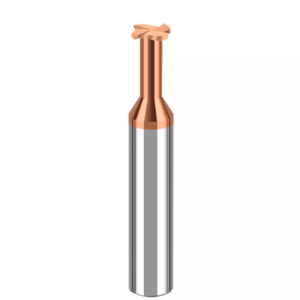
Tackling Tough Materials: Practical Insights into Coatings and Geometry for Steel T-Slot End Mills
When you are machining high-toughness, heat-prone materials like 4140 quenched and tempered steel or P20 mold steel, a pretty tool isn’t enough. We tell our clients: the most critical design factor for a T-slot end mill for steel isn’t how sharp it looks, but how well it manages heat inside a tomb. During T-slotting, the cutting edges are almost entirely buried in a narrow channel. Traditional coolants struggle to reach the actual cutting zone. This “choking” effect turns the operation into a high-stakes game of dry or semi-dry cutting.
Through years of workshop stress testing, we found that simply cranking up the relief angle to make a tool feel “sharp” is a trap. While it cuts well for a few minutes, it weakens the structural support of the edge. When you hit a hard spot in the steel, that thin edge chips instantly. We prefer a compound-angle design. By reinforcing the primary cutting edge and adding precise edge-honing, we balance cutting resistance with tool life. For our B2B clients in the US and Europe running 24/7 unattended cells, this stability is worth far more than saving two seconds on a cycle time.
Why General-Purpose Coatings Fail on 4140 or P20 Steel — The nACo Advantage
Many shops transition to high-strength steels but stick with their standard blue TiAlN coatings out of habit. Usually, within half a shift, they see “crater wear.” Standard coatings break down and lose their protection once temperatures hit 800°C. When milling 4140 (HRC 30–38), the friction generates localized heat that pierces thin coatings like a hot knife through butter. This heat scorches the carbide substrate, leading to rapid thermal fatigue and catastrophic failure.
To fix this, our R&D team moved to nACo. These aren’t just hard; they provide a thermal shield. In the cut, nACo forms a dense aluminum oxide layer that acts as a firebreak. It forces the heat into the chips rather than the tool. We recently helped a US mold shop switch to nACo for their P20 plates; they saw a 3x increase in tool life. If your tool is coming out of the machine glowing or burnt, your coating isn’t doing its job.
Suppressing Chatter with Uneven Indexing in Deep Steel Slots
That teeth-grinding “squealing” sound during a deep cut is the sound of money leaving your pocket. It means your tool has entered resonance. Most standard T-slot end mill cutters have equidistant flutes, which create a rhythmic vibration in steel. If that frequency hits the natural frequency of your spindle, you get chatter marks or a snapped shank. We saw a German client drop their feed rate by 30% to stop the noise, but the chatter remained. The geometry was the problem, not the feed.
Our solution is Uneven Indexing. By staggering the angles between the four or six flutes, we disrupt the vibration rhythm. Each tooth enters the cut at a slightly different time, breaking the “harmonic loop.” Grinding these tools to such high precision on a carbide T-slotting end mill is difficult, but the results are immediate. The load meter stabilizes, and the cutting sound changes from a scream to a low, robust hum—the sound of a stable process.
Specialized Flute Geometry: Why Chip Flow Control is King
In a deep steel T-slot, chip evacuation is your biggest hurdle. Most designers focus on how much a flute can hold, but they forget about how the chip flows. In our high-performance series, we use variable helix angles and a high-polish finish inside the flutes. If the flute surface is rough, high-speed steel chips will weld to the walls. This leads to “re-cutting,” a spike in load, and a broken tool.
We studied chip morphology in the lab and found that the perfect steel chip is a compact “figure-6” or a short segment. To get this, we use micro-arc optimization at the base of the flute. This induces pre-stress into the chip, forcing it to snap the moment it’s formed. This “self-evacuating” geometry is a lifesaver when you’re milling deep bores where coolant can’t reach. We will gladly trade a tiny bit of tool rigidity for a smoother chip channel. 15 years of manufacturing have taught us: if the chips can’t get out, the tool won’t stay in.
Have you ever pulled a tool out and found the flutes clogged with burnt, blue chips despite having the coolant on full blast?
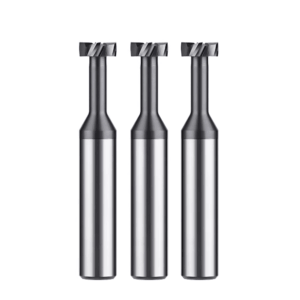
Identifying a Genuine China T-Slot End Mill Manufacturer vs a Trading Company
After a decade of working with Western clients, we’ve seen the confusion. Every website claims to be a “leading” China T-slot end mill manufacturer. But in a capital-intensive industry like CNC tooling, a shiny website can’t hide a lack of hardware. T-slot cutters require extreme precision—especially the coaxiality between the neck and the head. To find the real factory, don’t look at warehouse photos; ask about their grinding compensation logic and heat treatment temperature curves.
We once hosted a buyer from Chicago who asked his previous supplier: “How do you handle stress concentration at the neck-to-head junction?” A real manufacturer will talk about arc-transition optimization during 5-axis grinding and the use of shot peening to relieve residual stress. An intermediary trader won’t have an answer. We believe that to make a world-class carbide T-slotting end mill, your R&D lab must be on the production floor, not in a separate office building.
Machines Don’t Lie: Walter, ANCA, and Inspection Protocols
In our shop, the equipment tells the truth. If a supplier is vague about their machines, be careful. For high-end T-slot end mill cutters, Walter or ANCA 5-axis CNC grinders are the gold standard. These machines use closed-loop systems to compensate for wheel wear in real-time. We conduct rigorous tool setting and wheel dressing before every single shift. This micron-level obsession is what a trading company simply cannot offer.
The “truth serum” for any manufacturer is their inspection room. At a minimum, they should have a Zoller or a similar high-end tool presetter. We scan every batch for profile accuracy. For our carbide T-slotting end mills, we use high-mag microscopes to check the edge honing (honing) radius. We ensure there isn’t a single microscopic defect before shipping. If your supplier’s “factory tour” only shows a packing station and some hand calipers, expect the tool to fail in the cut.
Why You Must Demand Dynamic Balance and Run-out Reports
In our database, 30% of premature tool failures come from poor balance and run-out, not bad carbide. At 12,000 RPM, even a 5µm eccentricity creates massive centrifugal forces. This puts an uneven load on the teeth, causing one tooth to do all the work until it chips. We tell our B2B clients that 0.003mm run-out is the absolute limit for a multi-flute tool.
For large orders, always demand G2.5 standard dynamic balance reports. For our German clients, every high-performance tool is verified on a balancing machine. This protects your spindle bearings and stops those recurring chatter marks on your workpieces. If a supplier is evasive about “run-out control,” they likely don’t manage the fit between their tool holders and collets properly. That’s a risk your machine shouldn’t have to take.
The Logic of Real Cost Control: Unit Price vs Durability
True cost control isn’t about buying cheap carbide; it’s about First Pass Yield. We optimize our grinding paths to save on expensive wheels and use automated loading for 24-hour operation. This efficiency lets us use high-quality virgin carbide while staying competitive. We use better processes to offset the cost of better materials—we never cut corners on the material itself.
For long-term OEM contracts, we maximize “loading density” in our coating furnaces to lower the per-unit cost. For you, the end-user, the test is simple: is the manufacturer trying to reduce your “Cost per Cut”, or are they just offering a lower price? We often help clients extend tool life by 20% just by tweaking a parameter. In a modern shop, the cost of downtime and tool changes is usually much higher than the price of the tool itself.
Have you ever saved $5 on a tool only to lose $500 in production time when it snapped in the middle of the night?
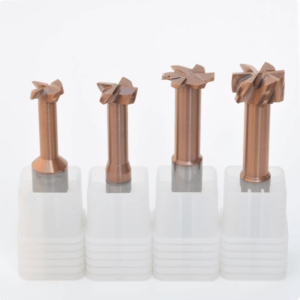
Addressing the Three Major Pain Points in T-Slotting: Our Frontline Workshop Solutions
In our technical support database, T-slotting issues consistently top the charts for troubleshooting requests. This is no surprise. T-slotting combines every nightmare a machinist faces: restricted visibility, poor chip clearance, and massive radial forces acting on a long, slender tool neck. When we step onto a client’s shop floor to solve these issues, we rarely start by just swapping the tool. First, we audit the entire “machining ecosystem.”
A truly robust solution must account for the pull-out resistance of the tool holder, the dynamic runout of the spindle at high RPMs, and the harmonic stability of the workpiece fixtures. If your foundation—the rigidity of your setup—is compromised, even a $500 custom carbide T-slotting end mill will eventually snap or chatter. Our experience shows that success comes from “negotiating” with the physics of the cut rather than fighting them. We don’t just sell you a T-slot end mill cutter; we help you build a fault-tolerant machining loop that prioritizes process security over raw speed.
Tool Breakage Warning: Optimizing Feed Rates (fz) Based on Real-World Rigidity
Blindly following a tool catalog’s speeds and feeds on a ten-year-old machining center is a recipe for disaster. We tell our shop supervisors that the “feed per tooth” (fz) is a living number, not a static one. It requires “dynamic compensation.” On a machine with worn box ways or a tired spindle, a high feed rate will drag down the RPMs and trigger a vibration loop. Conversely, if your feed is too light, the edge will “rub” rather than “shear,” creating localized heat that ruins the tool’s temper.
In a recent project for a Midwest US client machining 4340 steel, we heard the tool screaming the moment it entered the cut. Instead of just suggesting a heavier tool holder, we looked at the chips. They were discolored and stringy—a clear sign of heat and lack of chip thickness. We reduced the feed per tooth on our carbide T-slotting end mill by 15% but bumped the surface footage (Vc) to maintain productivity. By implementing a “stepped” depth-of-cut strategy, we eliminated the fatigue fractures in the tool neck. Remember: the most efficient program is the one that never hits the E-stop.
Solving Poor Surface Finish: Secondary Relief Angle Optimization
If your T-slot side walls look like they were finished with a wood rasp—marked by “fish-scale” patterns or dragging witness marks—your relief angles are likely to blame. In our R&D lab, we developed a proprietary Secondary Relief Angle system. Most general-purpose tools have conservative relief angles to maximize edge strength. However, when you machine gummy materials like 304 stainless or soft carbon steels, the material “springs back” after the tooth passes, rubbing against the tool body and causing friction-induced heat.
By grinding a precise secondary clearance, we drastically reduce the contact area between the tool and the workpiece. This results in a quantum leap in surface quality. For precision mold shops, we’ve seen this simple geometric change move an $Ra$ finish from a rough 1.6 down to a near-mirror quality. If you see shiny “rub marks” on the side of your tool after a run, your relief angle is too shallow. You aren’t cutting; you’re burnishing, and that’s a signal that your T-slot end mill for steel is about to fail.
Why We Mandate Internal Coolant for Deep T-Slotting
For any T-slot deeper than 20mm, we consider internal coolant non-negotiable. Why? Because in a narrow slot, centrifugal force acts like a wall, preventing external flood coolant from ever reaching the cutting zone. We used infrared thermal imaging to track this; without internal cooling, the edge temperature on a T-slot end mill for steel can hit 900°C in under three seconds. This heat causes the coating to “spall” (flake off) and makes the steel chips soft enough to fuse to the flutes—a death sentence known as “chip recutting.”
High-pressure through-spindle coolant serves a dual purpose. It quenches the heat instantly, but more importantly, it acts as a hydraulic ram. It forces the chips out of the slot from the bottom up, clearing the path for the next tooth. In an automotive chassis project for a German client, switching to an internal-coolant carbide T-slotting end mill boosted evacuation efficiency by 60%. This allowed us to crank up the cutting speeds without fear of thermal fatigue. Is a lack of internal cooling the “bottleneck” holding back your $300,000 machine tool?
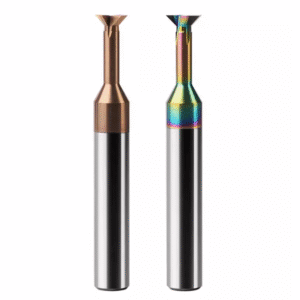
How to Build Trust Through Technical Specifications on Your Site
We’ve learned that the engineers standing in front of CNC machines don’t care about glossy, “artistic” photos of tools. They want data. A professional B2B site should be a “Technical Support Hub,” not just a catalog. When a supervisor searches for a China T-slot end mill manufacturer, they are looking for certainty. That certainty comes from seeing raw data: substrate grain size, HRC hardness after heat treat, and Transverse Rupture Strength (TRS).
Translating these manufacturing standards into transparent specs is how you bridge the gap with a US or European buyer. Instead of using “marketing fluff,” give them the facts: an h6 shank tolerance for high-precision shrink-fit holders, or the specific friction coefficient of your nACo coating. This “fact-first” approach tells Google you have Expertise and tells the buyer, “This supplier speaks my language.”
Why We Choose Parameter Charts Over “Action Shots”
We would rather spend a week validating a speed and feed chart than an hour on a photo shoot. For an engineer, a parameter chart is a roadmap for survival. If you are machining a work-hardening alloy, our charts tell you exactly what the stress load will be at specific axial (ap) and radial (ae) depths. This data tells the operator if they should trust the program at 100% or hover their hand over the feed-hold button.
We view these charts as our “contract” with you. They represent 15 years of researching chip formation patterns. An accurate parameter sheet reduces setup time, extends tool life, and slashes your scrap rate. For us, the dynamic performance of the T-slot end mill cutter at the bottom of a deep slot is the only aesthetic that matters.
Case Study: Solving 304 Stainless Steel Breakage in California
A client in California was snapping carbide T-slotting end mills every time the tool tried to retract from 304 stainless steel. After a remote review of their “spent” tools, we saw the problem: “galling.” The stainless was sticking to the flutes, causing the chips to clog. When the tool moved to retract, the clogged flutes wedged against the workpiece, snapping the tool neck.
We didn’t just send them a harder tool. We sent them a “solution set”: mirror-polished flutes to prevent sticking and a specialized edge prep to break the chips into smaller “6-shaped” segments. We also suggested a trochoidal milling strategy for the initial slot to reduce lateral pressure. The result? Zero breakages and a 40% faster cycle time. We share these stories because behind every broken tool is a shop losing money on downtime.
The Engineer’s Checklist: What a Professional RFQ Should Include
A vague inquiry like “I need a 20mm T-slot cutter” leads to the wrong tool and wasted money. To get a targeted recommendation from a China T-slot end mill manufacturer, your RFQ should be a technical brief. If you are preparing an inquiry, make sure you include these five pillars:
-
Material Grade: Be specific (e.g., “316L Stainless” vs. “Stainless”).
-
Tolerances: What is the required “play” in the slot width and depth?
-
Clamping: Are you using a side-lock (Weldon) or a high-precision collet?
-
Coolant: Do you have through-spindle coolant capability?
-
Machine Limits: What is your maximum stable RPM?
When you provide this data, our recommendations become surgical. Don’t be afraid to tell us your “machining scars”—mention the vibration issues or the short tool life you’ve had in the past. We prefer a direct, data-driven dialogue because, in the CNC world, the only thing that matters is the part coming off the machine.
Struggling to find the balance between cycle time and tool life in your current T-slotting setup? Send us your part prints or current parameters; let’s solve the physics of your cut together.