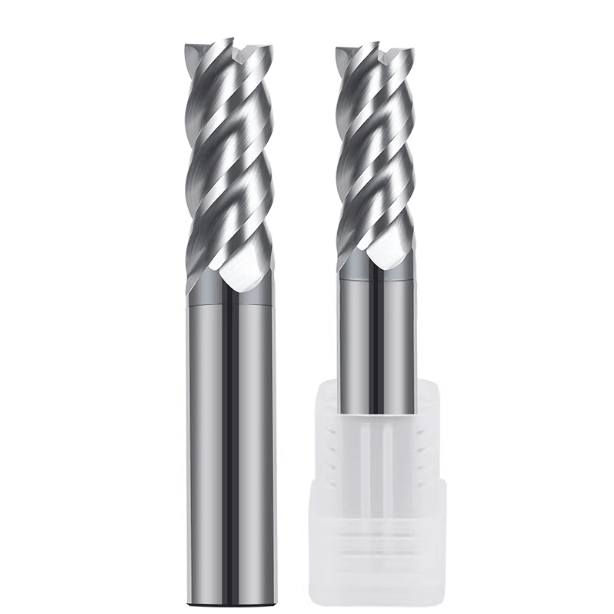
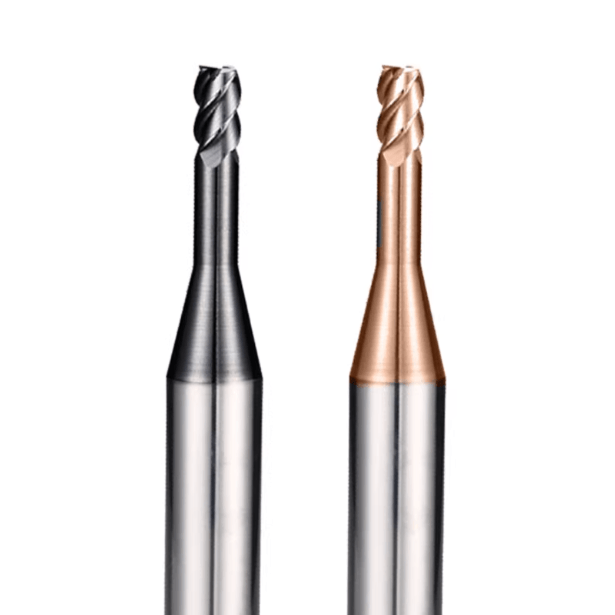
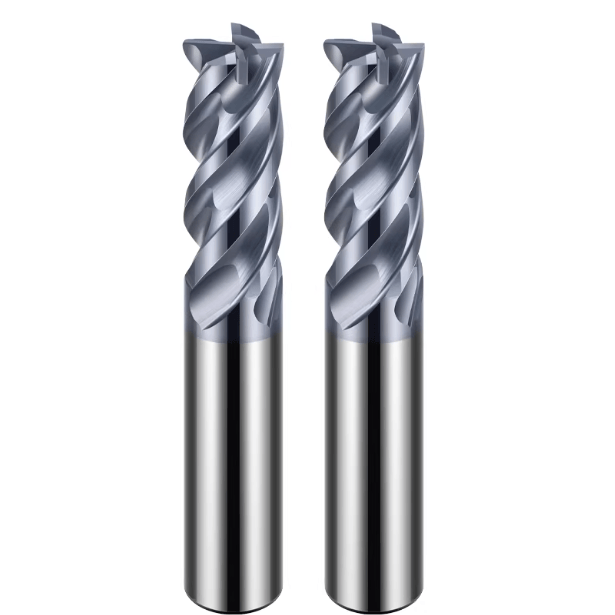
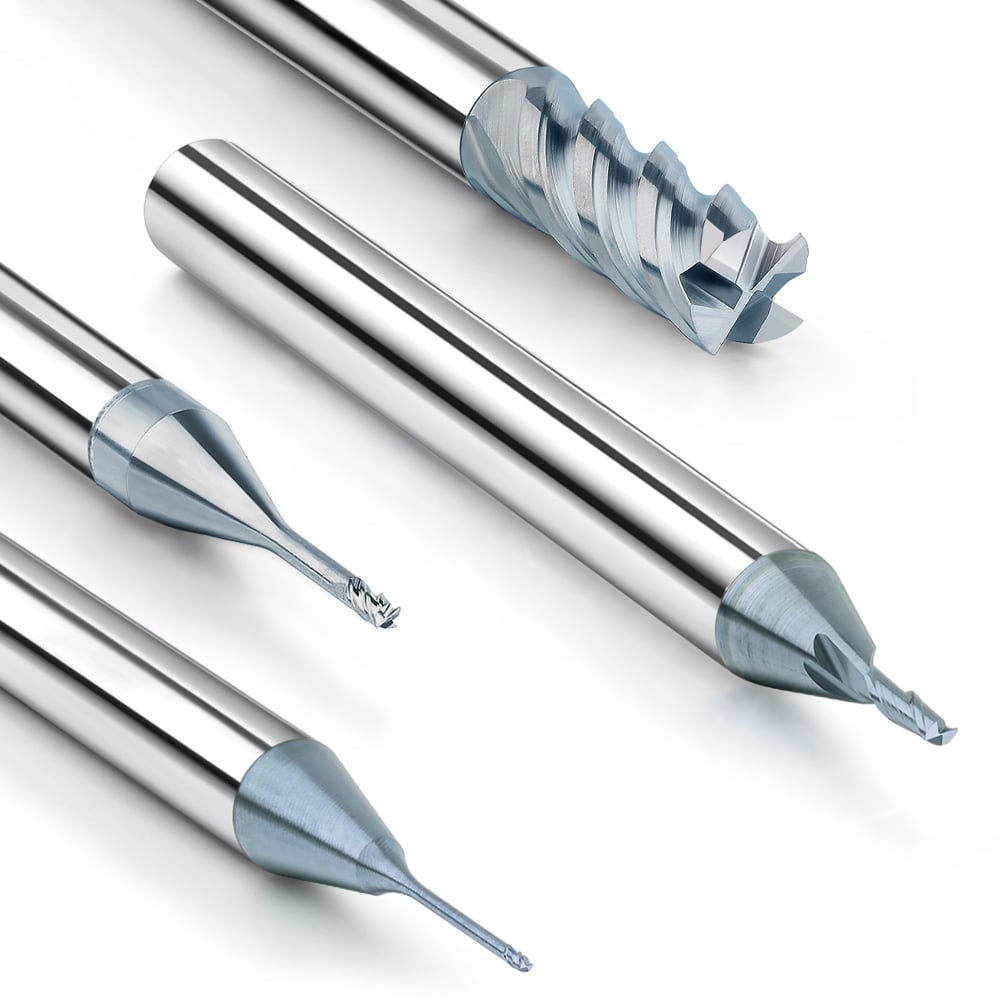
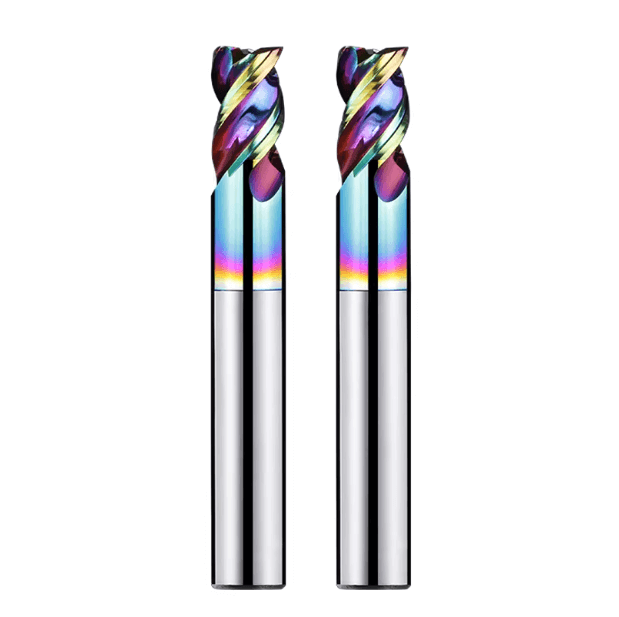
Over the past decade, in more than 50 projects with European and American machining clients, our experience shows a recurring issue: standard cutting tools rarely meet the specific requirements of complex workpieces. Whether machining high-hardness steel, titanium alloys, or intricate mold surfaces, standard tools often fall short in machining efficiency, surface finish, and tool life. To avoid repeated delays caused by inadequate tools, we learned to work with suppliers who can truly provide custom end mill design and manufacturing capabilities.
Hands-on projects revealed that the material choice and geometry of custom carbide end mills significantly impact machining performance. Even slight differences in helix angle, rake angle, or core thickness can reduce tool life by up to 50%. In thin-walled machining, these small differences can also cause vibration and burr formation. During client commissioning, we routinely test multiple customized cutting tools end mill solutions to ensure surface finish and dimensional accuracy while maintaining machining efficiency.
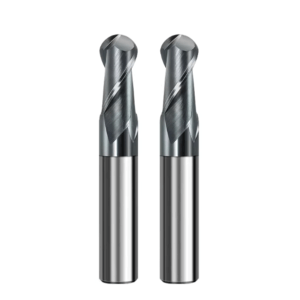
For complex three-dimensional curved parts, we rely on custom ball end mills, particularly in molds, aerospace components, and medical device machining. Our experience shows that minor adjustments to the tool tip radius significantly affect surface finish and subsequent polishing workload. A supplier’s mastery of these details often determines whether the machining process succeeds.
When selecting a China custom end mills manufacturer, our focus is not price but their understanding of our working conditions and ability to provide tooling solutions based on actual cutting tests. Production capability alone is not sufficient; problem-solving ability is critical—a lesson reinforced in every collaboration.
So, for your specific workpiece and machining conditions, can the supplier you choose truly resolve recurring tooling challenges?
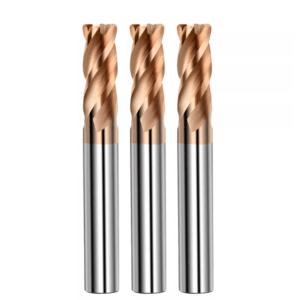
How We Evaluate the Reliability of a China Custom End Mill Manufacturer
Through years of cooperation, our experience shows that a supplier’s reliability depends on their ability to understand working conditions and provide feasible solutions for different materials, machine tools, and toolholder systems. Many clients seek quick solutions, but suppliers offering only standard tools or minor modifications often fail in high-hardness steel or complex five-axis machining. Reliable partners are involved early in design, evaluating helix angle, rake angle, core thickness, and toolholder compatibility, and performing cutting tests during prototyping.
Small-batch delivery is another critical factor. During new product development or complex workpiece prototyping, we often need rapid validation of customized cutting tools end mill solutions. Long prototyping cycles or inconsistent sample-to-batch performance can disrupt schedules and increase costs. Therefore, we request suppliers to provide past project case studies, material sourcing, and testing records to confirm their ability to solve practical machining problems.
Does the Supplier Possess the Capability for Custom End Mill Design?
In multiple aerospace and mold projects, we repeatedly observed that modifying standard tools cannot meet workpiece requirements. A reliable supplier must be able to redesign tool geometry for different materials and machines. For high-hardness steel parts, adjusting the helix and rake angles and increasing core thickness significantly improved resistance to chipping. These improvements rely entirely on the supplier’s experience in custom end mill design.
Equally important is the supplier’s experience in developing complex workpieces, not just producing according to drawings. In one project, a five-axis curved surface mold initially failed surface roughness requirements with modified standard tools. Only non-standard tools from the supplier resolved the issue. We now use a simple judgment standard: a supplier’s proactive proposal of feasible design solutions based on material, machine parameters, and toolholder systems is a key indicator of reliability.
Raw Material and Bar Sources for Custom Carbide End Mills
We frequently encounter carbide tools of the same model with vastly different performance. Investigation shows the main factor is bar stock source and grain size. Domestic cemented carbide bars often have less consistency than imported ones; slightly larger grain sizes or lower hardness can halve tool life under high-load conditions. During trial cuts, we test different material batches to confirm life and cutting stability.
Cemented carbide microstructure directly affects cutting performance and chipping resistance. For thin-wall or long overhang milling, uniform bar stock is critical. We advise customers to select fine-grain, stable-hardness material for key projects and optimize tool geometry to ensure consistent machining. Raw material sourcing and traceability are core considerations in supplier selection.
Is the Tool Geometry Design Based on Cutting Tests Rather Than Empirical Replication?
Suppliers relying only on experience to replicate tool designs pose high risks. Identical tool models can behave differently across machines and materials. We once tested customized cutting tools end mills with unoptimized helix and rake angles for HRC50+ steel, resulting in immediate chipping and vibration. Stable machining was achieved only after repeated adjustments and cutting tests.
In each project, we fine-tune tool geometry, recording helix angle, rake angle, and core thickness effects on cutting forces, surface finish, and tool life. This establishes quantifiable data standards and avoids reliance on verbal experience. Our practice confirms that test-based design is far more reliable for complex workpieces than experience replication alone.
Does the Coating Capability Match the Actual Machining Material?
Coating selection can be challenging. TiAlN coatings perform well on high-hardness steel but may stick in high-speed titanium alloy machining, affecting surface finish and tool life. Through trial cuts, we combine material, cutting parameters, and coolant to select optimal coatings rather than follow generic recommendations.
Adhesion and coating uniformity also affect machining stability. Uneven AlTiN coatings caused tool tip chipping in one case, resolved by supplier adjustments and test cuts. For us, coating capability is more than a surface specification—it determines whether the tool can operate stably under real working conditions.
Capability to Deliver Small-Batch Customized Cutting Tools End Mills
During new product development, we need rapid validation of tooling solutions. Suppliers limited to large-scale production or long sample lead times can delay projects. Some suppliers provide small-batch prototyping and quickly adjust geometry and coating based on trial cuts, which is crucial in R&D.
Small-batch delivery also tests consistency. We require suppliers to maintain tooling performance between sampling and mass production. Balancing rapid prototyping with mass production capability is key to supporting complex workpieces and ensuring machining quality and efficiency.

The Most Common Custom End Mill Requests We Receive When Serving European and American Clients
European and American clients typically require high-difficulty, high-precision machining. Aerospace parts, molds, and medical devices often involve high-hardness materials, complex shapes, and strict dimensional tolerances, making standard tools inadequate. Our role is not just providing custom carbide end mills, but designing geometry, selecting coatings, and verifying tool life and surface quality through trial cuts.
Recurring problems include tool chipping in high-hardness steel, tool sticking in high-speed aluminum alloy machining, and vibration in thin-walled parts. These issues cannot be solved with theoretical parameters alone; on-site adjustments to customized cutting tools end mill design are necessary, considering machine rigidity, depth of cut, and feed rate. Over time, we have developed reliable tooling solutions that reduce trial-and-error costs for clients in complex machining scenarios.
Machining of High-Hardness Materials (HRC45+)
Tool chipping and unstable life are common in HRC45+ steel. Standard carbide tools fail quickly, causing burrs and frequent changes. By increasing core thickness, optimizing helix and rake angles, and using high-homogeneity carbide in custom carbide end mills, we improved stability and chipping resistance.
Fine-tuning the tip radius and coating thickness further enhances tool life. We advise customers to prioritize non-standard tools tested under real conditions to ensure consistent mass production performance.
High-Speed Machining of Aluminum Alloys
Tool sticking and chip removal are key issues in high-speed aluminum alloy machining. We design custom end mill cutting edges and groove geometry based on groove shape, aspect ratio, and feed rate to prevent chip buildup and maintain surface finish.
Using appropriate coatings and minimal coolant, we monitor chip morphology and tool wear. Multiple trial cuts can extend tool life by over 20% while meeting surface roughness requirements, applicable for single or small-to-medium batch production.
Machining of Titanium and Heat-Resistant Alloys
Challenges include tool burn and vibration. Ordinary carbide tools heat rapidly, causing tip burning and reduced surface finish. Vibration damping grooves, increased rigidity, and optimized cutting parameters in custom carbide end mills ensure stable operation under high loads.
Trial cuts allow us to observe vibration frequency and chip formation, fine-tuning geometry as needed. Condition-optimized tooling outperforms material-only adjustments for tool life and surface quality.
Custom Ball End Mill Demand in the Mold Industry
3D curved molds often produce rough surfaces with standard ball end mills. Fine-tuning tip radius and cutting edge length improves surface finish. Custom ball end mills ensure consistency between tip radius and edge, reducing polishing effort.
Tool precision must match machine rigidity. Even precise tools under flexible machines produce vibration and ripples. We consider machine, fixture, and cutting parameters together to ensure stable machining results.
Machining of Thin-Walled Parts and Long Overhangs
Tool runout and vibration frequently cause dimensional errors in thin-wall and long-overhang machining. Increasing rigidity, adjusting helix angle and core thickness, and optimizing cutting edges with custom end mills suppress vibration.
We select tool diameters and coatings based on overhang length and clamping, using multi-round trial cuts to ensure accuracy and extend tool life. This approach reduces scrap and outperforms reliance on standard tools.
Top 10 China Custom End Mills Manufacturers in 2026
Over the past decade, through providing machining and tooling solutions for European and American clients, we have developed practical experience in evaluating Chinese tooling manufacturers. Our project collaborations revealed significant differences among suppliers in design capabilities, material control, precision stability, and delivery cycles. Based on our repeated use in real projects, we have compiled a list of 10 frequently used suppliers, including SAMHO TOOL. Each manufacturer has distinct strengths and is suited to different workpieces and machining conditions.
This list is not an absolute ranking. Instead, it reflects our observations of tooling compatibility and reliability. Some manufacturers excel in machining high-hardness steel or titanium alloys, while others perform better in mold surface machining or rapid prototyping. When selecting partners, we focus on workpiece material, machine tool type, and batch requirements to determine the most suitable supplier, rather than simply relying on brand reputation.
Comprehensive Custom End Mills Manufacturers
We have found that certain comprehensive manufacturers provide integrated services, from design to production to cutting tests. In multi-material and multi-machine-tool environments, they deliver trial-tested and validated solutions for HRC45+ steel, aluminum alloys, and titanium alloy parts. This collaboration ensures stable tool performance under varied machining conditions and reduces setup time.
These suppliers are particularly suited for long-term partnerships. We often use their custom end mills for new product development, mold parts, and aerospace components because they respond quickly to design adjustments and mass production requirements. Long-term cooperation also improves our confidence in tool life prediction and batch consistency, especially for complex five-axis machining projects, where continuous optimization experience is critical.
High-End Manufacturers Specializing in Custom Carbide End Mills
For high-hardness materials and aerospace parts, we rely on high-end manufacturers specializing in custom carbide end mills. Our experience indicates they maintain consistent carbide material selection, uniform grain size, and tight geometric accuracy control. Through repeated trial cuts, they deliver predictable tool life and stable cutting forces, ensuring machining accuracy and surface finish even for steels above HRC55.
In practice, we fine-tune the cutting tools based on machine tool rigidity and machining strategy. These suppliers excel in aerospace and medical device projects because tool precision and material stability directly affect part yield and efficiency. We prioritize manufacturers with documented success in challenging material machining when selecting partners.
Manufacturers Specializing in Custom Ball End Mills
In mold and five-axis surface machining, we frequently collaborate with manufacturers specializing in custom ball end mills. Years of project experience show that tool tip radius accuracy and cutting edge consistency are critical for surface finish and machining efficiency. Suppliers capable of providing customized tools for complex 3D surfaces reduce polishing and finishing time, which is invaluable in mold and medical component machining.
Tool stability under five-axis machining is also crucial. In actual projects, we validate this based on machine tool fixtures and cutting parameters to ensure vibration-free operation under high feed rates and long overhangs. This practice reduces scrap rates and improves production efficiency in complex surface machining.
Rapid Prototyping Supplier of Customized Cutting Tools End Mills
During new product development, we rely on suppliers capable of rapid prototyping. Quick delivery of customized cutting tools end mill samples allows us to conduct trial cuts and optimize tool geometry efficiently. Typically, we finalize tooling designs within two or three trial cut iterations.
These suppliers are ideal for small-batch pilot production. They not only deliver short-cycle samples but also record cutting data during sampling, helping us assess tool life and machining stability. This rapid feedback loop significantly reduces development time and provides a reliable foundation for machining complex materials and curved surfaces.
High-Performance, Cost-Effective China Custom End Mill Manufacturer
For mass production projects, cost control and tooling consistency are our primary concerns. Cost-effective suppliers provide stable material sources, consistent batch sizes of custom end mills, and competitive prices while maintaining cutting performance. They are especially useful for small- to medium-batch production, where tooling stability impacts efficiency and scrap rates.
In practice, we select appropriate tool diameters, cutting lengths, and coating schemes based on workpiece material, machining depth, and machine tool rigidity. Multiple rounds of trial cuts and parameter optimization allow us to reduce production costs while ensuring quality. While cost-effective suppliers are not suitable for the most complex projects, they remain preferred partners for batch processing and standardized parts production.
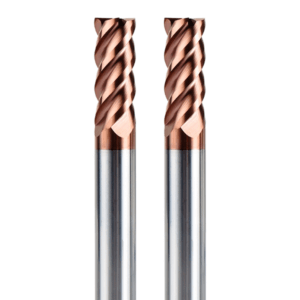
Pitfalls We Encountered When Choosing Chinese Tool Suppliers
Through long-term cooperation, we have faced practical challenges with Chinese tool manufacturers. Early-stage issues may not be obvious but can significantly affect efficiency and part quality. Miscommunication or process control deviations can result in tools failing to meet requirements, sometimes causing rework or scrap. Based on years of experience, we have identified common pitfalls and established verification processes to mitigate risks.
Most problems are avoidable through early communication and trial cutting verification. Providing detailed workpiece information, machining conditions, and machine tool parameters, combined with small-batch sample trials, identifies potential design or material issues. We proactively propose these steps in projects to ensure consistent performance and avoid risks from material, coating, or geometry variations.
Misunderstanding of Drawings Leads to Unusable Tools
Early on, we encountered tools rendered unusable due to misinterpretation of units, angles, or tolerances. For example, drawings specifying millimeters were sometimes read as inches, or angular tolerances were unclear, causing tool installation failures or dimensional errors.
To prevent this, we confirm units, machining directions, and tolerance requirements, requiring suppliers to provide drawing confirmation feedback. Small-batch trial cuts validate compliance with machining requirements. Though this increases initial effort, it prevents unusable tools and saves significant time and cost in mass production.
Tool Life Inconsistent with Samples
We often see small-batch sample tools performing well, only for lifespan to drop in mass production. Causes include material batch variation, carbide grain uniformity, or heat treatment inconsistencies. This is especially true for HRC45+ steel and high-speed aluminum machining.
We require suppliers to provide material batch records and record tool wear during trial cuts. This identifies issues before mass production and guides process adjustments, ensuring mass-produced tools closely match sample performance, reducing scrap rates and enhancing confidence in machining stability.
Coating Adhesion Issues
Coating peeling can lead to tool failure, particularly with TiAlN or AlTiN coatings during high-speed cutting of stainless steel or titanium alloys. Even minor peeling can compromise surface quality and tool life, especially in thin-walled or deep-hole machining.
We conduct trial cuts to verify coating performance, observing chip formation and wear. Localized peeling triggers process adjustment and re-verification. Confirming adhesion in advance is essential for stable, high-precision machining.
Tool Runout Affects Machining Accuracy
Tool runout significantly affects dimensional accuracy and surface quality. For example, a runout difference of 0.005mm vs 0.01mm can drastically alter outcomes. Thin-walled or deep-hole parts are especially sensitive, where excessive runout causes vibration, burrs, and scrap.
We perform runout tests on each batch before shipment, factoring in machine rigidity and clamping. Excessive runout prompts tool fine-tuning or clamping adjustments. While adding early-stage effort, this ensures high-precision, consistent mass production and has become essential experience from decades of projects.
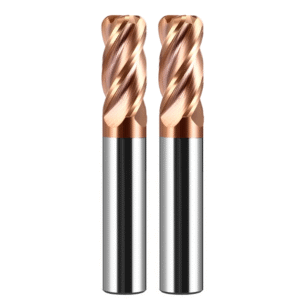
How to Communicate Effectively with China Custom End Mills Manufacturers
Through years of providing machining solutions to European and American clients, we have found that a supplier’s ability to fully understand working conditions and machining requirements directly determines tool reliability and machining efficiency. Simply providing drawings is insufficient for designing tools that meet actual machining demands. At the start of each project, we provide suppliers with complete information, including workpiece material, machine tool type, machining depth, and tool extension. This ensures that tool design is optimized for the real machining environment.
We have also found that communication efficiency and quality significantly impact project timelines. Providing detailed machining conditions and cutting data enables suppliers to quickly determine if tool geometry, coating, or material adjustments are required, which is far more effective than repeatedly revising drawings. By sharing this information upfront, we significantly shorten trial cutting and tool verification cycles for complex parts and high-difficulty materials, while reducing machining risks.
What Necessary Parameters Do We Provide?
We provide key parameters such as machining material, machine tool type, spindle speed, feed rate, and tool extension. Material hardness and chemical composition influence cutting edge geometry and coating selection. Machine tool type and fixture conditions determine tool rigidity and helix angle optimization. Spindle speed and feed rate dictate cutting forces and tool wear, while tool extension affects vibration control and machining accuracy.
In one project, we experienced severe vibration during deep-hole machining due to neglecting tool extension, resulting in tool life less than half of the sample design. After communicating tool extension, machine tool, and fixture parameters to the supplier, they optimized the core thickness and geometry of custom end mills, stabilizing machining performance. This highlights the importance of providing complete parameters for effective communication.
Why Provide Actual Machining Problems Instead of Just Drawings?
Clients sometimes provide only part drawings without describing machining challenges or previous failures. Based solely on drawings, suppliers may design custom carbide end mills that cannot resolve real-world issues, such as chipping in high-hardness steel, tool sticking in aluminum alloys, or vibration in thin-walled parts.
We proactively share past failures, tool life issues, and surface quality challenges. By describing actual machining problems, suppliers optimize tool designs for operating conditions instead of blindly replicating standard tools. In practice, this approach improves tool usability and reduces repeated trial cuts during sample verification.
How to Get Suppliers to Quickly Provide Usable Solutions
To expedite solutions, we provide trial cutting data and clear objectives, such as desired tool life, machining efficiency, and surface finish. For example, in high-speed aluminum alloy machining or five-axis mold projects, providing actual cutting parameters allows suppliers to quickly adjust tool geometry and coatings, yielding usable solutions rapidly.
We also clarify tool design priorities during communication, identifying which indicators are critical and which are negotiable. This gives suppliers clear guidance, reducing ineffective designs and rework. Our experience shows that data-driven, objective-based communication accelerates supplier response and ensures consistent tool performance in mass production.
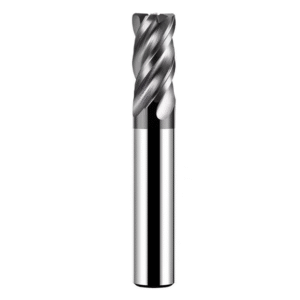
How We Verify the Suitability of Custom End Mills for Customer Operating Conditions
Even non-standard designs or high-end materials may underperform under real-world conditions. Therefore, we implement a systematic verification process before mass production, beginning with small-batch trial cuts that focus on tool life, surface roughness, and dimensional stability. This data not only evaluates tool suitability but also serves as a reference for mass production.
We also consider the influence of machine tools, fixtures, and machining strategies. The same custom carbide end mill may perform differently on a five-axis machining center versus a vertical machining center. Trial cuts under actual machining conditions help identify potential vibration, chip removal, or thin-wall issues, mitigating risks before mass production.
Trial Cutting Process and Evaluation Standards
During trial cuts, we record tool life, surface roughness, and dimensional stability. Tool life indicates whether the material and geometry match machining conditions. Surface roughness determines post-processing and accuracy requirements. Dimensional stability reflects tool rigidity, vibration control, and machine compatibility. Multi-round trial cuts allow comparison of performance under high load and continuous machining.
For instance, when machining HRC50+ steel or titanium alloys, we observed tool life variation of over 30% at different speeds for the same batch of custom end mills. Recording trial cut data enables preemptive adjustments to geometry and cutting parameters, ensuring stable mass production. This approach verifies usability and provides customers with quantifiable performance references.
How to Determine if Tool Design Needs Adjustment
We assess tool performance not only by life and surface quality but also by vibration, noise, and chip morphology. Excessive chip length, sticking, or breakage may indicate the need to optimize helix angle, rake angle, or cutting edge design. Vibration and noise reveal rigidity and machine-tool matching issues, guiding geometry or coating adjustments.
Wear location analysis is equally critical. Post-trial inspection of tool tip, cutting edge, and body wear identifies whether to increase core thickness, adjust helix angle, or use higher-homogeneity carbide. This ensures custom carbide end mills are truly optimized for the customer’s working conditions.
The Process of Continuously Optimizing Custom Carbide End Mills
Tool designs are rarely finalized after a single trial cut. We achieve continuous optimization through iterative testing and parameter adjustment. In five-axis curved surface mold machining, we verify sample tool life and surface quality, then adjust rake angle, helix angle, tip radius, and coating thickness based on cutting data. Each adjustment is data-driven, not theoretical.
Close communication with customers ensures consistent tool performance during mass production. This approach delivers reliable machining results in high-hardness steel, thin-walled components, and high-speed aluminum alloy machining. Continuous optimization also provides data for future supplier selection, tool design, and machining solution improvements, reducing rework and scrap risk.
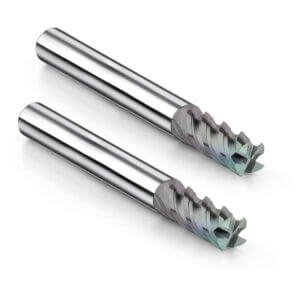
Our Advice to European and American Customers: What to Focus On When Choosing a Chinese Custom End Mill Supplier
Many machining problems can be prevented through careful supplier selection and effective communication. Customers often overemphasize price, overlooking tool consistency, material uniformity, and machining adaptability. If you are considering a Chinese custom end mill manufacturer, first evaluate the stability of tools under your actual operating conditions rather than the unit price. Tool stability determines tool life, machining accuracy, and surface quality—especially for high-hardness materials, five-axis curved surfaces, or thin-walled components.
We recommend prioritizing manufacturers with practical machining experience. Being able to solve real-world problems is more important than merely producing standard cutting tools. Suppliers familiar with HRC45+ steel, high-speed aluminum, or titanium alloys can design tools efficiently and optimize them based on trial cutting feedback. Sharing your working conditions, drawings, or material data enables practical and precise tool designs.
Don’t Just Look at Price; Focus on Stability
Frequent supplier changes in pursuit of low cost often result in fluctuating tool life, inconsistent surface quality, rework, and machining delays. Evaluate quotes by comparing tool consistency, material batch control, and trial cutting records, not just unit price. Stable custom end mills ensure predictable performance in mass production and minimize risks.
Stability also includes coating uniformity, tip geometry accuracy, and helix angle control. For thin-walled or complex curved molds, request trial cutting data and wear analysis to confirm consistent performance under your machining conditions. Though potentially higher in initial cost, this approach greatly improves efficiency and reliability.
Prioritize Manufacturers with Practical Machining Experience
Suppliers with extensive hands-on experience can quickly provide usable customized cutting tools. If you are machining high-hardness materials or complex five-axis surfaces, prioritize manufacturers with proven solutions for similar conditions. Experienced suppliers optimize geometry and coatings and adjust tools via trial cutting feedback, ensuring tool life, surface quality, and dimensional stability.
In practice, we share machining problems, failure cases, and trial cutting data with suppliers. This accelerates verification and improves mass production reliability. Providing workpiece material, machining parameters, and machine tool information allows suppliers to refine custom carbide end mills efficiently.
Long-Term Cooperation is More Effective Than Frequent Supplier Changes
Long-term partnerships provide significant advantages. Through ongoing trial cutting, geometry adjustments, and coating refinement, tools gradually adapt to operating conditions, ensuring batch consistency and predictable tool life. For complex and high-precision workpieces, prioritize long-term collaboration over frequently switching suppliers.
Continuous data accumulation is another benefit. Trial cut records, wear analysis, and cutting feedback optimize future designs of custom ball end mills and non-standard tools. Sharing actual machining data with your supplier reduces trial-and-error, accelerating the delivery of high-performance tools.