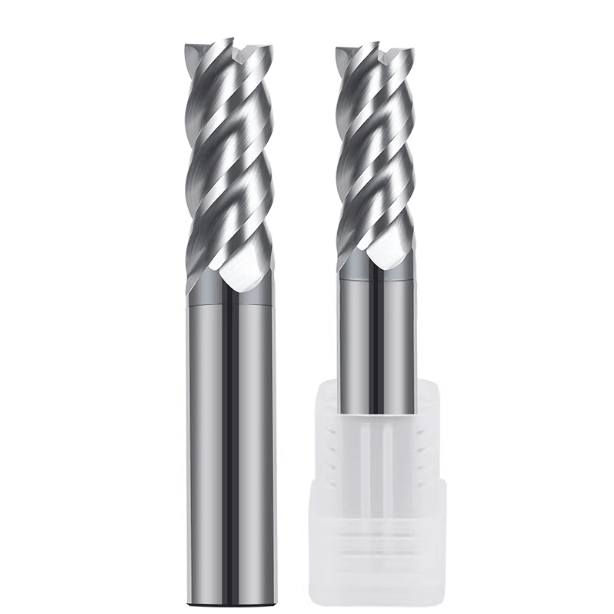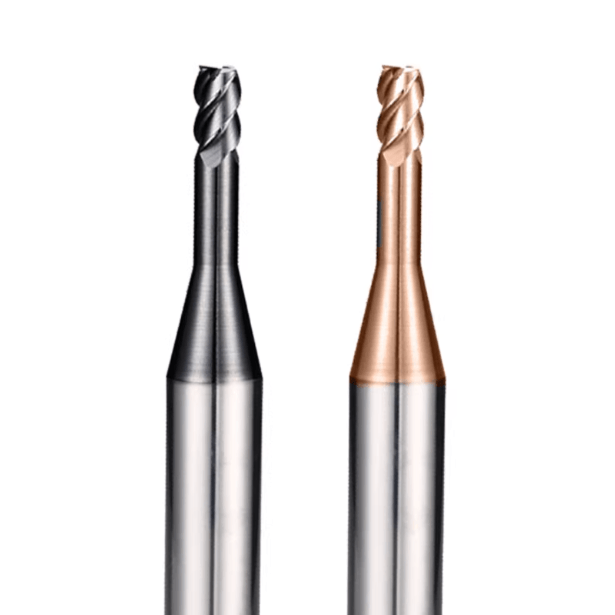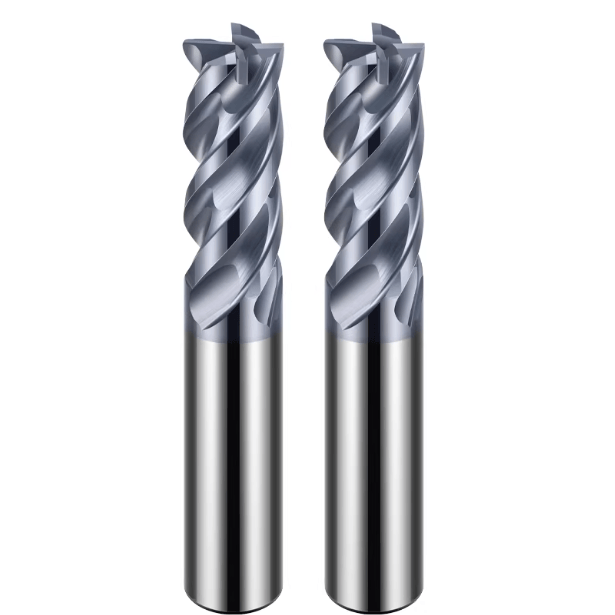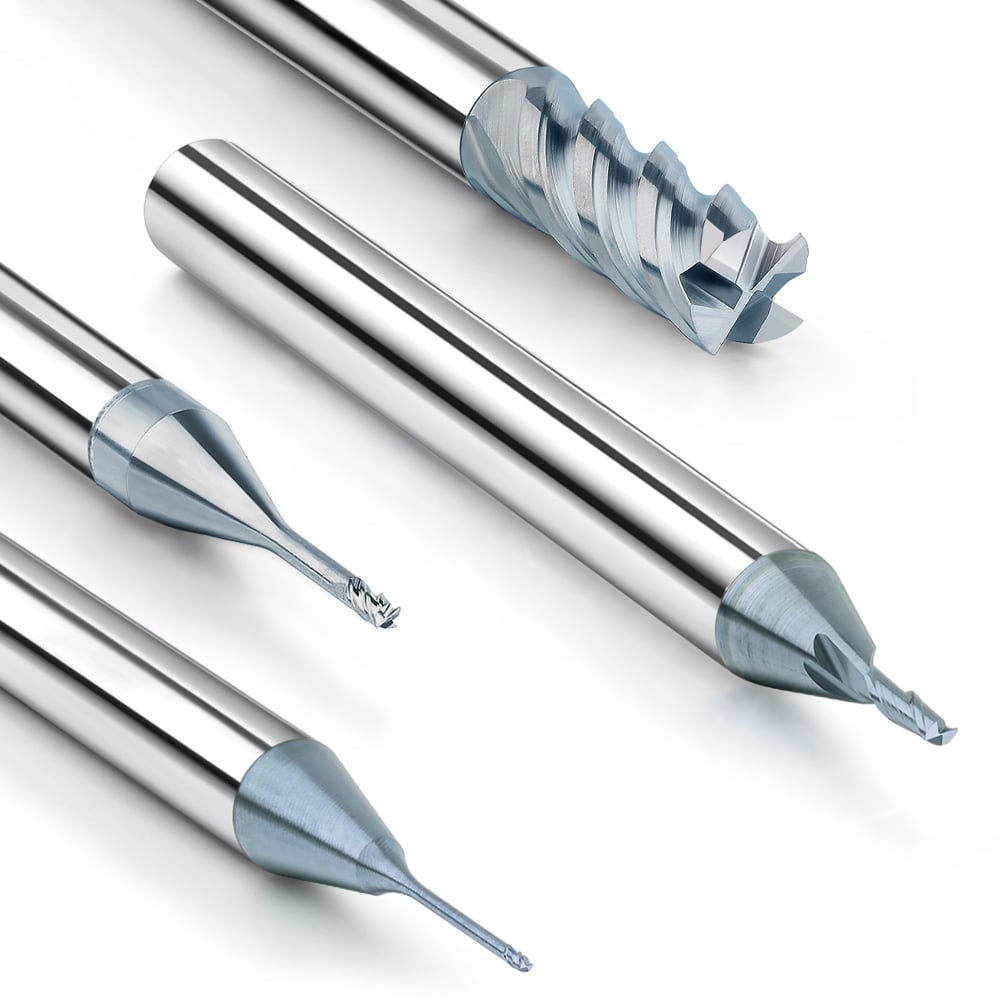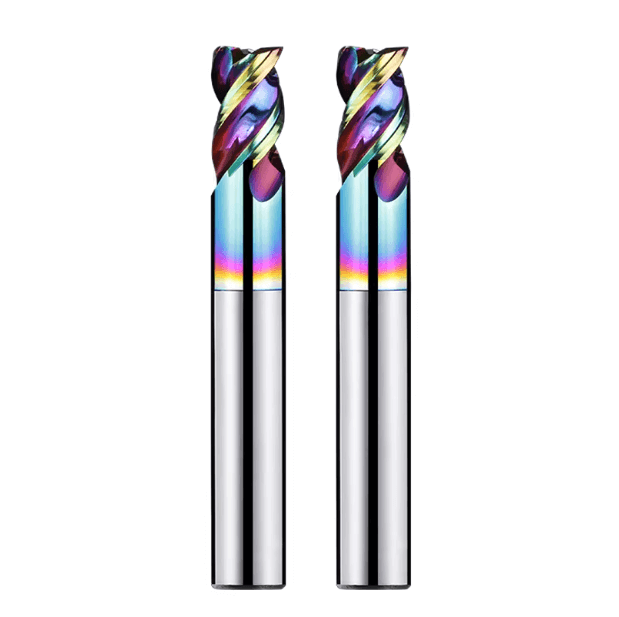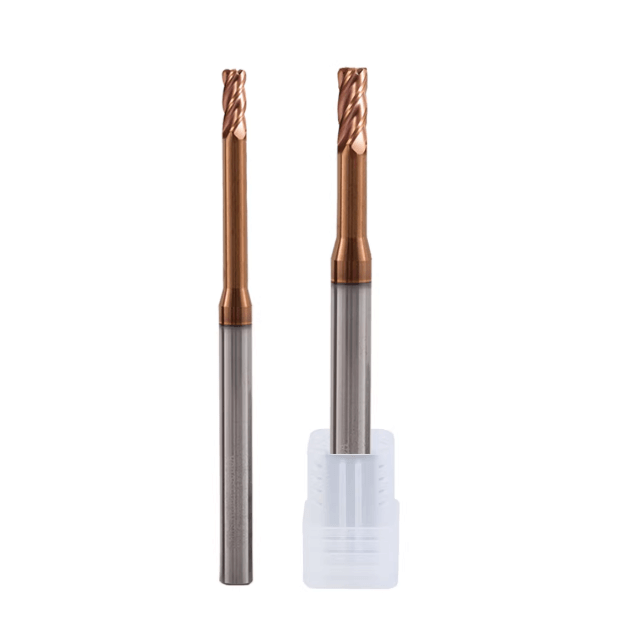
In delivering high-precision parts to clients in Europe and America, we repeatedly encountered a common problem: even with the most commonly used mini end mills, slight misselection or inadequate parameter control can lead to rough machined surfaces, significantly shortened tool life, and even tool breakage. We tested over 50 different mini end mill bits in actual projects, ranging from standard-diameter mini micro end mills to coated mini end mill carbide. Each machining operation has shown us that what truly affects accuracy and efficiency is not just the tool material, but also the tool geometry, number of cutting edges, and its matching with the machine tool’s rigidity.
Especially in precision mold, electronic component, and small-batch custom part machining, we observed that conventional experience often fails: mini micro end mills with diameters below 0.3mm are extremely prone to chipping during deep grooves or high-speed cutting, while wholesale mini micro end mills purchased in bulk can show significant differences in consistency and coating uniformity. These are real-world experiences repeatedly verified on customer sites, not textbook theory.
In this article, we’ll share our top 10 mini end mill application experiences, including machining strategies for different materials, tool life optimization techniques, and bulk purchasing selection methods. Through these practical insights, we hope our peers can avoid common pitfalls and improve machining efficiency.
Have you ever encountered similar tool breakage or insufficient tool life issues in micro-end milling?

How We Select Mini End Mills for Our Clients
In actual projects, we often face high demands from clients for precision parts machining. Whenever a client provides materials and part drawings, we first analyze machining hardness, shape complexity, and surface roughness targets. Then, we select suitable micro end mills based on these conditions. Our experience shows that even with the same batch of materials, different machining depths and tool diameters significantly affect tool life, especially for micro end mills. Under high speeds and deep groove cutting, even slight negligence can easily lead to chipping or vibration.
We also consider machine tool rigidity and clamping methods to determine tool suitability. On some small CNC machines, the same mini end mill bits can perform drastically differently compared to large five-axis machines. Our common practice is to perform small-batch test cuts on actual workpieces, recording cutting forces and chip removal behavior before deciding on batch usage. This selection method, based on real machining feedback, helps reduce tool breakage and rework rates while balancing machining efficiency and surface quality.
Actual Requirements of Mini End Mill Carbides for Aluminum, Stainless Steel, and Titanium Alloy
When machining aluminum parts, we typically choose mini end mill carbide tools with thin coatings and sharp cutting edges to ensure smooth cutting and efficient chip removal. Aluminum machining involves relatively low cutting temperatures but is prone to tool sticking; without proper consideration of cutting edge geometry and feed rate, chips quickly adhere to the tool surface. By adjusting tool coating types and helix angles, we have been able to significantly extend tool life and maintain surface finish.
In contrast, machining stainless steel and titanium alloys places higher demands on tool wear resistance and rigidity. We have repeatedly observed on customer parts that mini micro end mills with diameters less than 2mm are highly susceptible to chipping in high-hardness materials, particularly during deep-hole or extended-length machining. To address this, we prioritize mini end mill carbide tools that are heat-treated or coated, combined with proper cutting parameters and sufficient cooling. This ensures machining accuracy while reducing the risk of tool breakage.
Common Failure Causes of Mini Micro End Mills (<3mm Diameter)
In our long-term projects, micro end mills with diameters under 3mm are most prone to breakage during deep grooving, continuous cutting, or high-speed machining. We observed numerous failure cases, with primary reasons being excessive tool extension, insufficient machine tool rigidity, and fluctuations in cutting forces. During some high-precision part machining, conventional feed rates quickly caused chipping or uneven wear, which only improved after adjusting cutting strategies.
Chip removal is also a critical factor in the failure of micro-diameter tools. In aluminum and copper machining, small-diameter tools with large cutting depths often experience chip accumulation at the tool tip, sometimes leading to tool sticking. Our experience shows that micro end mill life depends not only on material and coating but also on cutting strategy, feed parameters, and machine tool rigidity; otherwise, uncontrollable breakage can easily occur.
Rigidity Issues Most Easily Overlooked by Customers (Spindle, Clamping, Extension)
At client sites, we repeatedly encounter situations where even suitable tools fail due to spindle vibration or insecure clamping, resulting in unstable surface quality. Many customers focus too much on tool material and cutting edge geometry, neglecting the rigidity matching between machine tool and chuck. Especially with mini micro end mills at long extensions or high speeds, small deviations can amplify vibrations, affecting dimensional accuracy.
We guide clients to adjust clamping methods, select high-precision tool holders, and control tool extension within safe limits. In deep groove or small hole machining, we recommend step-by-step operations—roughing first, then finishing—to ensure micro-diameter tools perform optimally under limited rigidity. These judgments and trade-offs are based on practical machining experience, not absolute formulas.
Why Do the Same Mini End Mill Bits Perform So Vastly on Different Machine Tools?
Our long-term service experience shows that the same batch of mini end mill bits can perform very differently across machine tool brands and models. A common reason is differences in spindle rigidity, feed control precision, and vibration characteristics. For instance, we once tested a micro-diameter tool on a small three-axis machine; the tool tip quickly chipped, whereas the same tool processed multiple parts stably on a high-rigidity five-axis machine.
Clamping systems and cooling methods also significantly affect performance. We advise clients to fine-tune cutting parameters and feed strategies according to machine tool characteristics, sometimes adjusting tool holder length or cutting paths to achieve optimal results. Experience-based optimization helps minimize mini end mill breakage while improving machining consistency and efficiency.
Top 10 Mini End Mill Recommendations
In our years of practical experience, we have observed that the performance of micro milling cutters varies significantly depending on material and machining conditions. Even the same batch of mini end mill bits can behave differently when cutting aluminum, high-hardness steel, or titanium alloys. We routinely perform small batch test cuts on actual workpieces to monitor tool wear, chip evacuation, and surface finish before committing to batch production.
Through these tests, we have identified ten categories of micro milling cutters that perform relatively consistently in different scenarios. Tool performance depends not only on material and coating but also on cutting parameters, tool protrusion, and machine tool rigidity. In many cases, we need to balance speed, feed, and tool selection to maintain both stability and accuracy. The following ten cases represent experience repeatedly validated in customer projects and can serve as practical references for peers.
High-Speed Mini End Mill Bits for Aluminum Processing (Anti-Stick Knife Case)
Aluminum machining often causes chips to stick to the tool and scratch the workpiece surface. Our experience shows that using mini end mill carbide with a thin coating and sharp cutting edges, combined with high-speed processing, significantly improves chip evacuation and surface finish. The helix angle and the number of cutting edges are critical for anti-stick performance. Depending on part geometry, we sometimes switch between 2-edge and 3-edge tools.
At customer sites, we simulate continuous production conditions to observe tool performance. This empirical “test cut first, batch production later” method ensures that micro milling cutters maintain high-speed stability without rapid wear or excessive chip accumulation, which is crucial for consistent results in aluminum processing.
High Wear-Resistant Mini End Mill Carbide for Stainless Steel (Tool Life Comparison)
Machining stainless steel often causes rapid wear on conventional micro milling cutter tips and makes surface roughness hard to control. In practice, we use mini end mill carbide with high wear-resistant coatings, combined with reduced cutting speed and increased cooling intensity, to extend tool life. We also compare tools from different suppliers, and our observations show that coating uniformity and edge geometry have a greater impact on wear than the material itself.
We monitor tool life during deep groove or hole machining and find that high wear-resistant tools maintain dimensional stability during continuous operations. Although slightly more expensive, they reduce tool changes and rework frequency, which is critical for small and medium batch production. This hands-on comparison provides more reliable guidance than parameter tables alone.
Mini Micro End Mills for Titanium Alloy (Tool Breakage Control)
Tool breakage is the most common challenge in titanium alloy machining, especially with micro-diameter cutters. Our experience shows that controlling tool protrusion and limiting material removal per pass are key to reducing breakage risk. Even the same mini micro end mills perform differently on different machines, so we adjust cutting parameters according to machine rigidity and clamping precision.
Chip evacuation is also a critical factor for micro-diameter tools. We optimize chip removal paths by combining helix angle and cutting direction, and select mini end mill carbide with tough coatings to enhance tool tip durability. These practices, based on years of on-site verification, cannot be fully predicted by theoretical data alone.
Ball Nose Mini End Mill Bits for Mold Finishing (Surface Roughness Case)
In mold finishing, surface quality directly affects polishing and assembly. We use ball head mini end mill bits to finish small radius curves and complex contours. Fine-tuning cutting speed and the number of tool edges significantly impacts surface finish. On-site trial cuts help us find the best combination to meet the customer’s roughness requirements.
Tool wear and surface deviations are recorded, and we note that the same tools may behave differently with different cutting strategies. We create part-specific fine-tuning plans rather than relying solely on specifications, ensuring consistent mold finishing results.
Long Neck Mini End Mill for Deep Cavity Machining (Vibration Problem Solution)
Deep cavity machining is where micro milling cutters are most prone to vibration. In customer projects, we tested long-edge mini end mills of varying lengths and observed that excessive tool extension significantly increases vibration and surface ripples. By reducing depth of cut, adjusting feed rates, and optimizing tool paths, we can minimize vibration while maintaining efficiency.
We also use high-rigidity tool holders and precision chucks to enhance system rigidity. Our experience shows that this combination is more effective than changing tool material alone. Controlling vibration is central to stable micro tool performance in deep cavities.
Mini End Mill Carbide Coating for High Hardness Materials (Chip Control)
High-hardness steel often causes tool tip chipping. We use coating-strengthened mini end mill carbide and reduce material removal per tooth to control edge chipping. On-site continuous cutting tests allow us to observe tool tip wear and confirm reliability before batch processing.
Uniform coating and sharp edges have the greatest impact on chip control. We visually inspect tools and perform simple cutting tests prior to use, ensuring practical reliability beyond specification sheets.
Ultra-Fine Diameter Mini Micro End Mills for Microgroove Processing (<0.2mm)
Tiny grooves and through-holes below 0.2mm are prone to tool breakage or vibration. Shortening tool extension and reducing feed speed and depth are effective ways to maintain tool life. We recommend stepwise machining—roughing first, then finishing—to reduce breakage risk.
We adjust cutting strategy based on spindle rigidity and cooling method. Chip evacuation is critical; even minor blockage can cause tool tip chipping. These measures allow us to develop the safest machining plan for each part based on real-world conditions.
2 Flute Mini End Mill for High-Speed Machining (Chip Removal Optimization)
For aluminum and copper, 2-edge mini end mills remove chips more efficiently than multi-edge tools, reducing sticking. Adjusting depth of cut and speed maintains stability at high RPMs without stringing or tip buildup.
At customer sites, we also optimize tool path according to cutting direction to ensure smooth chip evacuation. Experience shows that edge count and tool path design can be more critical than material in high-speed operations.
4 Flute Mini End Mill Bits for Fine Edge Trimming (Dimensional Stability)
For chamfering or fine edge trimming, 4-edge mini end mill bits help maintain dimensional consistency. Increasing edge count reduces vibration but requires lower feed rates to prevent overload.
We adjust cutting strategies according to part contours, using light cuts and multiple passes to ensure tool life and accuracy. This empirical approach produces reliable results for complex finishing tasks.
Durable Mini End Mill for Mass Production (Comprehensive Cost Case)
In mass production, tool life and total machining cost are both critical. We select mini end mill carbide based on wear resistance, cost, and tool change frequency. Increasing tool cost slightly but reducing changes often lowers overall cost.
Small batch testing before mass production allows us to record wear curves and surface consistency, ensuring no rework. This approach maintains efficiency while minimizing downtime risk.
Experience in Mini End Mill Selection Across Different Application Scenarios
In our long-term collaboration with European and American clients, we observed that part material and machining conditions significantly influence tool selection. Selecting a mini end mill involves more than choosing the correct diameter or material; processing depth, surface complexity, and machine tool rigidity also play crucial roles. For example, in precision part machining with mini micro end mills, excessive tool protrusion or inappropriate cutting parameters can cause tool breakage or surface ripples. These conclusions are consistently verified in real-world projects.
Industry-specific needs vary widely. Molds, medical devices, and electronic components require extremely high precision. During on-site testing, we select tool combinations with different edge counts, helix angles, and coatings based on part geometry. Multiple trial cuts and data logging allow us to assess tool performance under continuous machining and high-speed cutting, providing repeatable and stable machining solutions beyond theoretical guidelines or parameter tables.
Selection Logic for Mini Micro End Mills in Precision Parts Processing
Precision parts typically require micro-diameter tools between 0.3mm and 2mm. Tool selection must balance stiffness and toughness. For deep holes or complex contours, we select mini micro end mills with enhanced coatings, minimize tool protrusion, and reduce material removed per tooth to limit breakage risk. On-site observation of chip formation and tool tip wear informs any adjustments to tools or cutting strategies.
Machine tool characteristics and clamping systems are also considered. The same tool can tolerate deeper cuts on a rigid five-axis machine than on a smaller three-axis machine. Small batch trial cuts allow us to optimize parameters in real-time, ensuring both accuracy and stability.
How the Mold Industry Chooses Mini End Mill Bits to Improve Surface Quality
Surface finish in mold processing directly affects polishing and assembly. We observed that selecting mini end mill bits with appropriate edge counts and helix angles reduces vibration and maintains smooth cutting. Initial cutting tests on sample materials guide adjustments to feed rate and depth, ensuring surface quality meets customer specifications.
We also track tool wear patterns. By recording tool life across different workpieces, we determine when to replace tools or adjust cutting strategy. We recommend roughing followed by fine processing, and stepwise machining, to minimize edge chipping while maintaining consistent surface accuracy—experience gained from years of mold processing.
Special Requirements for Mini End Mill Carbide in the Medical and Electronic Industries
Medical and electronic parts demand extreme dimensional accuracy and surface finish. Even small errors can affect assembly or functionality. We select mini end mill carbide with uniform coatings and high tool tip toughness, combined with low feed and high-speed strategies to ensure stability in micro cutting.
Chip evacuation and cooling are carefully controlled on-site. In dense materials or micro-hole machining, any chip blockage can cause tool breakage or surface scratches. Constant adjustment of tool paths and cutting parameters minimizes risk and maintains dimensional stability. This knowledge is based on long-term experience with high-precision medical and electronic components.
The Impact of High-Speed Spindles (30K+ RPM) on Tool Structure
At 30,000+ RPM, tool vibration and tip wear become critical issues. Our on-site verification shows that if tool geometry does not match spindle rigidity, eccentric wear or breakage can occur. We select high-toughness coatings and optimize shank length and clamping method to reduce resonance.
Cutting parameters are adjusted based on real processing conditions. Reducing material per tooth, optimizing helix angle, or adjusting cutting direction can reduce vibration and tip wear. On-site trial cuts and data recording allow us to develop repeatable plans for various machines and materials, avoiding blind reliance on standard parameters.

Key Factors Affecting Mini End Mill Lifespan
In our long-term experience supporting high-precision parts machining, tool life remains the most direct factor affecting production efficiency and cost. We observed that the lifespan of mini end mills varies widely in actual machining. Often, this is not caused by material alone, but by a combination of factors such as cutting parameters, machine tool rigidity, cooling methods, and clamping systems. Field testing and data logging allow us to optimize these variables for each part and material, extending the service life of mini micro end mills.
Tool life management affects not only cost but also machining accuracy and part quality. We advise clients to conduct trial cuts, monitor tool wear, and adjust cutting strategies based on feedback. Experience shows that relying solely on parameter tables cannot guarantee stable tool performance for batch or small-precision parts machining.
Preventing Mini Micro End Mill Breakage from Incorrect Cutting Parameters
Excessive cutting speed, feed, or depth often causes mini micro end mills to break quickly. In aluminum or copper machining, high-speed deep cuts can lead to rapid tip breakage. For high-hardness steel, excessive feed or cut depth can overload the tool instantaneously, resulting in failure.
We recommend reducing depth and material per tooth first, then gradually optimizing feed rate. Chip clogging at the tool tip often accompanies breakage; optimizing toolpaths and chip evacuation, along with suitable cutting parameters, significantly reduces breakage rates. Field observations consistently confirm that inappropriate cutting parameters are a leading cause of unstable mini end mill lifespan.
Selecting Appropriate Coatings for Mini End Mill Carbides
In high-hardness material machining, a coating mismatch can drastically reduce tool life and surface finish. For titanium alloys or stainless steel, coatings that are too hard may chip under vibration or overload; coatings that are too soft wear quickly, accelerating tool degradation.
We select coatings based on material type, speed, and depth, and perform trial cuts to verify results. Comparative tests at customer sites, recording tool life curves under continuous machining, help identify coatings that maintain stability under specific conditions. Experience shows that optimal coating is a balance of material, feed rate, and machine rigidity—not simply the hardest coating.
Cooling Method Impacts on Mini Micro End Mills
Cooling significantly affects tool life. Dry cutting rapidly raises tool tip temperature, accelerating wear. Oil mist or water-soluble coolant reduces tip temperature and improves chip evacuation, extending tool life.
We select cooling methods based on material, machining depth, and machine characteristics. For high-speed machining, oil mist reduces tip chipping from vibration, while water cooling in aluminum or copper machining minimizes tool sticking. On-site adjustments allow balancing efficiency and tool longevity.
How Tool Holder and Chuck Accuracy Affect Mini Micro End Mill Lifespan
Even high-quality tools suffer if holders or chucks are eccentric, causing vibration, chipping, and dimensional deviation. We measure concentricity and use high-precision chucks to stabilize tools on the spindle.
In mass production, inconsistent clamping even within the same batch can cause lifespan differences. We implement inspection and maintenance protocols to ensure clamping accuracy after each tool change. Experience shows that small deviations accumulate, significantly impacting tool life and part consistency—a frequently overlooked factor.
Mini End Mill Usage Tips Summarized at Customer Sites
Micro-end mill issues usually arise from a combination of material, tool, machine, and operator factors. Through on-site verification, we developed operational methods that improve tool life and machining stability. Controlling tool extension, adjusting cutting parameters, and optimizing toolpaths reduces breakage and enhances efficiency and surface finish.
Tool management and monitoring are equally important. During continuous or batch machining, we adjust cutting strategies based on observed wear, avoiding errors caused by material variation or machine vibration. This approach provides clients with repeatable, stable machining solutions and deep insights into tool performance beyond datasheets.
Reducing Breakage Rate of Mini Micro End Mills
Excessive cutting forces and vibration are primary causes of tool breakage. We adjust material per tooth, depth of cut, and shorten tool extensions to reduce tip stress. For deep holes or grooves, we employ stepwise machining: roughing first, then finishing to achieve dimensional and surface accuracy.
Chip removal is critical; monitoring chip flow in spiral grooves allows us to adjust toolpath or cutting direction for timely evacuation. This strategy reduces breakage, especially in high-speed or high-hardness material machining.
Improving Efficiency While Maintaining Accuracy
Balancing efficiency and precision requires selecting optimal cutting edges, tool geometry, and fine-tuning feed and speed. For batch parts, we cut prototypes, record tool wear and surface deviations, then optimize parameters.
We also monitor machine rigidity and clamping stability. Even the best tool design fails under unstable conditions. On-site clamping calibration ensures stability for high-efficiency machining, more reliable than parameter adjustment alone.
Identifying Tool Wear vs. Material Issues
Surface defects or dimensional deviations are often attributed to material hardness or insufficient machine rigidity. Field experience shows tool wear is often the true culprit. We inspect tip edges, rounding, and coating wear, along with cutting sound and chip formation, to determine the root cause.
Comparing performance of the same batch of tools on different materials helps identify wear patterns. Adjusting tool parameters or replacing the tool first reduces downtime and rework.
Extending Mini End Mill Life Through Toolpath Optimization
Toolpath design impacts mini end mill lifespan. Poor paths create uneven loads, causing chipping. We adjust cutting direction, entry angle, and segment sequences based on tool diameter, edge count, and material.
Optimizing chip removal and heat distribution not only improves efficiency but also reduces tip temperature, extending tool life. Field testing confirms that proper toolpath planning is more effective than coating or material improvements alone.

How to Choose a Reliable Mini End Mill Supplier for Bulk Procurement
In our long-term experience supporting high-precision machining projects, mini end mill supplier selection directly impacts production stability and cost control. When purchasing mini micro end mills in bulk, we have repeatedly seen how quality fluctuations can lead to tool breakage, dimensional inconsistency, and unexpected downtime. In practice, we evaluate not only tool material and coating, but also production consistency, quality control processes, and small-batch validation results. These factors are far more reliable than simply comparing price lists.
Before moving into full-scale production, we usually conduct small-batch trial cuts based on the customer’s materials and machining conditions. By recording tool life, surface finish, and wear patterns, we can assess how a supplier’s tools perform under continuous machining. This approach helps us reduce risk and optimize procurement decisions. From our experience, supplier selection is not just a purchasing decision—it is a critical factor in maintaining machining stability and controlling total production cost.
Why Are Wholesale Mini Micro End Mills More Prone to Quality Fluctuations?
In bulk procurement, we often encounter situations where some tools perform consistently, while others from the same batch show breakage, uneven wear, or unstable surface finish. Through repeated on-site analysis, we found that small variations in heat treatment, coating thickness, and cutting edge geometry become highly amplified in micro-diameter tools. This is especially critical for tools below 0.3mm, where even minimal deviation can affect machining accuracy.
To manage this, we rely on random sampling, trial cutting, and tool wear tracking to evaluate batch consistency. Based on these results, we may adjust cutting parameters or separate tools into different usage groups. While this increases initial workload, it significantly reduces downtime and scrap rates in mass production. Over time, this approach has proven essential for maintaining stable machining performance.
How We Control Mini End Mill Carbide Consistency
Ensuring consistency in mini end mill carbide starts before procurement. We communicate with suppliers about carbide grade, grain structure, heat treatment processes, and coating technology. After delivery, we perform dimensional inspection, concentricity checks, and visual evaluation of cutting edges before releasing tools to production.
In addition, we conduct small-batch trial machining to evaluate tool life and surface quality. Any tool showing abnormal wear or instability is removed early. We also maintain tool usage records, including machining time, material type, and wear condition, allowing us to dynamically manage tool batches. In our experience, consistency is not controlled by suppliers alone—it also depends on systematic verification and management on the shop floor.
Common Pitfalls in Large-Scale Procurement
We once supported a customer machining high-precision electronic components who experienced frequent tool breakage after bulk purchasing mini micro end mills. Initial trial cuts showed acceptable performance, but during continuous production, tool failures increased significantly, causing downtime and rework.
After on-site analysis, we determined that the issue was not related to machine rigidity or material hardness, but to inconsistency in edge preparation and coating uniformity across the batch. This case reinforced an important lesson: passing initial trials does not guarantee batch stability. We now strongly recommend implementing sampling inspection, standardized trial cutting, and batch validation before full production to prevent large-scale risk.
How to Evaluate the True Cost Between Price and Tool Life
In mass production, low-cost tools with short lifespan often lead to higher overall cost. Frequent tool changes, machine stoppages, and increased scrap can quickly outweigh any initial savings. Our project data consistently shows that tools with stable wear resistance and predictable lifespan reduce total machining cost, even if the unit price is higher.
We evaluate cost based on the number of parts per tool, downtime during tool changes, and surface quality stability. By comparing different suppliers under identical machining conditions and recording tool wear progression, we help customers identify the most cost-effective solution. In real production, focusing only on tool price rarely leads to the best outcome.

Frequently Asked Questions about Mini End Mills (FAQ)
In our daily technical support work, we frequently receive questions about tool breakage, material selection, and machining strategies for mini end mills. Many issues arise during actual production, such as unstable tool life, poor surface finish, or inconsistent batch results. These are not theoretical problems—they are challenges we repeatedly encounter on customer sites.
Based on years of on-site support and data collection, we have summarized the most common questions and practical solutions. Our goal is to help engineers quickly identify root causes, optimize machining strategies, and improve the stability of mini micro end mills across different materials and applications.
Why Does My Mini End Mill Break So Easily?
From our experience, tool breakage is usually caused by excessive cutting force, long tool overhang, or insufficient machine rigidity. In deep slotting or high-speed machining, if the chip load per tooth is too high or the tool extension is too long, the tool tip becomes highly vulnerable to failure.
Chip evacuation is another critical factor. Poor chip removal leads to chip packing, increased cutting force, and rapid breakage. We often optimize toolpaths and cutting direction to ensure smooth chip flow, especially when machining aluminum, titanium, or hardened steel. In most cases, tool breakage is not caused by a single issue, but by a combination of parameters, setup, and machining conditions.
Is Carbide Always Better Than HSS for Mini End Mills?
Carbide tools generally offer better wear resistance and thermal stability, especially for high-hardness materials and high-speed machining. However, they are not always the best option. In aluminum or copper machining, high-toughness HSS tools can sometimes provide smoother cutting and reduce the risk of built-up edge.
In deep or delicate micro-machining, HSS tools may also offer better resistance to chipping due to their higher toughness. Tool selection should consider material properties, cutting conditions, and machine rigidity. In our experience, choosing between carbide and HSS requires balancing toughness, wear resistance, and application requirements rather than assuming one is universally better.
How Should Mini Micro End Mills Below 0.5mm Be Used?
For tools below 0.5mm, controlling cutting force and tool stability is critical. We keep tool overhang as short as possible and reduce chip load per tooth to minimize stress on the tool tip. Step-by-step machining strategies are often used to avoid sudden load changes.
Cooling and lubrication are also essential. Proper cooling helps control temperature and reduces wear at the cutting edge. Toolpath optimization is equally important to ensure smooth chip evacuation and minimize vibration. These practices are especially important for ultra-small tools in the 0.2–0.3mm range, where even minor instability can lead to immediate failure.
How to Select Mini End Mill Bits for Mass Production?
In mass production, tool consistency and predictable lifespan are more important than initial cost. We typically select mini end mill carbide tools based on coating stability, edge precision, and performance in trial machining. Small-batch validation allows us to confirm tool life and surface quality before scaling up.
We also consider machine rigidity, clamping accuracy, and cooling conditions to ensure that tools perform consistently in production. A balanced approach—considering cost, tool life, and machining stability—usually delivers better long-term results than simply choosing the lowest-priced option.