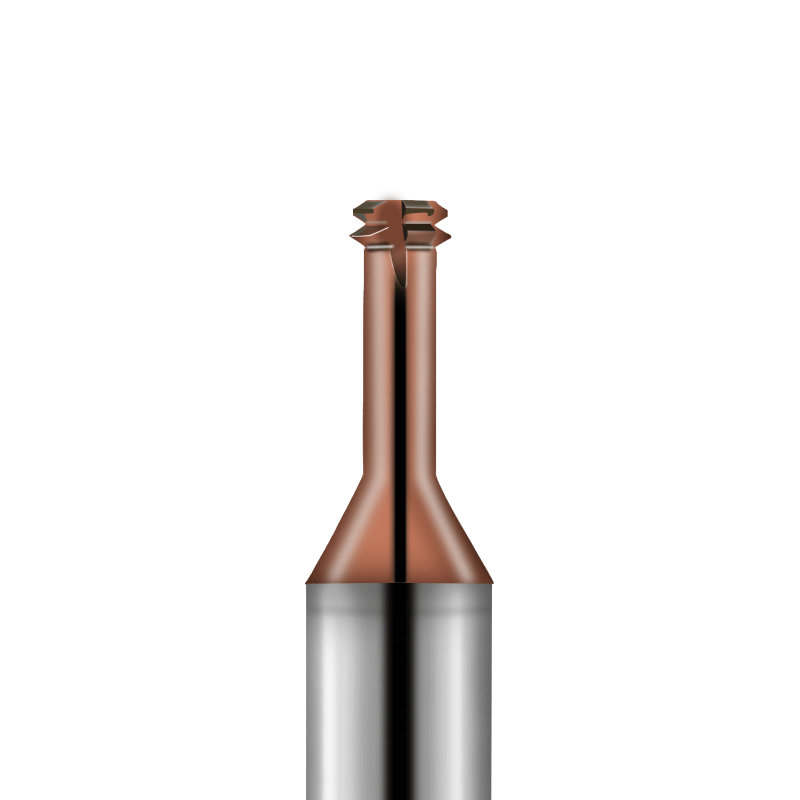
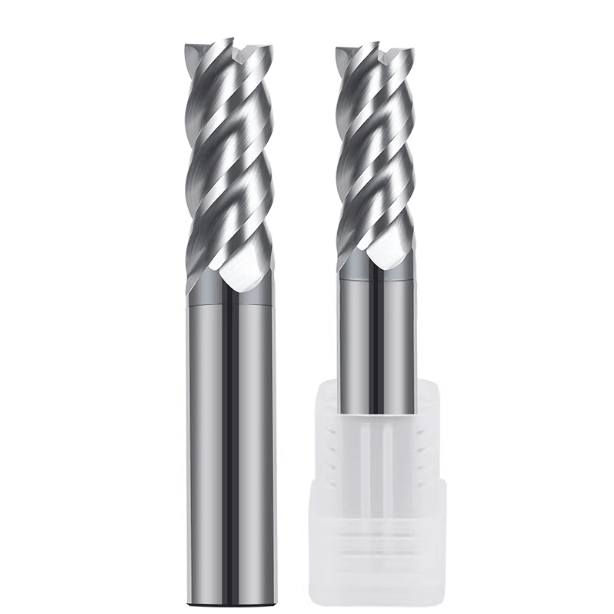
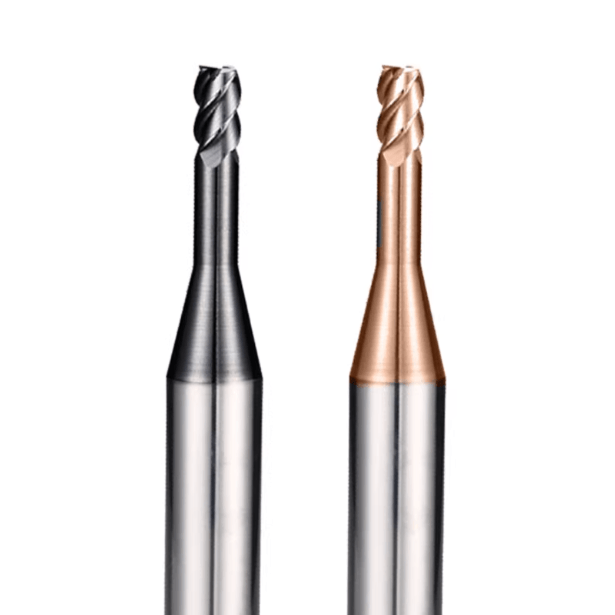
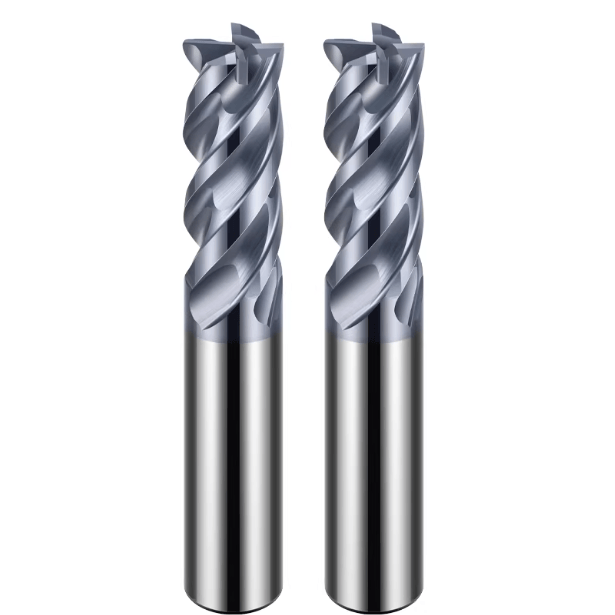
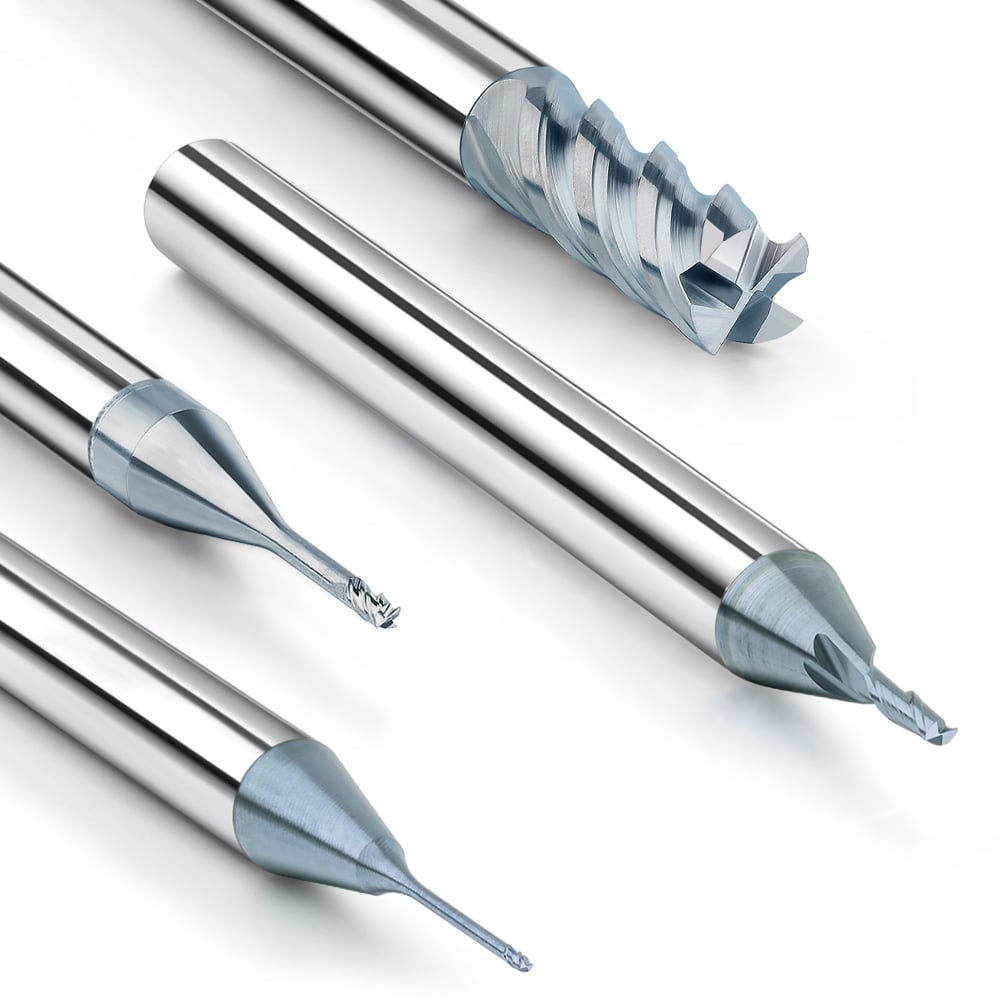
In precision manufacturing and complex surface machining, ball nose end mills play a crucial role in determining both surface finish and machining efficiency. With continuous advancements in industrial technology, leading ball nose end mill manufacturers are driving new trends through geometric design innovation, material optimization, and intelligent tool monitoring systems. Whether in mold manufacturing, aerospace machining, or precision component fabrication, the evolution of modern ball nose end mills is moving toward higher wear resistance, longer tool life, and superior cutting stability.
Over the past decade, manufacturers have introduced diverse solutions tailored to specific applications. For example, ball nose end mills for hardened steel now utilize ultra-fine carbide substrates combined with advanced TiAlN and AlCrN coatings, maintaining exceptional cutting performance at elevated temperatures. Meanwhile, CNC ball nose milling cutters for precision machining deliver outstanding surface finishes and consistent 3D contour accuracy through optimized geometry and micro-edge processing.
The difference between 2-flute and 4-flute ball nose end mills reflects not just variations in chip evacuation and feed rate, but also material-specific trade-offs. Two-flute end mills are ideal for soft metals and aluminum alloys due to their larger chip space and high-speed capability, while four-flute designs excel in hard materials and precision machining, offering improved rigidity and tool life.
Globally, top manufacturers are integrating smart manufacturing concepts, real-time tool data monitoring, and predictive maintenance systems to help users achieve higher productivity and process reliability. These companies represent the technological forefront of precision cutting tools, driving the metal cutting industry toward digitalization and sustainable efficiency.
The Importance of Ball Nose End Mill Cutter in Modern CNC Machining
As manufacturing moves toward higher precision and more intricate 3D surfaces, the ball nose end mill has become an indispensable tool in high-end CNC machining. Its spherical cutting end allows efficient processing of curved surfaces, grooves, and freeform geometries, making it essential in mold making, aerospace component machining, medical implants, and precision mechanical parts.
Compared to flat end mills, ball nose end mills provide superior contact control and cutting stability during 3D contouring, resulting in smoother finishes and better dimensional accuracy. When paired with high-speed spindles and multi-axis CNC systems, advanced carbide ball nose cutters can handle complex geometries with efficiency and precision.
Structure and Working Principle of Ball End Mills
The defining feature of a ball end mill is its hemispherical tip, which produces a continuous and smooth cutting path on the workpiece. This rounded geometry minimizes vibration, reduces tool wear, and enhances surface finish, extending overall tool life.
Key geometry parameters such as helix angle, rake angle, and radius accuracy directly affect surface quality. Optimized geometries improve chip evacuation and reduce built-up edge, ensuring consistent machining results even in complex 3D operations.
For ultra-fine finishing, micro-radius carbide ball nose end mills prevent edge chipping and enhance tool strength—especially beneficial in five-axis CNC machining where cutting stability is critical.
Applications in Precision Machining
Ball nose end mills are widely used for finishing operations in molds, aerospace components, and medical devices. Their smooth cutting profile minimizes the need for manual polishing and rework. In aerospace applications, Ball nose end mill cutters for hardened steel provide reliable wear resistance under high temperature and load conditions. In the medical field, these tools ensure surface integrity for implants and surgical tools, meeting stringent biocompatibility standards.
Tool selection in 3D machining depends on workpiece material, flute count, diameter, and coating type. Two-flute models are ideal for soft metals and aluminum, while four-flute models are recommended for steel and high-hardness alloys. High concentricity and optimized coatings are essential for achieving the best performance in CNC ball nose milling cutters for precision machining.

Overview of Major Ball Nose End Mill Cutter Manufacturers
In global precision machining, the quality of ball nose end mills directly affects cutting efficiency, surface finish, and tool longevity. Major manufacturers have continually refined tool geometry, substrate design, and coating technology to meet the increasing demands of aerospace, mold, automotive, and medical industries.
The market focus has shifted from standalone tool performance to integrated solutions that combine materials science, process optimization, and digital manufacturing. Whether a high-performance CNC ball nose end mill for precision machining or a carbide ball nose cutter for hardened steel, manufacturers are pushing the boundaries of tool efficiency and life expectancy.
Global Leading Brands
Mitsubishi Materials
Mitsubishi’s VFX and MP series carbide ball nose end mills feature ultra-fine grain substrates and multi-layer nano coatings for superior wear resistance under high-speed and high-temperature cutting. These are ideal for mold steels and titanium alloys.
OSG Corporation
OSG’s WXL and WXS series provide optimized performance for both 2-flute and 4-flute configurations. Renowned for precision and chip evacuation efficiency, they are widely adopted in CNC mold finishing and precision component machining.
Sandvik Coromant
Sandvik’s CoroMill® series emphasizes geometry optimization and modular design for high stability in multi-axis operations. Their carbide ball nose end mills deliver reliable results in complex surface finishing.
Seco Tools
Seco’s Jabro series is popular in aerospace and mold-making industries. Advanced TiSiN and AlTiN coatings significantly extend tool life while maintaining superior finish quality. Their deep CAD/CAM integration helps optimize toolpaths and cutting efficiency.
Kennametal
Kennametal’s HARVI™ ball nose end mill cutter excels in hardened steel machining. Its unique cutting edge design reduces heat buildup and tool wear. Integrated smart tool monitoring systems support predictive maintenance in automated environments.
These global leaders collectively advance the precision tooling industry, achieving a balance between accuracy, durability, and productivity.
The Rise of Domestic Ball Nose End Mill Manufacturers
Chinese manufacturers are rapidly closing the gap with global brands through advancements in carbide powder metallurgy, PVD/CVD coating processes, and tool geometry innovation. Many now offer performance levels comparable to international standards at more competitive costs.
Material and Coating Advancements
Domestic producers use ultra-fine tungsten carbide combined with high-performance AlCrN coatings for superior cutting stability in hardened steel and titanium alloy machining. This progress has made them strong competitors in the precision CNC tooling market.
Competitive Advantages
Domestic brands offer faster delivery, flexible customization, and strong cost-performance ratios. Manufacturers from Suzhou, Dongguan, and Ningbo have developed reliable 2-flute and 4-flute ball nose end mill series, supporting both mold production and automated machining lines.
In conclusion, both international and domestic ball nose end mill cutter manufacturers are advancing toward higher precision, longer tool life, and intelligent production. Future competition will focus not only on tool performance but also on who can deliver comprehensive digital solutions and sustainable manufacturing support for the era of smart CNC machining.
Innovations and Performance Enhancements in Ball Nose End Mills
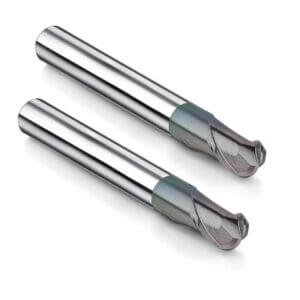
As manufacturing continues advancing toward greater precision, efficiency, and intelligence, the design and engineering of ball nose end mill cutters have undergone major transformation. Modern cutting tools now require breakthroughs not only in cutting performance but also in tool longevity, chip evacuation stability, material adaptability, and digital integration.
From CNC ball nose milling cutters for precision machining to ball nose end mill cutters for hardened steel, manufacturers are building a smarter, more efficient cutting ecosystem through innovations in coating technology, tool geometry, and intelligent monitoring systems. These developments allow ball nose end mills to deliver consistent performance on complex surfaces, hard-to-machine materials, and under high-speed machining conditions—ensuring both stability and cost-effectiveness.
Evolution and Application Scenarios of Coating Technology
The Role of TiAlN, AlCrN, and Nano Coatings in Extending Tool Life
Coating technology is one of the key drivers behind the performance improvement of modern Ball Nose End Mill Cutters. Current coating advancements have evolved from single-layer PVD coatings to multi-layer nanocomposite coatings, enhancing tool stability in high-speed and high-temperature environments.
-
TiAlN coating: Known for exceptional thermal stability and oxidation resistance, ideal for high-speed cutting of steel and die steel. It helps reduce flank wear during hardened steel machining.
-
AlCrN coating: Provides superior hardness and oxidation resistance, ideal for machining titanium alloys and stainless steels under extreme heat.
-
Nano multilayer coating: Offers a strong balance of hardness and toughness, widely used in CNC Ball Nose Milling Cutters for Precision Machining, significantly extending tool life and maintaining fine surface quality.
These coating combinations allow modern ball nose end mills to sustain stable cutting performance, reduce tool change frequency, and lower production costs across diverse materials.
Coating Selection Strategies by Material
Choosing the correct coating depends heavily on the workpiece material and machining parameters:
-
Carbon and die steel → TiAlN or AlCrN coatings for high-temperature wear resistance.
-
Titanium and stainless steel → AlCrN or TiSiN coatings to prevent chip adhesion.
-
Aluminum and copper → Use 2 flute ball nose end mill cutters with DLC or uncoated mirror-polished finishes to avoid built-up edge.
This application-driven coating strategy has become essential for manufacturers developing ball nose end mill cutters for hardened steel and other demanding materials.
H3: New Geometry Design and Edge Optimization
Enhanced Helix Angle and Chip Groove Design
In high-speed multi-axis CNC machining, even minor geometric changes can dramatically affect cutting behavior. Manufacturers now optimize helix angles and flute geometries to ensure smoother chip flow, reduced vibration, and stable cutting loads.
A well-designed helix angle improves cutting smoothness while maintaining lower resistance, increasing productivity during high-feed machining.
Geometric Innovations for Better Chip Evacuation and Surface Finish
Advanced CNC ball nose milling cutters often feature asymmetrical edge layouts and variable helix designs, which balance cutting forces and minimize vibration.
Micro-edge radius enhancements also strengthen cutting edge durability, reducing chipping and improving surface quality.
In 2-flute vs 4-flute ball nose end mill comparisons, these geometric upgrades clearly show their advantages—two flutes provide efficient chip evacuation, while four flutes deliver greater rigidity and longer lifespan during high-intensity machining.
Integration of Smart Manufacturing and Tool Monitoring
Intelligent Feedback from Smart Tools and CNC Systems
With the rise of Industry 4.0, tool intelligence is redefining the cutting process. Leading ball nose end mill cutter manufacturers are embedding micro-sensors within tool holders or tool bodies to monitor temperature, vibration, and wear in real time.
This data is analyzed through CNC control systems to dynamically adjust cutting parameters, ensuring optimal machining conditions.
Trends in Real-Time Monitoring and Predictive Maintenance
Smart tool monitoring enables predictive maintenance, alerting operators before a tool reaches critical wear levels. When integrated with AI-driven data analytics, these systems can automatically optimize cutting paths and parameters based on historical data.
This evolution transforms the CNC ball nose milling cutter for precision machining from a passive cutting tool into an active intelligent component, improving process reliability and overall manufacturing efficiency.
Overall, the innovation direction of ball nose end mills is moving from material and coating optimization to digital intelligence and smart geometry design. The next generation of ball nose cutters will function not only as cutting tools but also as intelligent data nodes, combining high-precision machining with smart manufacturing ecosystems.

Performance Comparison of Ball Nose End Mills with Different Flute Numbers: 2-Flute vs. 4-Flute
In precision machining, flute number is one of the most critical parameters influencing a ball nose end mill’s cutting behavior. The number of flutes directly affects chip evacuation, surface finish, cutting speed, and tool life.
A 2-flute ball nose end mill focuses on high-speed chip evacuation, while a 4-flute ball nose end mill emphasizes rigidity and precision. Choosing the right flute configuration can significantly enhance CNC machining stability and productivity.
Advantages and Applications of 2-Flute Ball Nose End Mills
Superior Chip Evacuation for Soft Metals
The 2 flute ball nose end mill cutter features large chip valleys, which provide ample space for chip removal and heat dissipation. This makes it ideal for aluminum, copper, and other non-ferrous materials.
Two-flute designs have sharper cutting edges and smaller contact areas, enabling higher cutting speeds and smoother motion. They excel in roughing, 3D contouring, and high-speed finishing under CNC ball nose milling cutter for precision machining conditions.
For soft materials, they offer excellent surface quality with minimal cutting forces, reducing deformation and improving precision. When combined with anti-adhesion coatings, they achieve even higher efficiency and longer life.
Advantages and Applications of 4-Flute Ball Nose End Mills
Higher Rigidity and Surface Finish for Hardened Steel
The 4 flute ball nose end mill cutter distributes cutting loads across more edges, improving tool rigidity and stability.
This makes it ideal for hardened steels, tool steels, titanium alloys, and heat-resistant alloys. Multi-flute engagement allows for smaller stepovers and smoother finishes, making these tools ideal for ball nose end mill cutter for hardened steel applications.
Equipped with TiAlN or AlCrN coatings, these cutters maintain edge sharpness at high temperatures and resist adhesion, performing well in mold finishing, surface pre-polishing, and 5-axis finishing where dimensional consistency is critical.
However, because of their smaller flute spaces, 4-flute cutters are less suitable for roughing or machining soft materials where chip buildup is likely.
Choosing the Right Flute Number for Different Materials
Flute Selection Guidelines
-
Soft materials (aluminum, copper, plastics) → 2-Flute for efficient chip removal and high-speed operation.
-
Medium-hard materials (carbon steel, stainless steel) → 3-Flute for balanced chip evacuation and surface quality.
-
Hard materials (hardened steel, titanium) → 4-Flute for enhanced finish and longer tool life.
CNC Parameter Optimization Tips
-
2-Flute tools → High spindle speed, low feed rate; best for roughing and light-load cutting.
-
4-Flute tools → Medium speed, steady feed; best for finishing operations.
-
Coated tools → Cutting speed can be increased by 10–20% to maximize coating performance.
Use atomized or oil-mist cooling for aluminum and high-pressure coolant for hardened steel to extend tool life and improve cutting stability.
The performance difference between 2-flute and 4-flute ball nose end mills lies in the balance between chip evacuation, surface quality, and rigidity.
Proper flute selection, combined with optimized machining parameters, can greatly extend tool life and improve the surface quality and productivity of CNC ball nose milling cutters for precision machining.

Breakthrough of Carbide Ball Nose End Mill Cutter for Hardened Steel Machining
With the growing demand for superior material performance in mold manufacturing, aerospace components, and precision engineering, the use of hardened steel continues to expand. This material, typically above HRC55 hardness, is characterized by high strength, excellent wear resistance, and thermal stability — all of which pose greater challenges for cutting tool performance and longevity.
Carbide ball nose end mills have become the preferred solution for high-precision machining of hardened steels due to their superior rigidity, thermal stability, and resistance to wear. Modern tool manufacturers have achieved major breakthroughs in tool substrates, coating technology, and geometric optimization, resulting in both higher machining efficiency and improved surface integrity for high-hardness materials.
By carefully selecting key parameters such as coating type, cutting-edge geometry, and feed rate, machinists can achieve excellent surface finishes and process stability while maintaining long tool life. This enables efficient and reliable solutions for mold manufacturing and aerospace-grade hardened steel components.
Challenges and Tool Stress Analysis in Machining Hardened Steel
Cutting Mechanisms in High-Temperature and High-Wear Environments
Machining hardened steel presents dual challenges: elevated cutting temperatures and abrasive tool wear. When temperatures in the cutting zone exceed 800°C, thermal softening and diffusion wear can quickly degrade the cutting edge, leading to loss of sharpness and poor surface finish.
Because of the changing contact angle in ball end milling, the cutting load varies continuously. This uneven load distribution becomes especially problematic in 3D contour milling, where the tool centerline speed approaches zero, increasing the risk of frictional burning, chipping, and microcracks.
To counter these effects, modern CNC machining strategies for hardened steels emphasize light cutting, low feed, and multiple passes. This approach lowers unit edge load, minimizes heat generation, and extends tool life. Additionally, adopting high-hardness substrates and advanced PVD coatings significantly improves oxidation and wear resistance, ensuring edge sharpness and dimensional stability during extended high-temperature cutting.
Optimizing Tool Materials and Coatings to Enhance Tool Life
Micro-Grain Carbide Substrates Combined with High-Performance Coatings
Tool material selection is critical for hardened steel machining. Leading ball nose end mill manufacturers now use ultra-fine-grain cemented carbide as the substrate, which provides superior bending strength and thermal stability. This prevents microcrack propagation and maintains tool integrity under heavy cutting loads.
Modern coatings further elevate tool performance:
-
TiAlN Coating – Excellent high-temperature oxidation resistance; ideal for dry or semi-dry high-speed cutting.
-
AlCrN Coating – Outstanding in cutting high-hardness steels; reduces friction and heat generation.
-
Nano-Composite Coating – Nano-layered structure enhances both toughness and wear resistance, achieving longer tool life.
Several manufacturers now offer specialized ball nose end mill series for hardened steels (up to HRC60+), delivering exceptional surface finishes and consistent cutting performance.
Case Study – CNC Machining Strategies for High-Hardness Mold Steel
Comparison of Process Parameters and Tool Life
A practical case in mold manufacturing involves machining H13 steel (HRC52–56) using an 8mm four-flute TiAlN-coated ball end mill at 8,000 rpm, 0.03 mm/tooth feed, and 0.2 mm depth of cut. Under these conditions, stable finishing lasted about 60 minutes with a surface roughness of Ra 0.2 μm.
Uncoated tools under identical conditions lasted only 20 minutes, with noticeable deterioration in surface quality.
Another example: machining SKD61 hardened steel (HRC58) using an AlCrN-coated four-flute ball nose end mill in dry cutting increased tool life by 35%, maintaining superior wear resistance and surface finish.
Key Optimization Strategies:
-
Apply small step-over and constant surface speed cutting to reduce friction near the tool center.
-
Control tool entry angles to prevent localized cutting force concentration and chipping.
-
Use high-precision toolholders (thermal shrink-fit or hydraulic chucks) for improved rigidity.
-
Optimize CNC parameters with high spindle speed, moderate feed, and shallow depth of cut.
These strategies achieve the balance of high efficiency, precision, and longevity — reducing tooling costs while enhancing mold surface mirror finish quality.
In conclusion, the advancement of carbide ball nose end mills for hardened steel results from combined progress in materials science and geometric engineering. With continued innovation in AI-based tool monitoring and nano-coating technology, the future of hardened steel machining lies in tools that deliver higher speed, automation, and extended lifespan.

Future Development Direction – Intelligent and Sustainable Manufacturing of High-Performance Ball Nose End Mills
Global manufacturing trends are shifting toward high efficiency, energy saving, and intelligent production. The development of ball nose end mills reflects this evolution. Beyond improving cutting performance and durability, tool R&D now prioritizes smart data systems, sustainable materials, and eco-friendly production.
With the integration of AI-assisted CNC systems, digital twins, and IoT-based tool condition monitoring (TCM), future ball nose end mills will evolve from simple mechanical cutters into intelligent, data-driven manufacturing assets capable of self-monitoring and adaptive optimization.
At the same time, environmental regulations and carbon emission goals are driving innovation in sustainable tool materials and circular manufacturing models, promoting waste reduction and material recovery throughout the production cycle.
Sustainable Tool Materials and Green Manufacturing Concepts
Recycling, Regrinding, and Remanufacturing Technologies
Traditional carbide tools are often discarded once worn, creating both material waste and environmental burden. Today, tool remanufacturing technology has matured, allowing used carbide ball nose end mills to be reconditioned through regrinding and recoating, restoring up to 80–90% of their original performance while lowering costs.
Leading manufacturers now implement closed-loop recycling systems, reclaiming valuable materials like tungsten carbide and cobalt through shredding and re-sintering. This circular production model aligns with sustainable manufacturing goals and helps reduce the industry’s overall carbon footprint.
Emerging trends also include recyclable carbide substrates and rare-earth-free coatings, such as AlTiN and CrN-based PVD coatings, which offer excellent wear resistance while reducing environmental impact.
Furthermore, the adoption of dry cutting and minimum quantity lubrication (MQL) in CNC machining significantly minimizes coolant usage and chemical emissions, reinforcing the green manufacturing approach.
Integration of Intelligent Tool Data Systems and Automated CNC
AI-Based Tool Wear Monitoring and Adaptive Toolpath Optimization
In the era of Industry 4.0, smart cutting tools are at the forefront of advanced machining. Modern carbide ball nose end mills can incorporate embedded sensors that monitor cutting forces, vibration, and temperature in real time.
This data connects with CNC control systems via AI algorithms to enable predictive tool wear analysis and adaptive toolpath optimization. When the system detects edge wear or abnormal cutting loads, it can automatically adjust spindle speed, feed rate, or cutting depth — preventing premature tool failure.
Combined with digital twin machining, the CNC controller can continuously update a virtual model based on live tool data, predicting remaining tool life and optimizing production cycles. This results in higher equipment utilization and optimized tool efficiency.
In the near future, intelligent ball end mill systems will fully integrate with MES and ERP platforms, completing a closed-loop data ecosystem from tool selection to real-time monitoring and maintenance. This integration promises zero unplanned downtime and 10–20% cost reduction, boosting competitiveness across high-precision machining operations.
Future directions for ball nose end mill development:
-
Sustainable Manufacturing: Circular material recovery and eco-friendly production.
-
Smart Monitoring: Real-time tool data analytics and predictive maintenance.
-
Digital Integration: Seamless data connectivity between tools, machines, and systems.
This “high performance + intelligence + sustainability” framework will redefine the future of CNC ball nose end mill cutters for precision machining, positioning them not just as cutting tools but as data nodes and value enablers in the intelligent manufacturing ecosystem.

Choosing the Right Ball Nose End Mill Cutter to Enhance CNC Precision Machining Competitiveness
In the modern manufacturing landscape—where high-precision machining and complex surface processing define production quality—the ball nose end mill cutter is no longer a simple cutting tool. It has become a strategic component that directly impacts the efficiency, accuracy, and competitiveness of CNC precision machining operations.
Whether sourced from leading international brands or innovative domestic manufacturers, the true measure of tool competitiveness now depends on the integrated optimization of five dimensions: tool materials, cutting-edge geometry, coating performance, intelligent monitoring, and sustainable production.
Global and Domestic Competitiveness
Leading global tool manufacturers dominate the market through advanced geometry design, ultra-wear-resistant PVD coatings, and high-speed cutting solutions, offering highly reliable performance for aerospace components, mold manufacturing, and medical device machining.
At the same time, domestic carbide ball end mill producers are rapidly advancing in the global arena. By improving carbide substrates, adopting AlCrN high-temperature coatings, and leveraging cost-performance advantages, they are becoming a powerful force in the global CNC tooling market.
Intelligent and Digital Transformation
The industry’s next leap forward is driven by AI and data intelligence. Cutting-edge technologies such as Smart Tool Monitoring, AI-based wear prediction, and real-time tool data visualization are transforming traditional CNC machining into digitally integrated manufacturing ecosystems. These systems enable predictive maintenance, automatic toolpath optimization, and unmanned production stability—key enablers of future smart factories.
Selecting the Right Ball Nose End Mill for Each Application
Different ball nose end mill configurations excel in specific machining scenarios:
-
2-Flute Ball Nose End Mills – Best for soft metals like aluminum and copper, offering excellent chip evacuation and high-speed cutting stability.
-
4-Flute Ball Nose End Mills – Ideal for hardened steel finishing, providing high rigidity and superior surface finish.
-
Carbide Ball Nose End Mills with Advanced Coatings – Maintain cutting stability under high temperature and load, making them the preferred choice for high-hardness mold steel machining.
The correct pairing of tool geometry, substrate, and coating ensures consistent surface integrity, longer tool life, and reduced cycle time in both mold finishing and precision component machining.
The Future: Intelligence and Sustainability
Future ball nose end mill cutter manufacturers will focus on two major innovation paths:
-
Intelligent Upgrading – Leveraging AI and IoT integration for tool condition monitoring, life prediction, and adaptive toolpath optimization, enabling stable unmanned CNC machining.
-
Sustainable Manufacturing – Reducing carbon emissions and production costs through regrinding, coating regeneration, and carbide material recycling, achieving the vision of high-efficiency, eco-friendly manufacturing.
In essence, selecting the right ball end mill cutter is not merely a procurement decision but a strategic manufacturing choice that influences long-term CNC machining competitiveness.
Practical Selection Considerations
When selecting a ball nose end mill for precision CNC machining, manufacturers should carefully evaluate the following factors:
-
Workpiece Material and Hardness – Determines tool substrate and coating type.
-
Machining Stage – Roughing, semi-finishing, and finishing each require different flute counts and cutting geometries.
-
Machine Tool Capability and Cooling System – High-speed spindles or dry machining demand specialized tool designs.
-
Cost-to-Lifetime Ratio – Regrindable or re-coatable tools provide greater economy for mass production.
A data-driven, application-specific selection approach allows manufacturers to maximize productivity, reduce tool consumption, and improve product consistency.