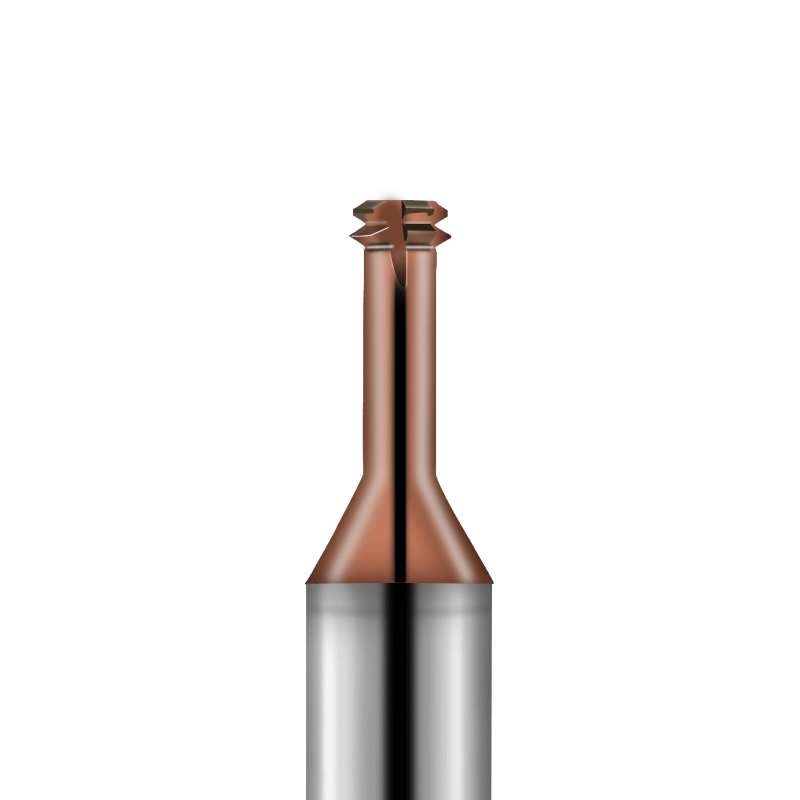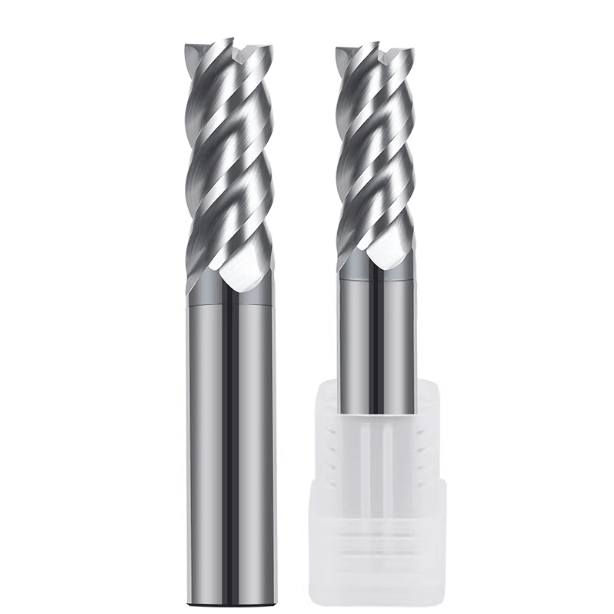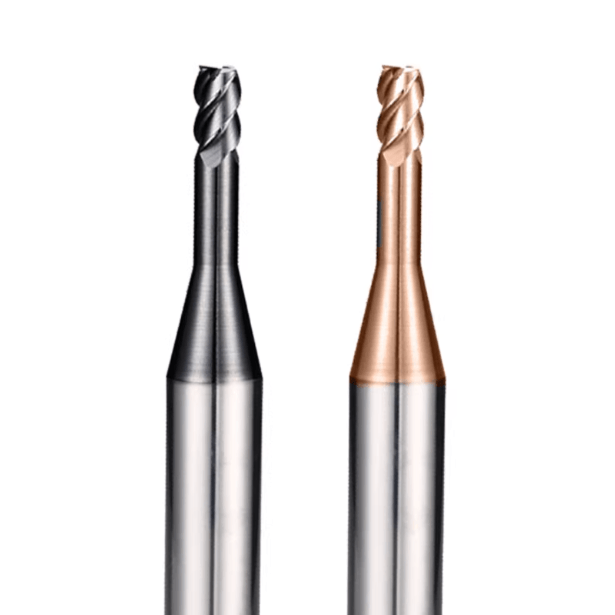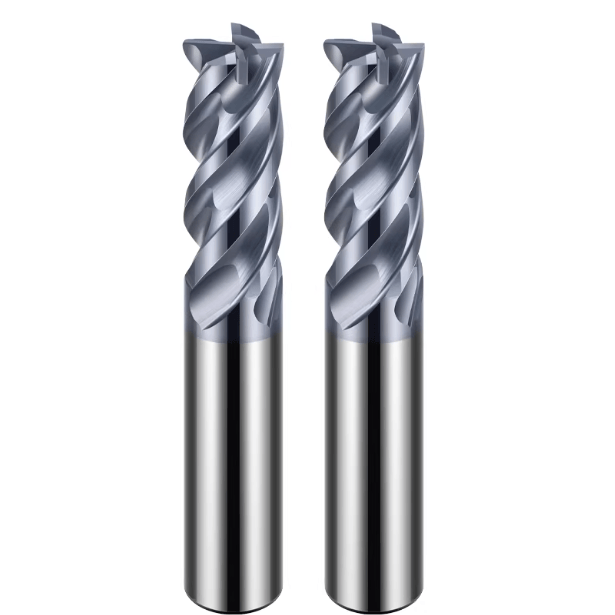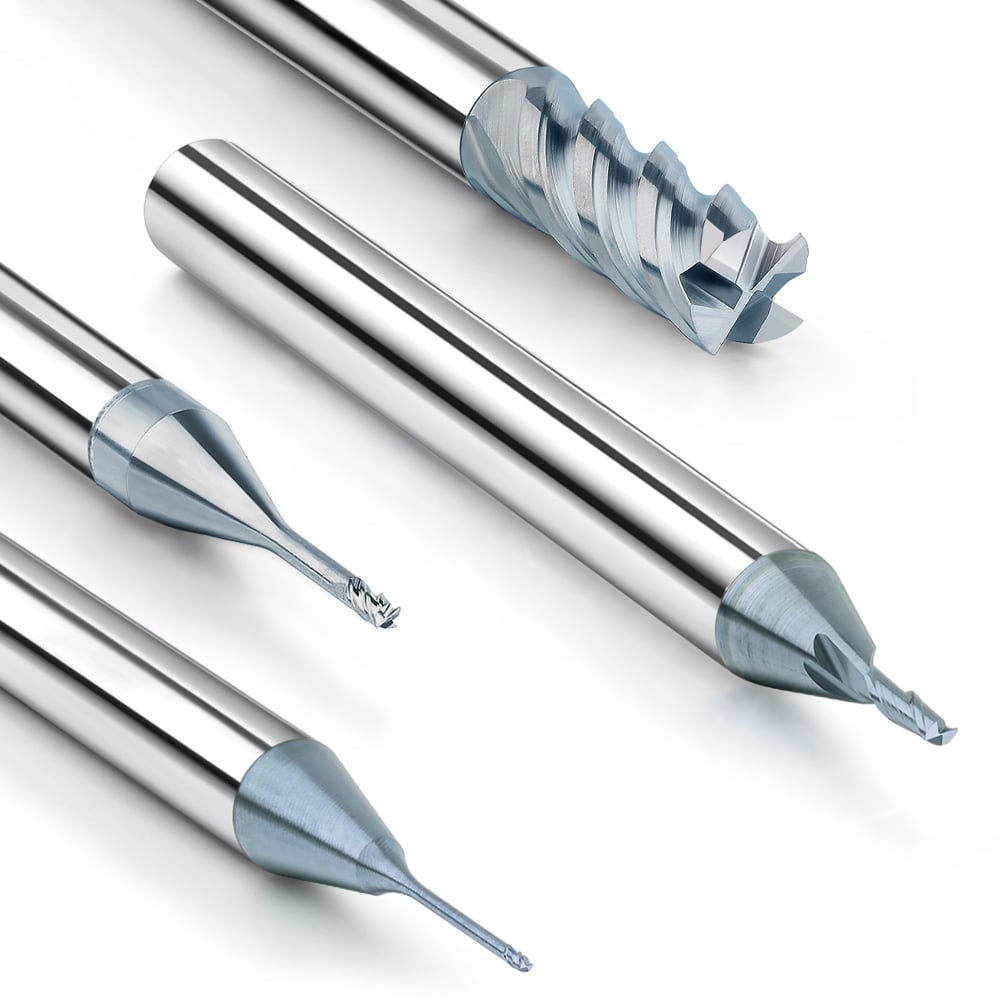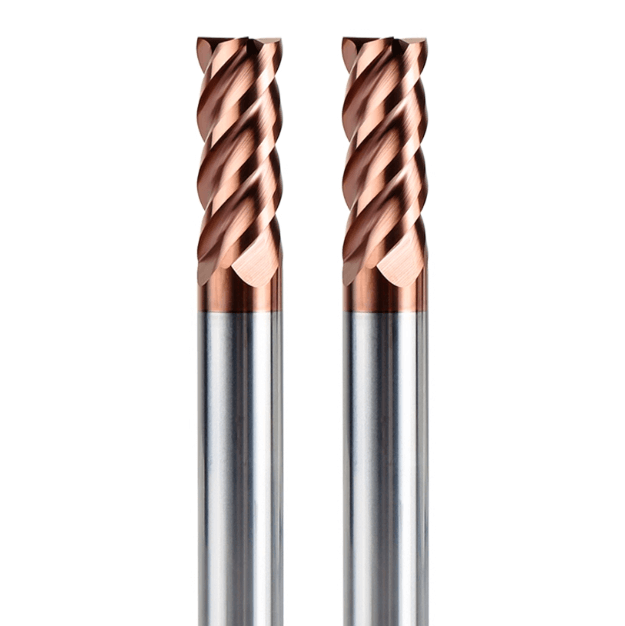
In the field of high-hardness material machining, selecting the right hard milling end mill is essential for both efficiency and precision. The market offers a wide variety of products, with different materials, coatings, and cutting edge geometries performing differently in practical applications. For factories or manufacturers working with high-hardness steel, high-quality end mills for hard steel can improve cutting efficiency, extend tool life, and reduce production costs.
When dealing with HRC65 high hard end mills, high hardness and wear resistance are critical indicators of tool performance. Using carbide end mills for hardened steel can also enhance machining stability and reduce vibration and tool wear, while ensuring a smooth surface finish.
Finding reliable hard milling end mill suppliers is not only about tool quality—it also directly affects production continuity and cost efficiency. From globally recognized brands to high-quality domestic suppliers, each company offers advantages in product range, technical support, and service. By comparing product specifications, cutting performance, and after-sales support, companies can select the most suitable hard milling end mill solutions for their needs.
Comparison of Selected Hard Milling End Mill Suppliers
Choosing the right hard milling end mill supplier is a key factor in achieving consistent machining efficiency and high-quality output. Numerous brands are available, from international leaders to domestic manufacturers, each offering different capabilities, product coverage, and service levels. Companies must consider not only the tool’s cutting performance but also the supplier’s overall support, including product variety, material adaptability, logistics, and technical assistance. A systematic comparison helps identify suppliers that can deliver efficient and stable machining of high-hardness steel.
Overview of Global Hard Milling End Mill Suppliers
Several well-known global manufacturers have extensive experience and leading technology in hard milling end mills. Their products cover a range of hardness levels and cutting edge geometries, meeting machining needs from medium-hard to high-hardness steel. These suppliers typically maintain rigorous quality management and R&D systems, ensuring stable wear resistance and cutting efficiency. Some even offer customized solutions based on workpiece materials and processing requirements, further enhancing production flexibility and accuracy.
Supplier Product Line Analysis
Supplier product line coverage is a crucial factor when selecting tools. Brands differ in specifications, edge geometry, and coating technology for end mills for hard steel and carbide end mills for hardened steel. Some focus on high-wear, high-hardness cutters suitable for HRC65 high hard end mills, while others offer multi-flute, high-feed designs that boost cutting efficiency and surface finish. Evaluating material adaptability, flute configuration, coating type, and cutting performance helps companies choose the best combination of tools, reducing downtime and tool replacement frequency.
Procurement Cost and Service Comparison
Tool procurement involves more than price—it also includes logistics, delivery times, technical support, and after-sales service. Tool pricing often reflects material, edge type, coating, and wear resistance. High-quality suppliers provide guidance to optimize cutting parameters and extend tool life. Efficient logistics and inventory capacity ensure uninterrupted production. By assessing cost, service, and technical support, companies can strike the right balance between quality and economy, ensuring successful high-hardness steel machining.
Application of HRC65 High-Hardness Milling Cutters in Machining
Machining high-hardness materials places extreme demands on tool wear resistance and stability. For HRC65 steel, cutting efficiency must be balanced with maintaining dimensional accuracy and surface quality under high load. Using high-performance milling cutters can significantly reduce tool vibration and improve processing stability and repeatability.
HRC65 high-hardness end mills are widely used in mold making, precision parts production, and aerospace high-hardness steel components. By selecting the right tool type and optimizing machining parameters, companies can efficiently machine high-hardness materials while extending tool life.
Performance Characteristics of HRC65 High-Hardness End Mills
HRC65 high-hardness end mills are typically made from premium carbide and feature wear-resistant coatings, offering excellent thermal stability. Their cutting edge design enhances cutting stability and chip evacuation, maintaining low cutting forces and smooth surface finishes during machining. Compared to standard carbide end mills, they provide superior durability and accuracy, making them suitable for both small and large batch production. Selecting the appropriate diameter, flute count, and coating type ensures optimal performance across different machining conditions.
Common Machining Case Studies
In practice, HRC65 high-hardness end mills are used for precision molds, gears, shafts, and aerospace high-hardness steel parts. For instance, machining high-hardness mold steel often involves low feed rates, high spindle speeds, and shallow cuts to minimize vibration and force fluctuations. Choosing the right end mills for hard steel and planning multi-axis toolpaths improves efficiency and surface finish. When machining titanium alloys or high-hardness steel, carbide end mills for hardened steel provide stable cutting performance, reduce tool changes, and increase overall productivity.
Tool Life Optimization Strategies
Extending the life of HRC65 end mills depends on both tool quality and optimized machining strategies. Controlling cutting speed, feed rate, and depth, combined with proper tool angles and cutting methods, reduces wear and thermal stress. Layered or helical cutting paths distribute the load evenly, minimizing tool tip wear.
Regularly inspecting tools, adjusting parameters as needed, and using high-performance coolants or dry machining techniques maximize tool life while maintaining part quality.
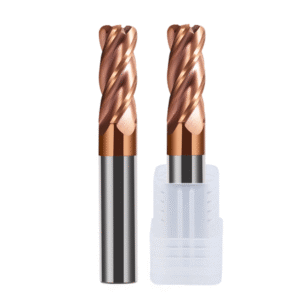
Selection Guide for Hard Steel Milling Tools
Tool selection has a direct impact on cutting efficiency, surface quality, and tool longevity. Milling cutters with different edge geometries, coatings, and flute counts perform differently on HRC65 high-hard end mills. Consider machining depth, material hardness, and machine rigidity when choosing the most suitable tool.
Suppliers offer a wide range of hard milling end mills, each tailored for different materials and conditions. Making the right choice improves productivity and reduces the frequency of tool replacement.
Edge Type Selection for End Mills for Hard Steel
Edge design is critical for effective hard steel milling. Flat-bottomed edges are ideal for precise flat surfaces, ball-nose edges for complex curves and mold components, and helical edges improve chip evacuation and reduce cutting forces. Selecting the appropriate edge type helps balance cutting forces, minimize vibration, and extend tool life.
Coating Comparison for Carbide End Mills for Hardened Steel
Coatings significantly affect wear resistance, cutting efficiency, and surface finish. TiAlN coatings provide strong oxidation resistance for continuous machining, while AlTiN coatings offer high hardness, extending tool life and improving surface quality. Choosing the right coating reduces tool wear and ensures efficient machining.
Selection Techniques for Multi-Flute and Single-Flute Hard Milling Cutters
Flute count affects cutting force distribution and chip evacuation. Multi-flute end mills are suitable for shallow cuts and high-feed machining, improving efficiency and surface finish. Single-flute end mills are better for deep grooves, heavy cuts, or complex part shapes, reducing cutting load and vibration.
By strategically combining end mills for hard steel with carbide end mills for hardened steel, companies can optimize tool utilization and maintain machining accuracy.

Practical Experience in Hard Milling
Machining high-hardness steel requires practical experience to achieve optimal efficiency, tool life, and workpiece quality. Even with high-performance hard milling end mills, improper cutting parameters, tool paths, or maintenance can lead to chatter, premature tool wear, and poor surface finish. Accumulating hands-on experience and summarizing techniques for improving accuracy, protecting tools, and optimizing surface quality helps extend the lifespan of HRC65 high hard end mills and carbide end mills for hardened steel while maintaining machining efficiency, providing reliable support for stable production.
Techniques for Improving Machining Accuracy
Machining accuracy is influenced by factors such as cutting force fluctuations, machine rigidity, and tool stability. When using end mills for hard steel, properly controlling cutting speed, feed rate, and depth of cut can effectively reduce chatter and burr formation. Moreover, adopting optimized tool path strategies—such as layered or helical cutting—not only balances the cutting load but also minimizes errors and improves surface flatness. For precision part machining, selecting the appropriate cutter geometry and using a stable workpiece fixture are key measures to ensure dimensional and geometric accuracy.
Tool Wear and Breakage Prevention Measures
Tool wear and breakage are common challenges in hard steel milling, directly impacting production efficiency and cost. To extend tool life, regularly inspect the cutting edges of HRC65 high hard end mills and carbide end mills for hardened steel, adjusting cutting parameters as needed. Choosing the right cutting fluid or dry machining method can also reduce thermal stress and tool wear. Practical experience shows that staged cutting, minimizing tool tip impacts, and timely chip removal combined with proper cooling system maintenance are effective ways to protect tools and reduce the risk of breakage, ensuring stable continuous machining.
Surface Quality Optimization Strategies
Surface quality directly affects downstream processes and product performance in high-hardness steel machining. Using high-performance hard milling end mills and end mills for hard steel, along with optimized cutting parameters and tool paths, results in smoother, more uniform surfaces. Coating type and cutting edge selection significantly influence surface integrity. For example, applying a coating suitable for carbide end mills for hardened steel can reduce tool wear, minimize burrs, and improve surface finish. In mold and precision part machining, stable processing and surface quality optimization complement each other, forming the foundation for efficient machining and high-precision finished products.

Recommended High-Performance Hard Milling End Mill Suppliers
Selecting a cost-effective and reliable supplier is crucial for production efficiency and cost control in high-hardness steel machining. As discussed in previous sections on cutter performance, practical machining experience, and tool selection, high-quality tools must provide wear resistance, hardness, and stable machining. Supplier capabilities—including service quality, product range, and pricing—should also be considered. By carefully evaluating domestic and international suppliers’ product lines, technical support, and delivery performance, companies can find partners capable of meeting HRC65 high hard end mills and carbide end mills for hardened steel requirements while balancing cost-effectiveness, ensuring stable daily production.
Selected High-Quality Domestic Hard Milling Cutter Supplier: SAMHO Tool
In the domestic market, suppliers like SAMHO Tool are often preferred due to their extensive product range and local service advantages. Their hard milling end mills products cover various hardness levels and cutting edge geometries, meeting the needs of mold and precision part machining. Domestic supply chain advantages allow faster logistics and timely after-sales support, ensuring reliable service for small batches and rapid delivery. Prices are generally more competitive than international brands, making them ideal for companies seeking cost-effective and flexible solutions.
Selected Internationally Renowned Hard Milling End Mill Suppliers
For high-hardness steel machining and applications requiring HRC65 milling cutters, international brands offer end mills for hard steel and carbide end mills for hardened steel with excellent wear resistance, precision, and durability. Advanced materials, coating technologies, and cutting edge designs enable these tools to handle high-demand production or special workpieces. Although procurement costs may be higher, these tools can reduce replacement frequency and improve overall process stability for long-term operations.
Comprehensive Procurement Recommendations
Based on tool selection, practical experience, and supplier analysis, companies should consider the following when purchasing carbide milling cutters:
-
Choose the appropriate cutting edge geometry and coating based on workpiece material hardness, shape, and surface requirements.
-
Evaluate supplier capabilities, including product line coverage, technical support, and logistics efficiency.
-
Balance costs and performance between domestic and international suppliers according to budget and production scale.
By systematically selecting tools and comparing suppliers, companies can ensure machining efficiency, tool longevity, and reliable high-hardness steel processing while controlling costs.