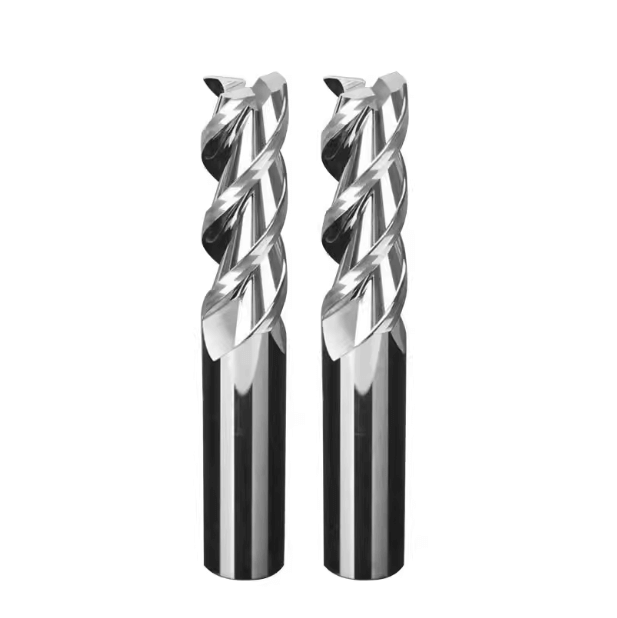
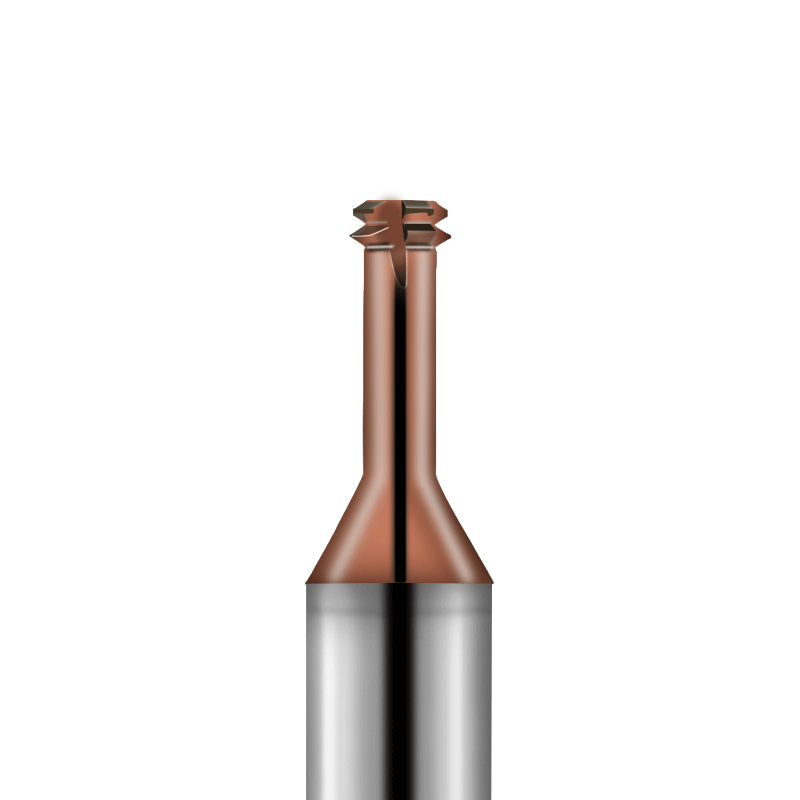
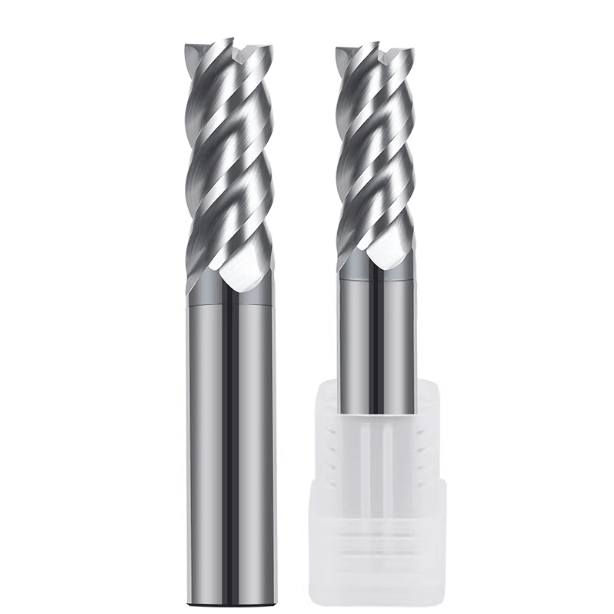
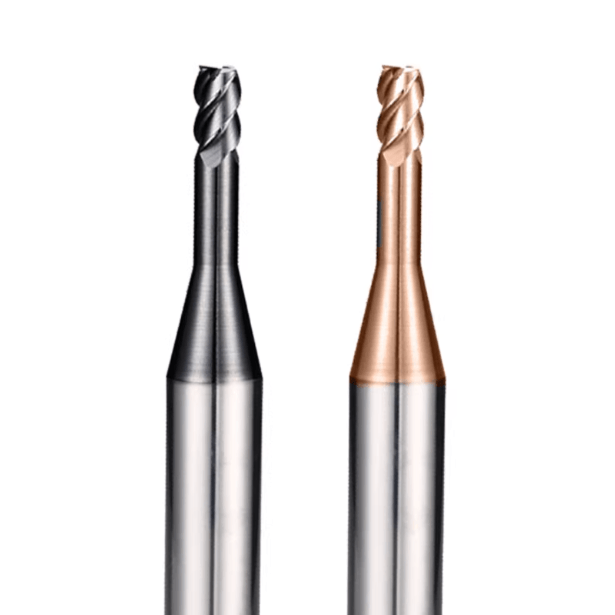
When chatting with senior foremen at top-tier mold-making facilities across North America and Europe, the question isn’t usually, “How much do your tools cost?” Instead, they ask: “Can your tools give me the peace of mind to go home and sleep soundly while the shop runs lights-out on a Sunday?”
We recently worked with a German client specializing in precision automotive molds. They were struggling with a batch of die-casting components hardened to HRC62. Their previous supplier’s tools were unpredictable. The cutting edges would exhibit micro-chipping after less than two hours. For a shop manager, “unpredictability” is the ultimate nightmare. You can’t establish a reliable tool-change schedule. You are forced to choose between wasting tool life or risking a workpiece worth tens of thousands of dollars.
Our on-site assessment revealed that the problem wasn’t the operator’s skill. The issue was that their carbide end mill manufacturer had provided standard parameters without considering the delicate physics of the job. They ignored the balance between substrate toughness and coating oxidation temperature required for high-hardness steel machining. Many manufacturers can grind a tool that looks impressive in a catalog, but they fail to provide systematic solutions for specific, high-stakes conditions.
Professionalism in an end mill manufacturer goes beyond geometric angles. Whether you are dealing with HRC50 or HRC65 requirements, true expertise comes from a nuanced understanding of tool rigidity, heat dissipation, and force distribution along the actual cutting path.
After 15 years in this industry, we know that being a reliable supplier of end mills for steel requires more than hardware. It requires mastering the invisible technical parameters that ensure absolute consistency. So, as a fellow professional, have you ever had to scrap a weekend production schedule because a tool “gave up” prematurely?
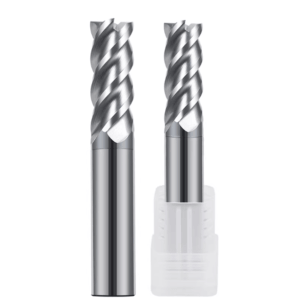
Why a Top End Mill Manufacturer Must Understand Your Material Hardness (HRC50 to HRC65)
In our daily technical exchanges, we often see a common misconception: many non-technical purchasing managers assume that higher tool hardness is always better. They want the most “extreme” cutter for every steel component. However, from an engineering perspective, this is often counterproductive. An exceptional manufacturer guides the client toward the “perfect fit” based on the material’s heat-treated state and matrix structure.
Hardness and toughness are two ends of a scale. Blindly chasing hardness leads to brittle chipping when the tool hits non-uniform materials. Conversely, insufficient hardness causes rapid edge wear. We demonstrate this trade-off through comparative testing. If a manufacturer pushes their most expensive model without asking about your heat treatment process, they don’t understand real-world machining dynamics. We use actual Rockwell C scale readings to fine-tune cobalt content and grain size, matching the most robust solution to your specific machine’s spindle rigidity and coolant pressure.
Optimizing Productivity with Specialized HRC50 End Mills for General Steel
When machining common grades like 45# steel or 40Cr, we find the “sweet spot” between cost and efficiency. Many shops use high-hardness mold steel tools for general-purpose parts to simplify inventory. Ironically, their cost-per-part usually rises. HRC50 end mills have specific physical advantages here. Their substrate offers superior impact toughness, allowing for more aggressive feed-per-tooth rates. They don’t succumb to the stress cracks that “harder” tools suffer during interrupted cutting.
We once helped an agricultural machinery client optimize their workflow. We replaced their expensive “fully hardened” tools with custom-tailored end mills for steel optimized for under HRC50. By adjusting the helix angle to 35–38 degrees, we cleared chip evacuation blockages and gave operators the confidence to boost cutting speeds by 20%. This wasn’t just about saving money on the tool; it was about making the process controllable and eliminating unplanned downtime.
The Rigidity Requirements of HRC55 End Mills in Mold & Die Applications
In the roughing phase of mold manufacturing—especially for pre-hardened steels like P20 or 718H (HRC50–55)—the enemy shifts from wear to vibration, or “chatter.” When we design HRC55 end mills, we focus heavily on the core diameter. A core that is too small will flex like a spring during side milling, ruining the part’s perpendicularity and surface finish. If the core is too large, the flute space is restricted, and chips can’t escape.
For a major injection mold manufacturer, we mitigated resonance issues using a variable pitch (unequal spacing) design. In deep-depth side milling, we often advise clients to trade a bit of chip space for superior rigidity. This real-world adjustment keeps the tool-tip trajectory stable, even during high-speed milling. For an engineer, these subtle nuances in force distribution are far more important than a catalog rating.
Precision and Heat Resistance: Mastering HRC65 End Mills for Hardened Steel
When hardness exceeds HRC60—such as quenched SKD11—the game becomes about thermodynamics. At these levels, the instantaneous heat at the cutting edge can soften most coatings. As experienced carbide end mill manufacturers, we prioritize the coating’s oxidation temperature. If a supplier talks only about hardness but ignores coating adhesion at 800°C or 1000°C, they haven’t handled true ultra-hard machining.
We often see “tool burn-out” happen in seconds because a coating failed, leaving the substrate exposed. When we develop HRC65 end mills, we use specialized nanocomposite coatings like nACo or TiAlN-based variants, combined with ultra-fine edge reinforcement. We often tell our peers: when machining ultra-hard steel, dry cutting with a high-pressure cold air blast is usually better than wet cutting. It prevents thermal shock. Mastering these details is what determines the precision of those final, critical microns.

The Technical Benchmarks of High-Quality Carbide End Mill Manufacturers
In the world of machining, everyone knows a good tool saves trouble. Yet, few truly dissect why one brand allows you to sleep soundly during lights-out shifts while another keeps you dreading the alarm light. As an engineer with over a decade on the shop floor, I believe the core competence of a top-tier carbide end mill manufacturer isn’t just their expensive grinding machines. It is their reverence for “tolerance boundaries.”
We don’t just sell cemented carbide; we sell a promise of stability. When your flute diameter and shank tolerance stay within a micron-level range, you unlock the full potential of your 5-axis simultaneous machining.
When we consult for aerospace clients in Europe and North America, our discussions rarely center on catalog values. We talk about static vs dynamic rigidity. If a manufacturer only measures tolerances in a climate-controlled lab but doesn’t understand stress release under rotational loads, their tools will fail in the real world. We obsess over geometric symmetry. This ensures that the moment an edge engages the workpiece, the load distribution is uniform. This detail determines if you finish a 5,000-part batch or stop midway to troubleshoot a precision drift.
Sourcing Premium Substrate: The Foundation of Reliable Carbide End Mills
If you think all tungsten carbide is the same, you haven’t seen the damage an inferior substrate can do. Our secret lies in the grain size, visible only under a microscope. Clients often ask why two tools with identical Tungsten (WC) and Cobalt (Co) ratios vary so much in price. In precision machining, a 0.2-micron difference in grain size can drastically change fracture resistance.
We’ve seen countless cases where unstable substrates caused catastrophic failure in titanium or stainless steel. The tool might look fine outwardly, but internal microscopic cracks lead to a “sudden death” edge fracture without warning. We insist on sub-micron or nano-grain substrates. Finer grains provide more surface area for the cobalt binder, enhancing impact resistance. When customizing carbide end mills for high-stability jobs, we minimize porosity. This isn’t for looks; it ensures the edge stays sharp after hours of cutting instead of chipping due to internal defects.
Consistency Across Batches: How We Minimize Tool Offset Adjustments
Few things irk a CNC operator more than “change a tool, measure the offset, repeat.” If a batch of 1,000 tools requires a recalibration for every swap, it’s a massive loss of efficiency and a risk to process stability. Our mission is to eliminate this uncertainty.
We impose uncompromising standards on run-out (radial eccentricity). On our lines, every tool is controlled within a 3-micron tolerance. If run-out exceeds 5 microns, tool life drops exponentially, and your hole diameters or slot widths spiral out of control. We use a closed-loop, real-time feedback system during grinding to ensure the geometric centerline is in perfect alignment with the machine spindle. This consistency allows our global clients to run truly unattended, automated lines. When your engineers stop fine-tuning for 10-micron deviations, your throughput naturally climbs.
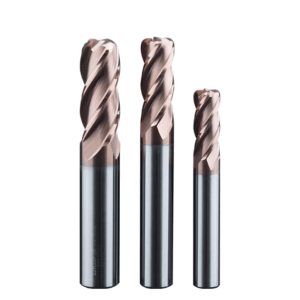
Beyond the Catalog: Selecting the Right End Mills for Complex Geometries
The worst thing a manufacturer can do is blindly suggest a solution from a generic catalog for a complex, thin-walled part. Standard tools often fail to overcome the laws of physics in deep, narrow cavities. Relying on “off-the-shelf” extended-reach tools usually ends in two ways: the part falls out of tolerance, or the spindle screams under torque load.
True technical support analyzes the actual cutting path—specifically how radial engagement surges around corners. While working with a European aerospace supplier, we solved a bottleneck involving resonances that standard tools couldn’t fix. As a specialized end mill manufacturer, we balance overhang length with anti-chatter performance. Sometimes, a minor adjustment to the relief angle is all it takes to turn a “struggling grind” into a “seamless flow.”
When to Swap Standard Tools for High-Performance End Mills
I remember a case involving a large die-casting mold. The client used standard four-flute end mills, but the moment they hit the deep cavity, a high-pitched whistle echoed through the shop, followed by ugly chatter marks. Reducing the feed rate only wasted time.
We decisively recommended switching to tools with a variable helix and variable pitch design. This geometry disrupts the periodic cutting frequency and cancels out resonant energy. The client eliminated the chatter and boosted spindle speeds by 30%. Don’t hesitate to invest where it matters. A “bargain” tool that requires manual surface finishing or causes high scrap rates is the ultimate cost trap. In deep-cavity work, the stability of high-performance designs far outweighs the price difference.
Tailoring Flute Geometry: Why a Versatile Manufacturer Offers More Than Just “Standard”
The design logic for chip evacuation in aluminum is the polar opposite of hardened steel. We often see workshops try to cut aluminum with steel-grade tools (which have small flutes). The result is “chip packing” and a broken tool within minutes.
As a versatile carbide end mill manufacturer, we tune the flute geometry to your specific depth and cooling conditions. For viscous materials, we polish the flute channels to a mirror finish to lower the coefficient of friction. For high-feed end mills for steel, we narrow the flutes to increase core strength and prevent deflection under heavy loads. There is no “universal” flute. We evaluate entry pressure using your machine’s torque curve. If a supplier just hands you a spec sheet without asking about chip entanglement, you aren’t getting true cost optimization. Our goal is to ensure every tool delivers its maximum life under your specific machine load.

Engineering Solutions: Delivering the Perfect End Mill for Steel Machining
In the B2B sector, steel machining accounts for over 70% of daily workshop operations. As a veteran in this field, I know that this fundamental task is the ultimate test for any end mill manufacturer. When you are processing tens of thousands of parts, a tiny design flaw is magnified exponentially. Real engineering solutions go beyond changing tool geometry; they happen in those critical microns where the edge meets the material. For us, a flawless tool means balancing edge sharpness with structural support.
We often see Western shops using “universal” tools to simplify inventory. However, our field logic is different: handling the toughness of low-carbon steel is not the same as managing the tensile strength of alloy steel. When we develop end mills for steel, we focus on resistance to cyclic loading. Our process involves multiple precision grinding stages to eliminate surface stress points. This obsession with detail ensures consistent accuracy during long, heavy-duty shifts, preventing sudden failures caused by thermal fatigue.
Solving Chipping Issues in Stainless Steel and Alloy Steel Milling
When the topic is 304 or 316 stainless steel, most machinists think of “sticking” and “chipping.” In many projects, we see clients choose tools with a sharp, zero-radius edge to get a cleaner cut. Unfortunately, these fragile edges shatter instantly when they hit the work-hardened layer of the steel. Our secret weapon is honing (edge strengthening). By using controlled brushing or sandblasting, we create a microscopic radius on the edge. This significantly boosts strength, preventing the impact-induced chipping that happens the moment the tool engages the workpiece.
For viscous materials, we also use specialized surface treatments to lower the coefficient of friction. We once helped a medical device manufacturer solve persistent chipping on stainless steel bases by combining edge passivation with a high-performance coating. My advice to you: sometimes making a tool “slightly duller” through honing is exactly what allows it to cut longer. This trade-off is a practical truth we’ve learned from thousands of scrapped workpieces—it matters far more than the hardness numbers on a datasheet.
Feed and Speed Optimization Support from Your End Mill Manufacturer
A responsible supplier doesn’t just ship tools and walk away. In our culture, the tool is only half the solution; the other half is the cutting strategy. Many operators use a “one-size-fits-all” parameter set. But in reality, changing your Ap or Ae fundamentally changes the force on the tool. We provide a comprehensive strategy based on real-world test data, showing you how to adjust cutting speeds to dissipate heat as your radial engagement changes.
We helped a German manufacturer optimize their roughing process by introducing chip thinning compensation. By using a shallower Ae and significantly increasing the feed rate, we reduced the force per unit of time and—unexpectedly—extended the tool life. Instead of blindly cranking up the spindle speed, focus on optimizing your toolpath for heat dissipation. Every parameter we recommend is backed by wear-curve data from thousands of experiments. This ensures your machines run at peak stability, which is the true value of a partner end mill manufacturer.
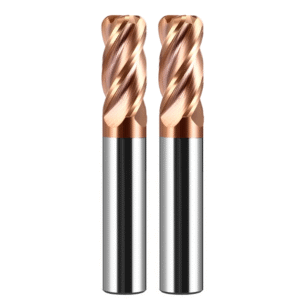
Why Our Support Engineers Are the Real Assets of an End Mill Manufacturer
After years in the North American and European markets, we’ve found that the best B2B partnerships aren’t built on unit price. They are built on who picks up the phone when a machine goes down. In this industry, downtime is a direct financial loss. Our greatest asset isn’t our inventory; it’s our engineers who can talk shop with your process specialists. Whether we are discussing HRC65 end mills or troubleshooting BUE, this “engineer-to-engineer” communication cuts through marketing jargon and solves technical pain points.
Our support goes beyond advice. We’ve handled emergency scenarios—from mysterious surface chatter on aerospace components to erratic tool performance—by flying to the facility or using remote video diagnostics. We analyze everything from spindle runout to fixture rigidity. This on-site capability is an “insurance policy” for your production schedule. We believe that by solving your toughest steel machining challenges, we evolve from a vendor into an indispensable partner.
Benchmarking Against Reality: Optimizing Your Machining Strategy
Successful technology depends on context. I encourage you to perform a “post-mortem” on your current workshop operations:
-
If you are running large batches of medium-carbon steel but your per-part costs are too high, re-evaluate your end mills for steel. You might be using a tool that is too brittle. Look for the “sweet spot” between toughness and speed.
-
If you are struggling with chatter marks in deep-cavity molds, look at tools with a variable helix design. Disrupting those harmonics can unlock the hidden feed rate potential of your machine.
-
If you see coating delamination on materials rated HRC 60 or higher, check your coating’s oxidation temperature. Your cooling strategy might actually be inducing thermal shock.
No manual covers every contingency. If you are struggling with a complex blueprint or a difficult material, reach out. Whether it’s weighing trade-offs in flute geometries or customizing a design, a fresh engineering perspective could save you from a weekend of all-nighters.