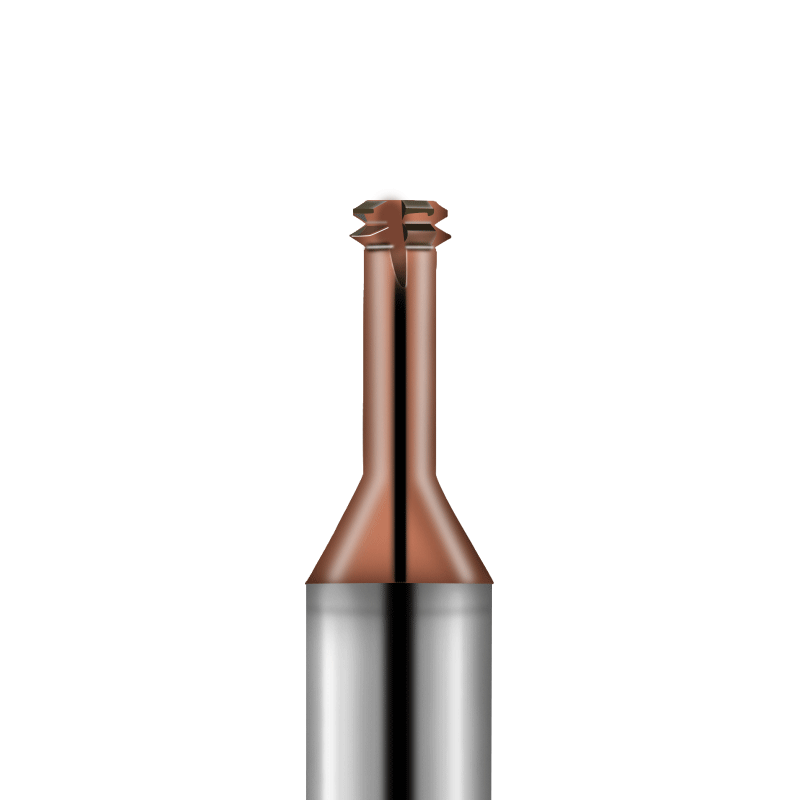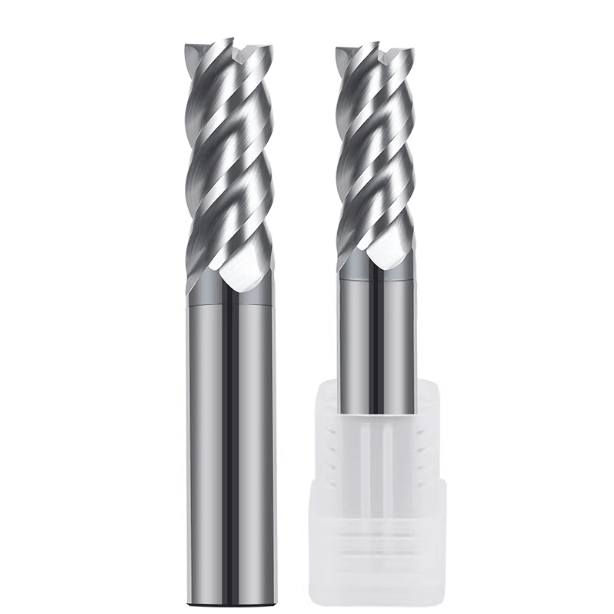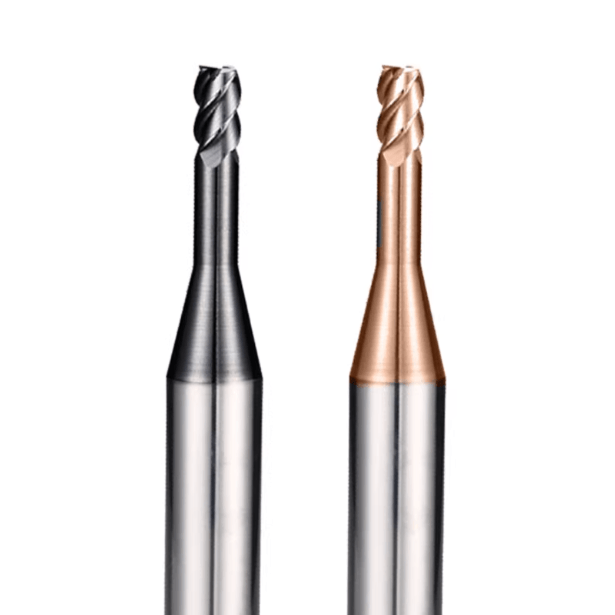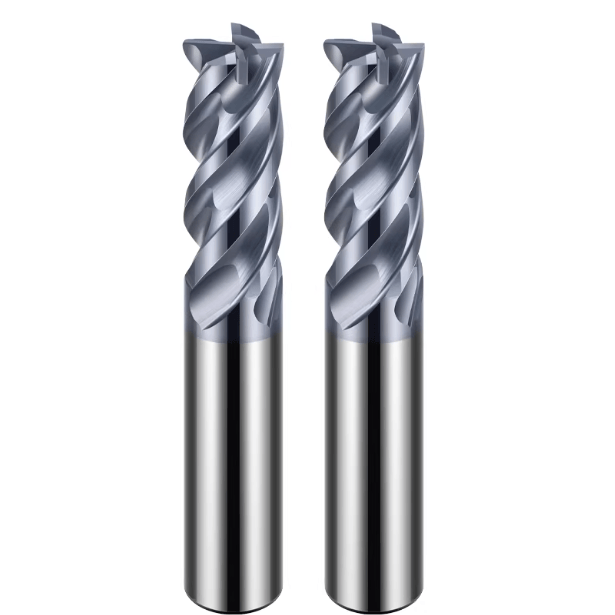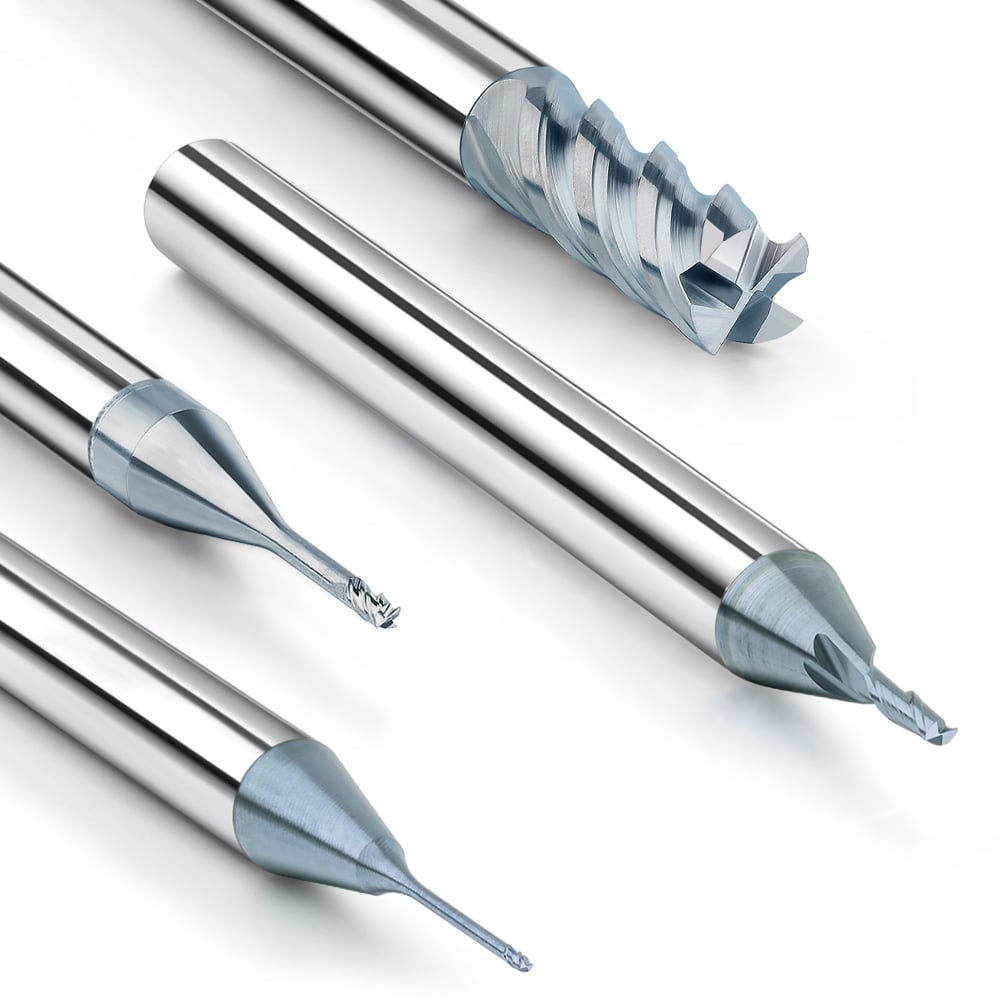
In high-precision mold and die manufacturing, the barrel end mill is becoming a key tool for improving surface quality and machining efficiency. Compared with a traditional ball nose end mill, a barrel cutter achieves a larger cutting contact area thanks to its unique curvature design, significantly reducing the number of toolpaths and machining time for 3D surface finishing. In applications such as mold cavities, complex freeform surfaces, automotive exterior parts, and die-casting molds, barrel end mills deliver more stable cutting performance while maintaining high surface finish.
Traditional ball nose cutters perform well in small-radius transition regions, but their efficiency drops when dealing with large-curvature surfaces. Barrel tools, with their large-radius cutting edge geometry, can use larger step-overs without compromising surface finish, thereby shortening the overall machining cycle. As a result, the topic of “barrel end mill vs ball nose end mill” has gained significant industry attention, accelerating the adoption of 3D surface finishing barrel cutter technology in mold manufacturing.
Different mold geometries and material properties require different tool curvature radii, cutting angles, and tool tip transitions. In these cases, custom barrel end mills can make a major difference. By designing tool geometry for specific mold geometry and machining requirements, you can better control surface residue height, extend tool life, and maximize process stability.
The introduction of barrel end mills does not mean replacing ball nose cutters entirely. Rather, barrel cutters are becoming a valuable complementary tool for efficient mold finishing. When machining tasks involve large curved surfaces, require high surface finish, or call for shortened cycle times, selecting the right barrel cutter can optimize process paths and strike a desirable balance between cost and quality.
What Is a Barrel End Mill?
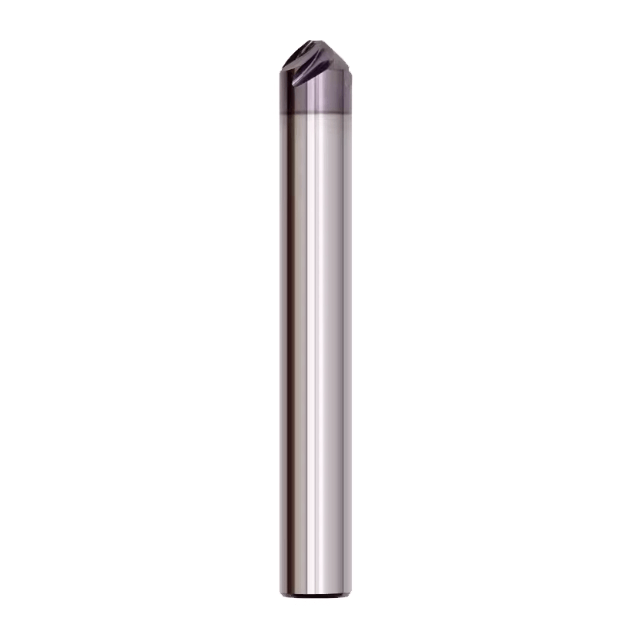
A barrel end mill is an advanced cutting tool designed for high-precision curved-surface machining. Its cutting edge follows a large-curvature arc—resembling the shape of a barrel. Unlike conventional flat-end mills or ball nose cutters, barrel end mills use a much larger effective cutting radius, which creates a wider contact arc during cutting. This geometry allows larger step-overs and higher feed rates while maintaining the same surface roughness, dramatically improving curved-surface finishing efficiency.
In sectors such as mold, die, and blade manufacturing, barrel cutters are increasingly replacing traditional tools, becoming a core component for efficient 3D surface finishing. With the capability to reduce toolpaths and improve surface finish on large-curvature surfaces, barrel end mills are widely used in automotive molds, aerospace parts, precision molds, and high-gloss exterior components.
Basic Structure and Geometric Features of Barrel End Mills
The geometry of a barrel end mill centres on the combination of its curvature radius (R) and contact angle design. Compared with ball nose cutters, barrel tools have elliptical or conical cross-sections and a curvature radius that may be tens of times larger than the tool diameter—resulting in a wider cutting contact and shorter paths.
-
Radius of Curvature (R): For a barrel cutter, the primary curvature radius typically ranges from tens to hundreds of millimetres, expanding the cutting contact area.
-
Cutting Edge Shape: The tool edge features a broad arc transition and may come in cylindrical, conical (conical barrel), or composite curved surface types.
-
Contact Angle Design: The tool axis tilt angle controls the contact point between tool and workpiece, enabling stable cutting pressure and high surface finish.
This design significantly reduces the risk of tool-workpiece interference during machining and enhances cutting stability. Compared to ball nose end mills, barrel cutters have a larger effective contact area and more uniform tool wear distribution, thereby extending tool life and lowering overall machining cost.
Role of Barrel Cutters in 3D Surface Finishing
In demanding 3D surface finishing applications, the “3D surface finishing barrel cutter” shows significant advantages. Thanks to its large-curvature design, the barrel tool can deliver the same surface finish with fewer toolpaths, which dramatically reduces machining time. This is particularly beneficial for mold cavity surfaces, aero-engine blades, turbine blades, and complex freeform surfaces.
In multi-axis machining—especially 5-axis setups—barrel cutters maintain constant cutting contact by adjusting tool-axis orientation. This capability reduces residual surface height and avoids ripple effects caused by changes in tool tilt angle.
Modern CAM software now supports toolpath strategies specifically for barrel cutters, like “barrel end mill toolpath optimization” and “3D surface finishing with conical barrel cutter”. These enable engineers to maximize production efficiency without sacrificing accuracy. In summary, barrel end mills—with their unique geometry and efficient cutting characteristics—are gradually becoming the core tool type for mold and complex-surface finishing.
Barrel End Mill vs Ball Nose End Mill: Performance and Application Comparison
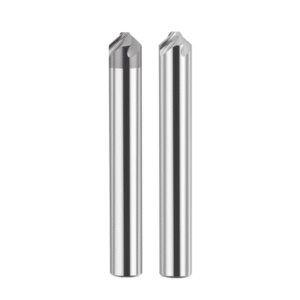
In mold and complex-surface finishing, barrel end mills and ball nose end mills are the two most commonly compared tool types. Although both are used for 3D surface machining, they differ significantly in cutting contact area, machining efficiency, surface quality, and tool life. With wider adoption of 3D surface finishing barrel cutter technology, many manufacturers are gradually replacing some ball nose operations with barrel cutters for high-gloss molds, blades, and large freeform surfaces.
Difference in Cutting Efficiency and Surface Quality
The geometric advantage of barrel cutters lies in the wider cutting contact arc achieved via their large-radius cutting edge. For the same surface-roughness target, barrel tools can use larger step-overs, thereby significantly reducing the number of toolpaths and machining stroke. For example, in mould cavity finishing or automotive exterior parts, using a barrel end mill can reduce the toolpath count by about 30% to 70%, while maintaining or even exceeding the surface quality of a ball nose cutter.
This improvement comes from a stable contact angle and minimal tool deflection in barrel cutters, which effectively lowers the height of tool marks and reduces subsequent polishing time. Compared to traditional ball nose cutters, barrel end mills reach high-gloss surface finishes (Ra < 0.2 μm) more efficiently in 3D surface finishing, making them particularly suitable for molds demanding ultra-fine surfaces.
Comparison of Machining Time and Tool Life
In actual production, machining time is a key tool-performance indicator. Due to its larger effective radius, a barrel end mill covers a wider area per pass, enabling higher feed rates and fewer cutting layers for the same area. Consequently, under the same finish requirements, a barrel end mill can reduce overall machining time by over 40%.
Furthermore, barrel cutters have more uniform contact-area distribution, which results in more stable cutting forces and less susceptibility to localised wear, thus significantly extending tool life. This is particularly evident when machining high-hardness materials or performing long continuous operations. In contrast, ball nose cutters, with concentrated contact points, wear faster at the tip and often need more frequent tool changes or re-grinding.
This performance differential gives barrel end mills a significant economic advantage in high-efficiency mold manufacturing and is a major driver behind the increasing demand for custom barrel end mills.
Differences in Applicable Scenarios
Even though barrel end mills excel in efficiency and surface finish, the ball nose cutter remains indispensable for certain localized machining scenarios. The main difference in application lies in surface radius and area complexity:
-
Ball Nose End Mill: Suitable for regions with small curvature, detailed geometry, or restricted spaces—such as cavity corners, local grooves, or curved-surface transition zones. Its point-contact nature preserves flexibility under slight curvature changes.
-
Barrel End Mill: Ideal for regions with large curvature, free-form surfaces, and high-gloss requirements—such as mold surfaces, automotive exterior parts, and aerospace blades. In five-axis machining, by controlling tool-axis inclination angle, barrel end mills efficiently and stably finish large-area curved surfaces.
For an overall mold-machining strategy, the optimal approach often combines both: use a ball nose cutter for detailing or localized finishing, then switch to a barrel cutter for large-area efficient finishing, thereby balancing speed and precision.

Application Scenarios of Barrel End Mills in Mold and Die Finishing
In mold manufacturing, tool selection directly influences machining efficiency, surface quality, and subsequent polishing cost. Barrel end mills, as high-efficiency finishing tools, bring significant advantages thanks to their unique geometry. They create wider cutting contact zones via large-curvature cutting edges, resulting in fewer toolpaths, smoother cutting, and better surface finishes. Compared to ball nose cutters, barrel cutters offer higher efficiency and cost-effectiveness for 3D surface finishing and complex free-form surfaces.
However, barrel end mills are not suitable for every machining scenario. Correctly identifying when to use a barrel end mill versus a ball nose end mill is critical for efficient mold manufacturing. The following content outlines ideal timing for using barrel end mills in mold finishing by exploring typical scenarios, selection criteria, and practical examples.
Typical Scenarios for Mold Finishing
Barrel end mills are widely used in mold-making processes, especially where surface-finish requirements and machining efficiency are extremely demanding. Common applications include:
-
Plastic Injection Molds: For large exterior part cavities (e.g., automotive interior trim, appliance housings). Barrel cutters significantly reduce toolpath count and achieve near-mirror finishes.
-
Die Casting Molds: When performing 3D finishing on high-hardness mold steels (such as H13, SKD61), barrel tools maintain stable cutting forces and extend tool life.
-
Stamping Dies: On forming or trimming die surfaces, barrel cutters improve surface uniformity and reduce manual finishing time.
-
Automotive Exterior Molds: For regions requiring high-gloss surfaces and high geometric accuracy, barrel cutters effectively control surface ripple and residual tool marks.
These scenarios share large curved surface areas, high surface finish demands, and costly polishing steps. Therefore, barrel end mills for mold finishing have become a mainstream solution for improving overall machining efficiency.
When to Choose a Barrel Cutter Over a Ball Nose Cutter
The optimal time to use a barrel cutter depends on workpiece geometry and surface-finish requirements. Key criteria include:
-
When the workpiece surface radius of curvature is greater than the tool radius. The effective cutting radius of a barrel cutter is typically tens of times larger than that of a ball nose cutter, making it more suitable for large-radius, gently sloped surfaces (e.g., automotive bumper molds or die-casting cavities).
-
When the machining area allows for a larger contact arc. Barrel cutters form a wider contact band during cutting, letting the tool use a larger step-over and reduce toolpaths and machine downtime.
-
When a quick improvement in surface finish is required. In high-gloss molds or mirror finish processes, barrel cutters can achieve excellent surface roughness (Ra < 0.3 µm) with fewer toolpaths, thereby reducing polishing steps.
In other words, when the objective is high-efficiency 3D surface finishing, reduced tool wear, and shorter machining cycles, barrel end mills are the more appropriate choice.
Typical Applications of 3D Surface Finishing Barrel Cutters
In modern five-axis machining environments, barrel cutters are used to their full potential. Examples include:
-
Free-form surfaces in five-axis mold machining: In automotive exterior molds or large plastic molds, barrel cutters maintain contact with the workpiece surface through tool-axis tilt control, achieving uniform cutting load and consistent surface quality. CAM software supporting “3D surface finishing barrel cutter toolpath” can reduce machining time by 40%–60%.
-
Mirror finishing of mold cavities: For mold surfaces requiring extremely high finish quality (e.g., optical lens molds or medical-device molds), using custom barrel end mills for final finishing can achieve mirror finishes (Ra ≈ 0.1 µm), significantly reducing post-polishing.
These examples show that barrel end mills are not just a tool type, but a finishing strategy for improving mold manufacturing efficiency and precision. By selecting the correct tool curvature, contact angle, and tool-path strategy, manufacturers can optimize time and cost while ensuring accuracy.
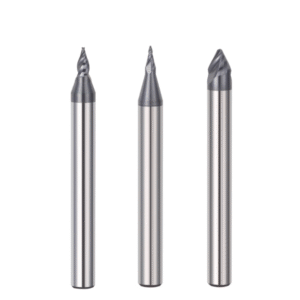
Advantages of Barrel End Mills in 5-Axis Machining
In high-precision manufacturing, 5-axis machining has become the mainstream solution for complex curved surfaces and high-gloss mold forming. With the development of barrel end mills, their integration with 5-axis technology further enhances the efficiency and quality of 3D surface finishing. Compared with traditional ball nose end mills, barrel end mills fully leverage their geometric advantages in multi-axis environments to achieve higher cutting stability, shorter cycle times, and longer tool life.
The core advantage of barrel end mills lies in their large effective cutting radius. On 5-axis machines with adjustable cutter-axis tilt angles, the contact arc between tool and workpiece is wider, allowing the same or better surface roughness with fewer toolpaths. Combined with advanced CAM programming strategies—such as hyperMill barrel finishing and NX conical barrel toolpath—this approach achieves efficient, stable finishing of molds and dies. The combination of 5-axis machining and barrel end mills is becoming standard in high-end mold manufacturing and aerospace component finishing.
Reduced Machining Time and Machine Load
One major advantage of 5-axis machining is that the cutter axis can be dynamically adjusted to maintain the optimal cutting posture. Under this control, a barrel end mill creates a wider cutting contact zone, which dramatically increases toolpath efficiency.
Because the curvature radius of a barrel end mill can be tens of times larger than its diameter, it allows a much greater step-over while maintaining the same surface roughness. This reduces machining time by 30% to 70% compared with ball nose tools.
At the same time, the dispersed contact area produces more stable cutting forces, which decreases spindle load, vibration, and thermal deformation.
This efficient toolpath strategy is particularly effective for large molds, blades, and automotive body panels, significantly improving machine utilization and overall productivity.
Optimized Surface Quality and Tool Wear
Another major advantage of barrel end mills in 5-axis machining is their optimized contact geometry, which improves both surface finish and tool wear distribution. In traditional ball end mill operations, cutting occurs mainly near the tool tip, causing localized wear, heat buildup, and surface micro-ripples. Barrel end mills, by contrast, distribute contact pressure evenly along the cutting edge, dispersing heat and cutting forces more effectively.
This design enhances surface integrity and makes tool wear more predictable, extending tool life and maintaining long-term accuracy.
In production, many mold shops use conical barrel end mills or tangent barrel cutters for mirror finishing or high-hardness materials. These tools deliver more uniform surface reflection and stable wear profiles than ball nose end mills.
CAM Software Support for Barrel End Mills
Efficient 5-axis machining depends heavily on strong CAM software support for barrel cutters. Today, mainstream systems—HyperMill, Siemens NX, Autodesk PowerMill, and CATIA—include dedicated toolpath modules for barrel end mills that automatically identify curved surfaces and generate optimized paths.
-
HyperMill Barrel Finishing: Automatically determines the ideal tool-axis tilt angle on freeform surfaces to maintain constant cutting contact.
-
NX Conical Barrel Toolpath: Reduces toolpath count via parametric curvature control while maintaining consistent surface roughness.
-
PowerMill Advanced Finishing: Supports multiple barrel end mill geometries (cylindrical, tangent, conical) and integrates machine simulation to prevent interference.
These CAM features allow engineers to exploit the full potential of 3D surface finishing barrel cutters, maximizing both machining efficiency and surface quality.
Additionally, many manufacturers now design custom barrel end mills tailored to specific part geometries. By fine-tuning the radius of curvature, tip angle, and cutting-edge length ratio, these custom tools align perfectly with CAM strategies, achieving optimal performance for complex surfaces.
In summary, the combination of barrel end mills and 5-axis machining delivers major productivity gains and stable, high-precision finishing of complex surfaces. This integration of advanced tooling and digital control has become a defining trend in modern precision mold manufacturing.
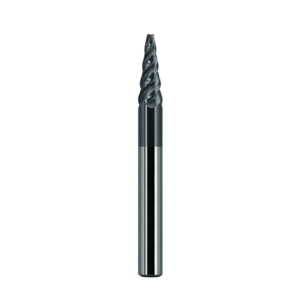
Custom Barrel End Mills — The Value of Tailored Cutting Tools
As part complexity and material diversity increase, standard cutting tools no longer fully meet the demands of modern mold and precision manufacturing. Custom barrel end mills address this challenge. By tailoring geometry for specific materials, surface shapes, and machine configurations, custom barrel cutters not only optimize cutting performance but also improve the efficiency and consistency of 3D surface finishing.
Compared with standard tools, custom barrel end mills can be optimized in curvature radius, edge transition design, tip shape, and coating selection—resulting in higher stability and longer tool life under defined machining conditions. This high-compatibility approach is now common in high-end mold manufacturing, aerospace blade machining, and automotive exterior part finishing.
Why Use Custom Barrel End Mills?
Different mold materials vary in hardness, heat treatment, and thermal conductivity, which directly affect cutting load and tool wear. Custom-designed barrel end mills maximize performance by adapting geometry and coating to these properties. For example:
-
H13 mold steel: High hardness and thermal stability. Requires a larger cutting-edge radius and high-temperature coating (AlTiN or TiSiN).
-
P20 pre-hardened steel: Good toughness. Works best with smaller contact radii and high-feed designs for higher efficiency.
-
NAK80 mirror steel: For mirror-finish molds, tools with ultra-fine edge polishing and small curvature transitions achieve Ra ≈ 0.1 µm.
Through optimized edge angles, helix geometry, and tool rigidity, custom barrel cutters deliver higher material-removal rates and lower wear without compromising surface quality.
Examples of Custom Tool Applications
In complex surface machining, standard tools rarely match the curvature of the part, resulting in uneven contact or dense toolpaths. Custom barrel end mills solve this by aligning cutting-edge geometry precisely with surface curvature.
-
Aero-engine blades / blisks: Custom conical barrel cutters maintain constant cutting angles in 5-axis machining, improving surface uniformity.
-
Automotive exterior molds: Large-radius custom barrel tools reduce toolpath count and avoid interference.
-
Optical or medical molds: Custom cutters with fine tip blending radii achieve consistent contact and mirror reflection quality.
This “tool geometry matches workpiece geometry” principle gives custom barrel end mills a unique precision advantage in 3D surface finishing barrel cutter applications.
Economic Benefits of Custom Barrel End Mills
Although the initial cost of a custom barrel end mill is higher, the overall return on investment is substantial. The main benefits include:
-
Reduced Machining Time: Optimized radius and cutting angle shorten toolpath length by 40%–60% while maintaining surface quality.
-
Extended Tool Life: Tools engineered for specific materials experience less wear and require fewer replacements.
-
Lower Polishing and Rework Costs: Superior surface finish minimizes post-processing and boosts mold yield.
In precision mold and high-end manufacturing, this customization strategy increases process stability and competitiveness—making custom barrel end mills the preferred choice for efficient surface finishing.
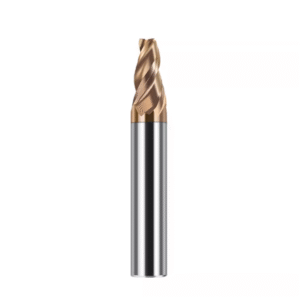
Precautions and Optimization Guidelines for Barrel End Mill Use
To fully realize the benefits of barrel end mills in complex surface finishing, correct use and parameter optimization are critical. Because barrel end mills differ greatly from traditional ball nose end mills in geometry and toolpath planning, improper settings can cause premature wear, surface ripples, or over-cutting.
In mold manufacturing, freeform surface machining, and 3D surface finishing barrel cutter applications, engineers should focus on tool selection, cutting parameters, cooling, and maintenance. The following guidelines help ensure stability and surface quality.
Tool Selection and Parameter Matching
Selecting the right barrel end mill type and matching parameters is key to performance. Different geometries suit different scenarios:
-
Cylindrical barrel end mill: Best for large, gently curved surfaces.
-
Conical barrel end mill: Ideal for sloped or complex 5-axis freeform surfaces.
-
Tangent or lens barrel end mill: Designed for high-gloss, mirror finishing.
Recommended parameter ranges:
-
Spindle speed: 10,000 – 25,000 rpm, adjusted for material hardness and tool diameter.
-
Feed rate: 30% – 60% higher than for ball nose cutters, taking advantage of the larger effective radius.
-
Tilt angle: 10° – 20° to maintain optimal edge contact and avoid tip cutting.
-
Step-over distance: 2 – 5 × that of a ball nose tool while maintaining surface roughness of Ra 0.2–0.4 µm.
Common Errors and Prevention
Typical issues during barrel cutter use include:
-
Excessive Toolpath Overlap: Increases time and wear.
Fix: Use wider step-overs and enable “constant scallop” mode in CAM. -
Incorrect Tilt Angle: Causes ripples or visible tool marks.
Fix: Maintain at least a 10° tilt to keep the edge in the ideal cutting zone. -
Tool Collision or Over-cut: Results from improper 5-axis posture changes.
Fix: Activate collision-check and simulation functions in CAM software. -
Mismatched Cutter Radius: Leads to residual scallops or uneven surfaces.
Fix: Choose a radius that matches the workpiece curvature or use a custom barrel end mill.
Tool Life and Maintenance Tips
Tool longevity directly depends on machining stability. Proper maintenance and cooling extend life and preserve cutting performance.
-
Tool Coating:
-
For hard mold steels, use AlTiN or TiSiN coatings for heat and oxidation resistance.
-
For stainless or aluminum, use DLC or TiB₂ coatings to reduce adhesion and improve finish.
-
-
Cooling Method:
-
Internal coolant barrel end mills are ideal for deep cavities or long cuts, minimizing heat buildup.
-
Air cooling suits mirror finishing or oxidation-sensitive materials to prevent residue.
-
-
Inspection & Regrinding:
-
Inspect tools after ~70% of expected life.
-
Regrind and recoat high-value custom barrel end mills to restore sharpness and coating quality.
-
With proper setup and maintenance, barrel end mills enable a machining strategy that combines high precision, high efficiency, and low cost—one reason they remain a cornerstone in the mold, aerospace, medical, and automotive industries.
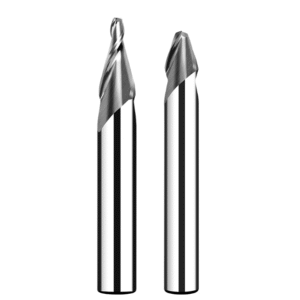
Key Strategies for Improving Mold Finishing Efficiency
The demand for high surface quality, machining efficiency, and stability in mold and precision manufacturing continues to rise. The emergence of barrel end mills has sparked a revolution in mold finishing efficiency. With their unique curved geometry and large-area cutting contact, barrel end mills overcome the limitations of traditional ball nose end mills, delivering both high precision and productivity.
Geometry and Performance Advantages
The core advantage of the barrel end mill lies in its larger effective cutting radius and optimized contact angle design. This geometry allows for wider step-over distances while maintaining the same surface roughness, significantly shortening toolpaths and reducing overall machine time.
When compared to ball end mills, barrel end mills provide smoother cutting pressure distribution and finer surface textures across complex 3D curved and freeform surfaces. This improvement directly translates into better dimensional accuracy and reduced post-polishing time.
Benefits in 5-Axis Machining
In 5-axis machining, barrel end mills maintain stable contact cutting across complex cavities and high-curvature surfaces through controlled tool axis tilting. This minimizes machine load, reduces vibration, and extends tool life—key factors for ensuring consistency in high-end mold manufacturing and aerospace component finishing.
Value of Custom Barrel End Mills
The custom barrel end mill further enhances these benefits by tailoring tool geometry to specific materials and part geometries. Whether machining H13 hot-work steel, P20 pre-hardened steel, or high-gloss mirror molds, a customized design—with optimized curvature radius and edge transition zones—achieves ideal results in both efficiency and surface integrity.
This level of customization allows engineers to precisely match tool geometry with the workpiece profile, improving cutting stability while minimizing tool wear and process variability.
Integration with CAM Software
Modern CAM systems now provide full support for 3D surface finishing barrel cutter strategies. With optimized toolpath generation, automatic tilt control, and collision avoidance, engineers can maximize the tool’s geometric potential. When combined with proper parameter selection, spindle speed, tilt angle, and cooling methods, barrel end mills become a cornerstone technology for competitive mold manufacturing.
The Future of Precision Mold Finishing
Barrel end mills are more than a tool innovation—they represent a shift in manufacturing philosophy. They transform the old belief that “high precision means low efficiency” into a new paradigm: “high precision with high efficiency.”
For manufacturers seeking to balance accuracy, cost, and productivity, integrating custom barrel end mills with advanced five-axis machining strategies is no longer optional—it’s a strategic imperative for improving mold finishing precision, shortening lead times, and enhancing overall manufacturing competitiveness.