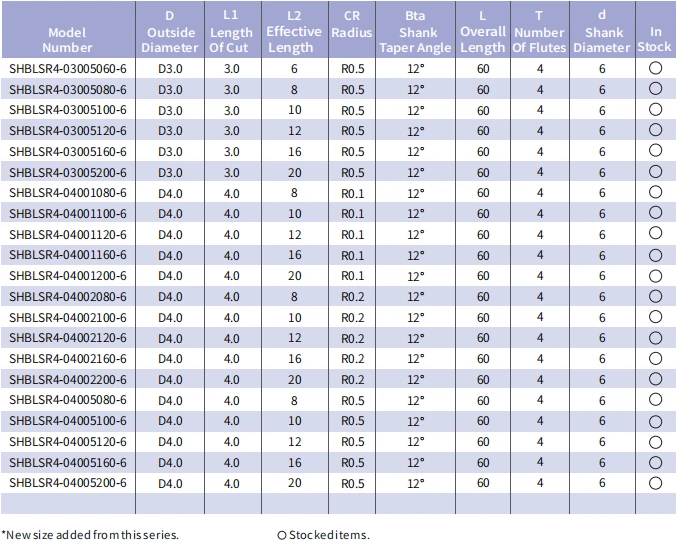
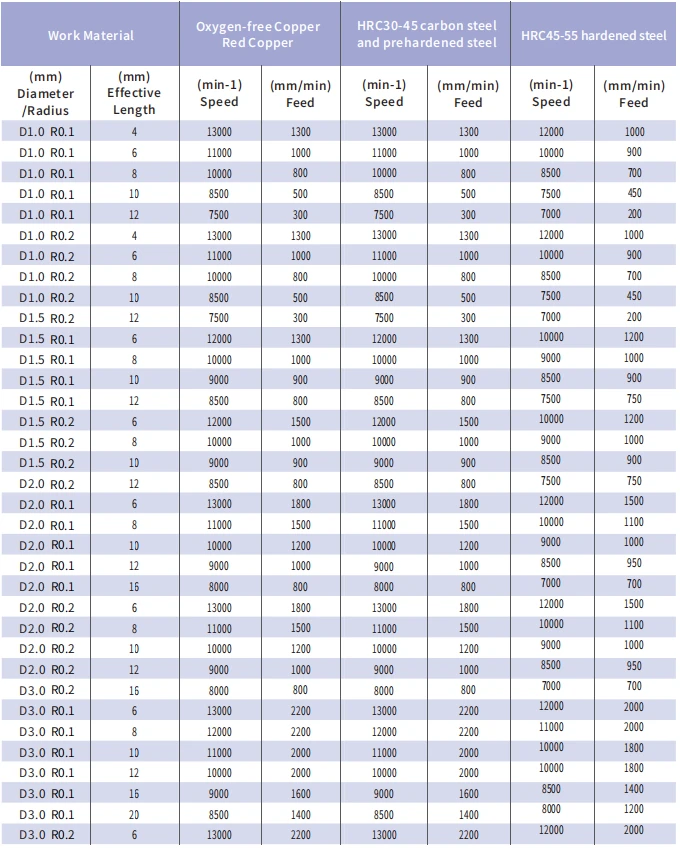
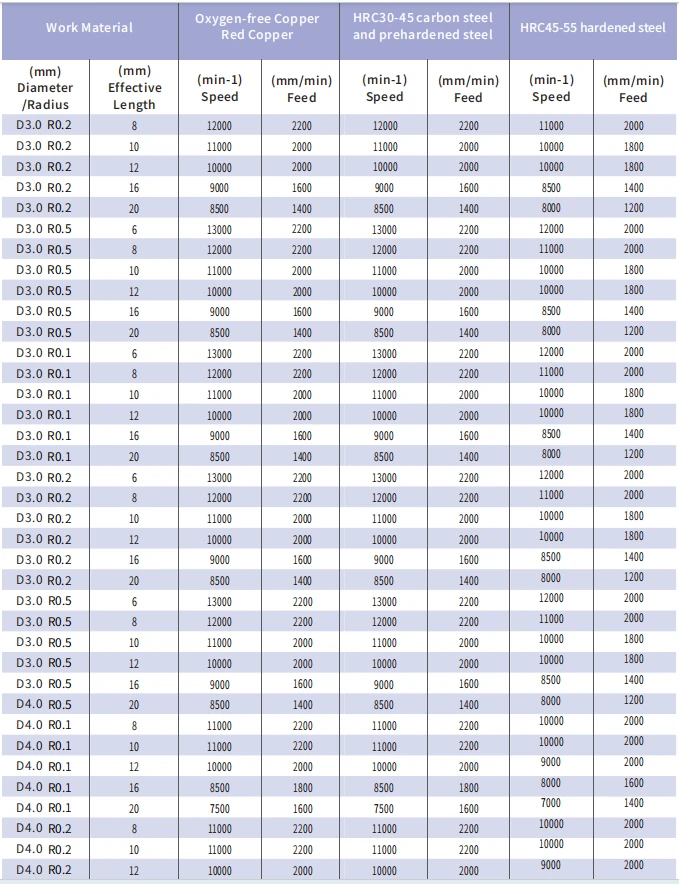
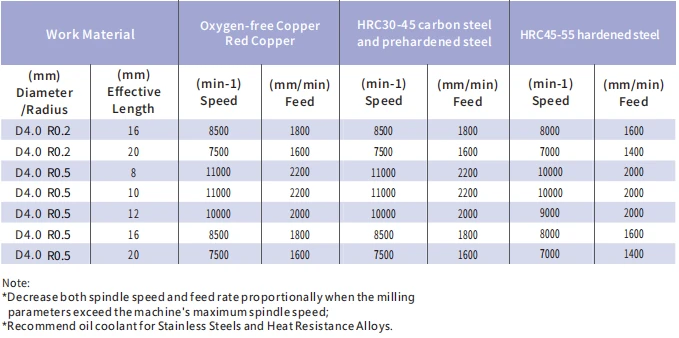
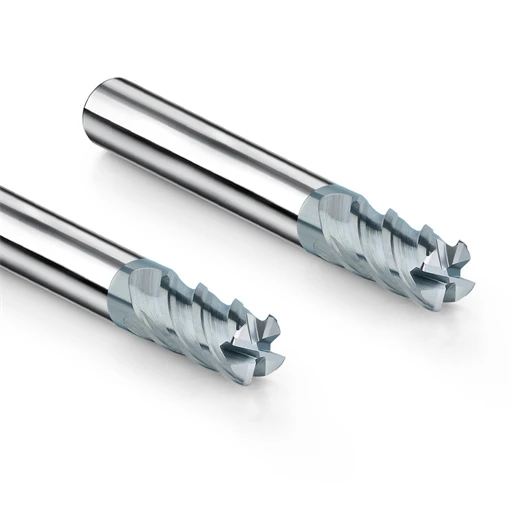
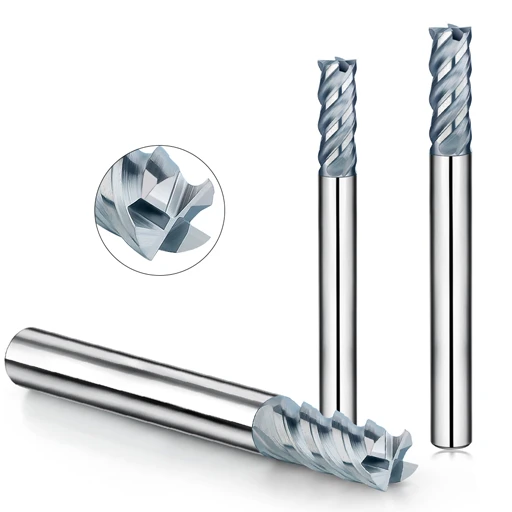
FAQ 1: What materials is the HRC55 4-Flute Long-Neck Corner Radius End Mill suitable for machining?
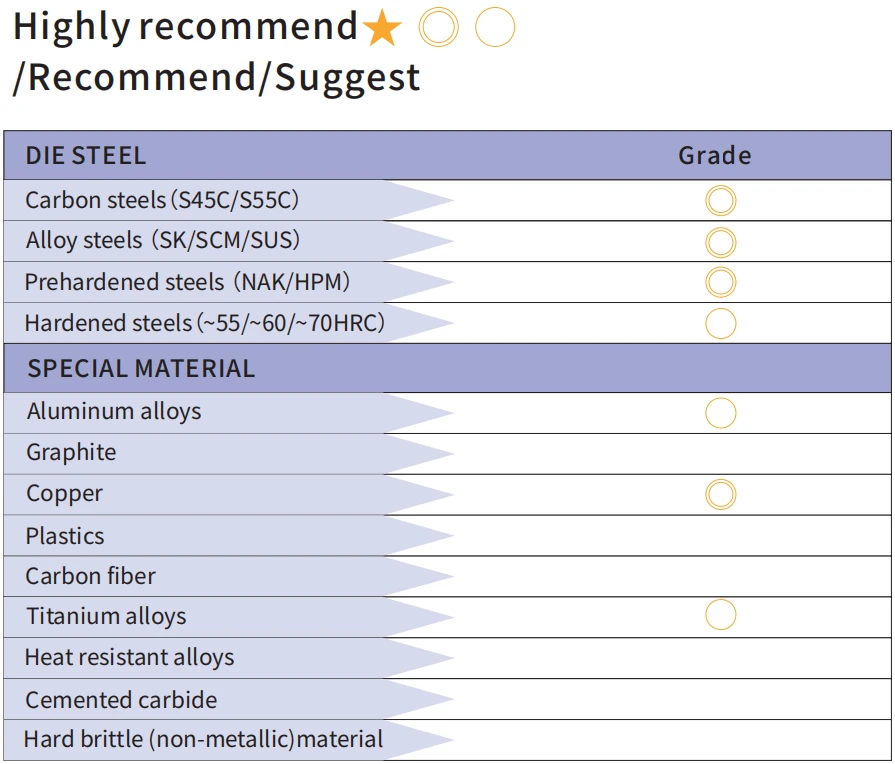
A: The HRC55 4-Flute Long-Neck Corner Radius End Mill is mainly developed for machining pre-hardened steels and mold steels with a hardness range of HRC45–55.
Typical materials include:
- P20 mold steel
- 718H steel
- NAK80 mirror steel
- S136 stainless mold steel
- H13 hot-work tool steel
- SKD61 hardened steel
In our experience working with mold manufacturers, machining HRC45–55 steels is challenging not only because of material hardness, but also because of unstable cutting conditions.
Common problems include:
- Higher cutting resistance;
- Increased impact on the cutting edge;
- Faster tool wear during long machining cycles;
- Vibration during deep cavity machining.
Compared with standard square end mills, a corner radius design provides stronger edge support. The rounded cutting edge reduces stress concentration at the tool tip.
This makes the tool especially suitable for:
- Mold cavity semi-finishing;
- Deep-wall machining;
- Sidewall finishing;
- Complex contour machining.
For manufacturers looking for a long neck corner radius end mill for steel, this structure provides a good balance between machining depth, edge strength, and surface quality.
FAQ 2: Why does the HRC55 4 Flute Long Neck Corner Radius End Mill use a corner radius design instead of a square end design?
A: The main purpose of the corner radius design is to improve cutting edge durability.
When machining hardened mold steels around HRC55, the sharp 90-degree corner of a square end mill becomes a weak point. During machining, this area experiences concentrated cutting forces.
This problem becomes more obvious during:
- High-speed milling;
- Deep cavity machining;
- Direction changes in complex tool paths;
- Continuous mold finishing operations.
A carbide corner radius end mill distributes cutting stress more evenly through the radius section.
The advantages include:
- Higher resistance to edge chipping;
- Improved impact strength;
- Longer tool life;
- More stable surface finish.
Based on production machining experience, corner radius end mills generally perform better than square end mills when machining ribs, pockets, and curved transition areas in mold components.
FAQ 3: How does the HRC55 4-Flute Long-Neck Corner Radius End Mill reduce vibration during deep cavity machining?
A: Deep cavity machining is one of the most difficult operations in mold manufacturing.
The main challenge is usually not the cutting ability of the tool, but the reduced rigidity caused by a long tool overhang.
When the L/D ratio becomes high, the following problems may occur:
- Increased tool deflection;
- Higher radial runout;
- Cutting vibration;
- Unstable dimensional accuracy.
A properly designed long neck corner radius end mill for steel helps control these problems through several features.
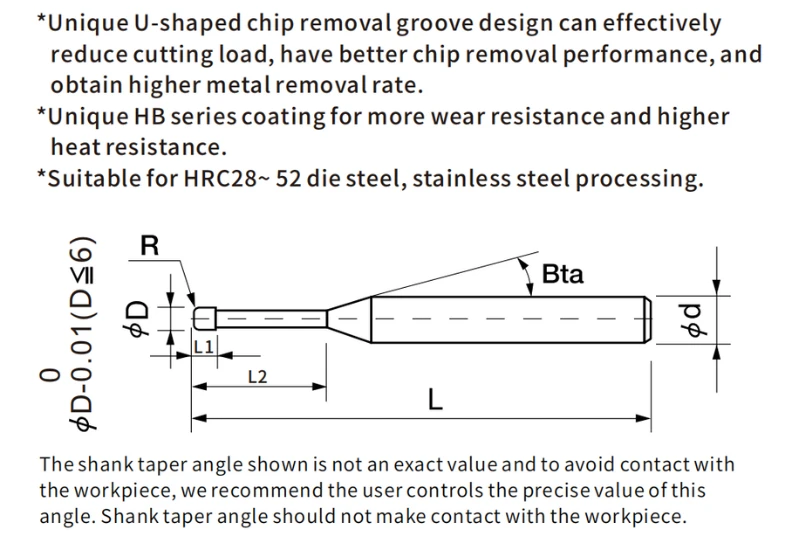
Optimized long-neck geometry
The reduced neck diameter provides better clearance between the tool and the workpiece.
This allows access to deeper machining areas while avoiding unnecessary interference.
Strong corner radius structure
The corner radius improves the strength of the cutting edge.
It helps the tool handle changing cutting loads during mold contour machining.
Precision shank control
High-precision shank manufacturing reduces runout.
Lower runout helps maintain stable cutting performance during high-speed CNC machining.
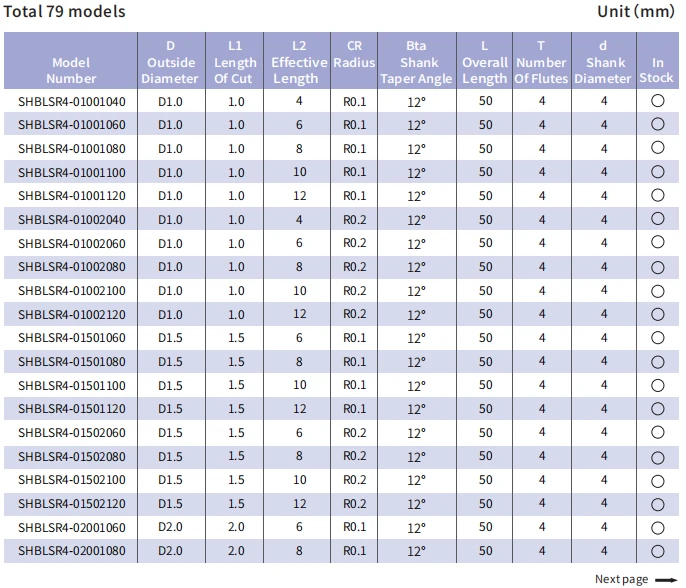
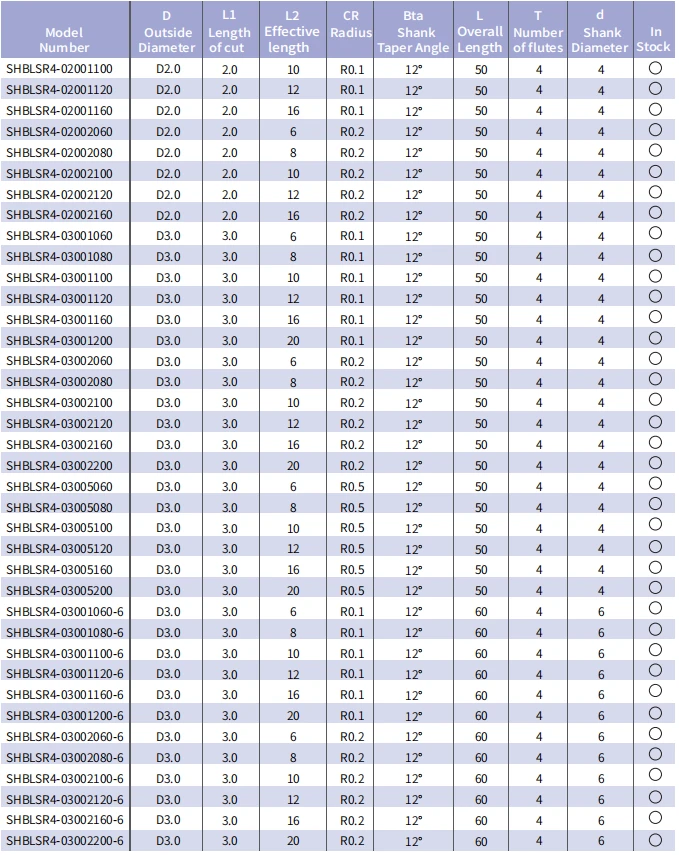
In actual mold production, we recommend selecting the tool based on:
- Tool diameter;
- Required machining depth;
- Tool overhang ratio;
- Machine rigidity;
- Cutting conditions.
A longer tool does not always mean better performance. The best results come from matching the tool design with the machining application.
FAQ 4: How does the HRC55 4-Flute Corner Radius End Mill improve surface quality in mold machining?
A: Surface quality in mold machining depends on the combination of machine accuracy, cutting parameters, and tool geometry.
A high-quality HRC55 mold steel end mill improves finishing performance through several design features.
Corner radius cutting edge
The radius design reduces stress concentration at the tool tip.
Compared with square end mills, it provides:
- Better edge strength;
- Lower risk of micro-chipping;
- More stable cutting during contour machining.
Consistent cutting edge accuracy
Precision grinding ensures that each flute shares the cutting load evenly.
This helps reduce:
- Surface marks;
- Cutting vibration;
- Dimensional variation.
Optimized flute and helix design
A suitable helix angle reduces cutting impact.
It allows smoother engagement between the cutting edge and hardened steel materials.
For mold finishing applications, this results in:
- Improved surface roughness;
- Better dimensional consistency;
- More predictable tool performance.
FAQ 5: How can the tool life of an HRC55 4-Flute Long Neck Corner Radius End Mill be extended?
A: Extending tool life requires more than choosing a high-performance cutter.
In our experience, stable tool life depends on three factors:
- Tool structure;
- Cutting parameters;
- Machining strategy.
Choose the correct tool construction
For HRC45–55 steel machining, recommended features include:
- Ultra-fine grain carbide substrate;
- Wear-resistant coating technology;
- Stable flute geometry;
- Accurate corner radius control.
These designs help reduce:
- Cutting heat;
- Edge wear;
- Cutting vibration.
Avoid common machining mistakes
Premature tool failure often comes from:
- Excessive radial engagement;
- Excessive axial depth of cut;
- Ignoring tool overhang limitations;
- Using unsuitable holders for high-speed machining.
Especially for long neck tools, controlling tool rigidity is critical.
Match the tool with each machining stage
A typical mold machining process usually includes:
Roughing stage:Use high-strength roughing tools designed for material removal.
Semi-finishing stage:Use an HRC55 4-flute corner radius end mill to achieve stable stock removal and surface preparation.
Finishing stage:Use precision ball nose end mills or small-radius finishing tools for final surface quality.
Selecting the right CNC mold machining tool for each operation is more effective than using one tool for every machining step.