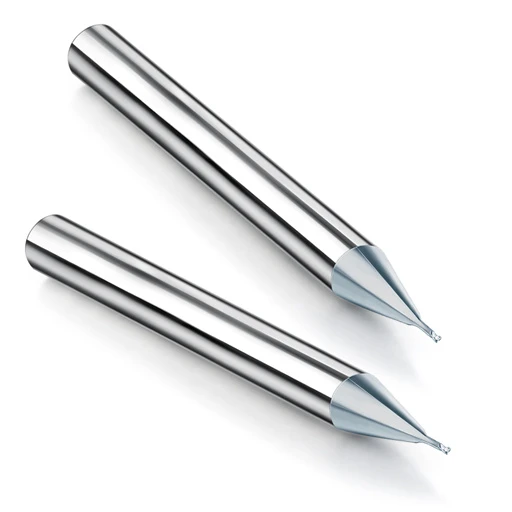
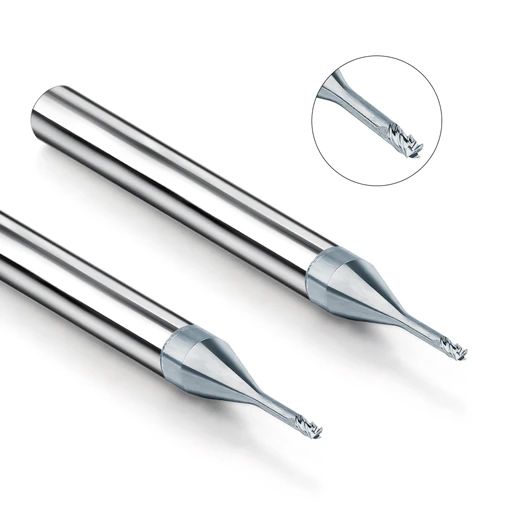
Graphite Corner Radius End Mill【2/4 Flutes Long Neck Φ 0.5-3】
Get the Best Quality Graphite Corner Radius End Mill【2/4 Flutes Long Neck Φ 0.5-3】 from SAMHO
We are excited to offer you the opportunity to procure the best quality Graphite Corner Radius End Mill【2/4 Flutes Long Neck Φ 0.5-3】 directly from China. These tools are perfect for precision drilling and cutting tasks, ensuring excellent results every time.
Home » Corner Radius End Mill » Graphite Corner Radius Long Neck End Mill【2/4 Flutes Long Neck Φ 0.5-3】
4-Flute Long-Neck Corner Radius Diamond-Coated End Mill – Engineered for Precision Machining of Graphite and Ceramics
Specifically designed for high-hardness, brittle non-metallic materials such as graphite and electro-ceramics, this 4-flute end mill features a long-neck geometry and corner radius cutting edge, offering excellent accessibility and edge strength. Constructed with an ultrafine-grain solid carbide substrate and coated with a high-adhesion diamond coating, it delivers outstanding wear resistance, thermal stability, and dimensional accuracy. Proven through field testing, the tool achieves a stable cutting life exceeding 18 hours under dry or MQL conditions on CNC machining centers.
High-Adhesion Diamond Coating for Extended Tool Life
Applied with a premium diamond coating (non-CVD/PCD), the tool offers exceptional surface hardness and chemical inertness. It resists graphite dust abrasion and cutting-edge microchipping during dry machining, significantly enhancing tool longevity and cutting stability.
Long-Neck Design for Deep Cavity & Intricate Feature Access
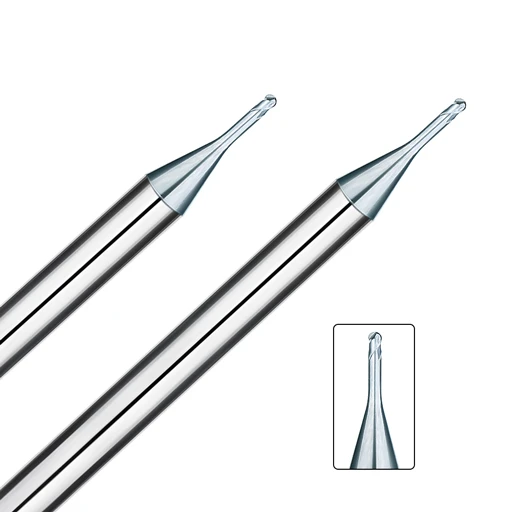
The extended neck geometry minimizes tool interference and enables efficient reach into deep cavities, narrow internal corners, and complex ceramic structures—ideal for mold cavities, microelectrodes, and precision structural components.
Corner Radius Geometry Enhances Edge Strength and Finish Quality
Rounded cutting edges reduce stress concentrations compared to sharp corners, improving edge durability and minimizing the risk of chipping. Especially effective in cavity finishing and contour milling of brittle materials like ceramics and graphite.
4-Flute Construction Increases Rigidity and Throughput
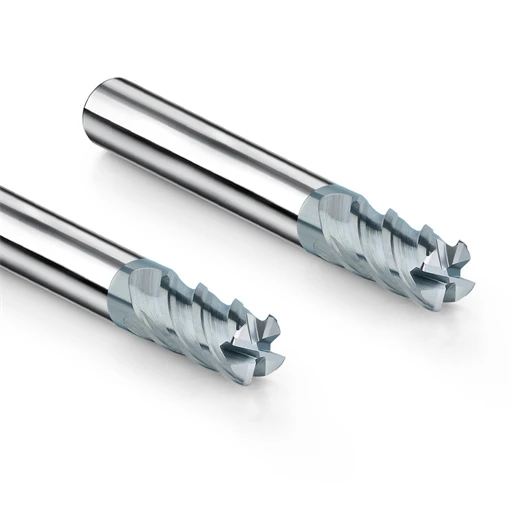
The 4-flute configuration enhances tool stiffness and vibration resistance, allowing for high-speed side milling, face milling, and finishing operations with improved surface quality and machining efficiency.
Ultrafine-Grain Carbide Core Offers Superior Crack Resistance
Made from high-performance ultrafine tungsten carbide, the tool provides excellent thermal stability and fracture resistance—built to endure the abrasive nature of graphite and ceramic materials in continuous operation.
Precision Five-Axis CNC Grinding – Tolerance ±0.01mm
Each tool is ground with high-precision 5-axis CNC equipment to ensure strict dimensional accuracy and edge consistency, meeting the high geometric tolerances required in applications like graphite electrodes, ceramic molds, and micro-structured parts.

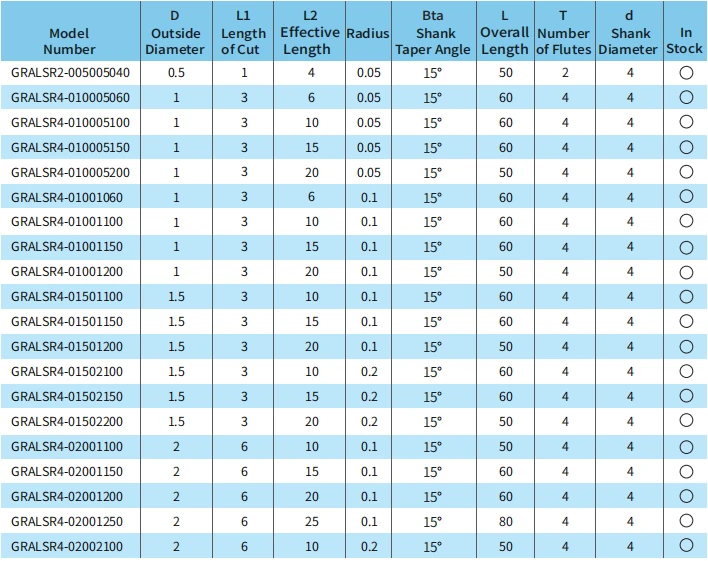
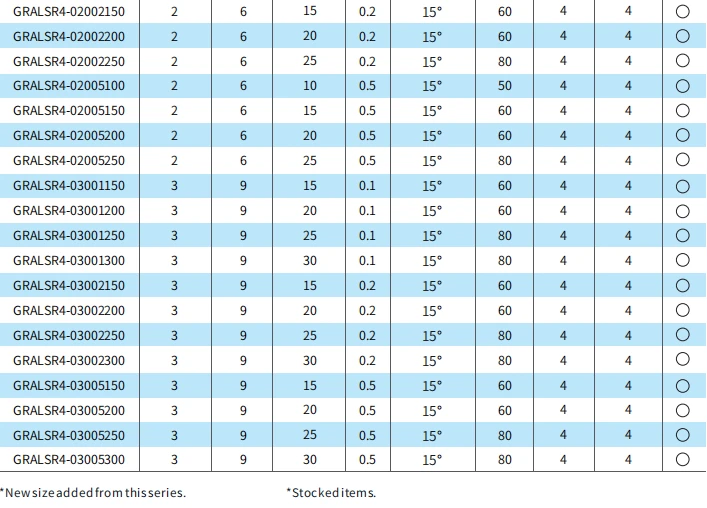
4 Flutes Long Neck Corner Radius End Mill Catalog
Total 39 Models-Unit(Mm)
Related Product Recommendation
HRC55 Ball Nose Long Neck End Mill【2 Flutes Long Neck R0.1-R2】
HRC55 Ball Nose End Mill【2 Flutes Long...
Read MoreHRC55 Corner Radius End Mill【4 FlutesΦ1-20】
HRC55 Corner Radius End Mill【4 Flutes Φ1-20】...
Read MoreHRC55 Corner Radius Long Neck End Mill【2 Flutes Long NeckΦ0.2-4】
HRC55 Corner Radius End Mill【2 Flutes Long...
Read MoreHRC55 Flat End Mill [2 Flutes ϕ0.2-6]
HRC55 Mold Steel End Mill [2 Flutes...
Read MoreHRC55 Flat Long Neck End Mill【2 Flutes Long Neck Φ 0.2-2】
HRC55 Mold Steel End Mill【2 Flutes Long...
Read MoreHRC55 Flat Long Neck End Mill【4 Flutes Long Neck Φ 1-3】
HRC55 Mold Steel End Mill【4 Flutes Long...
Read MoreFAQ: 4 Flute Long Neck Corner Radius End Mills for Graphite Machining
Q1: What are the primary machining applications for 4-flute graphite long-neck corner radius end mills?
A: These end mills are engineered specifically for the semi-finishing and finishing stages of high-precision graphite electrodes. They excel at machining complex mold electrodes with 3D contoured surfaces and deep cavities.
The corner radius strengthens the tool tip, preventing chipping when cutting sharp corners. Meanwhile, the extended long-neck design provides the necessary reach for deep, narrow cavity structures without risking tool holder collision.
Q2: Why is a long-neck structure essential for graphite machining?
A: Graphite electrodes frequently feature deep cavities, intricate ribs, and steep walls. A long-neck structure provides crucial tool holder clearance, allowing the mill to reach deep areas without rubbing against the workpiece.
By extending the reach without increasing the overall flute length, this design maintains high cutting rigidity. In production, this allows for deeper passes, fewer tool changes, and shorter cycle times.
Q3: What advantages does a 4-flute design offer over 2-flute or 3-flute options in graphite?
A: A 4-flute configuration delivers superior feed stability and a finer surface finish during the final stages of graphite machining.
When running at high spindle speeds (15,000 to 30,000 RPM), four flutes distribute the cutting load more evenly. This results in smoother transitions on 3D surfaces and reduces vibration.
Note: Because graphite generates fine dust rather than traditional chips, an optimized flute geometry is critical to prevent dust packing.
Q4: What is the benefit of using a corner radius instead of a sharp edge?
A: The corner radius significantly strengthens the tool tip. During high-speed dry machining, sharp-cornered tools are highly prone to micro-chipping due to the abrasive nature of graphite.
In standard electrode manufacturing, a corner radius between 0.2 and 0.5 mm drastically reduces tool wear. It ensures clean, precise radii in mold corners and prevents surface defects caused by premature tip failure.
Q5: How do you manage dust and minimize tool wear when using 4-flute graphite end mills?
A: Managing abrasive graphite dust requires a multi-step approach:
-
Dust Control: Always pair the machine with a high-vacuum dust extraction system. This prevents the tool from re-cutting abrasive dust particles, which accelerates wear.
-
Milling Strategy: Use a high spindle speed, a shallow depth of cut (Ap), and a climb milling strategy to keep cutting forces low.
-
Tool Coating: Always opt for Nano diamond-coated or specialized wear-resistant coatings. Diamond coatings vastly extend tool life and maintain a sharp cutting edge over long production runs.