
Recently, a CNC supervisor from Munich, Germany, sent us a video of an on-site operation: a new 5-axis machining center was cutting Ti-6Al-4V (TC4) aerospace parts with high-pressure internal coolant. The cutting noise was piercingly sharp. Within twenty minutes, chatter marks appeared on the workpiece, and the tool’s flank face showed severe built-up edge (BUE) and micro-chipping.
The shop was debating whether to use 4-flute or 5-flute solid carbide end mills. The process engineer wanted to switch to a 5-flute tool to increase the feed rate and boost the overall metal removal rate (MRR). However, the machine operator strongly objected: titanium alloys have poor thermal conductivity and high elastic recovery. With a 5-flute tool, the restricted chip gullet space can easily clog, causing pressure spikes that instantly break the tool.
This performance trade-off is not unique to the Munich shop. It is one of the most common questions we encounter from European and American B2B clients over our 15+ years of manufacturing specialized end mills for titanium.
There is no “magic bullet” tool for every titanium application. Selecting the best carbide end mill for titanium to boost productivity depends entirely on your cutting strategy. Whether using a carbide long neck end mill for deep-cavity clearance or a ball nose end mill for titanium for complex profiling, the performance differences in cutting forces, chip evacuation, and vibration resistance are profound.
As a dedicated china end mill for titanium manufacturer, we know that relying on theory without real-world testing wastes valuable machine time. Combining our factory R&D test data with field cases from overseas clients, here is our complete breakdown of 4-flute versus 5-flute titanium end mills.
When machining titanium structural parts, do you play it safe with a 4-flute cutter, or go bold with a 5-flute tool for higher feed rates?
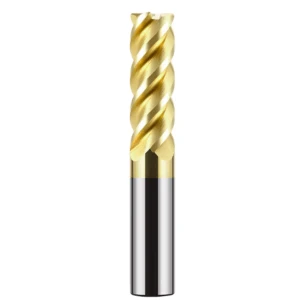
Why does the number of flutes—one more or one less—directly determine your tooling costs when cutting titanium?
In our milling test lab, customers frequently bring us catastrophic tool failures. Their initial reaction is often to suspect poor coating adhesion or a brittle carbide substrate. However, when we inspect the wear patterns under a profile projector and analyze their CAM programs, the root cause is almost always an incorrect flute count. Adding or removing a single cutting edge fundamentally alters the internal stress distribution and heat conduction path, directly driving your tooling cost per part.
Titanium alloys have extremely low thermal conductivity—roughly one-quarter that of AISI 1045 steel—and a high elastic modulus. Consequently, cutting heat stays concentrated near the tool edge instead of transferring to the chips. Choosing the wrong flute count leads to immediate tool failure from chip packing or severe chatter caused by excessive radial forces. Every adjustment to the flute count requires a precise balance between chip volume, core rigidity, and cooling efficiency.
Analyzing machining pain points: Differences in chip evacuation space and cutting force distribution between 4-flute and 5-flute end mills for titanium
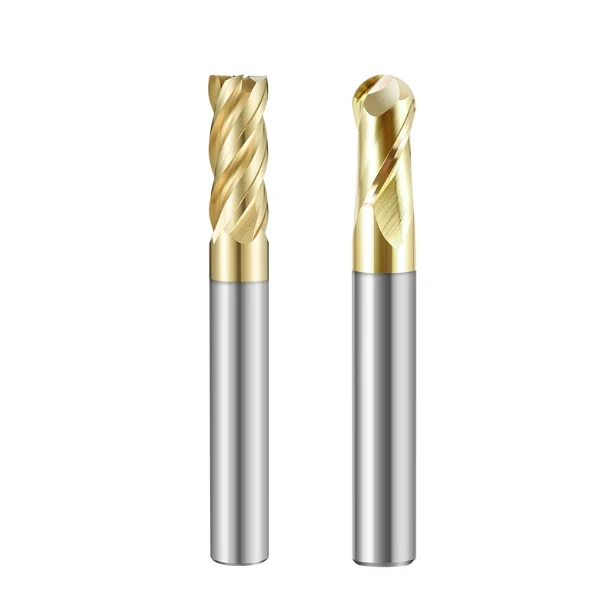
Examining the cross-sections of these cutters reveals that the primary difference lies in chip pocket depth. 4-flute cutters feature larger chip gullets, making them the safest choice for full-slotting or heavy axial cuts. Conversely, 5-flute cutters sacrifice gullet space for an extra cutting edge, resulting in a larger core diameter. Our tests show this thicker core significantly increases bending rigidity and minimizes tool deflection, which prevents work-hardening in titanium.
Cutting force distribution also differs subtly between the two designs. 4-flute cutters generate noticeable tooth-entry impacts, leading to periodic force spikes. In contrast, 5-flute tools create a smoother force profile due to increased cutting-edge engagement. When running High-Efficiency Milling (HEM) strategies with a small radial depth of cut (Ae), the balanced forces of a 5-flute china end mill for titanium allow for aggressive feed rates without sacrificing stability.
Machining Shop Data: Real-World Performance of 4-Flute vs 5-Flute Cutters Regarding Heat Accumulation and Tool Life
To provide our clients with reliable empirical data, we conducted extensive comparative tests on vertical machining centers using infrared thermography and dynamometers. At a cutting speed of Vc = 70 m/min and a feed per tooth of fz = 0.06 mm/z, 4-flute cutters maintained lower core temperatures. Their wider chip gullets allowed high-pressure coolant to flush the rake face effectively, resulting in predictable and steady flank wear.
However, when we subjected the 5-flute cutter to full-slot milling, temperatures spiked by nearly 120°C. Constrained gullet space caused secondary chip friction and blocked coolant flow, leading to rapid coating failure and BUE. Yet, during high-speed side milling (Ae = 15% Dc, Ap = 2 Dc), the outcome reversed completely. The 5-flute tool achieved a 35% longer tool life than the 4-flute tool while running at a higher table feed. Ultimately, there is no single superior tool—only the right flute count for your application.
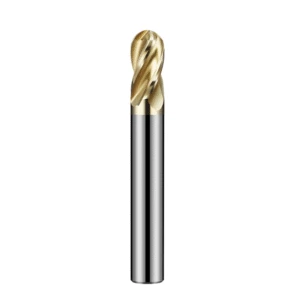
Selecting the Right Tool for the Job: How to Choose the Best Carbide End Mill for Titanium?
When consulting on tool selection, shop managers often ask us for a “universal model.” However, even when cutting the same titanium plate, slotting versus profiling places completely different demands on tool geometry. Evaluating projects for our clients requires looking past generic catalog options. We analyze CAM toolpaths and machine rigidity first to choose the best carbide end mill for titanium machining applications.
Titanium leaves virtually no margin for error regarding cutting parameters and tool design. Selecting a cutter solely based on substrate or coating while ignoring chip evacuation, heat dissipation, and force distribution leads to premature failure. Our factory tests and client feedback confirm that matching machining strategies with flute count is the single most effective way to control costs and prevent downtime.
Slotting and High-Depth-of-Cut Roughing: Why We Still Prefer 4-Flute Solid Carbide End Mills
In full-slot milling (100% Dc) or heavy roughing, reliable chip evacuation dictates tool survival. Titanium chips are naturally sticky and elastic. In a closed slot, they easily compress and pack into the flutes. We recommend 4 flutes solid end mills for titanium because their larger chip gullets provide ample space for chip deformation, preventing sudden edge chipping or catastrophic breakage caused by chip packing.
During full-slot engagement, severe heat buildup occurs in the semi-enclosed cutting zone. The spacious flutes of a 4-flute tool reduce secondary chip friction against the wall and allow high-pressure coolant to reach the cutting zone center. When optimizing slotting processes on TC4 titanium aerospace frames, our comparative tests prove that 4-flute designs remain unsurpassed for cutting stability and predictable tool life.
Dynamic Milling vs. Side Milling: How 5-Flute End Mills Help Western Customers Boost Metal Removal Rate (MRR) by Over 30%
With modern CAM software driving dynamic milling strategies, machine shops are shifting toward high-speed pathways with small radial (Ae) and large axial (Ap) cuts. This approach significantly relieves chip evacuation pressure, allowing 5-flute tools to shine. Thanks to a thicker core, a 5-flute china end mill for titanium resists deflection under high-speed, high-feed passes, maintaining exceptional dimensional accuracy.
When updating the process for a North American aerospace vendor, we replaced conventional 4-flute side milling with a 5-flute dynamic strategy. The extra cutting edge enabled a 20% higher table feed at the same chip load (fz). Furthermore, increased edge overlap dampened spindle vibration, boosting the MRR by over 30% for high-volume production.
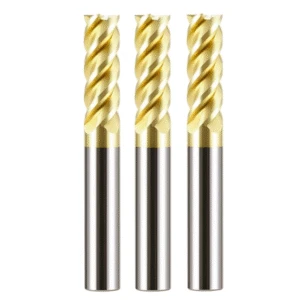
Machining Special Structural Components and Deep Cavities: Applications of Different Flute Counts on Complex Titanium Alloy Parts
Machining aerospace structural parts and medical implants often involves 3D surfaces and narrow deep cavities. These features demand exceptional cutter performance to handle titanium’s high strength alongside long overhang vibration and poor chip evacuation. To resolve these challenges, we systematically balance cutter cross-sectional rigidity against chip capacity, making flute selection a critical factor for success.
Blindly prioritizing speed or tool life on complex structures yields poor results. Selecting a geometry tailored to the actual toolpath is essential. When cutting forces shift across organic surfaces or deep cavities, 4-flute and 5-flute cutters behave very differently regarding vibration damping, force fluctuation, and surface finish. Matching flute count to the strategy cuts scrap rates on high-value parts.
Curved Surface and 3D Profiling: Comparative Surface Finish Tests of 4-Flute vs 5-Flute Ball Nose End Mills for Titanium
During 3D finishing on titanium turbine blades or medical implants, cutting velocity at the center of the tool approaches zero, making the tip vulnerable to tear-out. CMM and roughness testing on our ball nose end mill for titanium lines shows that 5-flute models excel at micro-stepover profiling. Their denser edge overlap reduces cusp height, delivering a smoother finish and lower Ra values than 4-flute designs.
However, 5-flute ball nose tools are not universal. When profiling steep walls, chips flow backward along the ball radius. The tighter gullets of a 5-flute tool can cause chip re-cutting, leaving faint compression marks on the wall. For gradual curves requiring peak surface finishes, we recommend 5-flute tools; for deep 3D pockets with varying angles, 4-flute designs offer better chip clearance and stability.
The Challenge of Clearance and Aspect Ratio: How Flute Count Affects Vibration Damping and Tool Breakage Rates with Carbide Long-Neck End Mills
Deep cavities require high aspect ratio (L/D > 5:1) tools, which sharply reduces system rigidity and invites chatter. When applying a carbide long neck end mill for deep corner picking or ribbing, flute selection directly impacts vibration control. A 5-flute long-neck cutter features a thicker core and higher bending stiffness, effectively suppressing elastic deflection and micro-chipping during light side milling passes.
However, deep-cavity chip evacuation demands extra caution. With long tool overhangs and limited coolant reach, a 5-flute tool’s smaller gullets can clog rapidly, creating severe forces that snap the neck. For shallow cuts under air blast, 5-flute long-neck cutters offer superior chatter resistance; for deeper full-width cuts or limited cooling, 4-flute designs provide the necessary chip clearance to prevent breakage.
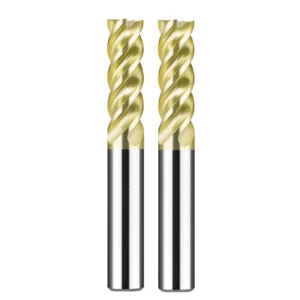
On-Site Troubleshooting Guide: Solving Titanium Milling Issues for Western Clients
In over a decade of B2B technical support, we have solved countless machining issues for European and American shops. When tackling titanium for the first time, machinists often rely on habits formed cutting stainless steel, using basic catalog specs. However, titanium’s unique properties make it extremely sensitive to parameters, cooling, and flute count. Minor mismatches can quickly escalate into severe tool wear or total failure.
Most titanium milling issues stem from a clash between tool geometry and actual cutting conditions, rather than manufacturing defects. This conflict is especially clear when choosing between 4-flute and 5-flute end mills for titanium. Shops face a constant trade-off: 5-flute tools risk chip packing and chipping, while 4-flute tools suffer from chatter and wall scoring. These real-world troubleshooting cases demonstrate how to navigate these challenges.
Frequent Chip Adhesion and Edge Chipping with 5-Flute End Mills on Ti-6Al-4V? Adjusting Feed per Tooth and Internal Coolant Air Pressure
A UK precision shop recently reached out regarding Ti-6Al-4V aerospace connectors machined on a 5-axis vertical mill. Their 5-flute solid carbide tools averaged under three parts per cutter, suffering from severe built-up edge (BUE) and flank chipping. Inspecting their program revealed the issue: seeking a smooth finish, they had set the chip load (fz) too low. The tool rubbed against the work-hardened layer instead of shearing cleanly, causing thin chips to weld inside the tight flutes.
As a specialized china end mill for titanium manufacturer, we resolved this without replacing the 5-flute tool. We increased the feed per tooth by 25% so the cutting edge could penetrate below the work-hardened material. Simultaneously, we upgraded the cooling from external flow to a high-pressure (30+ bar) internal air-mist system to flush chips out of the shallow flutes. Cutting noise quieted instantly, BUE vanished, and tool life nearly tripled.
Harmonic Chatter During High-Speed Side Milling with 4 Flutes End Mills? A Combined Strategy of Unequal Indexing Geometry and Optimized Depth of Cut
A German mold shop encountered severe chatter while high-speed side milling (Ae=20% Dc, Ap=1.5 Dc) titanium structural components using standard, equal-spaced 4-flute tools. The spindle screeched, and heavy chatter marks ruined the sidewall finish beyond tolerance. Lowering the spindle speed only increased cutting resistance, accelerating flank wear without eliminating the resonance.
Equal-spaced flutes enter the cut at fixed intervals, exciting natural system frequencies and creating harmonic chatter. To solve this, we supplied a 4-flute china end mill for titanium engineered with unequal indexing and variable helix angles to disrupt resonance. We also adjusted their strategy by reducing radial depth (Ae) and increasing axial depth (Ap), leveraging axial stiffness to neutralize chatter and restore a smooth finish.
Controlling Quality at the Source: How to Choose a Reliable Chinese Manufacturer of End Mills for Titanium?
Optimizing toolpaths and feeds requires a tool built to flawless physical standards. For B2B clients in North America and Europe, selecting a manufacturer that understands titanium’s quirks and maintains strict quality control is crucial for holding part costs down and meeting tight schedules. Evaluating a supplier requires looking beyond glossy catalog specs into their core shop-floor controls.
Cutting titanium demands high flexural strength, precise edge honing, and superior coating adhesion. Microscopic runout or grain inconsistencies during grinding translate to severe BUE and premature chipping on your CNC machine. Selecting the right china end mill for titanium supplier means securing a reliable manufacturing partner that protects your spindle, reduces downtime, and lowers total cost per edge.
From Substrate Rods to 5-Axis Grinding: Our Quality Control Practices as a Manufacturer of Titanium-Specific End Mills
If you are vetting suppliers for titanium cutters, scrutinize their manufacturing chain from raw rod to final inspection. In our facility, we grind titanium tooling exclusively from ultra-fine grain carbide rods (<0.5µm) with specialized cobalt binder ratios for optimal toughness and hardness. Using premium 5-axis grinding centers, we hold rake, relief, and clearance angles to micron tolerances, followed by precision edge honing to eliminate micro-serrations that trigger chipping.
To protect machine spindles and ensure lot-to-lot consistency, demand verified inspection reports for runout and coating quality. Every batch of our best carbide end mill for titanium inventory is held to a radial runout under 0.003mm and protected by heat-resistant AlTiN or nACo nanocomposite coatings. Integrating premium carbide, 5-axis grinding, precise honing, and advanced coatings guarantees stable performance under heavy cutting loads.
OEM/ODM Customization Advice: How European and American Clients Can Directly Partner with Chinese Manufacturers for Cost-Effective, Print-to-Spec Titanium End Mills
When standard catalog tooling fails on complex titanium features, or high-volume production demands lower costs, working directly with an OEM manufacturer is the best path forward. Direct technical communication eliminates trial-and-error costs. Whether you need custom variable helix geometries, specialized corner radii, or a carbide long neck end mill for deep clearance, our engineering team can optimize flute depth and core thickness for your exact CAM toolpaths.
If you are quoting a new titanium job or upgrading an existing process for better cost-efficiency, share your operating conditions, component prints, or material grades with our technical team. Whether you need a standard setup or a ball nose end mill for titanium profiling, we provide tailored geometry recommendations and test samples based on your machine’s rigidity, coolant capabilities, and programming strategies to maximize your productivity.