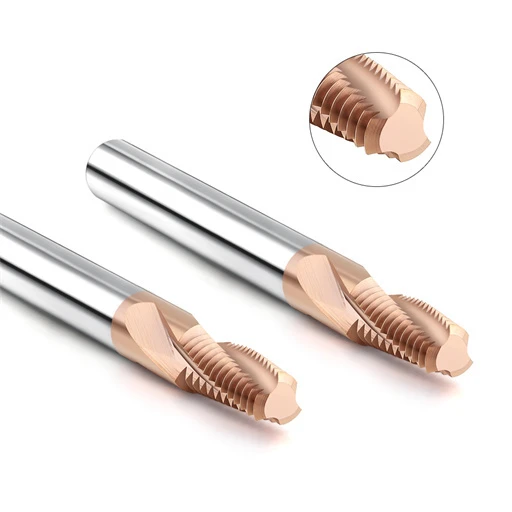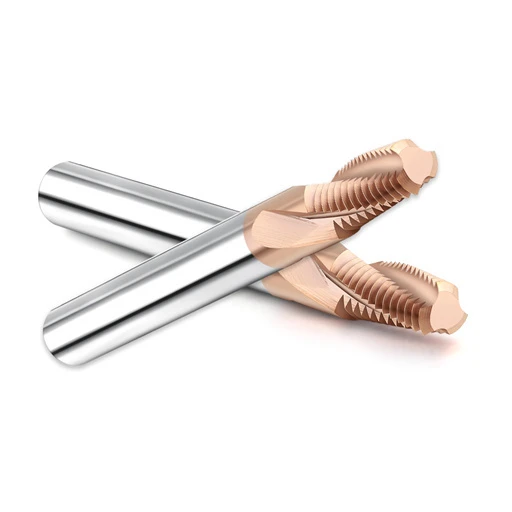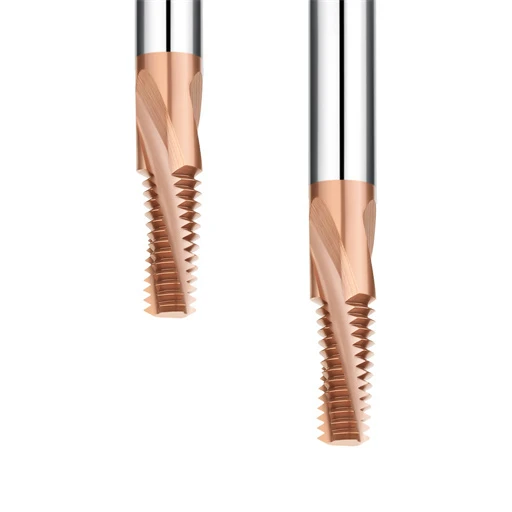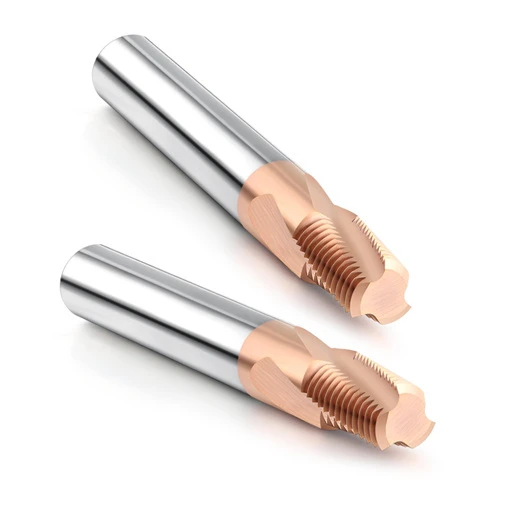
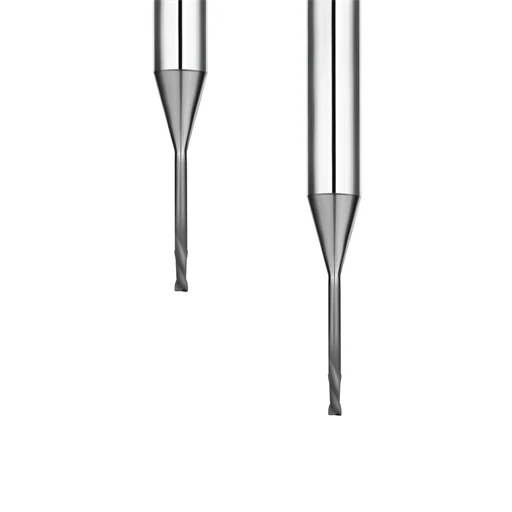
Graphite machining presents severe abrasive wear challenges that quickly degrade standard carbide tools. While switching to diamond-coated end mills is necessary, inconsistent tool life and poor machining efficiency often persist due to mismatched tooling solutions. Resolving these issues requires a manufacturer that understands the unique demands of graphite rather than just selling off-the-shelf coatings.
Evaluating potential suppliers goes beyond simple pricing or basic catalog browsing. Key factors like tool substrates, diamond coating thickness, edge preparation, and geometry dictate overall performance. A reliable manufacturer must demonstrate deep technical expertise in custom solutions for varied graphite applications.
Precision projects demand specific tool configurations suited to complex geometries and operational strategies. Micro-features require specialized micro end mills, while complex contours rely on ball nose or corner radius tools. Choosing the correct flute count ensures optimal chip evacuation, rigidity, and machining efficiency during continuous production runs.
OEM capabilities are essential for handling special dimensions and high-volume manufacturing demands. The ideal supplier translates your exact material specifications, tolerances, and operating conditions into stable, reliable tooling. This transforms procurement from a basic purchasing task into a comprehensive technical partnership.
Assessing manufacturers requires focusing on proven graphite machining experience, tool consistency, and rigorous performance validation. A dependable supplier delivers predictable tool life and high dimensional accuracy across large production batches. Prioritizing these technical criteria ensures your CNC operations maintain maximum efficiency and product quality.
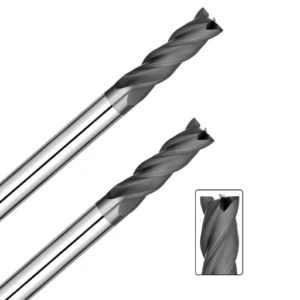
Why Choose a Specialized Diamond-Coated End Mill Manufacturer for Graphite Machining?
In practical CNC machining of graphite electrodes, tool performance relies on far more than just a surface coating. Clients often test identical-looking cutters, only to discover major variances in edge durability and dimensional stability during long production runs. Tool consistency depends heavily on the carbide substrate, edge preparation, coating adhesion, and precision engineering.
When sourcing graphite machining tools, prioritize manufacturers with deep material expertise over basic catalog specifications. A specialized diamond-coated end mill manufacturer evaluates your specific stock allowances, surface finish requirements, and operating conditions. They translate these real-world challenges into tailored tool designs and rigorous testing protocols for optimal performance.
Advantages of SAMHO Diamond Coated End Mills for Graphite Machining
Successful graphite milling requires strict lifecycle consistency, starting from the raw carbide substrate to the final diamond film. As an experienced SAMHO diamond coated end mills manufacturer, we optimize cutting diameter, core thickness, flute geometry, and edge condition. For micro-features and intricate contours, controlling radial runout ensures absolute machining stability.
Batch production often exposes dimensional drift that standard tools fail to prevent. Solving this issue requires precise adjustments to tool geometry and coating characteristics rather than arbitrary hardness increases. Partnering with a dedicated SAMHO diamond coated end mills manufacturer ensures your processing strategies, tool specs, and service life align seamlessly.
How Diamond Coated Graphite End Mills Meet Graphite Machining Needs
Graphite continuously exerts intense abrasive wear on cutting edges, eventually causing dimensional deviations and surface roughness fluctuations. Assessing coating wear resistance and adhesion holistically prevents premature edge chipping during continuous production runs. Diamond-coated graphite end mills provide the superior hardness required to combat abrasive dust effectively.
Tool selection must adapt to specific operational demands, including roughing, finishing, or micro-feature profiling. While diamond-coated graphite end mills remain the gold standard for high-volume production, balancing tool costs against service life for small-batch runs ensures optimal project efficiency.
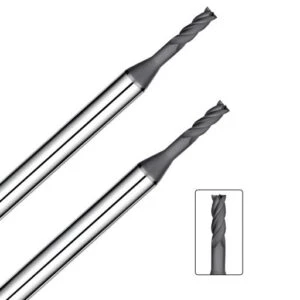
How to Assess the Quality of Diamond Coated End Mills?
Assessing cutting tool reliability in graphite machining requires evaluating long-term performance rather than relying on the first test workpiece. Initial cuts can look flawless, yet continuous manufacturing often reveals rapid edge wear, dimensional drift, and batch inconsistency. True diamond coated end mill quality is proven when consistent manufacturing precision translates into repeatable machining results across high-volume production.
Effective tool evaluation combines microscopic inspection with practical machining trials. Instead of comparing initial price quotes, analyze the supplier’s quality controls regarding substrates, edge preparation, and coating adhesion. Monitoring wear trends and radial runout during live graphite milling provides a much clearer picture of overall manufacturing capability.
Quality of Diamond Coating and Carbide Substrate
Graphite is severely abrasive, meaning diamond coatings cannot be evaluated independently of their carbide substrates. If the underlying carbide lacks proper grain structure or hardness, premature edge flaking will occur even with a high-end coating. Successful graphite machining relies on a robust metallurgical bond between the coating and a low-cobalt substrate.
Thicker coatings are not always better; uniformity, adhesion strength, and geometric compatibility matter most. Micro-tools require precise coating control to preserve sharp cutting edges, while roughing cutters demand enhanced thermal stability. Evaluating the diamond-coated end mill for graphite machining as an integrated system guarantees superior wear resistance.
Cutting Edge, Dimensional Accuracy, and Tool Consistency
Precision graphite components require strict control over edge integrity and radial runout to prevent surface defects in micro-slots and thin walls. Even minor geometric deviations will magnify errors on the workpiece during intricate contouring operations. Verifying edge symmetry through a mix of microscopic inspection and actual test cuts ensures reliable continuous performance.
Batch-to-batch consistency is vital when producing dozens of identical graphite electrodes in sequence. Variations in concentricity or dimensional tolerances force operators into frequent, costly machine offsets. Consistent tool manufacturing eliminates these unexpected variations, ensuring seamless integration across extended procurement cycles.
Verifying Quality through Tool Life and Machining Performance
Tool suitability must be verified through comprehensive lifecycle testing rather than isolated surface finish checks. Tracking production volume, cutting speeds, and dimensional drift over extended run times uncovers true tool wear patterns. This empirical data reveals how a tool handles continuous abrasive friction under real-world factory conditions.
Ultimately, buyers should focus on effective output rather than abstract hourly tool-life claims. Measuring how much reliable machining a tool accomplishes under your specific parameters delivers actionable insight. Selecting a diamond-coated end mill for graphite machining based on verifiable performance data ensures maximum shop floor productivity.
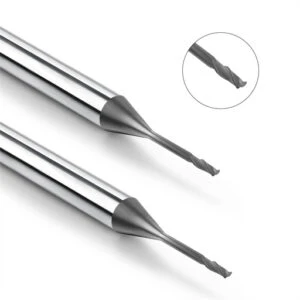
How to Select a Diamond Coated End Mill for Graphite Machining?
Graphite tool selection requires matching cutter geometry to workpiece characteristics rather than choosing the most advanced option. Applications vary from deep, narrow slots to large flat surfaces and complex 3D contours, dictating different structural needs. Prioritize cutting edge suitability over basic diameter and coating labels to ensure stable performance.
Testing different tool geometries helps prevent edge chipping and dimensional drift during continuous production. Assess whether micro, flat-bottom, corner-radius, or ball-nose structures fit your primary machining task. Evaluating surface quality, chip evacuation, and wear through targeted test cuts guarantees long-term process reliability.
Diamond Coated Micro End Mills: Micro-Graphite Machining
Small-diameter cutters are essential for intricate graphite electrodes featuring narrow slots and thin walls. Standard-sized tools often fail in these tight spaces or cause edge damage due to poor rigidity matching. Sourcing a high-performance diamond-coated micro end mill requires focusing on tool diameter, core thickness, radial runout, and edge integrity.
Controlling cutting loads and securing rigid tool holding prevents premature failure during fine structural machining. Even minimal runout at small diameters severely impacts machined profiles and dimensional accuracy. Gradual feed adjustments based on observed wear patterns ensure optimal micro-machining results.
Diamond Coated Flat End Mill: Precision Flat-Surface Milling
Flat end mills excel at machining graphite flat surfaces and cavity bottoms where precise depth control is critical. Mismatched bottom-edge conditions often cause visible tool marks and height variations during finishing passes. Selecting a diamond-coated flat end mill requires analyzing bottom-edge quality, runout, and surface roughness parameters.
Combining flat end mills with optimized toolpath strategies delivers superior flatness during both roughing and finishing. Stable cutting edges consistently outperform aggressive feed rates when trying to eliminate surface imperfections. Evaluating the tool alongside actual machining allowances guarantees flawless cavity floors.
Diamond Coated Corner Radius End Mill: Efficient Machining and Edge Protection
Graphite cavities and complex profiles create severe stress concentrations on sharp 90-degree tool tips. A reinforced corner radius distributes cutting forces effectively, reducing edge chipping during frequent directional changes. Proper radius selection strikes an ideal balance between tool life and high-speed machining efficiency.
Matching the corner radius size to your workpiece geometry prevents unnecessary tool wear during roughing and semi-finishing. However, tight right-angle corners may still require alternative tooling or specialized ball-nose strategies. Careful evaluation of workpiece geometry ensures your diamond-coated corner radius end mill delivers maximum durability.
Diamond Coated Ball Nose End Mill: Complex Surfaces and Finishing
Ball-nose cutters are vital for machining 3D surfaces and mold cavities on graphite electrodes. Surface finish depends heavily on step-over distance, tool diameter, and axis direction alongside cutter precision. Optimizing the finishing toolpath often resolves surface marks faster than simply replacing the cutting tool.
Evaluating ball-nose precision, effective cutting length, and runout guarantees smooth 3D contouring performance. Deep pockets require careful management of tool overhang to maintain necessary rigidity. Verifying surface quality through practical test cuts ensures your diamond coated ball nose end mill meets exacting industry standards.
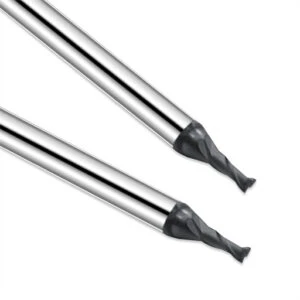
2-Flute vs 4-Flute Diamond-Coated End Mills
More flutes do not automatically equate to higher efficiency in graphite machining. Increasing flute counts often shrinks chip evacuation space, trapping fine abrasive dust and accelerating edge wear during heavy cuts. Matching the correct flute count to your specific machining allowance and depth of cut is vital for stable performance.
Choosing between a 2-flute diamond coated end mill and a 4-flute diamond coated end mill depends entirely on your material removal and chip clearance needs. Rather than asking which tool is universally better, evaluate whether your priority is rapid evacuation or surface finish. Balancing these operational demands guarantees optimal machining results.
When Should You Choose a 2-Flute Diamond Coated End Mill?
Two-flute designs excel in graphite roughing, deep slotting, and heavy material removal applications. Fine graphite dust easily packs into tight flutes, making expansive chip pockets essential to prevent premature edge chipping. Prioritizing ample clearance protects the cutting edges during aggressive, deep-cavity operations.
Testing a 2-flute diamond-coated end mill first is recommended for deep graphite electrode roughing. While high feed rates are tempting, starting with stable spindle loads ensures proper debris evacuation and extends tool life. Adjusting parameters gradually based on wear observations yields the most reliable outcomes.
When Should You Choose a 4-Flute Diamond Coated End Mill?
Four-flute configurations are ideal for graphite finishing passes where enhanced tool rigidity and edge definition are required. Additional cutting edges distribute the load, maintaining smooth contact during high-speed, shallow contouring. Proper machine rigidity and dust extraction are prerequisites for successful multi-flute operations.
Avoid using a 4-flute diamond-coated end mill to boost roughing efficiency where dust accumulation is a risk. Restricted flute spacing can trap debris and ruin surface finishes in deep slots. Reserve these tools for precision finishing and tight-tolerance geometric profiles.
How Do You Select the Number of Flutes Based on Graphite Grade and Machining Strategy?
Graphite particle structure, density, and hardness dictate that flute selection cannot rely on material names alone. High-density graphite exhibits distinct cutting loads that require tailored tooling strategies rather than generic parameters. A phased approach—using specific tools for roughing versus finishing—optimizes both productivity and edge integrity.
Evaluating compatibility between tool geometry and your specific machining strategy ensures long-term process stability. Comprehensive testing of tool wear, dimensional accuracy, and surface finish reveals the true value of your setup. Focus on overall performance consistency rather than just debating 2-flute versus 4-flute configurations.
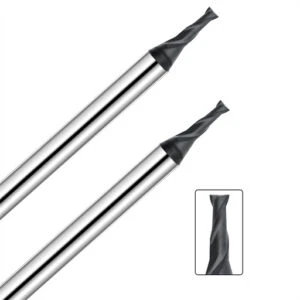
Why Are Diamond Coated Graphite End Mills Suitable for CNC Graphite Machining?
Standard carbide tools often suffer from rapid edge wear during continuous graphite machining, causing dimensional drift over long production runs. Evaluating tooling performance requires looking beyond initial test cuts to monitor wear rates, edge integrity, and stability under heavy stock removal. Diamond-coated graphite end mills provide superior wear resistance that keeps high-volume electrode production on schedule.
Achieving optimal results requires matching the tooling system to your specific graphite grade, machine rigidity, and dust extraction capabilities. Switching to diamond-coated solutions is only part of the equation; proper cutting parameters and toolpaths are equally vital. A holistic approach ensures stable, long-term performance across complex precision components.
How Does Diamond Coating Improve the Wear Resistance of Graphite End Mills?
Abrasive graphite dust quickly dulls standard carbide cutting edges during high-density milling operations. Ensuring uniform diamond film distribution and robust coating adhesion to the substrate prevents premature flaking. Graphite end mill wear resistance depends heavily on this molecular bond rather than just surface appearance.
Micro-tools require precise coating control to preserve sharp edge geometries without losing dimensional accuracy. Conversely, roughing cutters demand enhanced thermal stability to withstand prolonged abrasive friction. Evaluating actual wear data under shop floor conditions guarantees true coating reliability.
How Do Diamond Coated End Mills Extend Tool Life in Graphite Machining?
Frequent tool changes introduce costly machine downtime, re-zeroing, and dimensional compensation that far outweigh initial cutter costs. Tracking total output volume, machining time, and wear patterns reveals true economic value. Maximizing diamond coated end mill tool life minimizes interruptions and maximizes overall shop floor productivity.
True tool longevity relies on balancing cutting loads, feed rates, and depth of cut with optimized tool geometry. Incremental adjustments based on observed wear points prevent catastrophic edge chipping. Simultaneously refining dust extraction and machining parameters ensures prolonged tool service.
How Can You Balance Graphite Surface Finish with Machining Efficiency?
Balancing high material removal rates with pristine surface quality requires a structured division between roughing and finishing passes. Aggressive feed rates often cause visible tool marks and fine edge chipping on complex graphite profiles. Fine-tuning step-overs, tool paths, and cutter geometry resolves these surface imperfections effectively.
Achieving superior graphite surface finishing depends on a harmonious match between the cutting tool and your overall CNC process. Maintaining stable cutting loads and sharp edge conditions guarantees both high efficiency and flawless part geometry. Proper process planning eliminates the need to compromise between speed and finish quality.
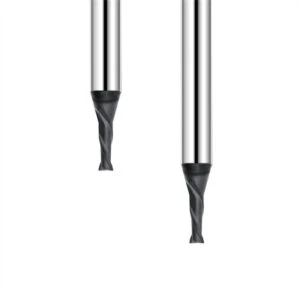
How to Select an OEM Diamond Coated End Mill Manufacturer?
Sourcing non-standard graphite tools requires evaluating more than just basic dimensional blueprints. Custom projects demand a deep analysis of cutting lengths, flute geometries, and post-coating tolerances to ensure proper machining clearances. Choosing a reliable OEM diamond coated end mill manufacturer means working with experts who optimize tool parameters for specific graphite milling conditions rather than simply copying drawings.
Provide detailed workpiece data, spindle specs, and machining stages rather than just diameter and coating requests. Validating dimensional consistency between initial prototypes and subsequent batches prevents costly machine downtime during production. Partnering with experienced manufacturers guarantees stable performance across all your custom graphite projects.
Dimensional and Geometric Customization for OEM Diamond Coated End Mills
Custom tool design must balance cutting length, tool rigidity, and clearance space to prevent dangerous vibration risks. Simply increasing tool overhang for deep features often causes breakage; optimizing core thickness and flute proportions is a safer approach. Tailoring OEM diamond-coated end mills to exact workpiece geometries eliminates contour errors and dust accumulation.
Geometric customization must address core thickness and chip evacuation space alongside cutting diameters. Verifying accessibility and dimensional stability through practical test cuts ensures tools perform reliably in micro-slots and deep cavities. This thorough engineering approach delivers robust solutions for complex graphite components.
Customizing Flutes, Helix Angles, and Cutting Edges for OEM Diamond Coated End Mills
Graphite machining requires careful selection of flute counts and helix angles to prevent fine dust accumulation. For example, adding flutes to boost speed can trap debris if chip evacuation space is insufficient. Customizing OEM diamond-coated end mills involves balancing flute design with feed rates and material densities.
Because graphite is brittle, edge chamfering and sharpness directly impact chipping resistance and surface integrity. High-density graphite finishing and standard roughing demand distinct edge preparations and tool rigidities. Integrating edge design with your specific machining path ensures optimal structural durability.
Prototyping and Mass Production of Custom Diamond Coated End Mills
Jumping straight into mass production for non-standard cutters is a risky strategy that often leads to unexpected tool wear. Validating initial samples through practical test cuts ensures dimensional accuracy, edge integrity, and surface finish match expectations. Prototyping allows engineers to refine custom diamond-coated end mills before committing to large-scale fabrication.
Transitioning to bulk manufacturing requires strict quality control over substrate dimensions, grinding precision, and coating uniformity. Establishing clear acceptance criteria during the prototype phase guarantees batch-to-batch consistency for long-term production runs. This rigorous validation process minimizes process adjustments and maximizes shop floor efficiency.
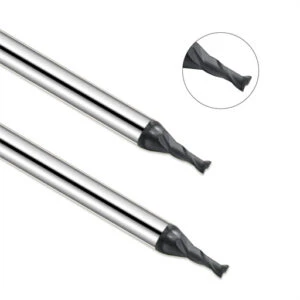
What Manufacturing Capabilities Should You Check When Selecting a Diamond Coated End Mill Manufacturer?
Evaluating a diamond coated graphite end mill supplier requires looking beyond basic product catalogs to examine their core manufacturing workflows. A tool that matches blueprint specs can still exhibit excessive runout or premature wear during continuous graphite machining. Reviewing substrate quality, grinding precision, and coating application ensures overall process reliability.
Sourcing long-term graphite tooling means investigating supplier consistency across every production stage. Check whether their grinding equipment maintains tight dimensional tolerances and if finished products undergo rigorous quality checks. Aligning these capabilities with your exact machining precision guarantees dependable shop floor performance.
Carbide End Mill Grinding and Dimensional Accuracy
Precision grinding dictates the final diameter, flute length, core thickness, and edge geometry of every cutting tool. Even minor geometric deviations can compound with spindle runout, altering the effective cutting path on complex graphite parts. Controlling these variables during production prevents dimensional drift in narrow slots and micro-electrodes.
Customizing grinding processes to suit specific tool diameters and workpiece materials yields far superior machining results. Asking suppliers about their dimensional tolerances and mass-production stability reveals their true manufacturing capability. High-precision carbide end mill grinding is fundamental to achieving repeatable graphite milling outcomes.
Diamond Coating Process and Coating Adhesion
Abrasive graphite dust constantly bombards cutting edges, exposing any localized defects or weak bonds in the diamond film. Evaluating the diamond coating process requires assessing uniformity, coverage, and molecular adhesion rather than just checking surface appearance. Thicker coatings do not automatically guarantee better durability if adhesion fails under thermal stress.
Small-diameter tools demand precise coating control to preserve sharp edges without compromising structural integrity. Inquiring about adhesion verification methods helps secure reliable diamond-coated end mills for high-density graphite machining. Integrating robust coating technology with proper substrate preparation prevents premature delamination.
Tool Inspection, Runout, and Diamond Coated End Mill Quality Control
Comprehensive finished-product inspection must evaluate physical dimensions, edge condition, and runout as an interconnected system. Subtle variances in coaxiality or edge symmetry can easily cause dimensional errors on precision graphite components. Relying solely on basic diameter measurements is never enough to guarantee tool conformity.
Strict diamond-coated end mill quality control catches manufacturing deviations before tools ever reach your CNC machine. Focus your supplier evaluations on their critical dimension tracking, runout testing, and batch consistency protocols. Proactive quality assurance eliminates unexpected tooling failures during continuous production runs.
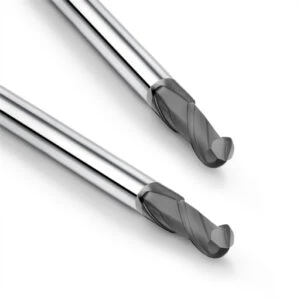
How Do You Compare Diamond Coated End Mill Manufacturers and Suppliers?
Choosing the right partner for graphite machining involves more than comparing price tags or looking at product catalogs. True performance relies on whether a supplier understands your specific materials, part geometry, and machining strategies from substrate to coating. Evaluating diamond-coated end mill manufacturers requires testing them against real shop floor conditions rather than relying on generic claims.
Implement a reliable three-tiered evaluation approach for long-term procurement success. First, verify their practical experience with similar graphite grades and application challenges. Second, assess their ability to engineer custom tooling solutions. Finally, confirm their consistency in quality control, lead times, and technical support during volume production.
Does the Manufacturer Possess Graphite Machining Experience?
A true graphite tooling specialist looks far beyond the word “graphite” on a product data sheet. They understand material density, grain structures, abrasive wear rates, and the distinct challenges of roughing versus finishing. Experienced diamond-coated end mill manufacturers proactively address dust accumulation, edge chipping, and thermal wear.
Engage potential suppliers using your exact material grades, part dimensions, and machine specifications. Pay close attention to the technical questions they ask about your spindle speeds and overhang limits. This dialogue reveals whether they are analyzing your actual machining conditions or simply pushing off-the-shelf stock.
Can They Provide Custom or OEM Diamond Coated End Mills?
Standard cutting tools often fail to accommodate deep pockets, narrow slots, or unique corner radii in complex graphite electrodes. Forcing standard tools into specialized geometries creates excessive vibration and premature tool failure. Verifying genuine customization capabilities upfront ensures your OEM diamond-coated end mills fit exact operational constraints.
Collaborate closely with suppliers by sharing blueprints, tool drawings, and workpiece samples before finalizing specifications. Reviewing critical variables like flute geometry, helix angles, and post-coating tolerances prevents costly design errors. Reliable manufacturers guarantee seamless consistency between initial prototypes and full-scale mass production.
How Do You Evaluate Suppliers Based on Quality, Tool Life, Lead Time, and Technical Support?
Low unit prices can be deceiving if frequent tool changes and dimensional drift drive up overall production costs. Evaluating suppliers requires analyzing real machining data, including tool wear rates, parts per life, and batch-to-batch consistency. A slightly higher initial investment in quality diamond-coated end mills often yields superior long-term value.
Request verifiable data on tool life, delivery lead times, and engineering support to match your specific production targets. Sharing detailed technical parameters and existing machining blueprints helps establish a transparent, high-performing partnership. Data-driven supplier evaluations eliminate costly guesswork and maximize shop floor efficiency.
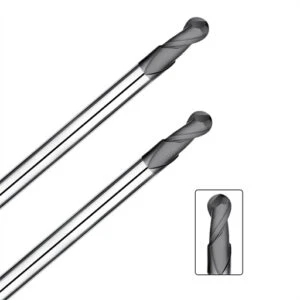
FAQ: Choosing a Diamond Coated End Mill Manufacturer for Graphite Machining
Choosing a supplier for graphite processing requires looking past brand names and initial price tags. True manufacturing suitability depends on a deep understanding of abrasive wear, substrate metallurgy, and precision edge preparation.
Evaluating potential partners requires analyzing diamond coated end mill quality, custom manufacturing capabilities, and batch-to-batch consistency. Testing tools against your specific shop floor conditions guarantees long-term machining reliability.
Which Is the Best Diamond Coated End Mill Manufacturer for Graphite Machining?
No single manufacturer holds a universal monopoly on the best graphite tooling. The ideal partner understands material density variations and provides comprehensive technical evaluations from substrate selection to finished-product inspection.
Focus your supplier comparisons on practical graphite processing experience and verified test cut results. Sourcing from manufacturers who prioritize tailored solutions ensures superior performance across high-density electrode production.
What Is the Best Diamond Coated Graphite End Mill?
Selecting the ideal cutter depends on your specific graphite grade, workpiece geometry, and machining stage. Factors like tool diameter, flute count, and depth of cut dictate structural suitability for every unique application.
Prioritize diamond-coated graphite end mills that have proven their durability in actual machining trials. Validating dimensional stability and wear resistance through targeted testing delivers the most dependable shop floor outcomes.
Should I Choose a 2-Flute or 4-Flute Diamond Coated End Mill?
Two-flute tools provide expansive clearance pockets that prevent fine dust packing during deep slotting and roughing passes. Four-flute configurations excel in precision finishing when machine rigidity and dust extraction are strictly optimized.
Balancing your material removal rate with effective chip evacuation determines the ideal flute count. Testing both a 2-flute diamond coated end mill and a 4-flute diamond coated end mill under your specific cutting parameters reveals the best configuration.
Can SAMHO Provide OEM Diamond Coated End Mills?
Custom projects require precise adjustments to cutting diameters, effective lengths, helix angles, and post-coating tolerances. SAMHO engineering teams evaluate your blueprints and material grades to design fully optimized, non-standard tooling solutions.
Providing existing tool drawings and current machining parameters initiates a rigorous prototyping and validation process. SAMHO OEM diamond-coated end mills ensure strict dimensional consistency and reliable performance before moving to full-scale mass production.
How Can I Verify Diamond Coated End Mill Quality?
Judging a tool’s quality based solely on initial visual inspection or a single test cut is a common mistake. True durability requires examining carbide substrates, coating adhesion, radial runout, and edge integrity holistically.
Tracking total parts machined, dimensional drift, and wear patterns during continuous runs reveals true performance. Verifying diamond coated end mill quality through empirical machining data eliminates unexpected tool failures.