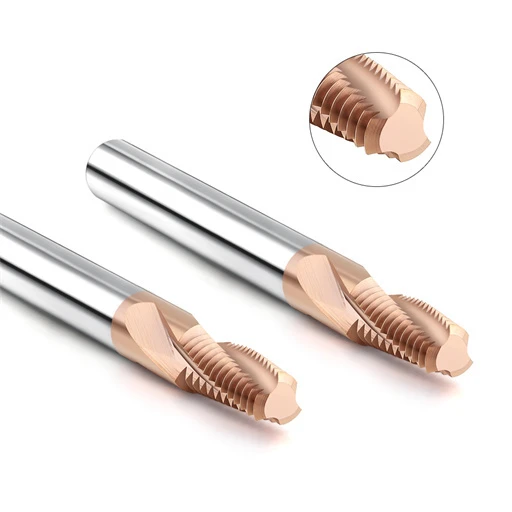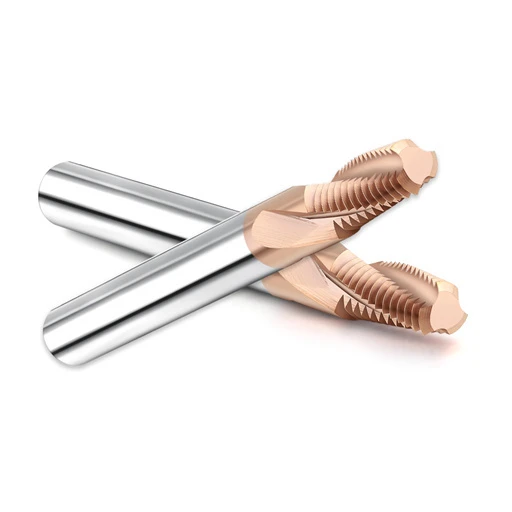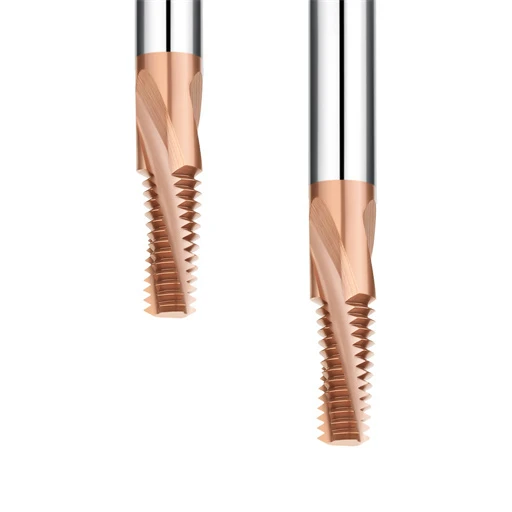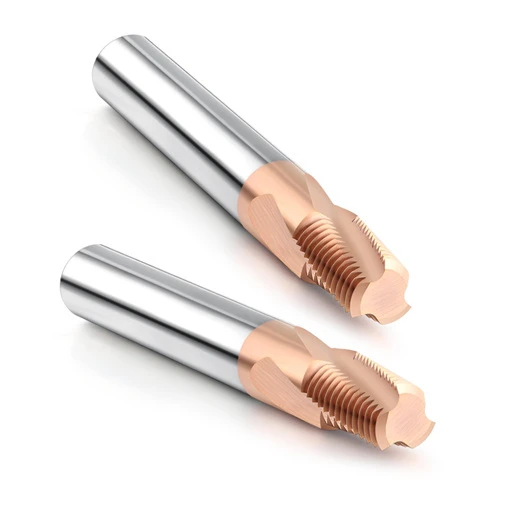
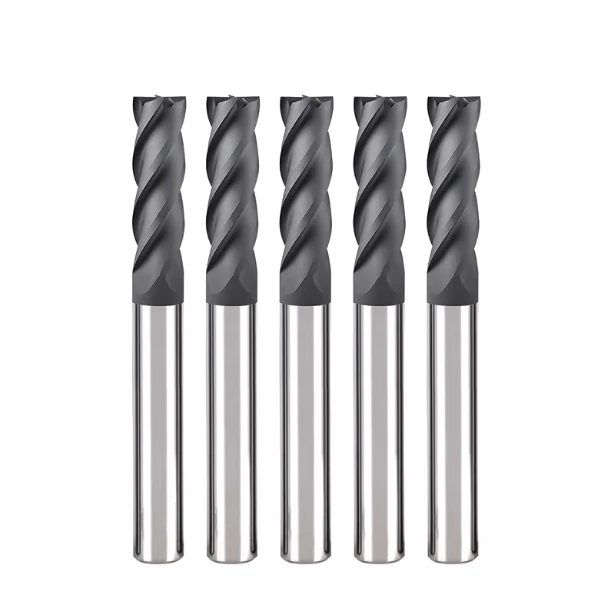
We recently resolved a severe tool-life issue on a graphite electrode production run. The customer was using standard off-the-shelf cutters from their existing tooling vendor and saw acceptable results on the first few parts. However, edge chipping, heavy abrasive wear, and excessive dust quickly followed, forcing continuous machine stoppages and frequent offset corrections.
The root cause was not tool failure, but process misalignment. The carbide substrate, cutting edge prep, and diamond coating were poorly matched to the abrasive nature of their specific graphite grade. Using identical cutter geometry for both roughing passes and finishing passes further compromised dimensional accuracy and surface finish.
In graphite CNC machining, prioritizing purchase price and catalog size over application engineering is a costly mistake. A competent graphite milling cutter supplier must understand how grain size, open porosity, and Shore hardness impact tool wear. They should prescribe distinct tooling strategies rather than treating graphite like homogeneous aluminum or steel.
Roughing demands robust core thickness, optimized flute volume, and high fracture toughness to evacuate abrasive particles efficiently without micro-chipping. Finishing stages, by contrast, require ultra-sharp cutting edges, controlled runout, and stable tool geometry to prevent corner breakdown on thin electrode ribs.
Off-the-shelf standard sizes often fall short when tight clearances, deep pockets, or fragile 3D details dictate tool rigidity. An experienced graphite end mill manufacturer will engineer custom neck reliefs, reach-to-diameter ratios, and corner radii to suppress tool deflection. Forcing a standard tool into an aggressive toolpath almost always results in chatter and premature coating delamination.
Evaluating a tooling partner requires looking beyond unit cost. Can their engineering team explain why a specific helix angle fits your spindle speed and graphite grade? Can they analyze abnormal flank wear or suggest parameters when transitioning from isotropic to extruded materials? These practical technical answers define true manufacturing competence.
Finding the right graphite milling cutter supplier ensures long-term process stability, predictable cycle times, and minimal scrap rates. When your tooling partner can evaluate roughing versus finishing dynamics and deliver custom-engineered diamond cutters, your machine shop gains a distinct competitive advantage.
Before committing to a vendor, verify their manufacturing capabilities, substrate sourcing, and quality control systems. Partner with an engineering-driven manufacturer that optimizes your entire machining strategy rather than simply selling catalog items.
What Graphite Machining Tools Does a Graphite Milling Cutter Supplier Offer?
When consulting on customer projects, we rarely start by asking for a part number. We first evaluate the electrode geometry, material grade, stock allowances, and required tolerances. For complex features, trying to run a single cutter from start to finish compromises edge life, cycle time, and part consistency. A balanced tooling package always beats chasing the specs of one general-purpose cutter.
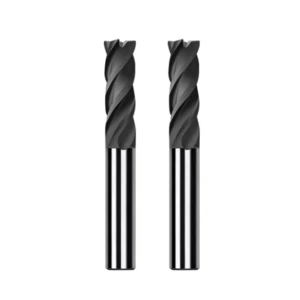
A qualified graphite milling cutter supplier should offer targeted solutions rather than an oversized catalog. Practical graphite CNC milling demands careful trade-offs between micro-grain carbide substrates, diamond coatings, flute geometry, and dust evacuation. Matching these technical factors to your machine spindle rigidity ensures repeatable, stable production runs.
Graphite Milling Cutter and Graphite End Mill Product Types
In our shop, we organize graphite end mills by structural function and toolpath intent. Heavy contouring calls for maximum core thickness, high rigidity, and open flute pockets to evacuate fine abrasive dust. Conversely, deep rib and narrow slot milling require precise neck reliefs, short flute lengths, and tight runout control to eliminate deflection.
We categorize products by specific machining tasks rather than generic names. Roughing, 3D profiling, pocketing, and detailing place completely different mechanical stresses on the cutting edge. Buying cutting tools solely by cutter diameter or price tag ignores the critical match between edge geometry and your actual operating conditions.
Diamond Coated Graphite Milling Cutter
We recommend diamond-coated cutters for high-density, fine-grain graphite grades and unattended batch production. We once audited a shop using uncoated solid carbide tools where rapid flank wear caused dimensional drift within four parts. Switching to a true diamond coated graphite milling cutter stabilized part dimensions and lowered overall tooling costs across the run.
Synthetic diamond coatings offer unmatched hardness against graphite’s abrasive micro-fracturing wear. However, long tool life also depends on coating adhesion, uniform layer thickness, and balanced substrate prep. While uncoated tools work for quick prototypes, diamond-coated options deliver the lowest cost-per-part on tight-tolerance production jobs.
Roughing Graphite Milling Cutter vs. Graphite Finishing End Mill
Using the same cutter for roughing and finishing creates severe quality issues. One client attempted to skip tool changes on complex EDM electrodes by running one cutter throughout the entire toolpath. By the time it reached the final pass, edge rounding had already occurred, causing edge breakout and out-of-spec ribs.
A roughing graphite milling cutter is engineered with robust edge strength to remove bulk material quickly without chipping. In contrast, a graphite finishing end mill features razor-sharp cutting geometry, ultra-low runout, and tighter radius tolerances to achieve fine surface finishes. Separating heavy chip loads from final profile passes is critical for tight-tolerance electrodes.
How to Evaluate Graphite Milling Cutter Quality?
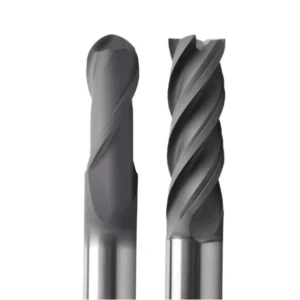
We never assess a graphite milling cutter based on factory appearance alone. We once audited a facility using two tools with identical specs: same diameter, flute count, and grade designation. One held tight tolerances across dozens of electrodes, while the other suffered rapid flank wear and corner chipping within hours. Grinding consistency, runout, substrate quality, and coating adhesion are the true differentiators.
Assessing cutter reliability requires real cutting data, not catalog promises. Graphite’s abrasive nature and fine particulate dust quickly accelerate wear on cutting edges. We evaluate a balanced matrix of edge retention, core rigidity, dust clearance, and batch-to-batch repeatability. True quality is proven through sustained tool life and consistent spindle loads.
Key Metrics for Evaluating Graphite Milling Cutter Quality
Incoming inspection should verify outer diameter, flute geometry, total indicator reading (TIR), and edge hone under a microscope before test cuts begin. Even sub-micron edge chipping leads to catastrophic failure at 20,000+ RPM spindle speeds. We also monitor wear symmetry along the flutes to rule out grinding runout, defective toolholders, or improper collet clamping.
Evaluating long-term tool life requires controlled validation cuts rather than single-piece testing. Standardize your depth of cut, feed per tooth, and spindle speed on the same graphite block, then measure dimensional drift every ten parts. For continuous production, repeatability across consecutive tool batches is what matters most.
Diamond Coating, Carbide Substrate, and Tool Life
We treat the diamond coating and the carbide substrate as an integrated metallurgical system. Simply applying a coating does not guarantee wear resistance or extended tool life. If the tungsten carbide substrate lacks micro-grain fracture toughness or proper cobalt-leaching edge prep, the diamond layer delaminates prematurely.
For any diamond-coated graphite milling cutter, film adhesion and micro-hardness govern production performance. Graphite generates aggressive abrasive rubbing; once the coating flakes, the carbide core wears out in minutes. Smart machine shops calculate cost-per-part and total machining minutes rather than comparing upfront tooling costs.
The Relationship Between Graphite Milling Cutter Quality, Machining Precision, and Surface Quality
Dimensional drift on stable CNC machines usually traces back to gradual cutting edge degradation. As the cutting edge micro-fractures, cutting forces spike, inducing deflection on thin ribs and rounding sharp workpiece corners. This directly impacts profile dimensions, Ra finish values, and burr formation during critical electrode finishing.
To verify graphite milling cutter quality, inspect the finished graphite component alongside tool wear patterns. Examine thin ribs for edge chipping, measure surface roughness, and check dust evacuation behavior in deep pockets. A truly capable cutter maintains dimensional tolerances and sharp workpiece contours long after initial roughing passes are complete.
Why Does Graphite Milling Cutter Geometry Affect Graphite Machining?
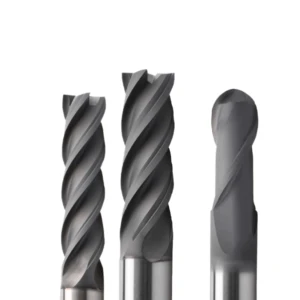
In production shops, switching cutter profiles without altering tool diameter, speeds, or feeds often yields completely different edge wear and surface finishes. Machining narrow slots, delicate ribs, and deep cavities in graphite electrodes requires more than just cutting clearance. Tool rigidity, web thickness, edge preparation, and flute geometry directly dictate cutting forces and dust evacuation.
Selecting the right tool goes beyond picking between a 2-flute and 4-flute end mill. We work backward from the graphite grain size, hardness, feature depth, and finishing tolerances. Roughing bulk material and finishing delicate 3D contours demand distinctly engineered flute profiles. Well-optimized graphite milling cutter geometry strikes the balance between edge strength, chip clearance, and deflection control.
Graphite Milling Cutter Geometry and Cutting Edge Design
When evaluating cutters, edge micro-geometry and the interplay between rake and relief angles are critical. We once solved an issue for a customer experiencing corner blowouts on thin-rib graphite electrodes. Their existing cutters had aggressive, sharp rake angles that cut easily but lacked the edge support needed to handle continuous micro-impacts on brittle graphite.
We do not design or select graphite milling cutter geometry for razor-sharpness alone. Graphite fractures in fine particulate dust rather than shearing into plastic chips, meaning unsupported edges will micro-chip. Pairing a balanced hone with a reinforced cutting wedge reduces localized chipping, minimizes cutting resistance, and protects fragile workpiece ribs during interrupted cuts.
Flute Count, Helix Angle, and Chip Evacuation Performance
Graphite roughing demands significant flute space for efficient chip evacuation. Machining dry produces abrasive graphite dust that packs into tight flute valleys, leading to friction, heat buildup, and dust recutting. For bulk material removal, choosing geometry with high flute volume is essential to carry abrasive dust away from the cut zone.
Helix angles and flute counts must match part geometry and operational loads. Lower flute counts with moderate helix angles provide superior chip clearance and core rigidity for deep pockets. Higher flute counts with steeper helixes provide smooth peripheral finishes and low cutting forces on shallow contours. When chip packing or chatter occurs, adjust the flute geometry along with your feed rates.
Selecting Graphite Milling Cutter Geometries for Different Applications
We analyze the workpiece blueprint to establish the exact tooling strategy before starting production. Bulk stock removal on heavy graphite blocks requires a rigid cutter core and impact-resistant edge protection. Deep, narrow ribs require short flute lengths, tapered neck reliefs, and controlled runout to prevent deflection and dimensional taper.
There is no universal graphite milling cutter geometry suited for every stage of electrode manufacturing. Grain size, shore hardness, machine spindle rigidity, and stock allowances dictate the optimal tooling path. Roughing requires a heavy-duty toolpath tool, while finishing demands high-precision contouring tools. The right geometry ensures reliable chip evacuation, minimal tool deflection, and repeatable part precision.
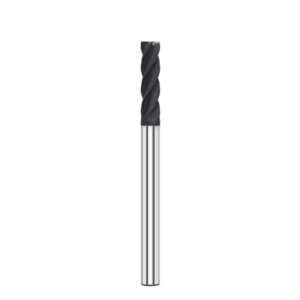
How Do You Select a Graphite Milling Cutter Based on the Machining Process?
We never recommend running a single tool for an entire machining cycle. One customer attempted to eliminate tool changes by using the same cutter from bulk roughing through the final contour. While the roughing cycle ran smoothly, flank wear degraded the cutting edge before finishing began, causing corner blowouts and dimensional failure. Matching specific tooling to each distinct operation is essential.
Choosing the right graphite milling cutter requires breaking down the toolpath into distinct phases. Roughing requires high material removal rates, core rigidity, and open chip clearance. Finishing prioritizes dimensional accuracy, edge retention, and fine surface finishes. Factoring in feature depth, wall thickness, and spindle runout ensures consistent results across the entire production run.
Selecting a Roughing Graphite Milling Cutter
For bulk material removal on raw blocks, process stability takes priority over high feed rates. In a high-volume electrode job, poor dust evacuation caused abrasive recutting and accelerated edge degradation. We switched to an open-flute geometry and dialed in the stepover parameters, which immediately restored thermal balance and stabilized the operation.
When selecting a roughing graphite milling cutter, focus on core thickness, flute volume, and abrasive wear resistance. A razor-sharp cutting edge micro-chips easily under heavy chip loads in dense graphite. Prioritize a reinforced cutting wedge combined with balanced axial and radial depths of cut to sustain tool life during aggressive, high-speed roughing cycles.
Selecting Graphite Finishing End Mills
Finishing demands an entirely different tooling strategy than roughing. We once resolved a corner-chipping defect where the semi-finishing allowance was completely uniform across the part. The root cause was minor edge rounding on an uninspected finishing tool, which induced deflection and ruined the sharp details critical for EDM spark gaps.
When choosing graphite finishing end mills, prioritize edge prep, tight radial runout, and consistent profile tolerances. Maintaining accurate spark gaps on EDM electrodes requires zero tool deflection and sharp, durable corners. Utilizing diamond coatings with ultra-low TIR toolholding protects against premature wear and keeps critical part dimensions within specification.
Precision Graphite Machining and Small-Diameter Graphite End Mills
Machining narrow slots, micro-ribs, and tight internal radii requires small-diameter tooling. However, decreasing cutter diameter exponentially lowers tool rigidity and flexural strength. Pushing aggressive chip loads on sub-millimeter cutters causes chatter, deflection taper, or catastrophic tool breakage. Rigid tool assemblies and minimal overhang are non-negotiable.
When selecting small-diameter graphite end mills, match the neck length and reach ratio precisely to the pocket depth. Avoid running longer flutes than necessary, as excess reach amplifies spindle runout. In micro-graphite machining, tool rigidity and vibration dampening are critical to holding tight tolerances on delicate 3D electrode geometries.
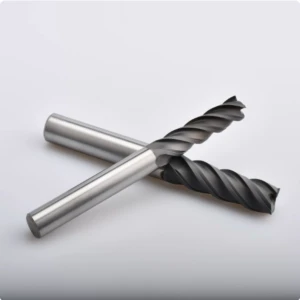
How to Choose Graphite End Mill Sizes?
Tool sizing in graphite machining is never about choosing the biggest or smallest tool available. We once supported a shop machining deep electrode cavities with narrow ribs. To avoid tool changes, they ran a micro-diameter cutter through bulk stock removal and final profiling. This drastically lengthened cycle times, and excessive overhang caused deflection that ruined rib tolerances.
Selecting correct graphite end mill sizes requires analyzing pocket geometry, stock allowances, corner radii, and depth-to-diameter ratios. We recommend stepping down through staged diameters: large cutters for bulk hogging and smaller tools strictly for micro-details. This tiered strategy maintains cutting rigidity, protects tool life, and stabilizes your entire batch production run.
Common Graphite End Mill Sizes and Diameters
Standard graphite machining involves mixing tool diameters to balance material removal rates against feature accessibility. Large diameters provide superior cross-sectional rigidity and chip evacuation for cavities and open faces. Medium cutters handle outer profiling and rough slotting, while micro-cutters should be reserved exclusively for tight internal corners and thin electrode ribs.
When evaluating graphite end mill sizes, balance the minimum corner radius against your target depth of cut. Selecting a cutter simply because its diameter fits the slot width overlooks flute length and reach. If the flute length is too long, deflection induces chatter; if it is too short, the shank collides with the cavity wall. Rigidity must dictate your final selection.
How to Select Small-Diameter Graphite End Mills
Machining delicate EDM features often demands sub-millimeter cutters that carry severe rigidity limitations. We once resolved a slotting failure where excessive cutter vibration chipped fine graphite walls. The diameter matched the drawing, but an oversized gage length introduced chatter. Switching to a stub-length cutter with a reinforced neck resolved the issue immediately.
When sourcing small-diameter graphite end mills, evaluate shank taper, usable neck reach, and dynamic runout. Cutting forces on micro-tools directly amplify bending moments, leading to premature fracture or dimensional taper. Always select the shortest reach that clears the workpiece, and verify that total indicator reading (TIR) at the cutting edge stays under three microns.
The Relationship Between Graphite End Mill Size, Machining Depth, and Precision
Deep cavity work constantly forces trade-offs between cutter reach and structural stiffness. Running a long-flute tool to bottom out in a single setup introduces heavy chatter, accelerated flank wear, and tapered walls. We recommend using progressive tool extensions—clearing top layers with stubby, rigid cutters before introducing relieved neck tools for deep floor finishing.
The geometry of your graphite end mill size directly influences edge retention, chatter resistance, and final electrode tolerances. Larger tools easily hold dimensional stability but risk corner gouging, while smaller cutters require high-RPM balance and gentle stepovers. When dimensional drift appears on deep features, inspect your tool overhang and neck clearance before blaming feed rates.
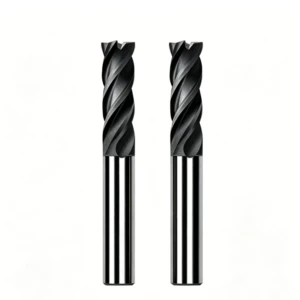
When Do You Need a Custom Graphite End Mill Manufacturer in China?
We rarely recommend custom tooling right out of the gate. Off-the-shelf cutters handle most standard graphite electrodes, open cavities, and simple contours efficiently. However, customization becomes necessary when deep ribs, thin walls, and tight radii exceed catalog specs. We once resolved a persistent edge-breakout issue where no standard tool could provide the needed reach without introducing deflection.
When vetting a custom graphite end mill manufacturer in China, first pinpoint why standard tools fail. If the bottleneck is simply an aggressive feed rate, a custom cutter will not fix it. But when complex electrode geometry demands specific neck reliefs or non-standard corner radii, a dedicated custom tool eliminates chatter and stabilizes your entire production line.
Situations Where Standard Graphite Milling Cutters Fail to Meet Machining Requirements
Standard tools fall short when deep-cavity features require long reaches without sacrificing cross-sectional rigidity. We once audited a customer cycling through standard catalog cutters to finish tall graphite ribs. Every tool either rubbed the shank against the wall or vibrated excessively, leaving rough finishes and chipped part corners due to mismatched reach-to-diameter ratios.
When requesting a custom graphite milling cutter, document your exact graphite grade, pocket depths, minimum corner radii, and current tool wear patterns. An engineering-led manufacturer will analyze the failure mode rather than blind-copying a print. This data dictates critical modifications to core taper, neck clearance, flute length, and edge hone for reliable machining.
Custom Graphite End Mill Geometry and Dimensional Customization
Engineering a custom tool involves much more than extending shank length. On a deep-slot electrode project, a client asked to simply lengthen an existing tool, but the extra overhang amplified runout and triggered chatter. We redesigned the tool with a short flute, a tapered reinforced neck, and a balanced corner radius to clear the feature while retaining maximum core stiffness.
Tailoring custom graphite end mill geometry means optimizing flute valleys, helix angles, web thickness, and edge hones for your specific graphite density. For fragile electrodes, small adjustments to the cutting wedge prevent rib breakout during finishing. A well-designed custom profile slots into your current CNC parameters with minimal testing or program alterations.
How to Choose a Custom Graphite End Mill Manufacturer in China
Grinding a tool to print is easy; understanding high-speed graphite dynamics is the real test. If a vendor holds tight shank tolerances but neglects edge prep, micro-grain substrate selection, or CVD diamond adhesion, the tool will fail under load. Reliable custom manufacturing requires engineering design support, precision CNC grinding, and complete metrology inspection.
To select the right custom graphite end mill manufacturer in China, evaluate their diamond coating partnerships, optical edge-inspection equipment, and engineering responsiveness. Can they analyze your tool wear and refine flute geometries across production runs? A dependable tooling partner continuously optimizes tool life alongside your evolving machining process.
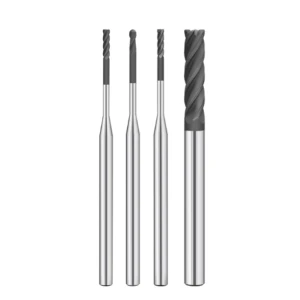
How to Compare Graphite Milling Cutter Suppliers?
Relying solely on quotes, catalogs, and lead times when vetting vendors is a costly mistake. We once benchmarked cutters with identical specs from two different sources on a high-volume run. While trial cuts performed identically, one vendor’s cutters suffered rapid flank wear after prolonged use, while the other maintained dimensional stability.
When comparing graphite milling cutter suppliers, look beyond the unit price. A thorough evaluation must cover substrate consistency, grinding tolerances, coating adhesion, and technical troubleshooting support. For continuous electrode machining, a supplier’s ability to deliver consistent tool life batch after batch is what protects your shop floor profitability.
How to Evaluate a Graphite Milling Cutter Supplier’s Product Capabilities
We evaluate whether a vendor provides an application-specific tooling matrix rather than a generic product catalog. Heavy stock removal on graphite blocks requires high core rigidity and open flutes, while finishing operations demand ultra-low runout and razor-sharp edge retention. If a vendor offers only one general-purpose cutter across all operations, their long-term capabilities are insufficient.
Examine whether the supplier provides comprehensive diameters, reach-to-depth ratios, and CVD diamond coatings matched to specific graphite grades. For tight ribs, deep cavities, and micro-radii, test their practical engineering expertise. Provide a complex workpiece print and evaluate their recommendations; practical application engineering speaks louder than a thick catalog.
Manufacturing and Quality Control Capabilities of Graphite Milling Cutter Suppliers
Batch-to-batch variation is one of the most common issues in CNC tooling. We once audited a customer whose first tool batch ran flawlessly, while the reorder showed erratic tool wear and dimensional drift. Laser metrology revealed subtle deviations in radial runout, edge hone, and coating adhesion that compromised high-speed milling stability.
Inquire directly into the quality control protocols of graphite milling cutter suppliers. Beyond outer diameter checks, verify their standards for carbide micro-grain consistency, total indicator reading (TIR), and edge hone uniformity. For diamond-coated tooling, ask how they verify interface bonding and film thickness to ensure consistent tool life across every production run.
How to Assess a Supplier’s Technical Support Capabilities for Graphite Machining
Tool failure on the machine often stems from improper process parameters rather than cutter defects. A client once faced dimensional expansion on finished electrodes, assuming the cutters were defective. By analyzing cut cycles, feed per tooth, and spindle loads, we found excessive tool deflection during finishing; adjusting stepover parameters solved the issue immediately.
A competent supplier must troubleshoot root causes on the spindle rather than blindly pushing replacement cutters. Share your graphite grade, speeds, feeds, tool wear photos, and dust extraction conditions to test their technical support capabilities. A true manufacturing partner analyzes wear mechanics and fine-tunes your machining strategy to maximize overall productivity.
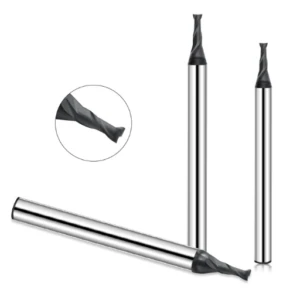
How to Choose a Graphite Milling Cutter Supplier?
Selecting a tooling partner is an engineering alignment, not a transactional purchase. Too many machine shops fall into the trap of ordering tools based on price sheets and sample tests, only to face dimensional drift and scrap during volume production. Evaluating a vendor requires matching cutter geometry, core rigidity, and diamond coating adhesion directly to your specific graphite grades and machining stages.
To establish a dependable supply chain, audit vendors against your real-world spindle conditions. What particle grain size are you cutting? Are cycle bottlenecks driven by bulk roughing or fragile electrode detailing? A qualified graphite milling cutter supplier will analyze your abrasive wear mechanisms and dust evacuation rather than simply pointing to standard catalog part numbers.
Choosing a Supplier Based on Graphite Grade and Machining Application
In electrode fabrication, tool wear patterns vary drastically across materials. High-density, fine-grained isotropic graphite exhibits intense abrasive friction compared to coarser grades, producing micro-fracturing along unsupported cutting edges. Provide prospective vendors with your material density, Shore hardness, and rib profiles to see if they tailor specific cutter geometries rather than pushing generic tools.
For heavy stock removal, verify that their roughing cutters feature reinforced cutting wedges and open chip valleys to prevent dust packing. For delicate EDM ribs, evaluate their small-diameter tools for dynamic runout, balanced relief angles, and tight corner tolerances. An expert graphite milling cutter supplier knows there is no universal end mill for all graphite applications.
Choosing a Supplier Based on Graphite Milling Cutter Quality and Tool Life
Never judge tool performance on the first two parts of a test cut. We often see uncoated or poorly coated tools cut cleanly initially, only to lose sharp corners to abrasive flank wear within an hour. High-speed spindle testing must track dimensional stability, edge breakout, and surface roughness across dozens of consecutive parts.
When evaluating graphite milling cutter quality, batch-to-batch repeatability and predictable tool life are critical. Run a controlled trial holding speeds, feeds, and stepovers constant to calculate your actual cost-per-part and spindle uptime. A premium diamond-coated cutter that holds dimensional tolerances across entire production cycles delivers far greater value than low-cost tools requiring constant offset adjustments.
Selecting a Supplier Based on Customization, OEM Capabilities, and Technical Support
Standard catalog tools handle basic open pockets and outer contours cleanly. However, deep cavities, tall ribs, and micro-radii frequently push standard tools into excessive overhang and chatter. When standard reach ratios fail, a competent supplier should deliver custom graphite end mills engineered with optimized neck reliefs, short flute lengths, and rigid core transitions.
A long-term tooling partnership requires proven OEM manufacturing standards, precision CNC multi-axis grinding, and responsive engineering support. Test their technical team with a blueprint of your most challenging electrode. If they can recommend feeds, speeds, and custom flute geometries that eliminate deflection and edge chipping, you have found the right graphite milling cutter supplier for your shop.
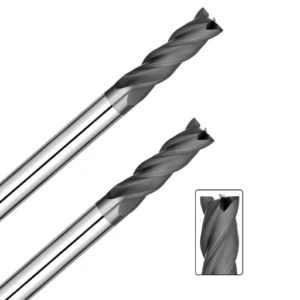
FAQ: Graphite Milling Cutter Suppliers
When preparing an RFQ, experienced machinists rarely ask only about stock availability. They scrutinize engineering expertise, batch repeatability, spindle life, and custom design capabilities. Evaluating potential tooling partners against real-world shop conditions ensures consistent production results.
The following practical questions address the core technical challenges we encounter on electrode production floors. Use this guide to vet any graphite milling cutter supplier against your specific graphite grades, part tolerances, and high-speed CNC machining strategies.
What is the Best Graphite Milling Cutter Supplier?
There is no universal “best” supplier without evaluating your specific machine spindle speeds and graphite grades. When assessing a graphite milling cutter supplier, review their carbide micro-grain quality, CVD diamond coating adhesion, grinding runout standards, and engineering support.
For continuous electrode production, prioritize vendors that guarantee batch-to-batch repeatability and predictable edge life. Request tool life validation data from real-world cutting trials rather than comparing catalog list prices. Reliable dimensional stability across volume runs is what truly protects your margins.
What is the Best Milling Cutter for Graphite Machining?
A single cutter cannot handle bulk material removal and high-precision finishing with equal efficiency. Selecting the best milling cutter for graphite machining requires analyzing grain size, pocket depth, thin rib structures, and required surface finishes.
For heavy hogging, run rigid roughers engineered with open flute pockets for rapid dust evacuation and reinforced cutting wedges. For finishing EDM electrodes, select dedicated diamond-coated finishing tools with tight radius tolerances and low runout to preserve sharp workpiece details.
Is a Diamond-Coated Graphite Milling Cutter Better Than an Uncoated Cutter?
CVD diamond coatings provide unmatched abrasive wear resistance against dense graphite particulates. When evaluating a diamond-coated graphite milling cutter against uncoated carbide, assess total tool life, dimensional drift rates, and cost-per-part rather than initial purchase price.
Uncoated micro-grain carbide tools work fine for one-off prototypes, soft carbon, or minimal stock removal. However, for continuous batch production, tight spark gaps, and fine-grain isotropic graphite, genuine diamond-coated cutters dramatically reduce tool changes and prevent scrap.
How Do I Choose the Right Graphite End Mill Size?
Start by evaluating the smallest internal corner radius, pocket depth, and rib thickness on your part print. When choosing your graphite end mill size, ensure the diameter reaches tight areas while maintaining the shortest possible flute length and overhang to prevent chatter.
We recommend using staged tool diameters across the toolpath. Run larger, rigid end mills to clear bulk material efficiently, then step down to micro-diameter cutters strictly for finishing narrow slots, tight radii, and fragile 3D contours.
Can a Graphite End Mill Manufacturer Provide Custom Tools?
Yes, reputable tooling manufacturers frequently produce custom tooling when standard off-the-shelf cutters fail. When reaching out to a graphite end mill manufacturer, provide your part drawings, graphite grade, pocket depths, and photos of current tool wear patterns.
Experienced manufacturers tailor core taper, neck reliefs, flute counts, and edge hones to match your specific electrode geometry. A properly engineered custom cutter eliminates tool deflection in deep cavities, stabilizes cutting forces, and integrates smoothly into your established CNC programs.