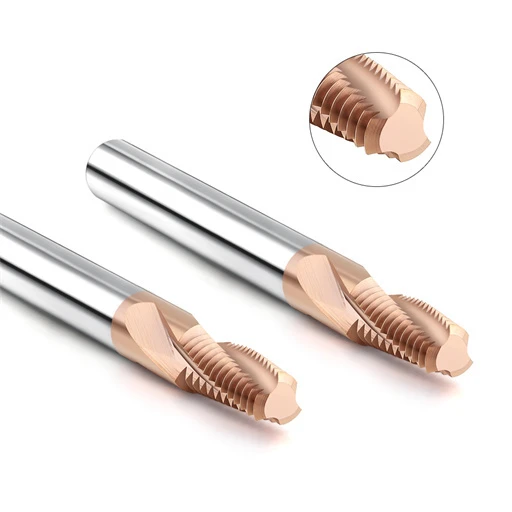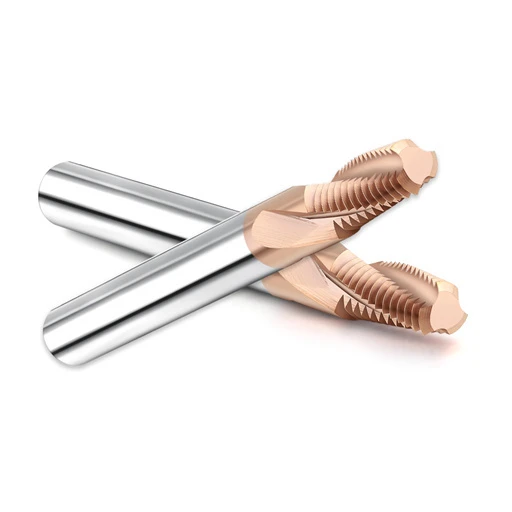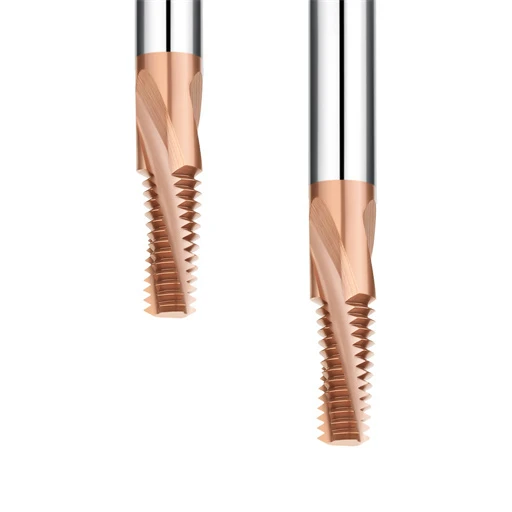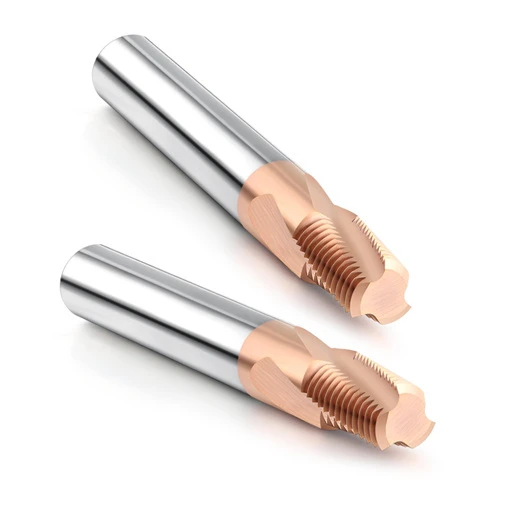
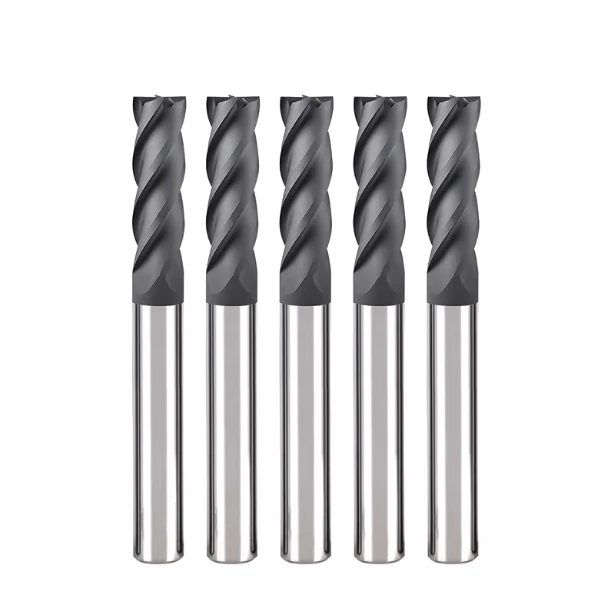
When machining graphite electrodes for Electrical Discharge Machining (EDM), operators rarely struggle with machine tool precision. Instead, the primary bottleneck is tool instability during the high-speed milling process. Graphite’s highly abrasive nature creates a unique cutting environment that severely tests cutting edge integrity.
We experienced this firsthand during a project for a European client requiring high-density, isostatic graphite electrodes. The specifications demanded intact cavity details, zero edge chipping, and flawless surfaces free of scoring marks. During initial runs, standard milling cutters suffered rapid, abnormal wear, causing the material to crumble and fail dimensional tolerances.
Graphite milling is essentially a continuous mechanical crushing process rather than traditional metal chip formation. Once a standard cutting edge dulls even slightly, cutting forces spike, shifting the process from clean shearing to aggressive micro-fracturing. This mechanical stress directly leads to edge chipping on intricate electrode details.
This recurring issue across various graphite machining projects forced us to re-evaluate our entire workflow. We focused on four core variables: tool geometry, coating systems, machining parameters, and the inherent properties of the graphite material. True process control was only achieved after replacing standard tools with specialized solid carbide graphite end mills.
For precision EDM electrode milling, the critical challenge is not whether a tool can cut, but how long it can sustain consistent performance. This longevity is heavily tested when machining deep cavities or intricate micro-features. In these zones, accelerated tool wear and poor chip evacuation amplify machining errors.
Standard cutting tools fail prematurely because they cannot withstand the continuous abrasion of fine graphite dust. Specialized solid carbide end mills, however, utilize optimized web thicknesses and flute spaces. This specific geometry ensures stable chip evacuation and prevents the catastrophic deflection that ruins deep-cavity tolerances.
Many manufacturing engineers overlook the critical role of specialized coating systems, often opting for standard uncoated carbide. Our side-by-side production trials compared uncoated carbide, standard diamond coatings, and engineered diamond coatings of varying thicknesses. The results proved that coating adhesion stability, rather than base material hardness alone, dictates tool life.
In high-dust and highly abrasive graphite environments, standard coatings quickly delaminate under thermal and mechanical stress. Premium diamond-coated end mills maintain an ultra-hard, low-friction barrier that shields the carbide substrate. This specific coating stability ensures predictable wear cycles and prevents unexpected dimensional drift.
To eliminate unpredictable tool failure, we systematized our selection logic for graphite machining end mills into a replicable methodology. By calibrating tool geometry, flute design, cutting edge characteristics, spindle speeds, and feed rates, we created a standardized machining framework. This system ensures consistent electrode quality regardless of batch size or geometry complexity.
When analyzing these variables, an important industry question arises: why do identical cutting tools from the same manufacturer perform so differently across different machine shops? The answer lies in the harmonization of shop-level variables, proving that tool success requires aligning premium hardware with precise, tailored application parameters.
What Are Graphite End Mills?
When entering the graphite electrode machining market, many shops make a costly mistake: treating abrasive graphite like standard mold steel. This miscalculation results in severe tool wear, edge chipping, rapid material pulverization, and uncontrollable dimensional drift. True optimization requires redefining these tools not as standard milling cutters, but as highly engineered, application-specific tooling systems.
In high-precision manufacturing, these specialized tools dictate the overall stability and surface finish consistency of your Electrical Discharge Machining (EDM) electrodes. Performance variations become critically apparent when milling dense, premium materials like isostatic graphite or POCO graphite grades. Therefore, successful project assessment always prioritizes tool structural design and substrate suitability over basic parameter adjustments.
Definition of Graphite End Mills and Key Machining Applications
In precision CNC environments, graphite end mills are defined as specialized solid carbide tools engineered specifically for abrasive carbon structures. Unlike repurposed general-purpose cutters, their core engineering prioritizes extreme abrasion resistance, maximum chip evacuation efficiency, and high-speed dry-cutting stability.
These dedicated cutters are indispensable for high-volume EDM graphite electrode production, complex mold cavity machining, and intricate 3D contour finishing. Field experience confirms that utilizing traditional metalworking tools leads to rapid cutting-edge rounding, which introduces micro-cracks and leaves a dull, sub-specification surface finish.
The Critical Role of Graphite Cutting Tools in EDM Electrode Machining
Within precision EDM electrode manufacturing, cutting tools represent the primary variable in dimensional accuracy and quality control. Because the electrode’s machined quality directly mirrors onto the final mold cavity during spark erosion, any tool instability completely eliminates your subsequent EDM compensation margins.
Experienced engineers must adapt their graphite milling cutters to match specific, complex electrode geometries. For example, deep-cavity electrodes require specialized long-neck configurations, while micro-featured details demand small-diameter tools engineered with maximum core rigidity. Selecting the correct tool architecture prevents catastrophic part rejection during long machining cycles.
Fundamental Differences Between Graphite Milling Cutters and Conventional Tooling
Controlled production tests reveal a stark contrast: under identical machine parameters and toolpaths, standard carbide milling cutters fail prematurely when cutting abrasive graphite blocks. Conversely, specialized graphite milling cutters maintain exceptional edge sharpness, delivering predictable tool life and superior surface consistency across large batches.
The defining differentiator lies in the radical design philosophy optimized for high-speed dry machining environments. Graphite milling cutters feature specific flute geometries, reinforced cutting edges, and customized clearances to combat the abrasive friction of fine carbon dust. Conventional tooling lacks these specialized features, causing immediate chip packing and catastrophic thermal degradation.
Why Dedicated Graphite End Mills Are Essential for Process Stability
When diagnosing customer workflow failures, we frequently observe that general-purpose cutters can initially rough-shape graphite but fail to maintain close tolerances. These subtle micro-errors accumulate rapidly during continuous batch electrode production, leading to severe dimensional variations across the lot.
Graphite’s inherently brittle structure requires a highly specialized shearing action rather than traditional metal deformation slicing. Without the rigid support of dedicated graphite end mills, high-speed milling inevitably triggers micro-chipping, edge crumbling, and unpredictable tool failure. Investing in dedicated tooling systems balances initial cost against the long-term profitability of zero-defect manufacturing.
Comprehensive Guide to Graphite End Mills: Tool Types and Structural Classifications
In our decades of managing graphite electrode and precision mold projects, we have observed that tool structure severely dictates material performance. In production-grade graphite machining, choosing a tool goes far beyond matching a functional catalog number. The specific geometry directly governs machining stability, ultimate tool life, and surface finish consistency.
After analyzing countless tool failures across diverse client sites, we found that success depends on how perfectly tool geometry integrates with the programmed toolpath. Before adjusting your spindle speeds or feed rates, you must categorize your graphite milling cutters by their structural classification. This upfront sorting ensures you deploy the optimal tool architecture for each specific feature.
Characteristics of Solid Carbide Graphite End Mills
Solid carbide graphite end mills are our primary choice for high-speed milling, especially when processing medium-to-high-density isostatic graphite electrodes. The defining benefit of a premium solid carbide substrate is its superior deflection resistance and structural rigidity. This rigidity eliminates micro-vibrations during dry, high-speed cutting, protecting critical dimensional tolerances.
We consistently prioritize these solid carbide cutters for continuous EDM electrode milling because they deliver exceptional batch-to-batch consistency. However, operators must verify that the tool’s flute design can handle high-volume dust evacuation in deep cavities. Without proper chip clearing, packed graphite dust causes premature abrasive friction and heat buildup regardless of tool material quality.
Selection Logic: 2-Flute vs 3-Flute vs. 4-Flute Graphite Milling Cutters
Choosing between 2-flute, 3-flute, and 4-flute designs is a strategic trade-off between chip clearance capacity and tool core rigidity. For heavy roughing, deep slotting, or open-boundary milling, we strongly recommend 2-flute graphite milling cutters. The massive chip pockets minimize cutting forces and ensure rapid, unrestricted dust evacuation from the cutting zone.
Conversely, for high-feed finishing of intricate mold cavities, 3-flute or 4-flute graphite cutting tools provide the superior surface consistency required for EDM. Note that higher flute counts require exceptional machine tool dynamic stability and spindle alignment. If your CNC center suffers from minor axis backlash, multi-flute tools will cause harmonic chatter and surface scarring.
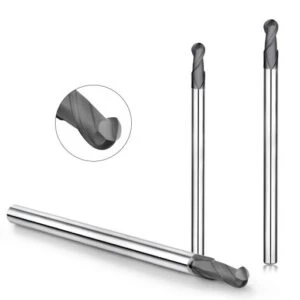
Ball Nose Graphite End Mill for 3D Electrode Machining
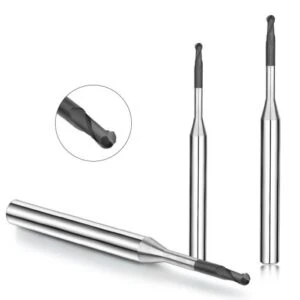
For complex 3D contouring, the ball nose graphite end mill is an indispensable asset in a CNC programmer’s toolkit. When machining freeform electrode geometries, we rely heavily on these ball-end cutters for clean corner picking and continuous multi-axis surface finishing. Their spherical geometry maintains a highly predictable contact point across complex, organic surfaces.
Field experience shows these specialized cutters perform flawlessly when paired with tight step-overs and constant engagement toolpaths. However, poor step-over control or abrupt deceleration triggers localized material burning, leaving a sub-specification grayish surface discoloration. To prevent this, we always optimize the CAM feed-rate deceleration strategies around corners rather than blaming the tool.
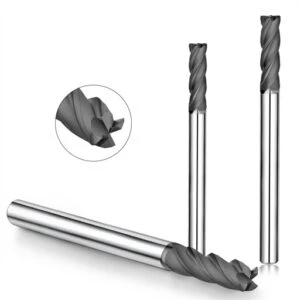
Square Graphite End Mill for Contouring and Slotting
Flat, or square, graphite end mills serve as the workhorses for standard linear profiling, slotting, and perpendicular pocketing. They provide exceptional stability during straight-line roughing and crisp cavity boundary control. Their geometric strength makes them highly efficient for bulk material removal stages in abrasive graphite machining.
While these flat end mills excel at rapid stock depletion, engineers must carefully manage the axial depth of cut during transitional finishing stages. If the corner transition toolpath is too aggressive, the high impact forces will trigger micro-chipping along fragile electrode edges. We mitigate this risk by utilizing a specialized corner radius or chamfered edge preparation.
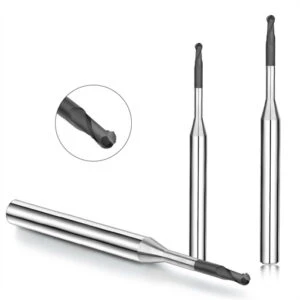
Long Neck Graphite End Mill for Deep Cavity Machining
Long-neck graphite end mills are the absolute industry standard for machining deep, narrow-cavity EDM electrodes. When manufacturing deep-pocket mold components, standard-reach tools inevitably suffer from tool holder interference or severe clearance limitations. The relieved neck design provides the crucial reach needed to access these restricted zones safely.
However, extended tool overhang dramatically increases the risk of harmonic vibration and tool deflection. When deploying long-neck configurations, we strictly limit our radial engagement and implement a highly controlled, layered Z-axis down-feed strategy. This careful parameters control compensates for the reduced rigidity inherent in long-reach tooling geometries.
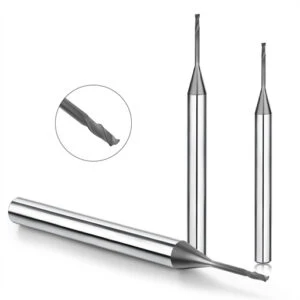
Micro Graphite End Mills for Precision Electrode Machining
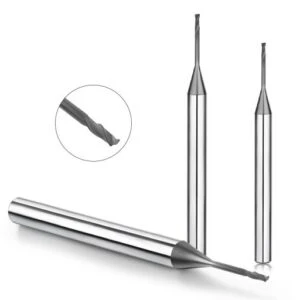
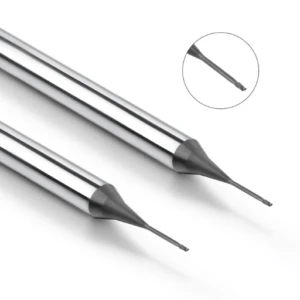
Micro graphite end mills are vital for producing high-precision, ultra-fine slots and miniature details on micro-electrodes. These sub-millimeter cutters demand absolute machine tool rigidity, perfect spindle concentricity, and virtually zero runout. Any minor system vibration or thermal growth in the spindle will cause instant tool breakage or severe dimensional deviation.
In our production workflows, we strictly reserve these micro graphite cutting tools for final, low-load detail finishing rather than bulk stock removal. We apply highly conservative feed rates and ultra-high spindle speeds to maintain consistent cutting pressure. This meticulous strategy guarantees structural integrity and part-to-part consistency throughout the micro-machining process.
Graphite Cutting Tools – Materials & Coating Systems
In our extensive field experience with graphite electrode machining, a tool’s substrate material and coating system are often only scrutinized after a catastrophic failure occurs. While many shops blame improper feeds and speeds for premature wear, retrospective analysis usually reveals a severe mismatch between the carbide substrate and the thin-film coating—especially when milling ultra-high-density graphite grades.
Production data proves that this material synergy directly governs the operational stability of graphite end mills. By benchmark-testing various substrate and coating combinations across identical toolpaths, we observed up to a 5x variance in tool life under identical feed rates. Consequently, selecting the correct material science combination must be handled as a primary engineering decision during the quoting phase.
Material Selection for Solid Carbide Graphite End Mills
For high-performance graphite end mills, the tungsten carbide grain size dictates the tool’s resistance to micro-chipping and edge deformation. When milling abrasive isostatic graphite or high-purity EDM electrodes, micrograin and sub-micron carbide substrates provide the optimal balance of fracture toughness and cutting-edge rigidity.
We balance this substrate selection based on the specific machining phase: maximizing impact toughness for heavy roughing and prioritizing edge retention during finishing. In deep-cavity graphite milling, using a coarse-grained carbide substrate accelerates edge rounding and macro-chipping. This degradation introduces immediate dimensional drift during continuous batch production runs.
Advantages of Diamond Coated End Mills for Graphite
For high-throughput manufacturing, diamond-coated end mills are the absolute industry standard for surviving highly abrasive carbon environments. Our longitudinal production studies show that a premium diamond coating does more than just extend tool life; it preserves the precise cutting-edge geometry required for spark-erosion electrode consistency.
Under dry machining conditions, these engineered diamond films act as a thermal and physical barrier, mitigating the continuous scouring action of fine graphite dust. However, if the coating supplier’s chemical vapor deposition process lacks optimal adhesion, the film will suffer localized delamination under high feed rates. This premature peeling leads to instant tool failure and scrapped workpieces.
Comparison of PCD vs CVD Diamond in Graphite Milling Cutters
In ultra-precision or high-volume contracts, we frequently evaluate the performance trade-offs between PCD and CVD diamond tools. While PCD offers unparalleled edge hardness and wear longevity on flat surfaces, its manufacturing process restricts it from being formed into complex, multi-flute geometries.
Conversely, CVD diamond coatings can be uniformly applied over complex, 3D helical end mill geometries, making them highly versatile for intricate detailing. For high-volume EDM graphite electrode production involving complex profiles, CVD-coated solid carbide is the most cost-effective solution, whereas PCD tipped tools excel in long-run, flat profiling operations.
The Relationship Between Coating Thickness and Graphite Machining Performance
When diagnosing premature graphite machining end mill failure, coating thickness is a critical variable that engineers frequently overlook. Many programmers mistakenly assume that any diamond coating behaves identically; however, the precise micrometer thickness and layer architecture directly control the tool’s thermal stability and residual stress states.
Our testing demonstrates that excessively thick diamond coatings suffer from high internal stress, making them prone to micro-cracking and chipping under high-frequency impacts. Conversely, coatings that are too thin quickly wear through, exposing the carbide substrate to rapid erosion. We optimize this thickness parameter based on a comprehensive balance of chip load per tooth and spindle harmonics.
Why Graphite End Mills Require High Wear and Dust Resistance
In high-speed graphite milling, cutting tools rarely fail from traditional mechanical overloading or breakage; instead, they succumb to progressive failure caused by intense dust abrasion. During high-speed dry cutting, millions of micron-sized graphite particles continuously scour the tool’s rake and flank faces like a high-velocity sandblaster.
Therefore, sourcing graphite machining end mills engineered with maximum abrasion and dust resistance is non-negotiable for EDM electrode production. If a tool cannot withstand this continuous abrasive erosion, it introduces rapid dimensional drift and a sub-specification surface finish. Managing this dust-induced wear from day one is the only way to guarantee tight-tolerance batch consistency.
Graphite Machining End Mill: Processing Techniques and Application Scenarios
In high-precision manufacturing, the graphite milling process is never an isolated variable. It is a highly systemic challenge where tool selection, high-speed cutting strategies, and target surface finishes operate as interdependent variables. Optimizing parameters in a vacuum without analyzing the final EDM application invariably leads to premature tool failure.
Field data proves that identical graphite machining end mills yield vastly different wear cycles depending on the specific application scenario. A tool that excels in shallow, open profiling might fail catastrophically when transitioning to deep-pocket mold electrodes. Defining these application-specific boundary conditions during the initial CAM programming stage is non-negotiable for process control.
Application of Graphite Electrode Milling Tools in EDM Electrode Manufacturing
When executing EDM graphite electrode milling projects, our primary engineering objective shifts from maximizing material removal rates to guaranteeing absolute geometric consistency. Because any microscopic machining error on the graphite electrode directly replicates onto the steel mold cavity during spark erosion, tool stability is the ultimate gatekeeper of mold quality.
In production, we segment our cutting strategies: roughing focuses on maintaining uniform machining allowances, while finishing prioritizes sharp corner details and surface texture consistency. If your graphite cutting tools suffer from erratic wear, calculating precise EDM spark gap compensation becomes impossible. This instability forces manual adjustments that destroy batch interchangeability.
Application of Graphite End Mills in the Mold Industry
Within the precision mold industry, graphite end mills are the primary tools used for refining intricate cavity details and machining complex ribbed structures. Across hundreds of mold cavity production runs, we have verified that the structural integrity of the graphite milling cutter directly dictates the uniformity of the final EDM surface texture.
These mold-making applications demand extreme tool stability, particularly when profiling complex 3D curved surfaces and slender, thin-walled ribs. Even microscopic harmonic vibrations in the graphite milling cutter will transfer visible surface defects onto the burned mold cavity. To mitigate this risk, we optimize our toolpath engagement angles rather than relying solely on the tool’s nominal rigidity.
Characteristics of High-Speed Dry Machining in CNC Graphite Machining
In modern CNC graphite machining, high-speed dry machining is the absolute industry standard. Because graphite dust is highly conductive and abrasive, mixing it with traditional liquid coolants creates a thick, destructive slurry that short-circuits machine electronics and accelerates abrasive wear. Therefore, high-velocity vacuum extraction systems replace liquid coolants entirely.
This dry-cutting environment places immense thermal stress on the cutting edge, demanding ultra-high spindle speeds and specialized chip evacuation paths. If graphite dust accumulates in deep cavities, the trapped particles regrind against the flank face, exponentially increasing cutting temperatures. This localized heat buildup triggers rapid coating degradation and premature tool failure.
Application of Graphite Milling Cutters in Machining Complex Electrode Cavities
When programming complex electrode cavities, the role of a graphite milling cutter transitions from simple stock depletion to maintaining perfect geometric symmetry. When pocketing electrodes with deep cavities, narrow slots, or multi-level steps, the CAM programmer must simultaneously control axial step-downs, radial step-overs, and constant tool engagement paths.
Field experience shows that these intricate operations are hypersensitive to tool deflection and chatter. If cutting vibrations are left unmanaged, even premium diamond-coated graphite end mills will cause localized edge chipping or surface gouging at sharp corner transitions. Controlling these dynamics is mandatory for zero-defect EDM electrode production.
Machining Differences Between Graphite Materials
The microstructural grade of your chosen carbon material dictates the wear mechanism of your graphite end mills. Standard isostatic graphite features a uniform grain distribution, resulting in predictable cutting forces and stable tool wear patterns. Conversely, premium POCO graphite, engineered with distinct particle densities and micro-grain structures, introduces highly complex abrasion characteristics.
Comparative shop testing reveals that identical cutting parameters produce radically different flank wear profiles across these two material classes. Rather than applying generic handbook feeds and speeds, experienced engineers must adjust cutting data based on specific material density, grain size, and electrode geometry to ensure predictable machining stability.
CNC Machining Parameters for Graphite (Cutting Parameters & Optimization)
In high-speed CNC environments, machining parameters are never static, theoretical values found on a manufacturer’s chart. They represent highly dynamic variables that directly dictate tool life, volumetric material removal, and surface finish. In automated electrode production, even minor feed-rate adjustments can radically shift tool wear behavior and jeopardize critical dimensional tolerances.
Field data proves that the optimal parameter envelope for graphite machining end mills shifts based on machine tool kinematics, workholding rigidity, and material density. Rather than deploying rigid, predetermined formulas, experienced programmers must establish flexible cutting ranges. These baselines are then fine-tuned in real time based on acoustic feedback and actual edge degradation on the shop floor.
Recommended Spindle Speed (RPM Range) for Graphite Machining End Mills
When programming high-performance graphite end mills, we consistently operate in the upper RPM bands of the machine’s spindle capability. Elevating spindle speeds—especially when deploying micro-diameter tools during finish-milling cycles—drastically reduces the chip load per tooth. This low chip load minimizes cutting forces and prevents catastrophic brittle fractures along fragile workpiece edges.
However, maximizing RPM without assessing spindle harmonics can cause premature tool failure. Across numerous EDM electrode machining projects, we observed that low RPM spikes cutting forces and triggers edge chipping, while excessive speeds accelerate diamond coating delamination. A multi-stage spindle speed strategy customized for roughing and finishing cycles yields the most predictable tool life.
Feed Rate Logic for Graphite Milling Cutters
For high-speed graphite milling cutters, optimizing the feed rate (feed per tooth) is the linchpin of process stability. This parameter balance becomes exceptionally critical when pocketing complex cavities or thin-walled electrodes. An overly aggressive feed rate introduces high deflection forces, amplifying tool chatter and inducing severe dimensional accuracy errors.
Our programming logic dictates that feed rates must not be calculated solely as a function of nominal tool diameter. Instead, the CAM programmer must holistically balance radial step-over, axial depth of cut, and the structural rigidity of the tool assembly. For ultra-precision graphite electrode milling, we implement adaptive feed-rate control to throttle speeds dynamically around sharp corner transitions.
Dry Machining vs Coolant Use with Graphite Cutting Tools
In production CNC graphite machining, high-velocity dry machining paired with vacuum extraction is the absolute industry standard. Because graphite is highly porous and electrically conductive, applying standard liquid cutting fluids creates an abrasive carbon paste. This slurry clogs machine axes, scoring linear ways and short-circuiting sensitive onboard electronics.
While wet setups are occasionally modified for specific deep-pocket heat dissipation, we strongly recommend gas-assisted cooling instead. Utilizing high-pressure air blasts or nitrogen-assisted delivery clears the cutting zone effectively without liquid contamination. Ultimately, managing the tool life of diamond-coated graphite cutting tools is far more controllable in a strictly dry environment.
Tool Path Optimization (Roughing & Finishing Strategies)
When executing precision graphite end-milling projects, custom toolpath optimization delivers greater tool-life extensions than parameter adjustments alone. When programming intricate electrode geometries, applying a uniform cutting strategy across both roughing and finishing cycles is a critical mistake. This approach fails to account for residual material stresses, leaving severe micro-surface irregularities.
Our standard operating procedure divides the CAM architecture into distinct phases: high-efficiency roughing focused on consistent chip-load depletion, and dedicated finishing prioritizing surface texture and geometric sharpness. Implementing a trochoidal or constant-engagement toolpath during roughing minimizes sudden mechanical impacts on the graphite milling cutter, securing process consistency.
The Impact of Dust Control on Graphite Machining Stability
Field diagnostics reveal that inefficient graphite dust control is a major, yet frequently ignored, cause of unexpected tool failure. Airborne graphite particles do more than compromise machine shop air quality; if left unmanaged, fine carbon dust becomes trapped in the cutting zone. The tool’s cutting edges then continuously regrind these particles, suffering severe abrasive friction.
In high-volume batch production, a weak vacuum extraction system drastically shortens the service life of premium graphite end mills. When commissioning a new CNC graphite cell, we audit dust collection velocity with the same engineering rigor applied to spindle speeds and feed rates. Superior dust evacuation is an absolute prerequisite for maintaining predictable machining tolerances.
Guide to Selecting a Graphite End Mill Manufacturer
In volume EDM production, vetting your cutting tool supply chain is a critical step that many shops only prioritize after facing costly part rejections. On-site machining failures rarely stem from programming errors alone. Instead, they are frequently caused by subtle variations in carbide substrate quality, coating adhesion, or geometric concentricity introduced by the graphite end mill manufacturer.
Our sourcing strategy prioritizes batch-to-batch repeatability and long-term supply chain consistency over stellar performance from a single golden sample. In abrasive graphite milling applications, one highly successful tool run proves nothing. Absolute statistical consistency across thousands of cycles is the only metric that guarantees stable, automated production of precision EDM electrodes.
How to Select a Reliable Graphite End Mill Manufacturer
When auditing a graphite end mill manufacturer, your primary qualifying metric must be operational tool-life stability rather than initial unit price. We implement strict gatekeeping protocols, running continuous tool-life testing using identical batch lots of graphite milling cutters. This testing allows us to track edge-retention degradation curves and spot early manufacturing anomalies.
Furthermore, we proactively benchmark candidate tools across vastly different carbon densities, specifically running comparative trials on standard isostatic graphite versus ultra-dense POCO graphite grades. If a supplier’s cutting-edge consistency fluctuates wildly when transitioning between these material structures, we disqualify them from high-tolerance aerospace and medical electrode projects.
Manufacturing Standards for High-End Graphite Cutting Tools (Precision, Runout, and Coating)
In high-end mold and die applications, the precise manufacturing standards of your graphite cutting tools dictate your maximum achievable surface quality. For instance, if a tool maker permits loose tolerances on spindle runout precision, the resulting assembly will generate cyclical vibrations at high RPMs. This micro-chatter ruins surface finishes and accelerates tool wear.
Our laboratory analysis reveals that uniform thin-film coating distribution and precise cutting-edge preparation exert a greater impact on tool longevity than the raw carbide substrate itself. Consequently, when purchasing premium end mills for graphite machining, we audit the supplier’s micro-geometry inspection reports, dynamic balancing certifications, and diamond coating adhesion ratings.
OEM/ODM Customization Capabilities for Graphite Milling Cutters
Complex, multi-axis electrode geometries frequently require custom OEM/ODM graphite milling cutters rather than standard off-the-shelf catalog tools. Standard geometries often fail to provide the necessary shank clearance or specific neck reliefs. This limitation becomes highly apparent when pocketing non-standard deep cavities or profiling intricate electrodes with negative draft angles.
When interviewing prospective tooling partners, we prioritize manufacturers with vertical integration capabilities ranging from proprietary geometry synthesis to in-house thin-film deposition. If a supplier merely grinds carbide according to a provided blueprint without offering engineering feedback or toolpath optimization input, they cannot adequately support high-tier development projects.
Variations Among Diamond-Coated End Mills for Graphite
When field-testing competitive diamond-coated end mills for graphite, the critical differentiators between top-tier and low-tier manufacturers manifest in three areas: nanocrystalline coating density, chemical adhesion bonding, and uniform wear stability. These hidden quality indicators become glaringly obvious during prolonged, continuous dry milling operations.
We frequently observe inferior tools that cut flawlessly during the first thirty minutes but suffer from sudden diamond delamination or rapid edge rounding during mid-cycle finishing. This catastrophic failure instantly compromises machining consistency. True process security requires looking past initial sharpness to map predictable wear trends over the tool’s entire functional lifespan.
Analysis of Supply Chain Advantages for Chinese Graphite Machining End Mills
Our longitudinal evaluations of global tooling networks indicate that the Chinese manufacturing ecosystem for graphite machining end mills offers distinct advantages in rapid prototyping turnarounds and aggressive customization flexibility. These supply chain traits are exceptionally valuable for fast-paced, small-to-medium batch EDM electrode machining projects.
However, when sourcing production-grade graphite cutting tools from this region, procurement teams must implement rigorous quality assurance filters to account for wide variances in manufacturing maturity. Significant gaps still exist between factories regarding raw material tracking, specialized coating controls, and final optical inspection standards. Partnerships must be validated through rigorous batch testing rather than relying on geographic marketing claims.
Common Issues and Failure Analysis for Graphite End Mills
In automated graphite electrode production and precision mold projects, tooling failures are rarely random anomalies. While an end mill might appear to break or dull suddenly, a thorough post-mortem analysis typically uncovers the cumulative effects of unmanaged variables. These hidden catalysts range from sub-optimal dust extraction to minor toolpath discontinuities.
If your shop frequently battles erratic tool life, dimensional drift, or a dull, substandard surface finish during carbon milling, a holistic inspection is required. Operators must look beyond the cutting tool itself and systematically audit the entire machining chain. This process isolates the technical root causes of premature degradation.
Analysis of Rapid Wear in Graphite Milling Cutters
The primary catalyst for accelerated wear in graphite milling cutters is rarely poor tool manufacturing quality. Instead, it typically stems from a severe mismatch between your active machining parameters and the microstructural density of the carbon block. For instance, low spindle speeds induce erratic cutting forces, while excessive feed rates overload the fragile cutting edge.
If your solid carbide graphite end mills wear out prematurely, you must immediately audit your chip-load per tooth settings. When transitioning to dense isostatic graphite, a generic parameters chart will fail, causing rapid diamond layer friction. Calibrating the RPM range to match the specific carbon grade stabilizes edge retention and extends tool life.
Chipping and Breakage Issues with Graphite Cutting Tools
During precision EDM electrode milling cycles, micro-chipping generally manifests at two critical junctions: initial material entry or high-speed cornering transitions. These failures point directly to structural rigidity deficits, spindle runout errors, or sudden angular spikes in the CAM toolpath. They are rarely caused by a lack of raw tool material strength.
If your graphite cutting tools suffer from frequent chipping, check for excessive radial step-overs and a lack of corner arc smoothing. Furthermore, reducing tool overhang in the holder minimizes the high deflection forces that snap small-diameter cutters. These systemic errors must be engineered out of your CAM program to stabilize production.
Reduced Tool Life Caused by Graphite Machining Dust
Field tracking across automated CNC graphite machining centers proves that ambient carbon dust is a severely underestimated wear variable. If vacuum suction drops, fine graphite dust becomes trapped within the active cutting envelope, acting as a highly destructive secondary abrasive. This entrapped dust continuously grinds against the tool’s flank face.
If your graphite end mills lose their cutting edge prematurely despite unchanged parameters, audit your vacuum CFM velocity immediately. In high-volume batch manufacturing runs, optimizing dust evacuation efficiency yields immediate dividends. Efficient dust clearing stabilizes cutting zone temperatures and instantly expands your tool life envelope.
Solutions for Poor Surface Finish
Sub-specification surface finishes on graphite electrodes typically present as an uneven matte gray appearance, heavy tool marks, or localized gouging. These visual defects are directly linked to high-frequency harmonic vibration, unstable feed delivery, and localized cutting edge rounding. Identifying these indicators early prevents producing out-of-tolerance EDM components.
When troubleshooting poor surface roughness, inspect three specific engineering areas: tool life degradation, CAM toolpath micro-stops, and spindle concentricity. In production environments, these mechanical factors often exhibit a combined negative effect. Correcting spindle runout and enforcing continuous-engagement milling paths will rapidly restore a pristine, reflective surface finish.
How to Extend the Life of Solid Carbide Graphite End Mills
Extending the operational lifespan of solid carbide graphite end mills requires mastering overall process stability rather than tweaking a single parameter. Balancing your mechanical cutting loads, maximizing dry vacuum efficiency, and strictly separating roughing from finishing cycles directly preserves cutting edge integrity. These standard practices safeguard your tooling investment over long production campaigns.
To maximize the service life of your graphite machining end mills, implement trochoidal roughing toolpaths and optimize your feed-to-speed ratios. These subtle CAM adjustments minimize localized impact stress on the diamond coating, delivering predictable wear without requiring a total tooling system replacement. By analyzing specific material grades and design blueprints together, we can engineering-match the ideal parameter envelope for your shop floor.