While optimizing a graphite electrode machining process for a European client, our engineering team ran into a classic field issue. Despite using identical CNC equipment, graphite material grades, and parameters, black dust heavily accumulated inside the machine frame after just a few hours. This dust buildup made daily maintenance difficult while causing a steady drop in surface finish quality and tool life.
Graphite is an inherently brittle material with no ductile chip formation. From basic material properties and cutting strategies to feed rates, tool selection, and machine system rigidity, every factor directly influences dust volume during CNC graphite machining.
Over years of serving mold makers and precision machine shops, we frequently see this critical oversights. Many machine shops prioritize cutting speed but ignore how airborne micro-particles ruin final precision. Fine graphite machining dust sticks to the cutting edge, accelerating wear on the graphite end mill. Left unmanaged, dust buildup leads to severe dimensional drift, rough surface finishes, and corner chipping.
Fixing excessive dust requires more than just high-vacuum suction. It demands a holistic approach across cutting parameters, tool geometries, dust collection setups, and machine rigidity. A well-designed dust control strategy protects machine components while extending the service life of your graphite end mill and ensuring process stability.
Below, we draw from our hands-on shop floor experience to analyze why dust spikes during CNC graphite machining. We will explore proven fixes across tool selection, parameter tuning, and equipment setups to help you regain tight tolerances and peak surface quality.
Have you ever seen a graphite setup start cleanly, only to suffer from severe dust buildup, rapid tool wear, and inconsistent dimensions hours later?
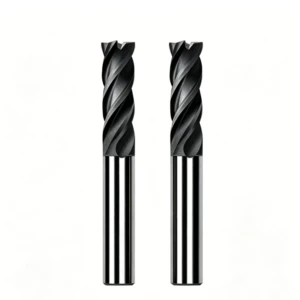
Analyzing Graphite Machining Dust: Why Does CNC Graphite Machining Generate Large Amounts of Dust?
In our shop floor consultations, dust control is a persistent challenge for almost every manufacturer. During a recent precision graphite electrode run, machine conditions started out stable, but heavy black powder quickly accumulated inside the enclosure after a few hours, causing rapid tool wear. Field logs revealed the core issue: the client failed to manage the fundamental dust-generation mechanics inherent to CNC graphite machining.
Graphite is highly conductive and easy to cut, but high-speed milling inherently shatters its brittle structure into micro-particles. When these graphite dust particles are not evacuated instantly, they recycle back through the cutting zone. This degrades surface finishes, causes dimensional drift, and creates severe processing bottlenecks across the entire shop floor.
How Do Graphite Material Characteristics Influence the Formation of Graphite Dust Particles?
When diagnosing dust sources, we first evaluate the micro-structure of the graphite grade itself. Fine-grain, isostatic, and molded graphite each feature distinct particle sizes, internal voids, and binder strengths that dictate fracture behavior under load. While finer-grained grades typically deliver smoother surface finishes, improper cutting mechanics will still turn them into airborne micro-dust.
Many machinists incorrectly assume that dropping cutting speeds automatically reduces powder formation. In our testing, overly conservative parameters increase edge rubbing and friction, paradoxically generating more airborne dust. Effectively controlling graphite dust particles requires balancing grain size, tool geometry, and target removal rates together rather than tweaking a single parameter.
Why Does Graphite Brittleness Lead to the Generation of Large Amounts of Fine Dust in CNC Graphite Machining?
Unlike ductile metals that form continuous curled chips, graphite undergoes micro-fracturing and particle spalling under the tool edge. This brittle fracture mechanism is the root cause of dust during CNC graphite machining. Without precise control over feed per tooth and edge sharpness, cutting forces crumble the material ahead of the tool.
When milling deep cavities, flex in long-reach end mills creates load spikes that shatter cavity walls into fine powder. This isn’t just a raw material flaw—it stems from structural vibration and unstable tool engagement. Addressing material brittleness through proper strategy is critical to reducing dust and preventing corner chipping.
How Do Cutting Methods in the Graphite Machining Process Influence Dust Generation?
In production, two identical machines using the same grade often produce vastly different dust volumes due to cutting strategy. Heavy depth of cut during roughing fractures large volumes of brittle material at once, overloading air extraction. Conversely, light finishing cuts with dull tools rub against the workpiece, turning spent material into fine suspended powder.
We recommend optimizing tool paths, climb milling directions, and chip evacuation setups simultaneously. When running continuous mold cores, maintaining smooth engagement with consistent chip loads reduces dust far better than simply maxing out spindle RPM. Refined cutting methods protect the graphite machining quality while keeping dust creation to a minimum.
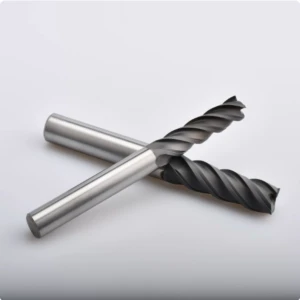
Factors Affecting Graphite Machining Quality: How Does Excessive Graphite Dust Compromise Quality?
In our shop floor practice, many machine shops overlook airborne powder until dimensional tolerances drift or surface finishes fail. During a recent project with a mold maker running a high-precision graphite electrode, initial dimensions were stable. However, continuous production soon caused micro-striations and severe corner chipping due to unmanaged powder accumulation altering the cutting environment.
Excessive dust isn’t just a shop cleanliness issue—it actively degrades heat dissipation, hinders chip evacuation, and changes cutting forces. When fine powder trapped in the cut zone gets re-machined, it acts like an abrasive paste that ruins precision. Protecting overall graphite machining quality requires a systemic approach balancing material selection, tool paths, dust extraction, and rigidity.
How Do Graphite Dust Particles Compromise Machining Quality?
During high-speed milling, microscopic graphite dust particles static-cling to the cutting edge of the tool. This creates a false built-up edge that changes effective tool geometry and increases cutting resistance. As cutting forces spike, tool deflection causes unexpected dimensional errors and micro-vibrations across the workpiece.
We once analyzed a production line where identical machine programs yielded completely inconsistent tolerances between batches. The root cause wasn’t material variation, but recirculating airborne dust clogging the cutting zone and causing rapid tool degradation. Preventing powder buildup is essential for shops aiming for predictable, long-term CNC graphite machining stability.
How Does Excessive Graphite Dust Affect Surface Finish and Machining Precision?
The damage caused by trapped powder rarely happens instantly; it accumulates gradually over long continuous runs. During finishing passes, unenclosed fine dust re-enters the path between the flank face and workpiece, dragging across the freshly cut wall. This abrasive re-cutting mechanism leaves dull micro-scratches and degrades the final surface roughness.
Operators often try to restore surface finish by simply dropping feed rates, but this tactic backfires when dust isn’t evacuated. Slowing feeds increases tool friction and rubbing, which generates even finer airborne particles. Achieving tight tolerances requires matching proper chip loads with high-velocity dust collection rather than isolated parameter tweaks.
How Do Dust Contamination and Machining Instability Lead to Graphite Machining Defects?
Common machining defects like corner chipping and dimensional drift stem from a compounding chain reaction. Loose dust alters cutting dynamics, unstable parameters increase material micro-cracking, and dust settling on machine guideways degrades positioning accuracy. When these factors stack up, part quality degrades rapidly.
While optimizing deep-cavity electrode setups for a client, we resolved persistent edge chipping by pairing targeted vacuum suction with optimized climb milling paths. Isolating single variables rarely solves these quality problems. To maintain high graphite machining quality, shops must stabilize the entire machining environment from spindle to exhaust.
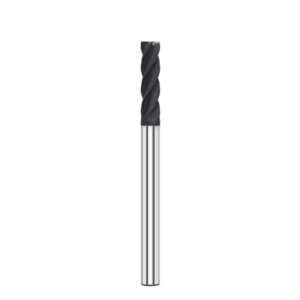
Graphite End Mill Performance Analysis: How Does Graphite Dust Accelerate Tool Wear?
In our consulting experience, rapid tool decay is the most common complaint from graphite machine operators. We worked with a mold maker running complex graphite electrode geometries where tool life plummeted unexpectedly after a few operational hours. Shop floor investigation revealed that localized dust buildup was creating immense thermal friction and unstable cutting loads across the tool edges.
Unchecked dust changes the entire mechanical contact zone during milling. When airborne powder is not evacuated immediately, it gets trapped between the tool relief face and the workpiece, causing severe micro-abrasion. Maxing out tool life requires a balanced strategy across tool geometry, diamond coatings, parameters, and high-velocity vacuum extraction.
How Do Graphite Dust Particles Cause Edge Wear on Graphite End Mills?
During high-speed milling, fine graphite dust particles enter the tiny clearance angle behind the cutting edge. Because graphite dust is extremely abrasive under compression, these microscopic particles continuously grind against the carbide substrate. Over time, this micro-abrasion dulls the sharp edge, degrades surface finish, and triggers tool deflection.
While troubleshooting a deep-cavity electrode job, a client experienced premature flank wear on small-diameter tools. The issue wasn’t the material hardness or programmed feed rate, but recirculating powder trapped inside the deep pocket. Maintaining a continuous stream of directed high-pressure air and targeted vacuum suction is vital to stopping dust-induced tool wear.
How Does Graphite End Mill Geometry Affect Dust Evacuation and Cutting Stability?
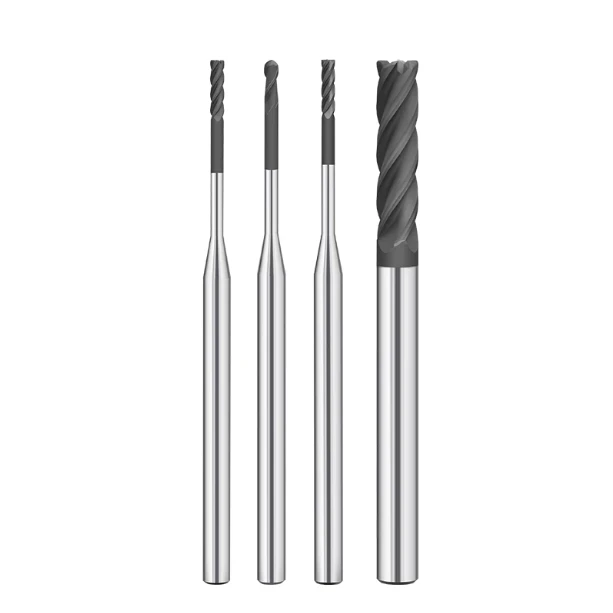
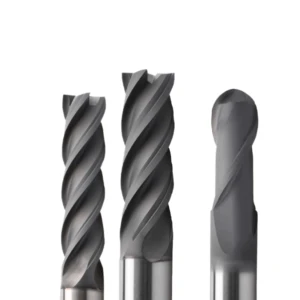
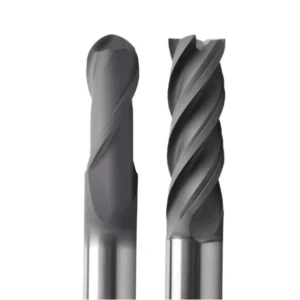
Tool geometry directly controls how airborne powder flows out of the cut zone. The number of flutes, flute helix angles, and core thickness dictate the available chip clearance volume on a graphite end mill. If flute space is too tight, micro-powder packs inside the flutes, raising cutting temperatures and forcing tools to recut trapped dust.
Many machinists make the mistake of using standard 4-flute metalworking end mills for heavy graphite removal. For roughing, a 2-flute or 3-flute design with open chip breakers provides superior dust evacuation and prevents flute packing. Matching flute design to your specific cutting depth is essential for maintaining process stability and minimizing dust buildup.
How Do Diamond Coated Graphite End Mills Mitigate Dust-Related Tool Wear?
For high-volume production, tool surface hardness is your primary line of defense against severe abrasion. Diamond coated tools provide extreme surface hardness and a low friction coefficient. This smooth coating reduces static attraction, helping graphite dust particles slide out of the flutes easily without sticking to the cutting edge.
However, diamond coatings are not a silver bullet for poor process control. If machining parameters induce heavy vibration or if suction airflow is insufficient, even expensive coated tools will suffer from edge micro-chipping. Achieving long tool life requires pairing high-performance coatings with optimized parameters and efficient vacuum systems in CNC graphite machining.
Optimizing Graphite Machining Parameters: How to Reduce CNC Graphite Machining Dust?
In our shop floor projects, improper parameter settings are the leading cause of heavy dust spikes. We worked with a client using an aggressive machining strategy on a dense graphite grade. Over continuous production, fine powder heavily accumulated inside the machine enclosure, accelerating tool wear and compromising tolerances.
On-site logs showed the issue wasn’t the material, but an imbalance between cutting speed, feed rate, and depth of cut. Reducing airborne powder does not require sacrificing throughput. By tailoring graphite machining parameters to particle size, tool diameter, and machine rigidity, operators can stabilize cutting action and minimize micro-fracturing during CNC graphite machining.
How Does Spindle Speed Affect Graphite Machining Dust Generation?
Spindle speed directly influences how aggressively brittle graphite fractures at the tool tip. Setting RPM too high increases cutting frequency, which can pulverize material into fine airborne micro-powder instead of clean macro-chips. With small-diameter tools, excessive RPM generates friction-induced heat, accelerating tool thermal wear and localized dust cloud creation.
However, simply dropping spindle speed isn’t a universal fix. In one field test, a client drastically slowed RPM to curb dust, but this reduced chip load per tooth, causing the tool flutes to rub against the material and generate even more fine powder. Spindle speed must be balanced alongside feed rate and tool path geometry to keep graphite machining dust under control.
How Do Feed Rate and Depth of Cut Affect Graphite Dust Generation?
Managing chip load per tooth is essential when dialing in feed rates and axial depth of cut. Overly aggressive feeds overload the cutting edge, inducing severe subsurface micro-cracking and shedding large volumes of loose dust particles. Conversely, excessive depths of cut increase mechanical shock, causing cavity corners to fracture unpredictably.
When optimizing a deep graphite mold core, a client experienced heavy powder buildup due to aggressive deep passes. We stabilized material removal by reducing axial depth of cut, increasing stepover, and smoothing toolpath corners. Controlling cutting engagement per pass minimizes airborne powder while protecting delicate feature geometry and enhancing overall graphite machining quality.
How Do Appropriate Graphite Machining Parameters Enhance Machining Quality?
Consistent tolerances in CNC graphite machining come from harmonic parameter balance, not raw cutting speed. Correctly calibrated parameters prevent excessive material shattering, keep heat levels low, and allow high-velocity vacuum systems to clear dust instantly. For precision graphite electrode production, process stability always trumps short-term speed gains.
During process audits, we evaluate spindle RPM, feed rate, radial engagement, and dust extraction capacity as a unified system. Dropping mechanical loads during finishing passes creates pristine surface finishes, while optimizing stepovers during roughing maintains high removal efficiency. Balancing these variables ensures long tool life, clean machine interiors, and stable machining precision.
Optimizing the Graphite Machining System: How to Achieve Effective Graphite Dust Control?
In our years of field experience, many dust problems aren’t caused by bad tools or bad parameters, but by a mismatched equipment setup. We once worked with a precision mold maker whose graphite electrode production suffered from constant powder buildup inside the enclosure. Despite dialed-in feeds and premium tools, machine operators spent hours daily manually cleaning the machine bed.
Manual cleaning addresses the symptoms, not the root cause. Achieving true dust containment requires optimizing your entire graphite machining system—including machine enclosure sealing, vacuum suction hood alignment, air velocity, and chip evacuation paths. A fully integrated system protects equipment components, reduces shop floor airborne pollution, and preserves long-term machining accuracy.
How Does the CNC Graphite Machining System Affect Dust Control?
Machine tool design directly dictates how airborne particles disperse or collect during operation. Factors like spindle enclosure design, positive pressure way-covers, internal airflow direction, and vacuum intake sizing determine whether powder is evacuated instantly. If airflow dead zones exist inside the work volume, fine dust continuously recirculates into the cutting path.
During equipment audits, we often observe vastly different dust levels on identical parts run across different machine frames. When upgrading a CNC graphite machining setup, we prioritize machine enclosure integrity, vacuum CFM ratings, and direct-line ducting over pure spindle RPM. A stable machine environment guarantees predictable tolerances during unmanned overnight runs.
How Does a Graphite Dust Extraction System Reduce Environmental Contamination?
Many machine shops make the mistake of pairing precision CNC mills with standard shop vacuums. Because airborne graphite micro-particles are extremely fine and light, generic suction units lack the CFM velocity and HEPA filtration required to prevent powder escape. An underpowered graphite dust extraction system lets abrasive dust leak into the shop environment, damaging sensitive electronics.
Effective extraction requires matching the collection hood position directly to tool path movement and cutting direction. When milling small electrodes, capturing fine powder at the point of cut prevents abrasive dust from entering linear guides and ball screws. High-efficiency vacuum systems maintain a clean cutting zone, which directly protects graphite machining quality.
How Do Machine Setup and Chip Evacuation Improve the Graphite Machining Process?
Dust management starts with basic mechanical setup in the machining zone. Excessive tool overhang, bulky workholding fixtures, and poor vacuum nozzle placement create turbulence that hampers dust evacuation. When abrasive powder accumulates around deep features, tools re-cut trapped particles, raising cutting temperatures and accelerating edge wear.
We optimize setups by minimizing tool stick-out, selecting low-profile pneumatic clamps, and directing high-velocity air blasts toward the vacuum inlet. When machining deep cavities, guiding dust out of the pocket protects cutting stability and prevents corner chipping. Refined setup practices balance effective dust control with high removal rates and superior surface finishes.
Graphite Dust Control Solutions: Methods to Enhance CNC Graphite Machining Quality
In our field consulting, dust control is rarely solved by adjusting a single variable. When confronted with heavy dust, operators often instinctively lower spindle speeds or swap tools, but these isolated tweaks yield limited success. Long-term process stability requires a synchronized approach across parameters, cutting geometries, machine rigidity, and high-velocity vacuum systems.
If your shop runs continuous graphite electrode production and suffers from dusty enclosures, rapid tool wear, or fluctuating surface finishes, audit your system systematically. Is your material grain size matched to your chip load? Does your tool geometry allow fast evacuation? Effective dust control isn’t just about shop cleanliness—it preserves tight tolerances and protects machine components during CNC graphite machining.
Optimizing Graphite Machining Parameters to Reduce Dust Generation
To balance high removal rates with low dust volume, start by auditing your chip load per tooth. Excessive axial depths of cut or improper feed rates crush brittle graphite ahead of the tool, pulverizing the material into dense micro-dust. Maintaining a steady mechanical load prevents micro-cracking and keeps airborne powder to a minimum.
Avoid simply slowing down every parameter across the board. In one field audit, a client drastically cut feed rates to control dust, only to create severe flank friction that generated even more fine powder. Fine-tune spindle RPM, feed rates, stepover distance, and toolpaths incrementally based on real-time cutting feedback. Tailor these graphite machining parameters to specific material grades and tolerance requirements.
Selecting the Right Graphite End Mill to Improve Machining Stability
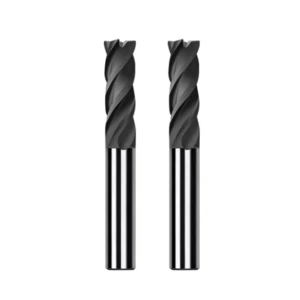
When milling high-precision mold cores or narrow electrode fins, proper tool geometry is critical. Heavy dust generation often stems from insufficient chip clearance, dull cutting edges, or tool deflection rather than raw material defects. Match your tool selection to the operation: use open-flute roughing cutters for high volume removal, and stiff, multi-flute finishing tools for smooth surface quality.
If you face premature edge wear or corner chipping, evaluate your tool’s structural rigidity and coating hardness. A premium diamond coated graphite end mill significantly reduces friction and prevents dust static-clinging to the flutes. Pairing optimized flute profiles with high-velocity air blasts prevents micro-powder recutting and keeps edge sharpness stable over extended production runs.
Achieving Long-Term Quality Control Through a Graphite Machining System
High-volume graphite production requires viewing dust containment as a system-wide discipline. Even with optimized tools and feeds, process drift will occur if dust collection hoods, machine enclosures, and preventative maintenance schedules aren’t managed together. Systemic dust control prevents machine guideway wear and protects long-term positioning accuracy.
We advocate optimizing the total process: machine tool enclosure sealing, vacuum CFM airflow, tool overhang, and regular filter cleaning routines. When every component of your graphite machining system works in harmony, dust volume drops drastically. This systemic synergy preserves overall graphite machining quality, extends tool life, and ensures dependable, repeatable precision.

Graphite Machining Quality – FAQs
Across hundreds of shop floor consultations, machine operators and shop owners repeatedly ask us the same core questions about dust. Why do two shops running identical machines and graphite grades experience drastically different dust buildup? Why do surface finishes degrade rapidly midway through a continuous shift? The answers lie in how material properties, cutting parameters, tool geometries, and extraction systems interact.
When providing technical support, we analyze the specific cutting physics on your machine bed rather than blaming a single variable. Below, we answer the most common questions about CNC graphite machining to help you troubleshoot root causes, extend tool life, and maintain tight dimensional control.
Why Does CNC Graphite Machining Produce Excessive Dust?
In our field investigations, dust spikes stem from graphite’s brittle fracture mechanism. Unlike metals that form curling chips through plastic deformation, graphite removed by a tool edge instantly fractures into fine particles. When cutting parameters are out of sync—such as excessive chip loads or dull edges—material crumbles ahead of the cut, creating dense airborne powder.
If dust levels suddenly surge on your machine, inspect tool flank wear, material grain size, and spindle vibration. Heavy dust accumulation is rarely a raw material defect alone; it usually signals unstable cutting dynamics or inadequate vacuum extraction during CNC graphite machining.
How Can Graphite Dust Control Improve Machining Quality?
Effective dust evacuation directly protects workpiece accuracy and surface finish. When airborne micro-powder lingers in the work volume, particles get dragged between the tool flank face and the workpiece, acting like an abrasive polishing compound that recuts finished surfaces and causes dimensional drift.
For high-precision graphite electrode production, optimized dust extraction keeps the cutting zone clear and temperatures stable. Maintaining high vacuum airflow velocity prevents powder recirculation, reduces cutting micro-vibrations, and ensures consistent graphite machining quality across long production runs.
Does Graphite Dust Reduce Graphite End Mill Tool Life?
Yes, unmanaged powder trapped in the cutting zone significantly accelerates tool wear. Because graphite micro-particles are inherently abrasive under pressure, recutting trapped powder creates severe friction against the tool relief face, dulling sharp cutting edges long before their expected service life.
If you observe rapid flank wear on your graphite end mill, look beyond carbide grade or coating specs. Check whether high-pressure air blasts and vacuum suction hoods are effectively pulling dust away from the tool tip. Protecting tool life requires combining proper edge geometry with direct-point dust evacuation.
Which Graphite End Mill Is Best for Reducing Graphite Dust?
There is no single “magic” tool for every application. Roughing deep cavities demands a 2-flute or 3-flute open geometry with large chip pockets to evacuate volume quickly, whereas high-speed finishing requires rigid multi-flute tools to prevent deflection and vibration.
To minimize dust-induced wear, choose a premium CVD diamond-coated graphite end mill. The extremely low friction coefficient of diamond prevents static-charged powder from packing inside the flutes. Match the tool’s flute volume to your depth of cut to ensure smooth powder discharge and reliable process repeatability.