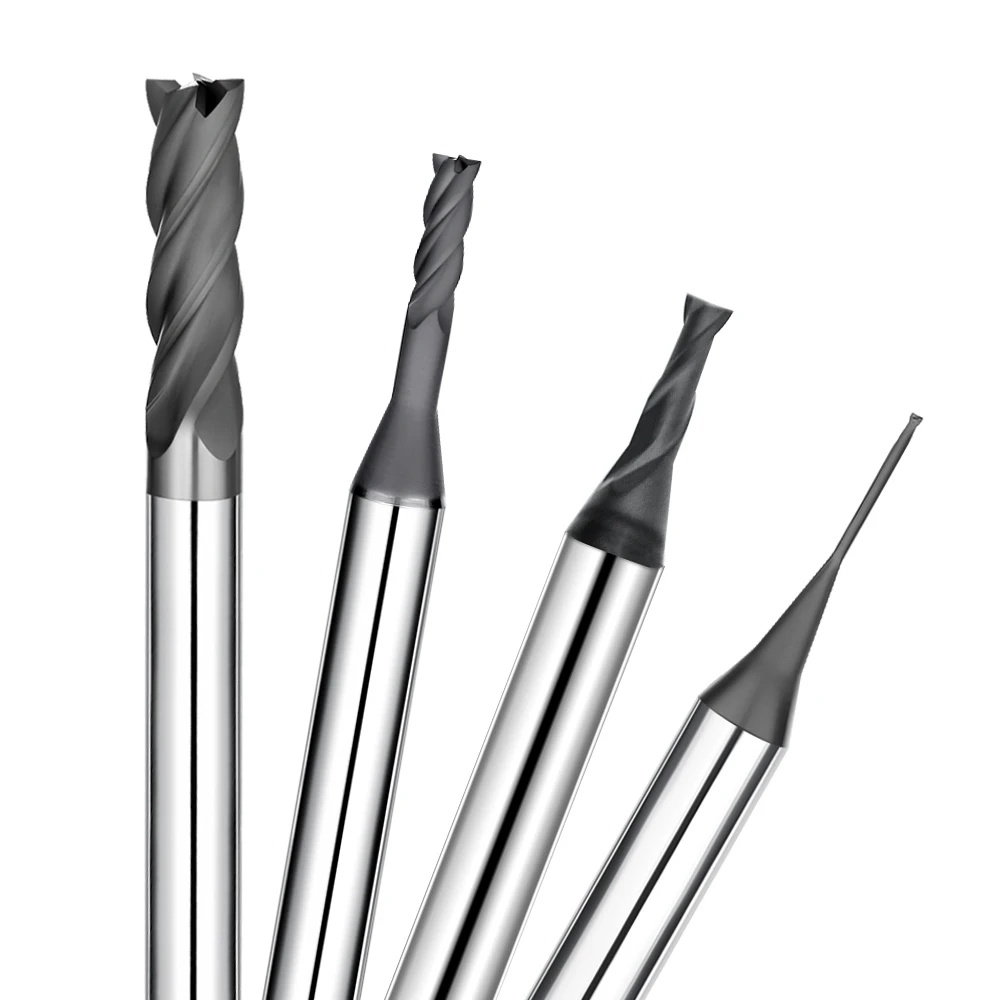
In our long-standing service to clients in EDM electrode machining and mold manufacturing, we frequently encounter a critical challenge. Clients often present high-precision graphite electrode blueprints that demand flawless surface finish, zero edge chipping, and strict cycle times. However, on the actual CNC shop floor, the real battle is not just about shaping the part, but ensuring long-term machining stability.
We consistently observe a frustrating bottleneck across multiple precision manufacturing projects. Within the same graphite machining system, switching to a different batch of graphite end mills causes massive fluctuations in surface quality. Some batches suffer from premature tool wear, while others trigger micro-cracks, forcing costly rework in the electrode machining process.
Our practical field experience proves that the root cause rarely lies in the CNC equipment itself. Instead, it stems from vulnerabilities in the graphite milling cutter supply chain and flawed tool selection logic. When machining high-hardness, fine-grained graphite, standard carbide end mills fail rapidly under high-speed dry cutting conditions.
Furthermore, a mismatch in coating technology accelerates this failure. Without premium diamond-coated end mills, the cutting edge degrades almost instantly during continuous high-speed runs. This rapid wear directly destabilizes the entire precision graphite milling workflow, impacting the final mold quality.
Comparative tests at various client sites reveal a vital truth. A genuinely stable graphite machining system cannot rely on a single tool or an isolated setting. True stability requires a precise synergy between tool geometry, advanced coating technology, tailored cutting parameters, and efficient dust control.
In high-tolerance EDM graphite electrode machining, any minor imbalance escalates quickly. A slight mismatch can trigger severe surface roughness or dimensional drift, ruining the workpiece. This recurring variance among “graphite-specific” tools from different suppliers highlights a deeper systemic issue that few manufacturers address.
If the core issue is not just the tool, but a misalignment across the entire system, where do we start? To re-establish machining stability, we must look beyond the tool label and optimize the matching logic between the machine, the material, and the cutter.
By analyzing tool micro-geometry and diamond coating adhesion, we can eliminate unpredictable tool life and edge chipping. Let’s break down how to engineering-match your cutting tools to unlock the true potential of your mold graphite machining solutions.
The Core Role of Graphite Machining Systems in the EDM and Mold Industries
In our practical EDM electrode machining experience, a graphite machining system is never a standalone process. It serves as the critical bridge spanning the entire workflow from initial electrode design to final spark erosion. Even with optimized electrode geometry, achieving consistent surface quality and dimensional stability during actual CNC milling remains a major shop-floor challenge.
From an engineering perspective, we prioritize total system compatibility over isolated cutting parameters. In high-precision graphite milling, micro-deviations in tooling, CAM toolpaths, or chip evacuation directly degrade EDM material removal rates and accelerate electrode wear. Total system synergy is what prevents costly scrap.
The Value of Graphite Machining Systems in EDM Electrode Machining
A frequent bottleneck in EDM electrode machining projects is the discrepancy between machined surface aesthetics and actual EDM performance. An electrode may meet blueprint specifications under a profilometer, yet cause uneven energy distribution or rapid volumetric wear during discharge. These issues are often wrongly blamed on EDM power settings rather than the milling phase.
Our field data proves that stable electrode manufacturing relies on highly repeatable machining logic. This encompasses strict tool selection, optimized toolpaths, and precise control of the dry machining vacuum environment. Inconsistency between batches of graphite end mills—even under identical CNC overrides—will alter the electrode’s micro-texture and ruin EDM efficiency.
Industrial Context for Mold Graphite Machining Solutions
Modern mold graphite machining solutions must tackle increasingly complex cavities and tighter tolerances. During the transition from aggressive roughing to micro-finishing, any instability in the tooling system disrupts the entire production cycle. Mold manufacturers constantly demand reduced cycle times without compromising the flawless edge integrity needed for parting lines.
However, during small-diameter tool finishing, batch-to-batch variation from a graphite milling cutter supplier often triggers catastrophic dimensional drift. To maintain a competitive edge, mold makers require highly predictable tool life. This predictability ensures that the finished mold core matches the CAD model perfectly across multi-cavity runs.
Why a High-Precision Graphite Machining System Determines Electrode Quality and EDM Efficiency
Data from our long-term manufacturing projects indicates that electrode quality and EDM efficiency share a non-linear relationship. A high-precision graphite machining system is critical because it dictates the uniformity of the electrode’s microscopic surface structure. This precise micro-topography directly controls the plasma channel and spark gap consistency during EDM discharge.
Comparative tests prove that using premium diamond-coated end mills yields significantly fewer microscopic surface micro-cracks than standard carbide end mills. While standard carbide tools suffer from rapid, uncontrollable abrasion during long unattended cycles, diamond coatings sustain sharp edges. Evaluating the entire machining system—including material grain size and coating adhesion—is the only way to guarantee EDM success.
Comprehensive Analysis of the Precision Graphite Milling Process
In mass-production graphite electrode projects, precision graphite milling functions as an integrated stability system rather than a sequence of isolated steps. Many machine shops utilize high-end CNC centers with excellent static precision, yet face severe roadblocks during long-duration runs. These typical failures include sudden dust accumulation, erratic surface roughness, and unpredictable tool life.
Our engineering experience shows that the most frequently overlooked factor is systemic compatibility. Specifically, the dry cutting environment, tool coating selection, and chip evacuation paths must work in perfect harmony. Any instability within these three vectors becomes magnified during continuous EDM graphite electrode production, leading to unexpected downtime.
Key Process Characteristics of Precision Graphite Milling (Low Dust, High Stability)
In practical CNC shop operations, airborne dust control is the most immediate technical challenge. While many clients focus solely on tool wear, they soon realize that graphite dust adhesion increases the thermal load on the cutting zone. This localized heat buildup degrades surface finish consistency, making robust dust extraction a fundamental prerequisite for stable machining.
During the CAM and process design phases, we emphasize strategic airflow management for dry cutting. This involves optimizing compressed air direction, dust hood positioning, and vacuum negative pressure within the enclosure. In high-precision electrode machining, poor dust evacuation leads to severe secondary abrasion and premature failure of expensive graphite end mills.
Implementation of High-Speed Dry Graphite Milling in CNC Machining
For high-speed dry machining, the ultimate goal is system rigidity and thermal stability rather than raw spindle speed (RPM). Many programmers experience a sharp drop in tool life when blindly boosting speeds, a common issue when milling ultra-fine grain graphite. High friction from high-hardness graphite requires balanced cutting dynamics.
Our proven shop-floor strategy focuses on managing cutting loads through advanced trochoidal or layered toolpaths rather than aggressive speed increases. Furthermore, the synchronization between air-cooling jets and chip evacuation direction is critical to prevent chip re-cutting. This prevents premature micro-chipping along the cutting edges of specialized diamond-coated end mills.
Surface Quality Control and Toolpath Optimization Strategies
In precision mold electrode projects, controlling surface finish determines the cycle time and quality of the subsequent EDM process. We consistently observe that even when using identical cutting tools, the electrode’s final dimensional accuracy varies drastically based on the CAM toolpath strategy. Optimized toolpaths minimize structural deflection and tool pressure.
We select specialized milling strategies based on the geometric features of the mold. For instance, we implement a layered constant-Z strategy for deep vertical cavities, while prioritizing a constant cutting contact angle on complex 3D surfaces. In precision graphite milling, aggressive or erratic directional changes trigger localized micro-chipping, ruining sharp corner profiles.
Common Issues and Solutions in Precision Graphite Milling (Chipping, Dust, Tool Wear)
Through years of tracking long-term mold projects, we have categorized three recurring failures: edge chipping, dust-induced abrasion, and erratic tool life spans. These issues rarely stem from a single isolated factor. Instead, they represent an engineering imbalance across the entire graphite milling cutter supply chain and process setup.
During heavy roughing with standard carbide end mills, excessive feed rates combined with inadequate chip evacuation trigger micro-crack propagation along the flute. Similarly, failing to switch to an ultra-hard diamond coating during finishing directly compromises electrode geometry. Resolving these challenges requires a total system re-evaluation of your graphite machining solutions, balancing dust control, tool geometry, and feeds.
The Core Role of Graphite End Mills in Graphite Machining Systems
In high-volume graphite electrode production and precision mold finishing, the graphite end mill serves as the primary anchor for overall machining stability. While many shops focus on adjusting CNC feed overrides, our on-site reviews show that surface finish stability depends heavily on tool geometry. Spindle speed and feed rates mean nothing if the tool’s core structure cannot handle the abrasive nature of the material.
During prolonged dry graphite milling, factors like chip flute capacity, cutting-edge toughness, and coating adhesion dictate the output of the entire graphite machining system. We never treat the end mill as a consumable commodity; instead, we analyze it as a critical system variable. Selecting the correct micro-geometry prevents catastrophic workpiece damage during unattended graveyard shifts.
Structural Design Features of Graphite End Mills (Chip Flute and Cutting Edge Optimization)
In complex EDM electrode machining projects, chip flute geometry is a critical detail that engineers frequently overlook. Graphite does not produce standard metal chips; it pulverizes into an abrasive, fine powder. If the flute profile lacks a polished, open volume, this powder packs tightly inside the cutting zone, triggering a rapid thermal spike along the cutting edge.
We specify distinct flute topologies based on your machining depth and electrode structural features. For heavy stock removal, we utilize specialized open-flute designs, while transitioning to reinforced cutting edges with a negative rake angle for finishing. In high-precision graphite milling, modifying this micro-geometry is the most effective way to eliminate fragile edge-chipping issues.
Application of 2 Flute vs 4 Flute Graphite End Mills Across Machining Stages
On the shop floor, we enforce a strict separation between 2-flute and 4-flute tools based on localized chip load per tooth. The 2-flute design is our default choice for aggressive roughing operations. It provides a massive chip-gullet capacity, ensuring superior stability and preventing pack-up when clearing deep cavities or removing large volumes of raw material.
Conversely, 4-flute tools are engineered exclusively for semi-finishing and high-speed surface finishing. Implementing a 4-flute cutter too early in the roughing cycle causes instant heat accumulation due to restricted dust evacuation, ruining the cutter. Conversely, using a 2-flute tool for finishing results in inconsistent step-over scallop lines, compromising the mold graphite machining solutions.
Analysis of Wear Mechanisms for Graphite End Mills in High-Speed Machining
Under high-speed CNC conditions, graphite end mill wear is highly non-linear, exhibiting sudden acceleration at specific failure thresholds. In high-RPM applications, the moment micro-chipping occurs at the cutting edge, the flanking wear land expands exponentially. This rapid degradation is a phenomenon we have verified through continuous laser tool-setter tracking.
The primary wear mechanisms include micro-crack propagation at the tool tip, localized coating delamination, and severe abrasive micro-friction. This mechanical breakdown happens almost immediately when using uncoated carbide end mills for graphite under aggressive feed rates. Even premium diamond coated end mills will fail prematurely if poor dust evacuation forces the tool to re-cut trapped abrasive powder.
Selecting the Right End Mill Specifications for Precision Graphite Milling
When matching cutting tools to specific mold applications, specification selection must extend far beyond basic nominal diameters. Programmers must account for the aspect ratio of the cavity and the structural rigidity of the setup. In fine electrode finishing, while small-diameter tools resolve intricate details, they demand stricter runout control to avoid deflection.
Our selection matrix evaluates the tool’s diameter-to-reach ratio, flute length stability, and the specific grade of diamond coating required. For high-precision graphite milling, we recommend deploying a multi-stage tooling assembly rather than relying on a single tool. This balanced engineering approach maintains the tightest tolerances while maximizing the lifecycle of your graphite milling cutter inventory.
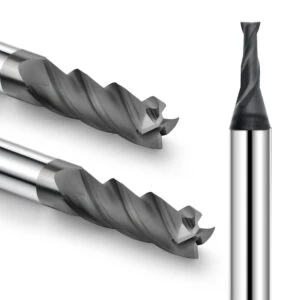
Diamond Coated End Mills for Graphite
In high-precision EDM electrodes and fine-grained graphite machining, diamond coated end mills are no longer optional—they are an absolute prerequisite for stable mass production. During long-cycle dry graphite milling, your tool wear rate directly dictates the dimensional stability window of the entire graphite machining system. Uncoated tools simply cannot withstand the highly abrasive nature of dense graphite particles over extended runs.
We consistently observe this bottleneck on various shop floors: when cycle times are compressed, standard carbide tools suffer rapid micro-chipping along the cutting edge. This chipping immediately ruins surface finish consistency and causes unpredictable part geometry. In contrast, while diamond-coated options require higher initial capital, their superior tool life ensures uninterrupted, lights-out precision electrode machining.
Wear Resistance Mechanisms and Advantages of Diamond Coated End Mills
On the CNC shop floor, the core value of diamond-coated end mills extends far beyond raw hardness. Their true engineering advantage lies in their ability to maintain cutting-edge sharpness under high-frequency impact cycles. During high-speed graphite milling, a premium diamond coating acts as a thermal and physical barrier, mitigating edge degradation caused by aggressive abrasive friction.
We evaluate two critical performance benchmarks when qualifying tools: coating adhesion shear strength and localized heat dissipation. In continuous milling setups running identical feeds and speeds, diamond-coated end mills exhibit negligible tool life fluctuations. This tight predictability is the single most critical factor for guaranteeing consistent EDM electrode quality across large batches.
Comparative Application of DLC vs Nano Diamond Coatings
During tool selection, mold makers frequently question the operational differences between DLC and nano-diamond Nano coatings. From our engineering experience, it is not a matter of which coating is superior, but which fits the application. DLC coatings excel in light-load finishing operations where a low friction coefficient and superior Ra surface finish are paramount.
Conversely, multi-layer nano-diamond coatings are engineered for prolonged, heavy-load stock removal. In our mold graphite machining solutions, nano-diamond tools demonstrate massive tool-life advantages in deep-cavity roughing. However, DLC systems prove superior at maintaining tight tolerances during intricate detailing with micro-diameter end mills, justifying a tiered, multi-tool CAM strategy.
Strategies for Extending Tool Life When Machining High-Hardness Graphite
When milling high-density, fine-grained graphite, accelerated tool wear is rarely caused by a single variable. Instead, it is a compound failure triggered by cutting forces, chip evacuation efficiency, and coating stability working against each other. Even micro-vibrations in the spindle can significantly amplify coating delamination during long-cycle operations.
Our standard optimization strategy focuses on reducing the impact load per tooth while maximizing the velocity of the chip evacuation path. In multiple client cases, simply adjusting the positioning and pressure of the air-assist blast—while using the exact same grade of graphite end mill—extended tool life by 20% to 40%. Fine-tuning chip evacuation often yields better ROI than switching suppliers.
Why High-End Graphite Machining Systems Require Diamond-Coated Tools
Our extensive project history proves that achieving stable, high-precision graphite machining requires a cutting tool fully synchronized with the broader CNC ecosystem. Tooling performance must never be evaluated in isolation from machine rigidity or dust extraction power. System-wide stability is what ultimately protects your profit margins in continuous, automated production environments.
Without diamond-coated tools, a graphite machining system might perform within tolerance initially, but surface finish variance widens exponentially as batch sizes increase. This degradation accumulates stealthily across multiple shifts, often going unnoticed until it causes erratic spark gaps and severe electrode wear during EDM discharge. True mold graphite machining solutions eliminate this risk at the spindle.

Application Scenarios for Carbide End Mills for Graphite
In graphite electrode roughing and pre-machining projects, carbide end mills for graphite typically handle the initial high-load phase. When shops first implement graphite machining systems, they often focus entirely on finishing stability. However, our field audits show that most failures—such as erratic cutting loads, chip-clogged flutes, and premature tool destruction—actually originate during raw hogging operations.
Uncoated carbide tools are not intended to replace premium coated variants; instead, they serve to optimize high material removal rate (MRR) operations. In heavy-stock graphite milling scenarios, choosing the wrong roughing tool overloads the subsequent finishing stage. This poor planning destabilizes the entire electrode machining workflow and accelerates finishing tool failure.
Material and Structural Characteristics of Carbide End Mills for Graphite
The primary engineering advantages of uncoated carbide end mills for graphite lie in their core substrate toughness and impact resistance. During aggressive, high-speed roughing, these tools withstand intense cyclic impact without the risk of premature coating delamination that plagues poorly formulated coated tools. This raw structural integrity is vital when breaking the hard outer skin of raw graphite blocks.
We optimize two critical structural parameters for these cutters: micro-grain substrate sizing and specialized flute geometries. In deep-cavity graphite machining, for instance, a narrow flute design causes rapid thermal loading due to compacted dust accumulation. Selecting a carbide tool with a polished, wide gullet ensures smooth chip flow and prevents localized workpiece cracking.
Application Positioning in Roughing and Semi-Finishing
In high-yield mold electrode machining workflows, carbide tools are deployed precisely during the transition between roughing and semi-finishing. Because the primary goal of roughing is maximum bulk excavation rather than flawless surface quality, we balance aggressive feed rates with tool deflection control. This strategic metal-removal strategy protects the CNC spindle from prolonged vibration.
During semi-finishing, these carbide tools prepare the workpiece geometry by establishing a highly uniform stock allowance for final blending. This careful preparation creates a stable foundation for expensive, diamond-coated finishing tools to run under ideal conditions. Mismanaging this mid-stage step increases total tool pressure during high-precision graphite milling projects, causing dimensional drift.
Performance Comparison with Diamond-Coated End Mills
Our long-term comparative testing proves that the performance gap between standard carbide tools and diamond-coated end mills for graphite manifests in volumetric tool wear and cutting-edge longevity. While premium carbide tools perform reliably during initial entry, their wear land expands exponentially during prolonged, dry continuous machining. This rapid abrasion quickly alters the tool’s effective cutting diameter.
Observations across thousands of EDM electrode machining cases indicate that relying solely on uncoated carbide tools for complete part cycles introduces severe uncertainty during final tolerance adjustments. Rather than viewing carbide and diamond as direct substitutes, we enforce a strict division of labor. We relegate carbide to bulk hogging and reserve diamond for maintaining tight tolerances.
Balancing Cost Control and Machining Efficiency
Balancing upfront tooling expenses with total shop-floor efficiency is a frequent consulting topic with manufacturing clients. Uncoated carbide end mills offer significantly lower individual unit costs. This makes them a highly effective cost-reduction tool per part when chewing through massive volumes of abrasive raw stock during roughing phases.
However, focusing exclusively on the purchase price of an individual cutter while ignoring finishing stage risks leads to inflated overall production costs. We recommend a tiered approach: deploy economical carbide end mills for graphite roughing, then transition to a stable diamond-coated tool system for finishing. This methodology ensures complete predictability across your entire mold graphite machining solutions.
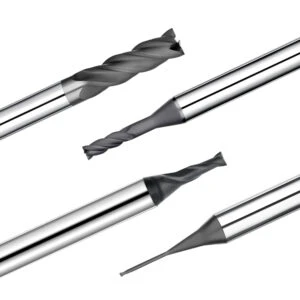
Selection Criteria for Graphite Milling Cutter Suppliers
In high-volume graphite electrode projects and mold shop procurement, the gap between graphite milling cutter suppliers rarely appears in product catalogs. Instead, the real differentiator is batch stability and performance consistency under harsh, real-world operating conditions. We frequently solve shop-floor crises where a client switches suppliers for the same graphite machining system and suffers immediate dimensional chaos, despite the nominal tool specs being identical.
Our engineering audits prove these volatile fluctuations are rarely detected during the initial, short-term procurement phase. Instead, they stealthily emerge once continuous mass production of EDM electrodes begins. Consequently, when qualifying a new tooling vendor, we prioritize statistical process control (SPC) and long-term machining stability over the performance of a single golden sample.
Key Evaluation Metrics for Graphite Milling Cutter Suppliers (Precision, Coating, Tool Life)
When benchmarking cutters from various global vendors, we scrutinize three non-negotiable core metrics: geometric profile consistency, coating adhesion stability, and tool-life variance. In high-precision graphite milling, even a microscopic deviation in radial runout tolerances or cutting-edge honing ruins surface finish uniformity. This geometric drift directly causes unpredictable electrode wear during spark erosion.
We evaluate tool-life stability through continuous, multi-batch cutting trials rather than relying on the lifespan of a single standalone cutter. In our field tests, even when nominal chemical coating specs are identical, real-world longevity varies wildly between suppliers. This performance gap becomes highly destructive when machining abrasive, ultra-fine-grained graphite.
Supply Chain Requirements for Industrial-Grade Graphite Machining Systems
When managing tooling chains for industrial clients, the reliability of a graphite machining system relies as much on procurement logistics as it does on CNC programming. In mass electrode manufacturing, batch-to-batch fluctuations in cutter shipments disrupt automated schedules and inflate the total cost of ownership (TCO). Consistent supply chains eliminate unexpected machine downtime.
We advise manufacturing executives to establish a highly standardized tooling pipeline with their suppliers. This requires locked-in diamond coating formulations, fixed cutting-edge micro-geometries, and rigorous inventory batch tracking. For advanced mold graphite machining solutions, this level of upstream supply chain control is often far more critical than tweaking individual parameters at the controller.
The Importance of OEM/ODM Customization Capabilities for Graphite End Mills
In our custom engineering collaborations, a supplier’s robust OEM/ODM capability often determines whether they can sustain a profitable, long-term partnership. While standard off-the-shelf catalog cutters perform adequately in basic, shallow-pocket tests, they fail when tackling complex electrode geometries. Specialized deep-cavity molds demand non-standard geometries that catalog tools cannot provide.
Across thousands of production hours, we have found that unless graphite end mills can be customized—specifically tailored for unique reach-to-diameter ratios, chip flute volumes, and targeted coating thicknesses—long-term stability is impossible. Therefore, we prioritize agile suppliers capable of structural micro-geometry customization over those offering only static, off-the-shelf inventories.
Competitive Landscape Analysis of Global Graphite Milling Cutter Suppliers
Based on our international consultancy experience, global competition among graphite milling cutter suppliers breaks down into distinct regional strengths. European suppliers typically focus on premium process stability and high-end tool geometry; Japanese vendors emphasize extreme precision consistency; while Chinese manufacturers offer unparalleled advantages in cost-effectiveness, rapid prototyping, and delivery flexibility.
Our cross-regional testing reveals there is no universal, one-size-fits-all supplier. The ideal choice depends entirely on your specific manufacturing environment. High-volume electrode operations require massive supply chain stability, whereas high-end precision electrode manufacturing relies heavily on bespoke coating technologies and custom structural designs. We match the vendor to the exact needs of your graphite machining system.
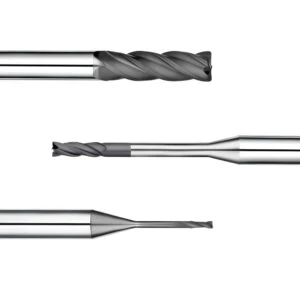
Mold Graphite Machining Solution
In high-volume mold electrode manufacturing and complex cavity production, a true mold graphite machining solution extends far beyond single-step parameter tuning. It requires a seamless, closed-loop engineering process that integrates initial CAD/CAM design, aggressive roughing, micro-finishing, and final EDM validation. Many machine shops optimize cutting feeds in isolation, yet fail to achieve predictable electrode consistency across multi-cavity runs.
Our experience reveals that erratic part quality stems from a lack of continuity across the broader graphite machining system rather than a single machining error. This bottleneck becomes catastrophic during high-precision electrode mass production. Without a stable, mathematically sound transition between roughing and finishing, micro-deviations compound rapidly, resulting in out-of-tolerance final products.
Application Workflow of Mold Graphite Machining Solutions
A standard, high-yield workflow for mold electrode production begins with automated 3D CAM electrode extraction and splitting. This engineering setup is immediately followed by bulk graphite roughing, intermediate semi-finishing, and high-speed final finishing. While each distinct phase requires independent tool geometries and chip load calculations, the global geometric data must remain tightly aligned throughout the entire run.
We frequently diagnose a destructive bottleneck on client shop floors: the deployment of mismatched graphite end mills across different CAM stages. This tool mismatch means that while the initial roughing appears trouble-free, the finishing cutter suffers from uneven stock allowances and deflects. This hidden error causes massive manual corrective work during the subsequent EDM electrode machining process.
A Comprehensive Graphite Machining System Workflow: From Roughing to Finishing
When engineering a high-efficiency milling workflow, we break down the graphite machining system into distinct operational thresholds rather than generic setup labels. The roughing cycle is programmed exclusively to maximize the material removal rate (MRR) and clear bulk stock. Conversely, the high-speed finishing cycle is mathematically optimized to preserve cutting-edge integrity and control surface roughness.
To bridge these phases, we enforce a highly strategic, tiered tooling matrix within our process plans. We deploy economical carbide end mills for graphite roughing to absorb high impact shock, then switch to premium diamond-coated end mills for finishing. This strict division of labor minimizes cumulative process variability, ensuring the final workpiece matches the CAD model perfectly.
The Relationship Between EDM Electrode Machining and Mold Precision
Through decades of consulting for global mold makers, we have verified a fundamental manufacturing truth: the micro-topography of the machined electrode dictates the surface texture and dimensional accuracy of the spark-eroded steel. While shops often focus on EDM generator settings, our forensic audits show that most finishing failures originate directly during the electrode machining phase.
Even a microscopic surface scuff or ridge generated during high-precision graphite milling will be amplified by the electrical plasma channel during spark erosion. This geometric distortion manifests as uneven surface textures or localized arc discharge burn marks on the hard mold steel. Therefore, precision electrode milling must be treated as the foundational link in your mold-making quality chain.
Building a High-Efficiency Mold Graphite Machining Production Line
When designing automated cell layouts for manufacturing clients, we define high efficiency as the continuous capacity for predictable, stable output rather than raw cycle speed. A world-class mold graphite machining production line requires a rigid machine tool platform, standardized tooling packages, and an engineered, high-vacuum dust management system.
We structure these high-output lines into three distinct, interconnected operational modules: a roughing efficiency module, a finishing stability module, and an automated inspection/feedback loop. In high-precision graphite machining projects, an engineering failure in any single module destabilizes the entire production cycle time. We leverage a total systems-thinking approach to eliminate these single points of failure.
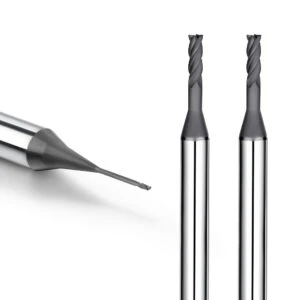
Process Optimization Strategies for High-Precision Graphite Machining Systems
In high-precision electrode machining and mold manufacturing, a stable graphite machining system relies on a combination of tightly monitored process factors. Many machine shops invest heavily in ultra-precision, high-end CNC centers, yet still suffer from uncontrollable dimensional drift during mass production. Over-relying on machine specifications while ignoring system synergy always results in volatile part tolerances and erratic surface quality.
These chronic shop-floor failures rarely stem from an isolated parameter setting; instead, they reflect a lack of holistic optimization across the high-speed dry machining loop. In precision graphite milling, the severe friction and micro-dust generated by the process act as an environmental amplifier. A minor mismatch in feed rates or extraction velocities will quickly escalate into tool failure.
Optimizing Spindle Speed and Feed Rates (High-Speed Graphite Milling Parameters)
In our custom engineering projects, the fine balance between spindle speed (RPM) and feed rate (IPM) is the primary anchor for machining stability. A common error among programmers is blindly boosting spindle speeds to maximize volumetric output. Our laser-setter audits reveal that this isolated adjustment accelerates thermal friction, destroying tool edges when cutting fine-grained graphite.
Rather than treating speeds and feeds as isolated variables, we focus on maintaining a constant chip load per tooth (IPT). A mismatch between cutting velocity and the actual material engagement zone triggers localized rubbing, uneven surface finish, or catastrophic over-cutting. We recommend using dynamic parameter ranges optimized for specific tool contact angles rather than static handbook values.
Toolpath Optimization and Vibration Control Techniques
When processing intricate EDM electrodes, the impact of CAM toolpath optimization on final surface roughness is frequently underestimated. We have verified across multiple automation cells that using identical graphite end mills under different toolpath strategies yields completely distinct surface finishes. Poorly programmed transitions generate harmonic vibrations that destroy fragile electrode ribs.
Our stabilization strategies eliminate localized chatter by managing tool overhang ratios, radial deflection, and cutting engagement angles. For complex geometries, we deploy smooth trochoidal toolpaths and constant-Z contours to prevent sudden spike loads on the tool tip. We tune toolpath segments based on localized part rigidity rather than applying a generic master template.
Dust Control and Dry Machining Environment Design
On a high-speed production floor, dust control is a primary driver of process capability rather than just a housekeeping issue. Precision graphite milling generates millions of abrasive micro-particles that will pack into the cutting zone if left unmanaged. Once trapped, these particles cause aggressive secondary re-cutting, instantly grinding down the sharp flutes of your tools.
We optimize system performance by modeling the airflow direction and positioning high-velocity vacuum pick-ups closer to the cutting zone. Simply boosting raw suction power without strategic air-assist blasting creates dead zones where dust accumulates anyway. Proper dry-cutting containment preserves the wear-resistant properties of diamond-coated end mills, preventing erratic surface scoring.
Application of Tool Life Management in Graphite Machining
In high-volume manufacturing, predictive tool life management extends far beyond setting simple, fixed timer alerts on the CNC control panel. It requires the real-time, dynamic monitoring of workpiece edge integrity and surface consistency. The underlying issue plaguing most mold shops is not how long a tool lasts, but the extreme variance in tool life from one batch to the next.
We establish tool-change intervals based on volumetric material removal and predictable wear-land thresholds rather than relying on standard clock hours. Without a statistically stable tracking matrix, individual tools exhibit erratic wear spikes that derail automated scheduling. Implementing structured tool life management is the only way to achieve reliable, unattended EDM electrode machining.
Advantages of the SAMHO Graphite Machining System as a Comprehensive Solution
In automated EDM electrode machining and high-yield mold manufacturing, global manufacturers adopt the SAMHO Graphite Machining System as a predictable framework rather than a collection of separate tools. Many machine shops optimize advanced CNC parameters yet suffer from erratic batch fluctuations across identical setups. Our field audits prove that these failures stem from a flawed tool selection methodology and mismatched process integration.
The true benchmark of machine shop profitability is not the peak performance of a single isolated cycle, but the total repeatability of the manufacturing system. In high-precision graphite milling, any slight variance in cutting edges or coating wear patterns will destabilize your EDM electrodes. We address these critical variables by matching tool geometry, advanced coatings, and balanced roughing strategies into a single ecosystem.
Stability Advantages of SAMHO Graphite End Mills in High-Precision Machining
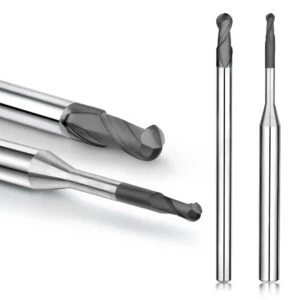
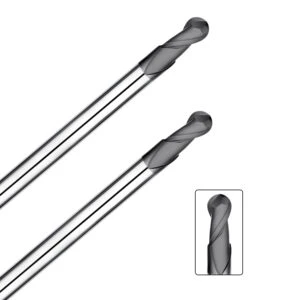
In complex manufacturing cells, SAMHO Graphite End Mills are engineered specifically for high-tolerance finishing and unattended, continuous batch production runs. We focus heavily on minimizing micro-geometric fluctuations during extended cutting cycles rather than chasing brief, unsustainable material removal limits. This dedicated focus on structural rigidity prevents catastrophic dimensional drift when executing complex electrode geometries.
Our field metrics confirm that a lack of geometric consistency across multi-cavity batches leads directly to unpredictable surface finish variations under a profilometer. Conversely, maintaining rigid batch control over tool tolerances eliminates these shop-floor variables, making your downstream EDM electrode machining processes highly predictable. SAMHO tools provide the microscopic edge retention necessary to secure flawless parting lines.
Industrial-Grade Performance of Diamond Coated End Mills for Graphite
When cutting highly abrasive, coarse-grained graphite or intricate thin-rib geometries, our specialized diamond-coated end mills for graphite deliver rock-solid reliability in continuous high-load environments. We prioritize a highly predictable tool wear curve under real-world floor conditions over sterile, idealized data generated in testing laboratories. This real-world durability is what keeps automated production cells running through overnight shifts.
Comparative analyses across demanding mold graphite machining projects reveal that coating adhesion shear strength directly dictates total process consistency. Under continuous running conditions, our multi-layer diamond formulation exhibits minimal flaking, protecting the tool substrate from thermal shock. This engineering barrier maintains the geometric accuracy of the graphite machining system, preventing unexpected tool changes.
Balancing Cost and Efficiency with Carbide End Mills for Graphite
In balanced process planning, uncoated carbide end mills for graphite are deployed strictly to handle high material removal rates during the initial bulk excavation phase. Rather than running these tools through the entire cycle, we isolate them to the graphite roughing phase to clear material rapidly without over-investing capital. This strategic setup protects your expensive finishing cutters from heavy cyclic impacts.
Shop-floor data proves that for high-volume hogging operations, specialized carbide end mills offer an excellent balance between low initial tool cost and rigid cutting stability. However, extending these uncoated tools into the final finishing cycle introduces immediate risks to dimensional uniformity due to accelerated abrasive wear. We enforce a strict division of labor across the CAM matrix to maximize efficiency.
SAMHO’s Supply Capabilities and OEM Support as a Graphite Milling Cutter Supplier
In high-volume manufacturing partnerships, the technical agility of your graphite milling cutter supplier directly dictates long-term production pacing and machine utilization rates. When qualifying a tooling vendor for automated lines, procurement executives prioritize batch consistency, guaranteed delivery schedules, and rapid engineering support over a single discounted invoice. A reliable supply chain stabilizes your total cost of ownership.
For specialized OEM/ODM graphite end mill projects, custom tools must be optimized for unique 3D electrode contours, deep reaches, and specific machine spindle configurations. We have verified that when a supplier possesses robust, in-house micro-geometry customization capabilities, overall component consistency rises dramatically. SAMHO delivers the advanced engineering flexibility needed to support high-capacity mold graphite machining solutions.
Future Trends in Graphite Machining Systems
Through our long-term monitoring of EDM electrode machining and mold graphite applications, we have seen that the graphite machining system has shifted from a simple process issue into a full systems engineering challenge. The key factors discussed earlier—tool geometry, coating selection, roughing-to-finishing separation, and supply chain consistency—all converge on one objective: machining repeatability.
From our field experience, future improvements will not come only from machine tool upgrades. They will depend more on system-level coordination. This is especially true in high-precision graphite machining, where isolated optimization is not enough to guarantee stability. We have confirmed this across multiple production environments and customer cases.
Development Directions for High-Precision EDM Electrode Machining
In the EDM electrode machining projects we support, we consistently see a shift in priority. Customers are less focused on single-part accuracy and more concerned with long-term consistency in batch production. In practice, blueprint tolerance is only the starting point. The real challenge is maintaining stable output across extended runs.
We usually advise reviewing the electrode manufacturing process as a complete chain rather than adjusting isolated parameters. For example, if EDM discharge becomes unstable, the root cause is often linked to variations in surface integrity during the graphite roughing stage. In many cases, this approach is more effective than adjusting EDM settings alone.
The Dominant Role of Diamond-Coated Tools in Graphite Machining
Based on our comparative testing across multiple tooling systems, diamond-coated end mills for graphite show clear stability advantages in industrial production. This is especially evident in high-volume graphite milling environments with long production cycles. However, we do not treat them as a universal solution, but as a key stabilizing element within the system.
If you are working on high-volume graphite milling, we recommend focusing on tool life consistency rather than peak lifespan. In our projects, the main issue is often not premature failure, but inconsistent performance between batches. This variation directly affects EDM discharge stability and overall process predictability.
Development Trends in Intelligent CNC Graphite Machining Systems
In our collaborations with manufacturing plants, we clearly observe a shift toward digitalization and process monitoring in graphite machining systems. The industry is moving away from purely experience-based parameter setting toward data-driven process control. This trend is especially visible in high-precision graphite milling environments.
If you are running continuous electrode production, we suggest tracking tool wear behavior alongside surface finish variation instead of relying only on fixed tool change intervals. From our project experience, this method reduces process uncertainty and improves overall machining control in a measurable and practical way.