
To be honest, in the world of graphite machining, the last thing we want is a phone call from a client saying: “The electrode isn’t even finished, and the tool has already chipped.”
Last month, a mold-making client in Detroit sent us an urgent project involving high-density, complex-geometry graphite electrodes. To save on upfront costs, they used standard coated carbide tools. The result? In less than 30 minutes, the coating on the tool tip vanished. This led to massive chipping along the edges, rendering the entire part scrap. These setbacks—caused by poor control over tool life and dimensional stability—are far too common in professional shops.
With over a decade of R&D and manufacturing experience, we’ve learned that machining graphite—an incredibly abrasive non-metallic material—without a diamond milling cutter is like fighting physics. Graphite dust acts like sandpaper, rapidly “devouring” any cutting edge that lacks extreme hardness.
For our clients in North America and Europe, selecting the right diamond milling cutter for graphite isn’t about paying a premium; it’s about operational survival. Especially in high-precision corner-clearing within deep cavities, a diamond end mill cutter offers wear resistance dozens of times higher than conventional tools. More importantly, it maintains a sharp edge, preventing dimensional deviations caused by tool deflection.
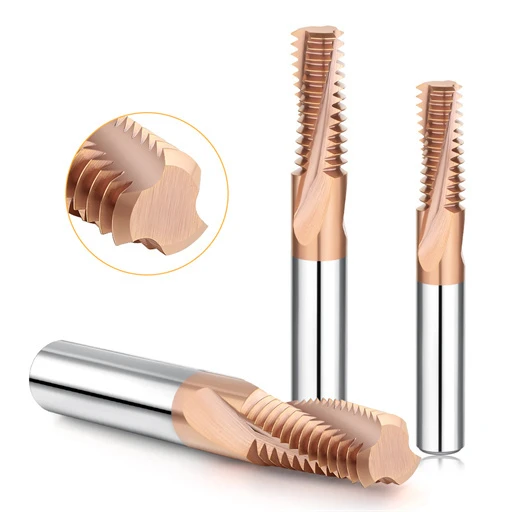
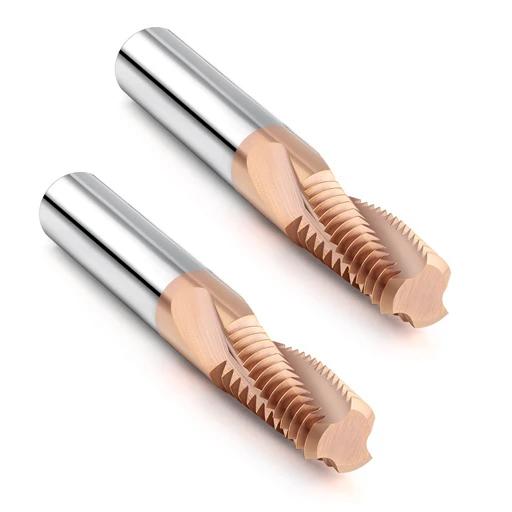
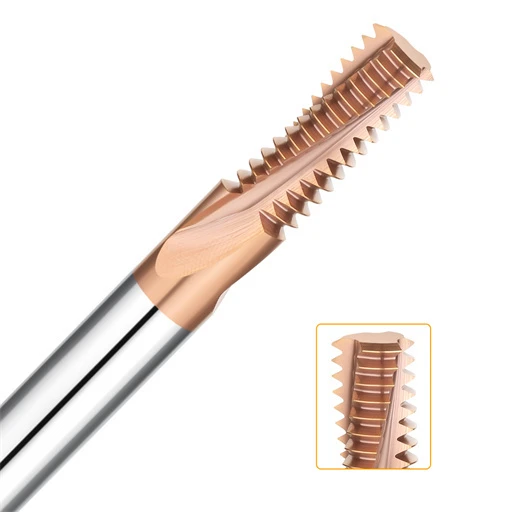
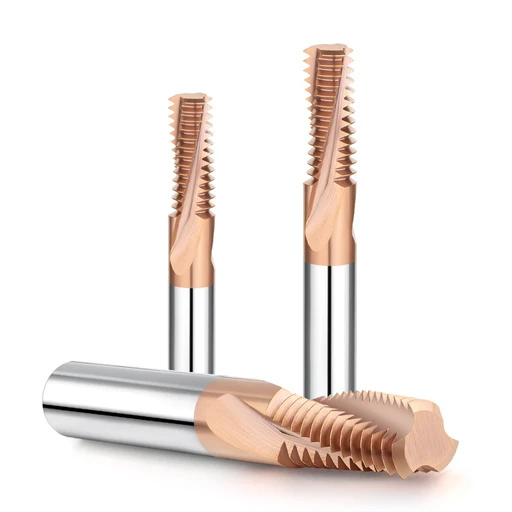
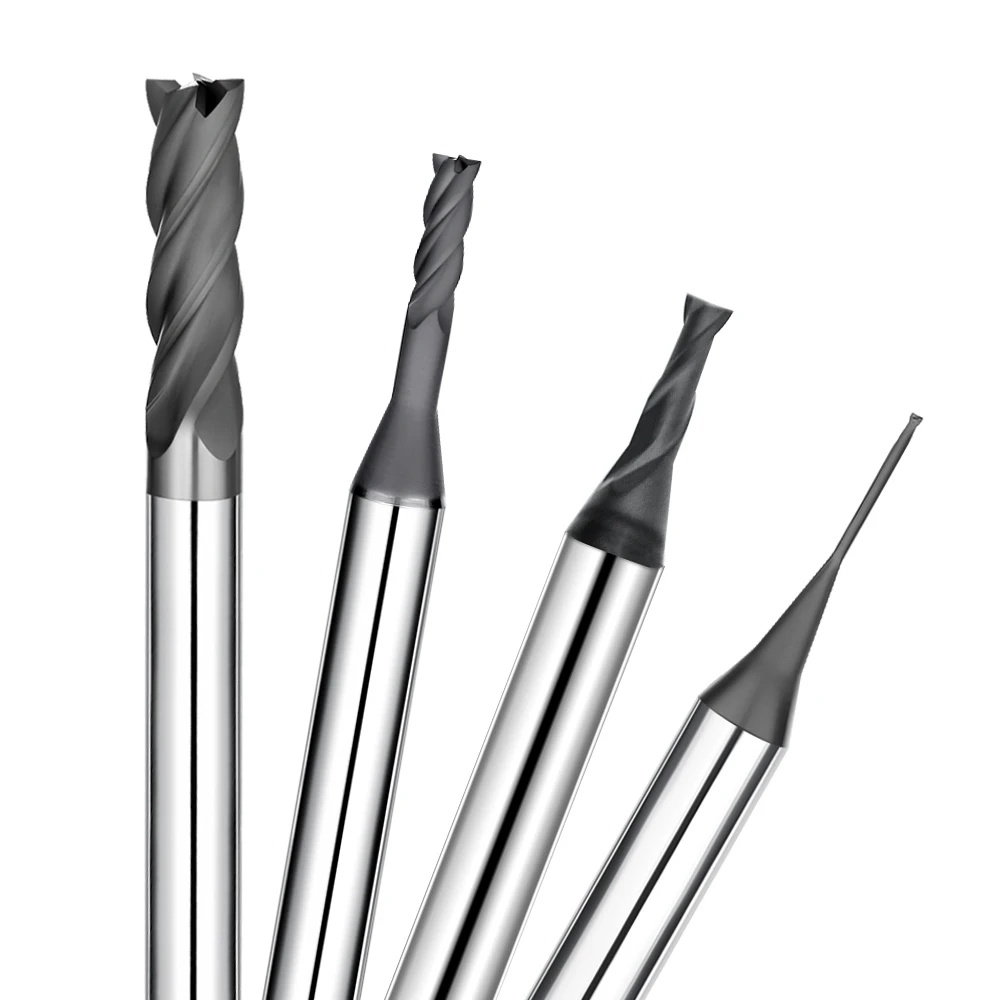
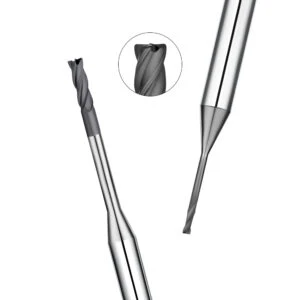
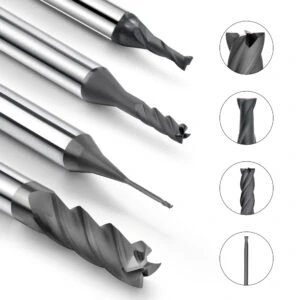
This advantage is undeniable when tackling complex surfaces with a diamond coated 4 flute milling cutter. The stability of a four-flute design, combined with diamond’s low friction, gives graphite a lustrous finish similar to machined metal. It completely eliminates that dull, torn look.
As a diamond milling cutter supplier with deep industry roots, we’ve seen too many man-hours wasted on the wrong tools. Since graphite machining is a battle against wear, why not equip your machines with the toughest “teeth” from the start?
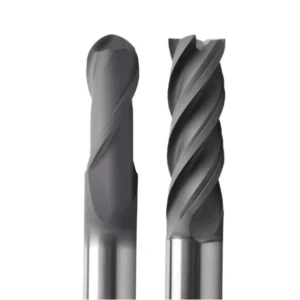
Insights from the Field: The “Fatal Flaw” of Standard Carbide in Graphite Machining
In our workshops, we often see newcomers try to minimize “cost-per-tool” by using standard tungsten carbide on high-purity graphite. While this might work for a few minutes, it eventually kills productivity. Standard carbide has decent toughness, but its surface hardness is no match for the abrasive microstructure of graphite.
We have analyzed dozens of premature tool failures. Our findings show that within ten minutes, standard alloy edges round off completely. This degradation causes cutting forces to skyrocket. The resulting heat can’t escape through the dust, so it transfers back into the tool. This vicious cycle proves that the diamond milling cutter is indispensable. Cost savings on cheap tools are always paid back through high scrap rates and labor costs.
Why We No Longer Recommend Uncoated Tools for Graphite Mold Machining
For the complex 3D electrodes used by Western mold makers, we’ve virtually banned uncoated tools. Graphite machining requires extreme profile accuracy. Uncoated tools exhibit an unstable wear curve; your dimensions might be perfect at the start, but by the end of the finishing cycle, the reduced tool diameter has ruined the part’s integrity.
We teach our customers to look at “Total Cost of Ownership.” While uncoated tools are cheap, they leave striations and burrs. This forces bench workers to spend hours on manual polishing. For automated production, a high-quality diamond end mill cutter ensures process consistency and eliminates tedious manual correction.
Wear and Chipping: How Graphite Abrasiveness Destroys a Tool in Sixty Seconds
Graphite machining isn’t really “cutting”—it’s high-speed micro-abrasion. These hard particles act like tiny grinding wheels on the tool’s rake and flank faces. In our lab tests, dry-cutting graphite with standard tools caused tip temperatures to skyrocket in just one minute. This softens the substrate, leading to visible coating delamination or edge chipping.
This is catastrophic when machining slender ribs or deep slots. Once a tool loses its edge, it stops cutting and starts “extruding” the material. This lateral pressure causes “bottom breakout” or corner chipping. If you aren’t using a diamond milling cutter for graphite, the snap of a broken tool is often followed by the sound of an expensive workpiece hitting the scrap bin.
Are you still dealing with the downtime of replacing worn-out alloy tools every few minutes?
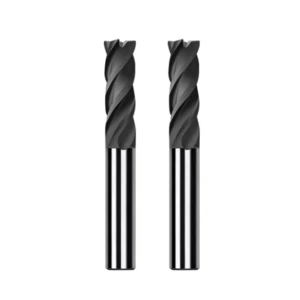
Core Advantage: How Diamond Milling Cutters for Graphite Transform Machining Economics
In our management philosophy, focusing only on the “per-tool” price is a mistake. If you analyze the Cost Per Part, you’ll find that the real expense is invisible downtime. Because graphite is so abrasive, standard tools have a tiny effective life. Frequent tool changes and resets are “black holes” for profit. Our data shows that while the initial investment is higher, a diamond milling cutter for graphite reduces overall cost-per-part by over 30% across large batches.
This shift allows for extreme process stabilization. During unmanned “lights-out” shifts, we confidently run diamond tools through complex blocks without fearing dimensional drift. This predictability gives you better scheduling flexibility and less reliance on constant monitoring. True machining economics is about maximizing the utilization of your expensive CNC equipment.
Dimensional Consistency: Leveraging Diamond Hardness to Stop “Tool Deflection”
In deep-cavity molds or thin ribs, tool deflection is an engineer’s nightmare. Standard tools under pressure suffer elastic deformation, leading to sloped sidewalls. We found that because diamond maintains extreme hardness and low friction, cutting resistance stays low and stable. A diamond end mill cutter mitigates radial runout, keeping hole diameters and slot widths within micron-level tolerances from top to bottom.
We once solved an 80mm deep-cavity issue for a semiconductor client. Their alloy tools were cutting “narrower” as they went deeper because the dulling edge increased compressive force, pushing the tool inward. Switching to diamond kept the edge sharp, resulting in a crisp, vertical cut. This “hardness vs. hardness” approach eliminated rework entirely.
The Key to Surface Finish: 4-Flute Diamond Coatings and Material Integrity
Under a microscope, graphite’s powder-metallurgy structure is prone to micro-chipping or spalling. Visually, this looks like “whitening” or tearing. Our tests show that a diamond coated 4 flute milling cutter excels here. The diamond layer provides high thermal conductivity and a smooth surface, letting dust evacuate rapidly without adhering to the edge.
We often say that graphite cut with the right tool has a “metallic sheen.” This finish determines the stability of the electrical discharge in EDM. If an electrode surface has micro-cracks, it leads to erratic discharges or arcing. By using nanoscale-smooth diamond coatings, we slice through graphite fibers with surgical precision. We’d rather spend a few extra dollars on the right tool than waste hours on manual polishing.
Are you still fixated on upfront procurement costs, or are you ready for the benefits of superior surface quality?
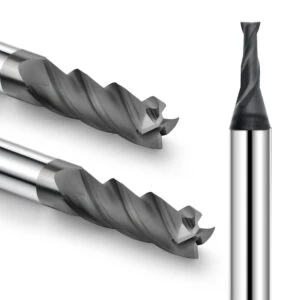
The Ultimate Tool for Finishing: Real-World Performance of the Diamond-Coated 4-Flute Milling Cutter
In the final stages of graphite machining, our requirements are nothing short of exacting. We demand an exceptionally high surface finish and long-term dimensional stability. While many shops favor two- or three-flute tools for roughing—to maximize chip evacuation—we invariably switch to a diamond coated 4 flute milling cutter for finishing. The four-flute structure provides a higher degree of cutting overlap. At an identical feed rate, this leaves a significantly lower residual cusp height. The result is a surface finish so refined it feels like a mirror.
We’ve analyzed the vibration spectra of different flute counts during sidewall milling. Thanks to its superior radial symmetry, the four-flute design counteracts harmonic vibrations. This stability is critical when machining thin-walled graphite components—some with wall thicknesses under 0.5 mm. As a specialized diamond milling cutter supplier, we know that in precision finishing, stability is more valuable than speed. A smooth cutting action extends spindle life and ensures every intricate detail meets the geometric tolerances on your prints.
The Feed Logic Behind the 4-Flute Design: Why We Prioritize 4-Flute Cutters for Side and Bottom Finishing
During side milling, step-down depth and feed-per-tooth determine your efficiency. Our rationale for using a diamond coated 4 flute milling cutter is the ability to shorten cycle times by increasing the overall table feed without overloading a single flute. Because the diamond coating drastically reduces friction on the rake face, graphite particles slide away the instant they are severed. This prevents “chatter marks”—those annoying surface irregularities caused by cutting force fluctuations.
For high-hardness, fine-grained graphite, we recommend a “light and fast” strategy: reduce the depth of cut per flute but increase the overall table feed. This leverages continuous multi-flute cutting and minimizes impact forces on fragile graphite edges. Experience shows that this method produces a bottom surface flatness far superior to aggressively forcing a two-flute tool. Once you see a perfectly flat floor that requires zero manual sanding, you’ll appreciate the value of this logic.
Balancing Chip Evacuation and Cutting Forces: Pitfalls to Avoid with 4-Flute Tools
The most common mistake engineers make with 4-flute tools is blindly using formulas meant for standard carbide. This usually leads to clogged flutes. While diamond coatings are slick, graphite powder can compress under high-speed cutting. If the chip pocket packs tight, cutting forces spike instantly, leading to tool breakage. When we guide customers on setting up this diamond end mill cutter, we emphasize thermal equilibrium. You must prevent localized powder “clumping” caused by heat buildup during deep slotting.
Another pitfall is ignoring the alignment between RPM and machine rigidity. At speeds exceeding 20,000 RPM, 4-flute tools are extremely sensitive to run-out. If you see uneven wear, the issue is usually the tool holder’s clamping force or dynamic balance, not the tool itself. We prefer a conservative initial depth of cut while observing the chips. Ideally, graphite chips should be fine, granular, and dry. If they darken, you’ve exceeded the heat limit. In this case, adjusting the feed rate is much more effective than blindly dropping the spindle speed.
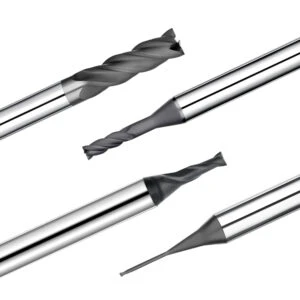
An Engineer’s Guide to Tool Selection: How to Identify a High-Performance Diamond End Mill Cutter
After years in tool manufacturing, we’ve learned that a superior tool is far more than just a substrate with a shiny coating. Many engineers focus on the luster of the diamond finish, but the real “inner strength” is hidden. A high-performance diamond end mill cutter must balance geometric precision and microscopic physical properties. If the substrate grain is inconsistent or the interface treatment is poor, the coating is like a tree without roots—it will fail the moment the spindle hits the material.
We advise our peers to prioritize two factors: dynamic balance and edge consistency. Graphite machining involves ultra-high speeds where the slightest eccentricity is amplified into a massive impact force. Our pre-shipment inspections show that tools capable of long-term stability always feature edges that have undergone rigorous microscopic optimization. Choosing a high-standard tool is essentially an insurance policy against batch-wide scrap.
Substrate-Coating Adhesion: Using Cutting Tests to Spot a Peeling-Prone Tool
Coating peeling is the most frustrating failure in graphite work. To test our new batches, we don’t just rely on laboratory scratch tests; we perform “extreme cutting tests.” We run high-feed step-cutting on extremely hard graphite. By observing microscopic changes in the edge after alternating thermal stresses, we can tell if the chemical bond between the coating and the carbide substrate is solid.
If you notice the tool tip turning gray during a run, or see irregular scratches on the workpiece, the coating is likely peeling. Superior adhesion comes from a thorough cobalt-removal process on the substrate surface before coating. Our data shows that diamond particles must be “anchored” into the substrate like roots to last for tens of hours. This performance-driven standard is what we use to support our high-end clients in North America and Europe.
Specialized Geometry for Graphite: Why Edge Prep is Critical
Newcomers often think the sharper the tool, the better—striving for a “hair-splitting” edge. However, for brittle materials like graphite, an excessively sharp edge is fragile. The geometry we design for our diamond milling cutter line incorporates a subtle edge-reinforcement treatment. We use controlled micro-blasting or brushing to apply a micron-scale radius (honing). This significantly increases the edge’s resistance to chipping.
This radius is a matter of meticulous engineering. If it’s too large, it generates excessive heat; if it’s too small, it can’t protect the coating. We once fine-tuned a project for a semiconductor component and found that this specialized treatment kept the tool sharp while drastically reducing chip accumulation. This level of detail is what separates a true diamond milling cutter supplier from a generalist. We aren’t “dulling” the tool; we are distributing cutting forces evenly to protect the diamond coating during high-speed rotation.
Faced with a mountain of technical specs, have you ever wondered why two tools that look identical on a data sheet perform so differently on the shop floor?
A Deep Dive into Supply Chains: Technical Criteria for Selecting a Professional Diamond Milling Cutter Supplier
From our perspective, a supplier should be an extension of your machining team, not just a shipping warehouse. Many shops focus solely on the unit price in a quote, but they overlook the hidden risks. The core competence of a professional diamond milling cutter supplier is the ability to guarantee coating consistency. In graphite machining, the “mystery box” phenomenon is a nightmare—where one batch lasts 100 hours and the next fails at 50. This instability derails automated schedules, causing losses that far exceed the price of the tools.
We believe the best metrics for evaluating a supplier are their substrate traceability and coating batch standards. Exceptional suppliers proactively disclose the physical limits of their products rather than making blanket promises. As manufacturers, we prefer partners with independent labs who provide detailed cutting analysis. In precision manufacturing, hard data carries more weight than verbal assurances.
Why a Supplier Who Understands Machining Logic Can Save You 30% on Your Tooling Budget
Cost-saving isn’t just about driving down unit prices. When we develop efficiency strategies for our clients, we start by optimizing toolpaths and parameters. A savvy supplier will tell you that if your machine lacks rigidity, the most expensive tool is a waste of money. We once helped a client reduce tool breakage by 30% simply by fine-tuning their spindle speeds and feed multipliers—without changing the tool itself. This experience-based support represents real, tangible savings.
When a supplier understands your logic—whether you prioritize rapid roughing or high-precision finishing—their recommendations become much more targeted. Eliminating “over-engineering” and selecting the right product for your specific setup is the key to that 30% budget reduction. The best tool isn’t always the most expensive; it’s the one that lets you sleep soundly while the machine is running. This application-driven purchasing is the ultimate goal of lean manufacturing.
Three Key Parameters for Customized Solutions
When we start a custom project, we never just ask for a diameter. We dive into three core parameters. First is the Shore hardness and grain size of your graphite. The rake angle of a diamond end mill cutter must be adjusted for different material densities. If you use standard geometry on ultra-fine, high-hardness graphite, you will inevitably cause the coating to peel prematurely.
Second, we look at your machine’s maximum RPM and tool holder runout. High-speed graphite work makes dynamic balance the top priority. If you’re running a small BT30 spindle, we focus heavily on vibration-damping tool design. Finally, we look at the environment—dry cutting vs. oil-mist. This determines the polishing grade needed for the flutes. As seasoned suppliers, our goal is to ensure that the moment our tools enter your shop, they generate production value.
Restoring Efficiency and Predictability to Graphite Machining
Graphite machining should not be a gamble; it should be a predictable science. Often, a failure to boost efficiency isn’t due to the machine or the operator, but a loss of control over cutting resistance at the start of the process. By introducing systematic tool management and high-standard diamond milling cutters, we establish order in the workflow.
The benefit of this order is the end of “firefighting” on the shop floor. Instead of figuring out how to repair a chipped part, you mitigate the risk during programming by optimizing parameters and tool selection. We advise our peers to look at the holistic value of a tool. When your diamond milling cutter for graphite reliably completes every stage, your schedules, quality, and costs become truly controllable.
Don’t Let Tools Become Your Production Bottleneck
In an automated shop, every minute of spindle time is a depreciation cost. If you are plagued by tool-change alarms or are afraid to push your feed rates, your current configuration is likely the bottleneck. The true limit often isn’t the equipment, but a consumable tool that can’t handle the load.
As engineers who have spent years on the front lines, we know every workshop is unique. If you are facing challenging graphite grades or impossible tolerances in deep cavities, reach out to us. Bring your specific parameters, drawings, or even photos of failed tools.
We prefer this type of targeted technical dialogue. As a diamond milling cutter supplier, our value is helping you find the perfect balance between efficiency and tool longevity.
Since we are all striving for the pinnacle of precision manufacturing, are you ready to join us in tackling the next technical challenge?